
Quick Take
- A carnivorous plant that dissolves insects alive willingly hosts one specific ant, and the reason it doesn't just eat it too is stranger than you'd expect. Meet the unlikely pair →
- Scientists once thought pitcher-plant ants were straight-up freeloaders, but the study that changed their minds tells a different story. See the scientific proof →
- Living inside a pool of digestive fluid is not even the ant's biggest trick. What it does on the rim is what really keeps the plant alive. See what the ants really do →
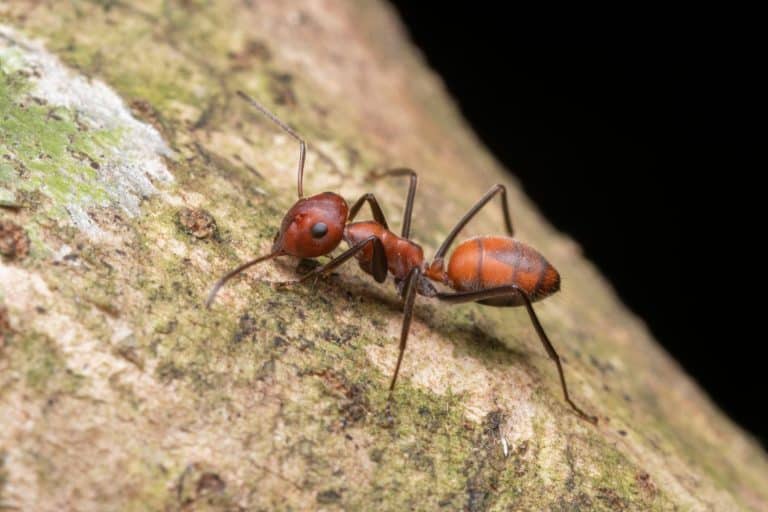
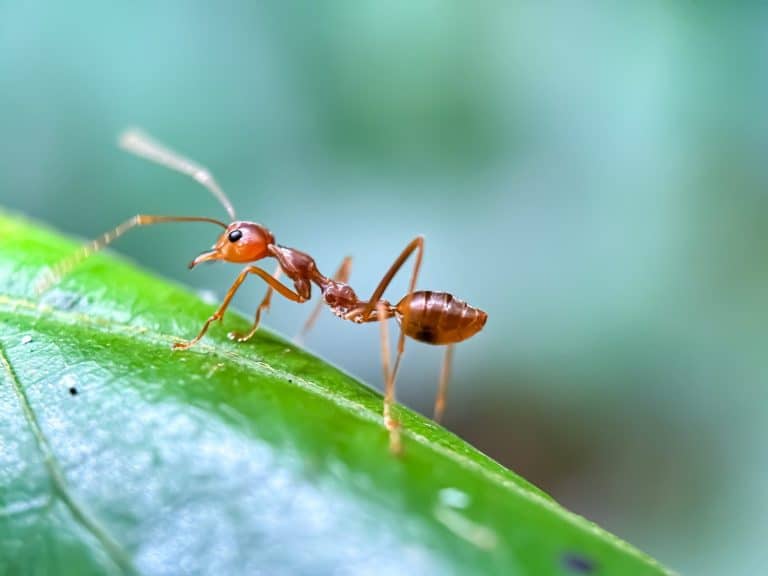
In the tropical rainforests of Borneo, it’s a bug-eat-bug world. Many seek protection from predators ten times their size, while also looking for shelter. For some, like the pitcher-plant ant (Camponotus schmitzi), the two are one and the same.
Rather than running to a decaying log or hollow tree for safety, pitcher-plant ants turn to one unlikely hero: a carnivorous plant. The Bornean fanged pitcher plant (Nepenthes bicalcarata) is the perfect place for an ant like this one to hide, rest, and even feed. This protection comes at a cost, but it’s one that the pitcher-plant ant happily pays. Its devotion fuels a mutually beneficial relationship that keeps both species alive.
Meet Borneo’s Most Exclusive Couple
Most carnivorous plants attempt to trap insects, not move them in as houseguests. However, the Bornean fanged pitcher plant is different in its design. Like many other pitcher plants, it has a pitfall lined with slippery walls. When insects traverse its large pitcher-shaped bowl, they slip inside. At the bottom, they encounter a pool of digestive enzymes. Over time, this liquid breaks down the insect’s body, turning it into a protein shake for the Bornean fanged pitcher plant.
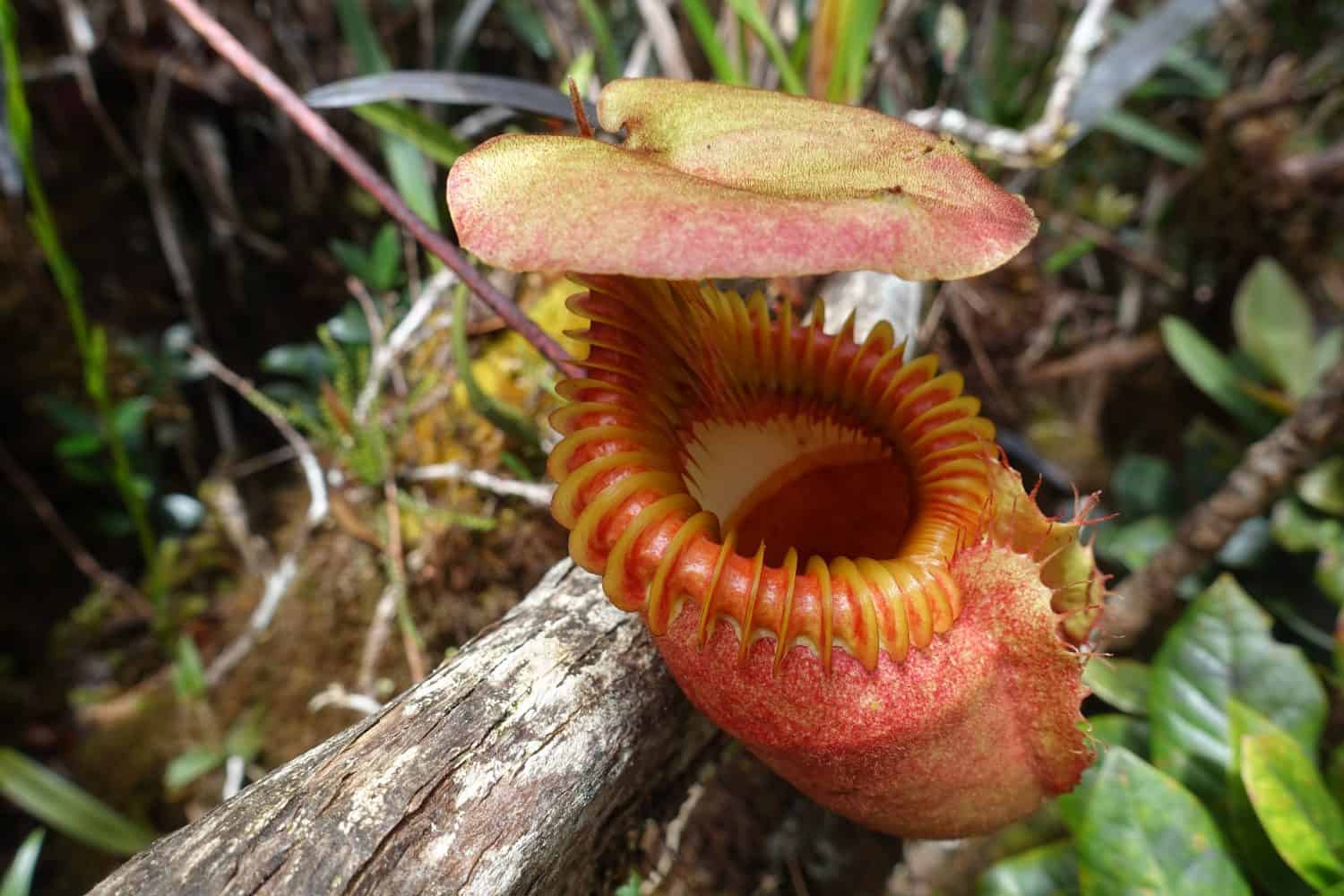
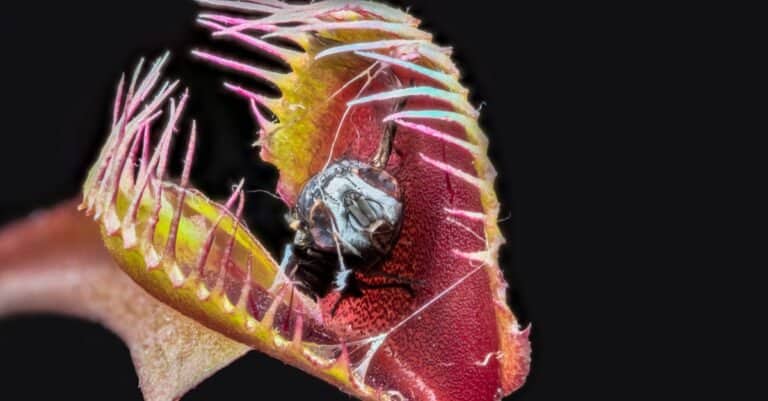
Pitcher plants trick insects into crawling along their rim before falling to their death in a pool of digestive enzymes.
©itsWisut/Shutterstock.com
However, not all insects fall victim to its wily ways and noxious toxin. The pitcher-plant ant, which is a close relative of the diving ant species, uses this open pool to its advantage. This species has not only learned to swim in the pitcher plant’s depths but is also unaffected by its digestive enzymes.
This is where the remarkable adaptation of Mother Nature comes into play. The pitcher-plant ants are biologically immune to isoshinanolone neurotoxin. While the sweet liquid lures in other insects and even other ants, C. schmitzi are chemically immune, able to dive into the pitcher plant and emerge unscathed, but well-fed. Typically, this would become a nasty pest problem for the Bornean fanged pitcher plant. But luckily, the two have found a way to benefit from each other’s lifestyles.
‘Scratch My Back, and I’ll Scratch Yours’
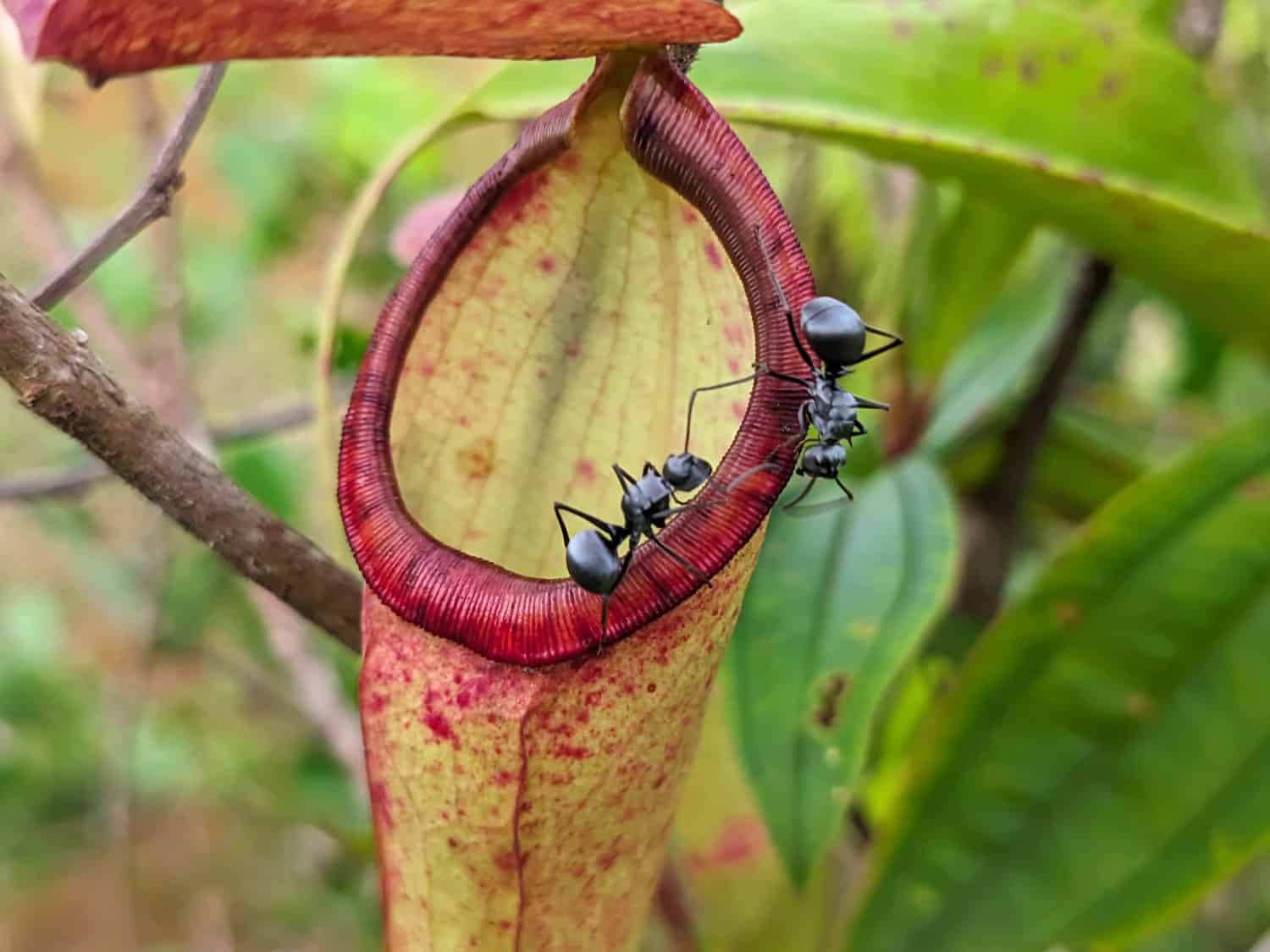
To understand why pitcher-plant ants are so drawn to the Bornean fanged pitcher plant, we must first understand its anatomy. The plant was named for its menacing-looking “fangs,” which hang over the pitfall and secrete the sweet toxin that lures insects. These secretions also feed pitcher-plant ants, which regularly patrol the rim of the pitcher plant. As the ants consume more, they produce more waste, which flows into the pitfall and becomes nitrogen-rich organic matter for the pitcher plant.
During their rim patrols, pitcher-plant ants also consume any fungi or unsavory bacteria that may grow on the plant. Doing this keeps the Bornean fanged pitcher plant healthy, allowing it to continue growing, trapping insects, and repeating the cycle.
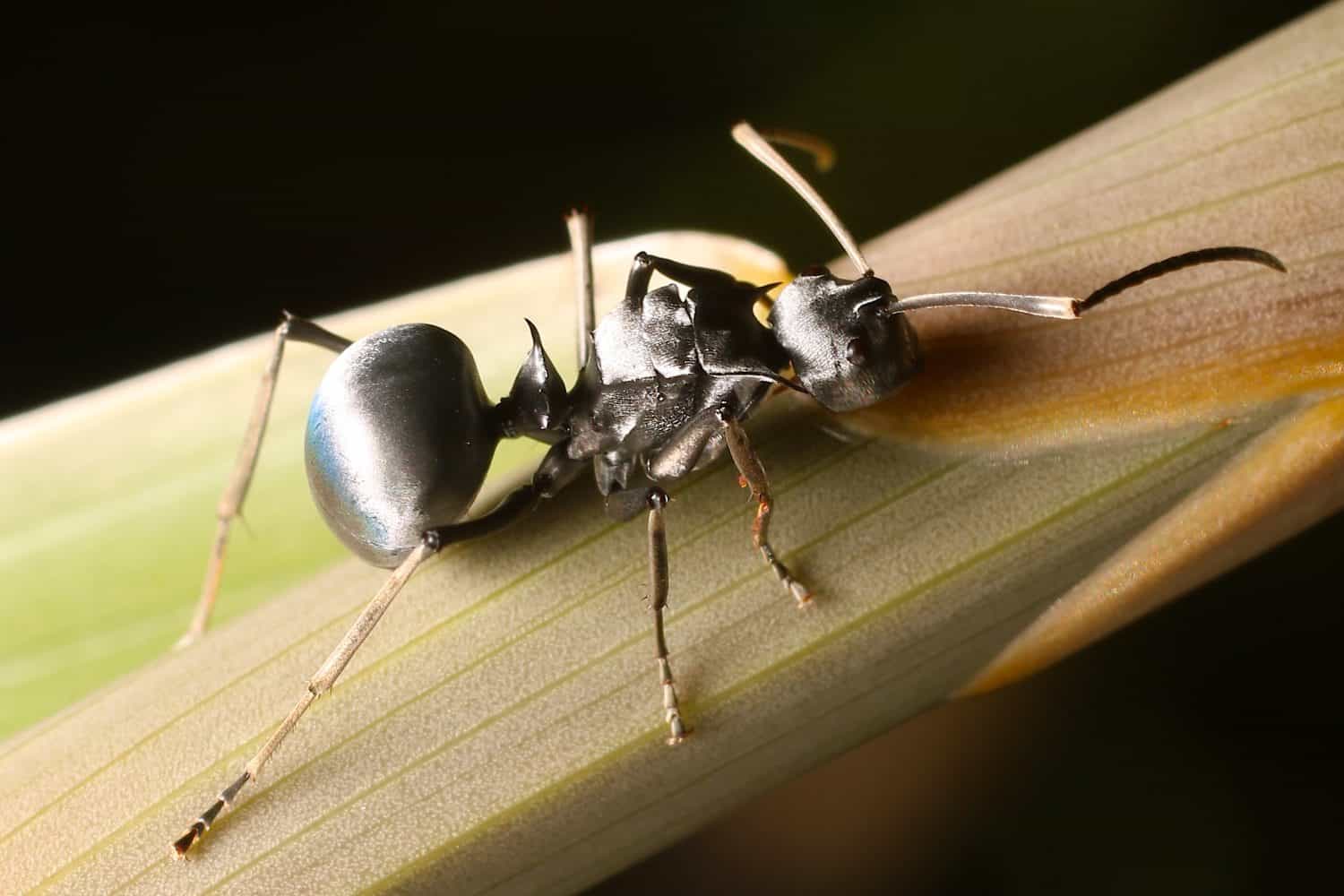
Pitcher-plant ants are chemically immune to the liquid inside the pitcher plants they live within.
©Dan Olsen/Shutterstock.com
The ants also function as soldiers. They prey on mosquitoes and other pests that threaten to use the pitcher plant as their own personal incubator. This prevents the pitcher plant from becoming overrun with insects and also creates more food as a byproduct. This symbiotic relationship is fueled by both species’ need for food, while the pitcher plant offers protection to the ants through its hollow tendrils. When the ants aren’t actively walking along the rim, they remain here, out of sight of predators.
A Proven Success Rate
It took scientists a long time to determine if the relationship between the Bornean fanged pitcher plant and its pitcher-plant ants was indeed mutual. For some time, many researchers believed it was one-sided. The ant was getting the better part of the deal, primarily due to the plant’s natural food source. However, after studying the relationship in depth, this mindset shifted.
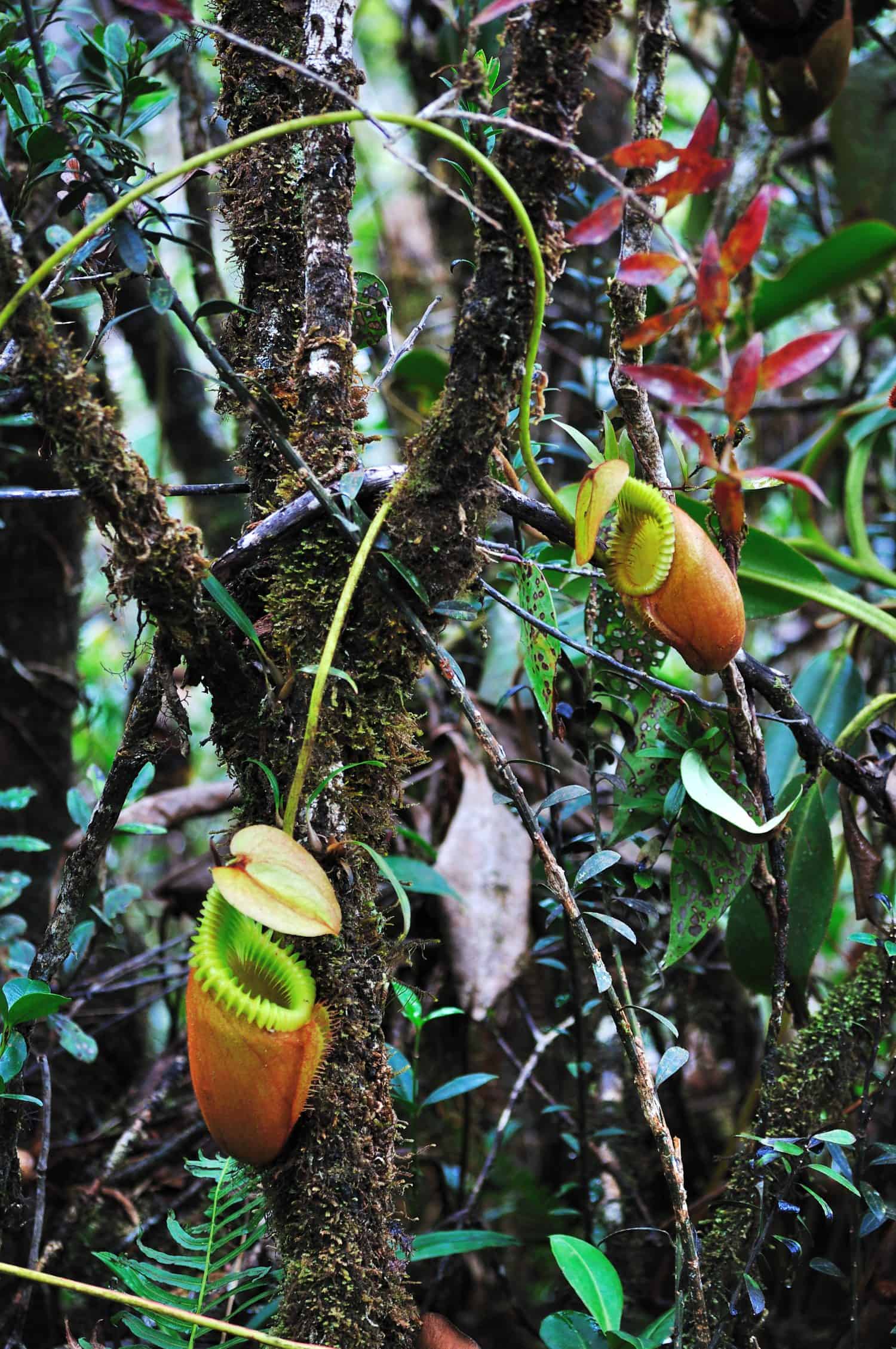
While beautiful, pitcher plants are deadly to the insects drawn to their nectar.
©Nokuro/Shutterstock.com
It turns out that carnivorous plants with a host of ants have improved prey capture efficiency and overall health. They also grow larger, with many plants having more foliage, larger leaves, and a better growth rate. Upon closer inspection, these plants also had higher levels of nitrogen in their leaves, which were subsequently larger than those without ants. The pitchers themselves also grew larger, allowing the pitcher plants to catch more food.
Scientists determined that ants are the primary line of defense against weevils, a common enemy of the pitcher plant. These slowly destroy the plant’s leaves and stems, weakening their integrity until the plant eventually dies. Pitcher-plant ants, as feisty as they are, feed on the weevils and eradicate that problem. Not surprisingly, pitcher plants that lacked ants also suffered from nutrient deficiencies, particularly nitrogen. Or, simply put, ant feces.