
Quick Take
- The Cape sundew is a carnivorous plant found in South Africa.
- The plant’s leaves are covered in tiny red tentacles called glandular trichomes.
- The tentacles produce drops of sticky mucilage, a secretion that traps insects.
- The Cape sundew consumes prey through external digestion.
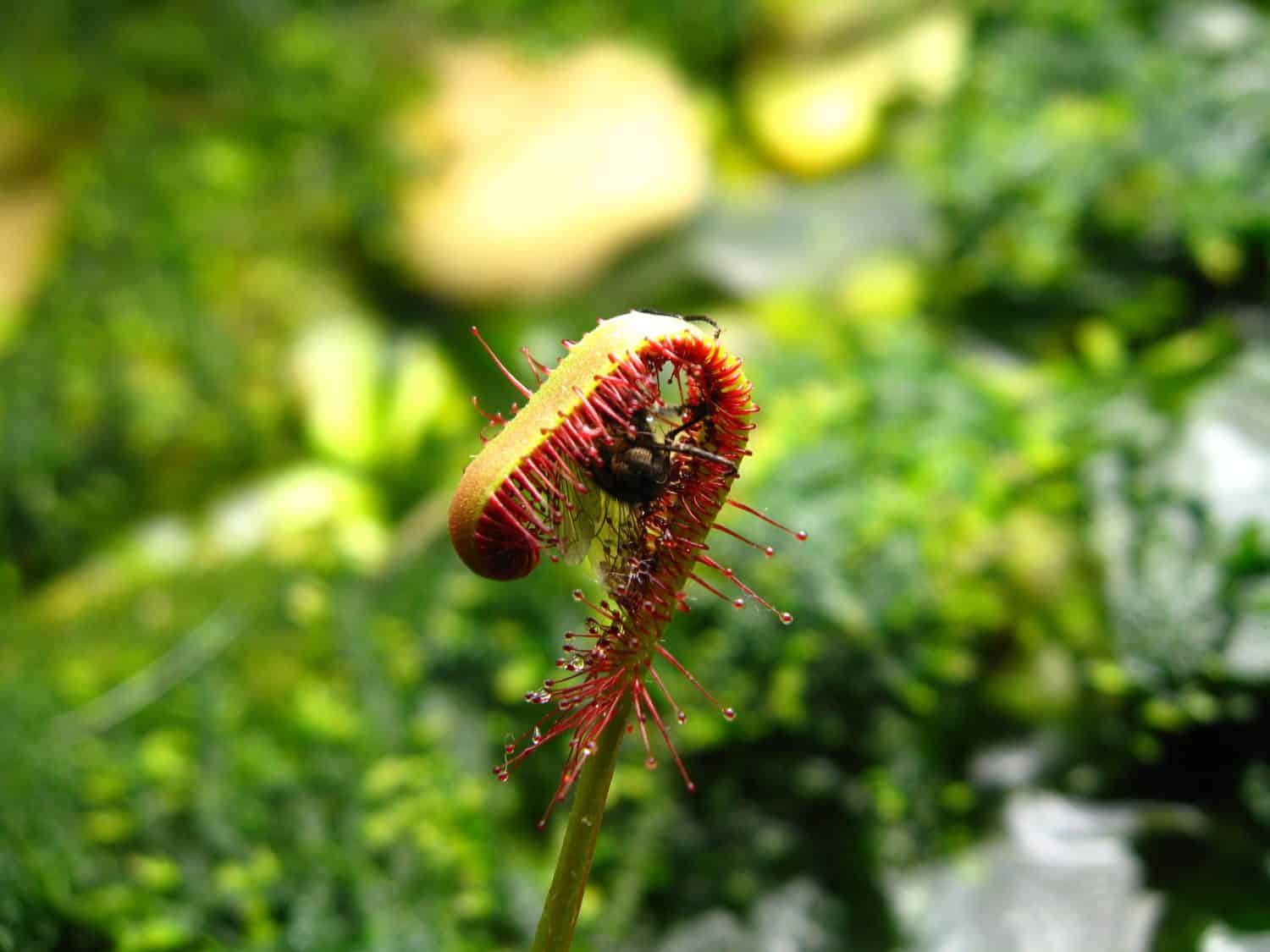
Carnivorous plants are some of the most interesting lifeforms in the world. While most plants rely solely on sunlight and water to survive, carnivorous plants additionally digest insects for added nutrients. Venus flytraps are easily the most famous example, but the Cape sundew is another amazing carnivorous plant. This post by @bbcearth shows one of these lesser-known plants eating a moth. Read here to learn more about the Cape sundew plant and how it eats insects.
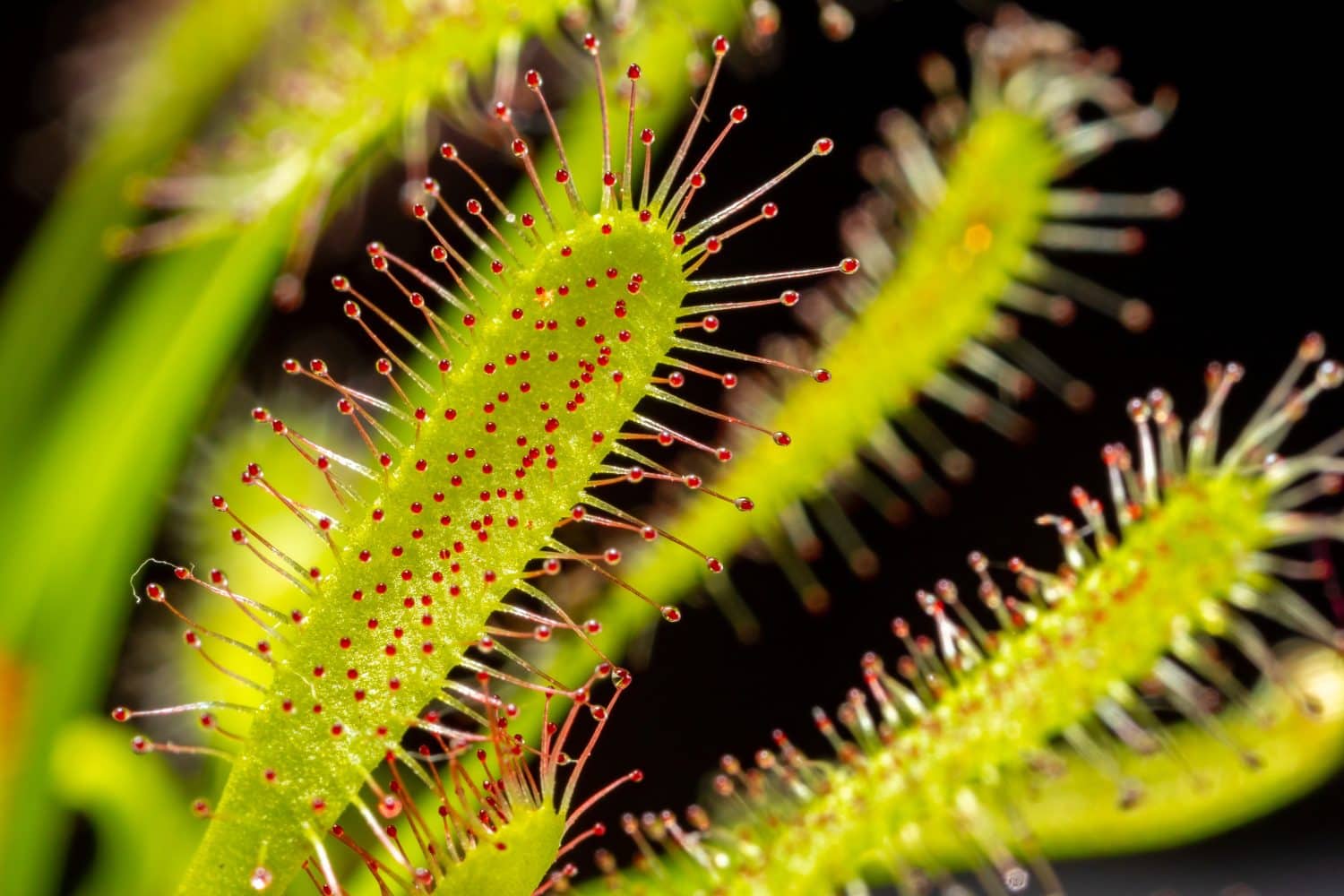
An up-close image of a Cape sundew shows the tiny tentacles on the leaf’s surface.
©Adilson Sochodolak/Shutterstock.com
About Cape Sundew
The Cape sundew is a native plant of the Cape region of South Africa. One of its most defining features is its long stem and tentacle-covered leaves that shine with morning dew. However, this innocent-looking “dew” actually isn’t dew at all; it is an intentional sticky trap. The plant’s leaves are covered in tiny red tentacles called glandular trichomes. The tentacles produce drops of sticky mucilage, a secretion that looks like dew. When insects fly nearby, they often mistake the “dew” for nectar. This is a fatal mistake; when they land, they get stuck immediately. As the insect struggles, it comes in contact with even more of these droplets, trapping it further. Once an insect is caught, the Cape sundew’s leaf slowly curls in on itself from the top down to digest its meal. The plant feeds on fruit flies, ants, gnats, and other small insects.
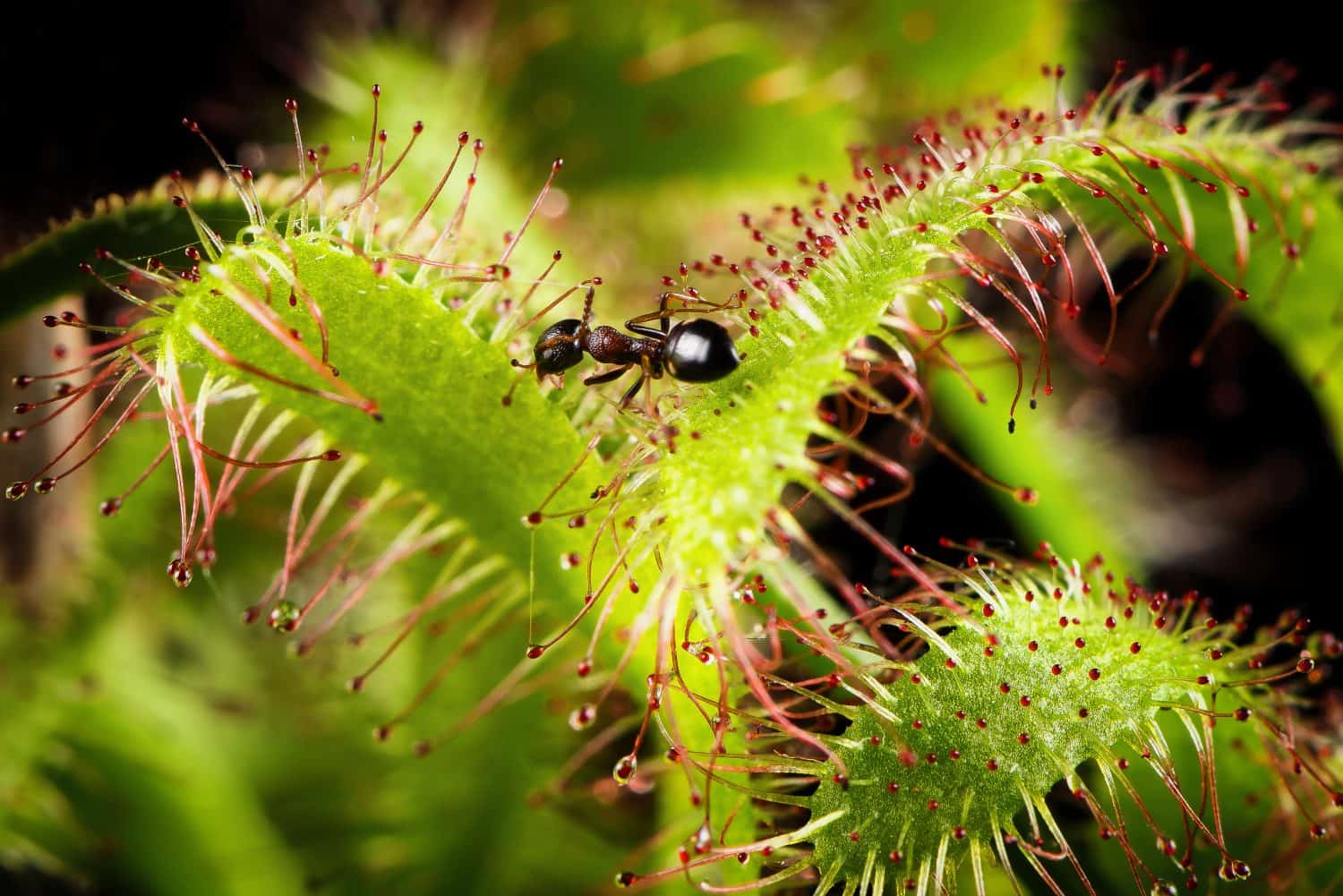
An ant caught in a Cape sundew.
©Marco Lissoni/Shutterstock.com
How Do Carnivorous Plants Eat?
Carnivorous plants like the Cape sundew do not have stomachs like animals, so how do they digest their prey? They do this through their leaves and a digestive surface. When an insect is captured, the surface of the plant secretes enzymes that break down the insect’s body. The plant then absorbs the nutrients directly through the leaf surface. So, rather than internal digestion like animals, plants rely on external digestion to absorb nutrients. Plants like the Cape sundew don’t eat insects every day, as it takes days to digest one. Since they already get their energy via photosynthesis, they use prey as a resource for extra nutrients like nitrogen that can be scarce in certain soils. The video above is an amazing look at the beginning of this plant digestion process. It highlights one of nature’s most incredible specimens.