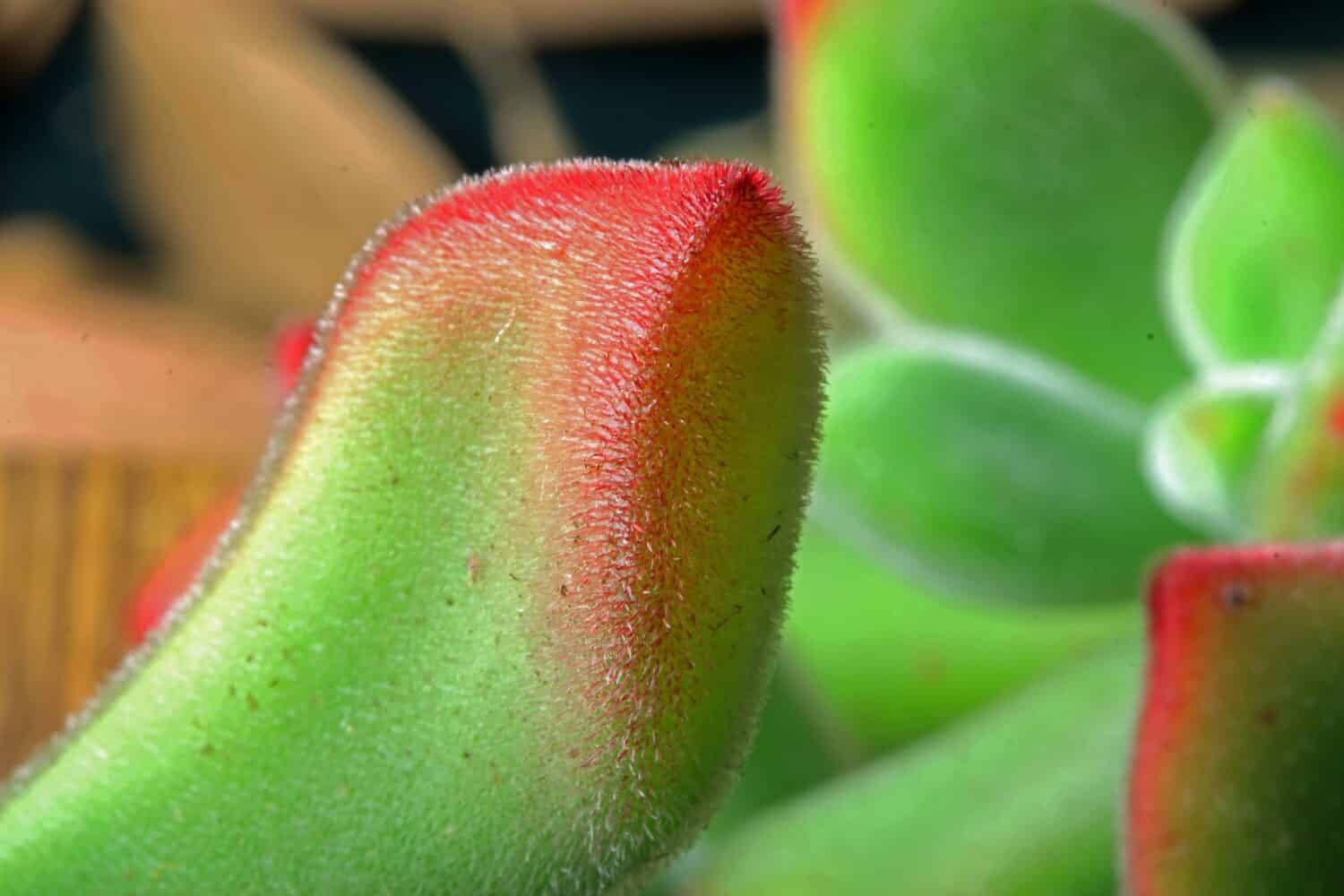

Succulents are generally known for their waxy leaves and stems. However, the plush plant challenges that conception with a soft, fuzzy covering that looks and feels amazing.
In this article, we’ll explore how to care for and grow the plush plant and cover the confusion between different succulent species with this moniker.
Let’s dig in!
Plush Plant: Origins
Echeveria harmsii is one of many echeverias hailing from Mexico. Originally classified by American botanist James Francis Macbride, this succulent was named after Hermann August Theodor Harms—a famed German botanist and one of Macbride’s idols.
The nickname “plush plant” refers to the soft coating of silvery fuzz that covers the waxy green and red leaves.
Plush Plant: Appearance
Echeveria harmsii has plump, narrow leaves tapering to a pointed edge. They boast a grassy green shade with deep red borders and tips. The velvety soft fuzz covers the entire leaf structure with a subtle silver glow.
With ideal growing conditions, this echeveria will produce orange and red tubular flowers.
Echeveria harmsii vs. Echeveria pulvinata
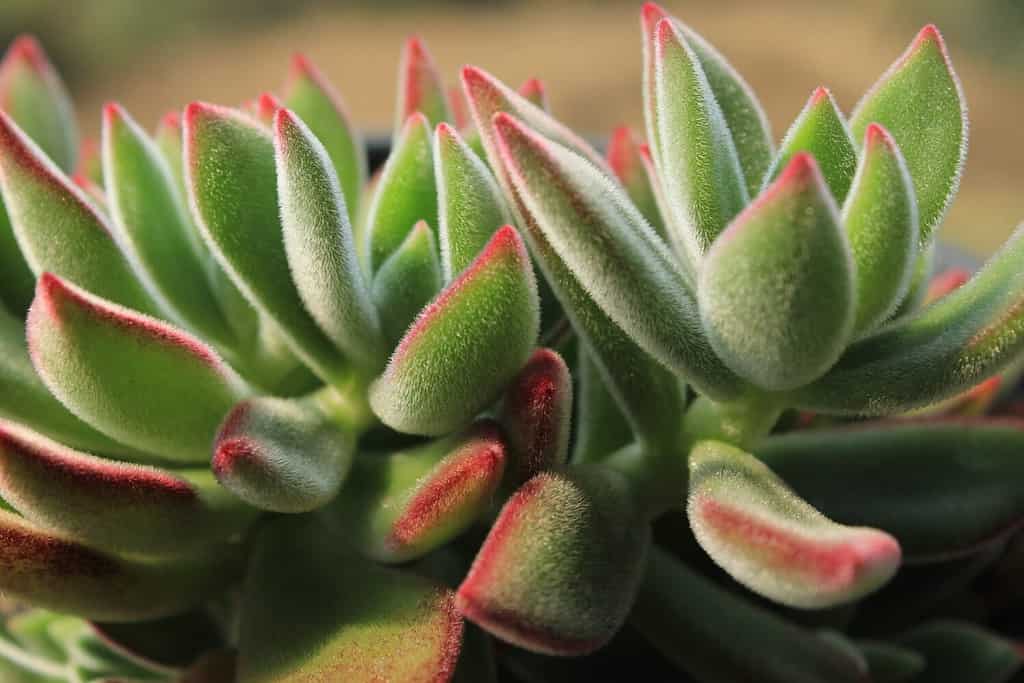
Echeveria pulvinata (pictured here) and Echeveria harmsii both bear the plush plant name. Fortunately, their care and growth needs are identical.
©Subhamay Acharyya/Shutterstock.com
Many plant collectors use the plush plant moniker for both Echeveria harmsii and Echeveria pulvinata. These succulents are incredibly similar in appearance.
Both succulents have waxy green leaves with red tips and a soft coating of silver fuzz. However, Echeveria harmsii tends to have a darker border and shorter, narrower leaves.
Ultimately, it doesn’t matter whether your plush plant is an Echeveria harmsii or an Echeveria pulvinata; their growth habits and care requirements are identical.
How to Care for a Plush Plant
Like most echeveria succulents, the plush plant is low-maintenance and beginner-friendly. While typically grown indoors, this ornamental succulent will survive outdoors in USDA zones 9-11.
1. Soil Selection
Choose well-draining succulent soil that contains a high proportion of perlite or pumice. Avoid using cactus soil, as it’s not suitable for echeveria succulents. The excellent balance of drainage and retention provided by succulent soil is essential for the optimal growth of these plants.
2. Watering
Plush plants thrive with infrequent watering. It’s better to underwater than overwater them. To determine when to water, insert your finger about an inch into the soil to check for dryness. If the soil is dry, give your succulent a thorough soaking. If it’s still moist, wait a few more days to prevent the risk of root rot.
3. Sun Exposure
Plush plants require bright, indirect sunlight for 6 to 8 hours daily to thrive. Place them near an east or south-facing window. Be cautious of drafts and avoid positioning them near vents.
4. Maintenance and Care
Plush plants, like all succulents, are susceptible to pest infestations. The common culprits include spider mites, mealybugs, and scale insects.
If you spot any of these pests, gently wipe your plush plant with a warm, soapy cloth to remove them. To prevent further infestations, apply a neem oil treatment.
5. Fertilization and Repotting
Plush plants don’t require fertilization to thrive. However, using a succulent-friendly fertilizer at the start of the active growing season can help prompt blooming.
Consider repotting your plant every few years if it becomes overcrowded or requires fresh, nutrient-rich soil.
How to Propagate a Plush Plant
Plush plants are easy to propagate. As they grow and thrive, they’ll produce offshoots that you can divide and repot.
You can also successfully propagate your plush plant with a leaf cutting:
- Prepare your parent plant by watering it 2-3 days before propagating. It’s best to propagate at the start of the active growing season.
- Pull an established leaf from your parent plant, twisting gently to make it release.
- Store the leaf cutting in a dry area out of direct sunlight for 2-3 days to develop a callous.
- Scoop 2-3 inches of moist succulent soil into shallow pots or trays with sufficient drainage.
- Dip the end of your cutting in rooting hormone to promote growth.
- Lay the leaf cutting on top of the soil, covering the end with a bit of soil.
- Place your plush plant cutting in indirect sunlight. Mist it regularly, avoiding full watering until roots are established in 2-3 weeks.
How to Grow a Plush Plant from Seed
Members of the Echeveria genus are considered the easiest succulents to grow from seed. While cuttings and offsets will produce faster results, this is a fun experiment for growing your own collection.
- Scoop 2-3 inches of moist, succulent soil into shallow pots or trays with sufficient drainage.
- Sprinkle your push plant seeds on the soil and use a toothpick to cover.
- Cover the tray with plastic wrap and set in indirect sunlight.
- Keep the soil moist with a mister, avoiding a full watering until the seeds sprout and establish a root system.
Start this project at the beginning of the growing season for best results.
Are Plush Plants Toxic?
Plush plants (both species) are considered non-toxic to pets. However, their sensitive fuzz is easily damaged and should be kept out of reach of curious pets and children.