
Imagine this: It’s a beautiful, sunny day, and you go outside to check on your garden. Everything seems healthy, but upon closer inspection, one of your kale leaves looks suspicious. One turn of a leaf reveals dozens of tiny, round bugs clinging to the base of the plant. While it’s unsightly, it’s also causing microscopic damage that will eventually kill off those leaves. The cause is aphids, and they’re the tiny pests that every gardener fears.
What do these tiny bugs want? Are they beneficial in any way, or just a nuisance to growing vegetables? And are they harmful to humans? Let’s find out.
What Are Aphids?
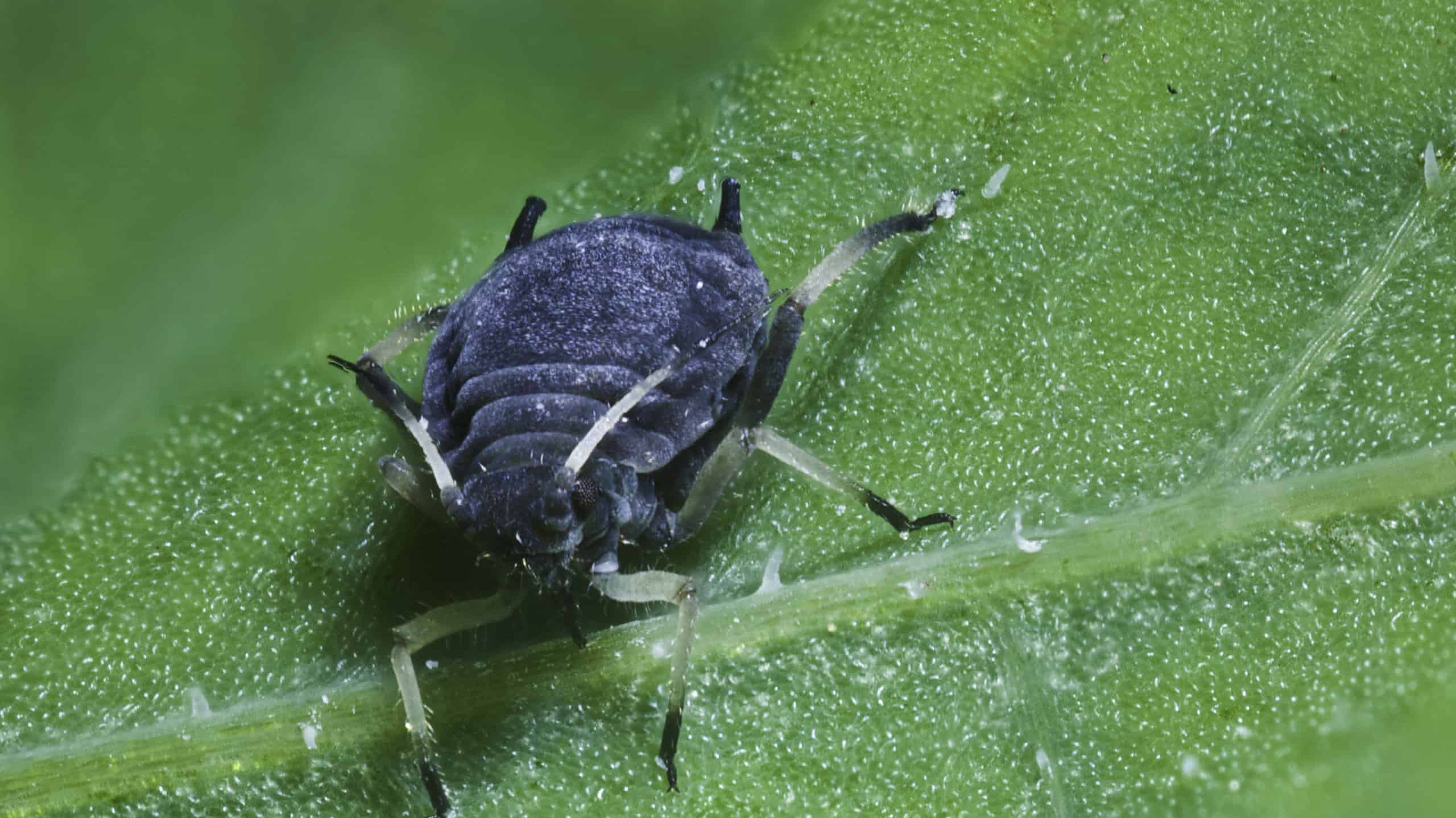
Aphids are tiny insects that survive by sucking the sap out of plants. They’re commonly found in gardens, where people often don’t notice them until there’s an infestation. They also go by the names greenfly (green species) and blackfly (dark-colored species), and fall under two lower classifications: Aphididae and Lachnidae. Aphids belong to the superfamily Aphidoidea, which includes several families, such as Aphididae. This is the largest, with over 5,000 species. Lachnidae is another, which contains the so-called giant aphids with around 346 species. There are many main, or common, types of aphids:
- Cabbage aphid
- Green peach aphid
- Melon aphid
- Potato aphid
- Oleander aphid
- Artichoke aphid
- Black bean aphid
- Pea aphid
- Woolly and green apple aphids
- Corn leaf aphid
- Bird-cherry aphid
- Rose aphids
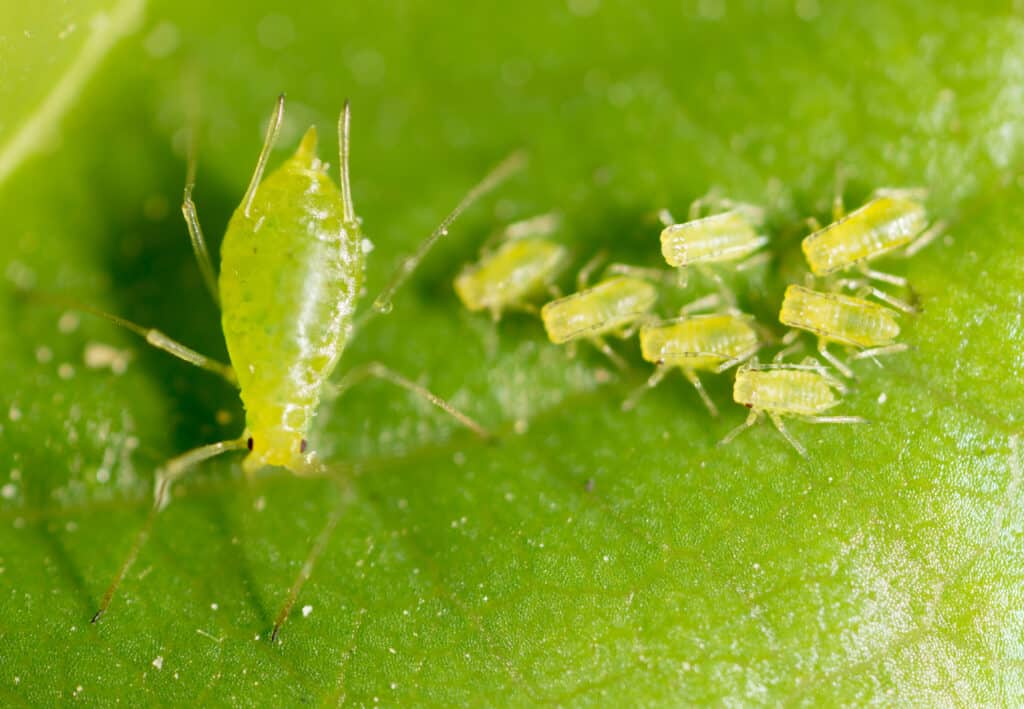
Aphids on a green leaf.
©schankz/Shutterstock.com
As their names imply, many aphids feed on a specific plant, vegetable, or fruit. However, some are not picky and will feed on a wide range of vegetation. This is why they’re found so often in gardens where aphids are prevalent. Like many insect species, aphids hatch from eggs as nymphs. Many are parthenogenetic during part of their life cycle, reproducing without mating. Some species also reproduce sexually at certain times of year. When aphids mature, most are wingless, but environmental factors such as crowding or declining food quality can trigger the development of winged forms. When reproducing, aphids find safe spots for their eggs to overwinter, which helps ensure the survival of a new generation each spring.
Where Do Aphids Live?
These tiny insects have an incredible range and are found throughout most of the world. If there’s a plant with nutrients, chances are, aphids are nearby. Their ability to adapt only encourages the population, with sizable numbers in warmer climates. Aphids typically colonize the undersides of leaves, forming large groupings along stems and leaf veins. However, their location can depend on the species and its preferred food source. Some feed on leaves, while others prefer buds or roots. Because of this, identifying the species of aphid is crucial for treatment.
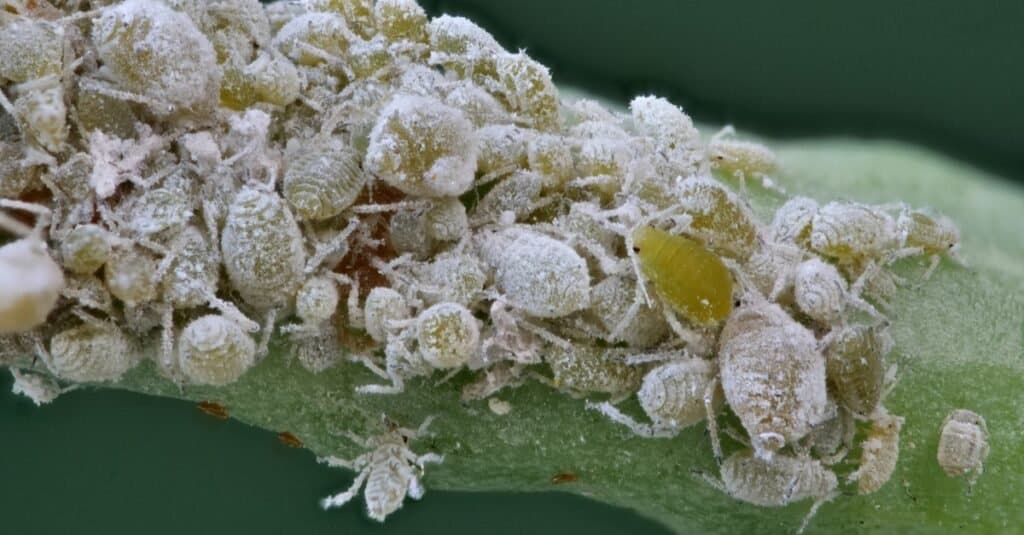
Cabbage aphid, Brevicoryne brassicae, on a tomato plant. Sometimes called plant lice, they are one of the most common pests of indoor plants.
©Holger Kirk/Shutterstock.com
Aphids target the healthiest parts of the plant for the best chance at securing their survival. When they feed on its sap, the plant eventually shows signs of damage. This includes browning, curling, or dead leaves that fall off on their own. Once a plant has been ravaged, it typically means a colony of aphids has established a base somewhere on its leaves or stem. When it comes to these insects, it’s usually a question of “when” rather than “if.” They’re present in many yards and on trees, making them one of the most frequently encountered garden pests in North America.
What Do Aphids Eat?
Sap is the primary meal of an aphid. They can devastate an entire garden if left untreated because of how quickly they eat and reproduce. Aphids use a tube-like mouthpiece to pierce a plant and reach its sap. They drink more than they need to get as much protein as they can from the sugar water. During this process, the plant loses vital nutrients that it needs to survive. As sap filters through the aphids’ bodies, they excrete it as a substance called “honeydew.”
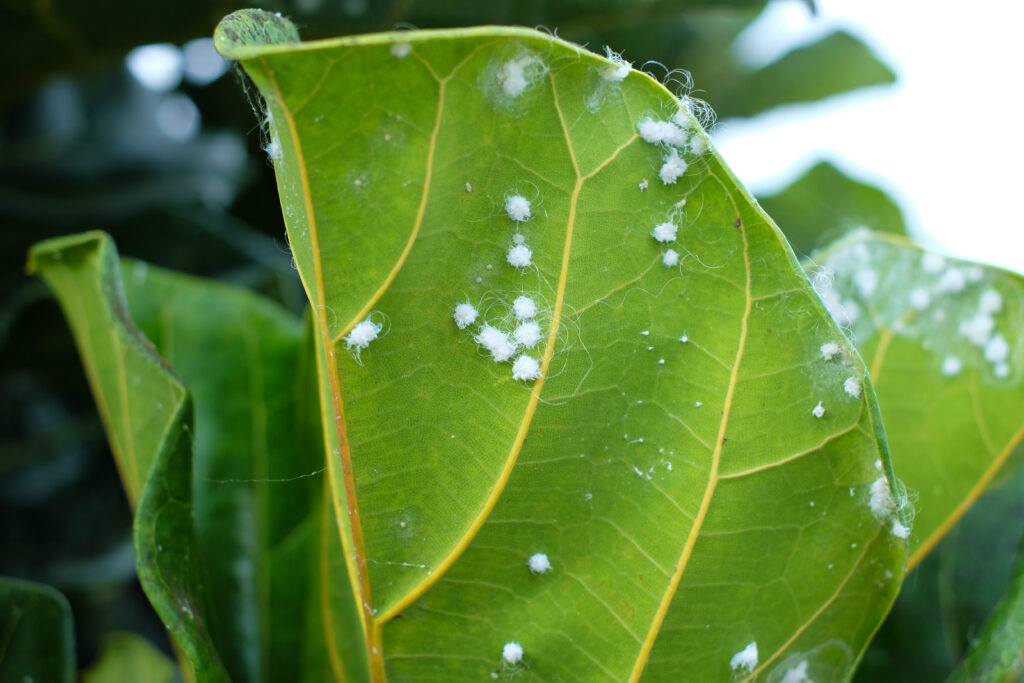
Woolly aphid infestation on the leaves of the fiddle leaf fig.
©daguimagery/Shutterstock.com
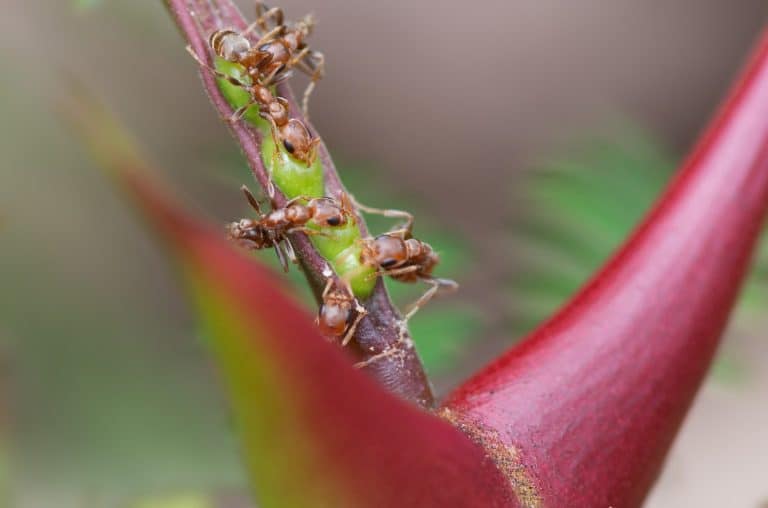
Another indication of aphids is a significant presence of ants in your garden. As aphids leave behind honeydew, it’s typically eaten by ants. The relationship is mutualistic; aphids and ants go hand-in-hand because of their nutritional needs. Ants also protect aphids from other predators, making them mutually beneficial. Without ants, honeydew left on plants can cause sooty mold. This mold type thrives on substances with a high sugar count, which can also be detrimental to a garden or flowers. The mold itself does not directly harm plant tissues, but its presence can inhibit the plant’s ability to photosynthesize. In extreme cases, sap can drip onto other things and other plants, covering everything in a sticky residue.
Are Aphids Good or Bad?
While no insect is inherently good or bad, aphids are generally considered to be pests. Their feeding habits make them damaging to plants and gardens, although they do serve as a food source for many beneficial insects and birds. Sucking the sap from a plant weakens it and reduces yields, which may lead to crop loss in severe infestations. Outside of gardens, aphid colonies can cause damage to trees and other natural flora. Additionally, aphids can cause disease among plants. They quickly become vectors, transmitting plant viruses from leaf to leaf. This is especially damaging to gardens, but it can damage flowers and ornamental plants, as well.
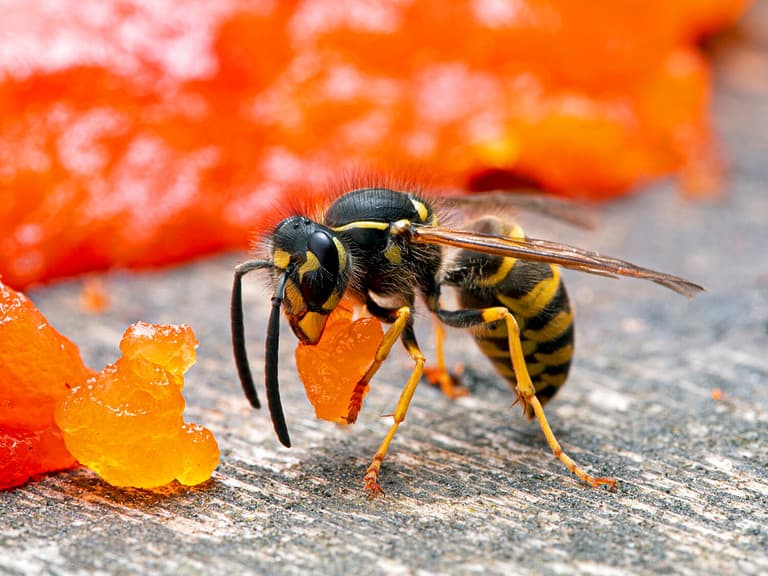
Alternatively, aphids are beneficial from the standpoint of the insects that prey on them. Their role in the ecosystem is vital for these insects:
- Hoverflies
- Parasitic wasps
- Lacewings
- Ladybugs
- Ground Beetles
- Spiders
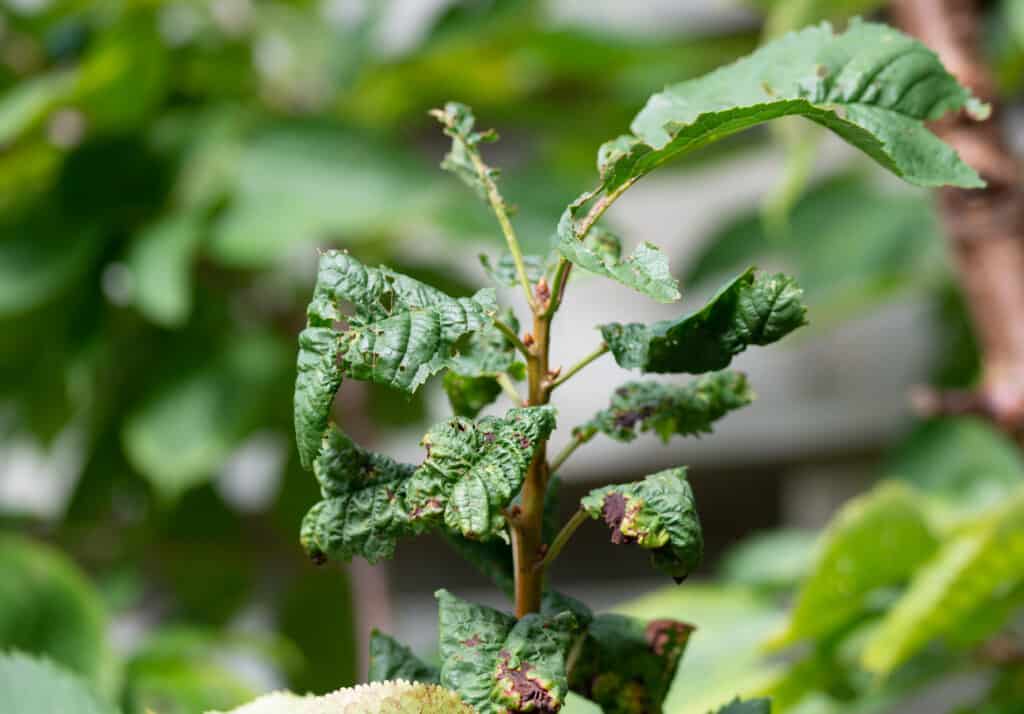
Curled or discolored foliage is a good sign that aphids have been in your garden.
©SrideeStudio/Shutterstock.com
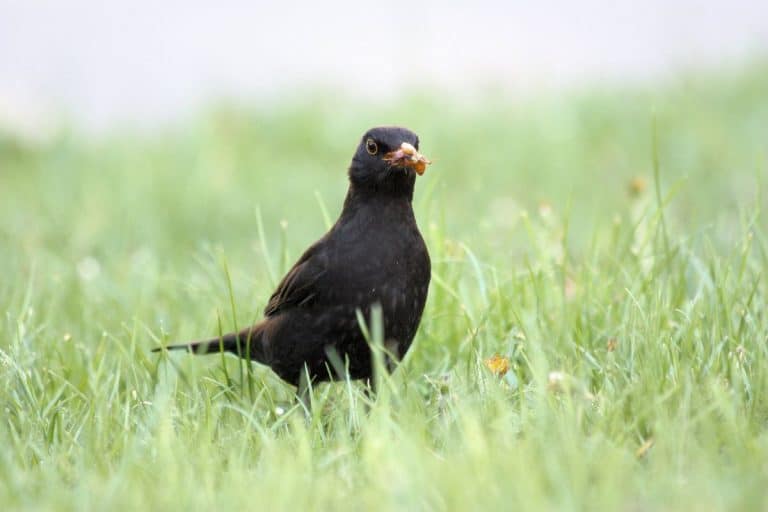
Some birds eat aphids as well, making them a tasty, protein-packed snack. All of these help keep the aphid population in check, making for a healthy food chain. Aphids also attract beneficial insects to gardens, such as ladybugs and spiders. These predators also feed on other pests, providing natural population control for your plants. And they prey on other pests, which means natural pest control for your plants. It’s actually encouraged to control, rather than eradicate, aphids in your garden. This allows populations to remain active but not grow, providing food for beneficial pollinators and carnivorous insects.
The Best Way to Remove Aphids
Moderation is key when it comes to aphid removal, and it’s important to avoid methods that can be toxic to other insects and wildlife. The most effective way to control aphid populations is to catch the problem early. Regular checks on plants and gardens can indicate a problem before it becomes an infestation. If you find a colony of aphids, often a strong blast of water from a hose is enough to knock them off. Of course, this won’t eliminate the colony, but it will remove them from your plants before they cause significant damage.
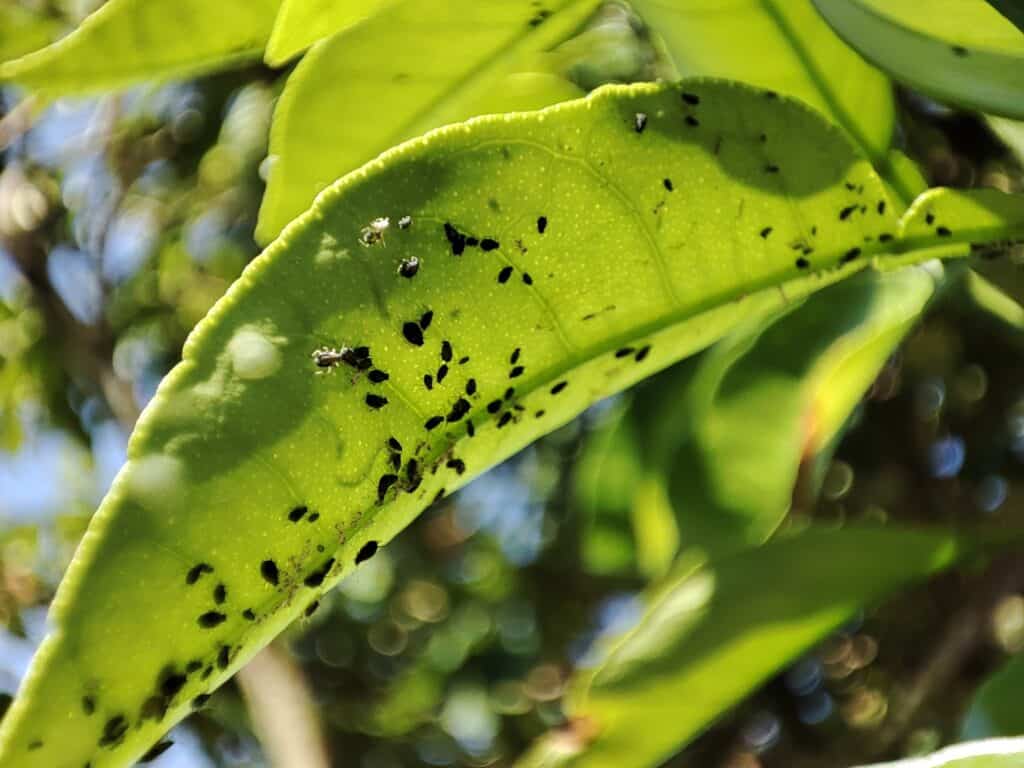
Aphids don’t just attack the topside of leaves – be sure to check the underside as well.
©jamaludinyusuppp/Shutterstock.com
Planting flowers and plants that attract aphid predators is another proactive measure. Attracting pollinators is always beneficial, and many of them also prey on aphids. While this might not be enough to control a large infestation, it can help keep many aphid colonies in check. If you have an infestation, here are some additional ways to treat your plants:
- Pruning: If aphids have colonized an entire plant leaf, the best practice is to cut the leaf off. It’s better to lose one leaf than a whole plant.
- Insecticidal Soaps: Rather than a pesticide, insecticidal soaps do not leave residue. Soaps containing neem oil are especially effective in treating infestations. These can be found at most plant nurseries and greenhouses.
- Horticultural Oils: Herbs such as rosemary, clove, and lavender can be infused into water or oil and sprayed to keep pests like aphids away. Routinely spraying horticultural oils can be a long-term treatment for gardens and ornamental plants.
Aphids are small insects that can multiply rapidly if left unchecked. While they do provide benefits for their predators, they are natural enemies of gardeners. Maintaining well-balanced soil, creating a pollinator-friendly garden, and watering regularly are all steps you can take to combat aphids.