
Plant enthusiasts love cacti for their low-maintenance nature and ability to thrive under drought conditions—i.e. when you forget to water them for a month.
The mistletoe cactus is a rarity among plant collectors and, at a glance, doesn’t resemble a cactus at all.
In this article, you’ll discover where the mistletoe cactus is from, how to take care of it, and why you want this unique succulent in your home.
Let’s dig in!
Mistletoe Cactus: Origins
Scientifically known as Rhipsalis baccifera, the mistletoe cactus is found throughout the tropics in Central America, South America, and up into parts of the Southern United States.
These origins immediately set the mistletoe cactus apart from other species, as cacti are typically found in arid desert environments.
Other members of the Rhipsalis genus have been discovered in Africa and Asia, leading to a lifelong debate about its true origins.
Rhipsalis baccifera was discovered in the Americas by German botanist Joseph Gaertner. Gaertner originally misclassified the mistletoe cactus as it behaved so differently from other cacti species.
Mistletoe Cactus: Appearance
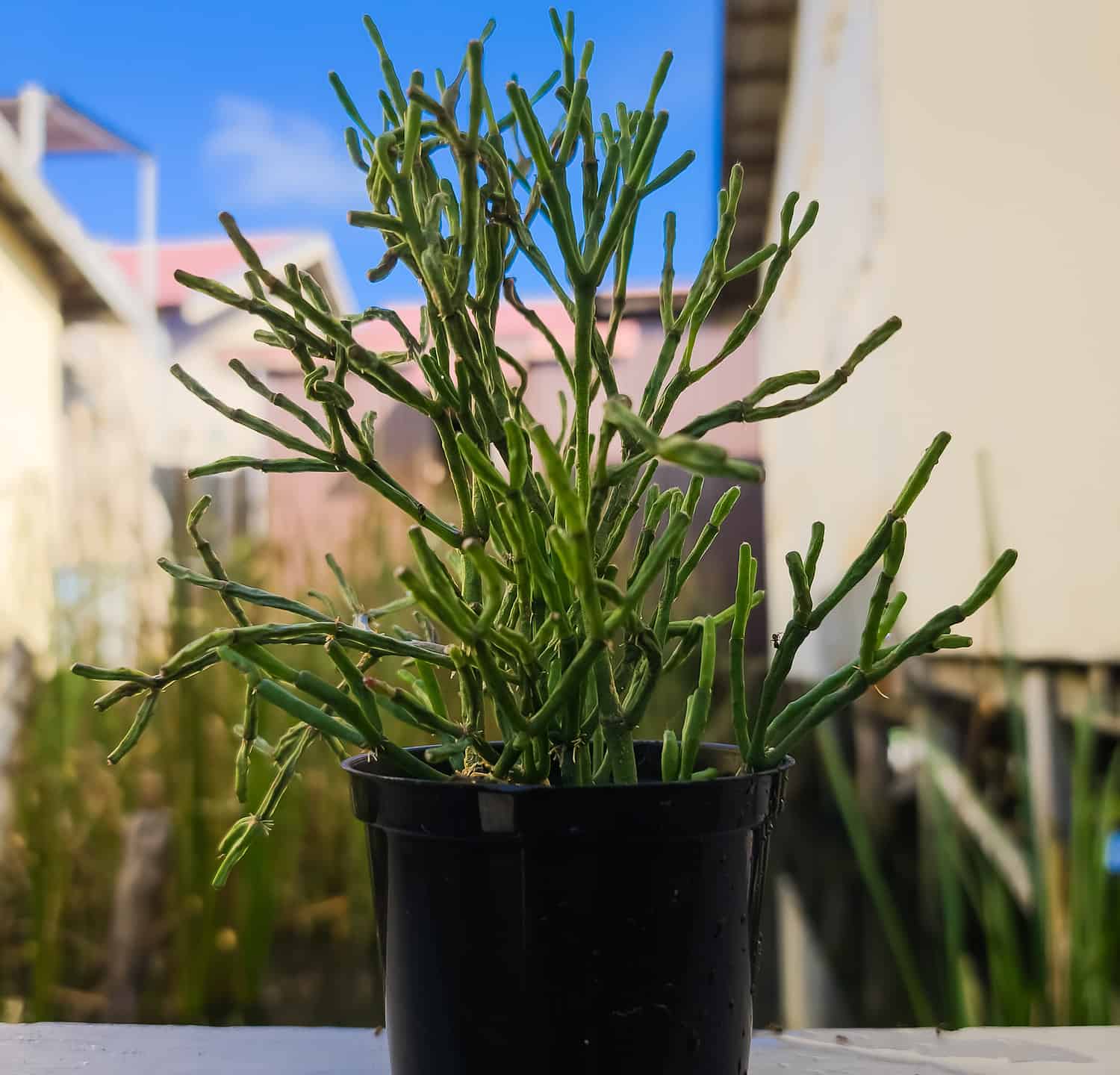
Rhipsalis baccifera is a trailing succulent cactus known as an “epiphyte,” meaning it clings to its surroundings. Its stems are long, slender, and cylindrical, with notable segmentation at the joints. The segments look similar to a balloon animal, like the stems have been twisted into sections.
With proper care, the mistletoe cactus will produce delicate white blooms and small white berries toward the end of the stems. Coloration can vary based on the environment. While most mistletoe cacti are a vibrant green, they may have blush tones that impact the stems and berries.
How to Care for a Mistletoe Cactus
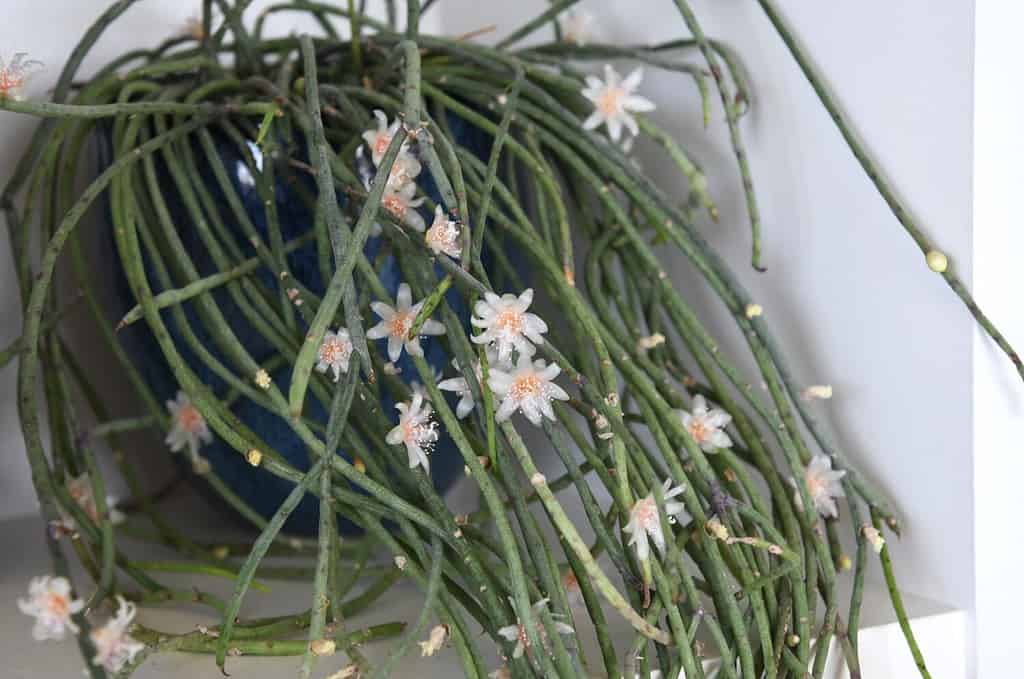
With proper care, the mistletoe cactus will bloom with delicate white flowers at the end of the stem.
©Creative by Nature/Shutterstock.com
Mistletoe cactus care is quite different from other types of cacti. It requires more moisture, less sun, and different soil. Like most cacti, this species will survive outdoors in USDA zones 9-10.
1. Soil Requirements
This cactus requires well-draining soil that will retain moisture for longer than the average cactus soil. Unlike other cacti, the mistletoe will survive in regular potting soil.
Consider blending potting soil with coconut coir, perlite, or bark fragments to find the right balance between drainage and moisture retention. Alternatively, opt for succulent soil over cactus soil.
2. Watering
Another key difference between the mistletoe and other cacti is its watering requirements. This unique, tropical cactus prefers consistent moisture and will struggle if the soil dries completely.
Keep your Rhipsalis baccifera on a regular watering schedule of every 7-10 days during the active growing season, reducing to every 2-3 weeks during winter dormancy.
Choose a container with sufficient drainage, as this cactus is prone to root rot.
3. Sun Exposure
Another key difference between the mistletoe cactus and other species is its sun sensitivity. Remember, the mistletoe clings to trees under dense canopies in its natural environment.
Replicate its natural environment by keeping this unique cactus out of direct sunlight. Place it a few feet back from a sunny window where it will receive bright, indirect sunlight.
The mistletoe cactus will survive in low light conditions, but they will impede its growth.
4. Maintenance and Care
The mistletoe cactus is susceptible to the common offenders for succulents: mealy bugs, scale insects, and spider mites. Overwatering can also lead to root rot and fungal growth.
Wipe these pests away with a warm, damp cloth and dish soap, spraying with a cactus-friendly pesticide if needed. Avoid overwatering by ensuring proper drainage and testing the soil before watering. Stick in your finger to the first knuckle. If it’s moist, wait another few days. If it’s dry, give your cactus a good soaking.
5. Fertilization and Repotting
The mistletoe cactus enjoys regular fertilization throughout the active growing season. Choose a cactus-friendly fertilizer and dilute it according to the manufacturer’s instructions. This cactus will thrive without fertilizer, but a good feeding can promote blooming.
Repot your mistletoe cactus every two years to replenish the soil nutrients and avoid crowding.
How to Propagate a Mistletoe Cactus
This whimsical cactus is simple to propagate via stem cutting. Use a clean knife or pair of scissors to take a long cutting, allowing 4-5 inches of stem. Let the cutting callous over for a few days in a dry area out of direct sunlight. Take your cutting during the start of the growing season, in the early spring.
When the cutting has calloused over, dip the end in rooting hormone and plant in your special soil blend. Mist your cutting regularly. Avoid a full watering for a few weeks, giving the roots time to establish. Give your cutting a gentle pull. If there’s resistance, it has roots.
How to Grow a Mistletoe Cactus from Seed
Mistletoe cacti are notoriously slow growers. While growing from seed is possible, it may be a full year before you see noticeable growth; stem cuttings are preferred.
Scatter seeds on top of your soil blend in a shallow tray. Gently cover the seeds with soil using a toothpick. Mist the seeds, cover the tray with plastic wrap, and set them in a warm area with indirect sunlight.
Mist regularly and monitor their progress. Separate and repot at the beginning of the next active growing season.
Are Mistletoe Cacti Rare?
Mistletoe cacti are not threatened and have an environmental rating of “least concern.” However, they’re rare to see as a part of a plant collection, so it’s a nice addition to consider for your home.
Is the Mistletoe Cactus Toxic to Pets
The mistletoe cactus is not toxic to pets and won’t harm your furry friends. However, it’s a sensitive plant, so keep it out of reach of curious pets and children.
Is the Mistletoe Cactus Easy to Care For?
The Mistletoe Cactus is a bit higher maintenance than other types of cacti but is still considered a low-maintenance house plant.