








C
Species Profile

Clumber Spaniel

Canis lupus familiaris

Slow-and-steady flushing specialist
Cavan-Images/Shutterstock.com

Clumber Spaniel Distribution

Click a location to explore more animals from that region

Origin Location

This map shows the native origin of the Clumber Spaniel. As a domesticated species, they are now found worldwide.

Loading map...

Found in 1 country

Size Comparison

Human 5'8"
Clumber Spaniel 1 ft 7 in

Clumber Spaniel stands at 28% of average human height.

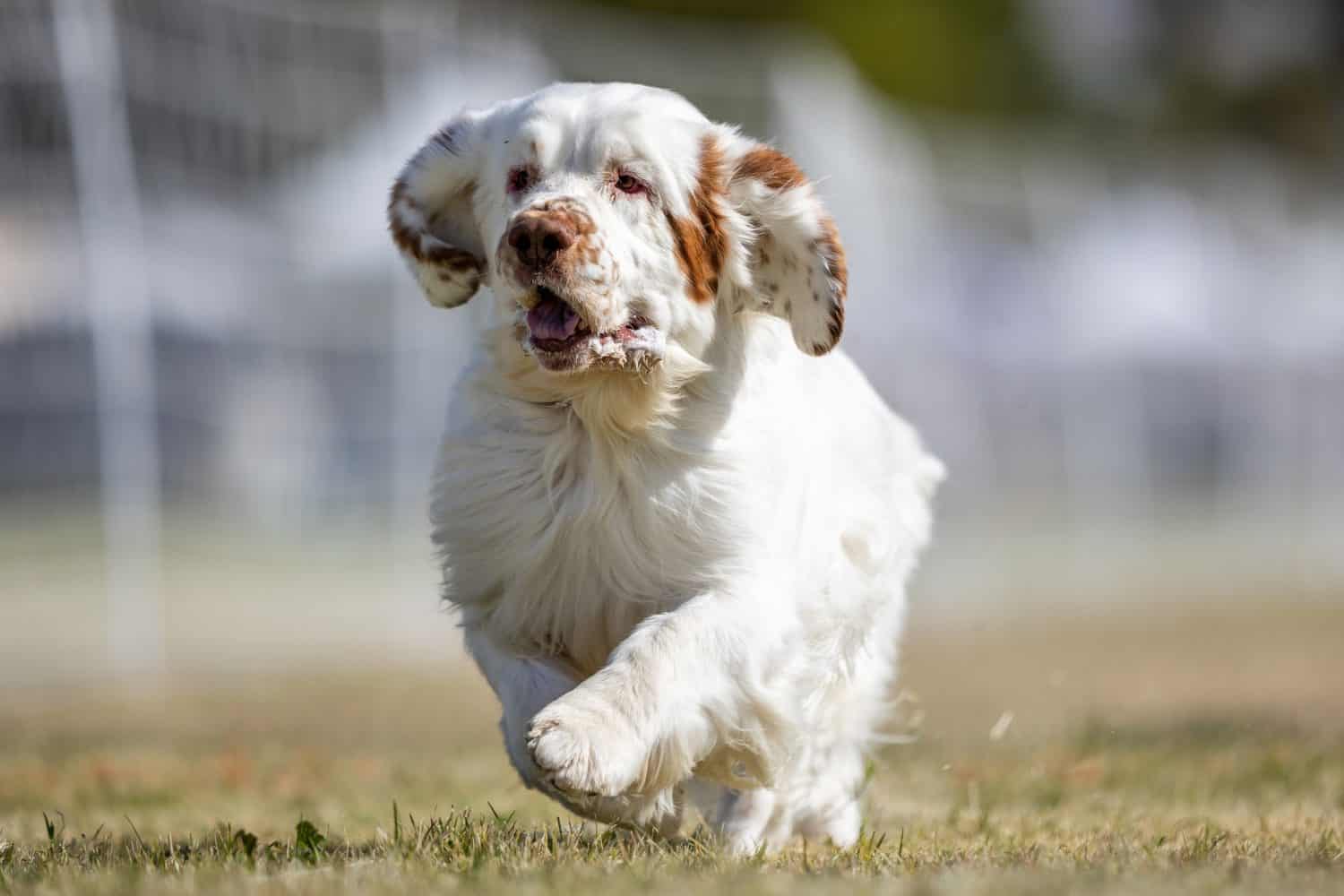
Clumber Spaniel Running Lure Course Sprint Dog Sport

At a Glance

Domesticated
Also Known As Clumber, Épagneul de Clumber
Diet Omnivore
Activity Diurnal+
Lifespan 5 years
Weight 34 lbs
Status Not Evaluated
Did You Know?

Named for Clumber Park in Nottinghamshire, the Duke of Newcastle's estate where the breed was developed.

Scientific Classification

The Clumber Spaniel is a large, heavy-boned spaniel breed developed in Britain for slow, methodical hunting and flushing game, noted for a calm temperament and a distinctive low, substantial build.

Kingdom
Animalia
Phylum
Chordata
Class
Mammalia
Order
Carnivora
Family
Canidae
Genus
Canis
Species
lupus

Distinguishing Features

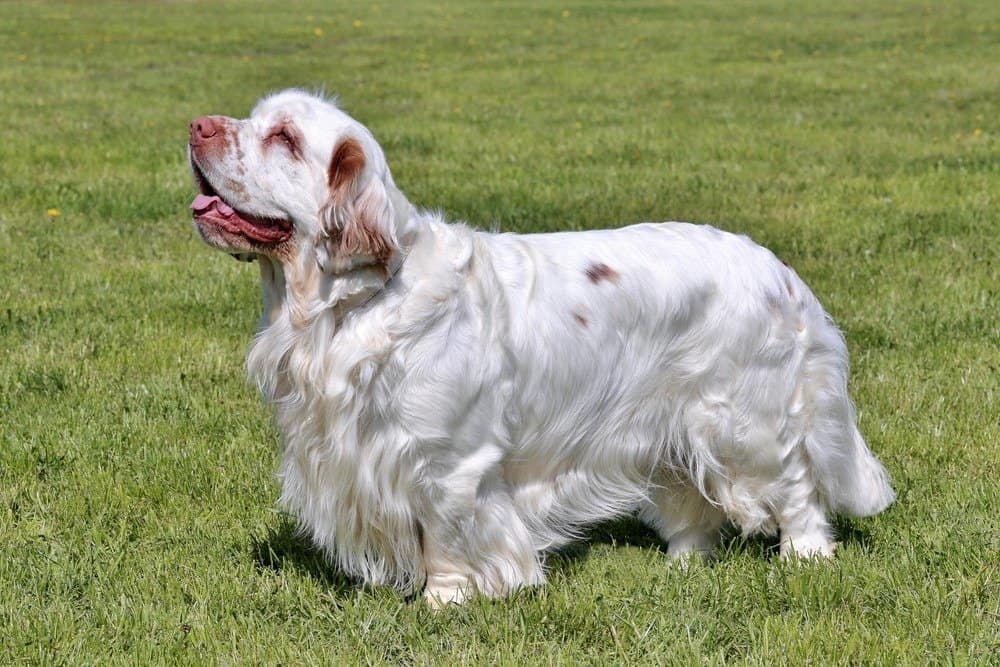
  • Large, low-to-the-ground, heavy-boned spaniel with substantial body and broad head
  • Predominantly white coat often with lemon or orange markings; feathering on legs and underside
  • Droopy ears, deep-set expressive eyes; typically a dignified, steady demeanor
  • Slower, methodical working style compared with more agile spaniels

Physical Measurements

Males and females differ in size

Height
1 ft 7 in (1 ft 7 in – 1 ft 8 in)
1 ft 6 in (1 ft 5 in – 1 ft 7 in)
Length
2 ft 10 in (2 ft 7 in – 3 ft 1 in)
Weight
69 lbs (64 lbs – 75 lbs)
63 lbs (55 lbs – 71 lbs)
Tail Length
9 in (8 in – 10 in)
9 in (8 in – 10 in)
Top Speed
19 mph
Slow, steady hunter

Appearance

Primary Colors
Secondary Colors
Skin Type Mammalian domestic dog skin with a dense, straight, weather-resistant double coat and pronounced feathering on legs/chest/tail; moderately loose skin around the head/neck with drop ears (predisposes to ear moisture/irritation).
Distinctive Features
  • Clumber Spaniel (Canis lupus familiaris) differs a lot from the gray wolf (Canis lupus): compact, low, thick-boned body, shorter legs for its body, and a mostly white, patched spaniel coat bred by people.
  • Large, substantial, low-stationed spaniel with heavy bone, broad/deep chest, long body, and a deliberate, rolling gait suited to slow, methodical flushing rather than fast quartering field work (unlike the lighter, higher-energy Springer/Cocker types).
  • Massive, square-ish head with pronounced stop, deep-set eyes, and heavier flews (lips) that can lead to noticeable drooling; calm, steady, affectionate temperament typical of the breed's gun-dog companion role.
  • Coat is dense and straight with abundant feathering; notable seasonal shedding and tendency to pick up debris-requires regular brushing/combing (especially feathering and behind ears) and routine hygiene around eyes/mouth.
  • Care needs: moderate daily exercise (steady walks, scent work, controlled retrieving) with attention to joint health; avoid overfeeding-obesity is a common issue and worsens orthopedic strain.
  • Heat sensitivity due to heavy build and coat-provide shade, water, and avoid strenuous activity in warm weather.
  • Watch for hip dysplasia and other bone or spine problems, ear infections (pendant ears), eye issues like entropion/ectropion, and obesity. Deep chest raises bloat (GDV) risk—manage feeding, avoid hard exercise after meals.

Sexual Dimorphism

Males are typically larger and more massive overall; females are slightly smaller and often appear more refined while keeping the same low, heavy-boned silhouette.

  • Heavier bone and broader head/jaw; more substantial forequarters and neck.
  • Typically taller and heavier within the breed standard range.
  • Slightly lighter frame with a more refined head and neck.
  • Often less pronounced flews and marginally less bulk through the forequarters.

Did You Know?

Named for Clumber Park in Nottinghamshire, the Duke of Newcastle's estate where the breed was developed.

One of the heaviest spaniel breeds-built more like a "sporting tank" than a springy field spaniel.

The mostly white coat wasn't just style: it helped hunters see the dog in dense cover.

Clumber Spaniels are known for a powerful nose and a deliberate pace, working close to the gun.

They were early favorites of British royalty; Prince Albert and King Edward VII kept Clumbers.

The breed is relatively rare today compared with other spaniels, despite its long history.

They're affectionate homebodies: many Clumbers prefer steady companionship over constant high-energy action.

Unique Adaptations

  • Low, heavy-boned frame and strong forequarters: suited to powering through thick undergrowth at a steady pace.
  • Dense, straight coat with feathering: helps protect skin from thorns and cold, damp conditions typical of British fields.
  • Large head and well-developed nasal passages: selected for scenting and close, persistent game-finding.
  • Predominantly white coat with lemon/orange markings: high visibility for handlers during driven or walked-up shooting.
  • Broad feet and substantial body mass: stability and traction on uneven woodland ground.

Interesting Behaviors

  • Methodical quartering: works cover in a measured pattern rather than racing ahead, reflecting its gun-dog role.
  • "Nose-down" tracking: tends to follow scent trails with persistence, sometimes appearing stubborn when on odor.
  • Close-working style: often checks back with the handler and stays within practical shooting distance.
  • Quiet determination: more likely to push through brambles steadily than burst explosively like some other spaniels.
  • Retrieving with heft: carries game confidently; many Clumbers have a naturally soft mouth.
  • Shadowing family members indoors: strong "velcro dog" tendency and a calm, watchful presence.

Cultural Significance

Clumber Spaniel (Canis lupus familiaris) is a British gundog bred for steady, close cover work rather than speed. A classic spaniel, it was favored by noble and royal hunters and early kennel clubs, but is now uncommon.

Myths & Legends

A long-told origin story says French nobility sent spaniels to the Duke of Newcastle for safekeeping during the French Revolution; the dogs were then developed at Clumber Park-giving the breed its name.

Estate lore around Clumber Park describes these spaniels as the "keeper's white dogs," prized because their pale coats could be spotted in bracken and woodland shade during shoots.

Royal association stories persist: Clumbers kept by Prince Albert and later by Edward VII were said to embody the ideal gentleman's gundog-unhurried, dependable, and dignified.

In sporting circles, the breed's deliberate pace inspired the old saying that a Clumber will "hunt every yard," a bit of field-side wisdom passed down like a maxim rather than a formal training rule.

Conservation Status

NE Not Evaluated

Has not yet been evaluated against the criteria.

Population Stable

Life Cycle

Birth 6 pups
Lifespan 5 years

Lifespan

In the Wild
2–8 years
In Captivity
8–12 years

Reproduction

Mating System Polygynandry
Social Structure Managed Domestic
Breeding Pattern Transient
Fertilization Managed Selective
Birth Type Internal_fertilization

Behavior & Ecology

Social Pack Group: 4
Activity Diurnal, Crepuscular, Cathemeral
Diet Omnivore Animal-protein-forward meals (e.g., poultry such as chicken or turkey), often highly motivating as training rewards

Temperament

Calm, steady, low-reactivity; typically less hyperactive than many spaniels
Gentle and patient with familiar people; often good with children when handled respectfully
Reserved with strangers at first; warms up with consistent, non-forceful introductions
Persistent and methodical (bred for slow flushing); can be stubborn if training is repetitive or harsh-responds best to reward-based, short sessions
Moderate play drive; prefers sniffing and exploration over intense sprinting
Food-motivated; high risk of weight gain-portion control and measured treats are important
Care requirement: moderate daily exercise (walks + sniffing work), avoid overexertion/heat stress due to heavy build
Care requirement: regular ear checks/cleaning (drop ears) and coat maintenance to prevent matting and skin irritation, especially in feathering
Health concerns (breed-associated): prone to obesity, orthopedic issues (e.g., hip dysplasia), intervertebral disc/back strain risk due to long/low build; manage with lean body condition, controlled jumping, and appropriate conditioning
Health concerns (breed-associated): eye issues can occur; routine veterinary screening is beneficial
Typical canine social learning: closely watches humans for cues; may show strong "shadowing" behavior in the home

Communication

Low, infrequent barking; may bark as an alert rather than continuously
Whining/whimpering to request access, attention, or when anticipating routines Food/walks
Grumbling/groaning vocalizations common during settling or when physically repositioning Often benign
Occasional howl or "talking" in response to other dogs or household sounds
Scent communication: intensive sniffing, urine marking patterns on walks; strong interest in ground scent trails Spaniel hunting heritage
Body language: leaning, full-body contact, and following indicate affiliation; slow tail wag and relaxed face commonly signal friendliness
Subtle displacement signals (lip-licking, head turns, yawns) when uncertain-important for owners to notice due to generally quiet demeanor
Pawing/nudging to solicit attention; may use a heavy head-lean as a request behavior
Mouth/soft mouthing of objects during carrying or play; typically gentle if appropriately trained
Human-directed gaze and positioning (standing in the way, blocking doorways) to manage proximity and routine access rather than overt vocal demands

Habitat

Biomes:
Temperate Forest Temperate Grassland Wetland Boreal Forest (Taiga) Tundra Desert Hot Desert Cold Mediterranean Tropical Rainforest Tropical Dry Forest Alpine Freshwater Marine +7
Terrain:
Plains Hilly Valley Riverine Coastal
Elevation: Up to 16404 ft 3 in

Ecological Role

Domesticated omnivorous predator-scavenger and human-associated hunting companion (flushing/retrieving gundog)

assists humans in harvesting game by locating, flushing, and retrieving birds local pest control via deterrence or occasional predation on small mammals in rural settings scavenging/consumption of human-provided food waste in feral/loose-dog contexts (where applicable) social/working role in human ecosystems (companionship and trained field work)

Diet Details

Main Prey:
Other Foods:
Berries and fallen fruit Grasses Roots and tubers Cultivated grains Squash family

Human Interaction

Domestication Status

Domesticated

The domestic dog (Canis lupus familiaris) came from the gray wolf (Canis lupus) through domestication starting at least 15,000 years ago. The Clumber Spaniel, bred in Britain on large country estates, is a slow, steady gundog for flushing and retrieving in thick cover, bred for calm behavior, strong human focus, low reactivity, and a heavy build made for steady work.

Danger Level

Low
  • Accidental knocks or bruises due to large, heavy build (especially around children/elderly)
  • Mouthy play or minor bites if poorly socialized or in pain (risk increases with orthopedic issues)
  • Resource guarding or reactivity is uncommon but possible without training
  • Zoonotic risks typical of domestic dogs (parasites, bite wound infection) if preventive care is neglected

As a Pet

Suitable as Pet

Legality: Generally legal as a companion dog where dogs are permitted; may be subject to local licensing, leash laws, and breed-agnostic dangerous-dog ordinances. Not typically targeted by breed-specific legislation.

Care Level: Moderate

Purchase Cost: $1,200 - $3,500
Lifetime Cost: $18,000 - $45,000

Economic Value

Uses:
Companion animal Sporting and working dog (flushing/retrieving) Breeding and showing Service/therapy work (individual-dependent) Veterinary and pet-care services market
Products:
  • sale of puppies from health-tested lines
  • dog shows/competition participation
  • hunting companionship and field training services
  • therapy visitation (non-monetary or stipends via programs)
  • associated goods and services (food, grooming, insurance, veterinary care)

Quick Take

  • Achieving an 85-pound weight is a primary physical requirement for the largest recognized spaniel.
  • The 3-year developmental timeline creates a significant constraint on standard canine growth expectations.
  • Utilizing Basset hound genetics for a sporting dog contradicted traditional 18th-century breeding assumptions.
  • Early scouting for Entropion symptoms is necessary to determine if surgery is required.

Clumber spaniels are affectionate dogs with a sweet temperament. These dogs have strong, stocky bodies that sit low to the ground. They are the largest spaniels, with soft, long coats of mostly white or lemon with orange markings. Although they were bred for hunting, these canines make great companions. In fact, they do well with kids and are loyal members of a family.

A detailed infographic about the Clumber Spaniel featuring sections on its origins, weight, pros and cons, temperament, health issues, and care.
Heavier than almost any other spaniel, this 'gentle giant' of hunting dogs takes three full years to reach its massive 85-pound potential. © A-Z Animals

Evolution

The origin of this dog goes back to England in the 1700s. The Duke of Newcastle wanted a smart, reliable dog he could take along on hunting trips in the woods. So, he crossed a Basset hound with an Alpine spaniel. The result was a Clumber spaniel, named after the Duke’s estate, Clumber Park. The dogs gained popularity among aristocrats for their superb hunting skills and gentle disposition. These spaniels belong to the sporting group and are sometimes called bird dogs or gun dogs.

Portrait of three nice clumber spaniel

Clumber spaniels drool and shed, but make up for it with sweet personalities.

3 Pros and Cons of Owning a Clumber Spaniel

ProsCons
Good with other dogs
Clumber spaniels are happy to be in the company of other dogs in a household. Of course, introducing them slowly is always a good idea.
Drooling
This dog drools quite a bit, which can be a nuisance to some owners.
A loyal companion
This dog loves to spend time with its owner, whether they are out walking or inside watching TV.
Chasing birds
The Clumber spaniel was bred as a hunting dog to scare birds out of bushes. Some owners may not be pleased with this type of behavior.
Easy to train
The intelligence of this dog makes it easy to train. It can be distracted by various scents in the air, so keeping the training sessions short is a smart idea.
Chewing activity
Like most spaniels, the Clumber spaniel tends to chew, especially if left alone at home for extended periods of time.
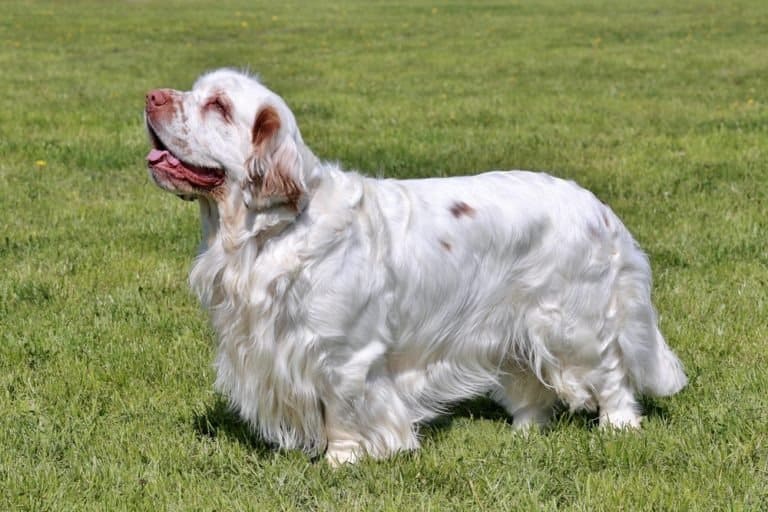
Clumber spaniel standing on grass

Clumbers are the largest spaniels, with males weighing up to 85 pounds.

Size and Weight

These spaniels are large dogs with medium-length, dense coats. A male grows to be 19 inches tall at the withers, whereas a female reaches 18 inches tall. In terms of weight, a male weighs up to 85 pounds while a female weighs up to 70 pounds. Starting out, eight-week-old puppies weigh around 8 pounds. Finally, these dogs are fully grown at 3 years old.

Common Health Issues

Most dog breeds have their own set of health issues, and the Clumber spaniel is no exception. One of the health issues common to this dog is hypothyroidism. This is when the thyroid gland doesn’t make an adequate amount of hormones. A dull, thin coat can be a sign of this condition. Another common health issue is otitis externa. This condition causes inflammation in the middle ear that doesn’t go away on its own. Pain and itching are symptoms of this issue.

Entropion is another common condition of these spaniels. This is when the eyelid of a dog folds inward. Someone looking at a group of spaniel puppies can sometimes see this condition beginning to develop. Sometimes surgery is necessary to address this issue.
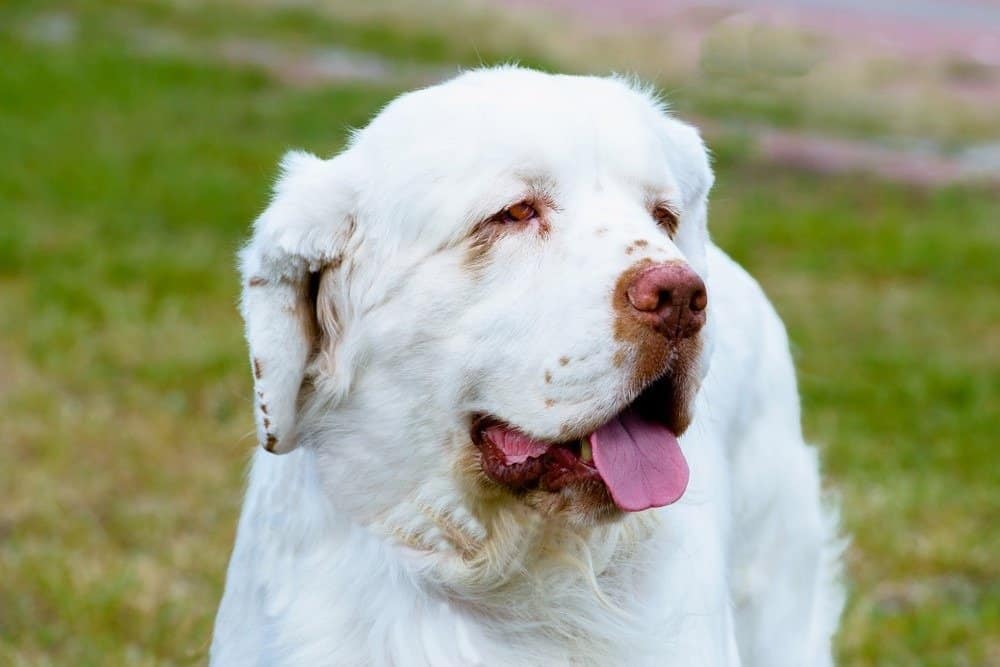
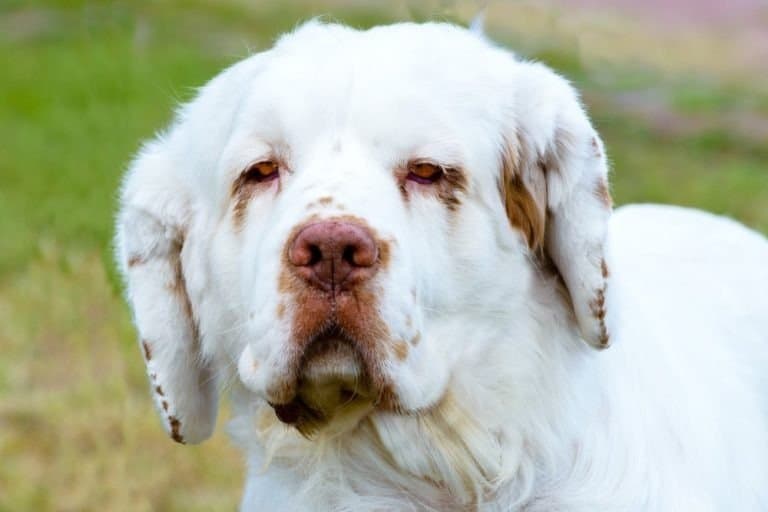
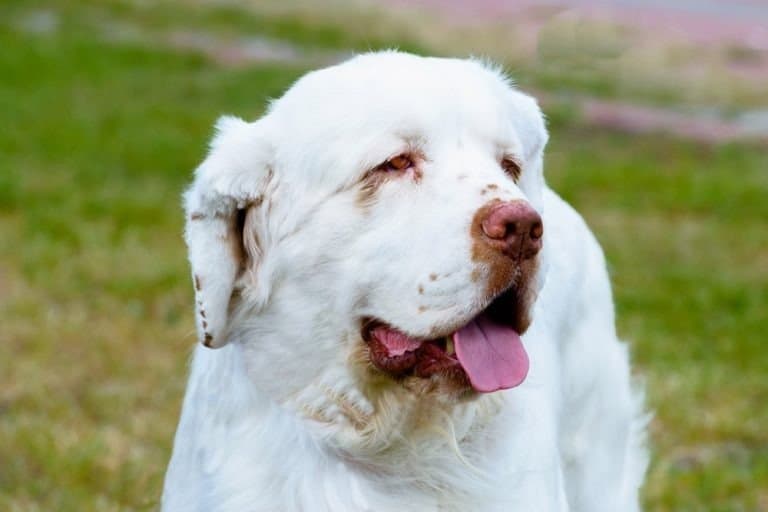
Clumber Spaniel portrait. The Clumber Spaniel stands on the grass in the park.

Clumber spaniels have a gentle, calm manner and are good with children.

Temperament & Behavior

These spaniels have a sweet personality that makes them a pleasure to have around the house. Their gentle, calm behavior makes them ideal for families with small children.

Intelligence is one of this dog’s most notable traits and makes them easy to train. However, it can be distracted by scents of nearby wildlife. After all, these dogs are built close to the ground. So, it’s recommended to train these dogs for short periods of time using lots of verbal praise.

This bird dog needs a moderate amount of exercise each day. Taking it for a walk in the woods or a field would be a delight for a canine with a nose that can detect every scent in the area.

How to Take Care of Clumber Spaniels

One of the best ways to prepare for a new puppy or adult dog is to learn as much about the breed as possible. Factoring in its health issues, diet, exercise, and grooming needs can help an owner provide first-rate care for this pet.

The Best Dog Food

Clumber spaniel puppies and adult dogs have different types of diets. Their nutritional needs change over time, and feeding them the proper nutrients can help to head off certain health issues.

Puppy food:

A proper diet for Clumber spaniel puppies must include protein. Protein contains amino acids that contribute to the healthy growth of muscles and tissue. Also, protein provides the nutrients needed to grow a healthy coat. Fat in a puppy’s diet provides them with the energy they need to run around and explore their environment.

Furthermore, fat in a puppy’s diet supports brain and vision development. Vitamin E delivers antioxidants to support a puppy’s developing immune system. A strong immune system can prevent some of the common health issues faced by Clumber spaniels. Omega-3 fatty acids can decrease inflammation in a puppy’s ears and may help in the fight against Otitis externa.

Adult dog food:

Adult Clumber spaniels need fat in their diet to maintain their energy level. Of course, adults are less active than puppies, so they need a smaller amount of fat in their food. Protein in a Clumber spaniel’s diet continues to strengthen muscle and tissue. Vitamin A supports eye health in these dogs. Zinc and phosphorus support an adult dog’s immune system, which can help in the battle against ear infections.

Both puppies and adult dogs should drink at least one bowl of water per day. Water helps with digestion and eliminates toxins from the body.
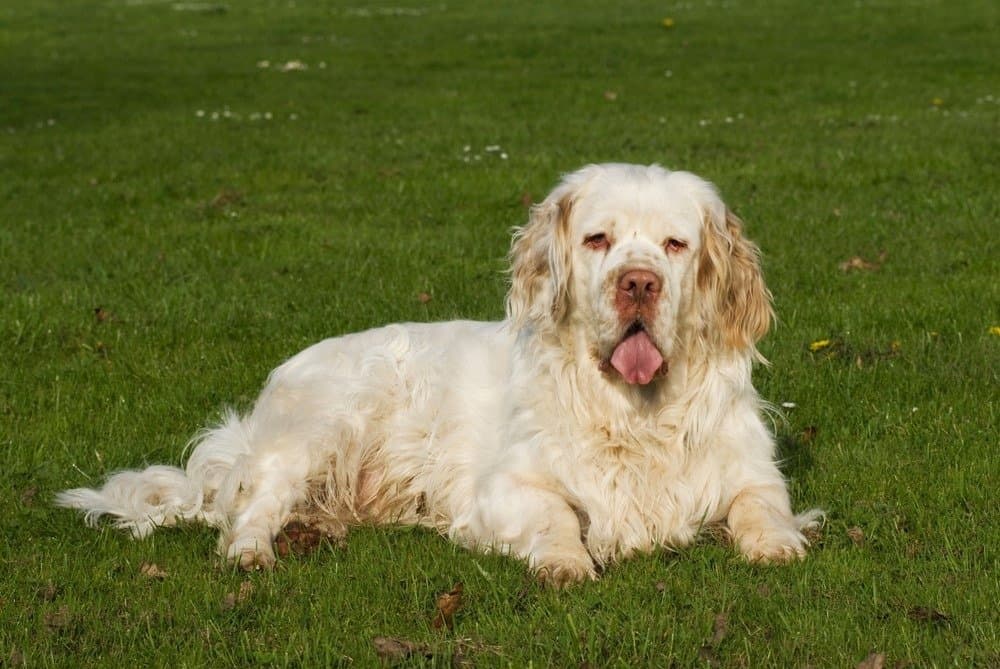
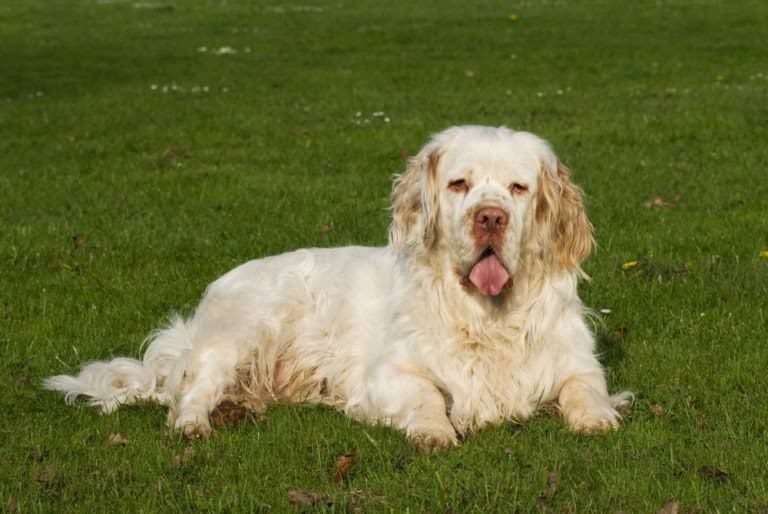
Clumber spaniel in a meadow

Because they shed, Clumber spaniels require brushing at least twice a week.

Maintenance and Grooming

How much does a Clumber spaniel shed? These dogs shed a large amount of hair. However, brushing it twice per week can remove loose and dead hair from its coat. Brushing a Clumber spaniel outdoors is ideal.

It’s best to brush a dog starting at its head, then move in the natural direction of its coat toward its tail. A large slicker brush is an effective grooming tool for getting rid of loose and dead hair from its dense coat. A soft-bristle brush can be used on this dog’s face.

Another part of the grooming routine should be cleaning the dog’s ears. Remove the debris in the dog’s ears with a gentle cleaning solution specially made for a dog’s ears. A soft cloth should be used on this sensitive skin. Cleaning a Clumber spaniel’s ears can help to prevent ear infections. An owner who’s unsure about how to clean the ears of this bird dog should look to a veterinarian for guidance.

Hypothyroidism is a Clumber spaniel trait that can cause dry, flaky skin. Owners should be aware of that as they go about their grooming routine.

Training

The Clumber spaniel is easy to train due to its intelligence. Owners must keep in mind that these dogs can be distracted fairly easily by any scents traveling through the air. Short obedience training sessions are the best way to go.

Exercise

This dog needs a moderate amount of exercise to stay healthy. An exercise period of 30 to 40 minutes daily is recommended. The combination of a Clumber spaniel’s stocky body and short legs makes it prone to taking on excess weight. Giving this dog exercise every day can help prevent unnecessary weight gain.

Walking in the woods, visiting a dog park, playing fetch, or throwing a ball around in the backyard are all fun activities for this dog. Keep in mind that it has short legs, so it won’t be able to take huge strides like a larger canine.

A Clumber spaniel is one of the many breeds of dogs that can live in an apartment. Of course, an owner should make sure the dog gets at least 30 minutes of exercise outdoors each day to keep it in good condition.

Puppies
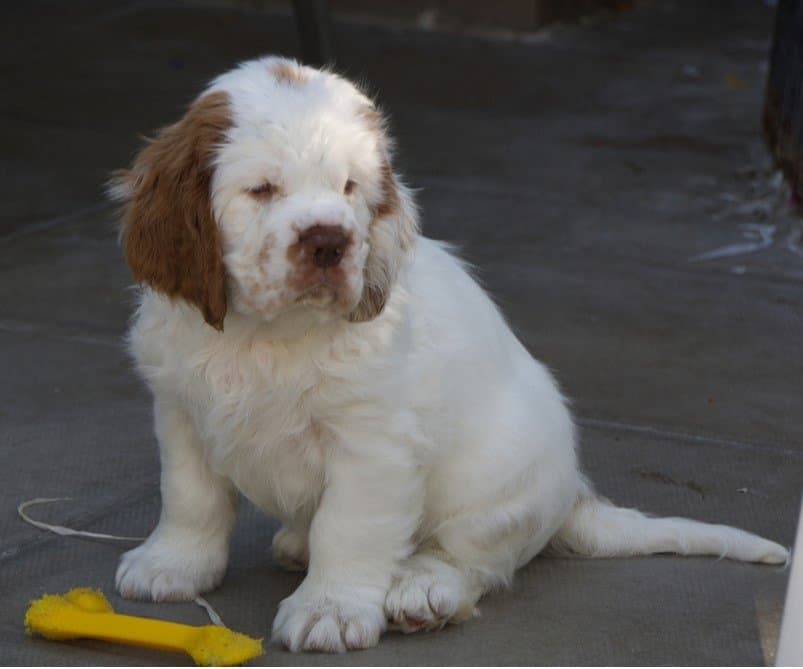
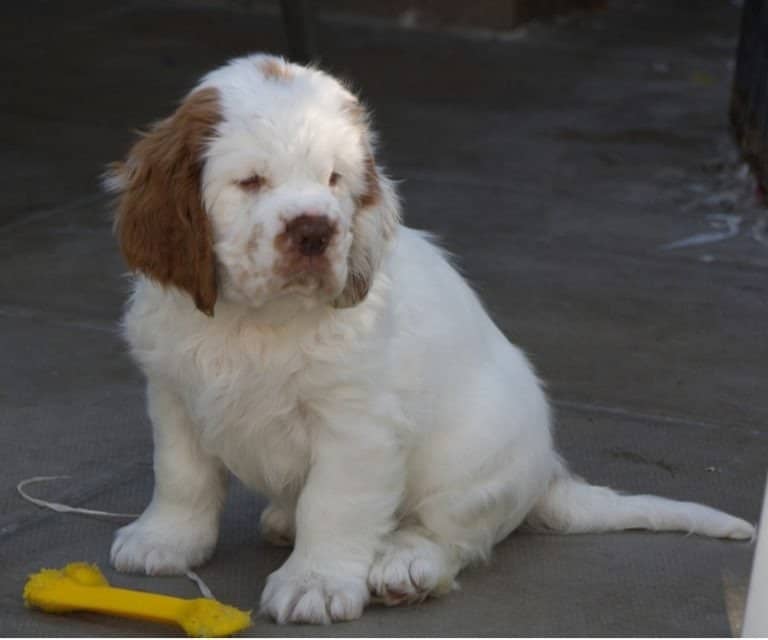
The cuteness of a Clumber Spaniel Puppy

Clumber puppies need their eyes to be monitored for entropion.

One thing to keep in mind when raising Clumber spaniel puppies is to monitor their eye health. Entropion can start to form even during puppyhood. The sooner a veterinarian checks the puppy’s eyes, the quicker an owner can find out what can be done.

Children and Clumber Spaniels

These spaniels are known to be good with kids of all ages. They are even-tempered with an affectionate nature. Of course, small children should always be taught how to treat any puppy or dog with respect and kindness.

Dogs Similar to Clumber Spaniels

Breeds similar to the Clumber spaniel include the American Cocker spaniel, the English Cocker spaniel, and the American Water spaniel.

  • American Cocker spaniel: The American Cocker spaniel is another gun dog like the Clumber spaniel. It shares the Clumber’s sweet, energetic temperament. However, an American Cocker spaniel is a much smaller dog.
  • English Cocker spaniel: An English Cocker spaniel shares a lot of qualities with the Clumber spaniel, including its reputation as a gun dog and ease of training. But English Cocker spaniels don’t grow as large as Clumbers.
  • American Water Spaniel: These dogs are intelligent and suitable for families with kids. But they can be more difficult to train due to a stubborn streak that a Clumber spaniel doesn’t seem to share.

View all 392 animals that start with C

Sources

  1. American Kennel Club / Accessed December 13, 2020
  2. Hill's Pet / Accessed December 13, 2020
  3. Your Pure Bred Puppy / Accessed December 13, 2020
A-Z Animals Staff

About the Author

A-Z Animals Staff

AZ Animals is a growing team of animals experts, researchers, farmers, conservationists, writers, editors, and -- of course -- pet owners who have come together to help you better understand the animal kingdom and how we interact.
Connect:

Thank you for reading! Have some feedback for us?


Clumber Spaniel FAQs (Frequently Asked Questions)

The initial cost for a Clumber spaniel ranges from $800 to $1200. A well-known kennel with Clumber spaniels such as the Blue Moon would have more specifics regarding the prices for these dogs. A kennel like the Blue Moon is going to be able to report on the family history of a puppy as well.

Veterinary care for this dog ranges from $500 to $1000 a year. The specific fees depend on the vaccinations and type of care this dog needs.

Food costs for this gun dog fall between $50 and $80 per month depending on the type of food an owner purchases.