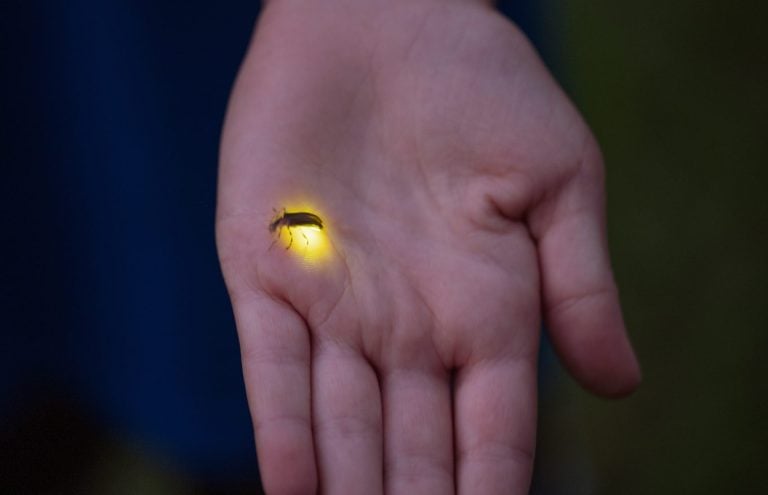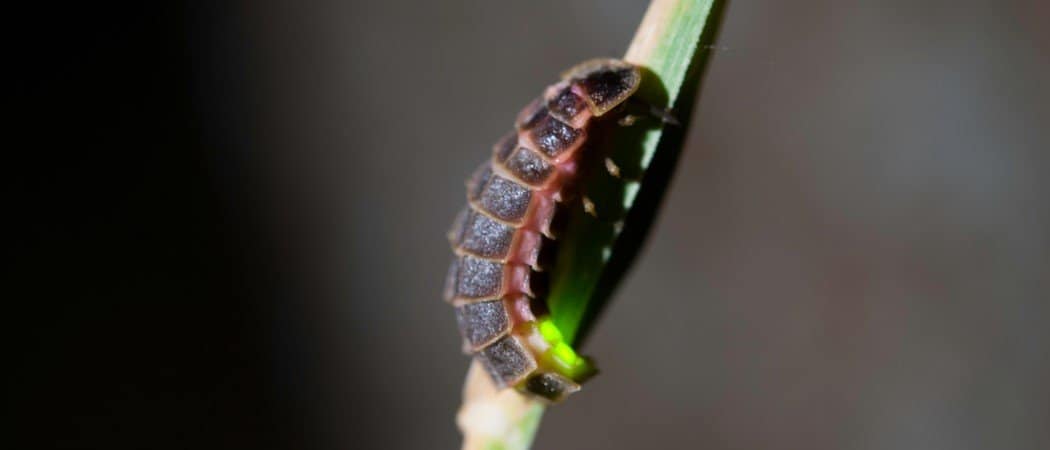
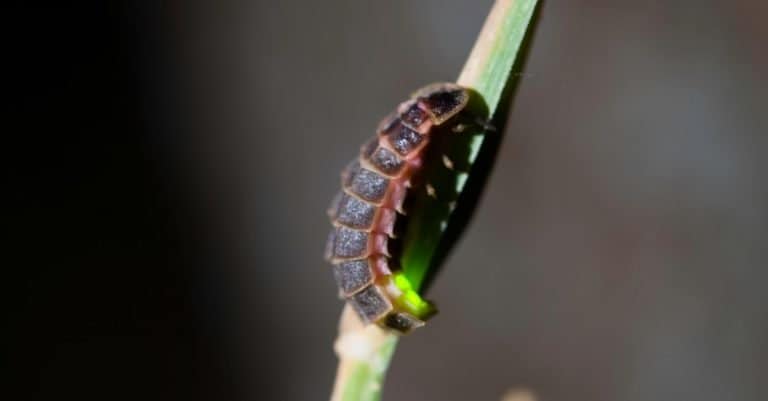
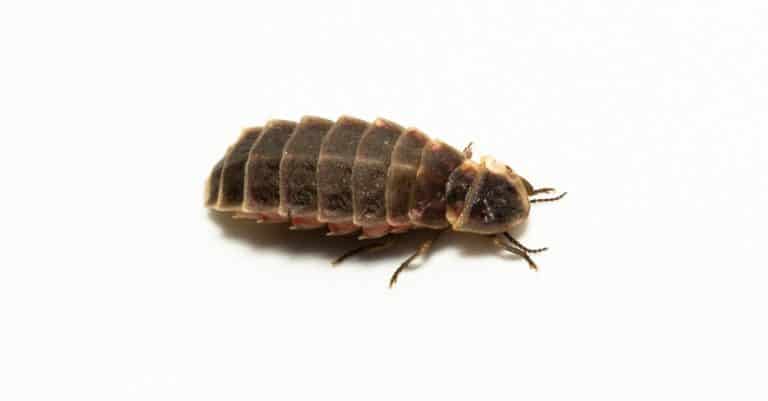


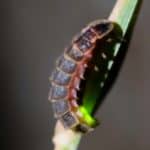
Glowworms are a group of light-producing insects that emit a brilliant glow.
Many people appreciate their strange ethereal beauty, but there are a lot of misconceptions and confusion about what this insect actually is. For a start, the name itself is a huge misnomer. It is not really a worm at all. Instead, “glowworm” is kind of a catch-all term that describes a larva (which resembles a worm) with a glowing body. Adding to the confusion, several species of insects, including both larval and adult stages, are called glowworms as well.
The ability to produce light through entirely organic means is called bioluminescence. The glow usually aims to attract a mate, capture prey, or warn away predators. If you’ve spotted a glowing insect, then it’s almost certainly a species of beetle (though some gnats can produce light as well). This article will discuss many different types of glowworms, including both the larval and adult forms of some species.
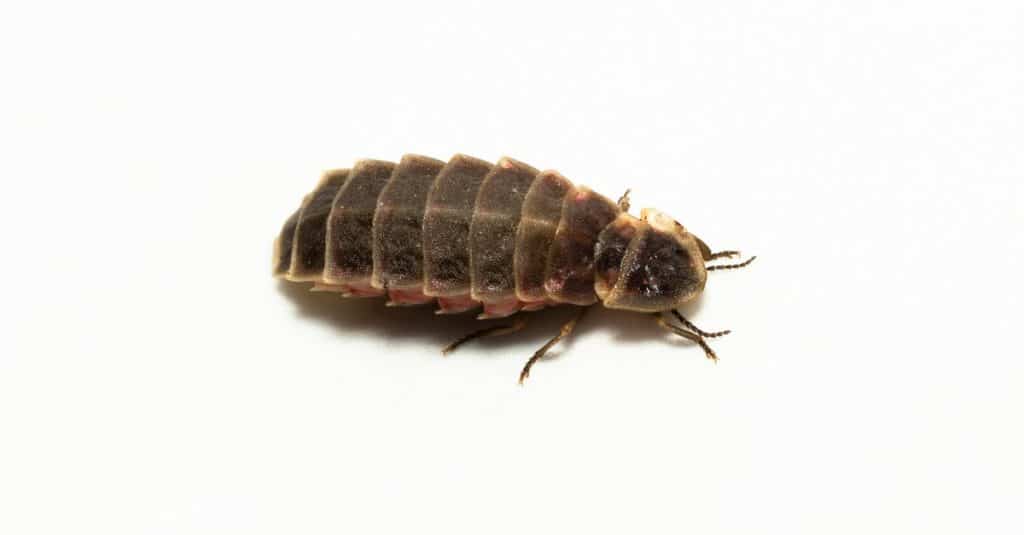
Several species of insects, including both larval and adult stages, are called glowworms.
©Piotr Velixar/Shutterstock.com
3 Incredible Glowworm Facts!
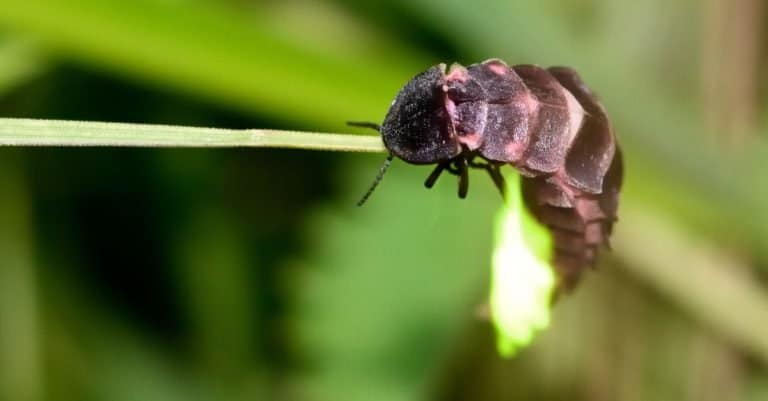
- In some species, only the female is capable of producing a bioluminescent light. This usually indicates it is used for reproductive purposes only.
- One species of fungus gnats that live in the wet caves of New Zealand have the remarkable ability to produce glowing tubes of mucus in their larval form. These mucous tubes, measuring about 16 inches long, hang from the ceiling of the caves and contain tiny silk threads produced from the larva’s mouth. When other insects are attracted to the glowing light of the tube, they become accidentally trapped in the silk threads and make a tasty meal for the larvae. Adult fungus gnats, which survive for only a few days, also produce light, but it’s not clear what purpose this serves. It might simply be a leftover feature of the larval stage.
- The organs responsible for producing light vary so much in size, location, and structure that they likely had separate evolutionary origins.
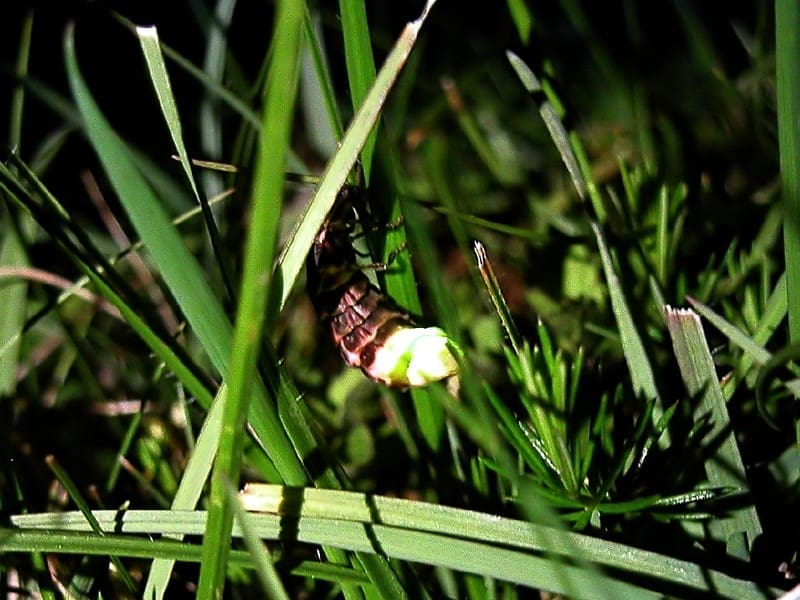
In some species, only the female is capable of producing a bioluminescent light.
©derivative work: Dysmorodrepanis Glow_worm_660030626.jpg: Timo Newton-Syms, CC BY-SA 2.0, via Wikimedia Commons – Original / License
Scientific Name and Evolution
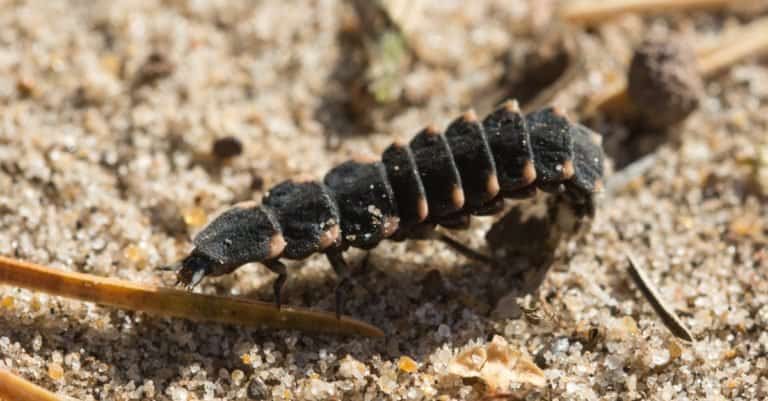
As mentioned previously, “glowworm” is a somewhat confusing catch-all term. While several species of insects and/or larvae are called glowworms, it’s not really a scientific term and doesn’t neatly correspond to any taxonomical classification. “Glowworm” can refer to many different species, some of them only loosely or not at all related to each other. The only commonality between them is their bioluminescent ability.
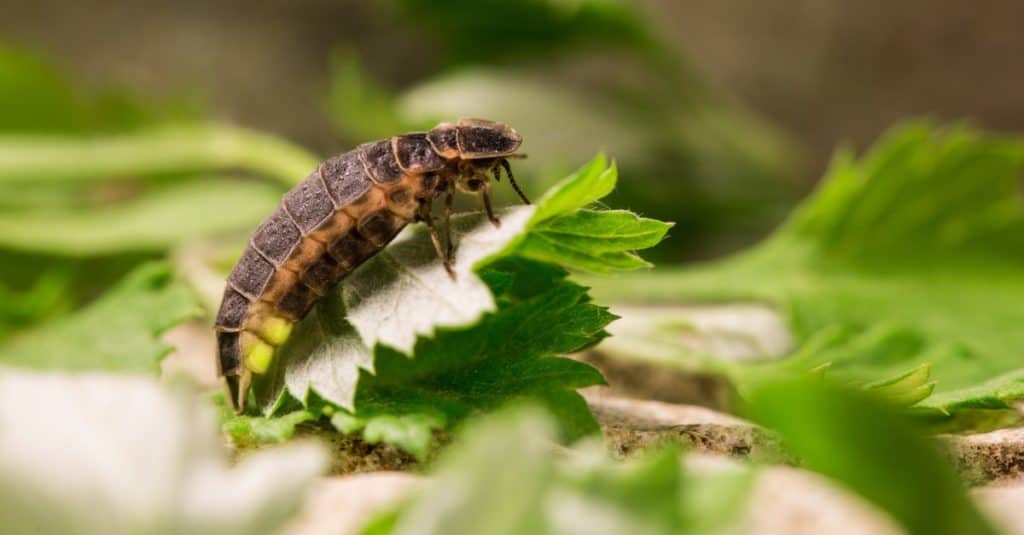
While several species of insects and/or larvae are called glowworms, it’s not really a scientific term and doesn’t neatly correspond to any taxonomical classification.
©Karelian/Shutterstock.com
Types and Evolution
Bioluminescence in animals, including marine animals, evolved in different ways and for different purposes. Some of the illumination functions for attracting mates and some to help capture prey.
Glowworms generally fall into two broad categories: they are either beetles or they’re fungus gnats. The glowing insects most people are familiar with, including the fireflies, true glowworms, and lightning bugs, are part of the beetle family called Lampyridae (though in fireflies, it’s mostly the larvae that are called glowworms). Another closely related family called Phengodidae also contains many species called glowworm beetles. The fungus gnats, by contrast, are completely different from the beetles. They’re more closely related to flies within the order of Diptera. From an evolutionary perspective, their bioluminescent adaption evolved separately from the beetles.
Glowworm Beetles
- Click Beetles – The Family Elateridae beetles are able to produce a click from a spine on their body which actually launches them into the air. There are about 10,000 different species of these beetles.
- Glowworm Beetles – The Family Phengodidae beetles are usually known as glowworm beetles. Males are much smaller than their counterparts, are believed to not feed, and are shorter-lived. The females, however, prey upon other insects found in soil.
- True Fireflies – The Family Lampyridae beetles include a couple of thousand different species including fireflies, lightning bugs, and other glowworms that illuminate usually near twilight.
- Glowworms in the Family Rhagophthalmidae – The Family Rhagophthalmidae beetles are still being debated as far as their classification is concerned. It was previously assumed to be under the Family Phengodidae.
Glowworm Fungus Gnats
These glowworms have a totally different approach to using illumination in order to capture food. They are able to produce and lower sticky webs from their bodies from cave roofs. The fungus gnats’ illumination capability is believed to have evolved separately in each of the three groups.
- Keroplatus – This genus is found in Eurasia. They feed solely on fungus spores.
- Arachnocampa – This genus comprises five subspecies and is located in Australia and New Zealand.
- Orfelia – This genus also feeds on fungus spores and has only one subspecies, which is found in North America.
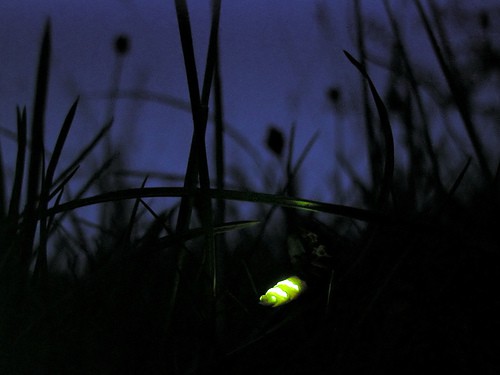
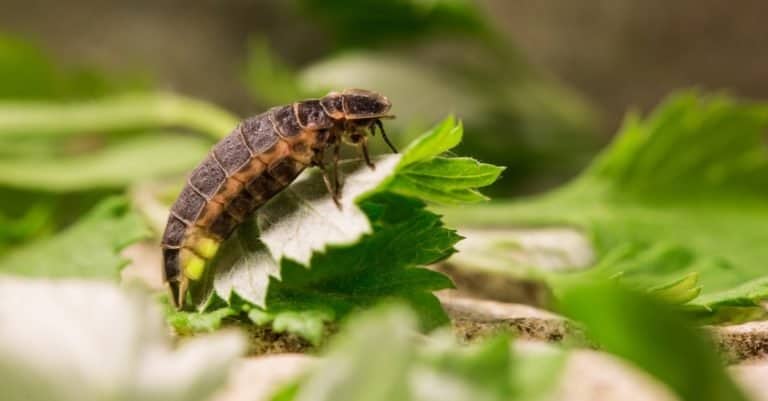
For the different types of glowworms, the only commonality between them is their bioluminescent ability.
©Timo Newton-Syms / Creative Commons – Original
Appearance: How to Identify
These insects vary quite dramatically in size and appearance. Each type seems to have its own unusual quirks and strange facts. The bioluminescent glow is the common feature among them. This light can be emitted as a series of flashes or as a constant glow, and it ranges in color between green, yellow, orange, and blue. Bioluminescence is produced by a chemical reaction involving a light-emitting pigment. The nature of this chemical reaction varies from one group to another.
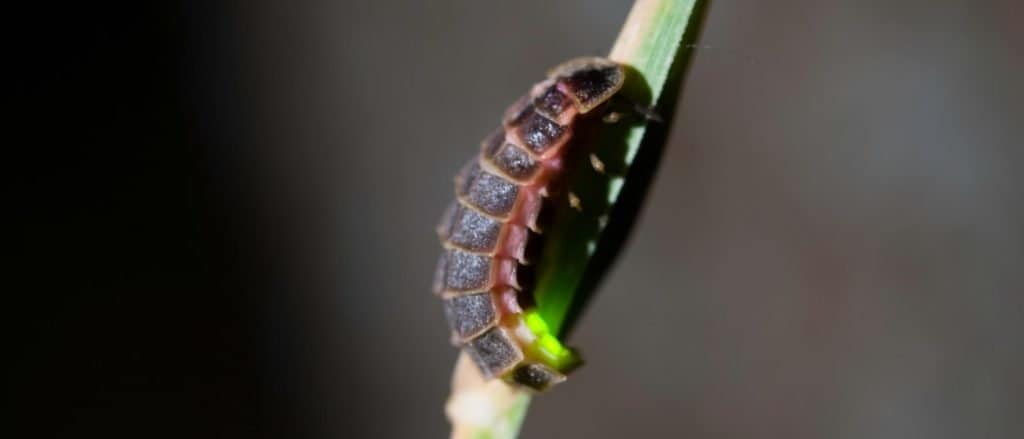
As mentioned previously, glowworm usually refers to the larval stage of a glowing insect. But there are entire species that have acquired the name of glowworm as well. The common European glowworm (a species of long, narrow beetles within the firefly family of Lampyrida) is one of the more well-known examples.
Unlike the closely related fireflies, only the female of this species is actually capable of producing light, at least after reaching their adult form. She is a type of larviform, meaning she has retained many larval characteristics into adulthood and therefore lacks wings. When the mating season arrives around June and July, she will climb up on a plant and produce a bright glow continuously to attract one of the winged males. His large, photosensitive eyes can see the light from up to 50 yards away. The brightness is itself a sign of the number of eggs she’s carrying. Therefore, the male glowworms, who only measure about half her size, will try to mate with the brightest females.
Habitat: Where to Find Them
These insects are found in many different environments all over the world. Depending on the species, their habitat includes forests, grasslands, meadows, and even gardens. By contrast, the larval glowworms of the fungus gnats are mostly found in caves or rock cavities.
Diet: What Do They Eat?
Most of these insects are actually carnivorous. Even the species that primarily use their bioluminescence for reproductive purposes tend to eat meat.
What eats them?
These insects provide a stable source of food for many different birds, mammals, reptiles, amphibians, spiders, and other insects. There are almost too many predators to even name.
What do they eat?
Many of these insects tend to be predatory in nature, and their means of feeding can be quite gruesome. Fungus gnats, as mentioned previously, use their bioluminescence to trap their prey in silky threads. Some also live up to their names by consuming fungi.
The larva of the common European glowworm, by contrast, has the ability to inject a toxic digestive fluid into its prey (usually slugs and snails). This fluid will gradually paralyze and liquefy its victim, so the larva can easily lap up the remains without a struggle. Because the prey is often multiple times larger than the actual larva, it provides quite a meal.
The larval beetle needs to be a voracious eater because once it reaches adulthood, it lives on the fat reserves and barely eats anything at all. Once it reproduces, it has effectively reached the end of its life cycle.
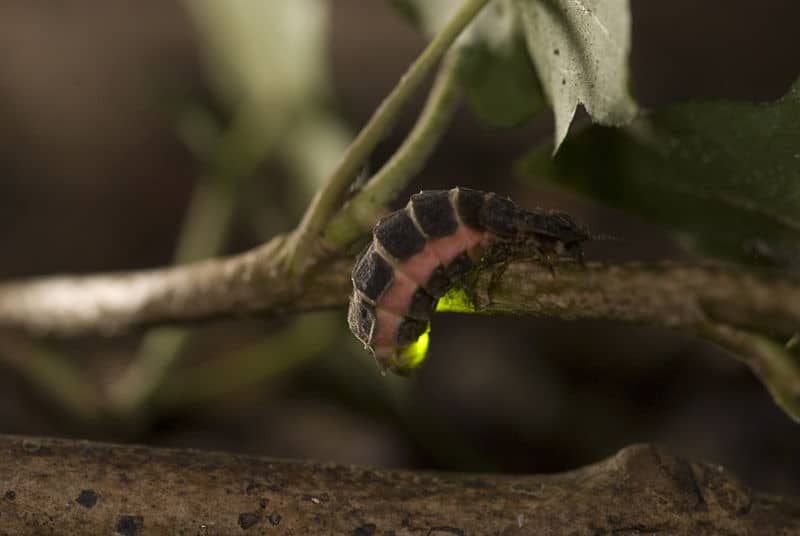
Most of these insects are actually carnivorous. Even the species that primarily use their bioluminescence for reproductive purposes tend to eat meat.
©Jasja Dekker / Creative Commons – Original
Glowworm Pictures
View all of our Glowworm pictures in the gallery.

Igor Krasilov/Shutterstock.com
Sources
- Britannica / Accessed June 8, 2021
- Wild Life Trusts / Accessed June 8, 2021
- New Scientist / Accessed June 8, 2021