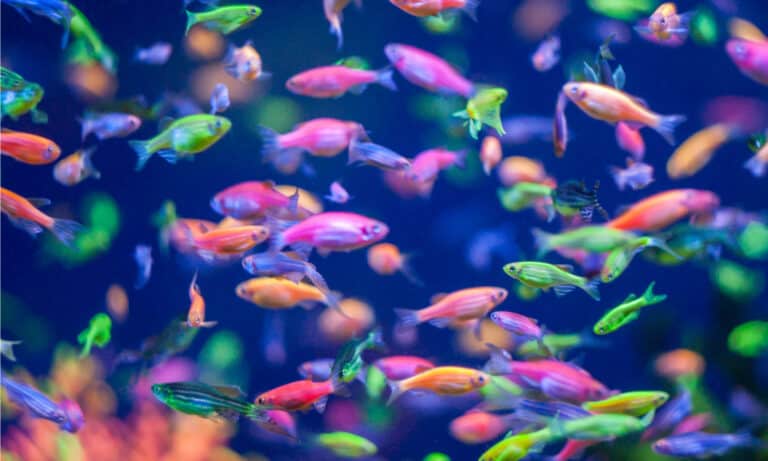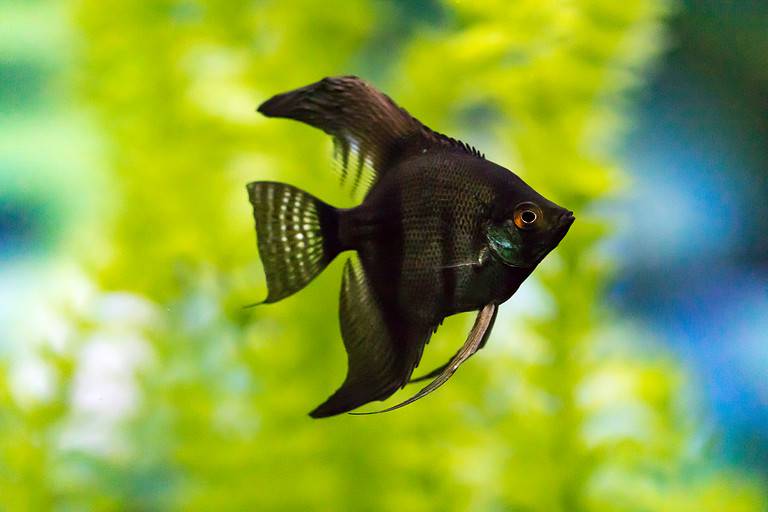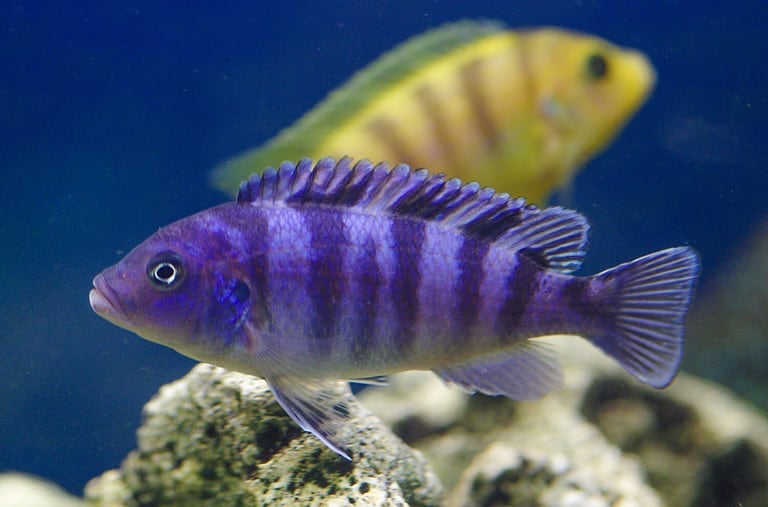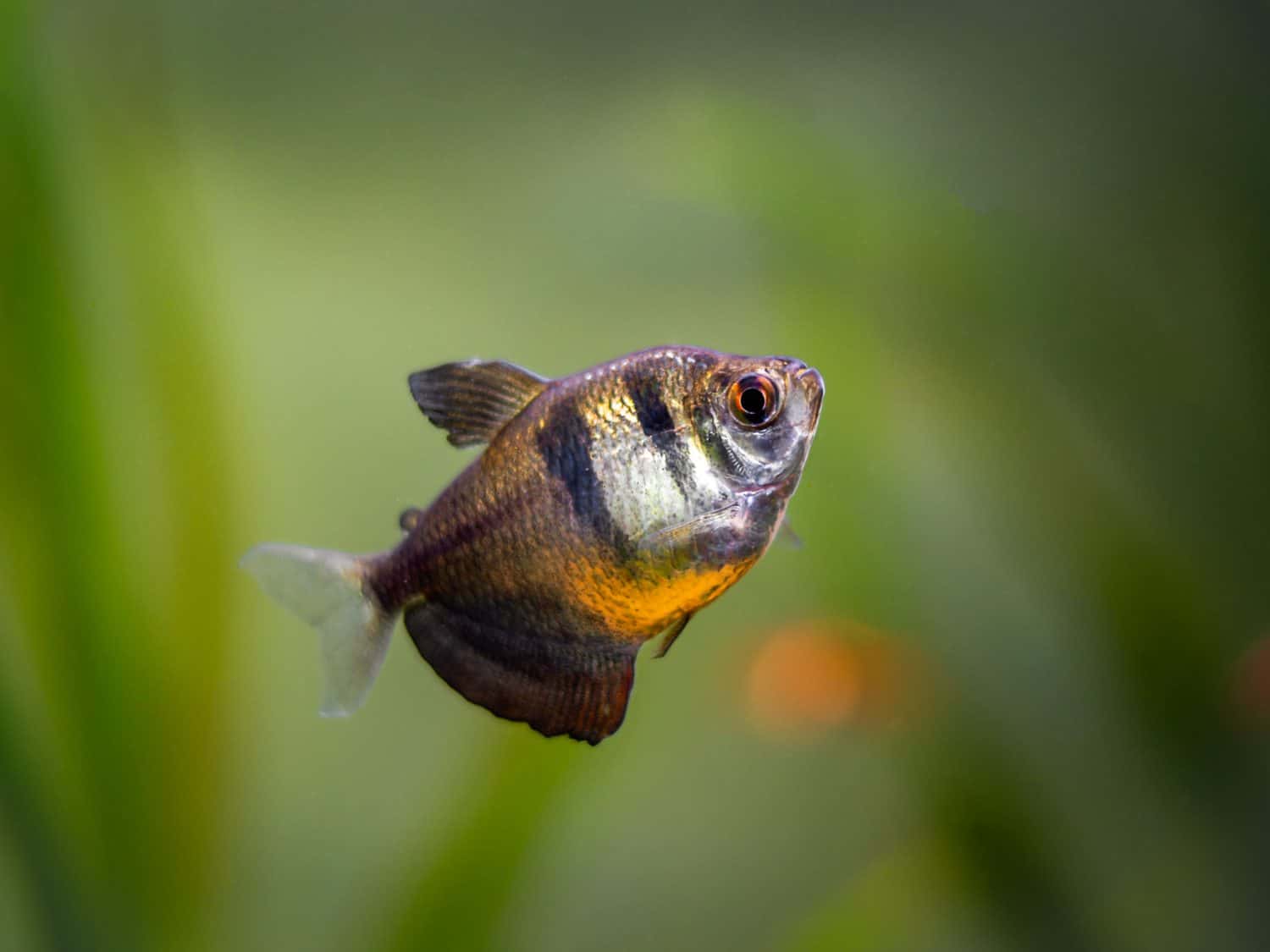
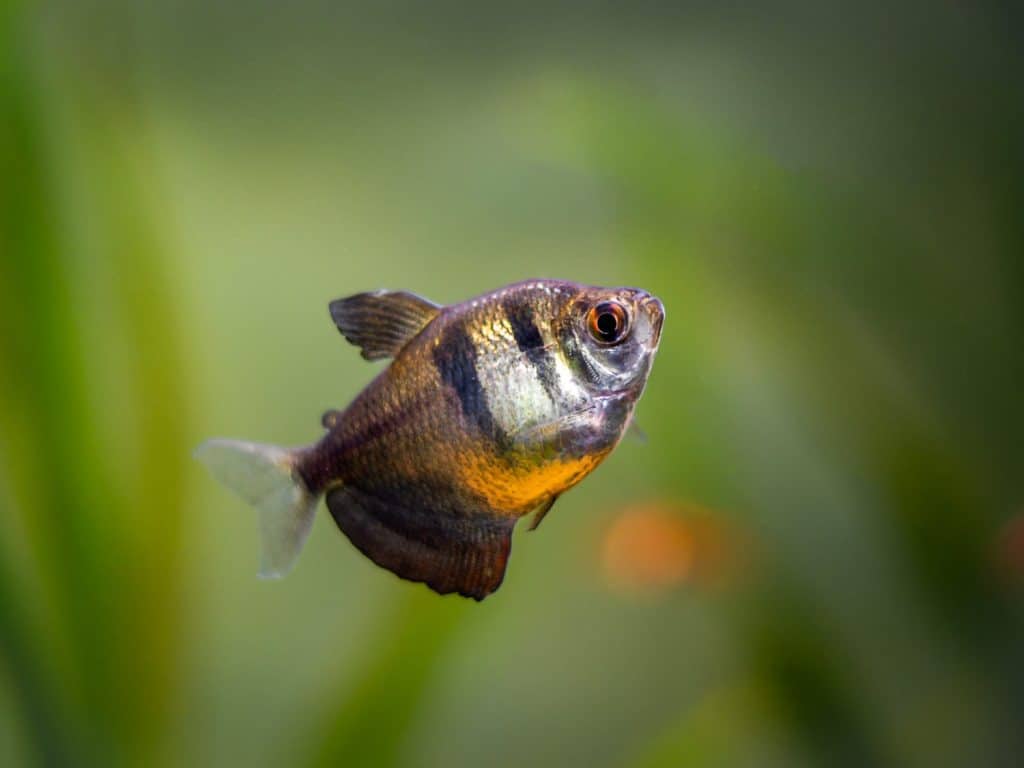
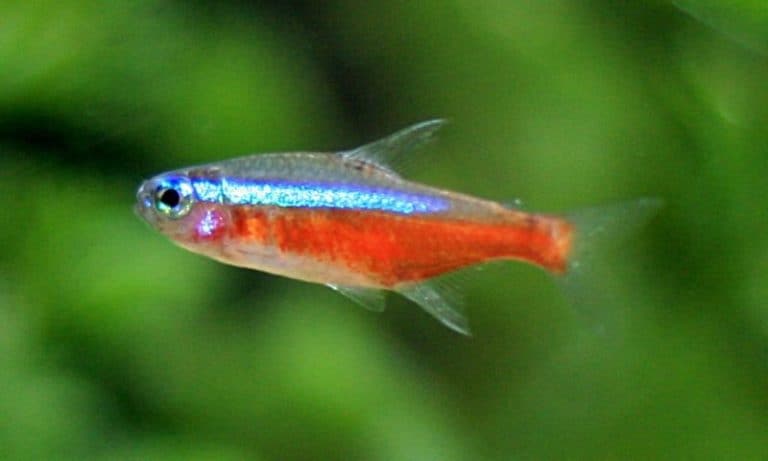
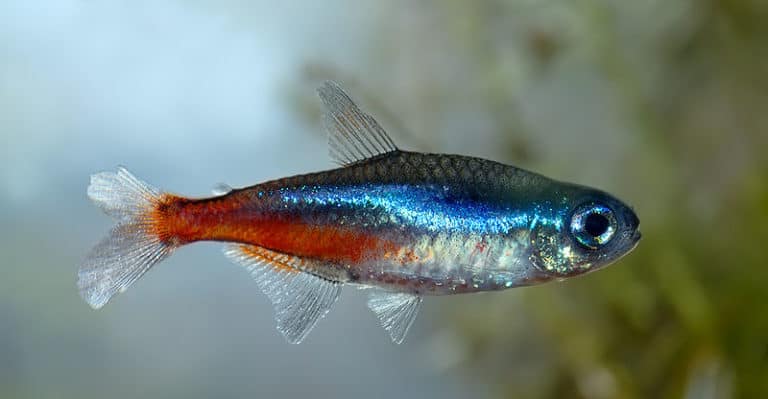
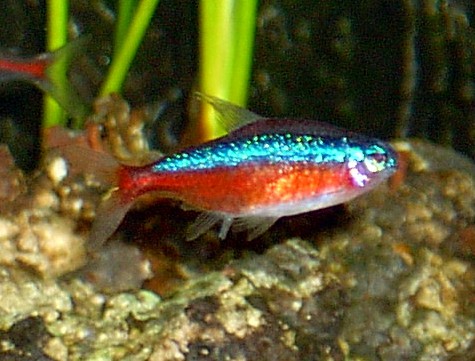



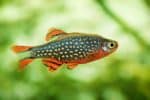
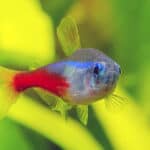
Tetra is a general name for tropical freshwater fish primarily in the Characidae family, but also includes species from related families such as Alestidae and Lebiasinidae within the Characiformes order. They are popular because they are peaceful species that can live with many other types of aquarium features. Aquarium enthusiasts also love them because they are easy to maintain, particularly the ember tetra. They come in many bright colors, like yellow, cardinal, and bright greens and blues.
Five Tetra Facts
- Tetras are among the world’s most popular aquarium fish.
- Rummy-nose tetras love to shoal.
- Tetras tend to act livelier when they are in bigger groups.
- The ember tetra, discovered in 1987, was named after explorer Heiko Bleher’s mother.
- Glow tetras, also called GloFish tetras, are genetically modified and typically grow to about 2 to 2.5 inches long.
Classification and Scientific Name
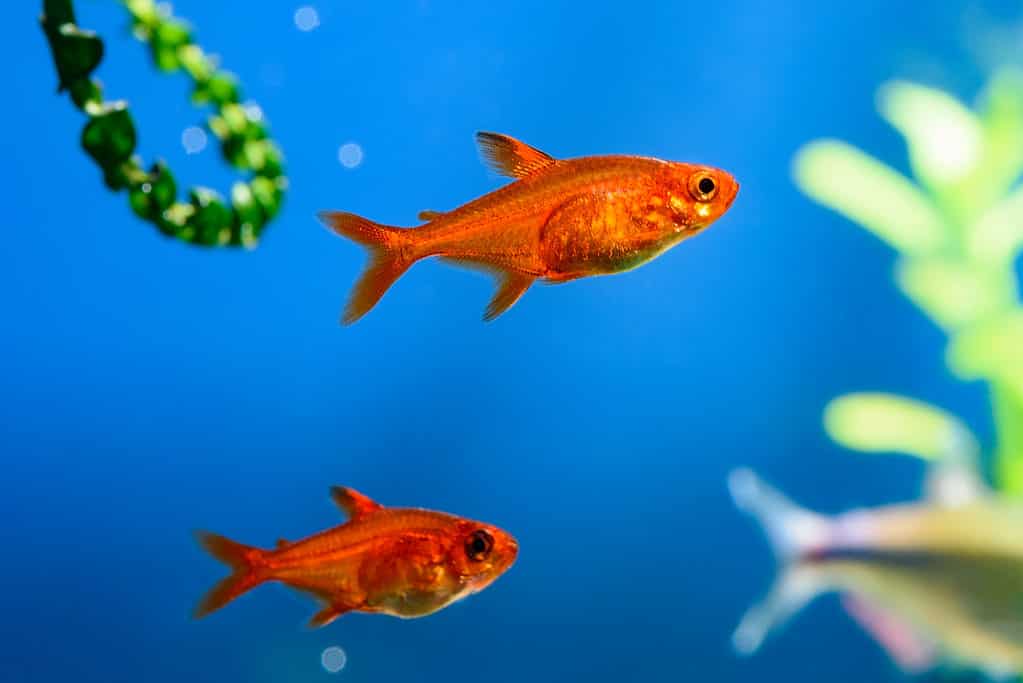
Ember tetras are omnivores, and they are micro-predators that feed on other small invertebrates.
©nektofadeev/Shutterstock.com
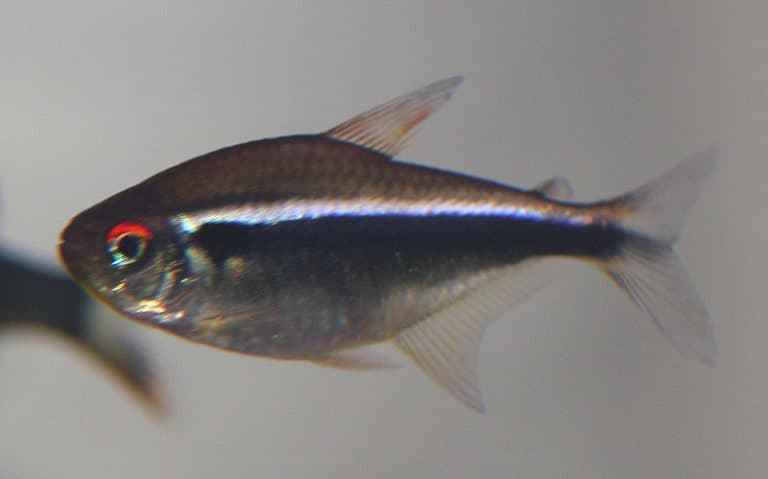
All tetras are members of the Characiformes order and the Characidae family. The scientific name of the neon tetra, probably the best known of these aquarium fish, is Paracheirodon innesi. Scientific names of some of the other tetras are yellow tetra, Hyphessobrycon bifasciatus; rummy-nose tetra, Hemigrammus rhodostomus; cardinal tetra, Paracheirodon axelrodi; ember tetra, Hyphessobrycon amandae; and glow tetra, Hemigrammus erythrozonus.
Origins
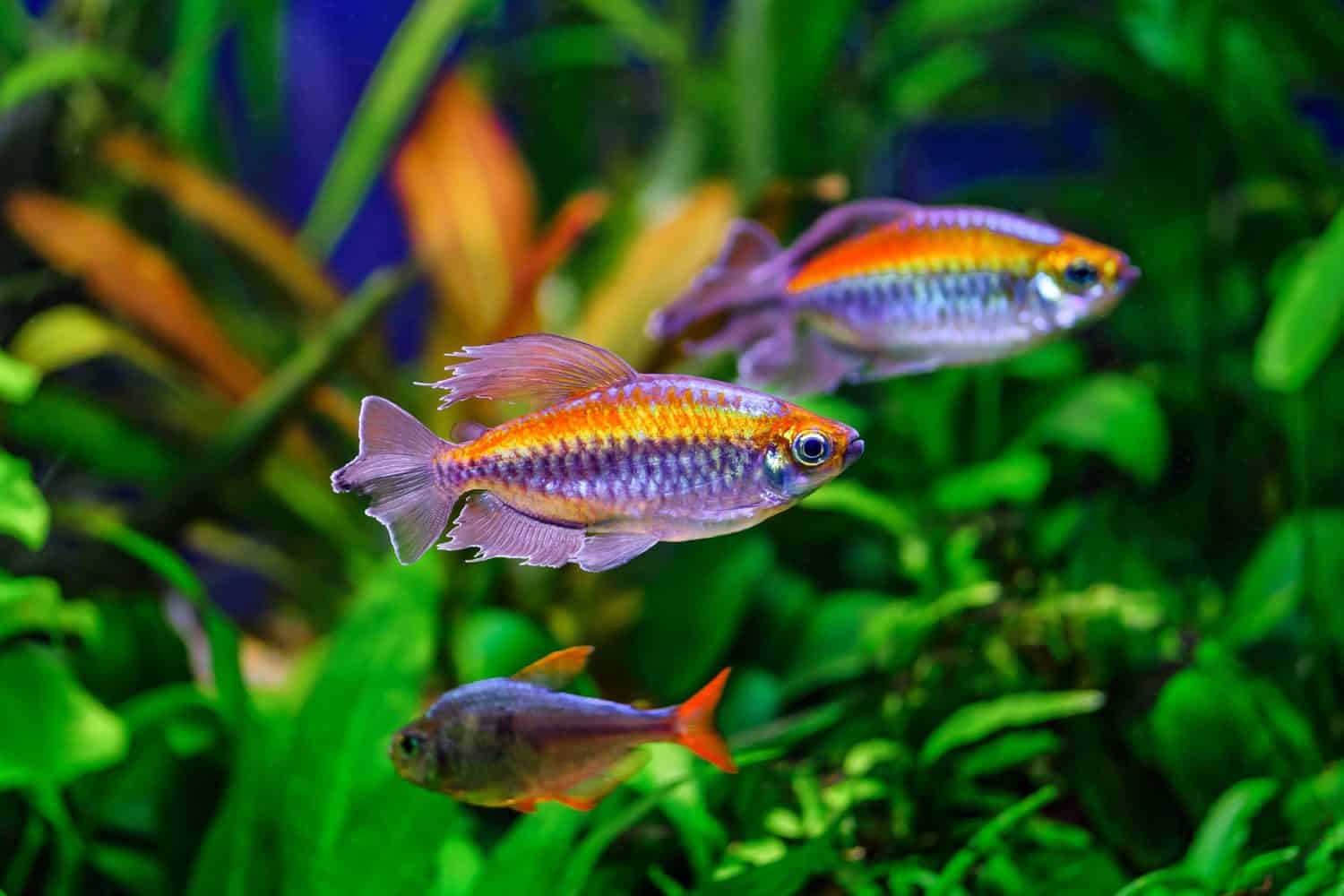
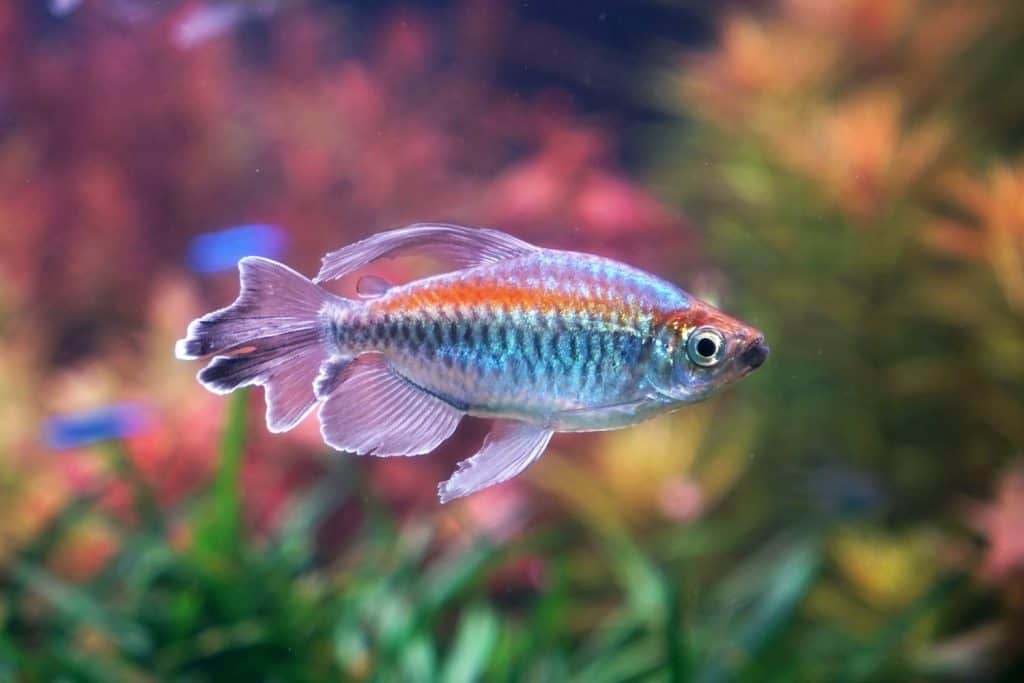
A green, beautifully planted tropical freshwater aquarium with fish and shrimps. A Congo tetra, Phenacogrammus interruptus, with water plants.
©Bukhta Yurii/Shutterstock.com
Tetra is a descriptive word used to refer to numerous species of small, freshwater characiform fish. These fish are native to Africa, Central America, and South America and belong to the Characidae family, as well as the two former subfamilies Alestidae (or African tetras) and Lebiasinidae. Many species in the Characidae family have a small adipose fin located between the dorsal and caudal fins, though this feature is not unique to the family. Tetra fish, such as the neon tetra (Paracheirodon innesi), are popular amongst aquarium hobbyists due to their vivid colors and low-maintenance care requirements. The word “Tetra” is derived from the Greek term “Tetragonopterus”, which means “square-finned”.
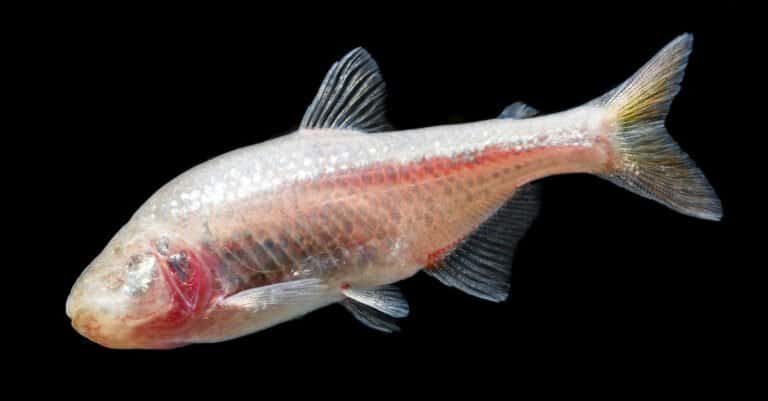
Many different types of fish are commonly referred to as tetras, even though they may not be related to each other. Tetras are native to South and Central America, Africa, and the Amazon Basin, except for the blind cave tetra that was found in Mexico. Each species of tetra has its own unique range and distribution, but some species may inhabit the same areas. They usually live in regions rich with vegetation and shaded areas.
Species
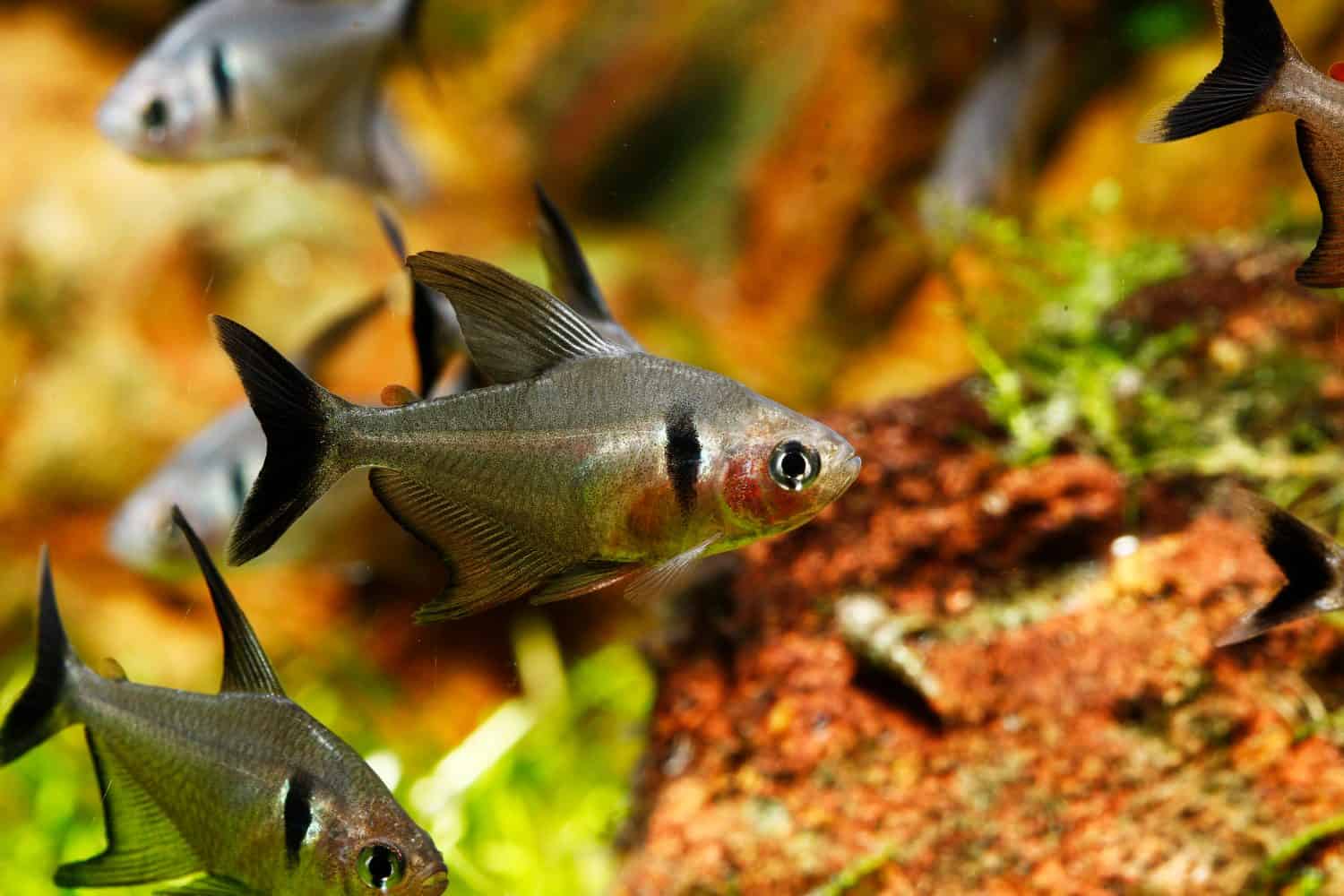
Black phantom tetras (Hyphessobrycon megalopterus) form a school in an aquarium.
©Pavaphon Supanantananont/Shutterstock.com
More than 150 species of fish, considered tetras, live worldwide. Although there are many different species, fewer than 20 are commonly found in aquariums worldwide. Most pet stores sell neon tetras at a low price as they are plentiful. Other popular tetra species among hobbyist fishkeepers include black, cardinal, rainbow, blue, flame, rummy-nose, emperor, and bloodfin tetras. The most popular tetras also have a low price in pet stores, making them affordable.
Appearance
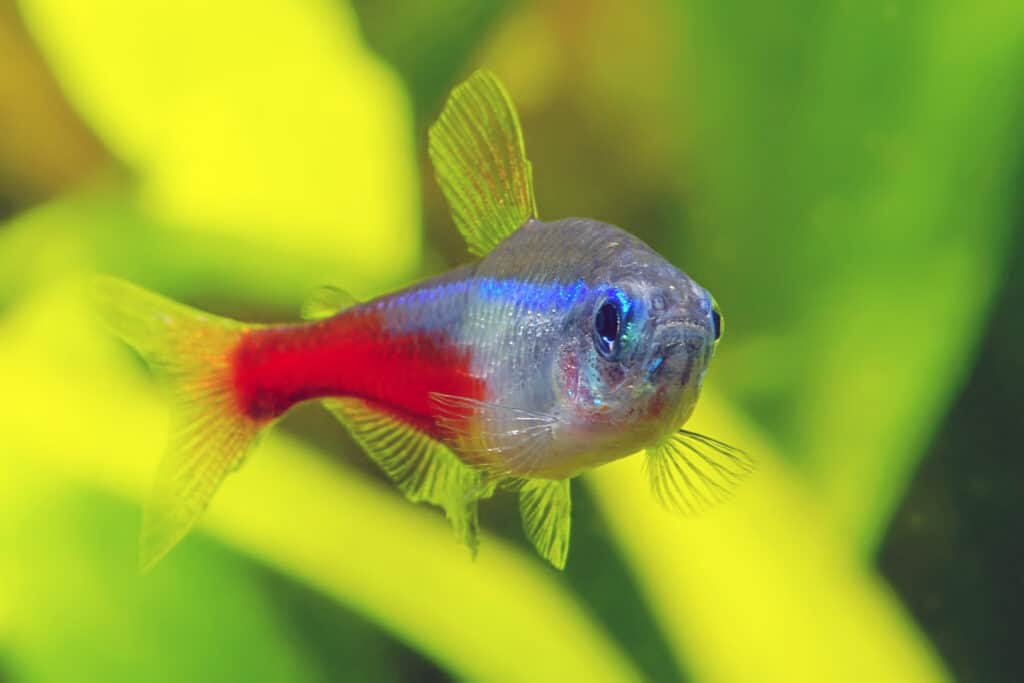
The neon tetra gets its coloration from guanine crystals found inside their cells that reflect light.
©Grigorev Mikhail/Shutterstock.com
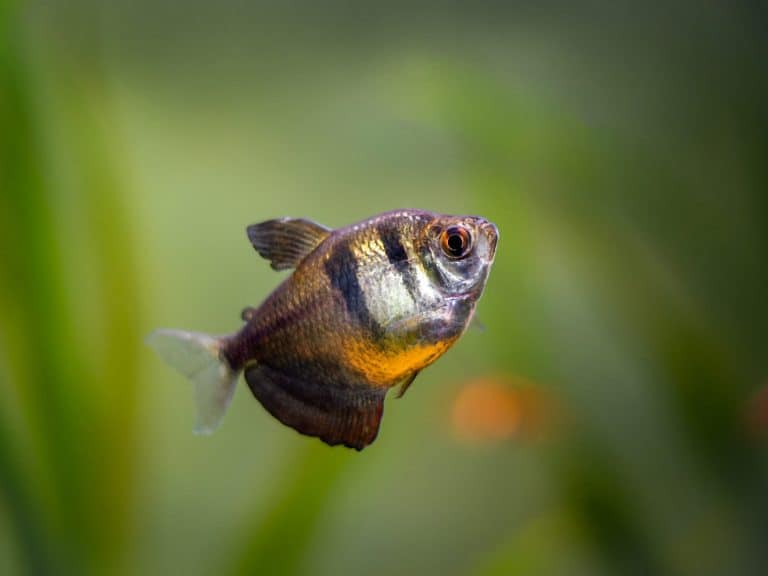
Tetras are small fish, generally ranging in length from one to four inches. Tetras have a small adipose fin between their dorsal and caudal fins, distinguishing them from other fish. You’ll find a few differences between male and female tetras. Males are usually thinner, while females are more rounded and tend to be larger. Colors are varied, ranging from silver and yellow to deep black.
Distribution, Population, and Habitat
Tetras are found around the world, although they are concentrated in the previously mentioned areas. They are primarily found in the freshwater rivers and lakes of the Amazon Basin. Most species generally have stable populations, although some have shown declines, while the numbers of the rest remain unknown.
According to the IUCN Redlist of endangered species, the tetra is considered of least concern.
Predators and Prey
Because tetra fish are so tiny, they have many predators.
©Mark Brandon/Shutterstock.com
As tetras are small fish, many different predators hunt them. Larger fish, eels, crustaceans, and some invertebrates all feed on tetra. Because of their colorful bodies, predators can easily see tetras. When tetras feel they are in danger, they’ll often try to find somewhere to hide or swim to darker waters where they won’t be as visible.
In the wild and the aquarium, tetras eat almost anything because they are omnivores. The diets of wild and captive tetras are similar, with the exception that captive tetras eat manufactured food like flakes, pellets, frozen brine shrimp, etc. In the wild, they have access to a wide variety of foods. Among the favorite prey are common water fleas called daphnia, mosquito larvae, brine shrimp, bloodworms, and small fish eggs. In aquariums, tetras eat twice daily, consuming as much food as possible in about two minutes.
Reproduction and Lifespan
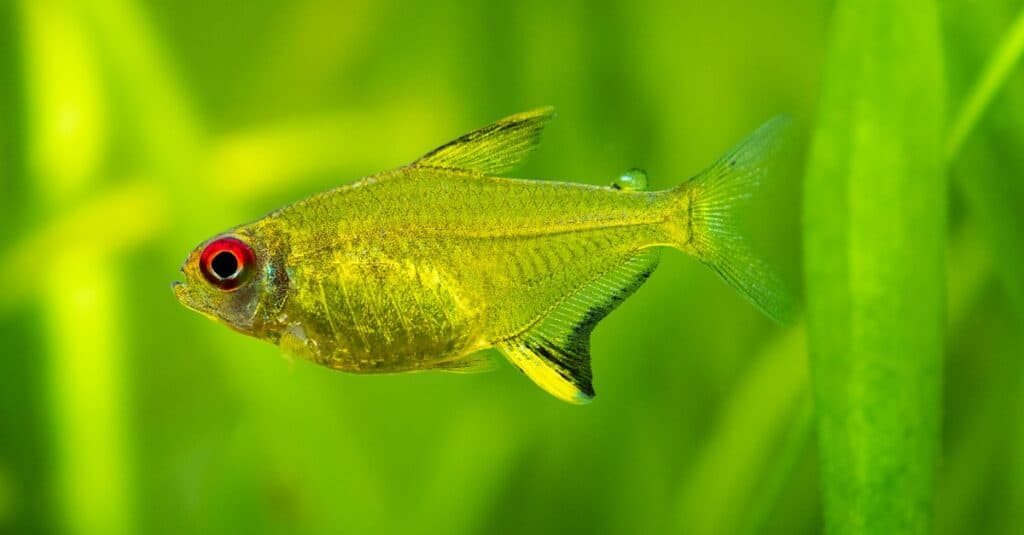
Lemon tetras are known for their neon yellow coloration and mild translucency.
©iStock.com/Juan Carlos Juarez Jaramillo
The lifespan of tetras is between eight to 10 years in the wild but considerably shorter in captivity. For example, neon tetras only live an average of five years. Tetras don’t live as long in captivity because of stress and boredom. Loneliness is also a factor, as these fish do best when living in a school of other tetras.
Although most tetras are easy to care for, breeding them in captivity can sometimes be difficult because it’s hard to distinguish males from females. Even though they do not form monogamous pairs, tetras will not necessarily spawn with any other tetra they see and may reject their potential mate. The male tries to attract the female by dancing around her. If she likes him, she will take him to the spawning site. The number of eggs laid can range from 50 to 1,000, depending on the species. Tetras grow slowly. After hatching, it can take neon tetras two months to reach one-quarter inch in length. However, emperor tetras grow quickly as juveniles only take six months to become adults. Eggs take at least 48 hours to hatch.
Fishing and Cooking
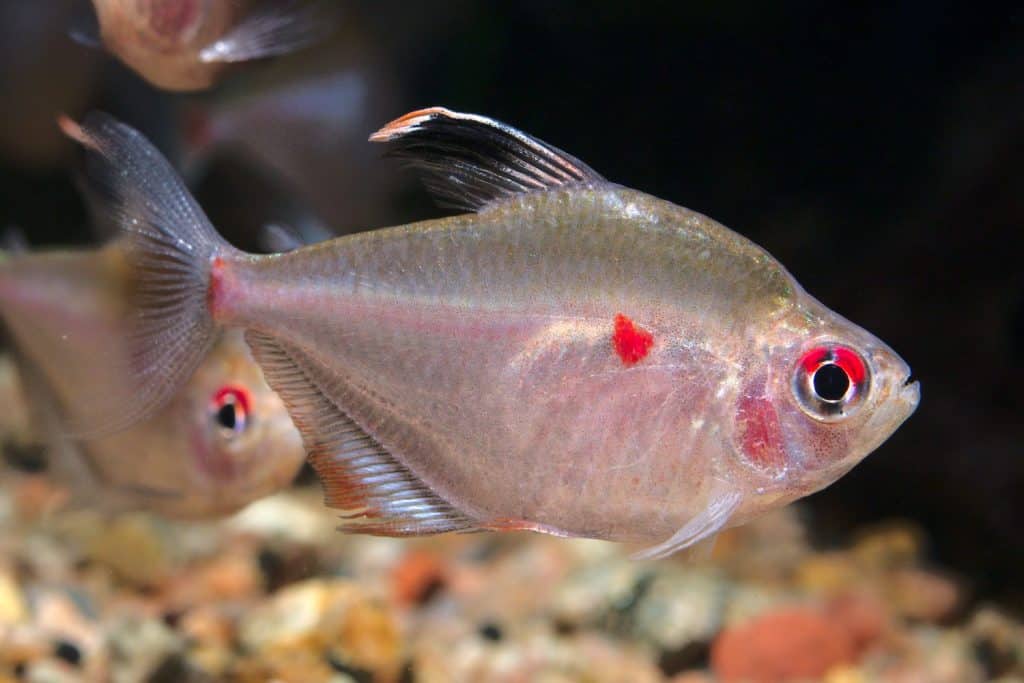
Bleeding Heart Tetra (Hyphessobrycon erythrostigma) is a very popular aquarium fish.
©Dan Olsen/Shutterstock.com
Generally, fishing for tetras only occurs to bring these fish into captivity to help populate home aquariums. Like most other aquarium fish, tetras are edible, but you probably wouldn’t want to do so. First off, their small size doesn’t produce much protein, but more importantly, you can run into digestive problems when consuming aquarium fish not explicitly raised for food.
Tetra Population
The exact number of tetras in the world is unknown, primarily because many of these fish live in remote regions and dark waters.
Popular Types of Tetra Fish
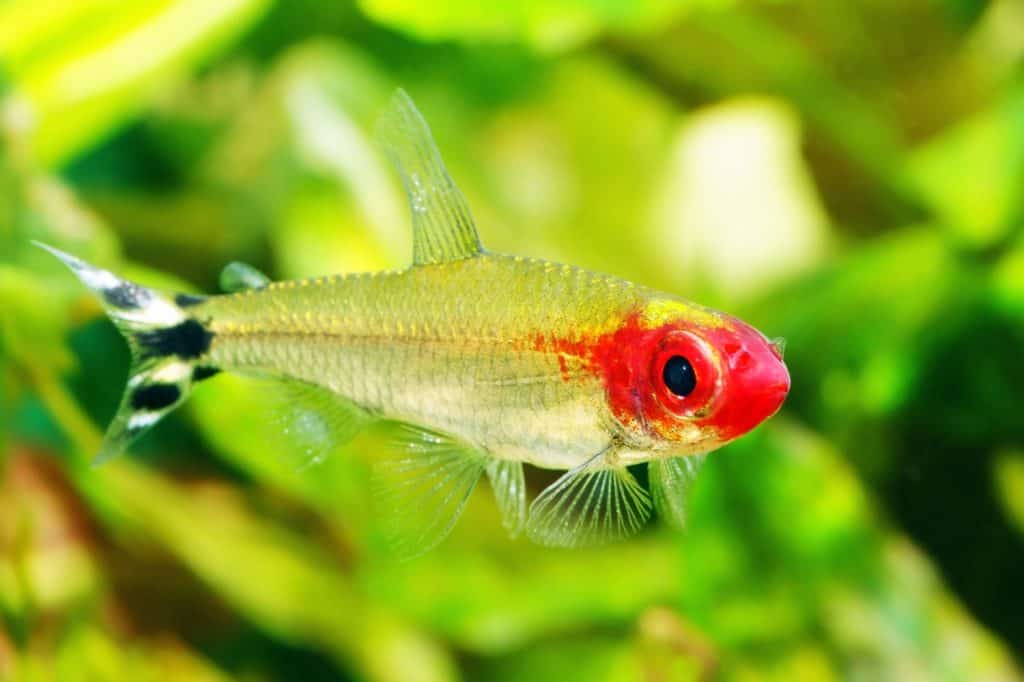
The Rummy nose tetra is one of the most popular tetra for aquarists.
©Grigorev Mikhail/Shutterstock.com
There are over 150 recognized types of tetra fish. Here are five of the most popular and fascinating tetras.
- Neon Tetra (Paracheirodon innesi) – Neon Tetras are peaceful, hardy, and easy to care for, and famous for their iridescent blue and red stripes. They are one of the most popular freshwater fish worldwide. They thrive in groups and add brilliant color to any aquarium.
- Cardinal Tetra (Paracheirodon axelrodi) – This tetra is similar to the Neon but has a bolder, full-length red stripe. It also prefers slightly warmer, softer water and does best in large schools.
- Glowlight Tetra (Hemigrammus erythrozonus) – This fish has a coppery-orange line along its body, that glows, especially under dim lighting. They are peaceful, undemanding, and ideal for beginner aquarists.
- Rummy Nose Tetra (Hemigrammus rhodostomus) – The rummy nose tetra is a favorite for aquascaped tanks. It can be recognized by its bright red nose and striking black-and-white tail stripes.
- Serpae Tetra (Hyphessobrycon eques) – The serpea tetra is best kept in groups, and can really add something special to planted aquariums. It is known for its deep-red color and lively nature, and is a classic community fish.
Tetra Pictures
View all of our Tetra pictures in the gallery.

Sources
- David Burnie, Dorling Kindersley Animal, The Definitive Visual Guide To The World's Wildlife / Accessed November 14, 2008
- Tom Jackson, Lorenz Books The World Encyclopedia Of Animals / Accessed November 14, 2008
- David Burnie, Kingfisher The Kingfisher Animal Encyclopedia / Accessed November 14, 2008
- Richard Mackay, University of California Press The Atlas Of Endangered Species / Accessed November 14, 2008
- David Burnie, Dorling Kindersley Illustrated Encyclopedia Of Animals / Accessed November 14, 2008
- Dorling Kindersley Dorling Kindersley Encyclopedia Of Animals / Accessed November 14, 2008