Quick Take
- Pensacola's famous beaches are a surprisingly poor bet for gator spotting. Find out where they actually hide. Find where gators hide →
- One campus legend with a crooked tail and a quirky name may still be lurking out there. Meet Captain Thunder →
- Two lakes in one forest ban swimming for a very toothy reason, yet you can still paddle one. See the no-swim lakes →
- One park lost several of its gators because of a well-meaning human habit. Learn what visitors did wrong. Learn about feeding gators →
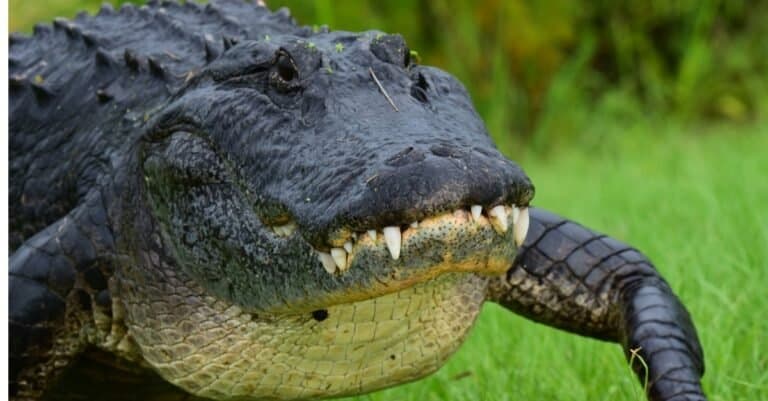
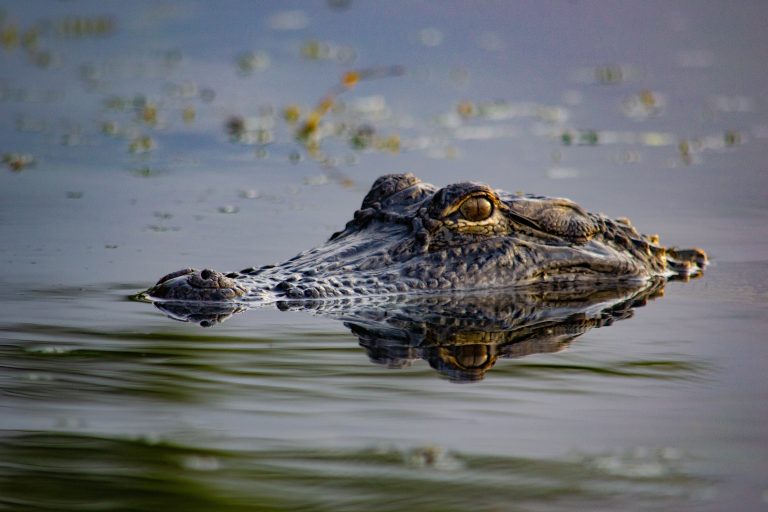
American alligators are one of the most well-known wild animals in Florida. While they are most common in central and southern Florida, some alligators also reside in northern Florida. Pensacola is a city in the Florida Panhandle, on the coast of the Gulf of Mexico, near the Alabama border. Some people call it the “City of Five Flags” because, throughout history, five different countries have governed it. Pensacola has miles of beaches and busy metropolitan areas, making it a popular tourist destination. Here are three places where you can find alligators in and around Pensacola.
Are There Alligators in Pensacola?
Alligators do live in and around Pensacola. However, it is rare to find them on the city’s famous beaches, because they prefer freshwater. They can be found in the upper part of Pensacola Bay where the salt water is diluted by freshwater from the rivers flowing into it. More commonly, though, they are found inland, in ponds, rivers, and swampy areas north of the city.
University of West Florida
The University of West Florida (UWF) is home to several trails that are open to the public for walking, biking, and horseback riding. These trails provide the opportunity to observe the natural areas surrounding the campus and the wildlife that lives there, including alligators. You are most likely to see alligators on the Edward Ball Nature Trail. This walking-only trail consists of a half-mile-long boardwalk over a swamp in Thompson’s Bayou. It is a good place to observe wildlife, including songbirds, waterfowl, and, of course, alligators.
UWF even has its own iconic alligator. In 1981, the university had a contest to name a 5-foot alligator living in Thompson’s Bayou. The alligator had a crooked tail and an injured front leg. The winning name, submitted by student Lucinda Ellis, was “Captain Thunder of the University Marine Patrol.” Alligators can live for 30 to 50 years in the wild, so Captain Thunder may still be out there.

The trails at the University of West Florida are a good place to spot alligators.
©Saddako/iStock via Getty Images
Blackwater River State Forest
Blackwater River State Forest is one of the largest state forests in Florida and is located northeast of Pensacola. It is named for the Blackwater River, which flows through the forest after starting in Alabama and before flowing into Blackwater Bay. The area offers numerous activities to visitors, including biking, camping, fishing, hiking, horseback riding, OHV (Off-Highway Vehicle) riding, canoeing, picnicking, and swimming.
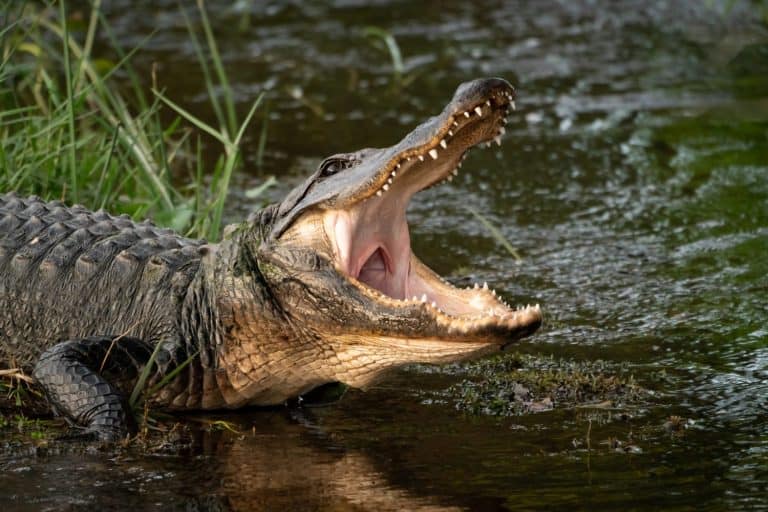
Alligators live in and around the lakes, rivers, and marshes of Blackwater River State Forest, as well as the Blackwater River State Park that is situated within the forest. Two of the forest’s lakes, Bear Lake and Hurricane Lake, do not allow swimming due to alligators. Canoeing is permitted on Bear Lake, and both lakes have hiking trails and campgrounds nearby. If you do spot an alligator in one of these lakes, be sure to keep your distance for your safety.

Alligators can be seen in and along the waterways of Blackwater River State Forest.
©Beth Keener/Shutterstock.com
Big Lagoon State Park
Big Lagoon State Park is located southwest of Pensacola. It is home to several ocean lagoons, including the Big Lagoon from which it gets its name. It offers a variety of activities to visitors, including biking, birding, boating, camping, fishing, geocaching, hiking, kayaking, picnicking, stargazing, swimming, and wildlife viewing. The park is a hotspot for wildlife, especially birds. It is a gateway site for the Great Florida Birding and Wildlife Trail, a network of over 500 sites across Florida that are ideal for bird and wildlife viewing. Several parts of Blackwater River State Forest are also part of this trail.
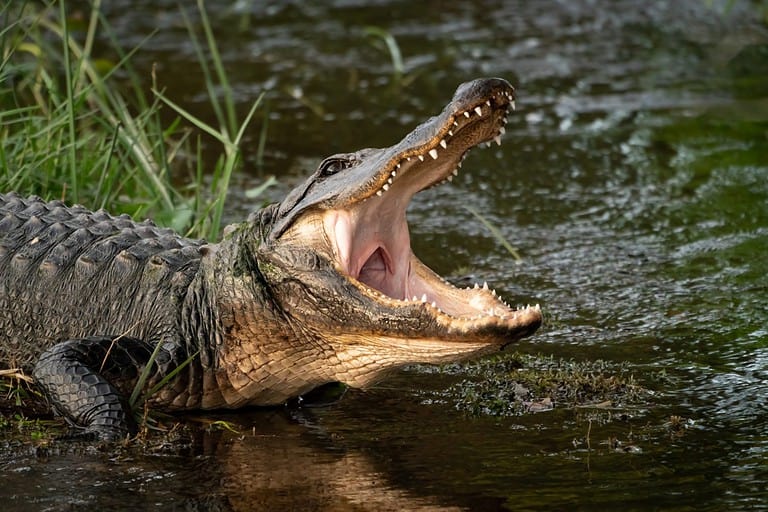
Sometimes you can find alligators in the lagoons, but since they prefer freshwater, you’re more likely to spot them in the lakes, ponds, rivers, and streams of the marsh farther inland. You can observe this marsh from the park’s observation tower and some of its trails. Alligators also inhabit Long Pond, a large man-made freshwater pond accessible by the park’s Estuary Trail and crossed by a bridge. Unfortunately, in the past, several alligators were removed from the park because people fed them, enticing them to come too close to humans. Feeding alligators poses a risk to both park visitors and the alligators themselves. That is why it is important never to feed alligators or other wildlife.

Alligators inhabit Long Pond at Big Lagoon State Park.
©WGN Photos/Shutterstock.com