
Quick Take
- Moose with calves are considered especially dangerous, though not for the reason most people assume. See why they're dangerous →
- Anchorage has a documented urban moose population, and the numbers are more surprising than you'd expect from a major American city. Anchorage's moose population →
- There's a practical reason moose keep showing up in parking lots and neighborhoods, and it has nothing to do with being lost. Why moose enter neighborhoods →
- If a moose crosses the road in front of you, the most dangerous mistake drivers make isn't what you'd expect. Avoid this driving mistake →
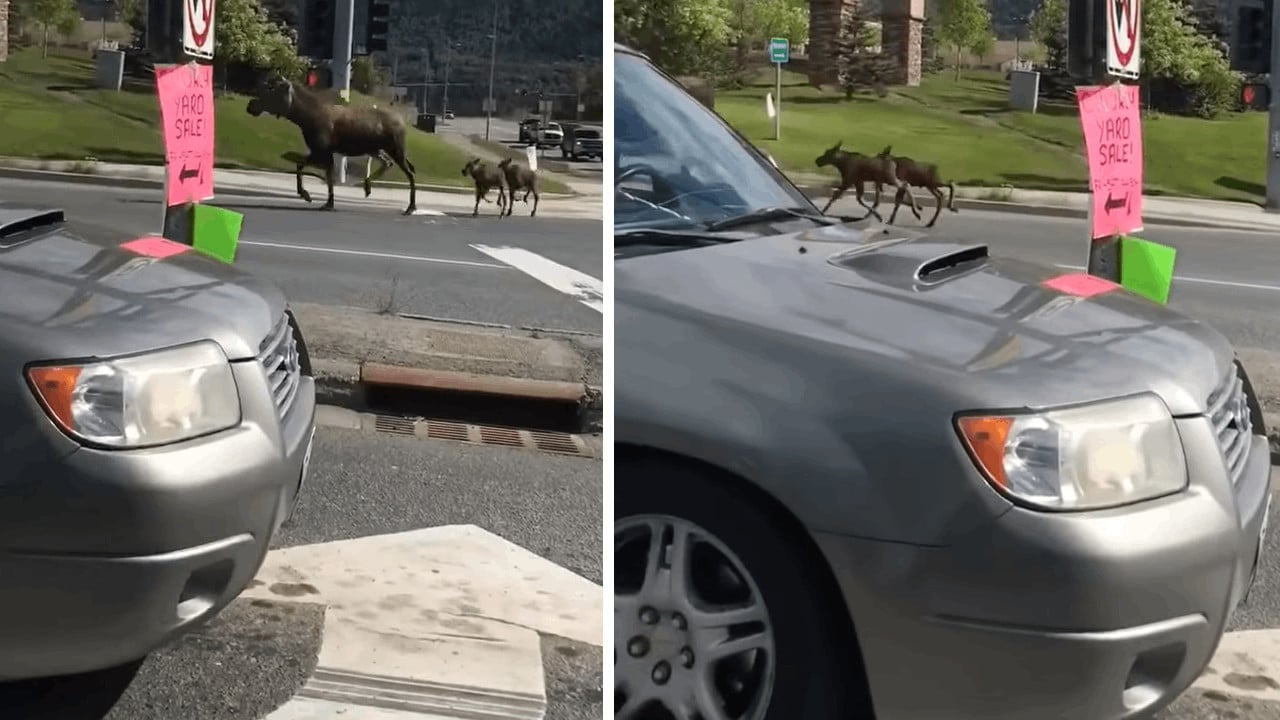
Imagine driving down the road and suddenly finding yourself sharing an intersection with a mother moose and her two young calves. That’s exactly what happened in Eagle River, Alaska, where a wildlife encounter near a Walmart looked more like a family outing than something you’d expect to see on a busy street.
The footage, captured on May 31, 2019, shows a mother moose trotting along the road with her twin calves following close behind. The trio makes its way through an intersection near a Walmart, seemingly unconcerned about the surrounding traffic. It’s an unusual sight for most Americans, but encounters like this are surprisingly common in parts of Alaska.
So why would a wild animal weighing hundreds of pounds wander through a populated area with two youngsters in tow? As it turns out, moose have become regular visitors to several Alaskan communities, and there are some practical reasons for their presence. Watch the clip now to see the family making its way through town, then discover why moose are so frequently spotted near roads, neighborhoods, and even shopping centers.
Watch the Mother Moose and Her Twins Trot Through Town
The video shows the mother maintaining a steady pace as her two calves follow her through the intersection. Although the animals appear comfortable moving through the developed area, that doesn’t necessarily mean they’re accustomed to traffic or understand the dangers of crossing a road. Moose regularly travel through areas where human development overlaps with their natural habitat, sometimes creating unexpected situations for drivers and pedestrians.
Why Do Moose Wander Into Towns and Cities?
For people unfamiliar with Alaska, seeing a moose walking through a shopping center might seem completely ridiculous. But in communities like Anchorage and Eagle River, it’s an ordinary part of living alongside wildlife. Moose don’t recognize city limits, private property, or parking lots as boundaries. If their normal movement routes take them through a developed area, they may simply continue on their way.
Food is another important factor. Moose feed primarily on vegetation, including the leaves and twigs of willow, birch, and aspen trees. Parks, landscaped neighborhoods, and wooded greenbelts can provide attractive feeding opportunities. In some cases, these areas offer enough vegetation that moose have little reason to avoid them.
Winter conditions can also influence their movements. When snow becomes especially deep, moose may move into lower elevations and developed areas where walking is easier. Plowed roads and maintained trails provide convenient routes, although they also increase the risk of vehicle collisions. The family in this video was filmed in late May, so deep winter snow wasn’t responsible for this particular encounter. Still, the broader pattern helps explain why moose can become such familiar visitors to Alaskan communities.
How Common Are Moose in Anchorage?
Anchorage is one of the few major American cities where spotting a moose near a backyard, neighborhood street, or public park isn’t particularly surprising. Wildlife officials have documented substantial numbers of moose living within the urban area, although the population fluctuates throughout the year.
A study published in 2025 in the Journal of Wildlife Management estimated approximately 306 moose in its Anchorage study area using genetic sampling and reports from local residents collected between 2018 and 2021. The researchers also identified potential advantages of urban living, including feeding opportunities, reduced predation risk, and easier movement along cleared roads and trails.
That doesn’t mean moose have become domesticated or are completely comfortable around people. They remain unpredictable wild animals that can react aggressively when startled, threatened, or approached too closely. Their ability to live near people is a reflection of their adaptability, not an invitation to walk up and introduce yourself.

Moose are regularly spotted along roads and in communities throughout Alaska.
Why Are Mother Moose So Protective of Their Calves?
Female moose, known as cows, typically give birth during late spring. Twins are relatively common when conditions are favorable, although a cow may also have a single calf or, less frequently, triplets. Newborn calves depend heavily on their mothers for protection, particularly during their first weeks of life.
That protective instinct makes mothers with young calves among the most potentially dangerous moose people can encounter. While moose generally prefer to avoid unnecessary confrontations, a cow may charge, kick, or stomp if she believes someone is threatening her offspring. Even people who aren’t intentionally approaching the animals can accidentally get too close.
According to the Alaska Department of Fish and Game, mothers with newborn calves are especially defensive during calving season. The agency warns that people should never approach a calf, even if its mother isn’t immediately visible. A cow may be nearby and could react aggressively if someone comes between her and her young.
Where Do Moose Normally Live?
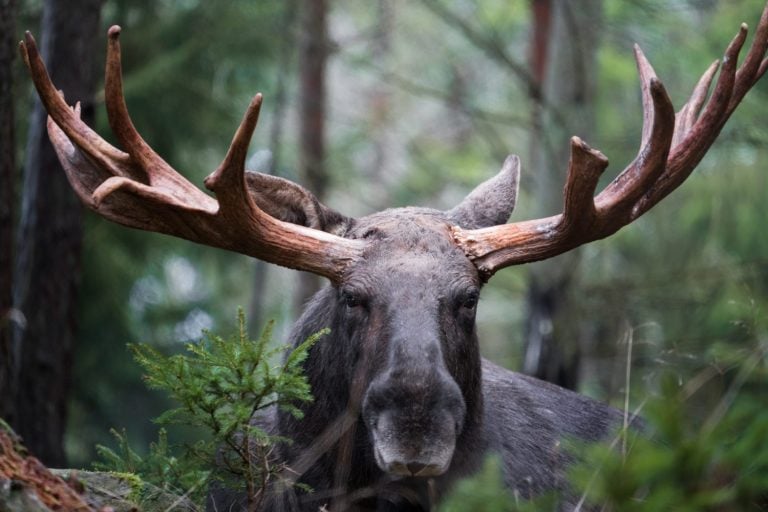
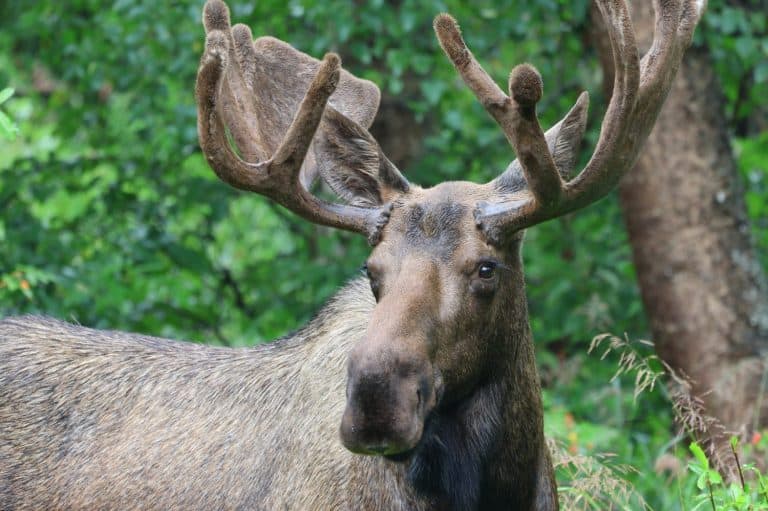
Moose are the largest members of the deer family and are native to northern parts of North America, Europe, and Asia. In the United States, they are found primarily in Alaska and parts of the northern contiguous states, including Maine, Minnesota, Montana, Wyoming, and others with suitable habitat.
They generally prefer forested environments with access to wetlands, lakes, rivers, and plenty of vegetation. Their long legs help them move through deep snow and marshy ground, while their broad muzzles are well adapted for feeding on leaves, twigs, and aquatic plants.
Alaska is home to some of the world’s largest moose. The Alaska-Yukon subspecies can produce enormous bulls weighing approximately 1,600 pounds, with some individuals standing more than six feet tall at the shoulder. Despite their awkward appearance, moose are surprisingly fast and can run at speeds approaching 35 mph. They’re also strong swimmers, making them well suited to the northern environments they inhabit.
What Should You Do If a Moose Crosses the Road?
Watching a mother moose and her calves trot through a busy intersection might look amusing on video, but these encounters can become dangerous very quickly. Moose are large, powerful animals, and collisions with vehicles can cause serious injuries to both people and wildlife.
Drivers who encounter moose should slow down, maintain a safe distance, and allow the animals to cross without being pressured. It’s also important to watch for additional moose nearby, especially calves that may be following an adult. Trying to drive between a mother and her young is particularly dangerous.
Pedestrians should avoid approaching moose for photographs or attempting to move them out of the way. If an animal blocks a sidewalk or trail, the safest response is to give it space and find another route. Moose can become defensive with little warning, particularly when calves are nearby.
As for the family in this video, there’s no evidence they were actually interested in shopping at Walmart. They were simply traveling through an area where human development and wildlife habitat meet. It’s a funny sight from the safety of a video screen, but also a useful reminder that in Alaska, sometimes the locals have four legs and weigh half a ton.