
Quick Take
- Florida leeches are prevalent across the state, and some have spread to parts of Latin America and the Caribbean. See the invasion details →
- A high concentration of leeches in a Florida waterway is actually a red flag, though perhaps not for the reason you'd think. See what leeches signal →
- Some leeches are FDA-approved for use in hospitals today, and their saliva does something to your blood most people don't realize. Discover their medical uses →
- There's a mosquito in Florida that feeds on leeches, and scientists warn that this could make things more dangerous rather than less. Meet the leech-feeding mosquito →
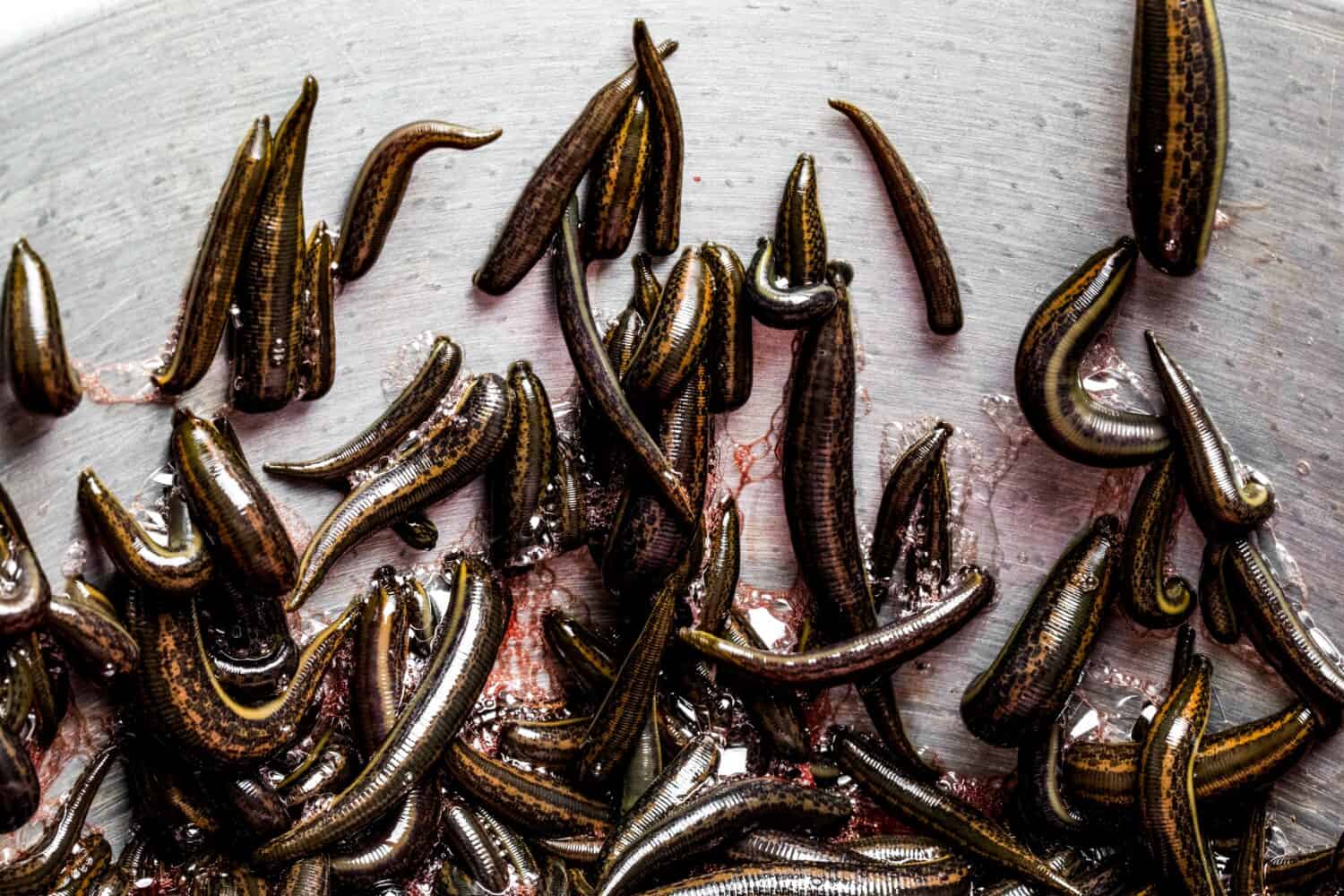
Leeches get a bad reputation. Most leeches are predators of small invertebrates. But several families of leeches that suck blood from vertebrates have inspired horror fantasies, such as the 1959 film Attack of the Giant Leeches, set in a Florida swamp. Even recently, where the clear Crystal River flows through Hunter Springs Park in west-central Florida, leeches were purportedly attaching to swimmers and causing itchy red bumps. Whether or not leeches ever inhabited that section of the river is unknown, but the lore appears to have faded.
Continue reading
But Are There Leeches in Florida?
Sure, there are leeches in Florida lakes and streams, like this colorful one found by someone picking up trash, or this leech inside an alligator’s mouth. A quick photo comparison in the app iNaturalist identifies the first one as a smooth turtle leech (Placobdella parasitica), which—unlike some of its relatives—has no projections (papillae) on its back. Smooth turtle leeches are common in freshwater in Florida, attaching to many species of aquatic turtles. They range from southern Canada all the way down the east coast of North America, with nine distinct geographic varieties, according to a 2020 study published in the Bulletin of the Peabody Museum of Natural History.
A look at reported leech sightings in iNaturalist reveals 22 species of leech occurring in Florida from the northwest corner of the state all the way to the Everglades.
What Is a Leech?
Leeches are a type of segmented worm, grouped in a taxonomic subclass called Hirudinea. Leeches typically have 34 body segments (somites) and can live in freshwater or seawater, depending on the species. This photo of a Placobdella sp. leech at the Arthur R. Marshall Loxahatchee National Wildlife Refuge on Florida’s east coast clearly shows its segments.
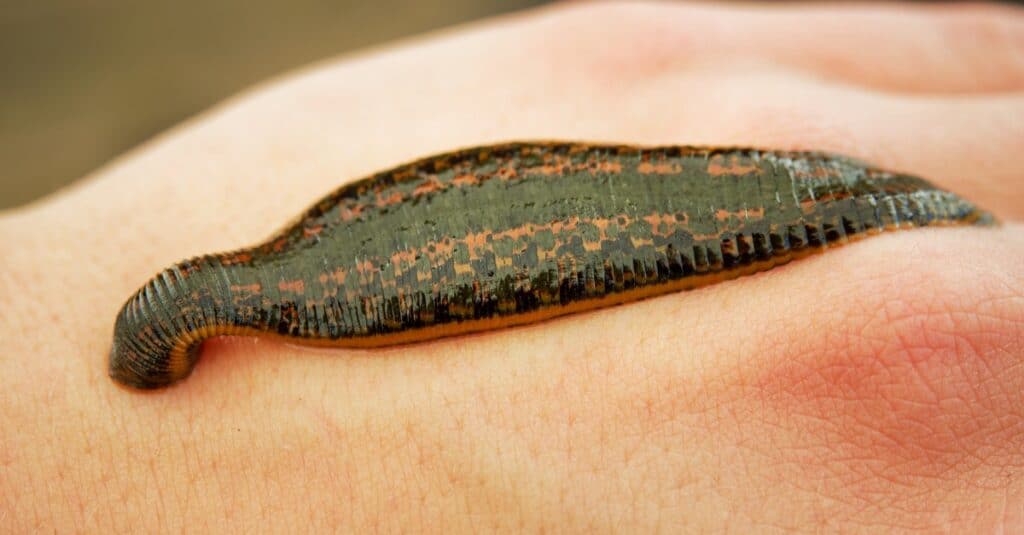
This medicinal leech (Hirudo medicinalis) is sucking blood from a person’s hand.
©Martin Pelanek/Shutterstock.com
Medicinal leeches became famous during the 19th century for their use in bloodletting, which was believed to remove toxins and balance the body’s “humors.” While such humors no longer feature in modern medicine, leeches today are FDA-approved for use after certain surgeries. The anticoagulants in their saliva prevent blood clots, while vasodilators widen blood vessels, thereby keeping blood moving. The saliva also has antimicrobial and anti-inflammatory properties that stave off infection.
Leeches in the Southeastern US
Across Florida and neighboring southeastern states, there are 33 known species of leech belonging to 5 families, according to the most recent compilation of freshwater leeches (Klemm, 1995). Despite the need for an update, Klemm’s 1995 North American reference is still in use by parasitologists – scientists who study parasites (including leeches).
“We don’t have fine-scale distribution data for most species of leeches, and some areas are poorly known, like Florida,” explains Anna Phillips, curator of parasitic worms at the Smithsonian’s National Museum of Natural History, in an email interview. “It’s still the age of discovery for leeches.”
That said, as more leeches are discovered and studied, scientific understanding of their biodiversity in Florida evolves. “The problem is that much of the taxonomy has changed in the last 10-15 years, so the names in the report aren’t reliable anymore,” added Phillips. She and other scientists are working to “tease apart species complexes and are still finding new species” of leeches. In a 2020 paper, Phillips tallied known leech species at more than 700.
What Does This Mean for Florida?
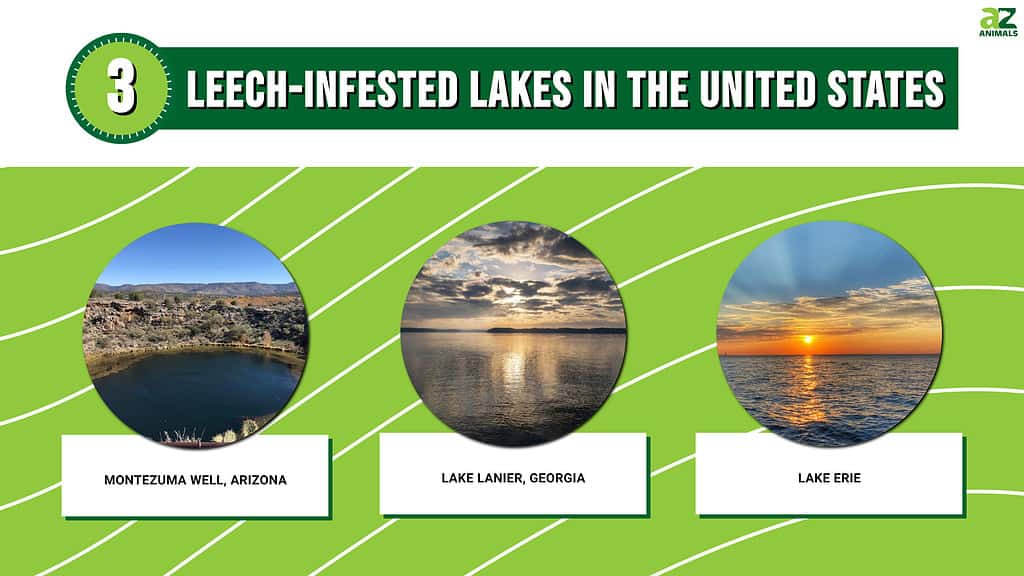
Since leeches prefer shallow, warm, protected, low-flowing waters, Florida has its share of leeches. Looking at Florida records of leech sightings on iNaturalist, I found them reported from dozens of lakes, including Lake Suggs in Hawthorne, Lake Rosalie in Lake Wales, Orlando Wetlands in Orange County, Hooks Lake and Smith Lake in Melrose, Lake Okeechobee in Glades Co., and a water catchment area in West Palm Beach.
It’s still the age of discovery for leeches.
Anna Phillips, curator of parasitic worms at the Smithsonian’s National Museum of Natural History
Some of Florida’s native species of leech, such as Myzobdella lugubris, have spread to become invasive in Latin America and the Caribbean Islands; see HERE. They hitchhike on boat bottoms or lay their eggs there, so experts recommend washing and scraping the hull of any boat headed out of Florida waters.
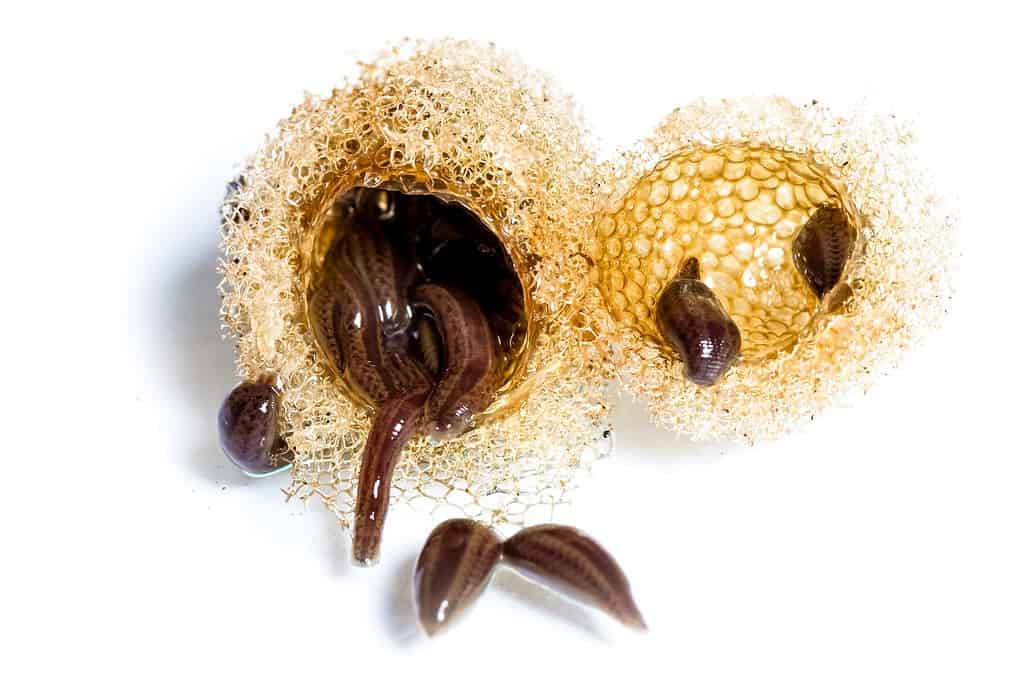
Mother leeches may attach their spongy egg cocoons on ship hulls, from which babies emerge.
©279photo Studio/Shutterstock.com
Do We Need Leeches?
Leeches, despite triggering revulsion in humans, are ecologically valuable. As researcher Mark J. Wetzel wrote on his university webpage, “Freshwater leeches (segmented worms) are important components of benthic communities in nearly every freshwater ecosystem.” A Florida pond construction company calls leeches “hidden heroes” because of their roles in nutrient cycling in still-water ecosystems like ponds and swamps. Their movements through sediments stir them up, letting oxygen in, while their soft bodies make them tasty prey for fish and aquatic birds.
Wetzel noted that leeches, because of their species-specific tolerances, have been used for water quality monitoring. A high abundance of pollution-tolerant leeches in a waterway typically indicates that water quality is poor. Monitoring densities of aquatic invertebrates, including leeches, is one way the Florida Department of Environmental Quality tracks water quality. A water sample with many leeches and few sensitive invertebrates — such as mayfly, caddisfly, and stonefly larvae — indicates that the environmental health of a waterway is compromised. In Florida monitoring, invertebrates are scored from 1–10 for their tolerance levels, with leeches receiving an 8-10. Some leeches are tolerant of extremes, such as low oxygen levels and hot temperatures.
Will Leeches in Florida Hurt Me?
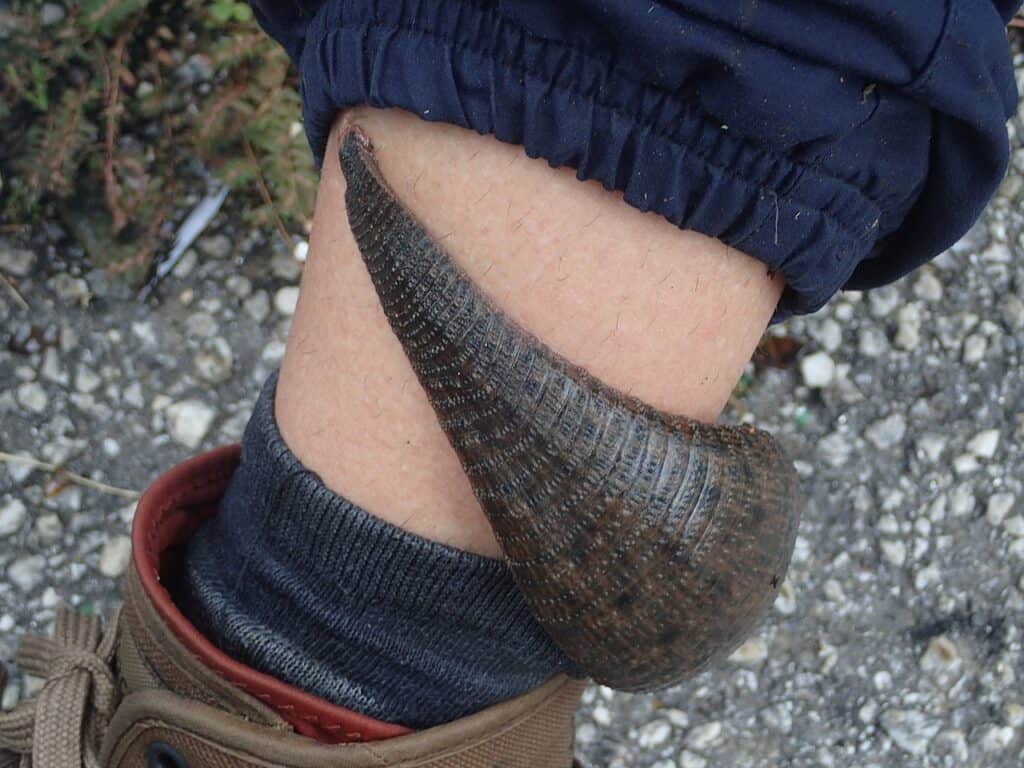
Even this giant Amazonian leech (Haementeria ghilianii), from Guyana, doesn’t usually provoke a health emergency. North American leeches are smaller.
Leeches are rarely dangerous to humans. While they may extract a bit of blood, they do not tend to carry disease like mosquitoes. And with proper extraction techniques, you can easily remove a leech without suffering much damage to the bite site. In rare cases where a leech lodges in a body orifice, such as the ear canal, a medical visit may be required. Leeches that persist on an animal, such as a turtle that can’t remove them, may eventually cause anemia from the blood loss, according to a University of Florida IFAS Extension page (viewer discretion advised!).
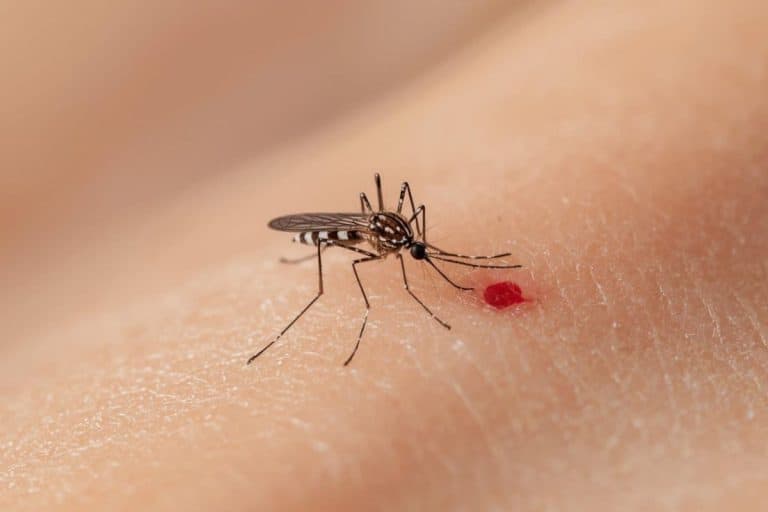
Also, a 2018 study from the University of Florida found that some species of mosquitoes, which carry diseases, specialize in feeding on leeches. The mosquito Urantaenia sapphirine got 100 percent of its blood meals from leeches, which challenges the assumption that mosquitoes feed exclusively on vertebrates. “It is possible that by feeding upon leeches, which themselves may feed on virus-infected animal hosts, this mosquito could come into contact with these viruses,” cautioned study author Lawrence Reeves in a press release.