
Quick Take
- The alligator used a hunting maneuver so lethal it overpowered both the victim and the person trying to save her. See the death roll attack →
- Wildlife investigators used the same forensic technique that solves human murders to pin this attack on one specific animal. See how DNA confirmed the suspect →
- Despite Florida's reputation, fatal alligator attacks are far rarer than most assume, and that rarity makes this one all the more unsettling.
Thanks to DNA techniques, an individual alligator has been positively linked to a fatal attack on a Florida woman in June. The young woman died after a horrific attack at Little Big Econ State Forest in Central Florida. Despite the best efforts of the woman’s companions, she could not be saved.
Fatal Alligator Attack at Little Big Econ State Forest
Hiker Brittany Clark was fatally attacked by an alligator on June 28th at Little Big Econ State Forest in Central Florida. At the time of the incident, the construction worker was swimming in the Econlockhatchee River with her boyfriend, Chance Allison, and her roommate, Jayden Hernandez. According to the medical examiner’s report covered in this article by Fox 11 LA, she was in shoulder-deep water when the alligator grabbed her by her arm and started a ‘death roll’. A death roll is a spinning maneuver that the alligators use. They rapidly rotate along the longitudinal axis of their bodies as part of their hunting technique.
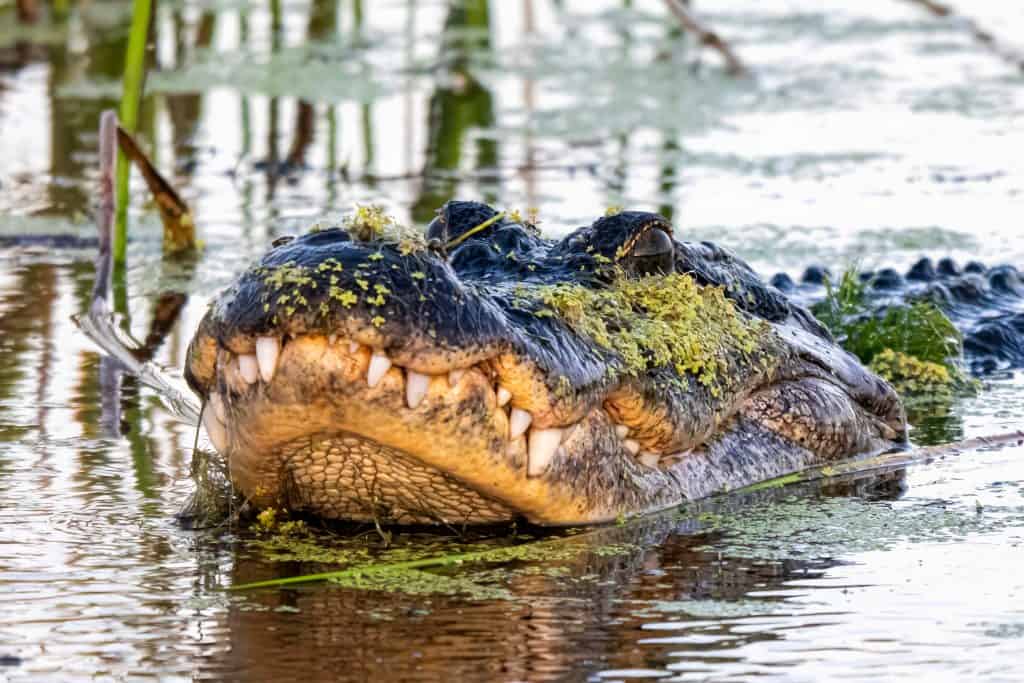
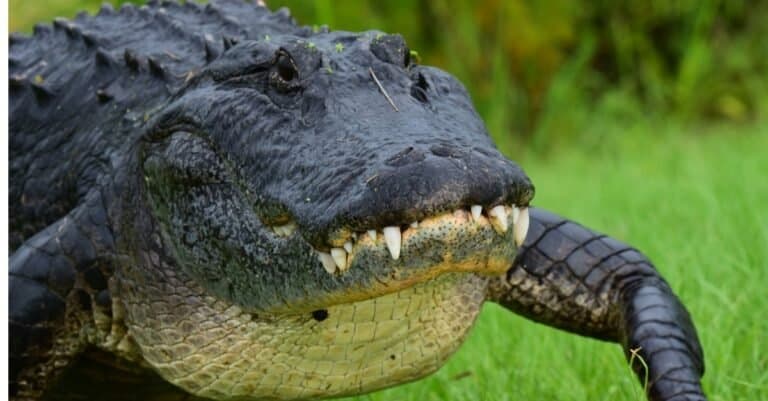
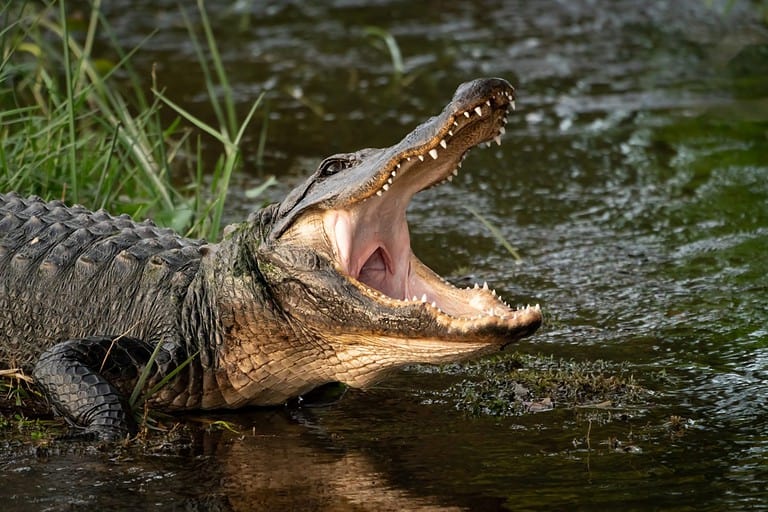
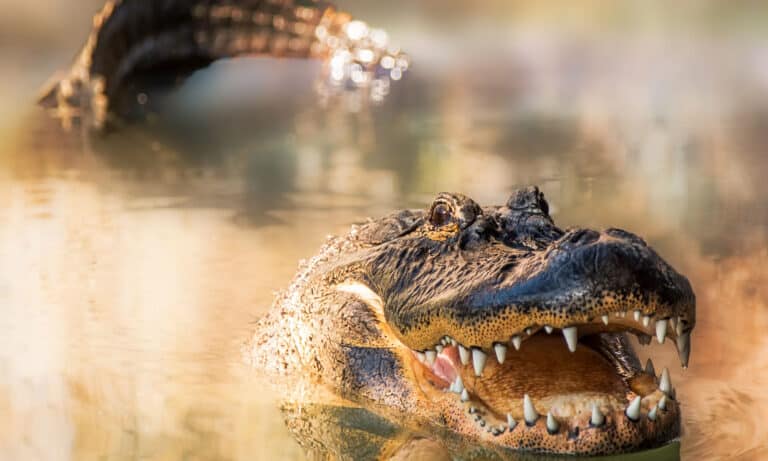
American alligators can attack without warning.
©Christopher J Barger/Shutterstock.com
Allison tried to get the alligator to release its grip, but it pulled them both underwater. When it did eventually let go, he took Clark onto the shore and called 911. He attempted first aid while waiting for emergency services to arrive. Clark was taken to a hospital, but sadly died from her injuries on the way.
Fatal alligator attacks are unusual in Florida, and the cause of this particular attack is currently unknown. According to the Florida Fish and Wildlife Conservation Commission, only a handful of deaths have been reported over the past several years.
How Did DNA Identify the Alligator?
Following the attack, trappers found and killed two large alligators in the Econlockhatchee River. One was roughly 12 feet long and the other around 13 feet long. Then, officials from the Florida Fish and Wildlife Conservation Commission (FWC) collected samples from the animals, which were tested at a laboratory in Gainesville and compared with DNA from the victim. Officials have now revealed that DNA collected from the larger, 13-foot alligator confirmed it was responsible for the deadly attack. Additionally, the medical examiner reported that bite marks on the victim’s body matched those of one of the alligators.
However, the investigation remains active as of July 2026.