
Quick Take
- Florida has 1.3 million alligators, yet researchers say the real attack trigger isn't the gator at all. What actually sets one off is something the swimmer is doing. See the attack triggers →
- Experts say alligators don't want to eat you, but then why couldn't Brittany Clark's boyfriend pull her free? Read Clark's story →
- Running from a charging alligator sounds obvious, yet most people would instinctively do it wrong. Learn how to escape →
A fun day of swimming suddenly turned tragic recently when a woman was attacked by an alligator in Florida. This marks the third attack in the state to date this year.
Woman Dies After Alligator Attack
On June 28, 2026, Brittany Clark was swimming in the Econlockhatchee River in the Little Big Econ State Forest with her boyfriend, Chance Allison. The river is known for its resident alligators, including a group of three to four near the Barr Street Trailhead, where Clark and Allison were swimming.
At 1:30 PM, Clark was attacked by a large alligator. Allison desperately attempted to free Clark from the alligator’s jaws, but it was to no avail. Clark died from her injuries while being transported to a local hospital.
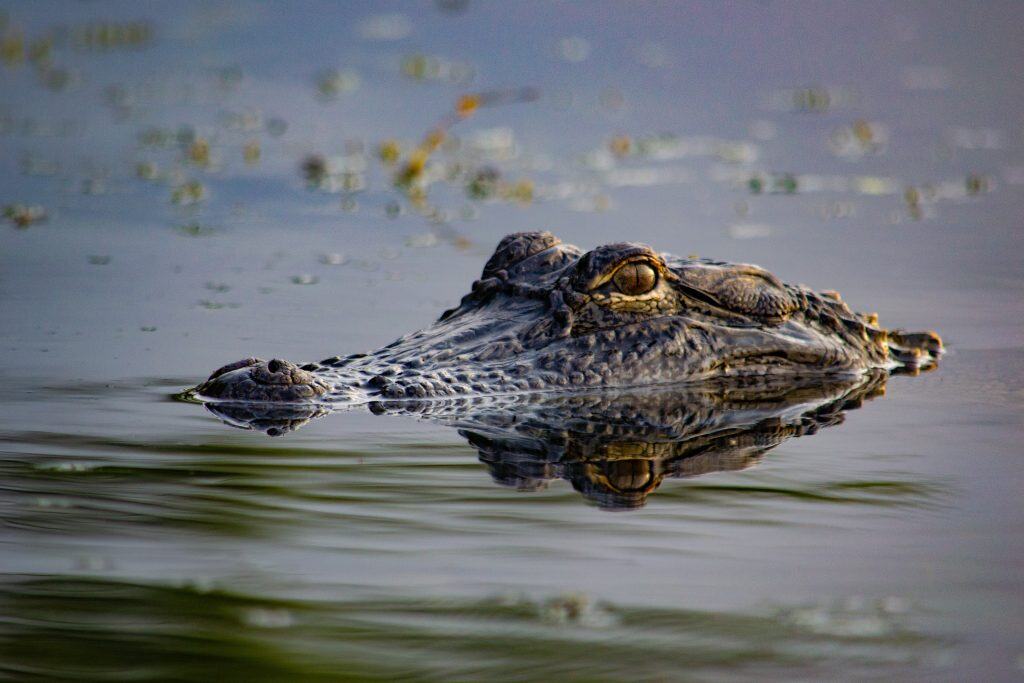
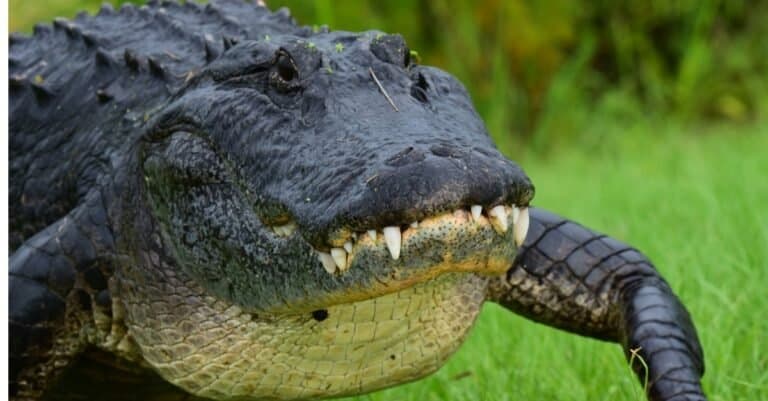
A 13-foot alligator was found to be responsible for Brittany Clark’s injuries that led to her death.
©SomervilleArts/Shutterstock.com
According to her recently released autopsy report conducted by the Orange County Medical Examiner’s Office in Orlando, Clark had “near complete traumatic amputations” of her right forearm and left arm at the shoulder. Teeth marks were also noted on Clark’s collarbone and left shoulder blade.
The Florida Fish and Wildlife Commission responded to the scene to locate the alligator that attacked, The Guardian notes. Two alligators, one 12 feet and the other 13 feet in length, were removed from the river and euthanized. It was later determined via DNA testing that the 13-foot alligator was responsible for Clark’s death.
Despite The Deadly Strike, Alligator Attacks Are Rare
Florida is home to an estimated 1.3 million alligators. With this large population, many assume that attacks are commonplace in the state. But despite the state’s large alligator population, serious alligator attacks remain rare.
Beginning in 1948, Florida began tracking alligator attacks. Since that time, 489 unprovoked attacks have been reported. Of those attacks, 31 were fatal.
According to a 2025 study conducted by the University of Florida and Centre College in Kentucky, 96% of alligator attacks are the result of “risky human behavior.” According to one of the study’s authors, Frank Mazzotti, a University of Florida wildlife ecology professor, alligators would prefer to leave humans alone.
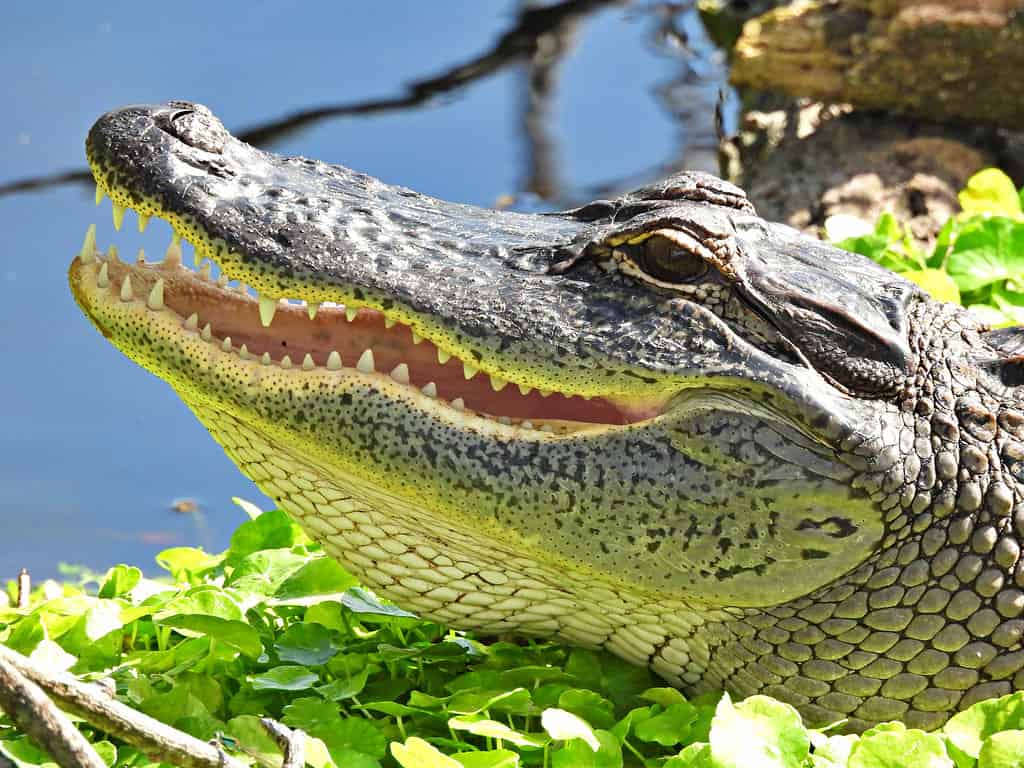
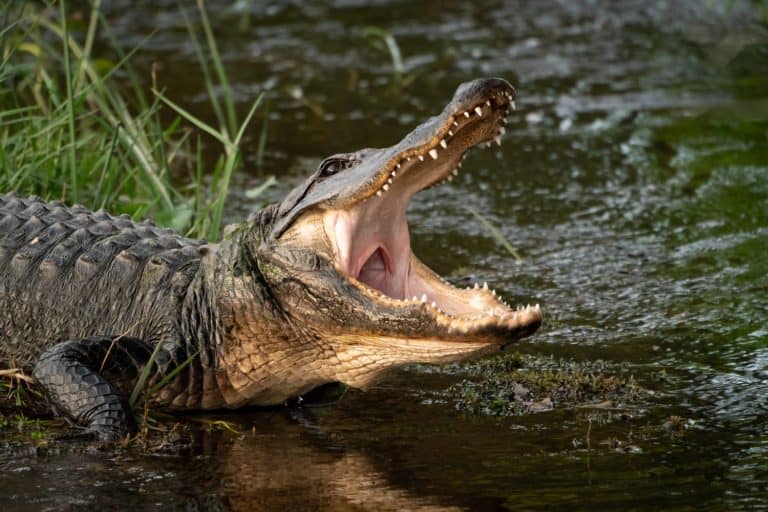
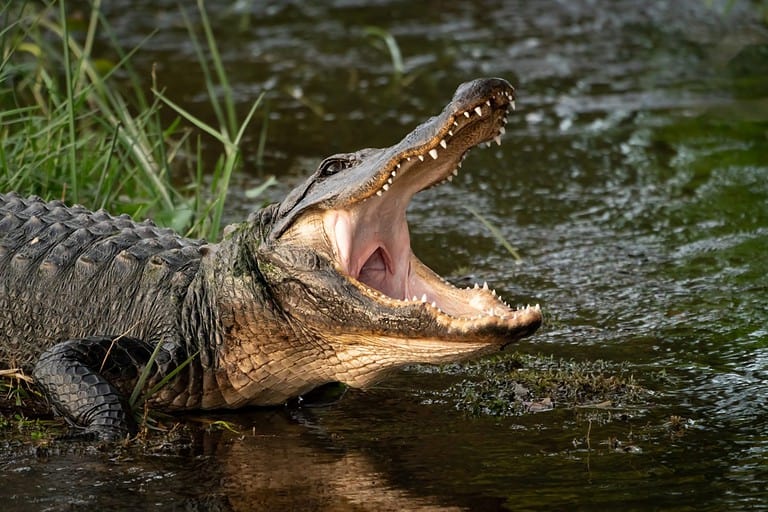
Alligator attacks are rare in Florida.
©passion4nature/iStock via Getty Images
“They’re not viciously aggressive, they don’t want to attack you, they don’t want to eat you, they’re no voracious eating machines,” Mazzotti explained to FOX 13. “None of those things are true about alligators. By and large, what they most like to do and spend most of their time doing is sitting in the sun getting warm.”
The study noted that the two biggest risk factors for alligators attacking are swimming in freshwater bodies known for alligator activity and walking dogs along freshwater shorelines.
If attacked while swimming, Mazzotti notes that alligators are responding to “attractive stimuli.” Splashing can potentially resemble the movements of prey and may increase the likelihood of an encounter.
How Can Alligator Attacks Be Avoided?
Clark was reportedly only swimming when she was attacked by the alligator. However, because June through August is the nesting season for alligators in Florida, the alligator may have been more aggressive than at other times of the year. This is important for others to remember, as alligators are known to inhabit nearly all freshwater bodies in Florida, especially during the summer.
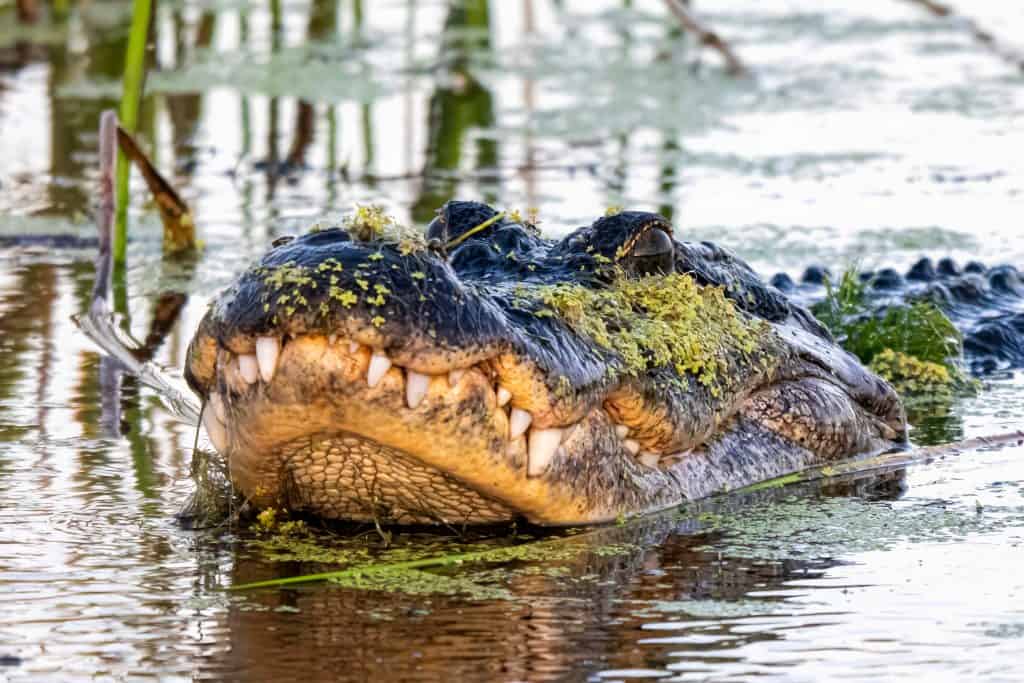
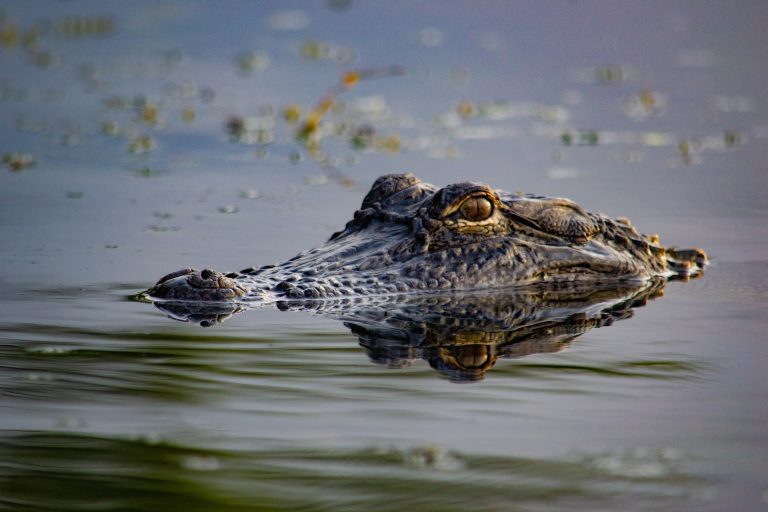
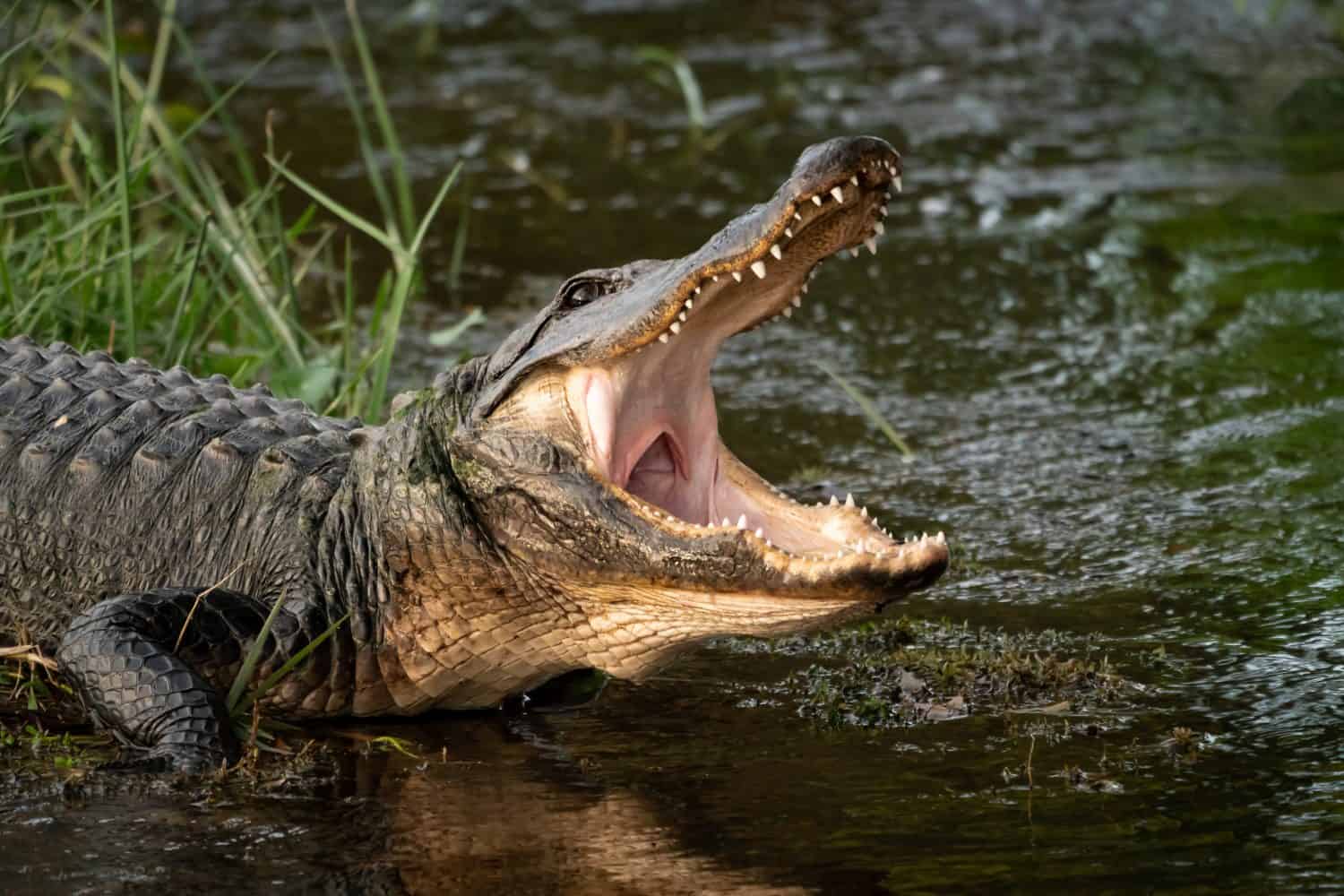
Alligator attacks can be avoided by keeping a safe distance, keeping pets on a leash, not feeding alligators, recognizing signs of agitation, and not swimming in known alligator habitats.
©Christopher J Barger/Shutterstock.com
Outside of being aware of higher-than-usual alligator aggression, there are other steps people can take to decrease their chances of an alligator attack. Those steps include:
- Keep a distance of at least 15 feet, preferably 60 feet away from alligators
- Stay away from lakes, swamps, marshes, and similar areas between dawn and dusk
- Keep pets on a leash and away from the water’s edge
- Keep children away from the water’s edge
- Never feed alligators
- Recognize the signs of an alligator feeling threatened, such as growling, snapping jaws, raising their head, or thrashing their tail
If an alligator does charge, the best course of action to get away is to run quickly in a straight line. While alligators are initially fast-moving, they cannot maintain high speeds over long distances, making it possible to outrun them. Clark’s death is a tragic reminder that people should take alligator safety seriously when swimming or spending time near Florida’s freshwater.