Quick Take
- A carnivorous snail introduced to Hawaii from imported garden plants played a role in dooming this bird to extinction, and that role was both decisive and deeply unexpected.
- Scientists knew the Po'o-uli was nearly extinct for nearly three decades before serious conservation action began.
- Feral pigs didn't just compete with the Po'o-uli for food. Their rooting behavior triggered a chain reaction that unleashed something far deadlier on Hawaii's birds.
- The last known Po'o-uli was alive and healthy in captivity, yet the species still vanished within weeks.
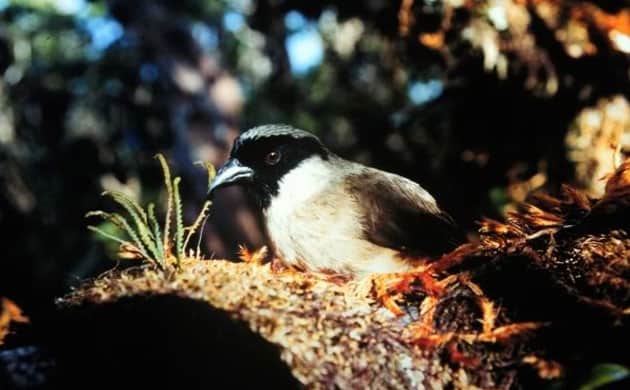
The Po’o-uli was first discovered by Western science in 1973 and became extinct in 2004.
©https://commons.wikimedia.org/wiki/File:Po%CA%BBouli.jpg – Original / License
When Charles Darwin visited the Galapagos archipelago, the vast bird diversity he observed helped crystallize his fledgling theories about the origin of species. Small differences among islands meant that the small number of birds that reached them diversified into dozens of new species, each uniquely suited to its island home and the different ecological niches found there.
A similar pattern, called adaptive radiation by evolutionary biologists, can be observed in the Hawaiian archipelago, and there’s no better example of this diversification than the Hawaiian honeycreepers (Family Fringillidae). Between 6 and 7.2 million years ago, a species of rosefinch reached the Hawaiian Islands; over 50 species descended from this original ancestor.
Evolution and Discovery of the Poʻo-uli
The most ancient of these descendants to survive into modern times was the Po’o-uli (Melamprosops phaeosoma), or the Hawaiian black-faced honeycreeper, which evolved into a distinct species about 5.7 million years ago. This bird lived on the slopes of Haleakalā, on the eastern side of Maui Island, and used its medium-length, slightly curved beak to hunt invertebrates like snails, spiders, and flying insects and their larvae. It had a spoon-shaped tongue that it used to scoop out the nutritious flesh from inside the shell of native Succinea snails, which populated the understory of Maui’s forests. The Po’o-uli scoured the branches and trunks of trees, probing beneath bark and lichen to seek out snails and insects, especially the ʻōhiʻa tree, which was also the tree favored for the bird’s nests.
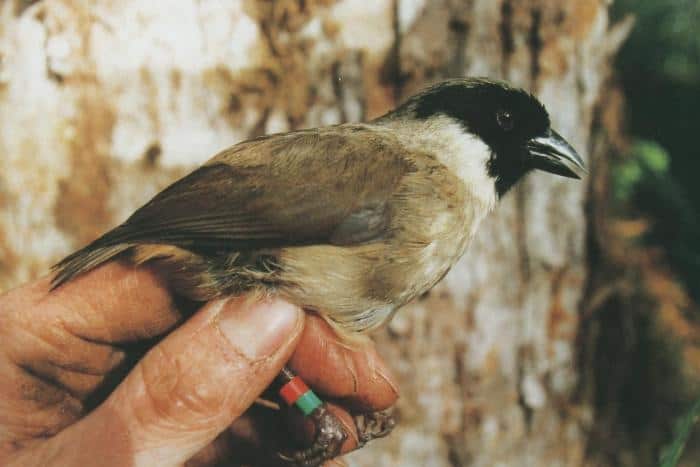
The black-faced honeycreeper is an ancient species.
©Paul E. Baker/USFWS (U.S. Fish and Wildlife Service)/Public Domain – Original / License
The Po’o-uli was an elusive bird; though it was known to Native Hawaiians, it was first observed by Western scientists in 1973, when a group of University of Hawai’i students discovered it during a biodiversity survey. At this time, the bird’s population was already close to the end of a steep decline; scientists estimated that just 100-200 individuals remained. Fossil evidence indicated that the species once had a much wider distribution across Maui, and its decline is linked to centuries of human migration to the Hawaiian archipelago.
Invasive Species and Ecosystem Collapse in Hawaii
When ancient mariners first reached the Hawaiian islands 1200-1000 years ago, they did not come alone; they brought their chickens, pigs, and dogs (and accidentally carried stowaway rats) to these far-flung ecosystems, forever changing them. The rats soon became predators of Hawaiian birds, which were naive to mammalian predators: the only native land-based mammals in Hawaii are the Hawaiian Hoary Bat and the Hawaiian Monk Seal. But the feral pigs would have a particularly devastating impact on the forests the Po’o-uli called home.
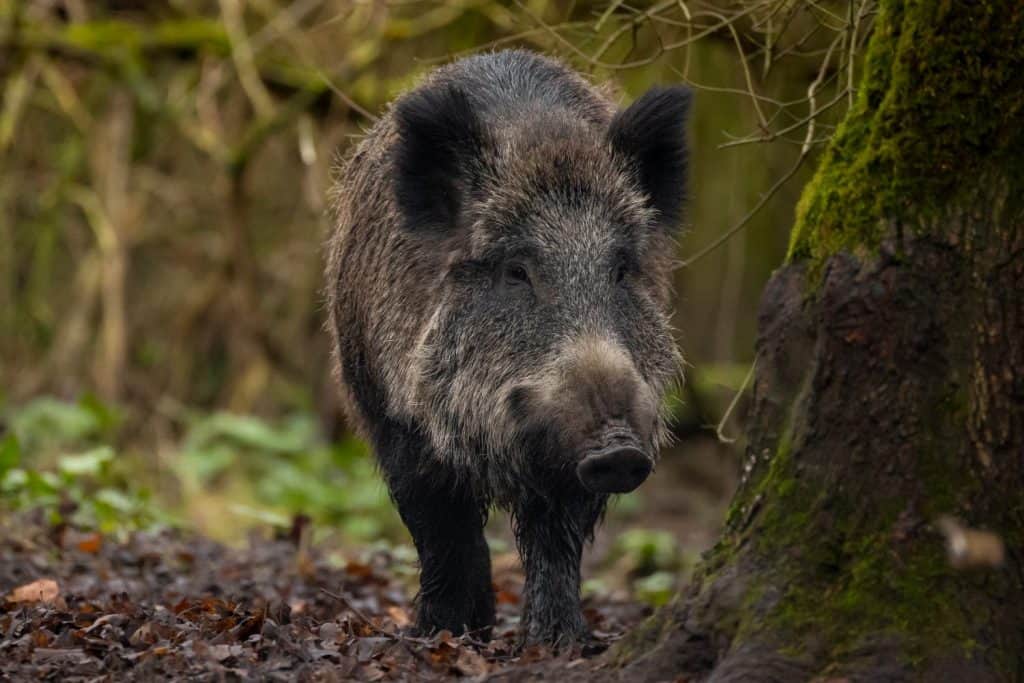
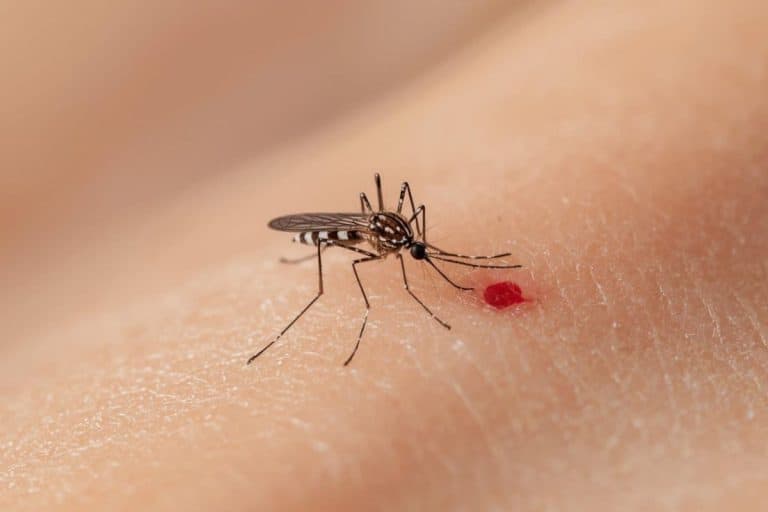
Feral pigs uproot native vegetation and create habitat for mosquitoes when they form wallows.
©Nick van den Berg/Shutterstock.com
Feral pigs (Sus scrofa) are famous for their ravenous appetites and propensity to dig, and both of these attributes harm Hawaii’s native birds. Opportunistic feeders, they compete with birds for some foods and eat their nests, eggs, and hatchlings. Pigs learned to knock over tree ferns to eat their starchy insides, making room for non-native plants to grow. Rubbing their sides and scraping their tusks against the bark of the ʻōhiʻa trees that the Po’o-uli nested in and used as nest-building materials allowed a deadly fungus to enter and kill many adult trees. Digging for their food, pigs create deep trenches, which fill with water, as would the hollowed-out stems of tree ferns. This standing water allowed mosquitoes to breed, and in the 1940s, these mosquitoes became carriers for a new and deadly invader—the one that would prove most lethal to the Po’o-uli.
Avian Malaria and the Decline of Native Birds
In the 1940s, avian malaria was first discovered in the Hawaiian Islands, a disease caused by a tiny protistan, Plasmodium relictum. Because Hawaiian honeycreepers had never encountered the parasite before, infections were up to 90% lethal, making avian malaria a major cause of extinctions and population declines among native birds. Many species, including the Po’o-uli, retreated from the warm lowlands where malaria-ridden mosquitoes could breed into cooler montane forests. Ecologists believe that this combination of disease and ecosystem-disrupting invaders explains why the bird was first discovered in such a restricted range, when once it was much more widespread.
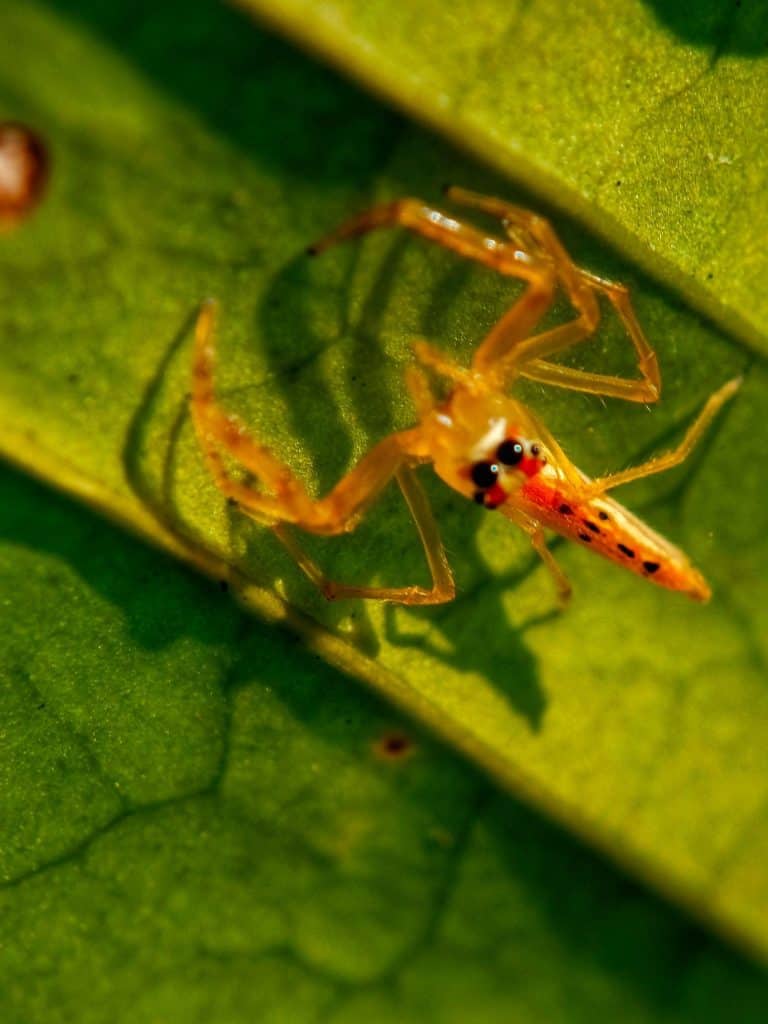
Around the same time as the arrival of Plasmodium relictum, a most peculiar snail was brought to the Hawaiian Islands. Named for its pungent odor, the garlic snail (Oxychilus alliarius) is unusual among snails: it is carnivorous, and other snails are its favorite meal. Using pheromone-sensing tentacles, they track the slime trails of other snails, drill through their shells with rough ‘teeth’ on their radula (a tongue-like structure found in most gastropods), and consume their insides. Like many invasive species, they arrived with imported decorative plants intended for homeowners’ gardens.
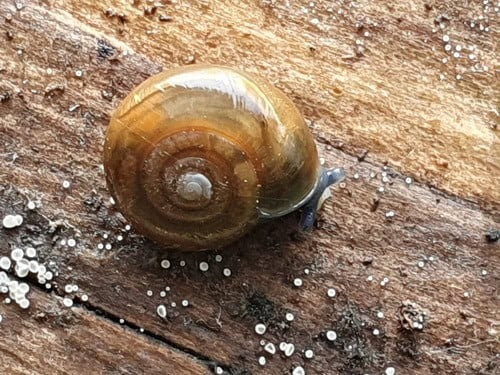
Unassuming garlic snails such as this one have devastated native Hawaiian gastropods.
But just as Hawaii’s birds evolved without pressure from protistan parasites and hungry mammals, its snails evolved without the presence of predatory snails. Today, Hawaii’s native snail species are at risk of extinction from this slimy predator. The Po’o-uli, which evolved over millennia to prey upon snails with its shovel-like tongue, found no safe refuge in high-elevation woodlands; lacking access to their favored prey, the birds struggled to maintain their population.
Conservation Efforts and the Final Years of the Poʻo-uli
When the Po’o-uli was first discovered in 1973, it was near the brink of extinction, numbering no more than 200 individuals. Unfortunately, conservation professionals did not take immediate action to protect this rare bird; targeted efforts to prevent its extinction did not begin until the early 2000s.
By 1985, the population of the Po’o-uli had cratered, dropping by 90% from the date of its discovery to under 50 individuals living in a small area of Maui’s mountainous highlands. The state government collaborated with the county government, the Nature Conservancy, and the National Park Service to create Hanawi Natural Area Reserve. After the land was fenced off, a pig removal project began, followed by the removal of rats, cats, and goats. Though other species of Hawaiian honeycreeper did see population increases following this intervention, by 1997, only 3 Po’o-ulis were known to exist.
After site-specific conservation efforts failed to help the Po’o-uli, conservationists began implementing a species-specific plan. Their first attempt, in 2002, involved capturing a female and bringing her to the home range of a male; disappointingly, she flew back to her own home range almost immediately.
With only 3 known individuals remaining in 2003, the bird’s protectors changed their tactics. Teams spread throughout the forests with mist nets, in hopes of beginning a captive breeding program for the species. Conservationists at the Maui Bird Conservation Center had experienced success with breeding other Hawaiian honeycreepers in captivity; they hoped that they could do the same for the Po’o-uli.
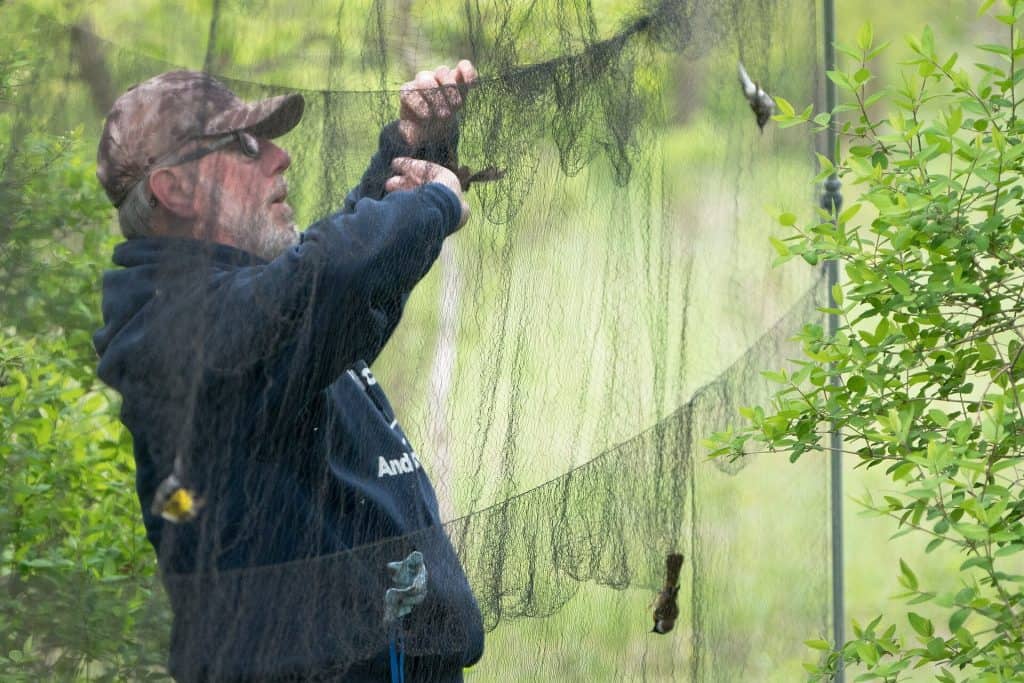
Mist nets like these are essential for studying wild bird populations.
After many months of deploying mist nets in remote, steep rainforests, there was finally a hopeful moment on September 9th, 2004, when a male was captured on the slopes of Haleakalā. The team brought him back to the specially designed enclosure they’d created at the Maui Bird Conservation Center and redoubled their trapping efforts in hopes of catching a female.
The bird acclimated well to captivity, eating and appearing relaxed. He was a healthy weight and showed no traces of avian malaria infection. But the teams setting traps in the home ranges of the remaining Po’o-uli were returning only with bad news; not only were they not catching the remaining individuals, but they had also stopped sighting them, whereas during previous expeditions, the bird could reliably be spotted.
On November 26th, 2004, the final known Po’o-uli died as a result of a swift illness; the species has not been seen since. The bird is presumed extinct. Several samples of Po’o-uli DNA are held at the San Diego Zoo’s “Frozen Zoo.” Though some hope that extinct species could be resurrected from their DNA samples, no such attempts have yet been successful.
Though the story of the Po’o-uli lacks a happy ending, the lessons learned from this animal’s extinction have been far-reaching. Captive-breeding programs are no longer a last resort in endangered species management, as biologists agree that the actions taken to protect the Po’o-uli were too little, too late. Innovative approaches to combat avian malaria have been deployed, such as releasing millions of mosquitoes infected with a sterilizing bacterium into the wild and introducing another bacterium into forest pools to kill mosquito larvae. Fencing, trapping, and hunting feral pigs have also been recognized as key parts of protecting Hawaii’s avian diversity. And though many Hawaiian birds remain on the Endangered Species List, no similarly well-documented bird extinction has occurred in Hawaii since 2004.