Quick Take
- The odds of a white bison calf being born are staggeringly low. See the staggering odds →
- Native American spiritual leaders say this white calf isn't just a wonder. They believe it carries a warning the world needs to hear. Hear the sacred warning →
- White bison aren't actually albino, sporting the typical black nose and dark eyes. Discover why leucism matters →
- Bison once numbered in the tens of millions across North America, so it raises the question of what nearly erased them within a single generation. Learn what nearly erased them →
Babies are always a cause for celebration—perhaps even more so when the babies in question help further wildlife conservation. A new bison calf born at Neal Smith National Wildlife Refuge in Iowa is especially exciting. It isn’t just any new bison: it’s a rare white bison calf.
“We’re thrilled to welcome a new addition to the prairie—a bison calf with an unusual whitish coat,” the wildlife refuge wrote in a May 4 Facebook post. “This is a rare sight, as most newborn bison calves are usually reddish-brown.”
In pictures shared by the wildlife refuge, the calf is stunningly beautiful with its white fur coat that stands out against the adult bison with dark brown fur. White bison are also extremely rare; the National Park Service (NPS) estimates that only one white calf is born in the wild for every one million births.
All About American Bison
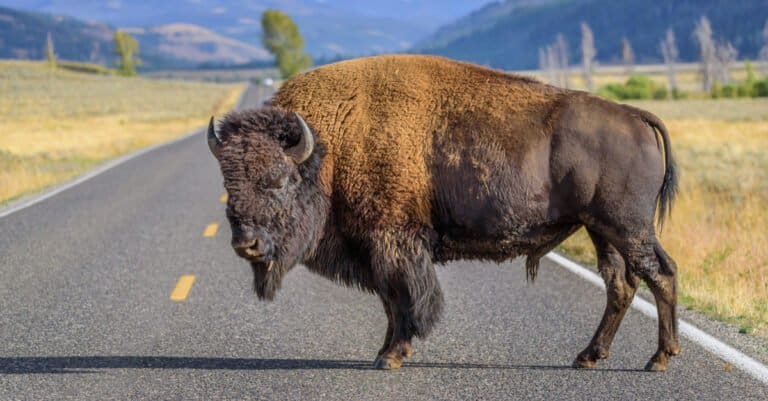
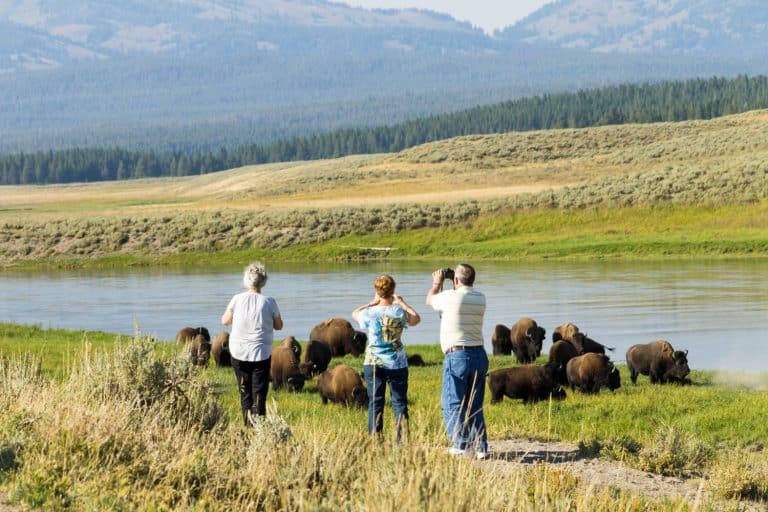
American bison bulls can grow up to 6 feet tall and weigh up to 2,000 pounds, while females reach 4–5 feet and weigh up to 1,000 pounds. They are the largest land mammal in North America and are the official national mammal of the U.S. They live in national parks and mountains, eating mostly grass.
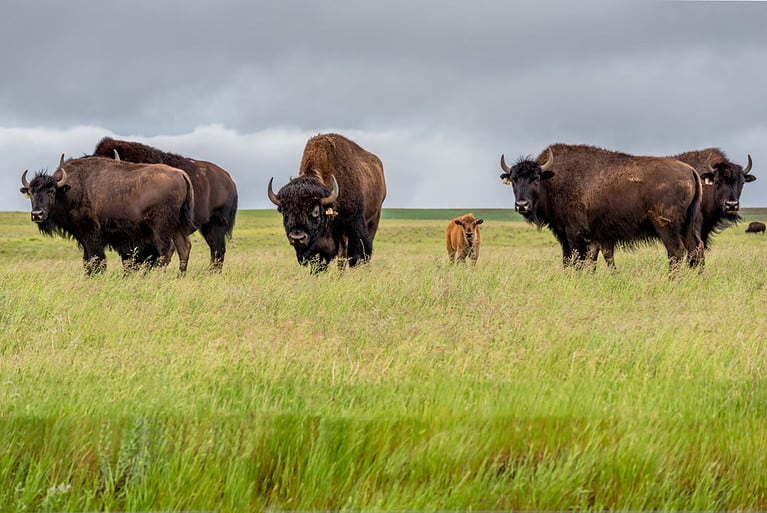
Baby bison weigh anywhere from 30 to 70 pounds at birth (we feel sorry for that labor and delivery!) and stick close to their mothers for several months until they are weaned. Most bison calves are called “red dogs” due to their typical reddish-brown coats.
Significance to Native American Cultures
A white bison holds spiritual and cultural significance in Native American communities.
“To American Indians, a White Buffalo Calf is the most sacred living thing on earth,” the National Park Service Biological Resources Division in Colorado wrote in an article. “The calf is a sign to begin life’s sacred loop. Some American Indians say the birth of a white calf is an omen because the birth takes place in the most unexpected places and often happens among the poorest of people.”
They added that a white bison’s birth signals hope and approaching good times.
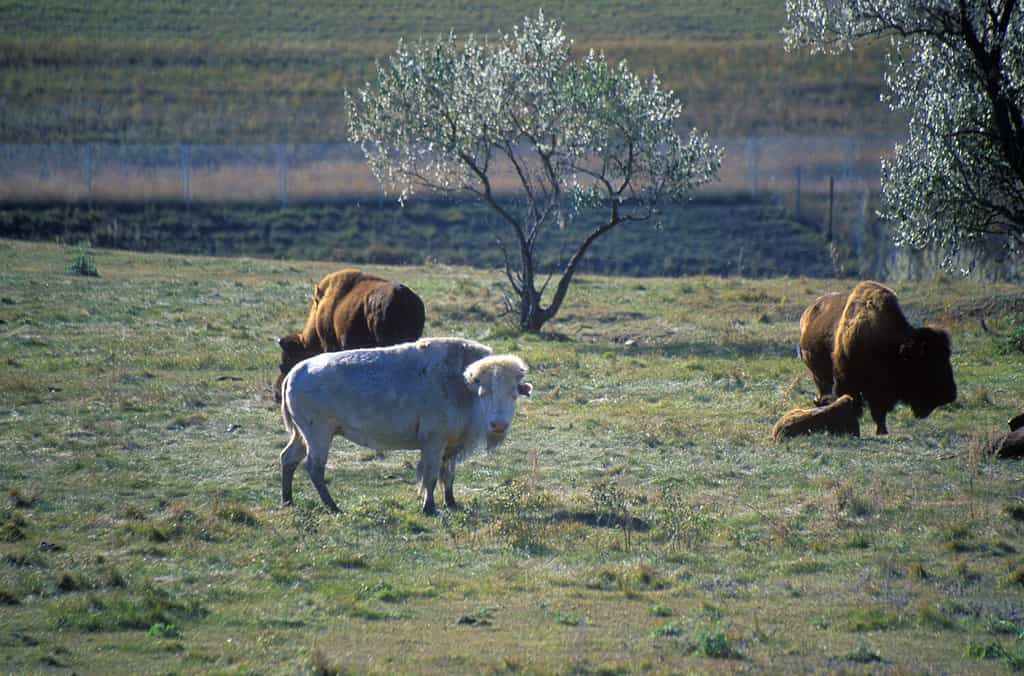
White bison are rare, with some estimates putting their birth at one in a million.
©Joseph Sohm/Shutterstock.com
After a white buffalo was born in Yellowstone National Park in June 2024, an American Indian tribe cautioned the public about its significance to the world. Chief Arvol Looking Horse, spiritual leader of the Lakota, Dakota and the Nakota Oyate in South Dakota, told Associated Press at the time, “The birth of this calf is both a blessing and warning. We must do more.”
Looking Horse is the 19th keeper of the sacred White Buffalo Calf Woman Pipe and Bundle, which honors a Lakota legend about a White Buffalo Calf Woman. According to the tradition, food was scarce and bison were disappearing about 2,000 years ago, when the White Buffalo Calf Woman appeared to present a bowl pipe and bundle to a tribal member. She taught the member to pray and use the pipe to draw buffalo to the area before she transformed into a white buffalo calf.
According to Looking Horse, she said, “And some day when the times are hard again, I shall return and stand upon the earth as a white buffalo calf, black nose, black eyes, black hooves.”
Other American Indian tribes have their own legends and traditions related to the sacred white buffalo.
The Cause of White Bison Calves
Many different animal species born white are albino, which means they completely lack pigment. Their eyes and a nose appear pink. Mammals, birds, reptiles, amphibians, and fish could all be born albino if they possess a recessive trait, but this only occurs in about one out of every 10,000 births, according to Summit Wildlife Removal.
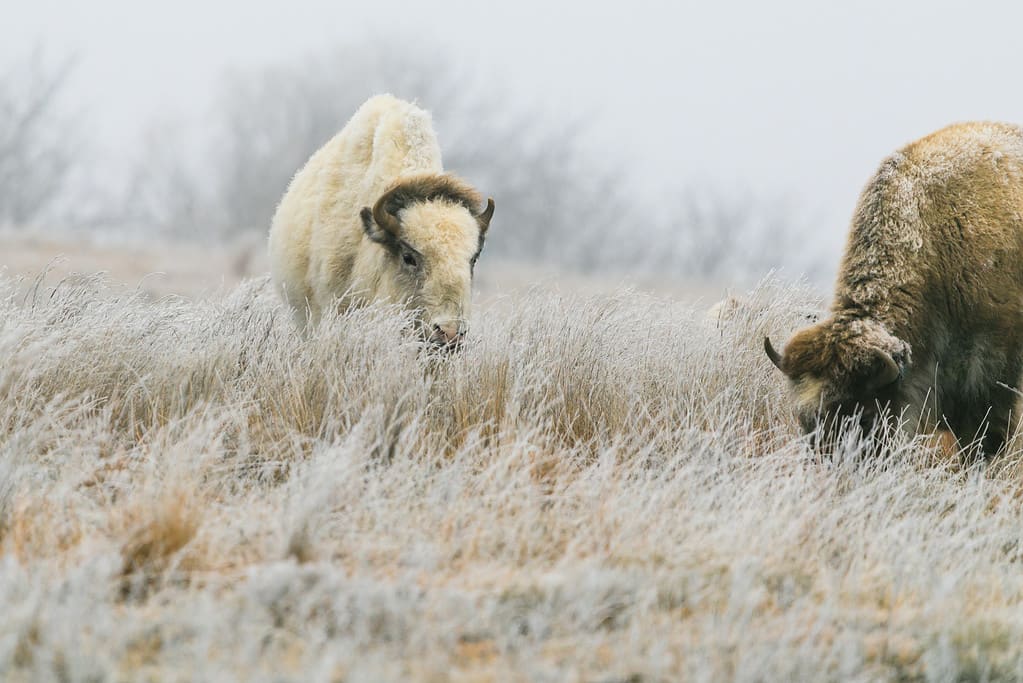
A white bison has special cultural significance in American Indian communities.
©Marine2844/ via Getty Images
On the other hand, partial albinism is called leucism, which means the animal may have white fur, scales, or skin, but does not have pink eyes or noses. This is the type of white bison that is considered sacred in American Indian cultures, as the white buffalo in the tradition is known for its black nose, black eyes, and black hooves.
American Bison Conservation Efforts
Before the 1800s, bison used to roam freely across North America, with some estimates suggesting there were between 30 and 100 million individual bison, according to the Smithsonian’s National Zoo & Conservation Biology Institute. By the 1890s, fewer than 1,000 bison were left — down from an estimated 60 million in the late 18th century — primarily due to overhunting and habitat destruction. Conservationists have worked hard to bring this majestic breed back from near extinction, and the remaining bison are dependent on conservation efforts to continue to survive.
As of 2026, the American bison are listed as Near Threatened on the IUCN Red List.