
Quick Take
- The Attwater's prairie chicken isn't actually a chicken, and understanding what it really is changes how you see its fight for survival. Discover the real taxonomy →
- A tiny invasive insect dealt one of the most devastating blows to this species' survival. See the fire ant threat →
- A Texas ranching family has played a major role in helping this species survive alongside official conservation efforts. Explore Wexford's approach →
- This bird's population once numbered around a million, and the chain of events that collapsed it to near-zero is more tangled than any single cause. Trace the population collapse →
The Wexford Ranches of South and West Texas have received a prestigious conservation award. The O’Connor family, who have been ranchers in Texas since 1836, received the Leopold Conservation Award for their commitment and devotion to the unique ecosystems and wildlife found in the Lone Star State. One species that has especially benefited from Wexford Ranches’ exceptional habitat management is the critically endangered Attwater’s prairie chicken.
The Beleaguered Attwater’s Prairie Chicken
Attwater’s prairie chickens (Tympanuchus cupido attwateri) are not actually chickens but are a type of grouse. They are members of the Phasianidae family, which includes partridges, peafowl, and quail.
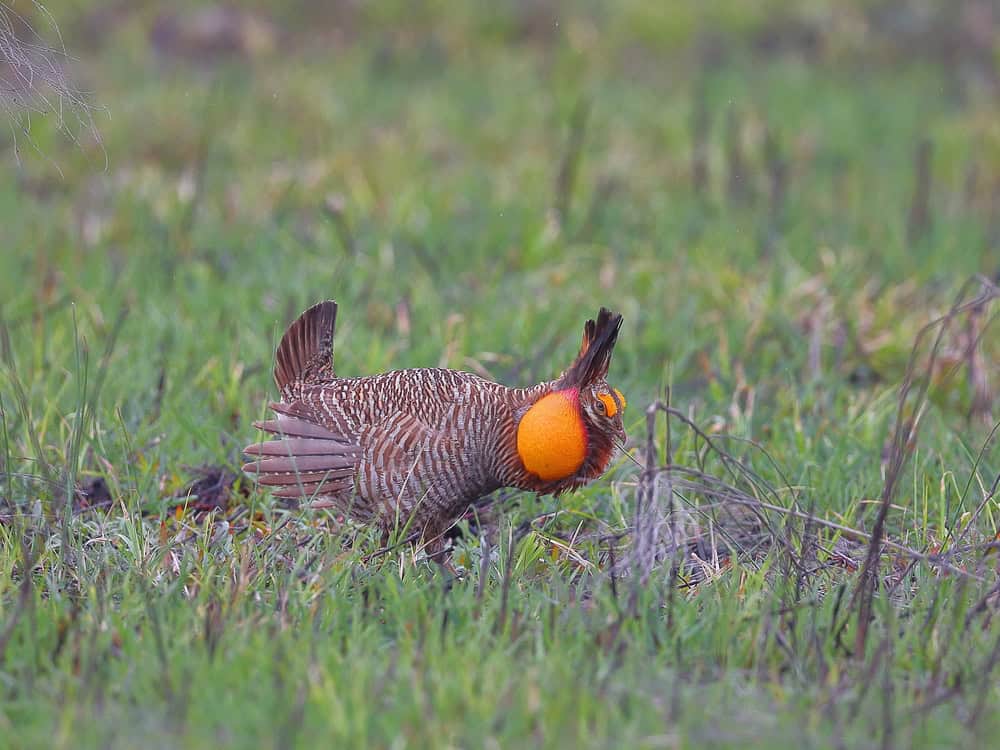
These rather striking-looking birds weigh up to around 2.5 pounds. Their bodies are chunky, rounded, and about the size of a football. Both males and females have barred brown and white feathers. Males also have bright yellow/orange combs above their eyes and air sacs on their necks.
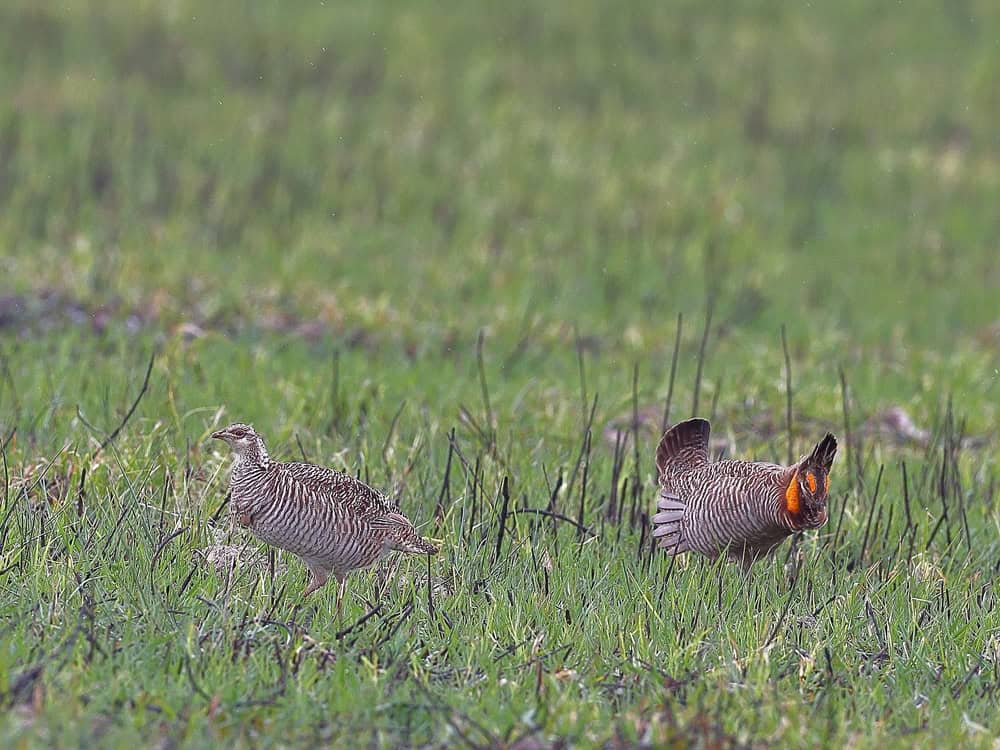
Attwater’s prairie chickens are a type of grouse.
©Robert Shupak/Shutterstock.com
Attwater’s prairie chickens are ground-dwelling birds that spend most of their time hiding out in tall prairie vegetation. If needed, they can fly several miles between roosting and feeding sites. Adults forage for leaves, seeds, and buds while young chicks eat insects such as grasshoppers.
Why Did Attwater’s Prairie Chicken Populations Decline?
Historically, this species would have been seen on 6 million acres of prairie. Their range extended along the Gulf Coast from Corpus Christi, Texas, north to the Bayou Teche area in Louisiana, and up to 75 miles inland. Today, however, they are critically endangered, and only two populations remain in very limited habitats, including the Wexford Ranches and the Attwater Prairie Chicken National Wildlife Refuge.
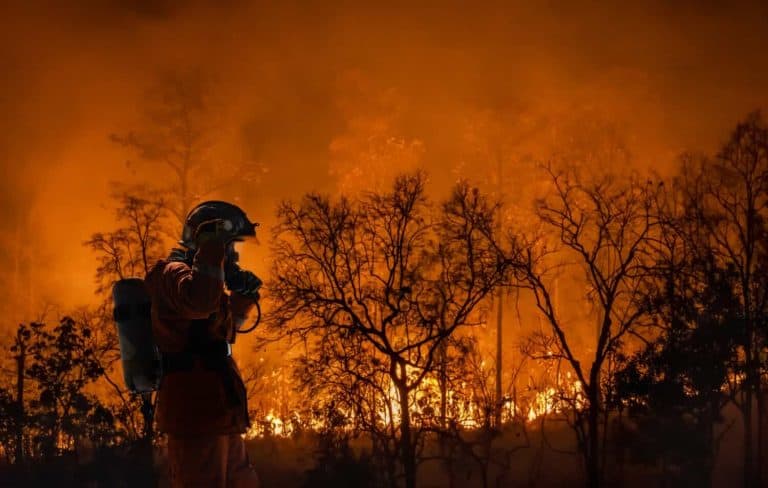
When this bird’s population was healthy, there would have been around 1 million birds in their range. The species suffered severe losses from 1900 onwards due to three main factors: habitat loss, habitat fragmentation, and the introduction of red fire ants.
Habitat Loss Nearly Destroyed the Attwater’s Prairie Chicken
Sadly, coastal prairie habitats were converted to cropland or taken over by towns, cities, and industry. As the pasture was ‘improved,’ native plants were destroyed due to fire suppression, and invasive plant species arrived and spread. Now, just 1 percent of the Gulf coastal prairie habitat remains. Because this habitat is also fragmented, each pocket is too small to support a prairie-chicken population.
Hunting has also put the birds’ population in jeopardy. Commercial and recreational hunting during the 1800s and early 1900s was often excessive and poorly regulated. Hunters competed to kill the most birds, leaving piles of carcasses to rot. Eventually, hunting these birds was banned in Texas in 1937, but the damage had already been done.
Threatened by Invasive Fire Ants
Fire ants have further worsened the situation. They are an invasive species introduced to Texas in the 1950s. This aggressive ant species killed off much of the local insect population, leaving very little for prairie chicken chicks to feed on. This lowered chick survival rates and added to the decline.
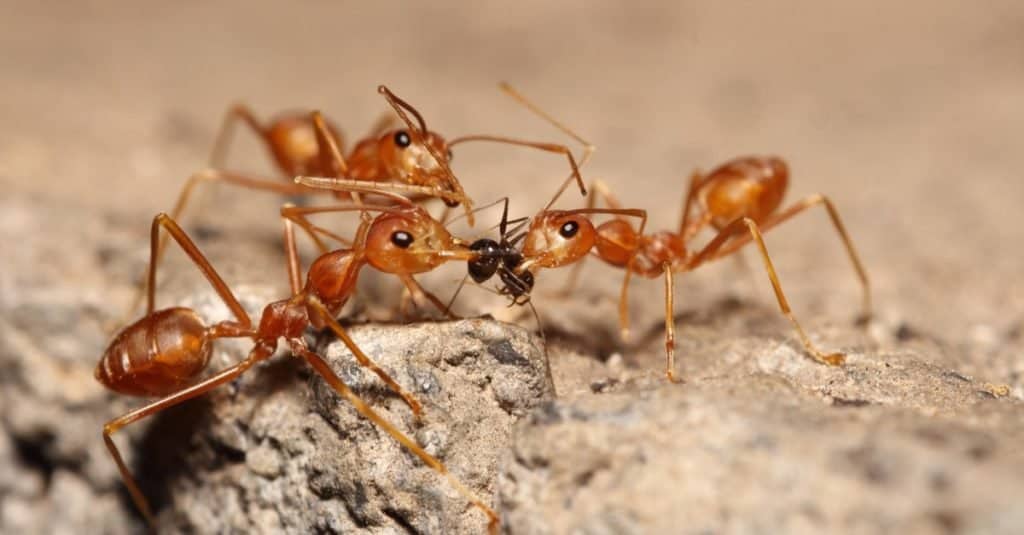
Fire ants competed with Attwater’s prairie chicks for food.
©sarawuth wannasathit/Shutterstock.com
Small populations of any animal are always more vulnerable to diseases, genetic anomalies, and parasites due to inbreeding. Storms, droughts, and increases in predators threaten their very existence. Sadly, many species are entering population declines that are difficult to reverse.
However, the outlook for Attwater’s prairie chickens is now more hopeful, thanks in part to the efforts of Wexford Ranches of South and West Texas, the O’Connor family, and their employees.
How Did Wexford Ranches Win the Conservation Award?
Wexford Ranches has received the Leopold Conservation Award in honor of renowned conservationist Aldo Leopold. It is given to ranchers, farmers, and forestland owners who inspire others with their dedication to environmental improvement.
A portion of Wexford Ranches, known as Duke Prairie, spans 14 linear miles and includes several lakes and waterways. The ranch has spent decades managing and enhancing the area to establish habitats for endangered species. Over the past five years, more than 50 Attwater’s prairie chickens have been observed there. Other bird populations, including quail, have also flourished.
Thanks to their conservation practices, water flow into natural streams has increased. There is less stress on the pasture thanks to well-managed grazing practices, which have seen the resurgence of native grasses. This provides hiding places and nesting structures for native birds. Native grass also stabilizes topsoil, which increases water infiltration in this semi-arid region. Ranch foreman Kai Buckert has played a leading role by introducing new technologies and innovative conservation practices.
In this Texas Parks and Wildlife Press Release, Tim Siegmund, Private Lands Program Leader for the Texas Parks and Wildlife Department’s Wildlife Division, said, “Their management allows a glimpse into what portions of our state looked like prior to settlement and allowed the species dependent on these systems to thrive.” It is hoped that this will serve as an example of what can be achieved for other farmers, ranchers, and land managers.