Quick Take
- North America's fastest land mammal can actually outlast a cheetah, and its closest living relative is not what you would expect. Meet North America's fastest →
- Pronghorn have followed the same Wyoming route for 6,000 years, yet human development threatens the migration entirely. Explore the ancient route →
- Protections for the migration path faced fierce criticism. See the near-derailment →
- Wyoming built infrastructure specifically for this migration, though it only solves part of the problem. See Wyoming's wildlife infrastructure →
The fastest land mammal in North America embarks on a 150- to 200-mile trek every spring and again in the fall. Pronghorns in Wyoming migrate each year between their winter grounds in the Green River Valley and their summer location in Grand Teton National Park. It’s a difficult journey, not just because they must cross rough terrain, but because of the dangers they face from human development. Along their route, they cross highways and navigate through neighborhoods. Since the early 2000s, conservationists have sought to protect this critical migration corridor. Today, protection awaits a governor’s signature.
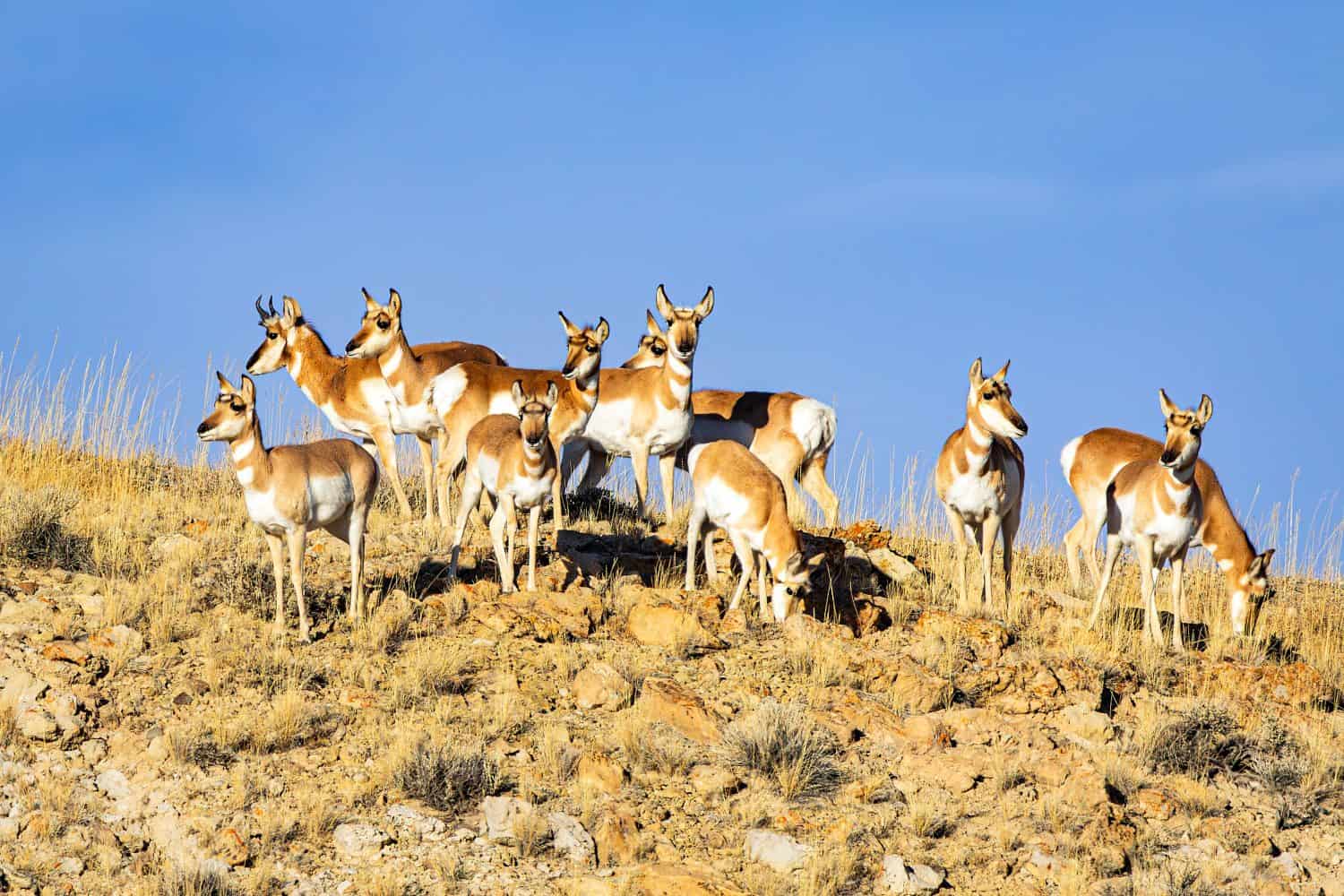
Pronghorn herds complete a nearly 300-mile round-trip migration each year.
©Tom Olson/Shutterstock.com
Meet the Pronghorn
Pronghorn (Antilocapra americana) are the only species to remain in the Antilocapridae family. By the end of the Pleistocene era (11,700 years ago), the other 12 members of the family had gone extinct. Pronghorns are only found in North America. Although they are also called antelopes, they are not closely related to the African antelope. In fact, the pronghorn’s closest living relative today is the giraffe.
These fast-moving animals once numbered in the millions in the American West. They can run at speeds up to 60 miles an hour. Cheetahs may be faster during sprints, but pronghorns have more endurance. They can maintain speeds of 40 miles per hour for up to an hour at a time. Both males and females have horns, though female horns are much smaller. With their amazing eyesight, they can spot predators from miles away across the plains.
The Path of the Pronghorn is a Grueling Journey
Pronghorns were nearly hunted to extinction during the 19th and 20th centuries. By the early 1900s, their numbers dropped to a low of around 20,000. Thanks to conservation efforts and hunting regulations, they have rebounded to around one million. The survival of pronghorns depends on their ability to migrate. Pronghorns living in areas with year-round food do not need to migrate, but those in colder regions undertake a nearly 300-mile round trip each year to find food.

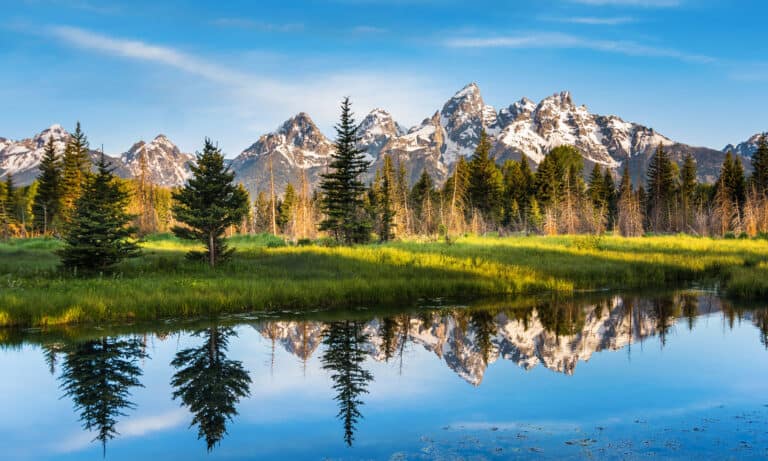
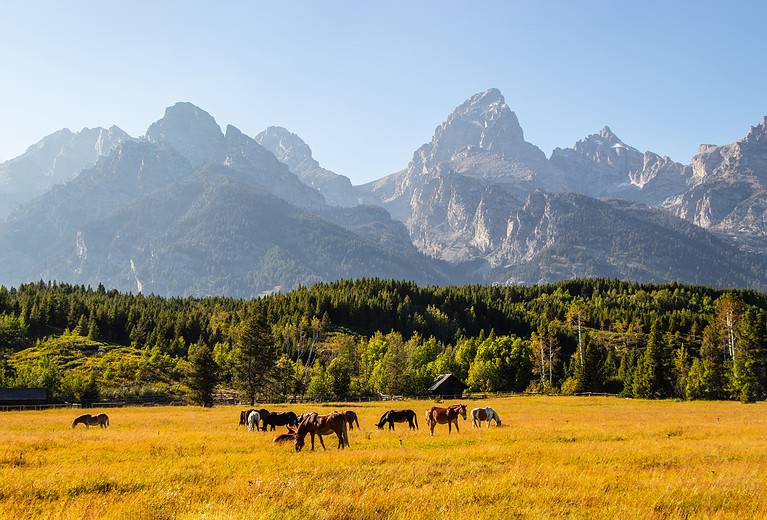
Pronghorns leave Grand Teton National Park during winter when food grows scarce.
©iStock.com/christiannafzger
In Wyoming, the Sublette Pronghorn Herd begins its winter migration in late fall, following a path that pronghorn have taken for 6,000 years. The pronghorns depart from their summer grounds in Grand Teton National Park and head south, where they must pass through ranches, private land, roads, and fences. They are headed to the Upper Green River Valley in Wyoming, which is abundant in one of their main foods, sagebrush.
Why Bottlenecks Can Make or Break the Migration
During their journey, the herd must pass through difficult areas, known as migration bottlenecks, where the route narrows and progress is slowed. Bottlenecks can occur because of natural obstacles like cliffsides and rivers, or due to human development, such as mines. The Wyoming Department of Transportation has helped protect the migration route by investing in projects such as building wildlife overpasses and underpasses. They have built two wildlife overpasses for pronghorns and six underpasses for other migrating animals, allowing them to safely cross a stretch of land at Trapper’s Point that has historically been hazardous to wildlife.
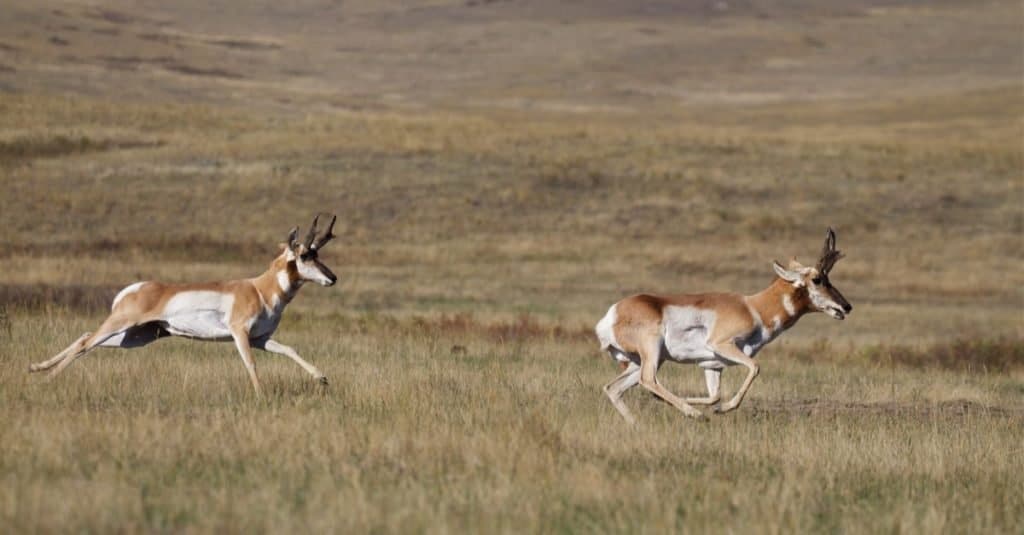
Pronghorns can reach speeds of up to 60 miles per hour.
©Tom Reichner/Shutterstock.com
The 25-Year Fight to Save the Path of the Pronghorn
The current legislation, which is about to be signed by Wyoming’s governor, is the result of a long process. In 2003, conservation biologist Joel Berger wrote the paper, “Is it acceptable to let a species go extinct in a national park?” Another five years later, in 2008, the U.S. Forest Service enacted the Bridger-Teton National Forest plan amendment, which protected a portion of the northern migration route.
Progress can be slow; it has now been nearly 20 years since the 2008 amendment. Conservationists have worked hard to gain protection for the Path of the Pronghorn, while biologists have spent time studying the importance of the wildlife corridor. Without the ability to travel south, the pronghorn that live in Grand Teton National Park would likely not survive the harsh winter.
Nearing Permanent Protection
The plans for protection almost didn’t succeed. In 2019, Wyoming began the process of designating the corridors for protection. But, an alliance representing the mining industry and agriculture groups nearly derailed the progress with a letter voicing their concerns to the Wyoming Game and Fish Department.
After receiving the letter, Game and Fish Deputy Wildlife Chief Doug Brimeyer told Jackson Hole News and Guide, “I wouldn’t say that they’ve been suspended, but we’re going to take a little time to consider everyone’s thoughts on these last two designations that we’re working on. We didn’t want our guys to be pushing forward with things given that recent correspondence.” However, later that year, Gov. Mark Gordon introduced a new migration policy via executive order.
Recently, a working group appointed by the governor completed its final review of the Sublette Antelope Migration Corridor and is preparing to send its recommendations to the governor for final approval.