
Quick Take
- The butterfly was rediscovered doing something scientists had never seen it do before, and that single behavior may be what saved it. Read the rediscovery story →
- The first attempts to breed the rescued population nearly collapsed, but two decades later, their numbers are almost unbelievable. See the breeding breakthrough →
- This butterfly's entire adult life, which includes courtship, mating, and egg-laying, has to happen inside a window most people would consider impossibly short. Explore the short lifespan →
- Saving this species required planting something most people would never associate with butterfly conservation. That plant is now critical to every release. Discover the critical host plant →
The Palos Verdes blue butterfly was once believed to be extinct. Thanks to conservationists, this federally endangered butterfly is making a comeback. Learn more about this rare butterfly, including its history, ecology, and how field teams are restoring this butterfly’s native habitat.
The History of the Palos Verdes Blue
Scientists first described the localized subspecies of the silvery blue butterfly (Glaucopsyche lygdamus), the Palos Verdes blue (G.l. palosverdesensis), in 1977. The slightly different patterning on the underside of the wings helped distinguish this rare species from the far more common silvery blue. It was quickly added to the U.S. Endangered Species Act in 1980.
However, by 1983, their habitat on California’s Palos Verdes Peninsula in Los Angeles County was nearly wiped out by development. The butterfly requires coastal sage scrub for its survival, primarily laying its eggs on the Santa Barbara milkvetch (Astragalus trichopodus var. lonchus). Photos were taken of the last known butterflies in March of that year, right before fire control scraped the area. The Palos Verdes blue butterfly was thought to have gone extinct.
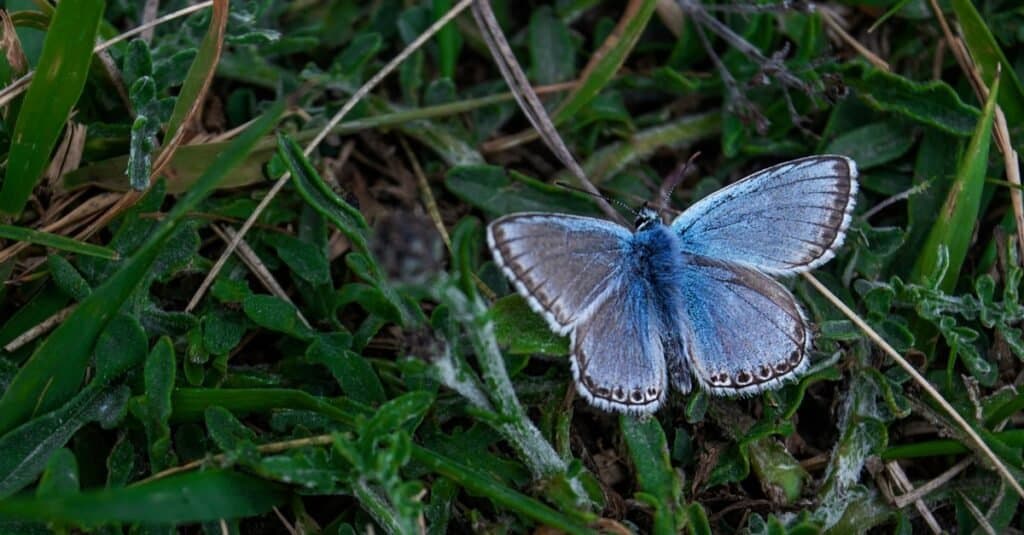
The Palos Verdes Blue butterfly has only a 1-inch wingspan.
©Katerina Iacovides/Shutterstock.com
Miraculously, the butterfly was rediscovered in 1994 by Rudi Mattoni, Timothy Dahlum, and Rick Rogers. New eggs were found laid on common deerweed (Lotus scoparius), never before known to be used by the subspecies. The limited population, believed to be just a few hundred individuals, was captured for propagation and protection with an initiative to restore the habitat for the butterflies.
At first, breeding didn’t go very well, with poor results from the captive population. However, in 1999, nearly 630 pupae developed. By 2000, 968 pupae were produced. During the 2025 season, the captive stock had grown to over 7,000 butterflies. More land has been dedicated to their protection, and conservationists release butterflies into the wild each year.
Facts About the Palos Verdes Blue Butterfly
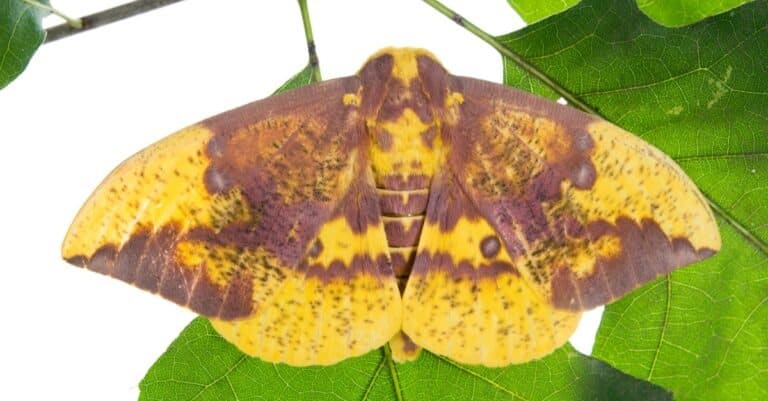
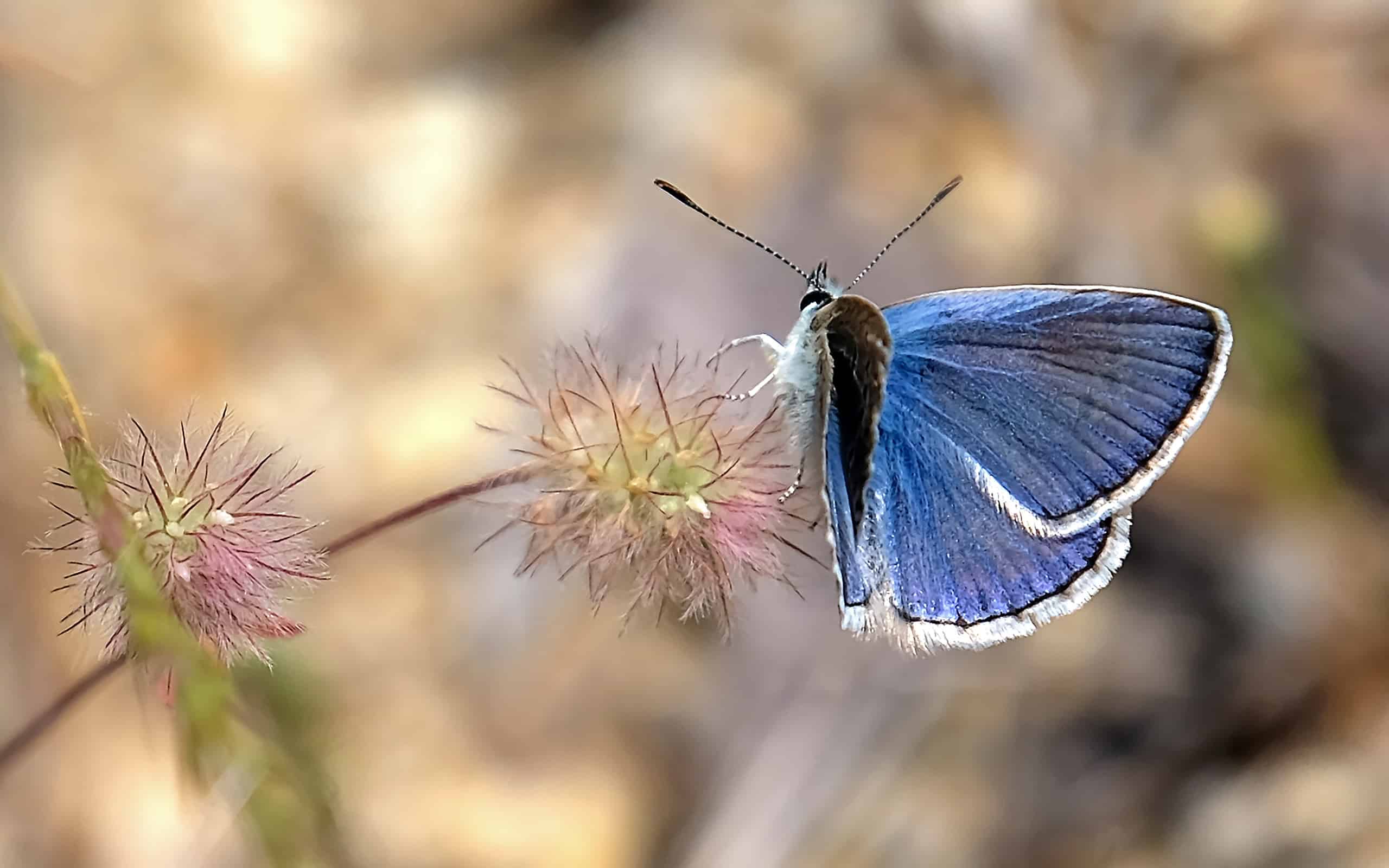
Palos Verdes blue butterflies are very small, with just a one-inch wingspan. Males have bright, silvery-blue upper wing surfaces with a thin black border and white edges. Females have brownish-grey upper wing surfaces. Both males and females have grey under wings with dark spots surrounded by white rings. Males and females also have silvery-to-grey hairs on their thorax and abdomen, giving them a fuzzy appearance.
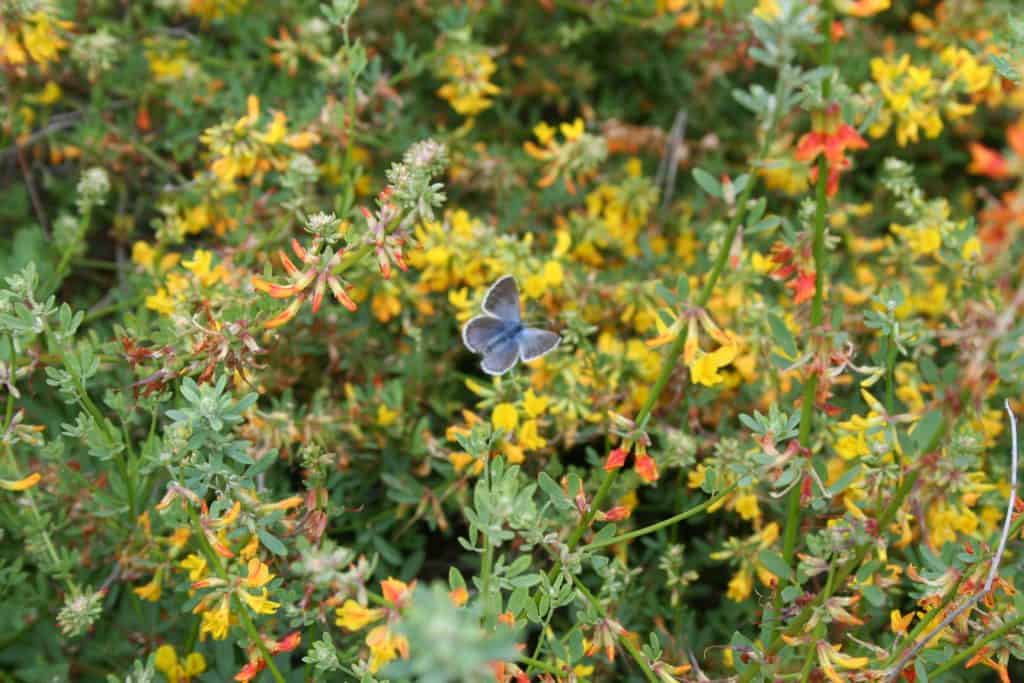
The Palos Verdes blue butterfly only lives 4 to 9 days.
Their flight and reproductive period occur concurrently, with individual adults living only 4 to 9 days. Each late January to early May, the breeding season occurs. The butterflies lay eggs only once per breeding season. The eggs are deposited on Santa Barbara milkvetch and common deerweed, the only plants the larvae are known to eat. After hatching, four life stages occur in these butterflies’ brief lifetimes. It takes 7 to 10 days after eggs are laid for the larvae to hatch; they then emerge from their cocoons. They then crawl out to find food and pupate.
Some caterpillars can remain dormant, overwintering up to twice in the chrysalis before they emerge as adults two years after hatching. Researchers believe this allows them to withstand drought, hatching when conditions have improved.
Restoring the Palos Verdes Blue’s Habitat
The Palos Verdes Peninsula Land Conservancy works with the U.S. Fish and Wildlife Service, the California Department of Fish and Wildlife, America’s Teaching Zoo at Moorpark College, Urban Wildlands Group, the United States Navy, scientists, community volunteers, and many other organizations to ensure the Palos Verdes blue can return to its native ecosystem.
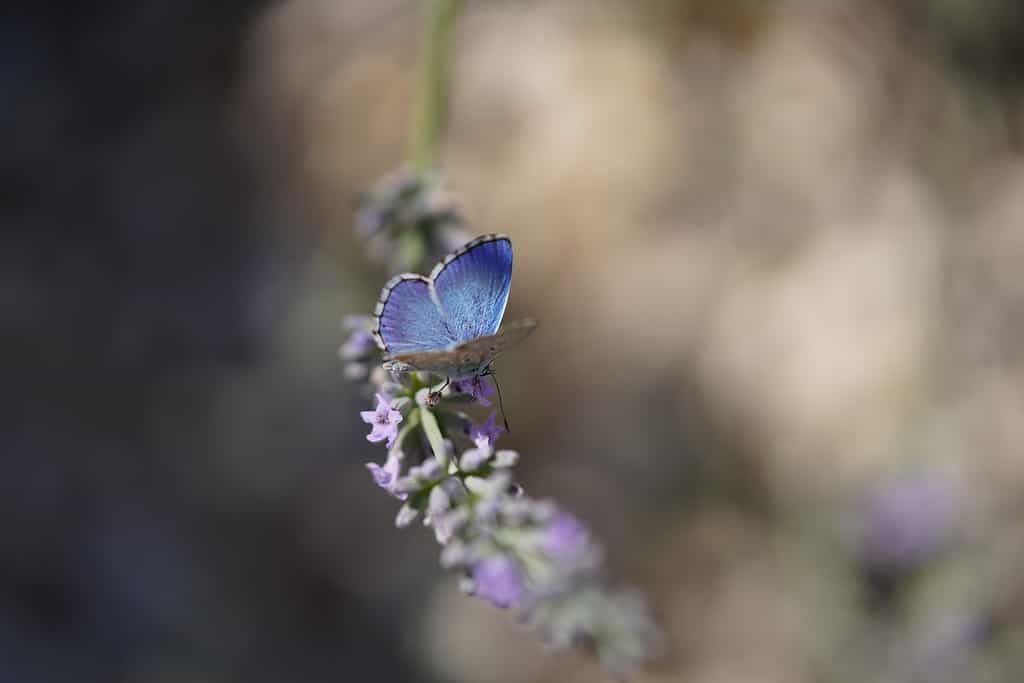
The Palos Verdes blue butterfly requires Santa Barbara milkvetch or common deerweed to survive.
©Wirestock/ via Getty Images
Conservationists and volunteers have dug up invasive plants and weeds, planted tens of thousands of native host plants where the butterflies can lay their eggs, and planted nectar plants for food. Crews have also worked to stabilize the soil as they rebuild the scrublands and rocky, coastal hillside habitats Palos Verdes blues call home.