
Quick Take
- Completing the spring flight requires at least 3 successive generations to reach the northernmost range.
- Ambient temperatures below 55 degrees trigger stalled maturation during the first wave of migration.
- The spring migration pattern varies with the weather.
- In total, several generations of monarchs will travel 3,000 miles or more to their final destinations.
The arrival of monarchs in the Northeast is one of nature’s most beautiful spectacles. Their grueling journey pays off, but it’s a miraculous flight that requires multiple generations of butterflies. Migrating south for the winter is no easy feat, but coming back is where the species shines in its endurance, willpower, and desire to survive. As thousands of monarchs take to the air this spring, let’s take a closer look at how this tremendous migration is possible.
Monarchs Don’t Overwinter, and Some Travel Over 3,000 Miles
Unlike many butterfly species, monarch butterflies can’t survive cold winter temperatures. While other species’ larvae overwinter in leaf piles or hollowed-out wood, monarchs of the Northeast fly south. They typically spend the winter months in Mexico. Historically, Western monarchs have overwintered in Southern California, though recent years have seen very low numbers in that region. Western monarchs have a much shorter flight in the spring. As monarchs prepare to fly back north in the Eastern U.S., they also prepare to mate, reproduce, and send their offspring off.
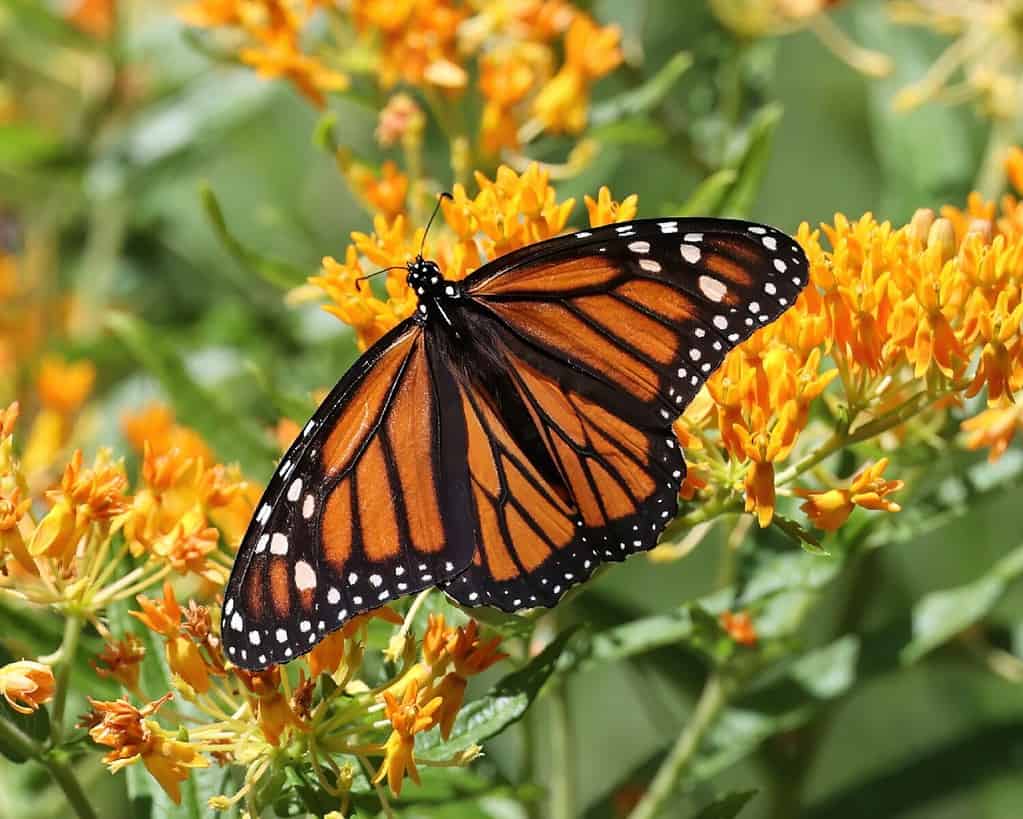
Many monarchs that you see during the summer may be second, third, or fourth generation.
©David Trevarthen/Shutterstock.com
This multi-generational migration is what monarchs are known for. It’s also why protecting the species is so crucial. Their travel is entirely dependent on weather cues, making it vulnerable to climate change and human activity. And as monarchs take to the sky, some must travel up to 3,000 miles before reaching their final destination.
Not All Monarchs Make It to the Northeast
The ultimate goal of the species is to return to the northern U.S. and Canada by the summer. This is how they repopulate and find milkweed, their preferred food source. Milkweed is also essential for the monarch population in the Northeast. It feeds the next generation of northern monarchs and provides nutrients to the adult butterflies that lay eggs. However, not every monarch will reach the northern U.S. or Canada.
As the migration begins, mature butterflies end their journey in the southern states. By the end of March, adult monarchs have already reached Texas, Louisiana, Alabama, Florida, and Georgia, with arrivals in the Carolinas typically happening in April. Here, they mate and lay eggs, continuing the cycle. The mature monarchs use the earlier arrival of spring in the southern states to their advantage. They survive on milkweed that has already bloomed, allowing them to care for their larvae.
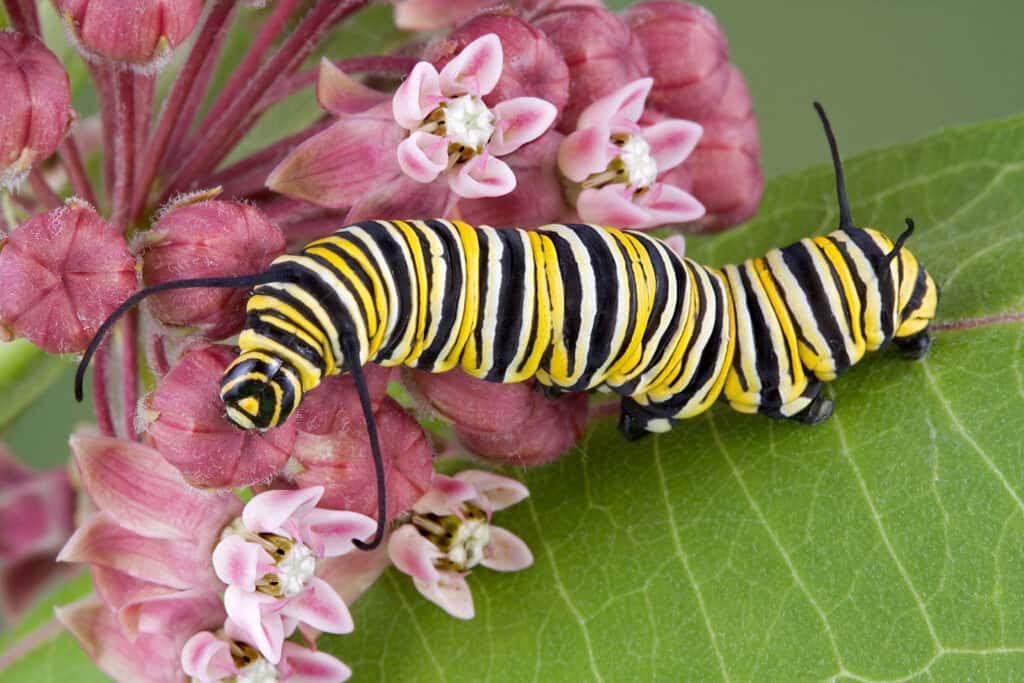
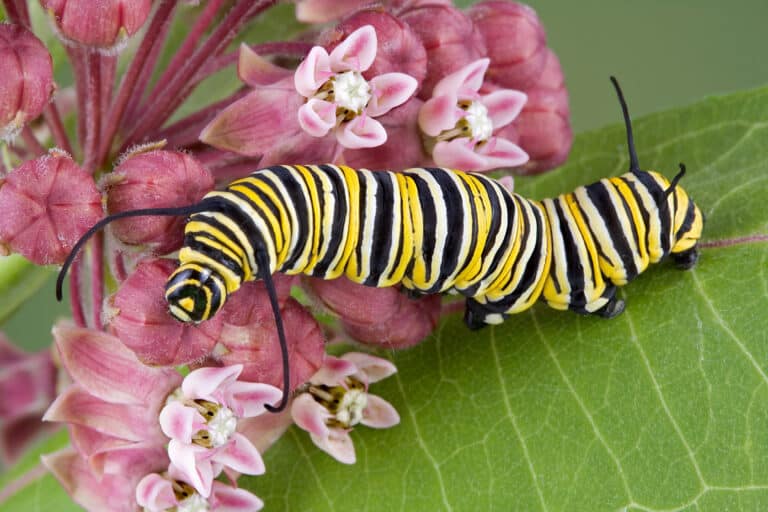
Milkweed flowers are popular food for caterpillars, and also attract them to many backyard gardens.
©Cathy Keifer/Shutterstock.com
Once the larvae have grown, fed off the southern milkweed, and completed their metamorphosis, they’re ready to move on. While their parents stay behind, the new first generation of monarchs migrates north. In the Northeast, the cycle starts again as milkweed begins blooming through April and May. Northern monarchs now feed on milkweed and other butterfly-friendly plants to sustain themselves and their larvae. This generation emerges in the summer and remains in the Northeast until the fall.
A Tragically Short Lifespan
In nature, most winged insects have a short lifespan. For the majestic monarch, this is only two to six weeks, depending on the region. The monarchs that begin the migration from Mexico to the southern states typically die after laying eggs in the southern U.S., completing their life cycle. After reproducing, they have served their purpose. Those that continue the migration into the Northeast live slightly longer—long enough to lay eggs that will hatch during the summer. As these larvae grow, the first generation of monarchs dies before winter.
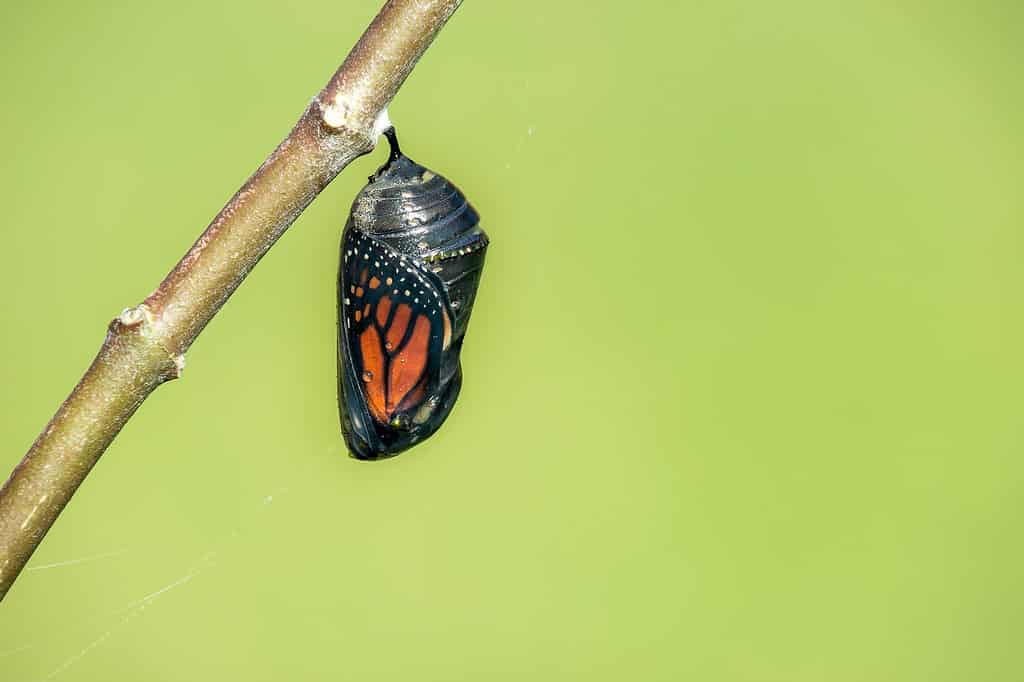
Most monarchs live only two to six weeks, depending on the region and generation.
©Leena Robinson/Shutterstock.com
When the second generation of monarchs emerges, they survive the longest. They have the unique ability to enter reproductive diapause. This is a type of hibernation for insects, which slows down their metabolism so they can conserve enough energy to survive. Diapause allows the monarchs to survive long enough to restart the long migration back south to Mexico. As they begin this trek before winter arrives, they enter hibernation and emerge the following spring. These monarchs now become the parents of the next “first” generation to fly northward.
In total, it can take up to four generations of monarch butterflies to complete their annual migration. These butterflies cover more than 3,000 miles, spanning from Mexico to Canada. Chances are, if you see a monarch in the Northeast during the summer, it may be the second or third generation of its kind. It may even be one of the few lucky monarchs that make the return journey to ensure the survival of future generations.