
Quick Take
- Scientists still can't agree on why cassowaries have that bizarre horn on their head, and the leading theories contradict each other. See the competing theories →
- Cassowaries are called one of the world's most dangerous birds, yet people who've studied them up close use a completely different word to describe them. Discover their true nature →
- Cassowaries send messages their mates can receive but that humans can only physically feel without being able to hear them. Hear about their secret calls →
- Male cassowaries take sole charge of raising chicks, and the way that arrangement eventually ends is stranger than you'd expect. See how fatherhood ends →
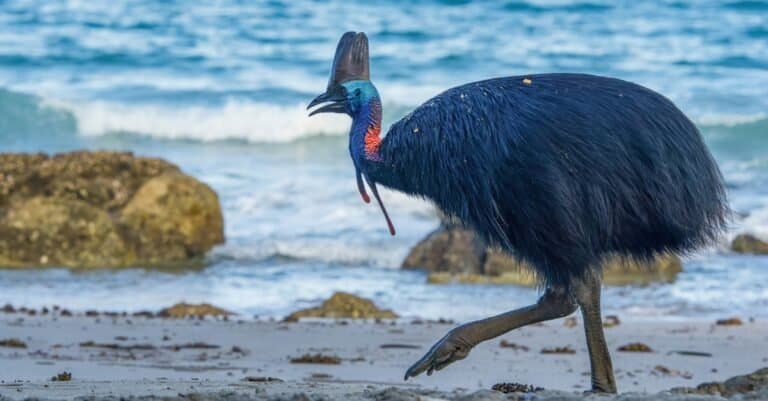
Belonging to the genus Casuarius, cassowaries are ancient, flightless birds with an imposing appearance that rank among the largest avian species on Earth, capable of reaching heights of nearly 6 feet. Instead of taking to the skies, these remarkable creatures are highly adapted for terrestrial and aquatic locomotion, utilizing their powerful legs to run, walk, and act as exceptionally strong swimmers moving through water at impressive speeds. The genus is comprised of three living species: the Southern cassowary (Casuarius casuarius), the Northern cassowary (C. unappendiculatus), and the dwarf cassowary (C. bennetti). Collectively, these enigmatic birds inhabit the lush tropical forests spanning northeastern Australia, New Guinea, and neighboring islands, offering a glimpse into a unique evolutionary lineage detailed in the ten incredible facts below.
Cassowaries Talk With Infrasonic Booms
Cassowary can communicate with infrasonic booms.
©RonnyDesign/Shutterstock.com
Cassowaries are usually solitary birds. However, the breeding season brings out a different side of them. When breeding season comes around, cassowaries will use infrasonic booms to communicate. Cassowary booms are low-frequency sounds that humans cannot hear, but potential mates can. Although we cannot hear these booms, humans can sometimes feel the powerful, low rumble they produce. These birds also exhibit throat and neck swelling, high stepping, and head shaking to attract a mate.
Cassowaries Belong to a Super Order of Birds
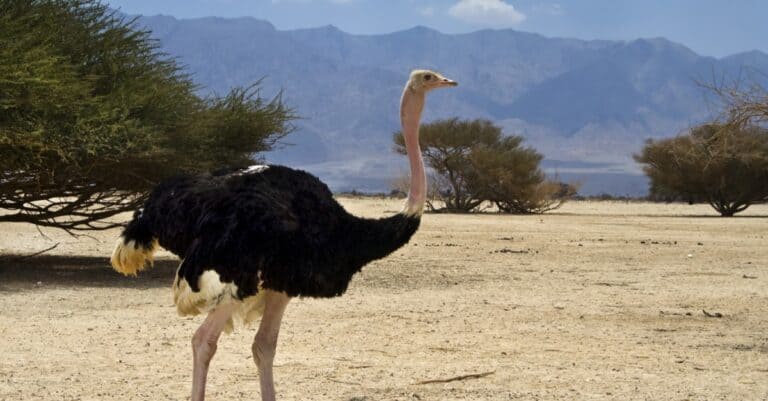
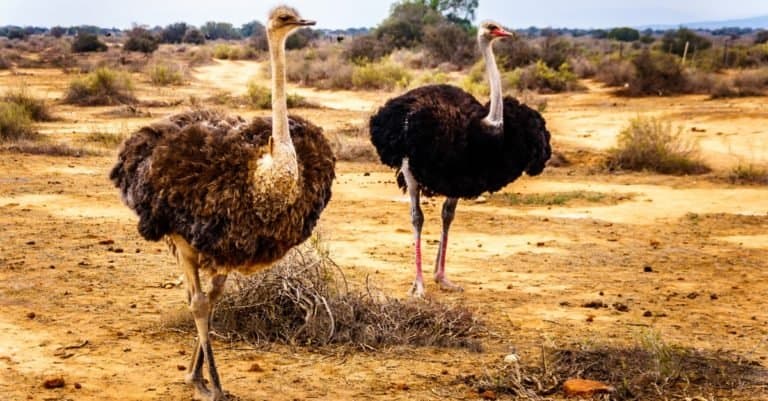
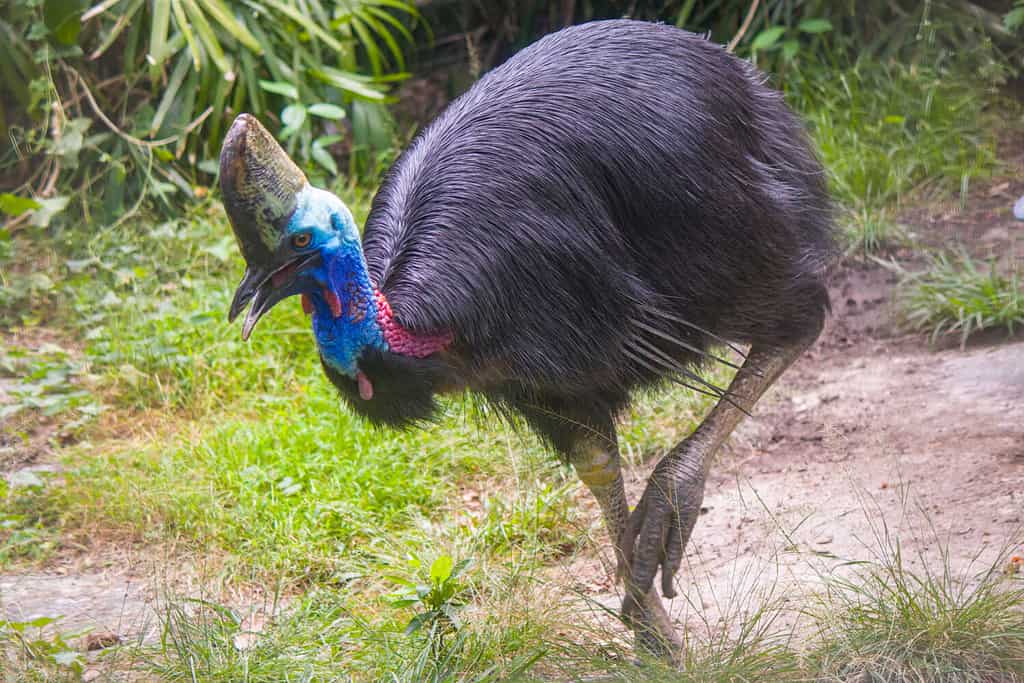
Cassowaries belong to the group of birds called Palaeognathae, one of the two major lineages of living birds. The other lineage is Neognathae, which contains the vast majority of modern bird species. Palaeognathae includes a variety of large, flightless species and smaller chicken-sized birds, including ostriches, kiwis, tinamous, and rheas.
©Danny Ye/Shutterstock.com
However, not all flightless birds belong to the Palaeognathae group. Penguins, rails, and puffins are contained in Neognathae.
They’re One of the Most Dangerous Birds Alive
Cassowaries have earned the title of one of the most dangerous birds in the world, and for good reason. All it takes is one swift kick for a cassowary to slice open a large predator.
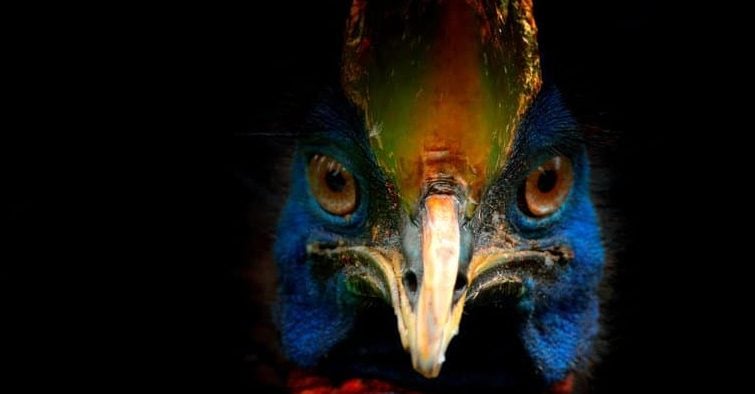
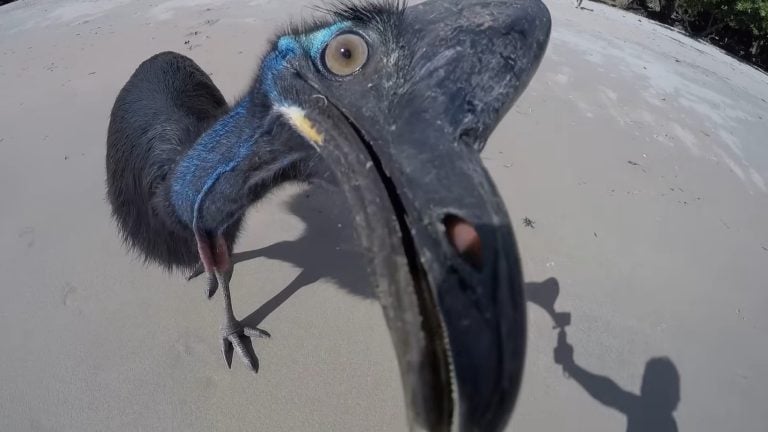
They have a sizeable three-toed foot with a razor-sharp claw on the inner toe. The dagger-like cassowary claw can be as long as 4 inches. Their legs are powerful too. They can run 31 miles per hour and jump 7 feet straight up in the air. The good news is that cassowaries don’t seek out people. These birds are not aggressive unless threatened. In fact, cassowaries have been described as shy.
They’re Difficult to Study
It’s impressive that scientists are even able to uncover any cassowary facts, considering they are difficult to research. One of the reasons cassowaries are mysterious has to do with where they live.

Many cassowary populations inhabit New Guinea, where conservation and political issues interfere with the study of these mysterious birds.
©Strelyuk/Shutterstock.com
Many cassowary populations live in New Guinea, where conservation and political issues often interfere with research. That’s why there are unanswered questions about the cassowary’s evolutionary history, behavior, ecology, and biology.
On the mythological side, some people in New Guinea believe that cassowaries are reincarnations of their female ancestors.
Scientists Are Puzzled by the Cassowary Horn
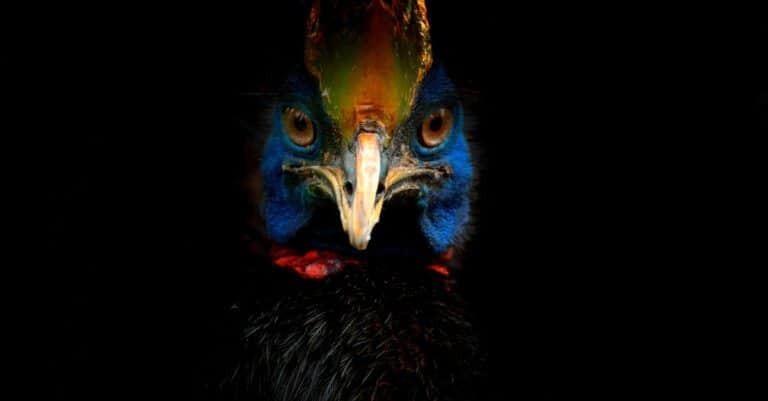
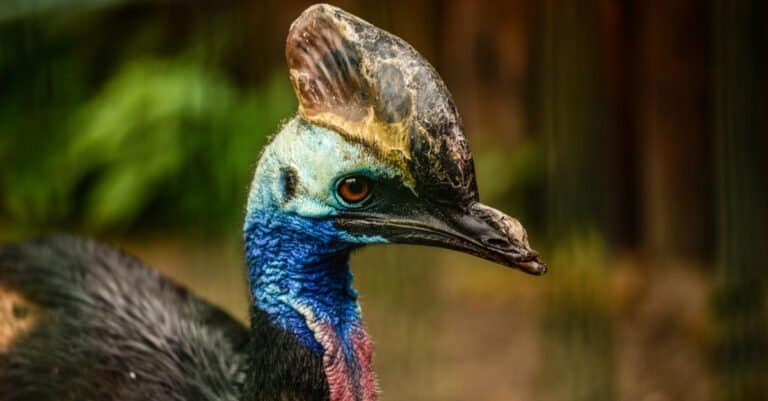
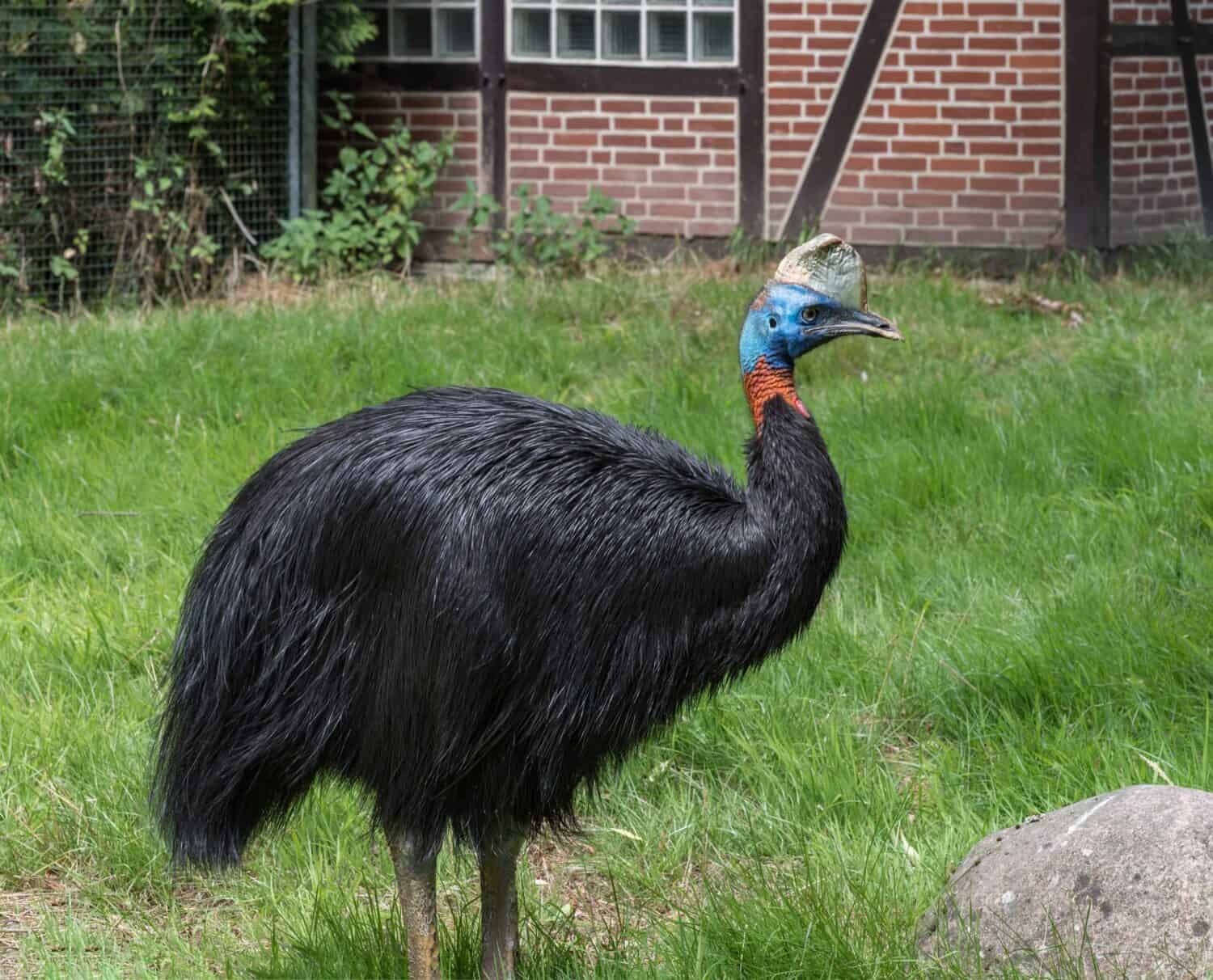
Cassowaries possess one of the most unique head structures in the animal kingdom. On top of their head sits a prominent feature known as a casque, which is commonly referred to as a helmet. This horn-like structure consists of a spongy interior covered by a tough, protective keratin layer.
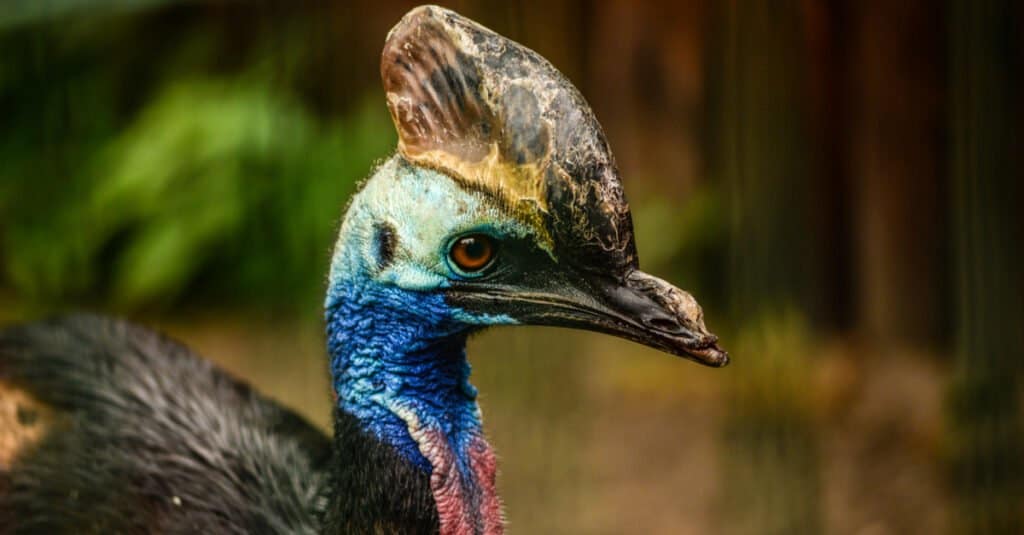
Cassowaries have a casque on top of their head.
©studioxy/Shutterstock.com
The casque is a mysterious part of their anatomy. Scientists are still unclear as to why they have it. Some believe the helmet is there to help protect their head when running at fast speeds. New research suggests that it might even have the capacity for thermal regulation. However, the cassowary helmet might be more cosmetic than anything else. It’s possible that cassowaries use their helmets to attract a mate, similar to a peacock’s tail. It may be that the larger the helmet, the more attractive the cassowary is. The only clear fact is that the horn is how they got their name. The word cassowary is of Papuan origin and means horned head.
They Can Live For More Than 50 Years
In captivity, a cassowary can live as long as 60 years. However, in the wilderness, it’s unclear how long these birds can live. For a cassowary to have a long life in captivity, it must be taken care of by an expert. Their diet is one of the most important aspects of caring for these large birds in captivity.
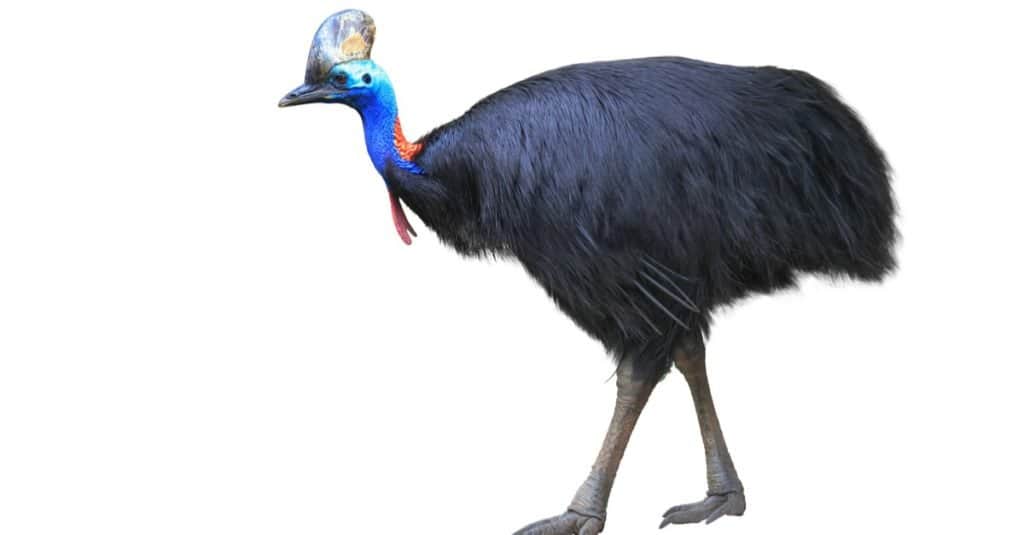
Cassowaries can live up to 60 years in captivity, but their lifespan in the wild is unclear.
©Sanit Fuangnakhon/Shutterstock.com
Cassowaries are omnivores; they eat a diet consisting of fruit, insects, reptiles, and small mammals. Sometimes they’re even referred to as frugivores because of their fondness for fruit. However, when a cassowary craves more protein, it will eat reptiles or small mammals to get the necessary nutrients. They also love snails and a variety of fungi.
Cassowaries Lay Green Eggs
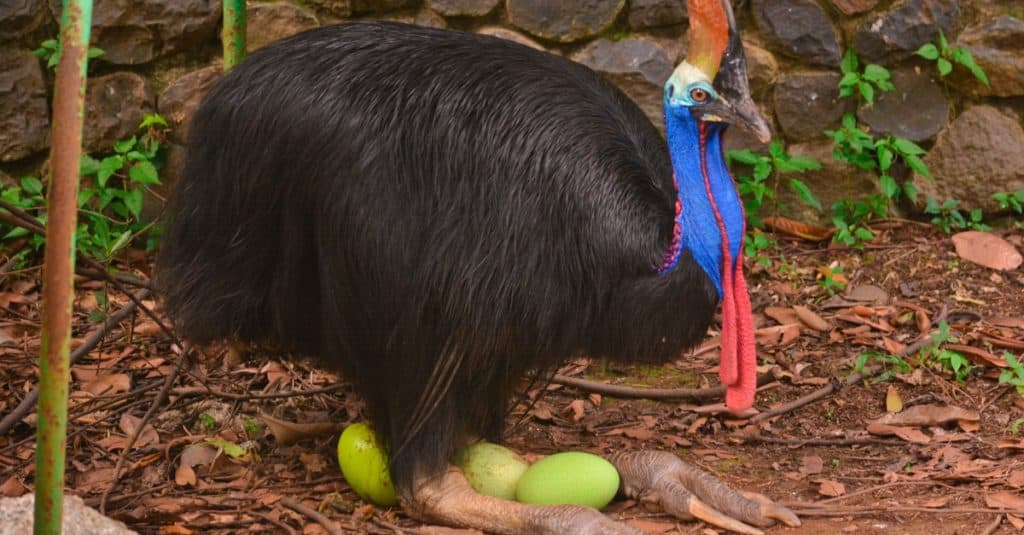
The eggs of a Southern cassowary are green in color.
©lucky vectorstudio/Shutterstock.com
Southern cassowaries lay green eggs. Southern cassowaries have a reputation for laying camouflaged eggs. The eggs are a vibrant greenish color thanks to a special pigment (biliverdin) found in the shells.
Cassowaries Nest on the Ground
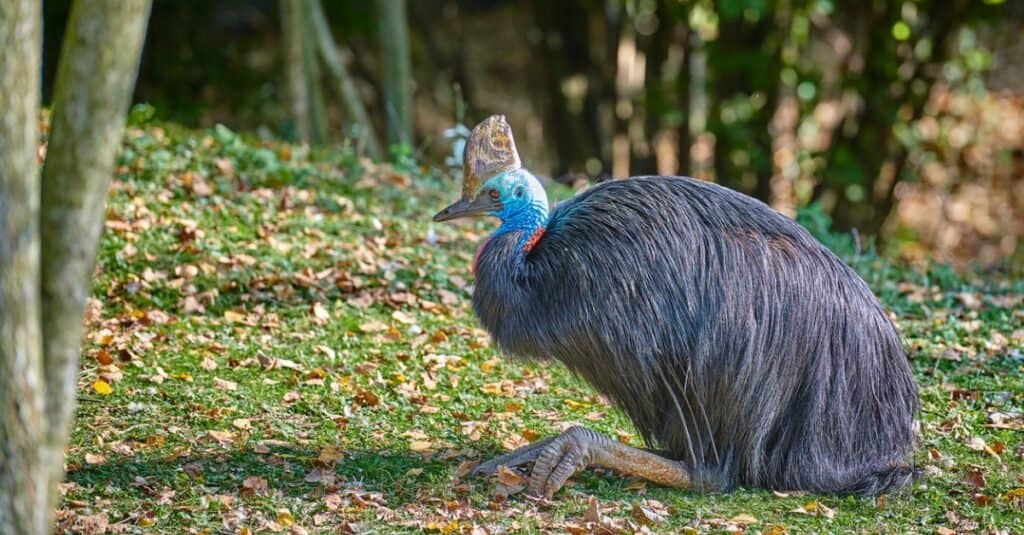
Cassowaries are ground-nesting birds that use hollow depressions to lay their eggs in.
©iStock.com/DannyIacob
Some birds use treetops to escape ground predators, but not cassowaries. Cassowaries are ground-nesting birds. Rather than building a nest, they use a hollow depression on the ground for their eggs, which can measure up to five inches long. The male cassowary will sit on the giant eggs for about two months, keeping hungry predators away. Predators of the eggs include quolls, dingoes, pythons, and crocodiles.
Male Cassowaries Are in Charge
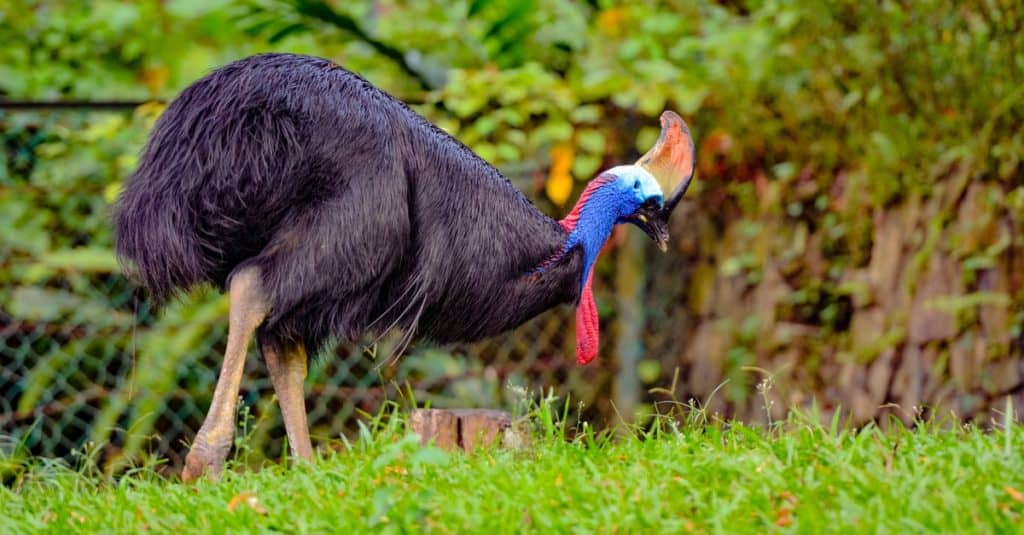
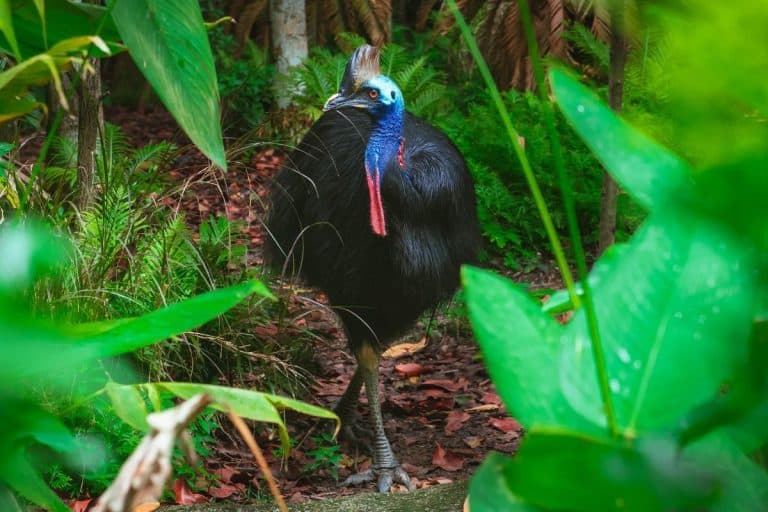
Cassowary in the tropical forest
©HAFIZULLAHYATIM/Shutterstock.com
When baby cassowaries emerge from their eggs, they stay with their dad instead of their mom. The youngsters will stay with their father for around 9 to 10 months. After that time, the dad chases the young ones away to live independently. By the time the father chases the young away, they’re usually at adult size. However, in some situations, the young cassowaries don’t want to leave their father. Some young cassowaries will stay for as long as 16 months.
They Have a Wattle
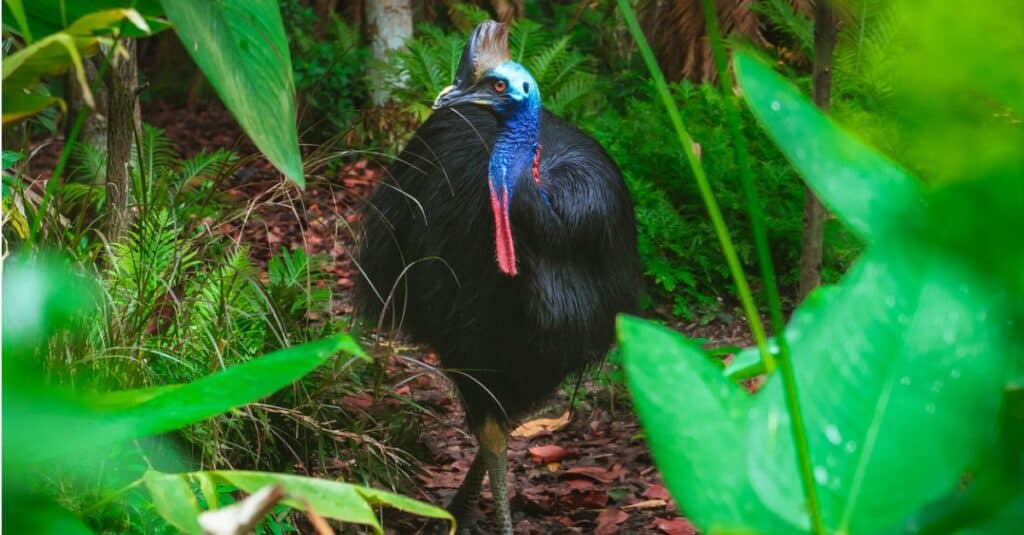
Similar to turkeys, the cassowary has a wattle.
©iStock.com/Henry Soon
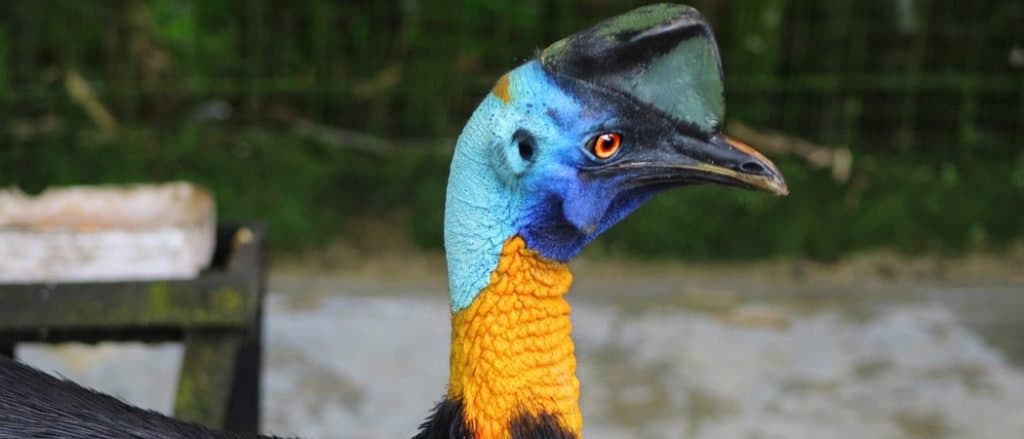
Gobble gobble, just like a turkey, cassowaries have wattles. Wattles are the wrinkly, bumpy-looking red skin that hangs from their chin. Only two of the three cassowary species have these fleshy pouches hanging from their neck: the Southern cassowary (also known as the double-wattled cassowary) and the Northern cassowary, which has a single wattle. The Dwarf cassowary typically lacks wattles. The fleshy pouches have a bright blue, red, purple, gold, or white color. The color of the wattle helps identify the cassowary subspecies. Their wattles may also reflect the cassowary’s mood.