
Quick Take
- Its helmet-like crest is one of the animal kingdom's great unsolved mysteries, and scientists still can't agree on what it actually does. See the casque mystery →
- Hunter-gatherers may have domesticated this bird thousands of years before anyone assumed it was possible, and the evidence for it is stranger than it sounds.
- Without this 'dangerous' bird doing a job no other animal can replicate, entire tree species across two continents would disappear. Discover its forest role →
- The cassowary's kill count tells a very different story than its reputation, one that reframes everything you thought you knew about the world's most dangerous bird. Check the real attack stats →
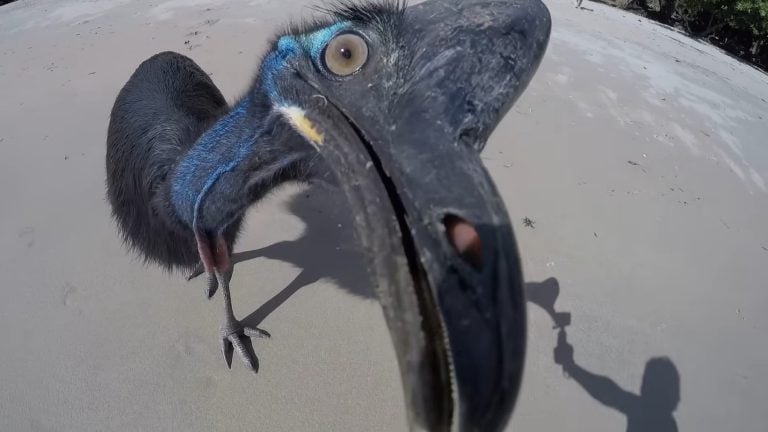
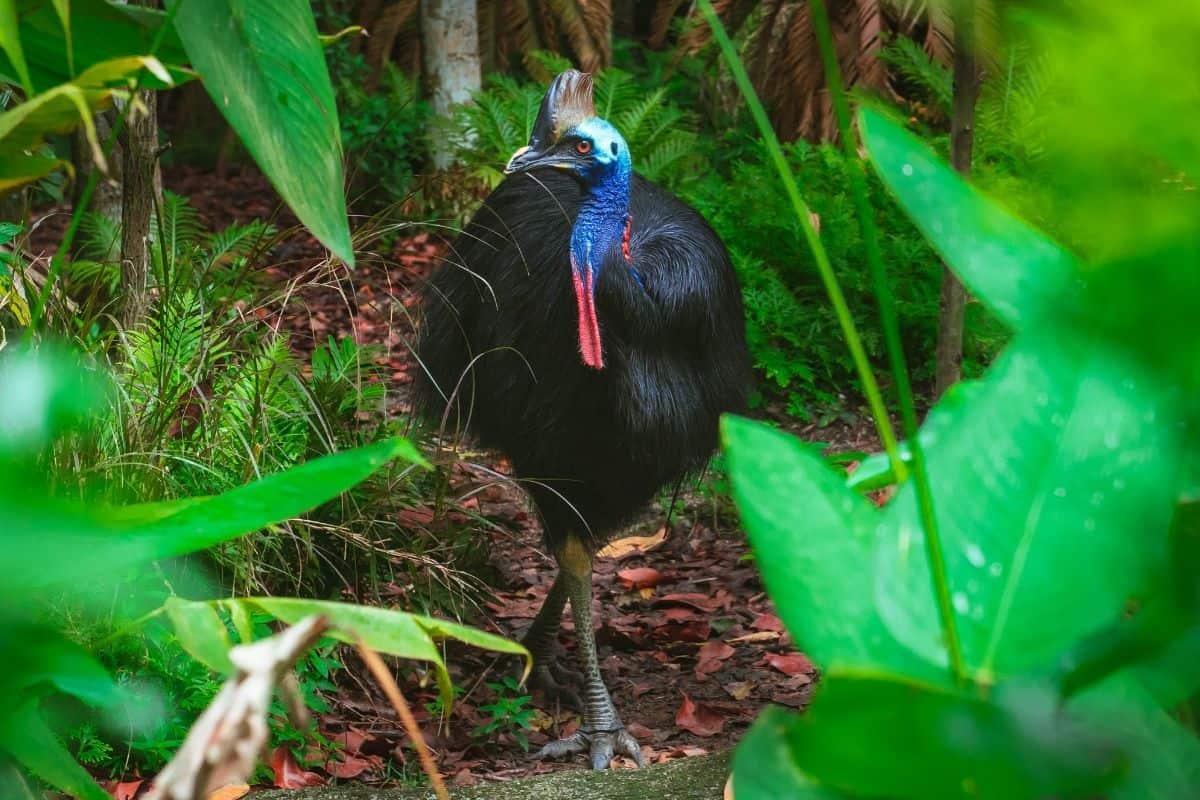
The southern cassowary, Casuarius casuarius, stands nearly six feet tall and can weigh as much as an adult man. Each foot carries a dagger-like inner claw up to about five inches long. It lives in the rainforests of northern Australia and New Guinea, and its reputation as the world’s most dangerous bird is everywhere.
The record tells a more complicated story. So does the forest, which depends on this bird more than on almost any other animal.
A Fearsome Bird With a Mild Track Record
A cassowary can sprint at around 30 miles per hour, jump high and strike with a forward kick. Males incubate the eggs for about 50 days and then guard the striped chicks for months, and that is when they are most defensive.
Yet attacks are uncommon and deaths rarer still. A review of 221 recorded cassowary attacks in Queensland found that the largest group, 109 cases, involved birds approaching people for food. Most of those birds had learned to link humans with handouts. Far fewer attacks were defensive, around eggs, chicks or a cornered bird.
Only two human deaths are on record:
- a 16-year-old in Queensland in 1926, who had attacked the bird with a club before it turned on him;
- a man in Florida in 2019, killed by a cassowary he kept on his property.
Neither was a wild bird ambushing a hiker. Experts give simple advice: never feed cassowaries, keep dogs away, and back off slowly, keeping something like a backpack or a tree between you and the bird.
The Casque Mystery and an Ancient Bond
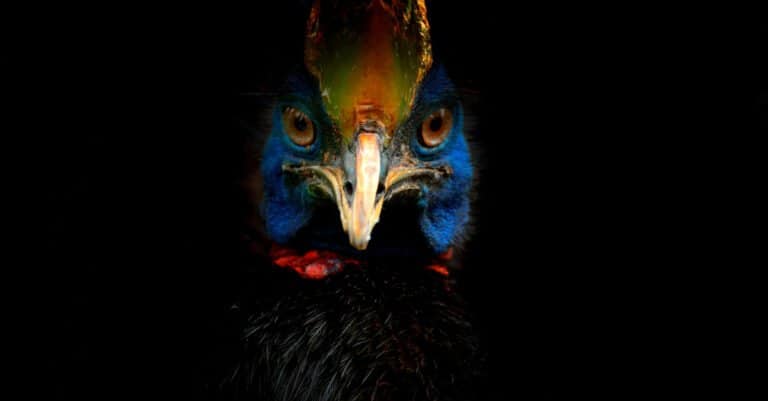
The tall, helmet-like casque on its head has puzzled scientists for a long time. It is built from a spongy core covered in keratin, the material of fingernails. Thermal imaging of captive birds showed that it releases more body heat in hot weather, working as a kind of radiator.
Display may also play a role. A comparison of 155 adult cassowaries from all three living species found that each species has its own average casque shape. The authors suggest the casque may help birds recognize their own species and judge potential mates, though field studies still need to confirm it.
People and cassowaries also share a long history. Analysis of more than 1,000 ancient eggshell fragments from two rock shelters in New Guinea, dated to roughly 18,000 to 6,000 years ago, found that most eggs were collected late in development. Many late-stage shells showed no sign of cooking. The team led by Kristina Douglass of Penn State suggests people may have been hatching chicks and raising them, which would make the cassowary one of the earliest birds managed by humans. In parts of New Guinea, captive cassowaries are still raised and traded today.
The Gardener of the Rainforest
The cassowary’s most important job is moving seeds. In Australia’s Wet Tropics, it eats the fruit of well over 200 plant species and swallows many of them whole, including seeds up to about two and a half inches wide.
Few other animals can move seeds that big. The seeds pass through the bird’s gut and come out in droppings, sometimes more than half a mile from the parent tree, with a load of fertilizer. For some rainforest trees, the cassowary is the main way to spread into new ground. Researchers estimate that 70 to 100 plant species rely mainly on it.
That makes the bird’s own future a question for the whole forest. The Australian population is listed as endangered under national law. The last national survey, more than a decade ago, estimated about 4,400 birds, and current numbers are not known. Cars are the biggest measurable threat, along with dogs, habitat loss, and extreme weather and fire that damage fruit trees. Queensland has tested roadside signs that detect cassowaries and warn drivers, and they slowed traffic in trials.
The bird with the frightening kick is, above all, a planter of trees. More on the cassowary’s role in rainforest ecology.