
Quick Take
- A single cassowary gut-pass can transform a near-dead seed into something almost guaranteed to sprout, and the numbers are genuinely hard to believe. See the germination numbers →
- Cassowaries flip the typical bird parenting script in a way most people wouldn't expect, and the female's role turns out to be even stranger than that. Explore the parenting role-reversal →
- Without this one bird, roughly 45 rainforest plant species have no way to reproduce, and the collapse ripples further than you might expect. See the ecological ripple effects →
- The cassowary's iconic head casque is not merely decorative. Scientists think it serves multiple surprising functions that are still debated today. Discover the casque's functions →
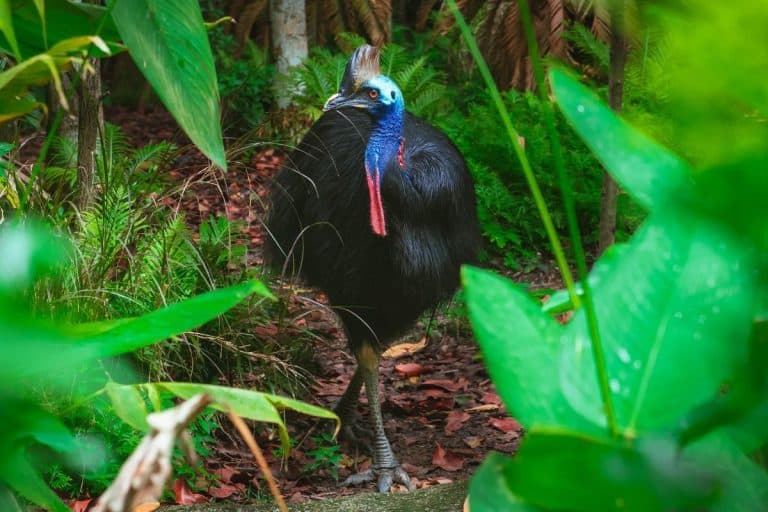
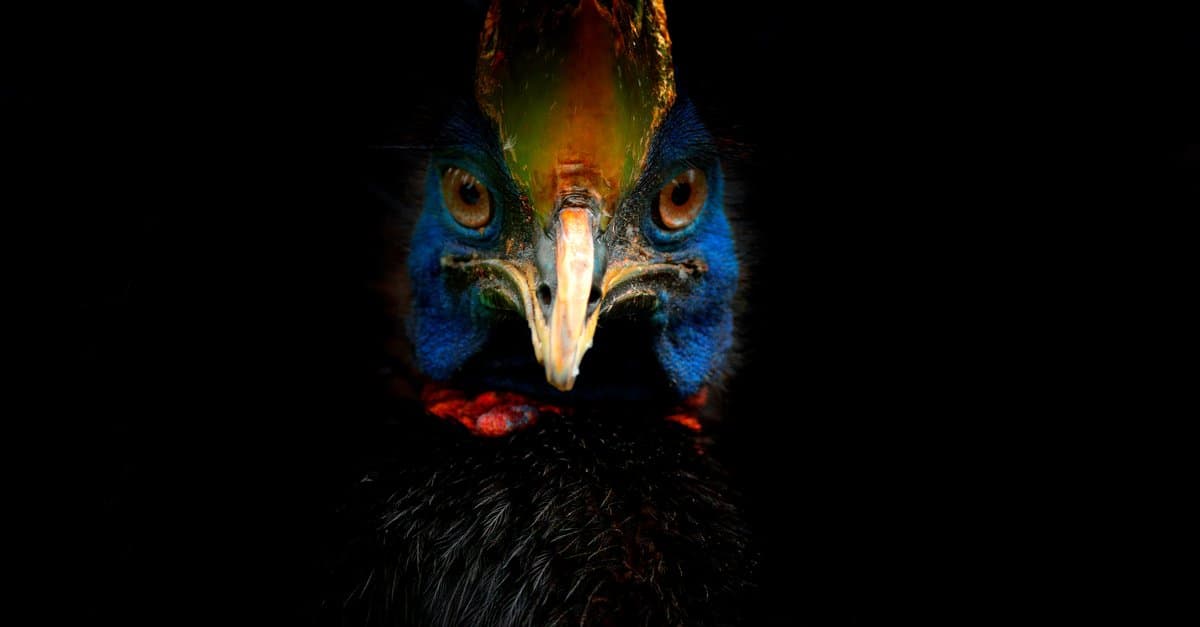
World Cassowary Day on September 26 is a great chance to spotlight one of the planet’s most extraordinary flightless birds. With vibrant blue and purple necks, helmet-like casques, shaggy black feathers, and powerful legs, cassowaries almost look like creatures from another age — and in many ways, they are.
Cassowary ancestors trace back 50 to 60 million years, and their ancient lineage gives these birds an unmistakably prehistoric appearance. As flightless birds, cassowaries retain several striking traits associated with ancient bird lineages. Their unique physical traits — such as their three-toed feet and distinctive head casques — offer scientists valuable clues about how dinosaurs lived and evolved.
But cassowaries are far more than living relics. In Australia’s tropical rainforests, they are essential ecosystem engineers, spreading the seeds of hundreds of plant species. Unfortunately, these rainforest guardians face growing dangers from habitat loss, car strikes, and dog attacks.
Continue reading
A Bird Built for the Rainforest
The cassowary (genus Casuarius) is a large, flightless bird closely related to the emu. The largest females reach over 6 feet and weigh up to 167 pounds. The southern cassowary, in particular, holds the title of Australia’s heaviest bird and is among the heaviest birds in the world, with some sources ranking it second and others third globally.
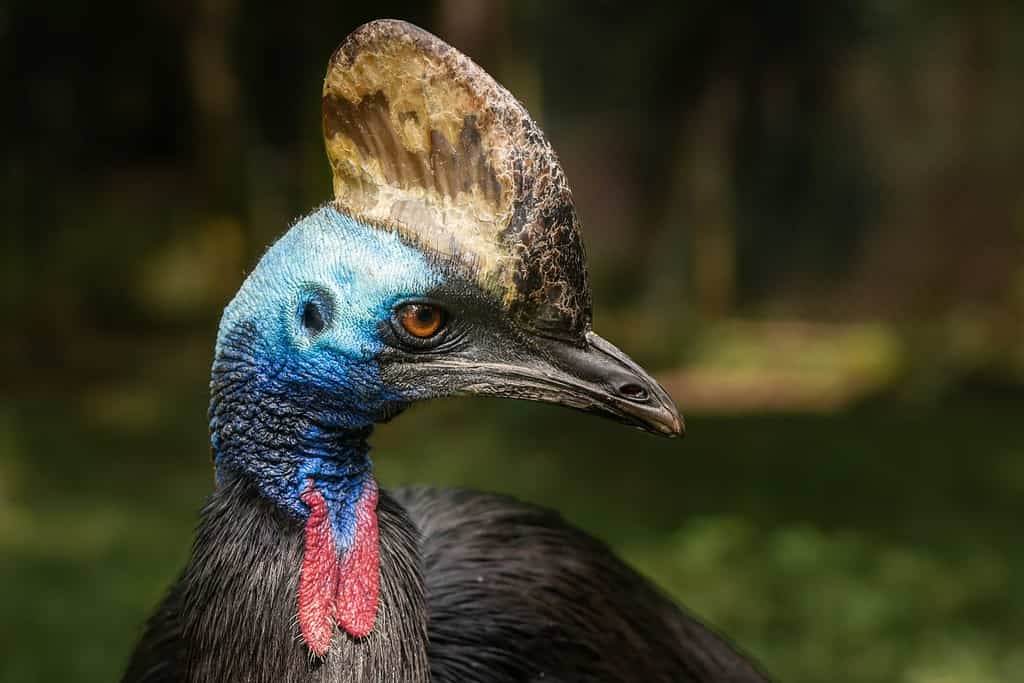
The helmet-like casque atop a cassowary’s head is made of keratin.
©Honza123/Shutterstock.com
Adult cassowaries average 5 feet 7 inches tall. Their dense, hair-like black feathers camouflage them in dense vegetation and protect their bodies from sharp rainforest thorns. Their strong three-toed feet feature a lethal, dagger-like claw up to 5 inches long on the innermost toe, giving them a powerful defense when threatened.
The birds’ signature head crest is made of hollow, sponge-like keratin (the same protein as human fingernails) and starts growing around one to two years of age. Scientists believe it helps with heat regulation, sound detection or amplification, head protection in thick brush, and displaying age or dominance. The bare skin on their necks adds a splash of color with vivid shades of blue and purple, along with hanging wattles on the southern and northern species.
Meet the Three Living Cassowary Species
There are three distinct, living cassowary species.
The southern cassowary (Casuarius casuarius) is the largest and best-known of the three. It has a brown casque, bright blue neck, and two wattles. The only cassowary native to Australia, it primarily lives in northern Queensland, parts of New Guinea, and some of the nearby islands.
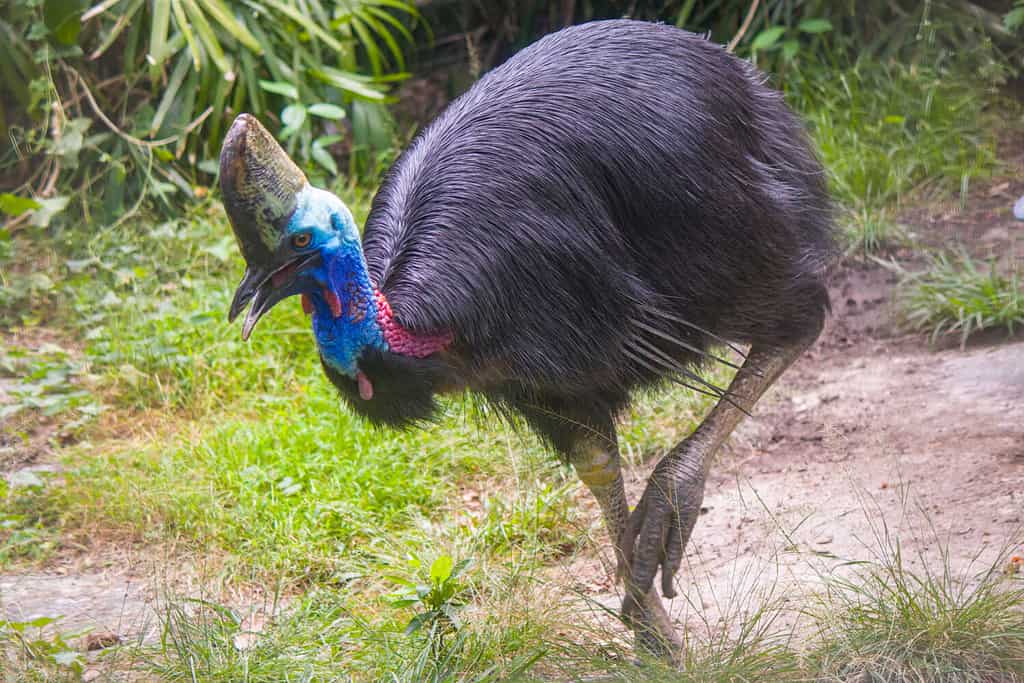
The southern cassowary is also called the double-wattled cassowary.
©Danny Ye/Shutterstock.com
The northern cassowary (Casuarius unappendiculatus) is slightly smaller than its southern cousin, but it has a larger flared casque and a single red or golden wattle. These birds primarily live in northern New Guinea.
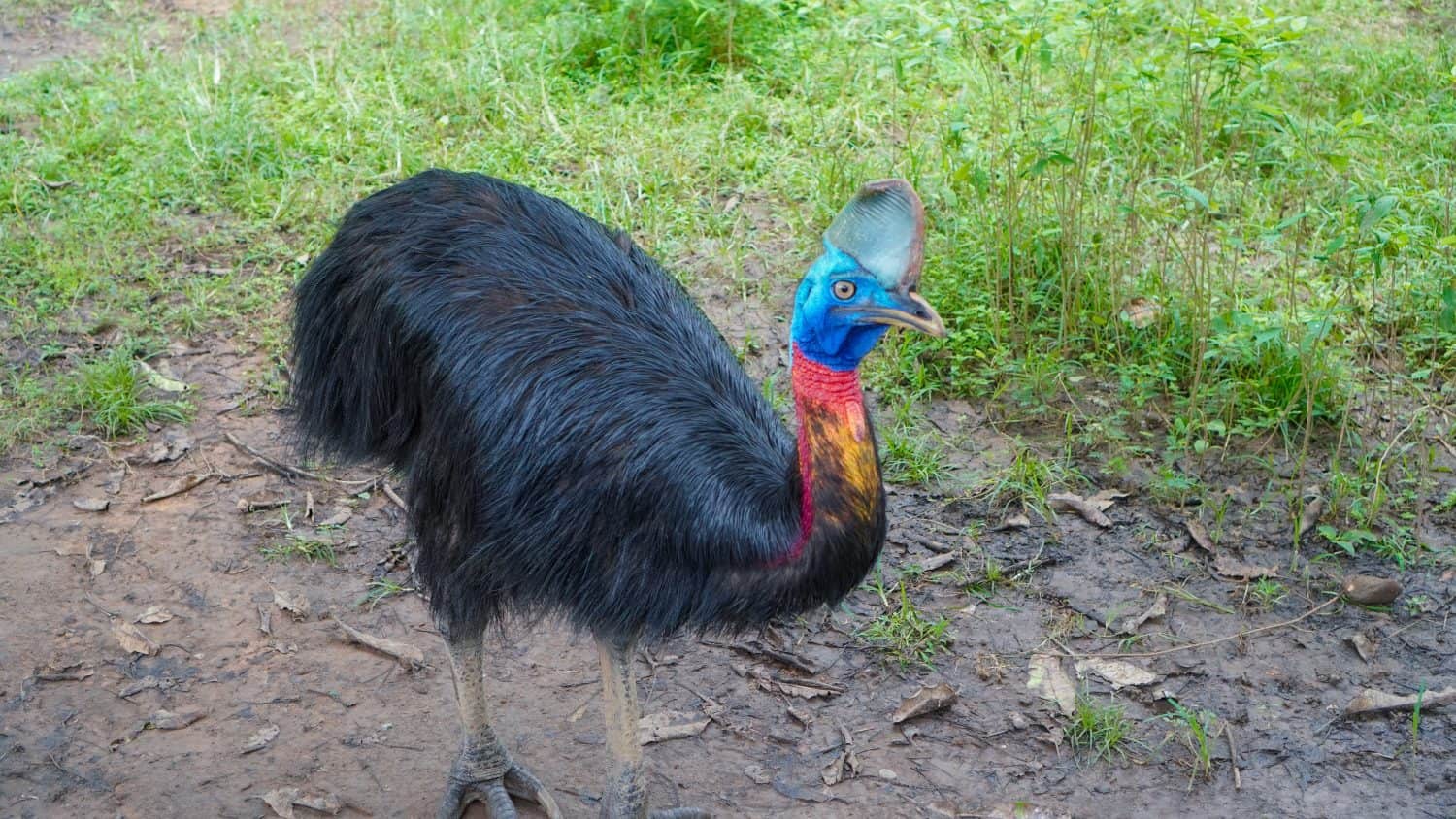
Northern cassowaries typically live in low-elevation forests or coastal swamp habitats.
©Kotak Kaca/Shutterstock.com
The dwarf cassowary (Casuarius bennetti) is the smallest of the three species. Found in the central mountain highlands of New Guinea, it lacks a wattle but instead sports a distinct purple neck patch.
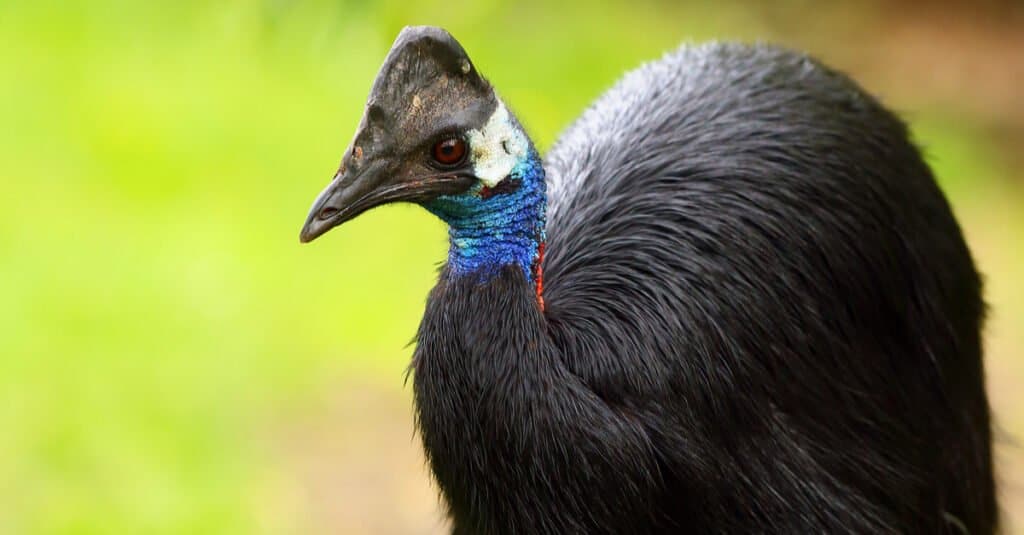
The dwarf cassowary is sometimes called the muruk, mountain cassowary, or little cassowary.
©Karel Bartik/Shutterstock.com
Solitary Birds With Serious Attitude
Shy and elusive, cassowaries live mostly solitary lives, spending their days foraging along rainforest trails. They are active mostly in the morning and late afternoon.
Despite their rather bulky builds, cassowaries are surprisingly agile and athletic. They can run up to 31 miles per hour, leap up to 7 feet into the air, and easily swim across rivers.
Cassowaries communicate by producing extremely low-frequency booms and rumbles. The dwarf cassowary, for example, produces sounds as low as 23 Hertz, and the southern cassowary reaches 32 Hertz — the lowest recorded calls of any bird species.
The social dynamics of the cassowary break typical bird expectations. Female cassowaries are larger, heavier, more colorful, and sport larger casques than males. They are also polyandrous, meaning that they mate with multiple males during the breeding season.
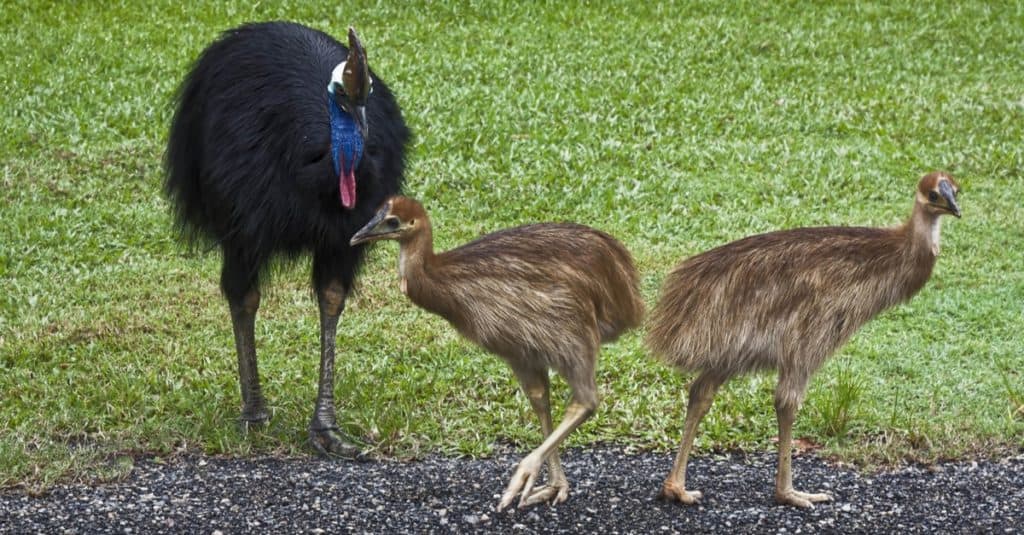
Cassowary chicks are brown with creamy stripes, which provide camouflage amid the dappled lighting of the rainforest.
©electra/Shutterstock.com
After laying three to five bright green eggs, the female departs. The male takes over incubation, brooding the eggs alone for 49 to 60 days. Once hatched, the chicks are protected and fed by the male for around nine months. Fathers use low coughing sounds to call their chicks, who reply with high-pitched whistles.
The Rainforest’s Seed-Dispersal Champions
Cassowaries are vital to maintaining tropical plant diversity in their ecosystems. They consume fruit from over 238 plant species (including 149 woody trees) and are large enough to swallow enormous fruits like the cassowary plum whole. They distribute seeds for more than 70 large-fruited tree species that other forest animals cannot process. For about 45 plant species, cassowaries are the only native animal that can spread their seeds.
Cassowaries can digest fruits with toxic saps that other animals avoid. Their short digestive tracts allow seeds to pass through safely while leaving many seeds viable, and the seeds are deposited in nutrient-dense dung that fuels plant growth.
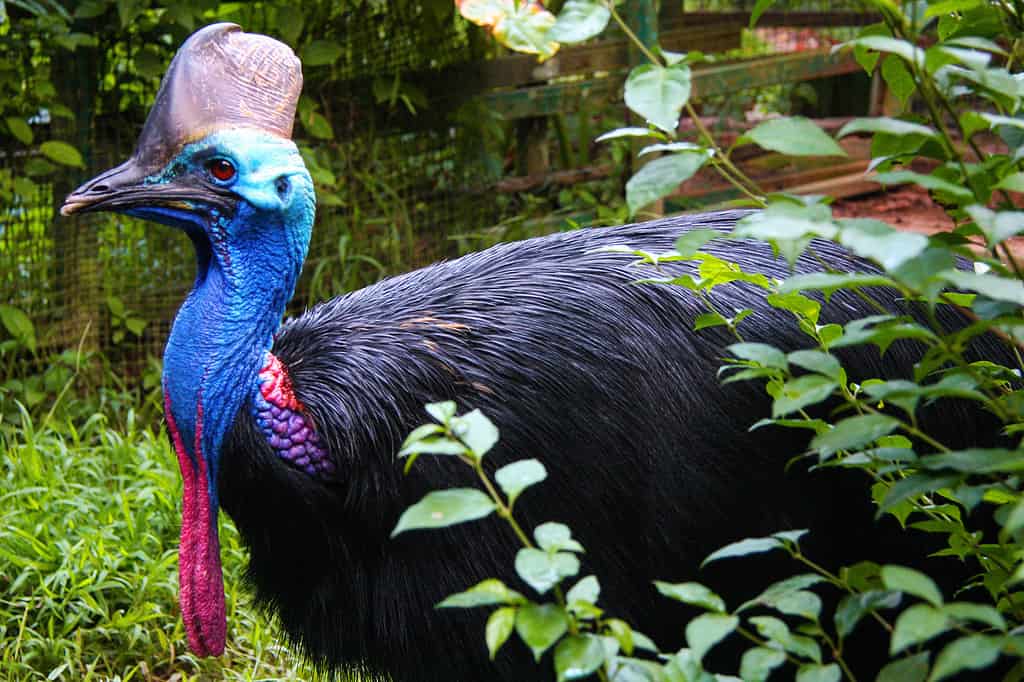
Cassowaries mainly eat fruits, but may also snack on small mammals, fungi, and insects.
©iStock.com/bdfyjdbx
The difference can be dramatic. Seeds of the rare Ryparosa kurrangii tree, for example, have a natural germination rate of just 4 percent, but after passing through a cassowary, their germination rate rises to an astonishing 92 percent.
This makes the cassowary far more than a fruit eater — it is an essential rainforest gardener.
Why Cassowaries Matter to the Entire Forest
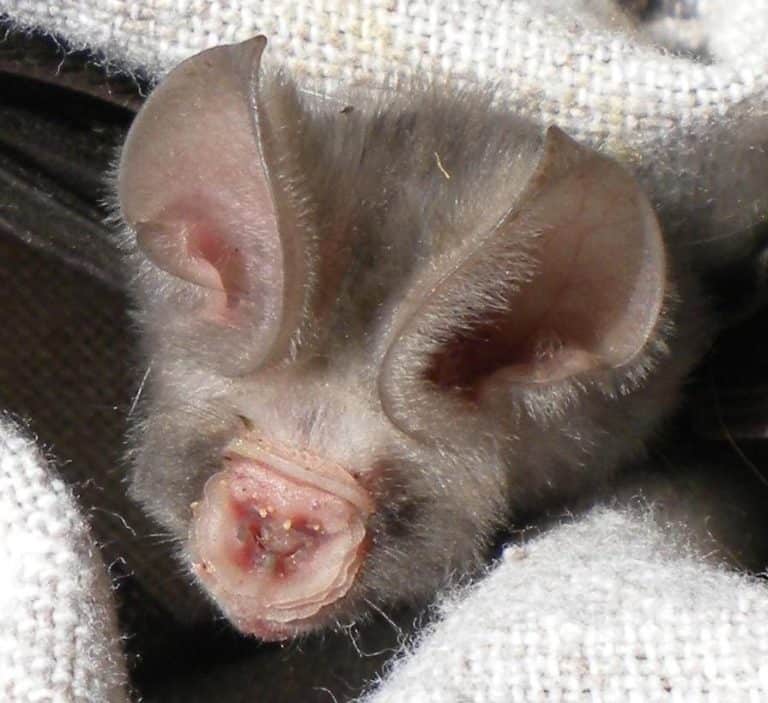
By carrying and dispersing seeds away from parent trees, cassowaries maintain plant diversity and prevent dominant species from taking over. Trees grown from cassowary-dispersed seeds supply essential food for threatened animals like the musky rat-kangaroo and the spectacled fruit bat. In addition, up to 40 percent of the seeds in cassowary dung piles are later eaten by ground dwellers like white-tailed rats and musky rat-kangaroos.
Long-lived cassowaries also hold stable home territories, continuously replanting and reshaping the forest over decades. Protecting the cassowary therefore protects the larger rainforest ecosystem that depends on its daily seed dispersal.
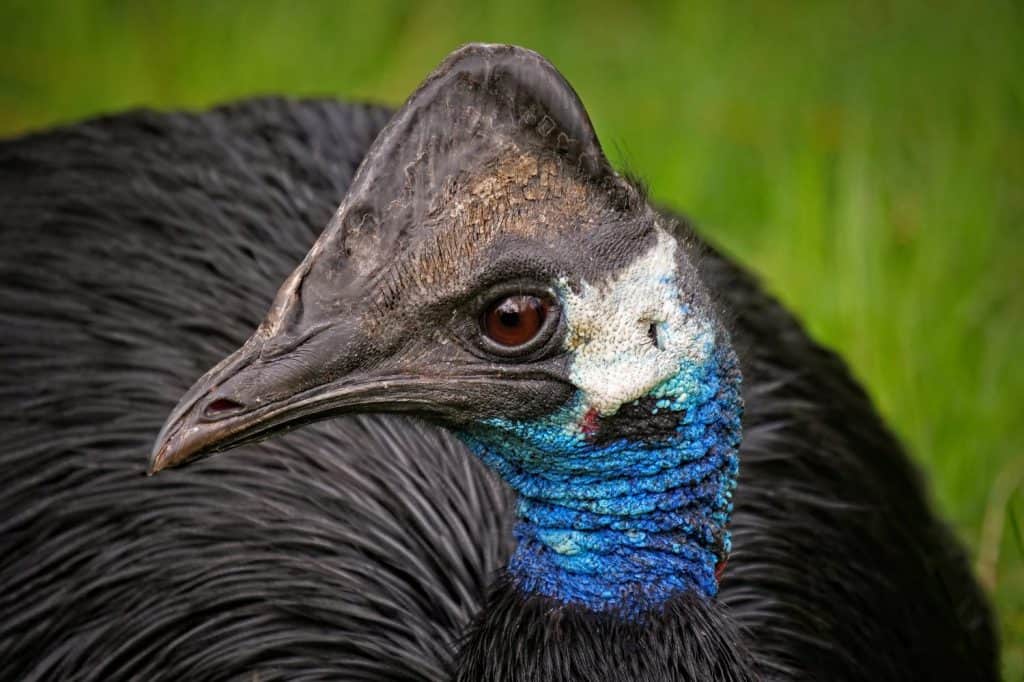
Cassowaries are considered one of the most dangerous birds in the world.
©Holger Kirk/Shutterstock.com
A Rainforest Guardian Under Pressure
Unfortunately, as of 2026, the southern cassowary is globally classified as Vulnerable and Endangered in fragmented regions of Australia. Deforestation for agriculture, housing, roads, logging, and palm oil expansion is splitting rainforests apart, forcing cassowaries to wander through human-developed areas.
This makes roads especially dangerous. In fact, vehicle collisions are the leading cause of death for adult cassowaries as they try to cross roads between their shrinking habitats.
Additionally, domestic dog attacks, resource competition with feral pigs, and hunting in certain regions add continuous pressure to declining populations.
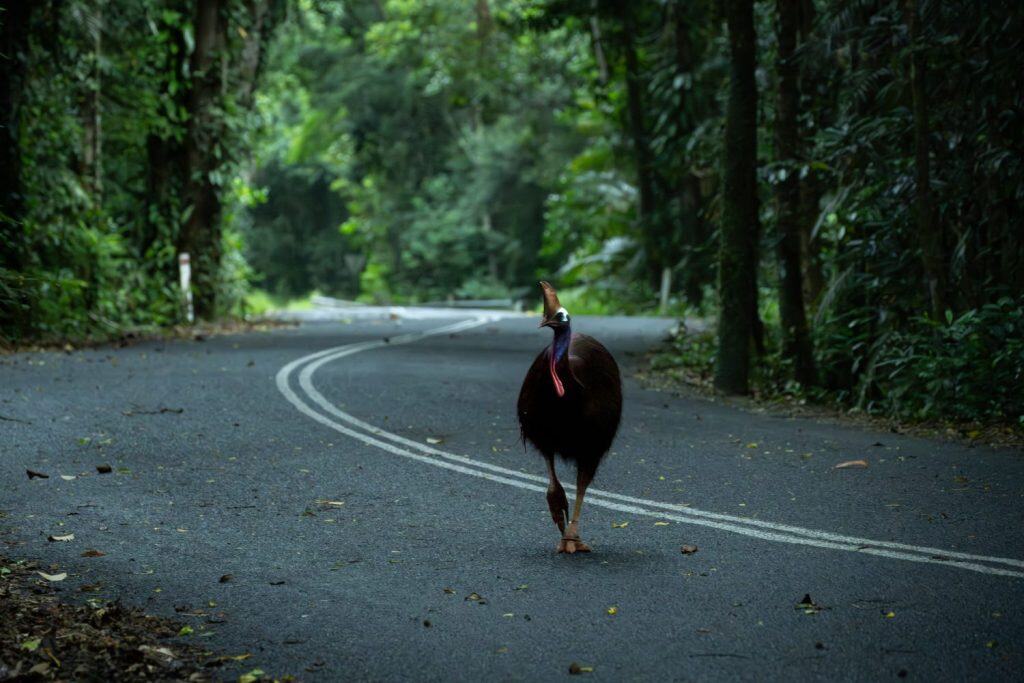
Cassowaries typically avoid humans, but habitat loss and fragmentation are pushing them closer to human activity.
©Wavey Jones/Shutterstock.com
How Protecting the Cassowary Protects the Rainforest
Wildlife corridors are a critical part of cassowary conservation. Connecting fragmented and isolated rainforest patches allows the birds to move between habitats, which also boosts genetic diversity and helps populations recover after natural disasters like fires or cyclones.
Organizations like Rainforest Trust and Yayasan Ekosistem Nusantara Berkelanjutan are working to protect 120,000 acres in New Guinea, while forest restoration efforts in northern Queensland are helping to reconnect fragmented forest corridors. Studbooks, captive breeding, and anatomical studies are also expanding conservation knowledge and public awareness of these remarkable birds.
People living alongside cassowaries have a very important role, too. Feeding wild cassowaries conditions them to seek out human spaces in search of food, which drastically increases their risk of being struck by cars or attacked by dogs.
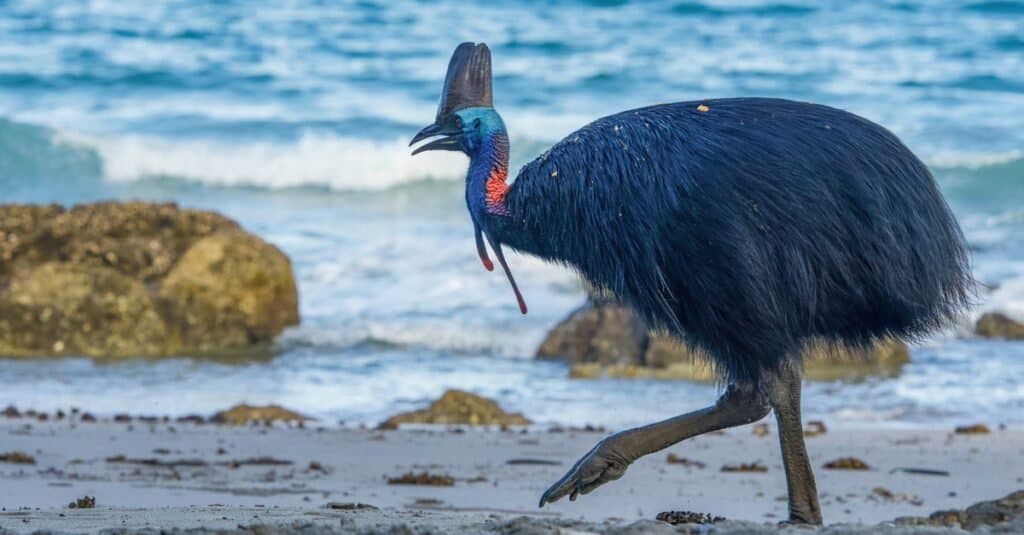
Scientists believe cassowaries have roamed the Earth for 50 to 60 million years.
©Kensho Photographic/Shutterstock.com
As the Queensland government explains, the simplest way to help these birds is to Be Cass-O-Wary:
- Never feed cassowaries, and be sure to secure any food, trash, compost, or cooking equipment safely where the birds cannot access it
- Keep drinks, food, and cell phones (which cassowaries may mistake for food) out of sight.
- Keep a safe distance from both adults and chicks.
- Slow down in marked cassowary road zones.
- Keep dogs leashed or securely enclosed.
Protecting these extraordinary birds means protecting the rainforest systems they quietly help build, one seed at a time.