Quick Take
- Blue chickens don't always lay blue eggs, though one breed on this list manages to pull off both. See the blue egg layer →
- One of these fluffy blue birds hides a shocking secret beneath its feathers that surprises almost everyone. Discover the hidden secret →
- The 'blue' gene doesn't actually produce blue feathers. So what does it do?
- One breed here can actually fly, and that unexpected ability plays a key role in its survival. Meet the flying breed →
If you’re eager to learn about chickens but want to explore something a little out of the ordinary, we have just the thing for you. In the poultry world, the blue gene is quite a remarkable phenomenon.
This gene doesn’t necessarily lead to a bird with blue feathers. Instead, it can result in a spectrum of colors based on the genetic contribution of both parent birds. Let’s dive into the list of 11 amazing blue chicken breeds that carry this unique genetic trait, showcasing a fascinating variety of feather displays.
Blue Ameraucana
Many people assume that a blue chicken would naturally produce blue eggs, but this isn’t always the case. Nevertheless, such birds do exist. If you want a blue chicken that lays blue eggs, look no further: the blue Ameraucana is that bird.
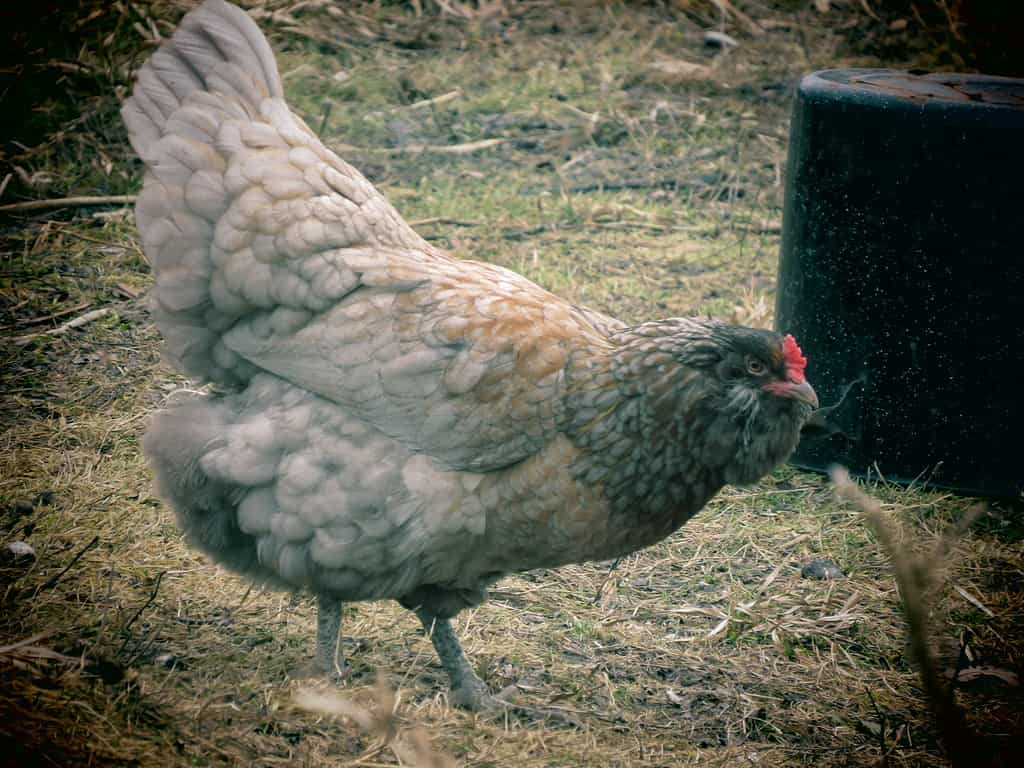
Blue Ameraucanas are not only blue — they also lay blue eggs.
The blue Ameraucana chicken exhibits grayish-blue or even blue-black plumage. This occurs due to the presence of a recessive gene responsible for the blue tint. This gene merely lessens the intensity of any black pigmentation in the feathers. If the particular chicken doesn’t inherit a copy of the blue gene, its black feathers will retain their original color.
Blue Andalusians also have medium-sized combs with a distinct five-point structure. Roosters can weigh approximately 7 pounds, while hens weigh about 5.5 pounds.
Their dietary needs are comparable to other chicken varieties. They flourish when given a nutritious mix of premium feed supplemented with fresh fruits and vegetables and occasional treats like mealworms or scratch grains.
The blue Ameraucanas are genuinely delightful, boasting additional feathery tufts on their faces that give them a cute appearance. Plus, they have an endearing personality to boot, getting along well with humans and other chickens alike.
Blue Silkie
Blue silkie chickens stand out, covered in feathers from head to toe. Their feathers are not only soft but also resemble fur and have a texture similar to satin or silk. Researchers believe that the silkie chicken has historical roots in China, dating back nearly a thousand years. In particular, people lean towards blue silkies because of their distinctive blue and lavender shades.
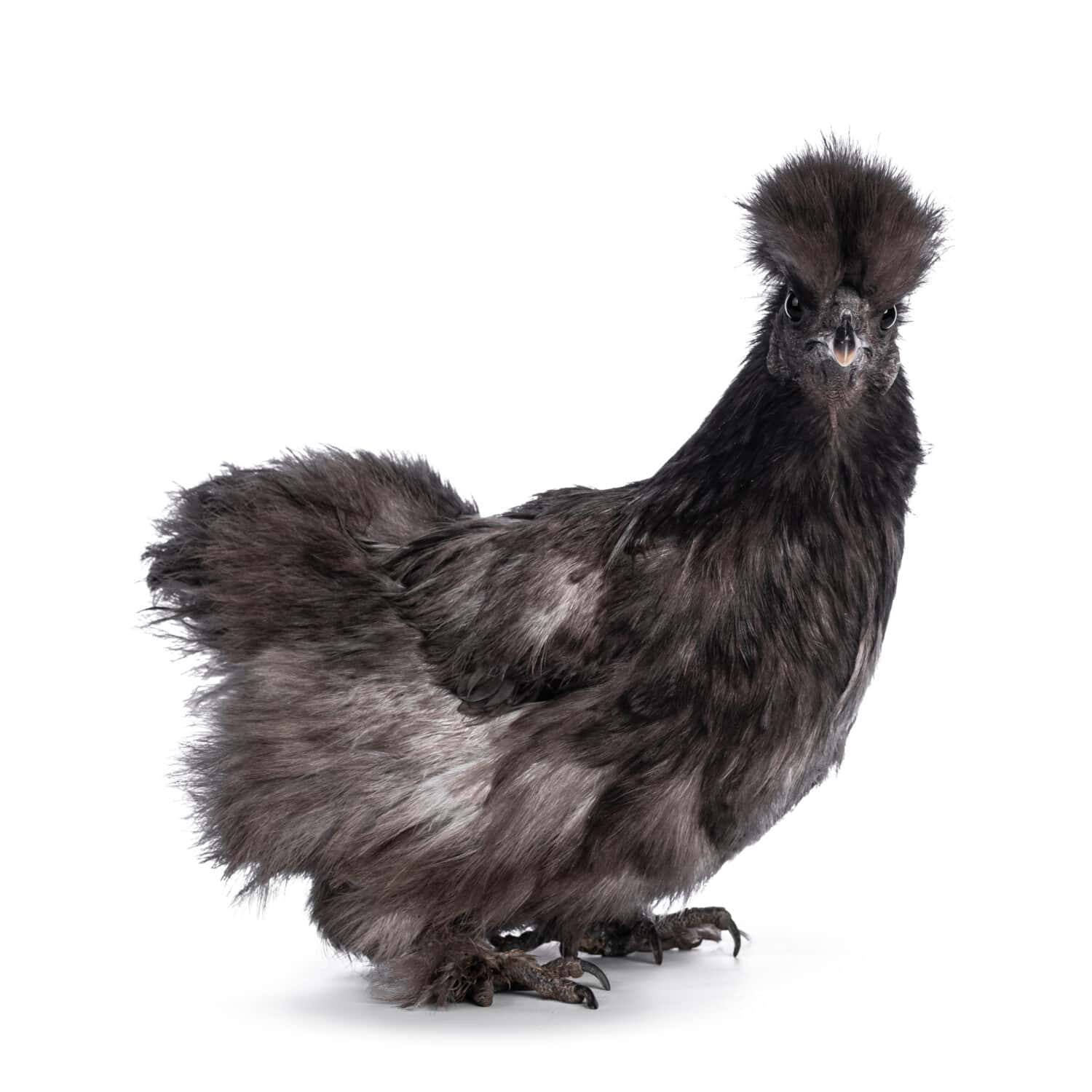
One of the cutest blue chicken breeds in the world is the blue silkie.
©Nynke van Holten/Shutterstock.com
Blue silkies are relatively small, with males averaging a weight of 4 pounds and females around 3 pounds. Their diet is diverse, as they are omnivores, feeding on a mixture of insects, seeds, fruits, and vegetables.
Blue silkies, or silkies in general, are a perfect choice to consider adding to your flock if you fancy having a pet that enjoys a good hug. Their gentle nature means they’re more than happy to indulge in a snuggle now and then.
Though they might be small, they are popular for their quality meat. Hidden beneath the lush feathers is a surprising attribute: black skin, meat, and even bones. These are a delicacy and a vital component in certain medicinal recipes in various countries.
Blue Copper Marans
The blue copper Marans chickens trace their roots to France, perhaps explaining why people often call them the French blue copper Maran. These medium-sized birds boast a compact feathering that feels somewhat silky to the touch.
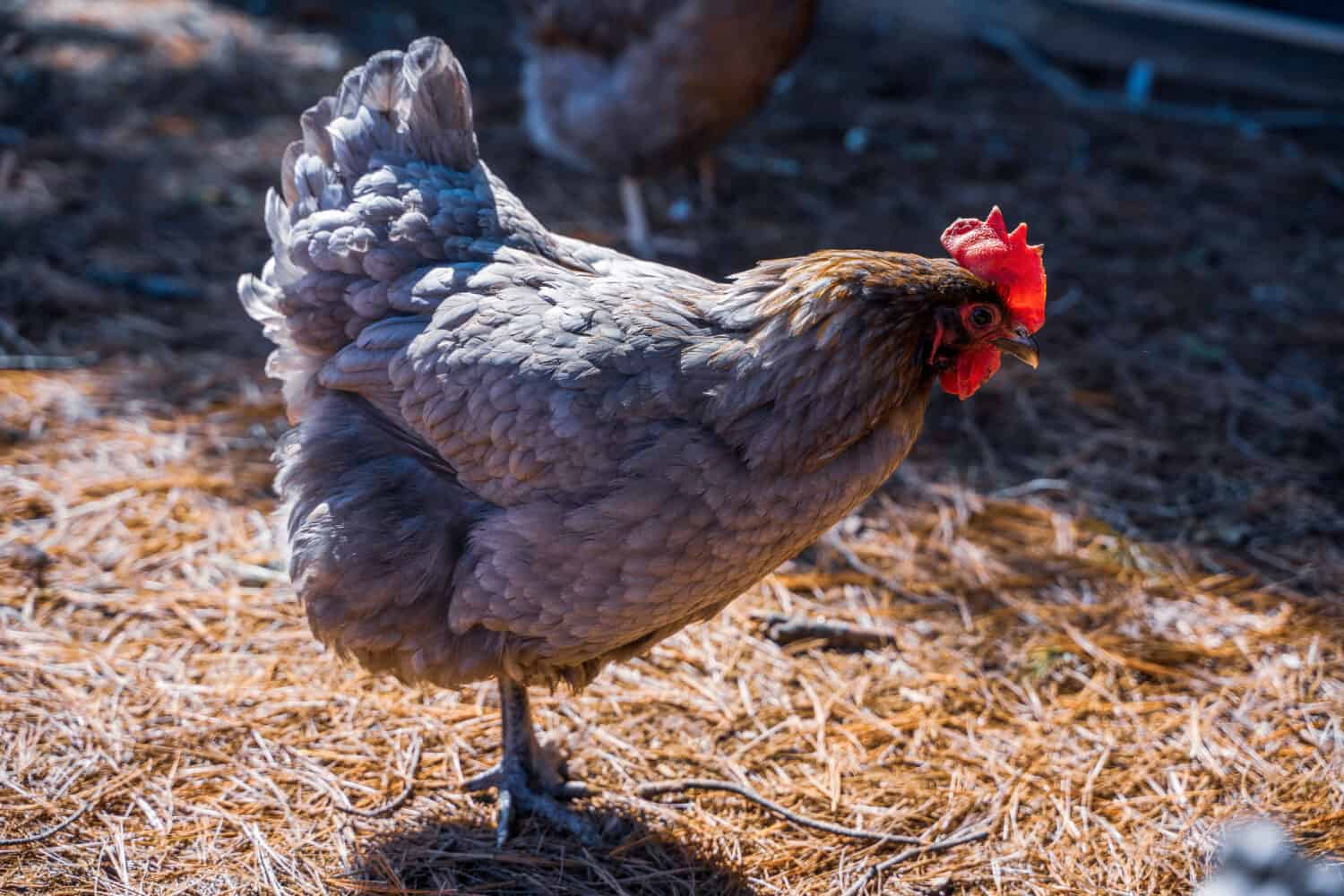
Boasting a copper head, the blue copper Marans chicken is a blue color on the rest of its body.
©Bullet Point Ranch/Shutterstock.com
Blue copper Marans hens typically have a dark to copper color on their head and neck feathers, contrasting sharply with the blue that dominates the rest of their bodies. Notably, their tails are narrow, stretching backward without flaring upward, a trait quite distinct from certain other chicken breeds.
Blue copper Marans chickens are proficient scavengers, with their diet extending beyond insects, larvae, and worms to include larger prey like reptiles.
Generally characterized as docile and easygoing, the temperament of the blue copper Marans can nonetheless vary, with a few individuals displaying more aggressive tendencies. These chickens also tend to be more athletic.
Blue Laced Red Wyandotte
The Wyandotte chicken has consistently maintained its popularity among poultry enthusiasts. In recent times, the blue laced red Wyandotte has become the center of attraction due to its distinctive color patterns. Though it hasn’t been officially acknowledged by the American Poultry Association yet, it seems likely that it will be soon.
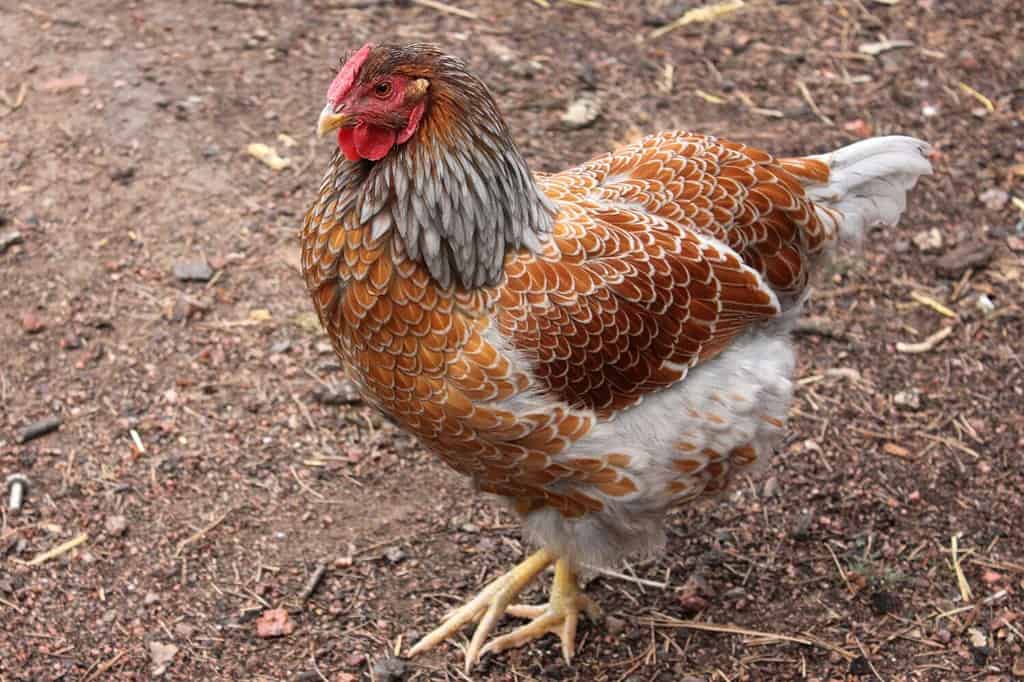
The blue laced red Wyandotte is a colorful chicken with a grayish or blueish tinge.
©Alisha Falcone/Shutterstock.com
Wyandottes are generally plump and rounded birds, featuring a full chest and a subtle curve in their back. Their head sports a rose comb, which is complemented by red wattles and earlobes.
The blue laced red Wyandotte variety exhibits grayish-blue dense under feathers extending from its abdomen to its tail. Atop this, their back, chest, and flanks showcase reddish-chestnut plumes bordered with gray or blue tinges.
Wyandottes are on the larger side, with hens tipping the scales at about 6.5 pounds, while the roosters can weigh approximately 8.5 pounds. Their diet is naturally supplemented by various seeds and insects they discover during outdoor adventures.
Around other chickens, blue laced red Wyandottes tend to maintain their distance. While they are not aggressive, they stand their ground firmly when confronted by another bird.
Blue Andalusian
Blue Andalusians, originating from a region in Spain sharing their name, were brought to the United States around the 1850s, where breeders continued to perfect the coloring of the chicken.
These chickens exhibit a bluish-gray hue, a characteristic that extends to their downy under-feathers. Instead of a uniform color, their plumage is a blue laced pattern, highlighted by a darker blue border around each feather. Blue Andalusians can come in a splash color as well. This variety is almost entirely white with some splashes of blue.
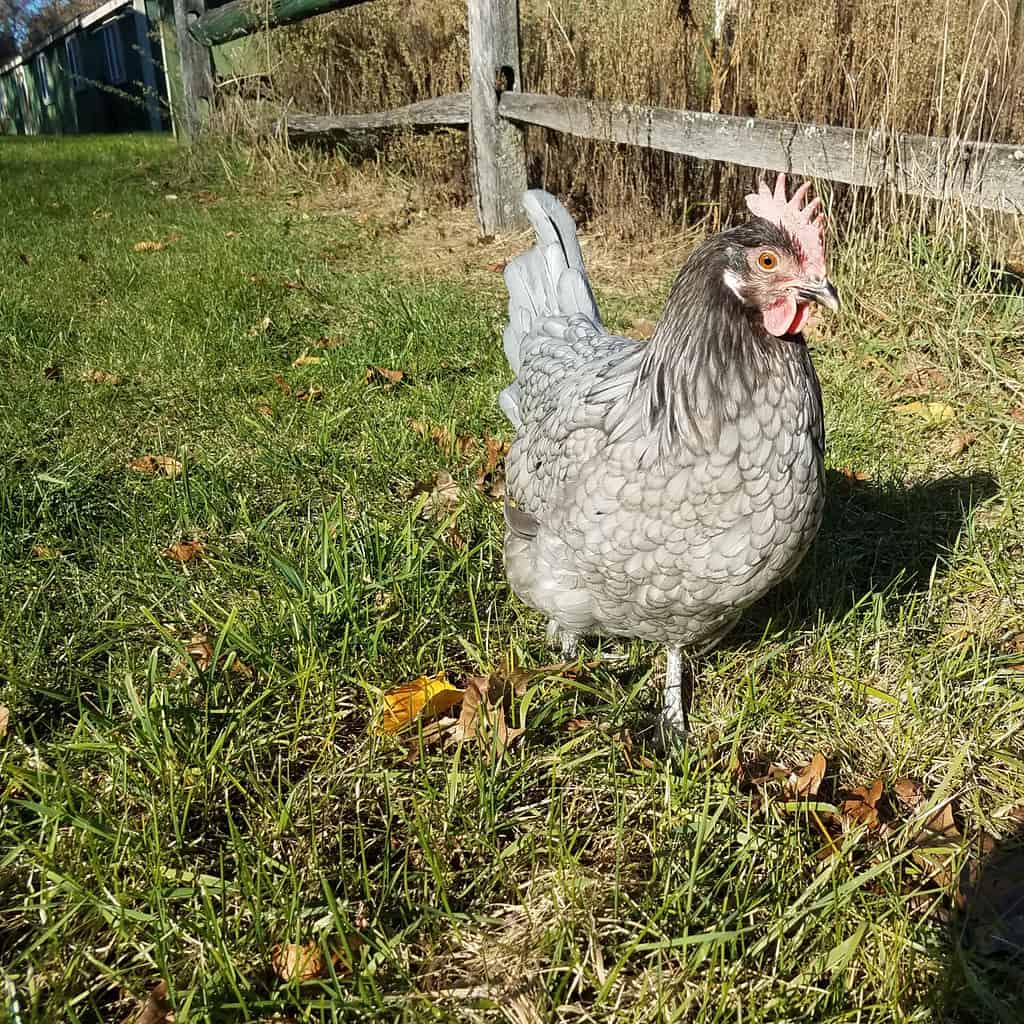
Featuring a blue, laced pattern, blue Andalusians are a popular chicken breed.
©cainphotos/Shutterstock.com
Blue Andalusians also have medium-sized combs with a distinct five-point structure. Additionally, blue Andalusians possess white, moderately sized earlobes accompanied by substantial wattles. Males can weigh approximately 7 pounds, while females weigh about 5 pounds.
Despite the common belief that blue Andalusians are well-suited to cold environments, the reality paints a different picture. Their combs and wattles are quite prone to frostbite, a condition as agonizing for them as it would be for humans. Though they can endure colder climates, it comes at the cost of significant discomfort.
Their ability to fly, a skill not common in many other chicken breeds, further aids in the Blue Andalusians’ defense against predators. Their vocal nature serves as an efficient alarm system, as they don’t hesitate to warn their group at the slightest indication of danger.
Blue Sumatra
As its name suggests, the blue Sumatra finds its roots on the islands of Sumatra, Java, and Borneo, situated in Indonesia.
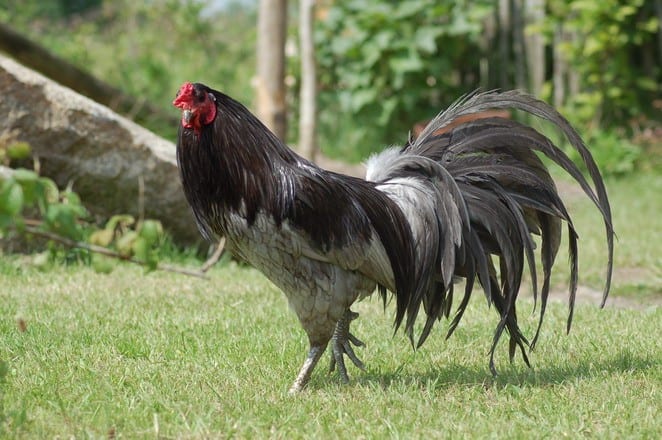
This breed of chicken known as the blue Sumatra is found in the western part of Indonesia.
Admired as exhibition or ornamental birds, blue Sumatras capture attention with their extravagant tails and distinctively colored faces. As they mature, both males and females develop a shimmering blue coat of feathers, complemented by grayish legs. Their tails, inclusive of their sickles and coverts, can gracefully touch the ground when well-maintained. Females roughly weigh 4 pounds, and males weigh between 5 and 6 pounds.
Blue Sumatras have a habit of scavenging, often seen enjoying fresh bugs directly from gardens. They are among the handful of chicken breeds that can fly, managing to cover a considerable distance when they take to the air.
Although blue Sumatras dazzle with their bluish feathers, their egg-laying capacity is somewhat limited, laying approximately 100 eggs per year. Blue Sumatran hens tend to get broody.
Blue Australorp
The blue Australorp is a relatively rare version of the Australorp chicken, originating from Australia. Their feathers have a unique ability to reflect sunlight, resulting in a magnificent display of bluish-gray, almost iridescent hues that captivate onlookers.
Blue Australorps maintain a grand posture, holding their tails upright and showcasing a broad and rounded chest, a testament to their robust and well-formed physique.
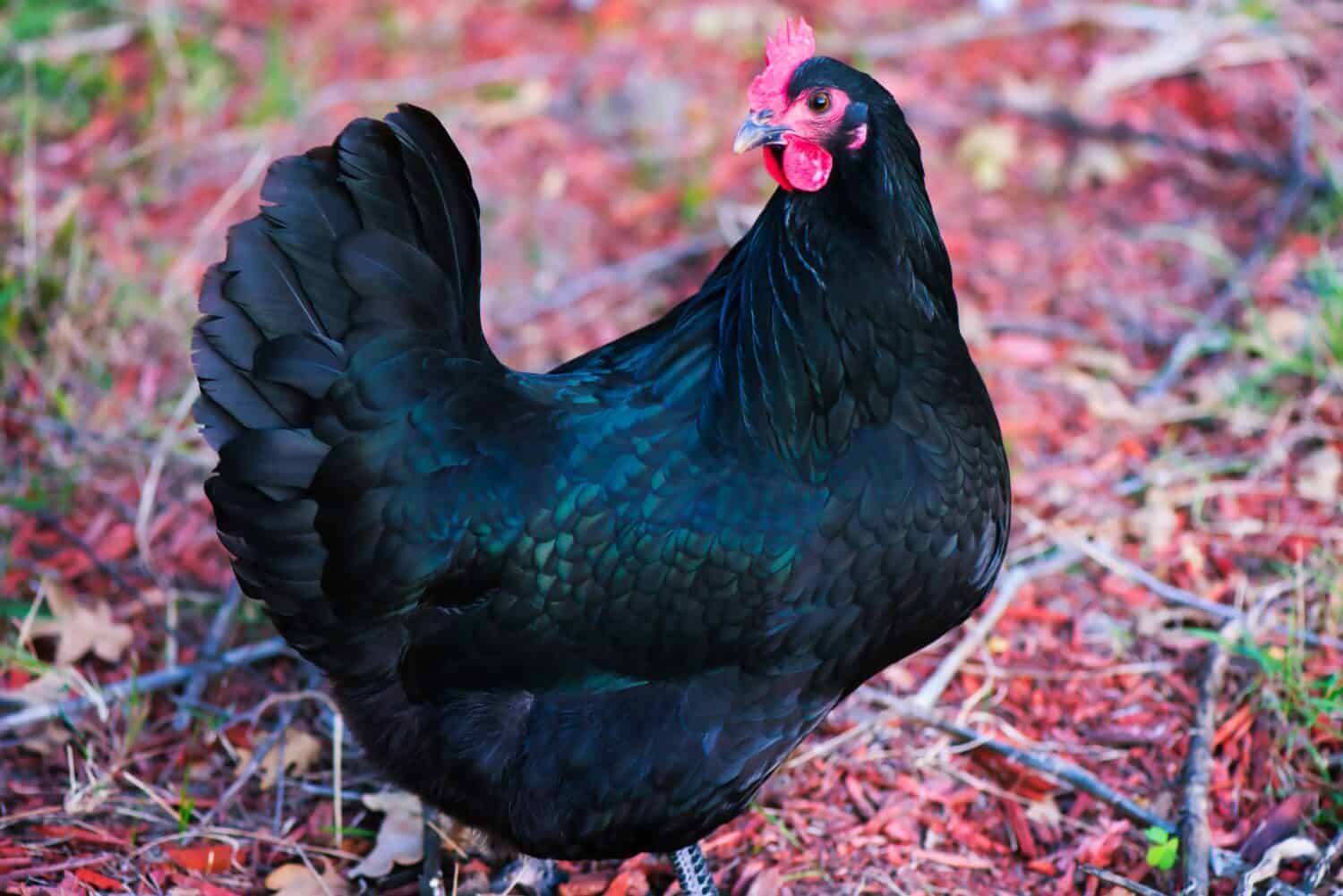
One of the best egg-producing chicken breeds is the blue Australorp.
©Ashley Thomas Photography/Shutterstock.com
Adult blue Australorp roosters generally tip the scales at about 8.5 to 9.9 pounds, while the females usually weigh between 6.5 and 7.7 pounds.
Their diet is quite diverse, comprising greens such as weeds and seeds, in addition to a variety of insects, worms, and other small creatures like mice and lizards they might find.
Given their sizable build, blue Australorp chickens thrive when they stay active, which helps prevent obesity — a common concern in larger breeds, especially when confined to smaller spaces.
Recognized as one of the premier choices for egg production, the blue Australorp also performs well in shows and farm events.
Blue Plymouth Rock Chicken
The blue Plymouth Rock is a fascinating color variant of the original Plymouth Rock chicken, native to the U.S. This breed has feathers with a blue-gray color, with darker tones on their head and around their neck.
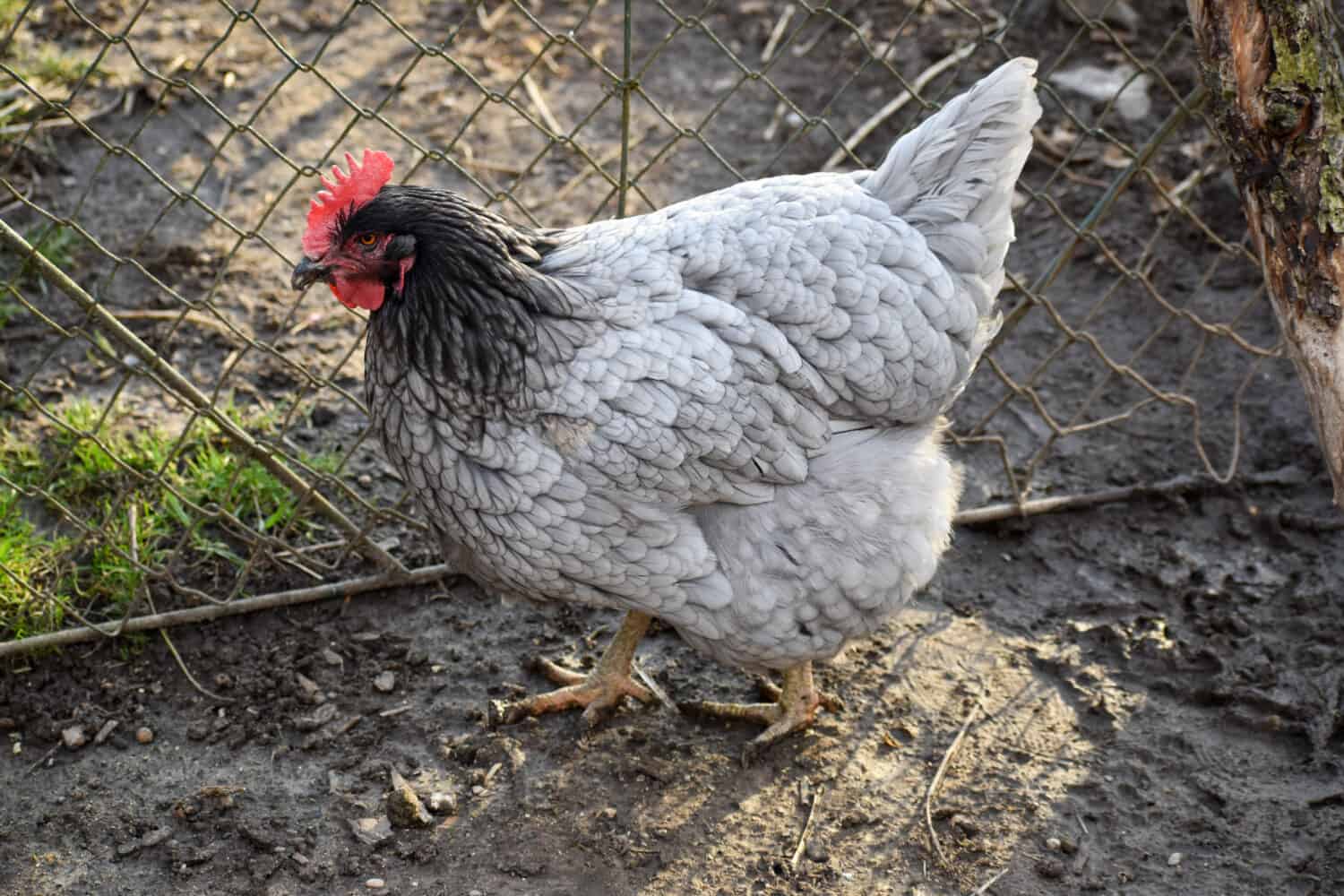
Mostly a blue-gray color, the blue Plymouth Rock chicken has a friendly temperament.
©Monika Valachovic/Shutterstock.com
Blue Plymouth Rock hens are slightly smaller than the roosters, but they are still pretty substantial, weighing in at around 7 pounds, while roosters generally tip the scales at around 9 to 9.5 pounds.
Their diet is diverse, including a mixture of feed, grains, and an array of fruits and vegetables, complemented by a selection of insects for protein.
Blue Plymouth Rock chickens are among the most approachable and friendly you’ll find. They have a curious nature, frequently seen exploring their surroundings energetically. Additionally, they are well-adapted to various climates and can withstand cold winters without a dip in egg production.
Rhode Island Blue
The Rhode Island blue chicken was developed in the United States. This amazing chicken breed beautifully blends the resilience and high yield of the renowned Rhode Island red chicken with a striking blue color, a trait borrowed from the blue Australorp breed.
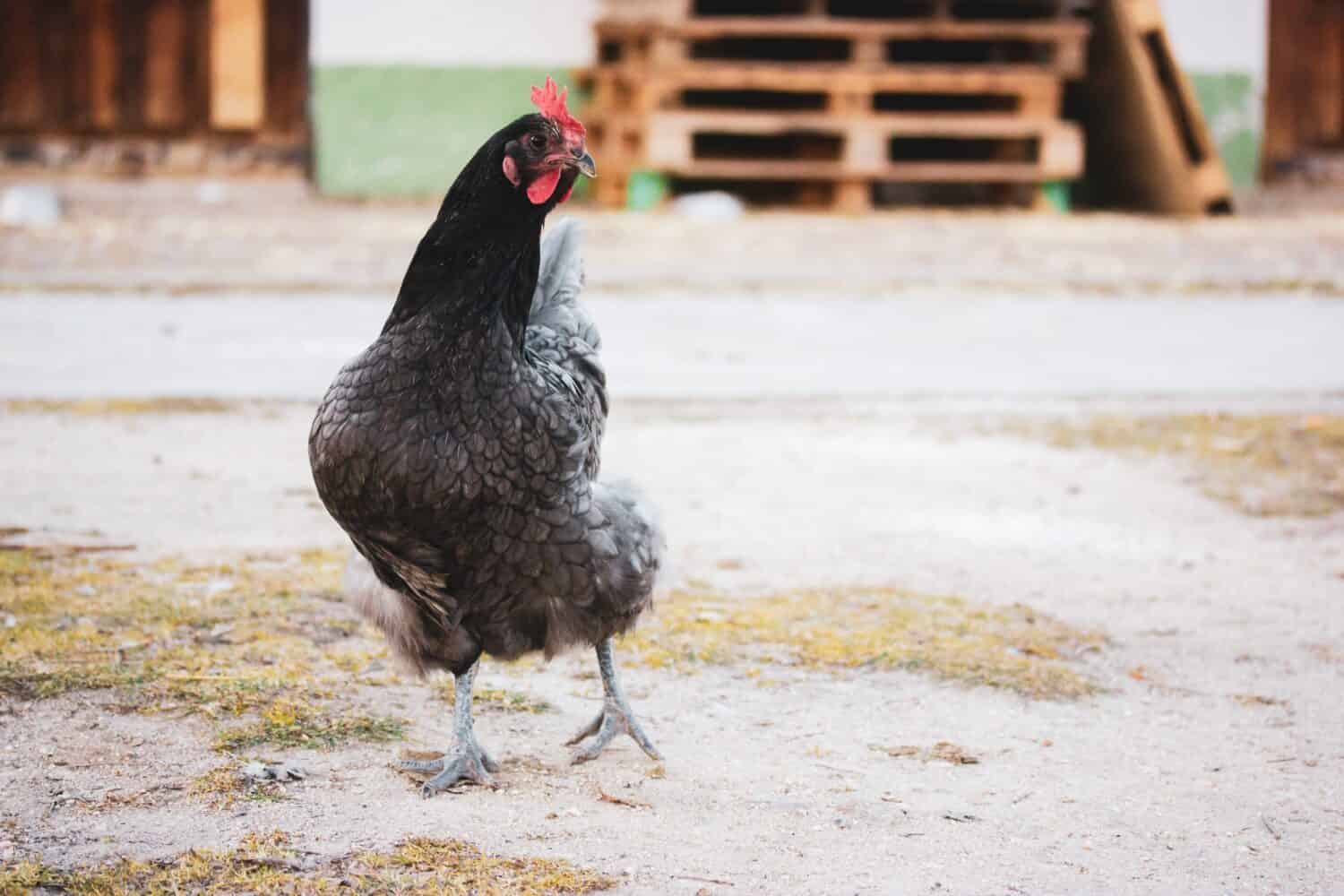
A cross between the Rhode Island Red and the blue Australorp, the Rhode Island Blue chicken has some blue in its plumage.
©Al More/Shutterstock.com
The Rhode Island blue chicken sports a spectrum of blue in its plumage, varying from light to dark shades, sometimes presenting a sprinkle of other colors due to their diverse lineage. They boast a broad and sturdy frame, indicative of their meat-producing potential.
Rhode Island blue roosters can reach weights of up to 6.5 pounds, while hens are slightly lighter at 5.5 pounds.
Their diet is rich and varied, encompassing a range of fruits, vegetables, grains, and occasionally some leftover table scraps.
Rhode Island blue hens are prolific layers, producing an average of four to six large brown eggs per week. Not only are they efficient layers, but they also excel at foraging, a trait that assists in pest control and can potentially reduce feed costs, provided they have sufficient space to roam freely.
Their friendly nature makes Rhode Island blues a great fit for families and enthusiasts who raise chickens as a hobby.
Blue Jersey Giant
The blue Jersey giant is an American domestic chicken breed created in New Jersey. These birds have your classic chicken look with a single, medium-sized comb, red wattles, and earlobes. Their eyes are typically brown, and they have strong and sturdy legs. The blue Jersey Giant boasts a magnificent blue coloring. The deep blue feathers cover the entire body, with a glossy sheen that adds to their beauty.
Blue Jersey Giant hens generally weigh an incredible 10 pounds, while adult males weigh up to 13 pounds.
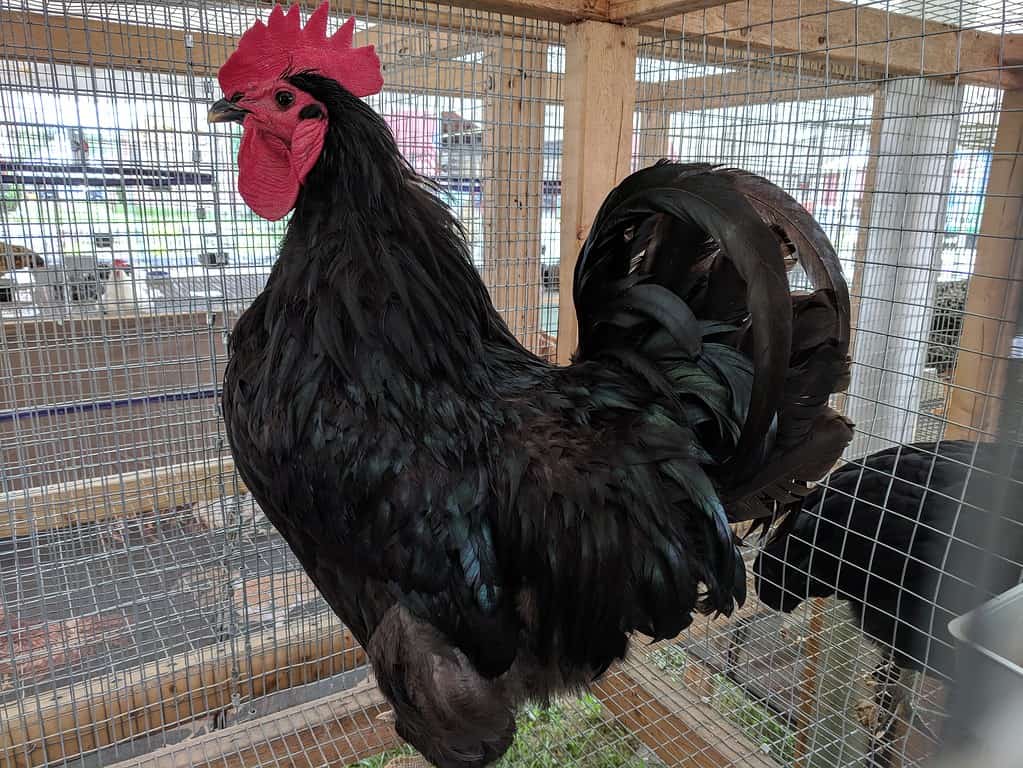
Adult female blue Jersey giants weigh 10 pounds, while adult males weigh approximately 13 pounds.
The blue Jersey giant’s diet is the same as most other chickens, typically comprising high-quality poultry feed along with grains and fresh greens.
Blue Jersey Giants are known for their gentle and docile temperament, making them a favorite choice among families and hobbyists. They are sociable birds that tend to get along well with other chickens and humans. As one of the largest chicken breeds in the world, blue Jersey giants are a great choice for consumption as well. Plus, they lay large eggs.
Blue Cochin
Originally from China, the blue cochin has fluffy plumage and a docile nature. One of the blue cochin’s most striking features is its voluminous blue feathers. The blue coloration itself is soft and appealing, creating a lovely visual contrast against its bright red wattles and earlobes. Notably, these chickens also have feathered legs, which add to their overall fluffiness.
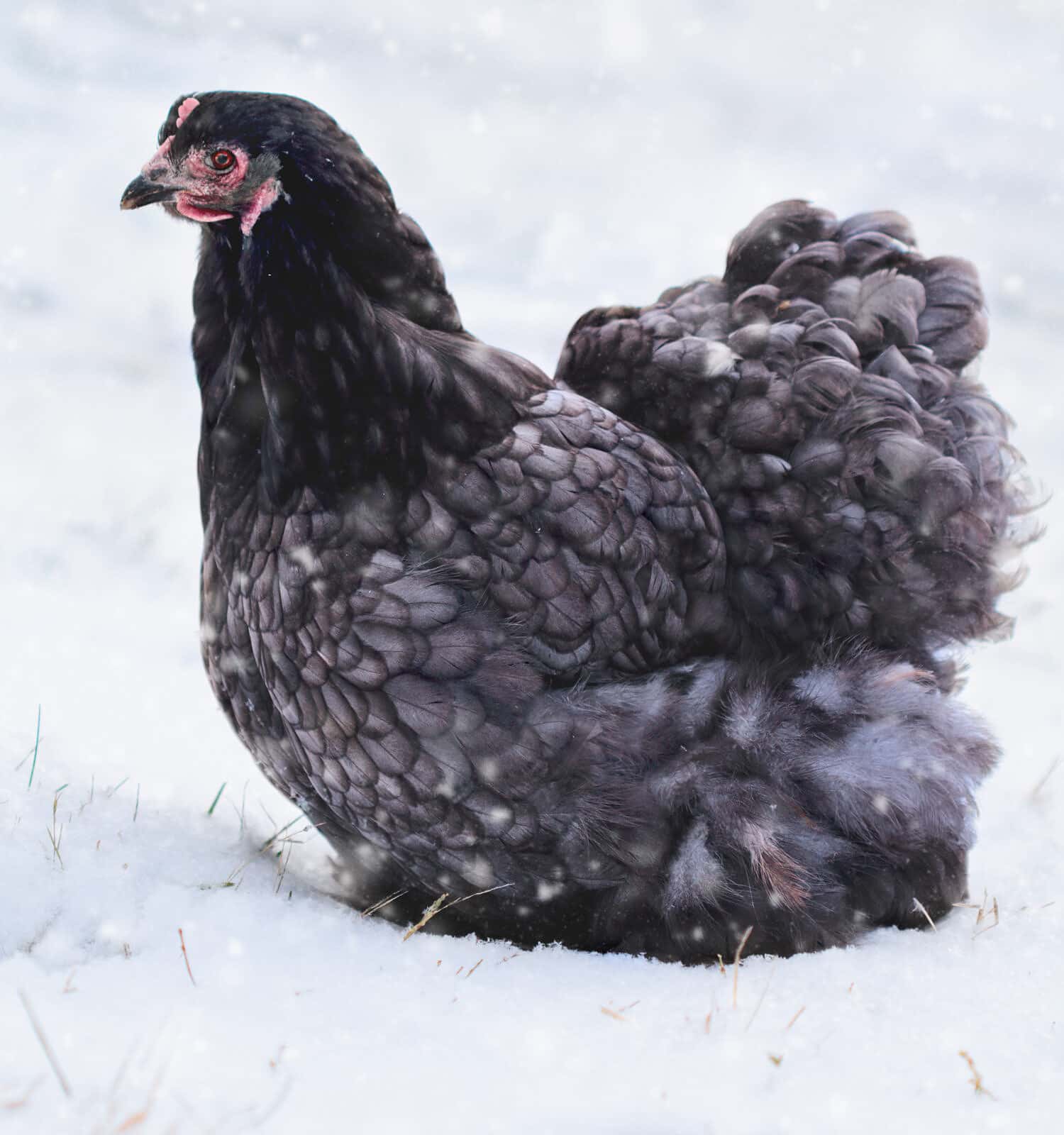
The blue cochin is an incredibly fluffy chicken breed.
©Stephanie Frey/Shutterstock.com
Blue cochins are medium to large birds. Hens typically weigh around 8 pounds, while roosters can reach weights of 10 to 11 pounds. These chickens thrive on a diet of high-quality poultry feed supplemented with grains, fruits, and vegetables. Make sure to feed them extra protein during the molt.
Blue cochins are friendly and sociable. While blue cochins may not be the most prolific egg layers in the chicken world, they do produce a respectable number of large brown eggs, around 150 to 180 a year.