Quick Take
- A chicken that looks like a Velociraptor should be terrifying to keep, yet its actual temperament is the last thing you'd expect. Discover its surprising temperament →
- Bigger doesn't mean better, and the Indio Gigante's massive size comes with a production trade-off most chicken keepers never see coming. See the production trade-off →
- This Brazilian giant has one glaring vulnerability that could prove fatal, and that vulnerability has nothing to do with predators. Explore its cold-weather vulnerability →
- No two Indio Gigantes share the same appearance, a fact whose genetic explanation is rooted in how the breed was built from scratch. Understand the genetic variation →
The thought of a super tall chicken sounds utterly insane. However, such chickens do exist and have existed for decades. We’re talking about the massive Indio Gigante chicken.
Indio Gigante Chicken Looks Like AI But it is Real
The images of a Velociraptor-looking chicken on @tosglobalx’s Instagram do not look real. And in an age where AI-generated videos are becoming the norm, it’s easy to assume it’s fake, but this one is legitimate. There truly is a chicken that towers over children.
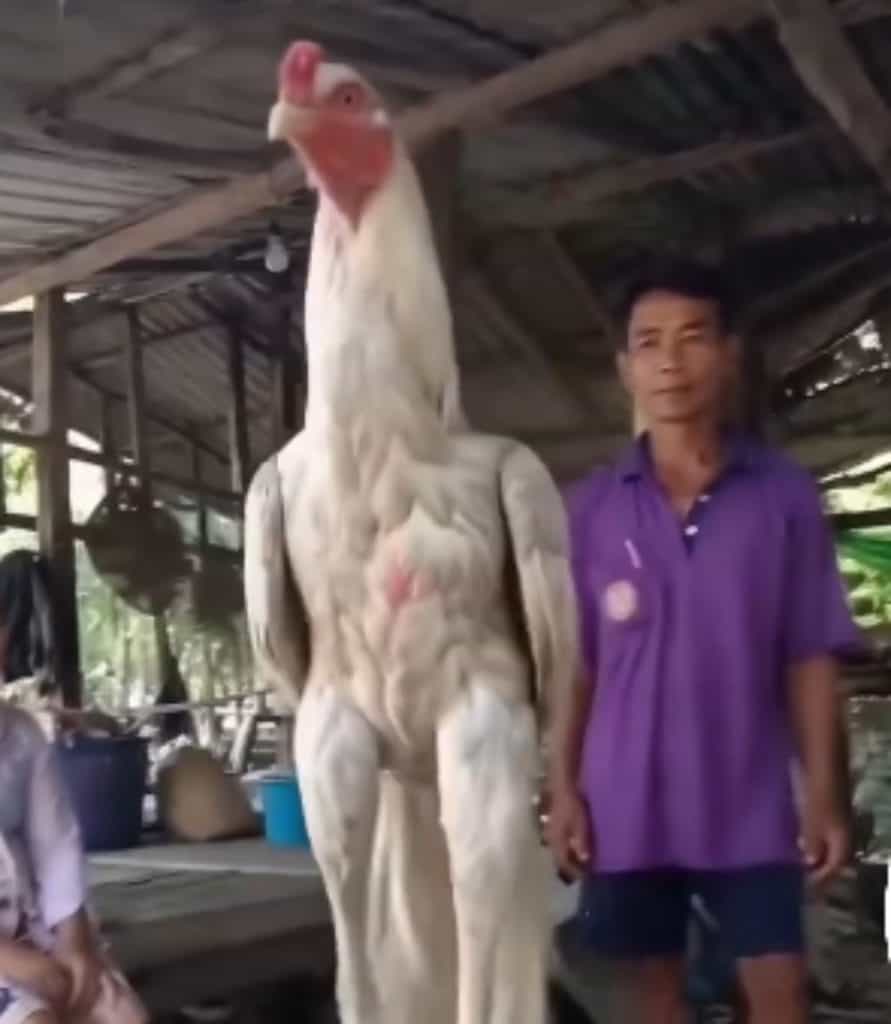
Indio Gigante chickens look AI-generated but are real.
©@tosglobalx / Instagram – Original
The Indio Gigante chicken looks like something from prehistoric times. These birds can be over four feet tall and weigh over 10 pounds.
While looking dangerously close to a dinosaur, these chickens get along well with smaller breeds. Therefore, in South America, it is not uncommon to see them roaming and foraging with more traditional-sized chickens.
Origins of the Indio Gigante Chicken
The history of the Indio Gigante chicken dates back only a few decades. They were successfully created in Brazil in the 1980s after crossbreeding local Caipira chickens with Shamo and Malay chickens. The former is known for its hardiness, while the latter is known for its size.
These chickens were bred for both their appearance and the amount of meat they could produce.
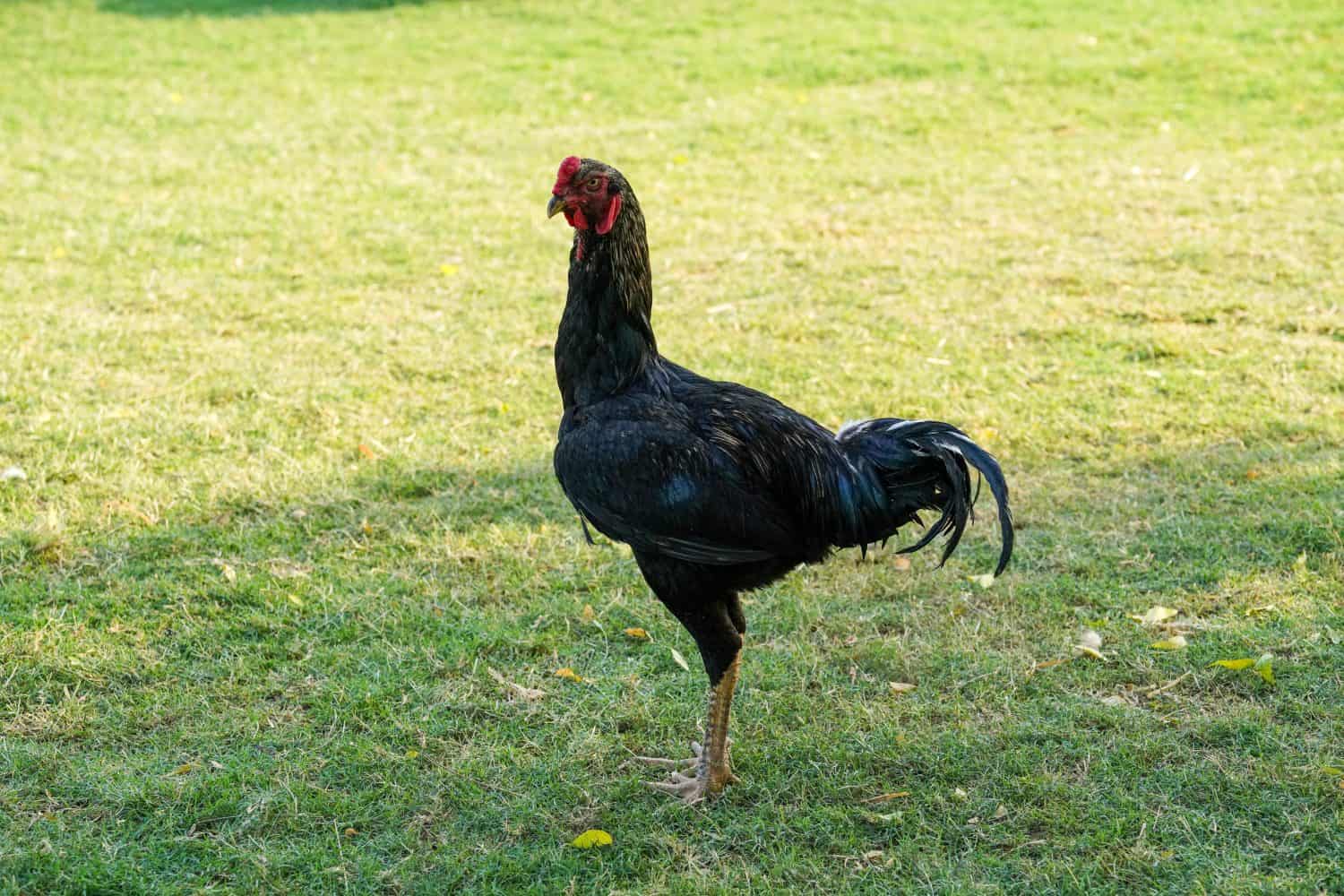
The Shamo chicken is one of the breeds used to create the Indio Gigante chicken.
©MB SS08-42/Shutterstock.com
Despite being dramatically larger than most chicken breeds, size does not equate to higher egg production. A typical Indio Gigante hen produces between 150 and 200 eggs per year. A smaller hen breed can lay up to 300 eggs per year.
Comparatively, Indio Gigante chickens have a shorter lifespan than other chicken breeds. Their lifespan is approximately five years, with some living a bit longer. A typical chicken lives between five and 10 years, while heritage chickens live between eight and 12 years.
What is the Temperament of the Indio Gigante Chicken?
These chickens are gentle giants. That is why they are such a welcome addition to coops for both beginning and advanced chicken owners.
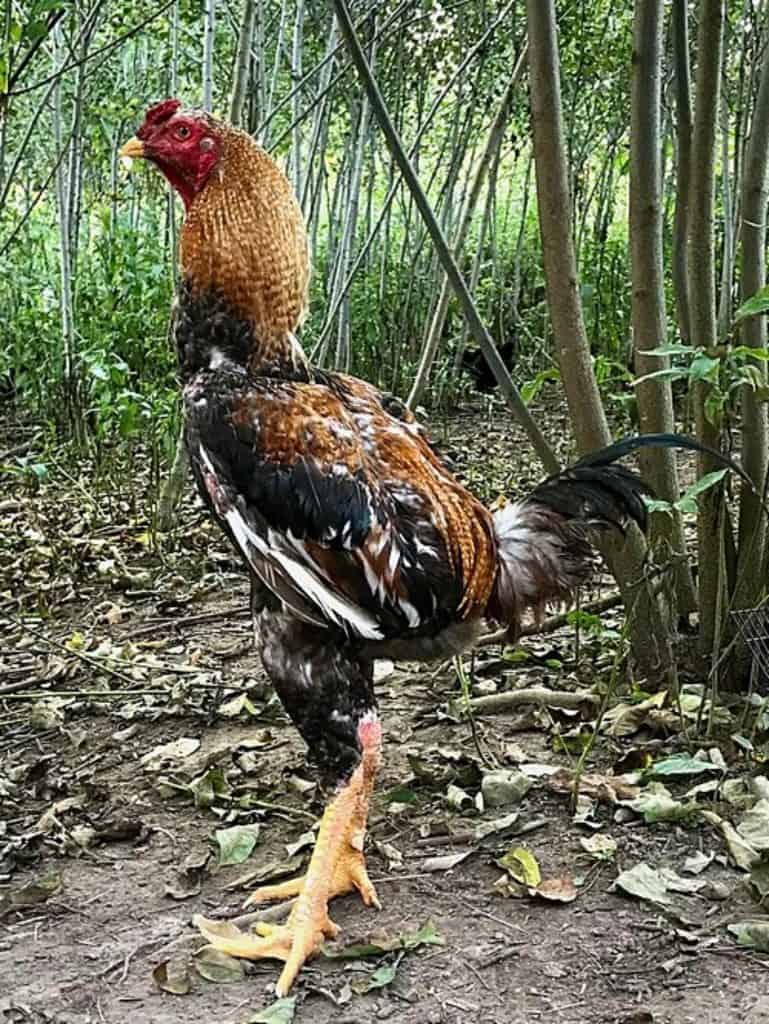
Indio Gigante chickens are docile chickens.
©Khromy, CC BY-SA 4.0 , via Wikimedia Commons – Original / License
Indio Gigante chickens are confident. However, they are also curious and friendly. With that said, they need a good-sized plot of land to live on and explore. This is especially important for their natural foraging behavior.
Of course, like all animals, each individual Indio has its own personality, so some may be slightly more standoffish than others. But as a breed, they are among the most docile chickens around.
Indio Gigante Chickens Are Not Cold-Weather Tolerant
Unlike some chickens, such as Rhode Island Reds, which can do well in cold weather as long as they have an insulated chicken coop, Indigo Gigante chickens are not cold-weather tolerant. They thrive only in warmer climates.
Originating in Brazil, Indio Gigante chickens have adapted to warm, humid climates. In locales where temperatures drop to freezing, they will die. These chickens are not known for abundant down feathers, and their combs can easily become frostbitten. This does not mean they cannot live in colder locations. What it does mean is that precautions need to be taken to ensure they remain healthy when temperatures drop.
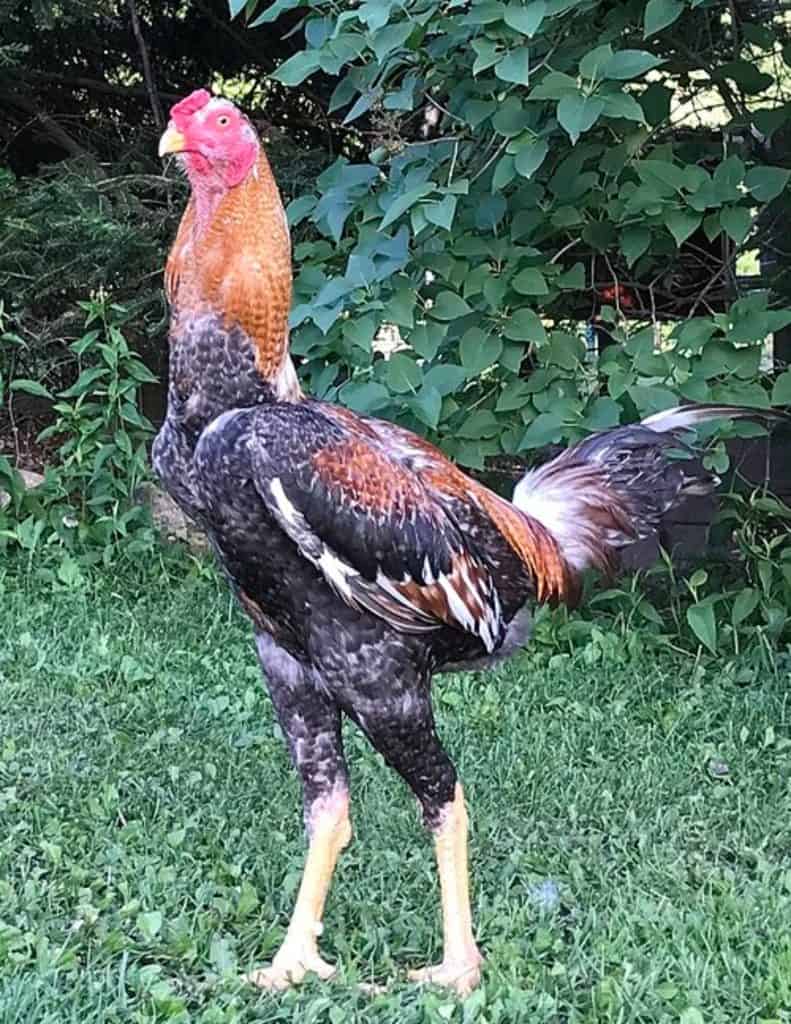
Indio Gigante chickens fare better in warm, humid weather than in freezing temperatures.
©Khromy, CC BY-SA 4.0 , via Wikimedia Commons – Original / License
To keep Indio Gigante chickens alive when temperatures reach freezing, experts recommend owners follow these steps:
- Insulate the coop and make sure the chicken run is free of drafts and moisture
- Apply petroleum jelly to wattles and combs to protect against frostbite
- Add a source of supplemental heat in the coop and run
- Change water often to keep it from freezing and provide chickens with high energy chicken feed
By following these instructions, Indio Gigante chickens can survive cold winters, even though they were not bred to do so.
No Two Indio Gigante Chickens Look Alike
Unlike some chicken breeds with uniform looks and coloration, no two Indio Gigante chickens look the same. This includes those who are in the same flock. The reason has to do with the original chickens used to create the breed.
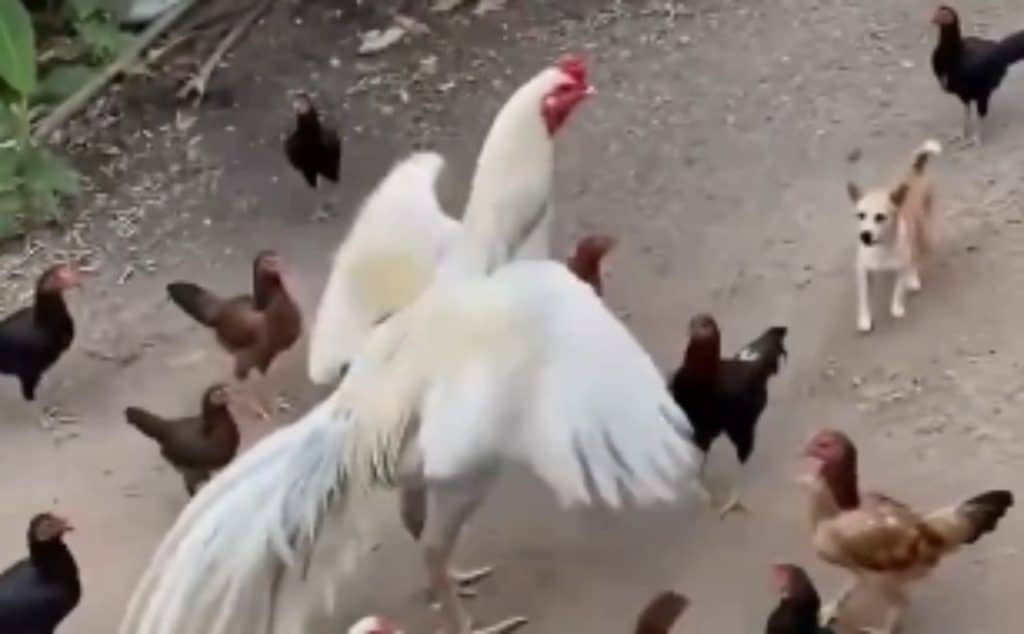
No two Indio Gigante chickens share the same coloring.
©@tosglobalx / Instagram – Original
Caipira chickens, Malay chickens, and Shamo chickens are collectively a variety of colors. Indio Gigante chickens can pull from all the feather colorations found in their gene pools. As a result, Indio Gigante chickens can be solid black, all red, or a combination of black, white, red, green, and more.
Indio Gigante chickens were bred for height and weight rather than feather color. To be a true Indio Gigante chicken, roosters must be over 3.4 inches tall and weigh 10 pounds or more. Hens must be over 2.9 feet tall and at least 6.5 pounds. But as for coloration, these huge chickens can be any combination, adding to the breed’s uniqueness.