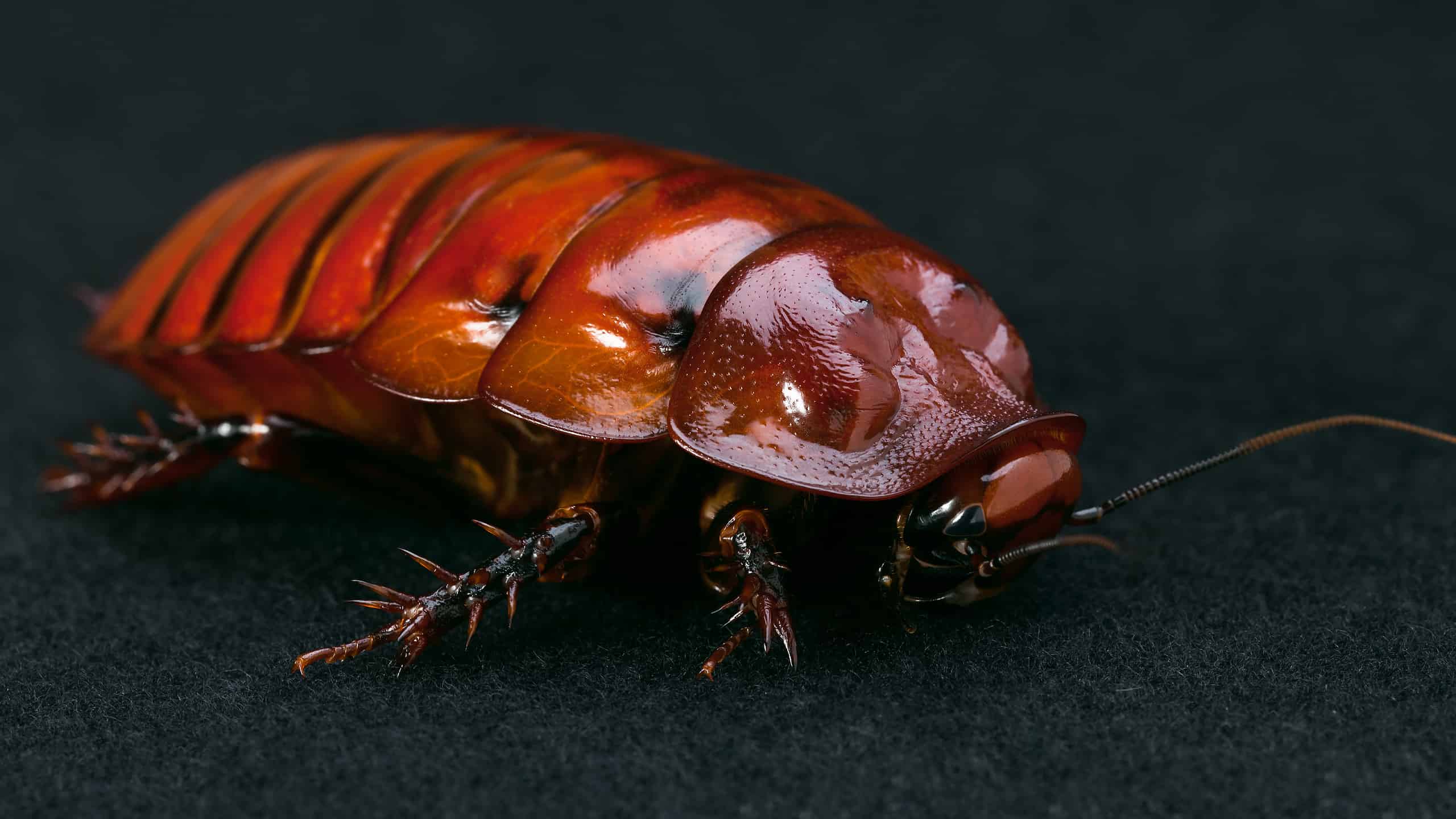

Cockroaches aren’t the most adorable insects, but they are fascinating creatures capable of surviving where many life forms can not. Of the 4,500 different species of cockroaches in the world, only around 30 are considered pests. Cockroaches are opportunistic feeders that eat food scraps, grease, paper, glue, hair, and decaying plant and animal matter. The average cockroach is 1.6 inches long. The most common species in the U.S. are the American cockroach (Periplaneta americana) and the German cockroach (Blattella germanica), neither of which is large enough to make the list. Continue reading to learn about the five largest cockroaches in the world.
5. Death’s Head Cockroach
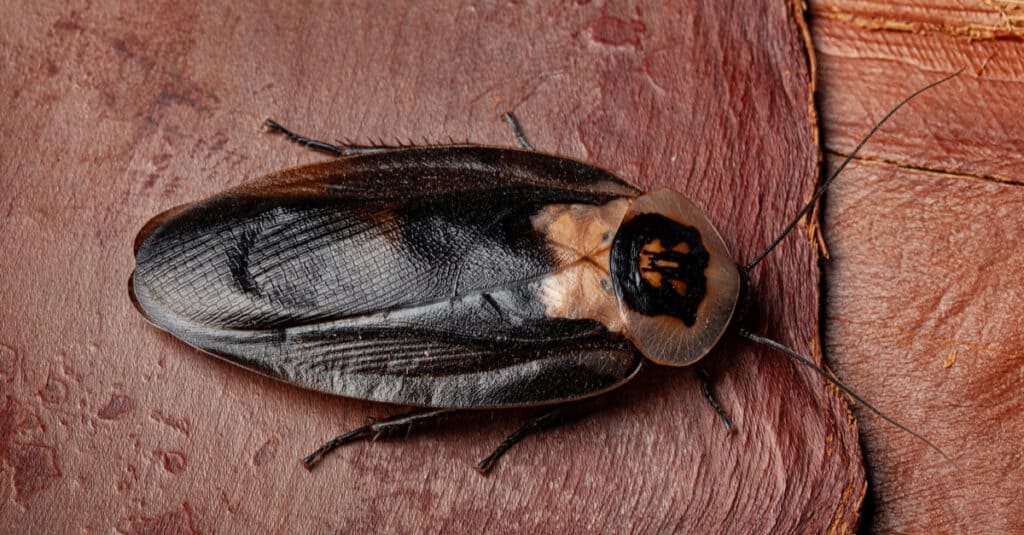
The death’s head cockroach gets its name from the skull-like image on its head.
©K Hanley CHDPhoto/Shutterstock.com
Death’s head cockroaches (Blaberus craniifer) are feared due to their unfortunate name, but they are not an omen of death. The name refers to the skull-like image on their dorsal plates, which is cherished by cockroach enthusiasts who keep them as pets.
Death’s head roaches are two inches long and one inch wide. They are native to Mexico, the West Indies, and Central America, but are found in other places due to accidental transport in luggage and on trade boats. This roach species loves warmth, and unlike other cockroaches on this list, death’s head roaches are attracted to light.
They don’t scramble for cover when the lights turn on but stand their ground and hiss. Traditional African rituals invoke the death’s head cockroach as a guard against evil spirits due to its brave attitude.
Like other roaches, death’s heads eat decaying organic matter, mostly plants, but will also eat carrion, paper, and anything that contains traces of organic matter.
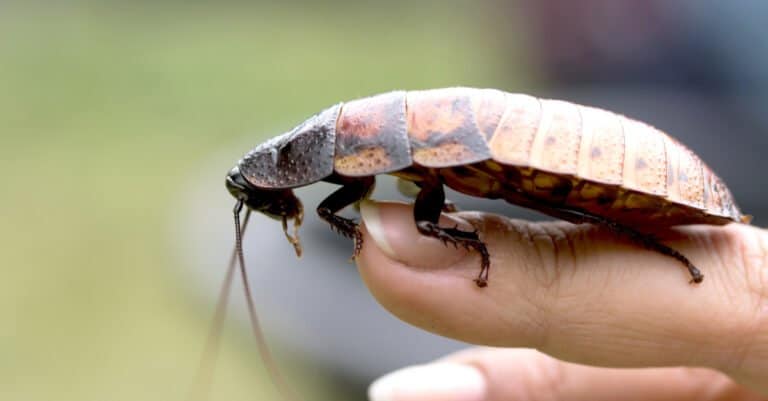
4. Madagascar Hissing Cockroach
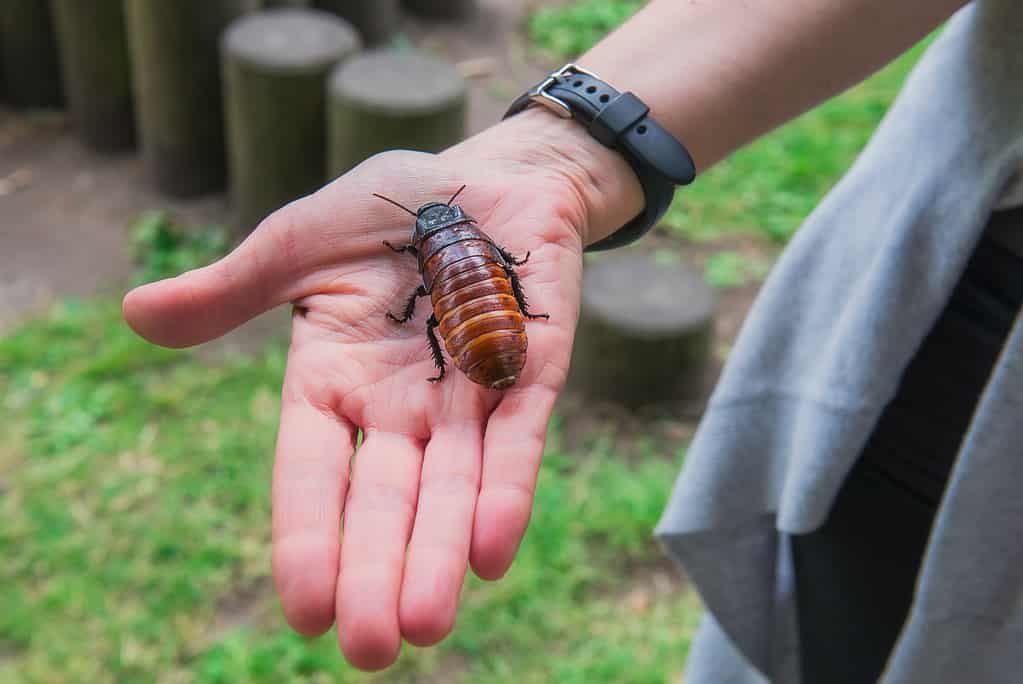
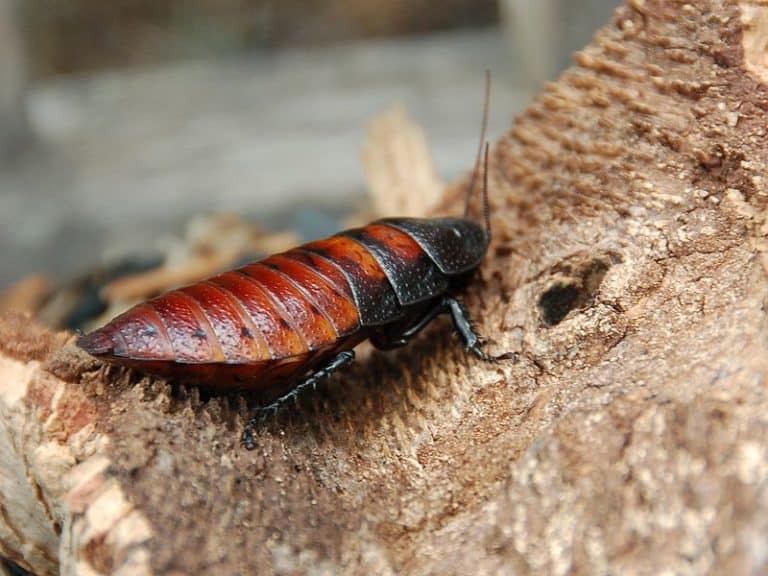
The Madagascar hissing cockroach emits long, loud hissing noises through abdomen holes to scare away predators.
©iStock.com/OKrasyuk
Madagascan hissing cockroaches are endemic to Madagascar off the African coast. They are giants at three inches long and one inch wide.
Many species of cockroaches hiss, but this dark brown beauty is the hissing master. Madagascan hissing cockroaches emit long, loud hissing noises through abdominal holes to frighten predators such as birds, lemurs, and chameleons. Hissing also warns colony members of the danger. Male Madagascar hissing cockroaches also hiss to attract mates. The louder, the better, as far as lady cockroaches are concerned.
Madagascar’s tropical rainforests are the perfect habitat for these cockroaches, which love damp leaf litter. This type of environment provides masses of dead and decaying foliage, decomposing creatures, and enough water to sustain whole colonies of roaches.
3. Central American Giant Cave Cockroach
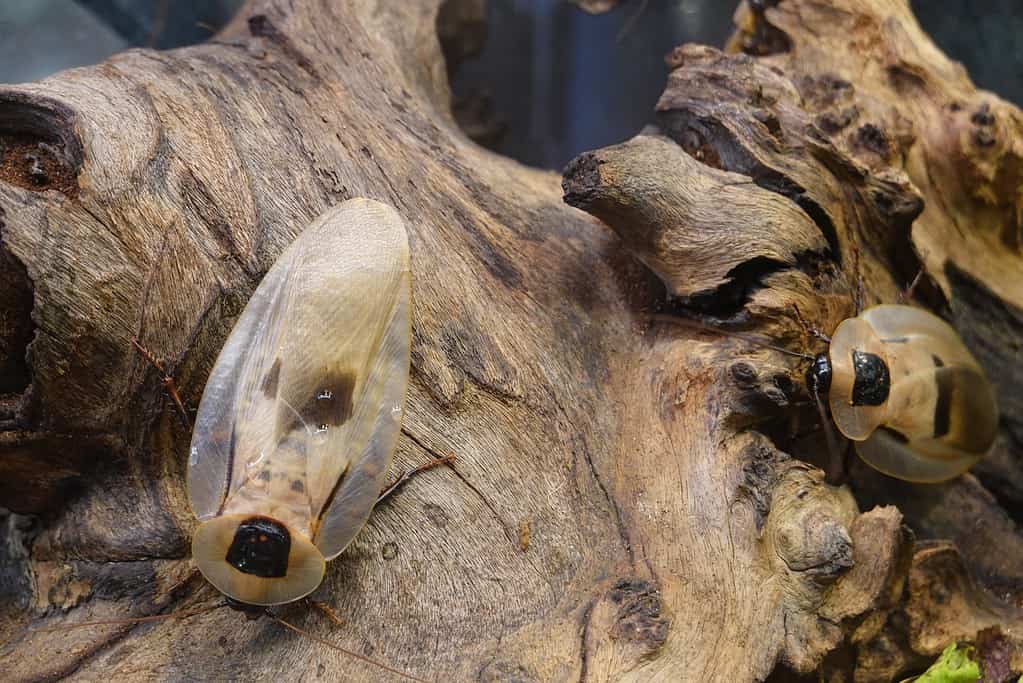
The Central American giant cave cockroach prefers damp, dark environments.
©LifeisticAC/Shutterstock.com
Blaberus giganteus is better known by its common name, the Central American giant cave cockroach.
It’s one of the largest cockroaches in the world, with females reaching over three inches in length with a six-inch wingspan. These huge cockroaches like damp and dark environments, so they live in tree hollows, rock cracks, and caves, as the name suggests!
They are nocturnal omnivores that prefer decaying leaves but will also eat bat droppings, which often fall from cave roofs, carrion, and fruit. They look a little different from other cockroach species because their bodies are leaner and pale tan in color with irregular black splotches.
2. Giant Burrowing Cockroach
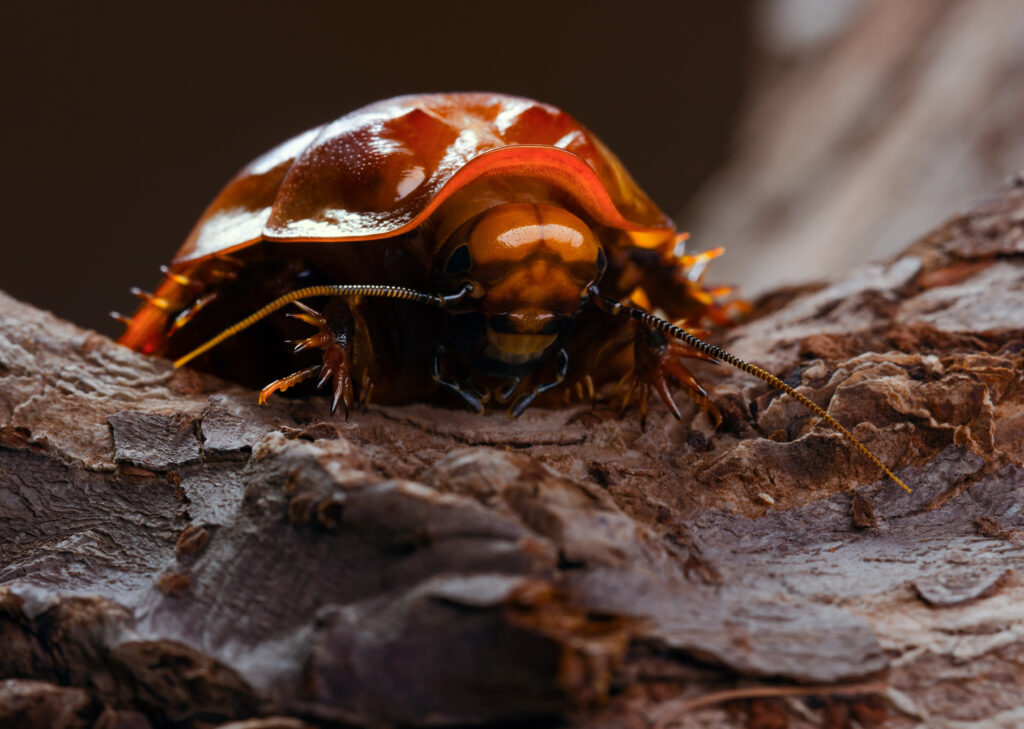
The giant burrowing cockroach is the heaviest of the cockroach species, weighing 1.5 ounces.
©skydie/Shutterstock.com
The giant burrowing cockroach (Macropanesthia rhinoceros), also called the rhinoceros cockroach, is the second-largest cockroach in the world and the heaviest overall cockroach species. Adults reach just under 3.1 inches in length and can weigh up to 1.2 ounces, making them the heaviest cockroach species
The giant burrowing cockroach is native to tropical and subtropical Australia, particularly Queensland’s dry eucalyptus forests. These giant roaches live solitary lives in permanent burrows, digging them out to lengths of 3.5 feet with their forelegs and only leaving to eat and find a mate. This is the only cockroach species known to live in a permanent burrow.
Giant burrowing cockroaches eat decaying foliage, which they drag back to their burrows and eat at their leisure. Research has determined that these impressive roaches can climb trees, despite not having wings. Giant burrowing cockroaches sometimes enter houses in search of food. However, they are not considered pests.
Giant burrowing cockroaches are quite aggressive and protective of their burrows. They’ve been spotted butting and shoving other roaches to prevent them from entering their homes. When they fight, they produce a hissing noise.
1. Giant Black Cockroach
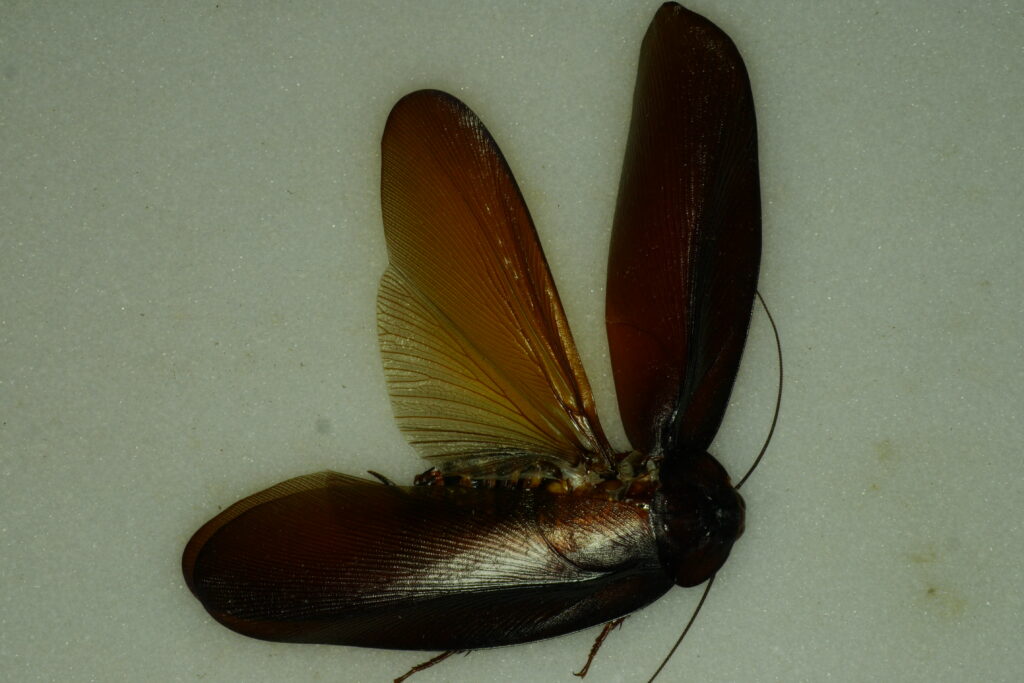
Megaloblatta longipennis, commonly the giant black cockroach, is the largest cockroach in the world.
The largest cockroach in the world by length and wingspan is Megaloblatta longipennis. It can reach up to 3.8 inches long, 1.75 inches wide, and has a wingspan of up to 8 inches. That’s enough body length to cover the average adult’s palm. This monster roach is native to Peru, Panama, and Ecuador.
This enormous dark brown cockroach is a species in the Ectobiidae family, and it’s the largest cockroach species by length and wingspan. It’s nocturnal, like most cockroach species, and enjoys moist, damp environments, so it lives in damp vegetation and eats the decaying matter found there. Fortunately, this mega-sized insect isn’t attracted to homes!
According to the Guinness World Records, the largest specimen on record is a female measuring 3.8 inches long and 1.75 inches wide. You can find this mammoth cockroach in the collection of Akira Yokokura of Yamagata, Japan.