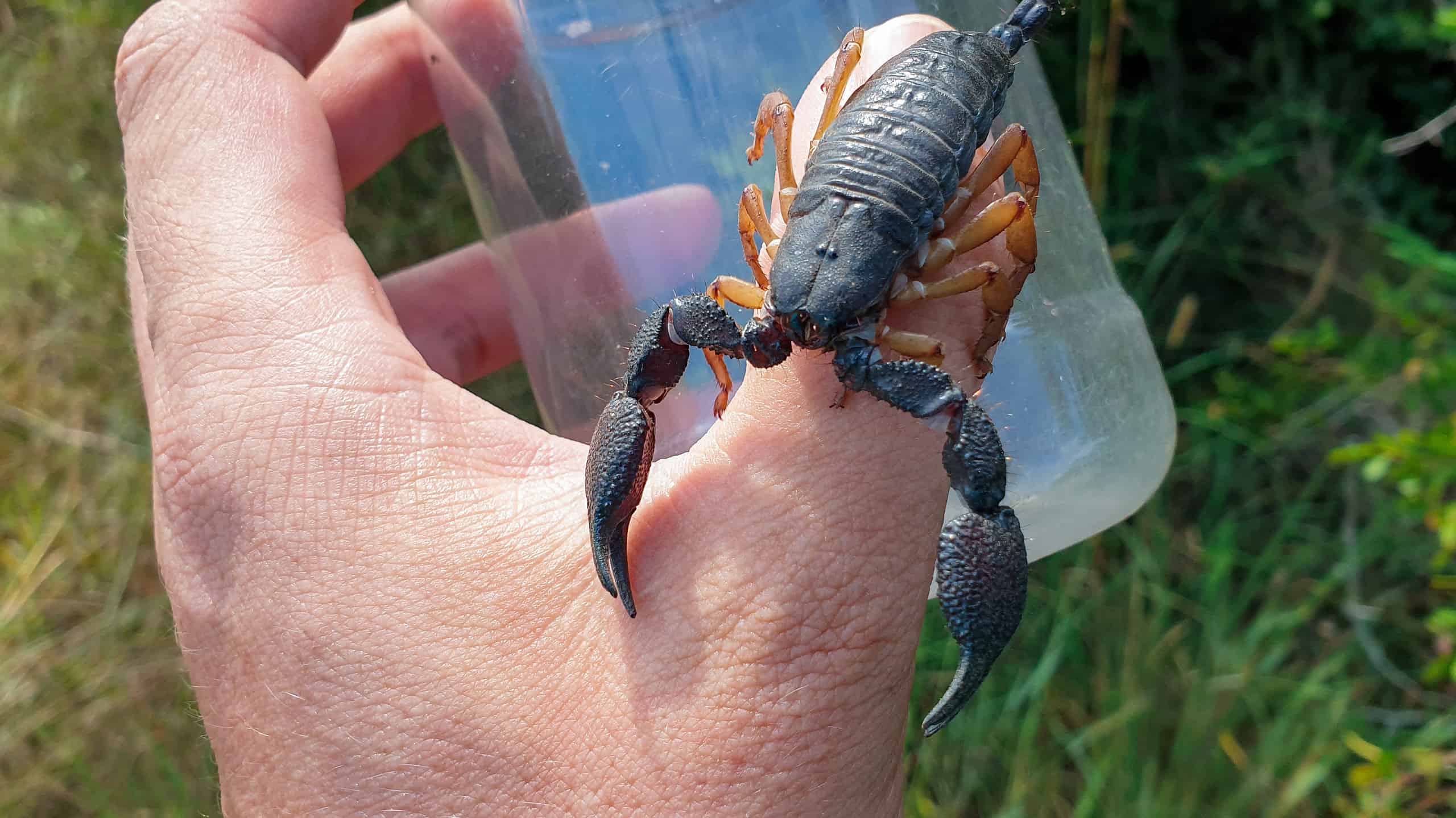

Quick Take
- Scorpions live in a diverse range of habitats and come in awide range of sizes.
- Many of the most venomous scorpions are relatively small, while the largest scorpions rely more onsize and strength to subdue prey.
- The largest scorpion currently living is theIndian Giant Forest Scorpion, which measures up to 11.5 inches.
Scorpions are some of the most recognizable (and creepy looking) creatures on Earth. With their large pincers, armored bodies, and venomous stingers, they’ve fascinated and frightened people for centuries. They belong to the class Arachnida, meaning they are related to spiders, ticks, and mites rather than insects. There are more than 2,000 known scorpion species, and they are found on every continent except Antarctica.
Although many people associate scorpions with deserts, they actually live in a wide range of habitats, including rainforests, rocky cliffs, savannas, and scrublands. In fact, some of the largest species in the world are not desert dwellers at all.
Here are 10 of the biggest scorpions in the world, ranked by their commonly reported maximum length. Because measurements can vary between sources and individuals, note that the exact order can differ slightly.
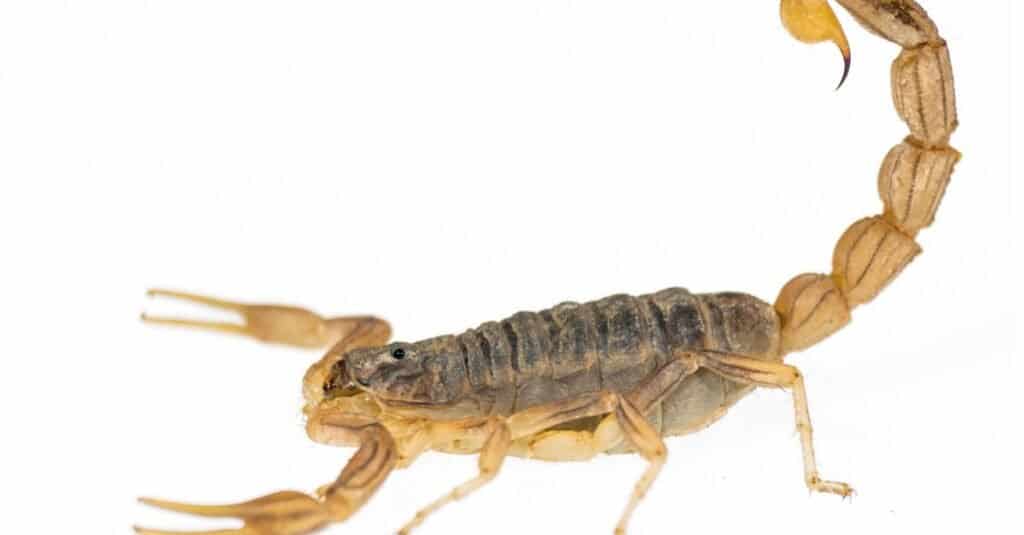
10. Deathstalker (Leiurus quinquestriatus)
©iStock.com/Javier Conejero
Maximum length: around 4 in
The Deathstalker is one of the best-known scorpions in the world, not because of its size, but because of its venom. This pale-yellow species is found across North Africa, the Middle East, and parts of Asia, especially in dry and desert-like environments.
While it is not among the absolute giants of the scorpion world, it is still a fairly large species and often appears on “largest scorpions” lists due to its reputation.
As its name suggests, the Deathstalker is famous for carrying medically significant venom, which contains powerful neurotoxins. Their stings can be dangerous, especially for children, older adults, and people with health complications.
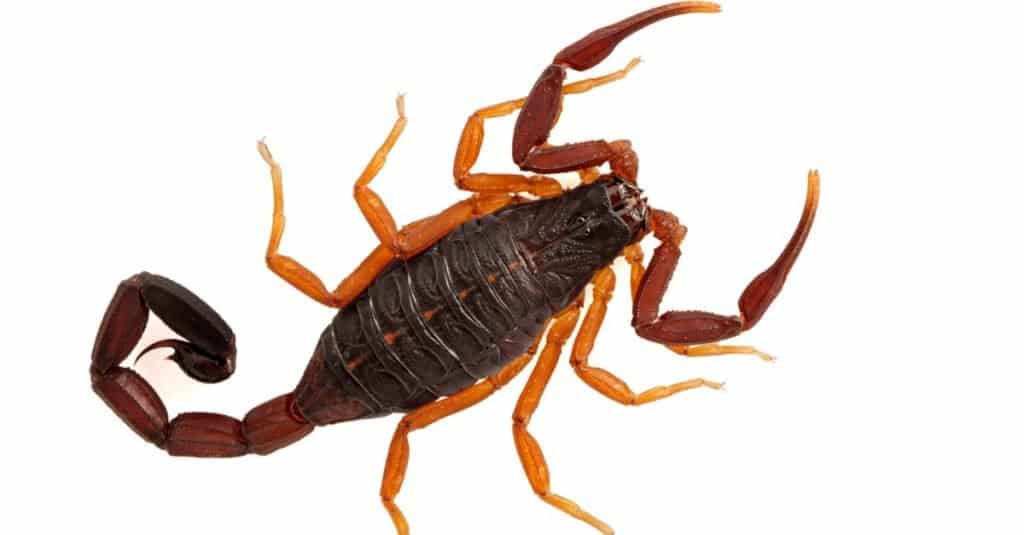
9. Florida Bark Scorpion (Centruroides gracilis)
©Ernie Cooper/Shutterstock.com
Maximum length: around 4–4.7 in
The Florida Bark Scorpion, also known as the Slender Brown Scorpion, is a long-bodied species found in parts of Central America, the Caribbean, and southern North America, with some populations introduced outside their native range.
This aptly named scorpion often shelters in tree bark, crevices, logs, and under stones, emerging at night to hunt insects and other small prey.
Its slim shape makes it look especially long compared to some stockier scorpion species, even if it is not one of the heaviest.
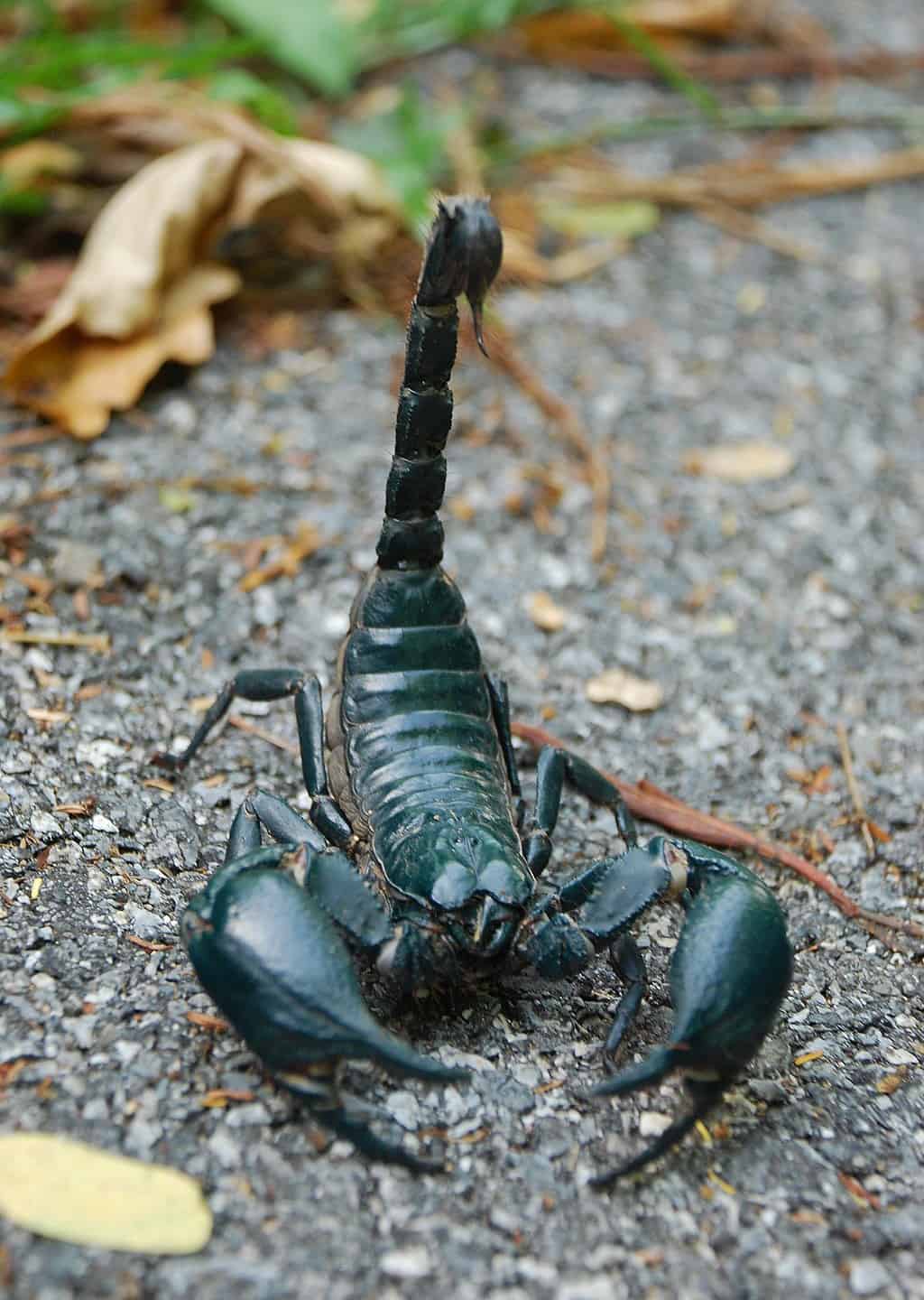
8. Vietnam Forest Scorpion (Heterometrus laoticus)
©Chris huh, CC BY-SA 3.0 <http://creativecommons.org/licenses/by-sa/3.0/>, via Wikimedia Commons - Original / License
Maximum length: around 4.7 in
The Vietnam Forest Scorpion is a large, glossy black species from Vietnam, Laos, and nearby parts of Southeast Asia. It lives in humid forests, where it hides beneath logs, leaf litter, and rocks.
Like many forest scorpions, it is a powerful ambush predator that feeds on insects, spiders, and other invertebrates, and it may also prey on smaller scorpions.
It is known for being defensive and strong, but its sting is generally not considered as dangerous to humans as that of highly venomous desert species.
7. Tanzanian Red-Clawed Scorpion (Pandinus cavimanus)
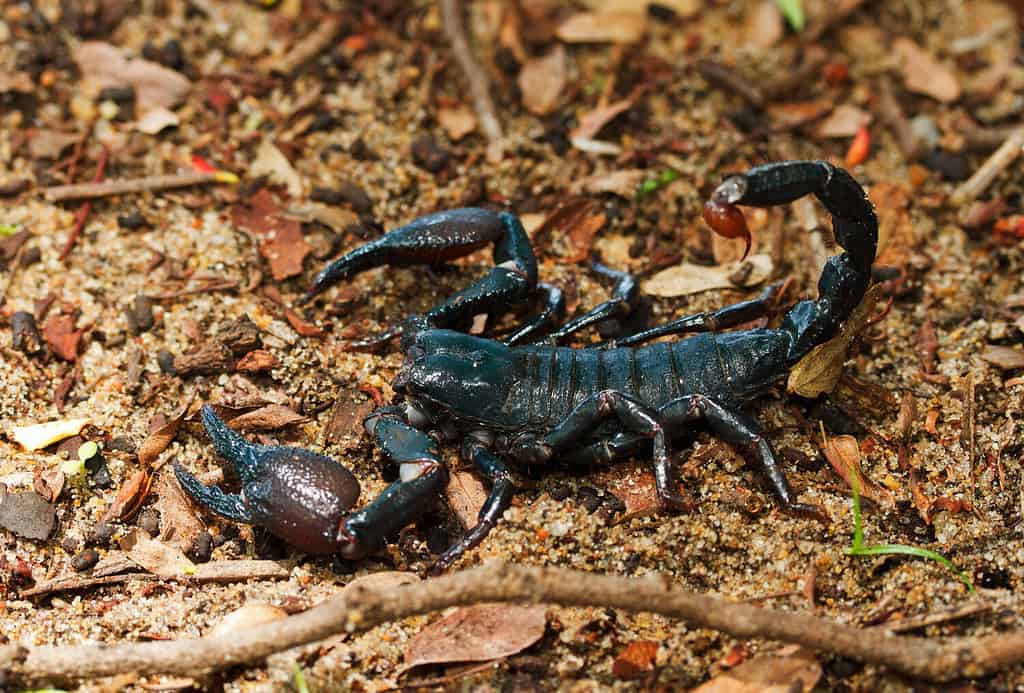
©Nick Greaves/Shutterstock.com
Maximum length: around 5 in
The Tanzanian Red-Clawed Scorpion is a large African species recognized by its dark body and reddish-tinted pincers. It is often compared to the Emperor Scorpion because of its size and overall appearance.
This species usually inhabits humid tropical environments, where it shelters under logs, rocks, and debris. It is a powerful predator of insects and other small animals.
Although it can be defensive if disturbed, its venom is considered relatively mild compared to more dangerous scorpion species.
6. Transvaal Fat-Tailed Scorpion (Parabuthus transvaalicus)
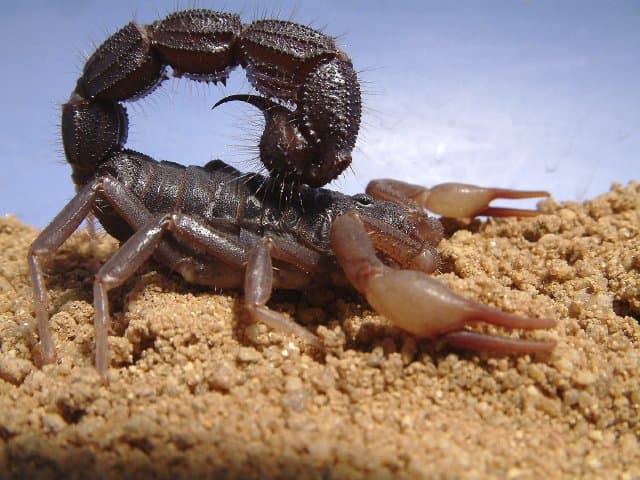
©Alexander Tietz, CC BY-SA 2.0 DE <https://creativecommons.org/licenses/by-sa/2.0/de/deed.en>, via Wikimedia Commons - Original / License
Maximum length: around 5.5 in
The Transvaal Fat-Tailed Scorpion is one of the most impressive and most dangerous scorpions in southern Africa. It is instantly recognizable thanks to its thick, heavy tail, which stores large venom glands.
This species is found in South Africa, Botswana, Zimbabwe, Mozambique, and nearby regions, often in arid or semi-arid habitats where it hides out beneath rocks and debris.
Unlike many of the giant forest scorpions, this species relies heavily on its venomous sting rather than brute strength. Interestingly, this species is known to make a warning sound through stridulation, a scraping behavior used in defense.
5. Malaysian Forest Scorpion (Heterometrus spinifer)
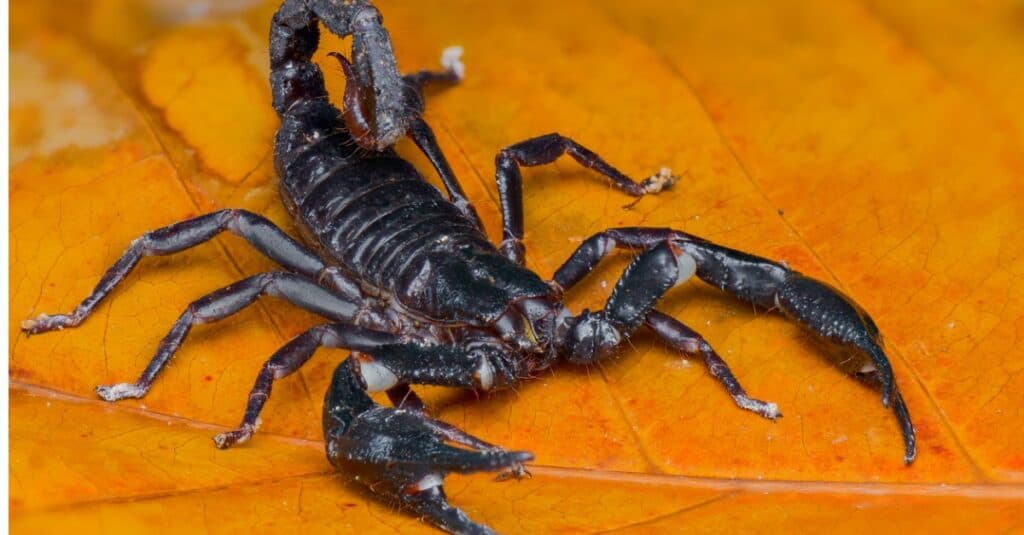
©iStock.com/Dwi Yulianto
Maximum length: around 6–6.3 in
The Malaysian Forest Scorpion is one of Southeast Asia’s largest and most striking scorpions. Its body is usually jet black; it has large, powerful pincers and a thick tail.
It lives in tropical forests, often sheltering in burrows, under logs, or among roots and leaf litter. Like many large forest scorpions, it relies heavily on its strong pincers to subdue prey rather than depending entirely on venom.
This species is often confused with other large Asian forest scorpions, especially in the pet trade, where common names are frequently used inconsistently.
4. Giant Hairy Scorpion (Hadrurus arizonensis)
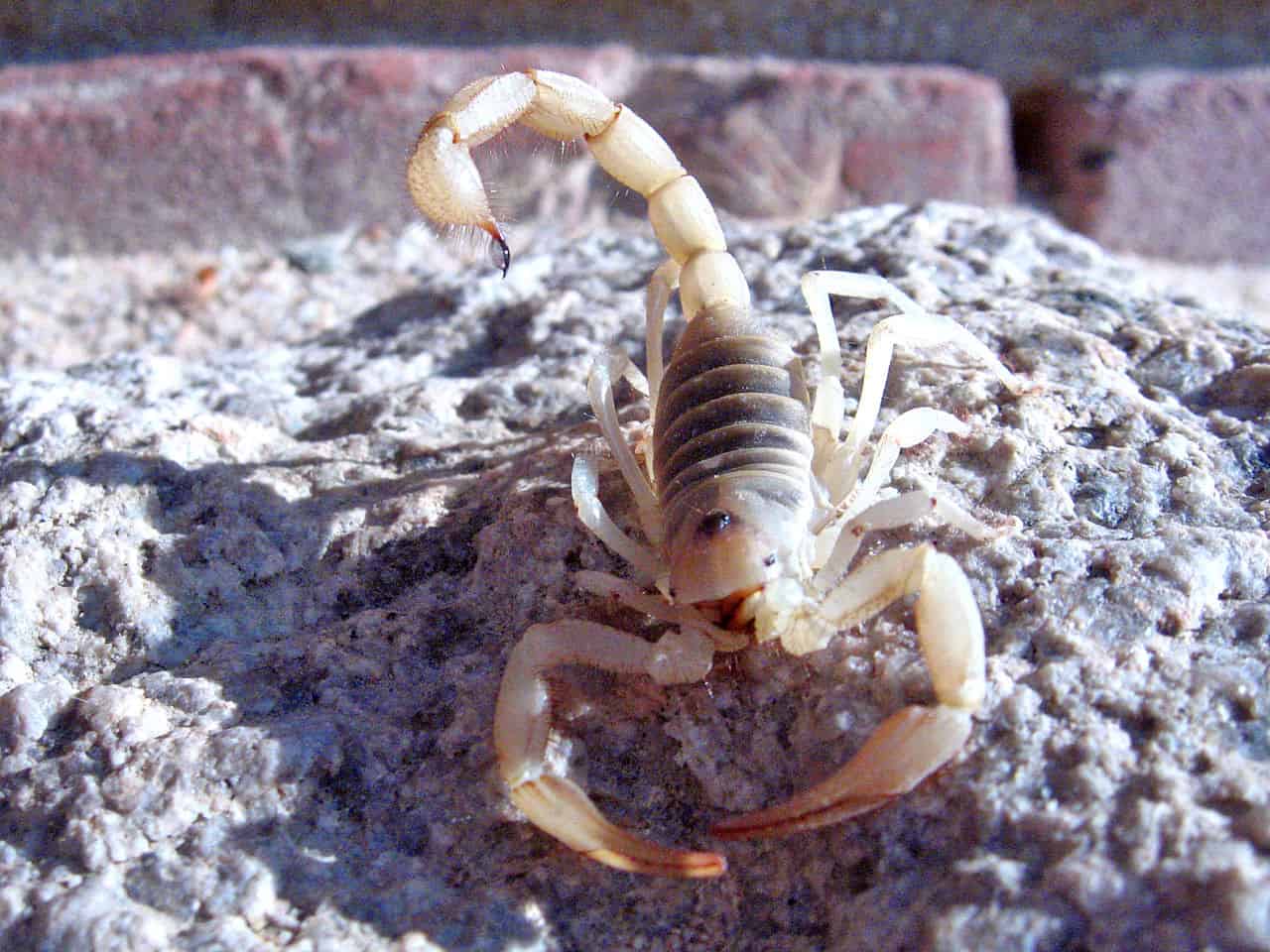
©Robb Hannawacker, while working for Joshua Tree National Park / CC BY 2.0 - Original / License
Maximum length: around 6.3–6.7 in
The Giant Desert Hairy Scorpion is the largest scorpion in North America. It is found in the deserts of the southwestern United States and northern Mexico, especially in Arizona, California, Nevada, and Utah.
This species gets its name from the tiny hairs covering parts of its body and tail. It is usually yellowish with a darker back, giving it a distinctive desert camouflage.
A strong burrower and active nocturnal hunter, it mainly feeds on insects, spiders, centipedes, and other arthropods, though it may occasionally take small vertebrate.
3. Emperor Scorpion (Pandinus imperator)
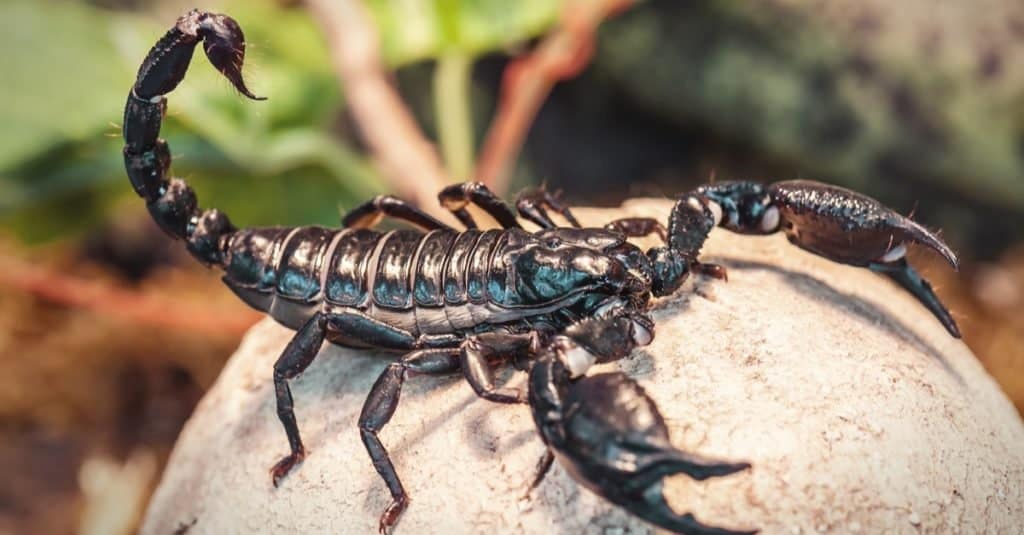
©Vova Shevchuk/Shutterstock.com
Maximum length: around 7–7.9 in
The Emperor Scorpion is probably the most famous giant scorpion in the world. Native to West Africa, it lives in humid forests and savanna edges, where it hides in burrows and under debris.
Its glossy black body and massive pincers make it one of the most visually fascinating scorpions alive today.
Despite its intimidating appearance, the Emperor Scorpion is generally considered less dangerous than many smaller species, since it relies more on its pincers than its sting. Its venom is usually mild to moderate.
2. Flat Rock Scorpion (Hadogenes troglodytes)
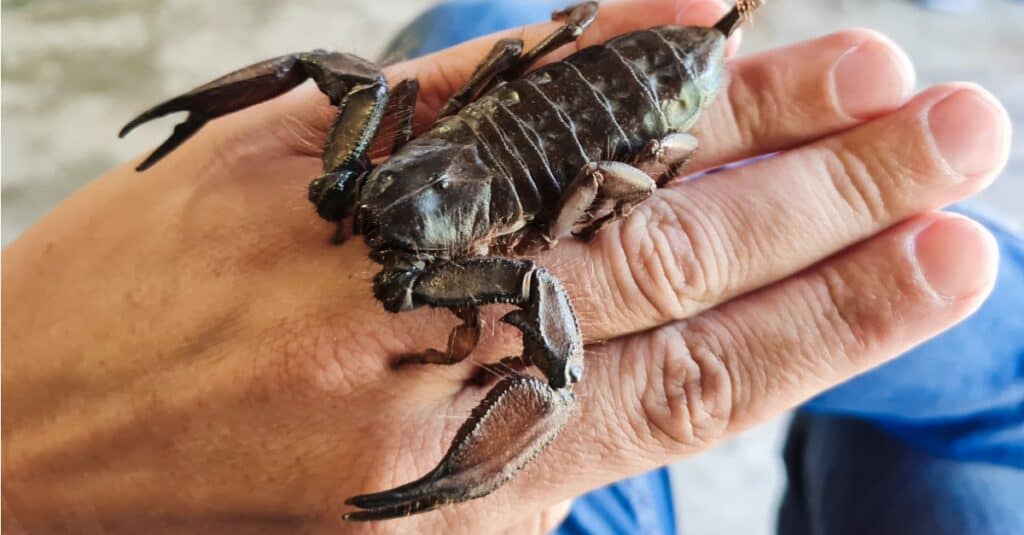
©iStock.com/Willem Van Zyl
Maximum length: around 8–8.25 in
The Flat Rock Scorpion is one of the longest scorpions in the world. Native to southern Africa, it is specially adapted for life among rocky cliffs and narrow crevices.
Its flattened body allows it to squeeze into cracks where bulkier scorpions cannot go, and its unusually long, slender tail helps distinguish it from many other giant species.
Although it is impressive in size, this species is generally considered less medically dangerous than some smaller but more venomous scorpions.
1. Giant Forest Scorpion / Indian Giant Forest Scorpion (Heterometrus swammerdami)
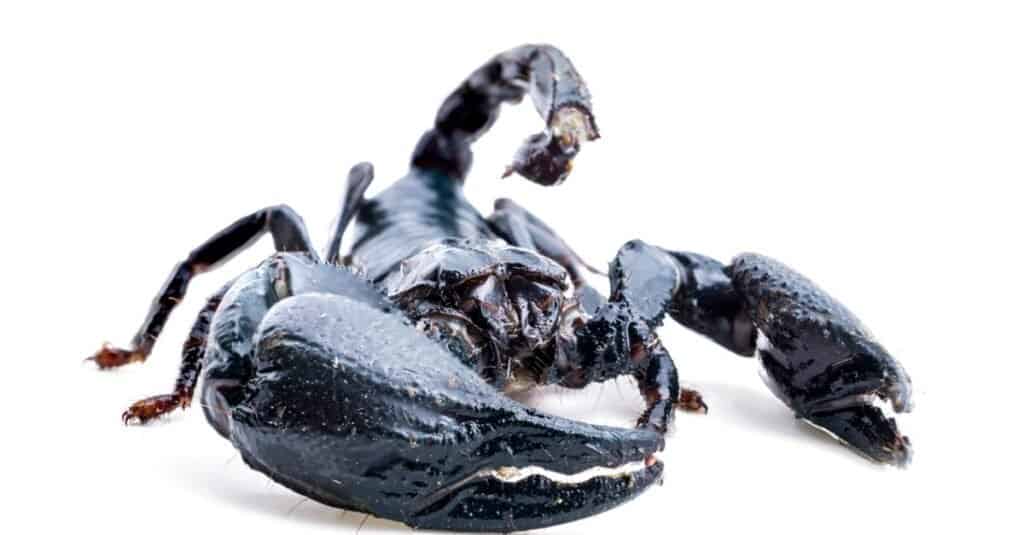
©iStock.com/lamyai
Maximum length: up to 11.5 in
The largest scorpion consistently recorded in the world is the Indian Giant Forest Scorpion, or Heterometrus swammerdami.
This massive species is found in parts of India and Sri Lanka, where it lives in forest and scrub habitats, often hiding in burrows, under logs, or beneath stones.
It has a heavy, dark body with huge pincers and can appear extremely intimidating. Because it is not among the most venomous, the Indian Giant Forest Scorpion relies heavily on strength and physical restraint to overpower prey.
Its enormous size has earned it recognition as the largest living scorpion ever officially measured.
Bonus: The Largest Scorpion to Ever Roam the Earth!
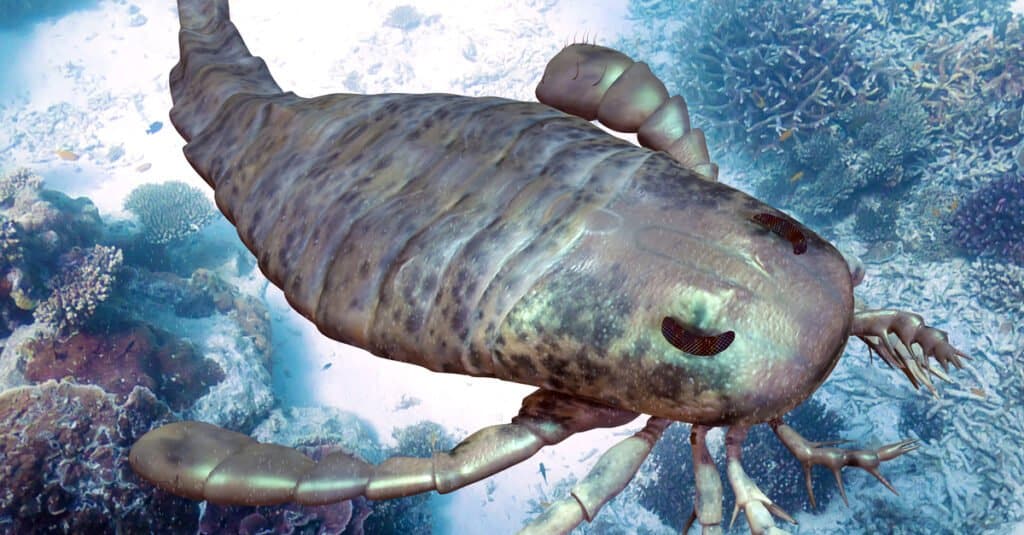
©iStock.com/Aunt_Spray
Maximum length: possibly 8 feet!
If we go beyond true scorpions, the largest scorpion-like arthropods ever known were the eurypterids, often nicknamed “sea scorpions.”
These ancient aquatic predators lived hundreds of millions of years ago and were not true scorpions, even though they looked somewhat similar.
Some species are believed to have reached more than 2.5 meters (8 feet) in length, making them among the largest arthropods to ever live.
So, while the Indian Giant Forest Scorpion is the largest living scorpion, it is absolutely tiny compared to the giant “sea scorpions” of prehistory.