
Quick Take
- The 276-pound weight attached to the record mountain lion is repeated everywhere, but the official record tells a very different story. See the official record →
- A hunter, 32 inches of snow, and a pack of hounds set the stage for how the record cougar was actually taken, and the real account differs from how it's usually told. Read the real account →
- Sex, age, and geography all shape a cougar's size, but one overlooked factor may matter more than any of them. Explore the size factors →
- Despite the name, mountain lions don't actually need mountains, and the habitat they choose reveals something unexpected about what they really require to survive. Discover their true habitat →
Mountain lions are among the most powerful and adaptable predators in the Americas, stalking prey from Canadian forests to the mountains and scrublands of South America. The biggest cat recognized by the Boone and Crockett Club came from British Columbia in 1979, but its record was established by skull measurements, not a verified body weight. That distinction matters because the often-repeated 276-pound figure is not listed in the official record. Here is what is known about the record-setting cougar, how large these cats normally grow, and why sex, age, prey, habitat, and genetics can produce unusually massive individuals.
Mountain Lions Can Survive Almost Anywhere
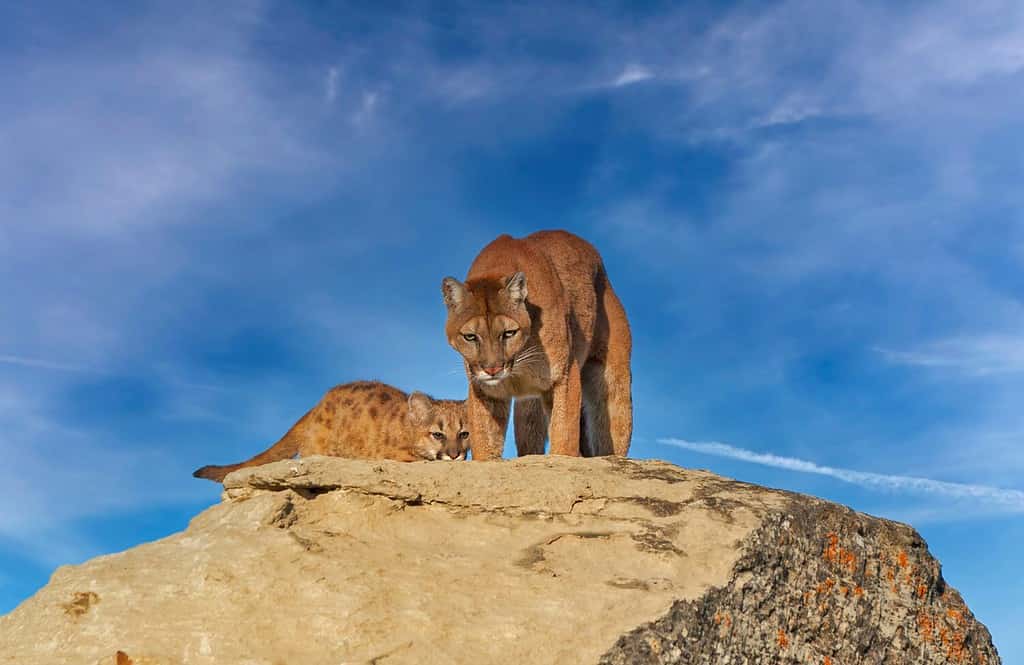
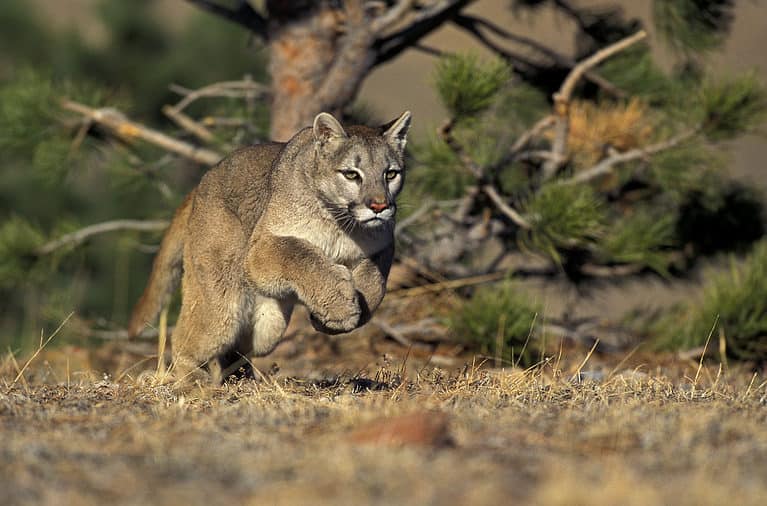
Mountain lions occupy one of the broadest ranges of any wild land mammal in the Western Hemisphere. They can survive in conifer forests, rocky mountains, desert canyons, coastal brush, grassland edges, swamps, and even fragmented habitat near expanding cities. What matters most is not a particular climate or elevation, but enough cover for stalking, access to prey, and room to move without constant disturbance. These cats do not hibernate and remain active throughout the year, adjusting their routes and hunting times as weather, prey movements, and human activity change. Their ability to use such different landscapes is a major reason the species stretches from western Canada to southern South America.
Mountain Lions Usually Avoid People
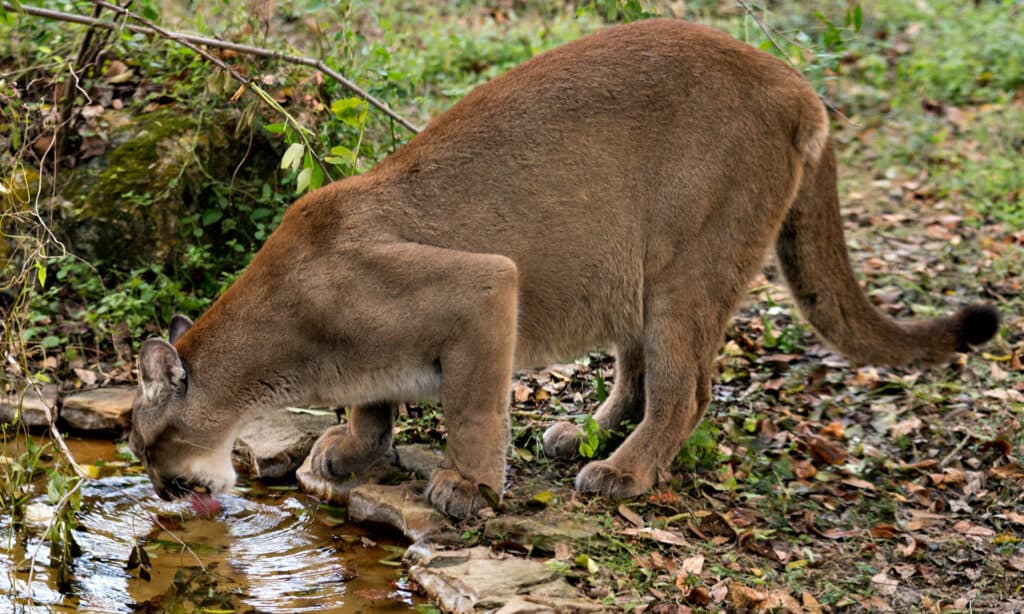
Despite their size and predatory ability, mountain lions are secretive animals that generally avoid direct contact with people. They may travel or hunt at any hour, but sightings are most common around dawn, dusk, and nighttime, when deer are active and human traffic is lower. Some lions live surprisingly close to suburbs without being seen because they use brush, ravines, and darkness as cover. That does not make them harmless, and pets or livestock can attract attention in lion country, but attacks on people remain rare. Wildlife agencies advise giving any cougar an escape route, keeping children close, securing animals at night, and never running if a close encounter occurs.
How Big Does the Average Mountain Lion Get?
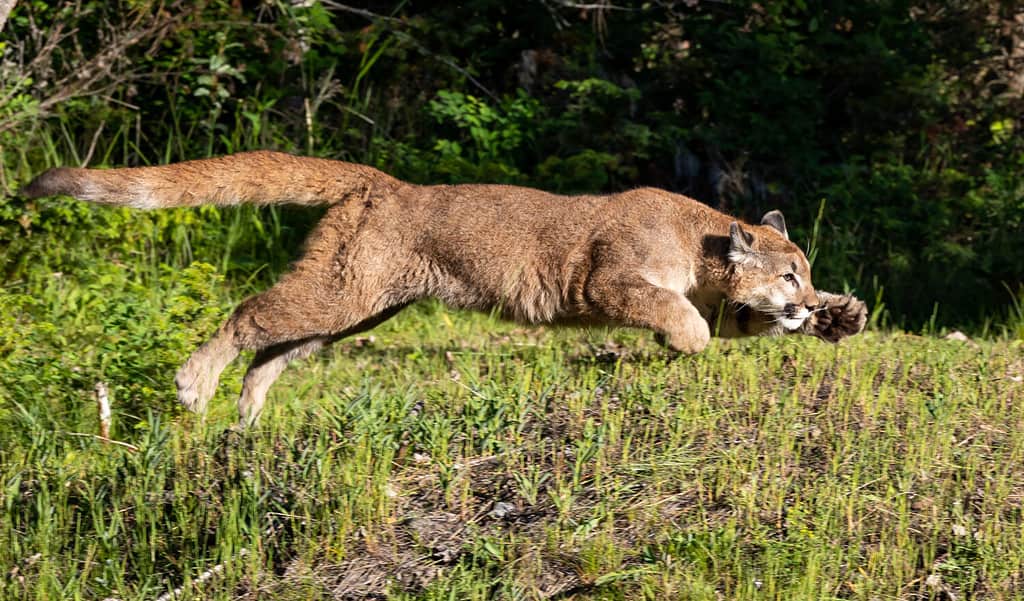
Mountain lion size varies by sex, age, region, and available prey, so no single number fits every population. Adult males commonly weigh about 130 to 180 pounds, although exceptional individuals can exceed 200 pounds. Females are smaller and often fall between roughly 65 and 120 pounds. Large males may reach about eight feet from nose to tail, with the long tail accounting for close to one-third of the total length. Those measurements make the cougar one of the largest cats in the Americas, behind the jaguar in maximum bulk. Claims about animals far above the usual range deserve extra scrutiny because estimated weights, stretched hides, and skull records are often mistakenly treated as interchangeable measurements.
Mountain Lion Kittens Grow Quickly
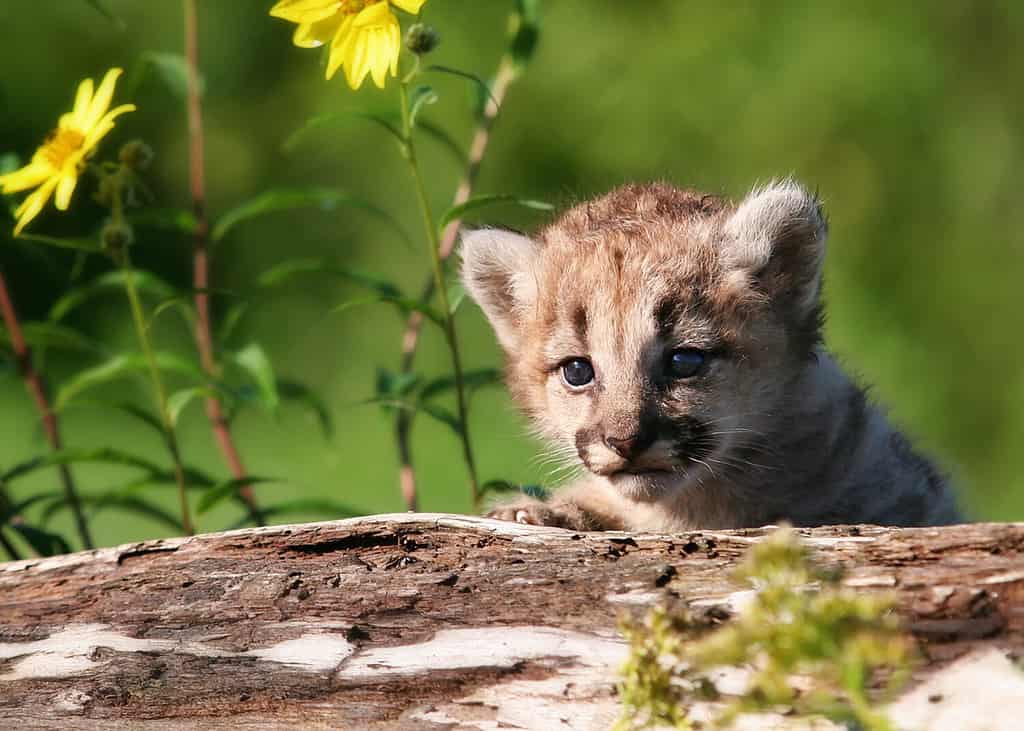
Mountain lion kittens begin life at only about one pound, covered in dark spots and marked with rings on their tails. Their growth is rapid because they depend on nutrient-rich milk and, soon afterward, meat brought back by their mother. Weaning can begin around six weeks, although cubs continue relying heavily on the female for food and protection for many months. By roughly six months, a young cougar may weigh around 40 pounds and start participating more seriously in hunts. Growth rates vary, so precise age-to-weight claims should be treated as estimates rather than rules. Males eventually develop much larger frames than females, but neither sex reaches full adult size or independence in its first year.
The Record Was Set by Its Skull, Not Its Weight
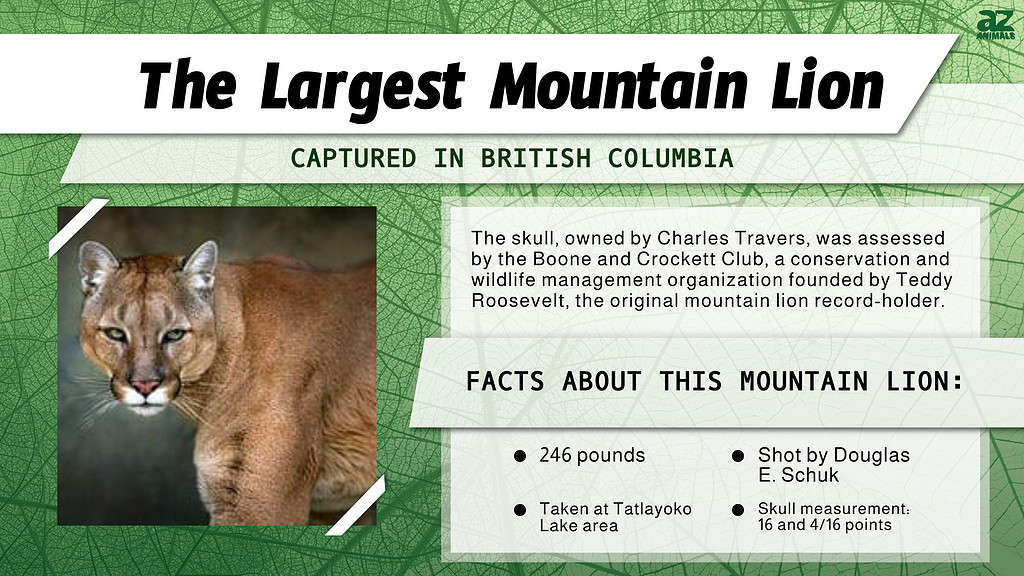
The official Boone and Crockett world-record cougar was taken near Tatlayoko Lake in British Columbia in 1979 by Douglas E. Schuk. Its skull measured 9 9/16 inches long and 6 11/16 inches wide, producing a combined score of 16 4/16 points. That score remains the club’s all-time record for the species. Importantly, Boone and Crockett ranks cougars by skull dimensions, not body length or weight, and its record entry does not provide a verified field weight for this cat. The widely repeated claim that the same animal weighed 276 pounds should therefore not be presented as confirmed. It may have been enormous, but the documented record is the exceptional size of its skull.
How Douglas Schuk Encountered the Record Cougar

The story behind the record cat unfolded in deep winter conditions rather than during an ordinary sighting. Boone and Crockett reports that Schuk’s hounds followed the large male through about 32 inches of snow in the Tatlayoko Lake region. Late in the afternoon, the dogs brought the cougar to bay, and Schuk heard the change in their voices along with the cat’s hiss. A cornered adult male can seriously injure or kill a dog with its paws, so Schuk moved in and shot the cougar with a .308 rifle. The account is sometimes simplified into a last-second rescue, but the official version describes a deliberate hunting situation in which he acted quickly to make a clean kill and protect his trained hounds.
What Determines a Mountain Lion’s Maximum Size?
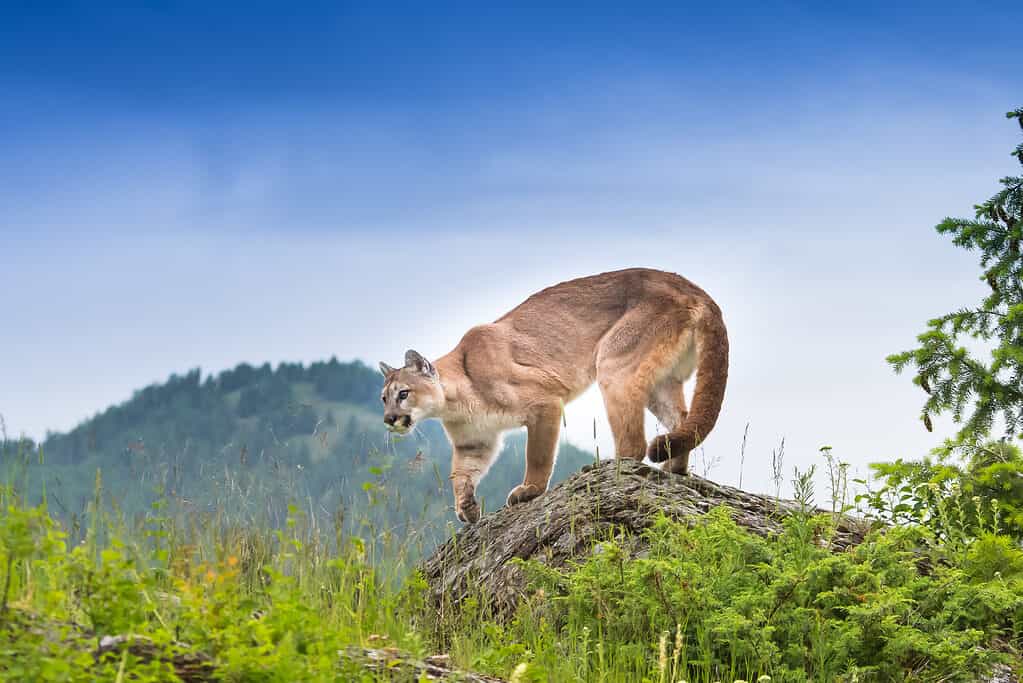
No single factor explains why one mountain lion becomes exceptionally large. Sex is the strongest starting point because adult males are substantially heavier than females. Age also matters, since a mature cat has had more time to build muscle and master the hunting of large prey. Genetics can influence frame size, while health, injuries, parasites, and competition can limit growth. Food availability is equally important: a lion with regular access to deer, elk, or other large prey has a better chance of maintaining a heavy, muscular body than one living where prey is scarce. Geography and climate are connected to these influences, but they do not guarantee that every cougar in a cold or prey-rich region will become a giant.
They Are Not Limited to Mountains
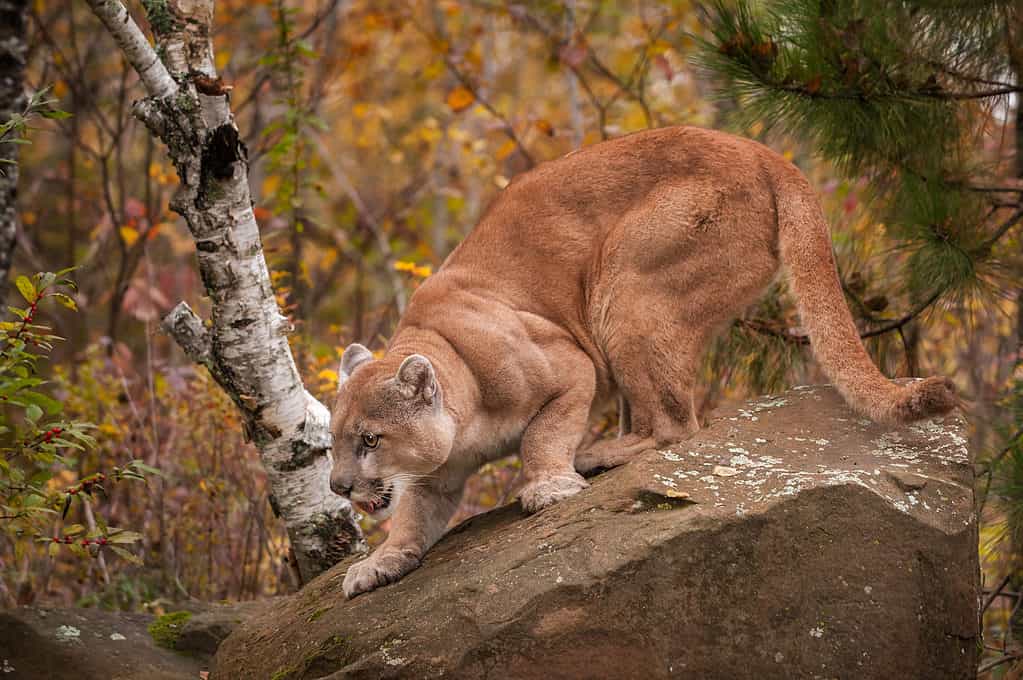
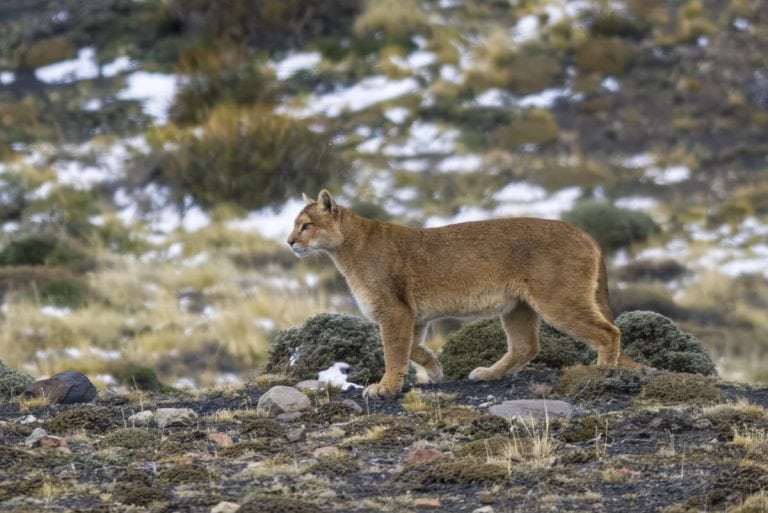
Mountain lions are often associated with cliffs and rugged mountains, but they are not limited to high country. They live from low coastal areas and Florida wetlands to deserts, forests, foothills, and mountain systems reaching well above 10,000 feet. Their best habitat usually combines abundant prey with broken terrain, thick vegetation, rock ledges, or other features that help them approach unseen. Deer are the most important food source across much of North America, so places that support healthy deer populations often support cougars as well. Roads, development, and habitat fragmentation can still make an area dangerous or unusable, even when food is present, because lions need connected routes for hunting, dispersal, and finding mates.
Adult Males Can Control Enormous Ranges
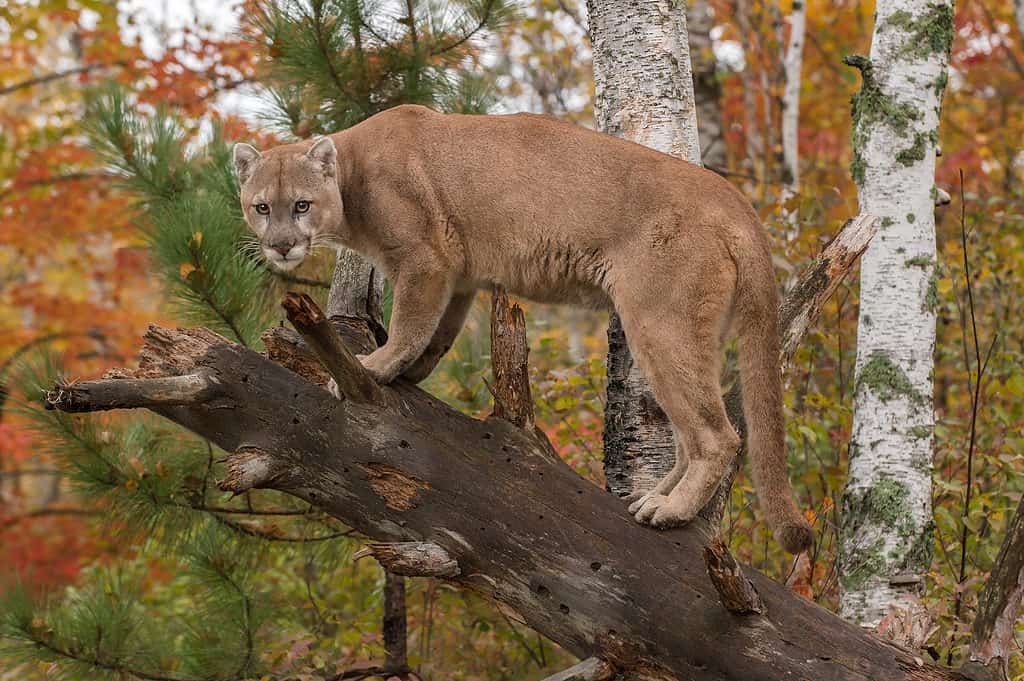
Adult males typically use much larger home ranges than females, but the actual size can vary enormously with terrain, prey density, neighboring cats, and human development. Colorado wildlife officials report ranges from about 10 to 370 square miles, while other regions have documented males using even larger areas. Females with young usually occupy the smallest spaces, and a male’s range may overlap those of several females while avoiding heavy overlap with other adult males. A large range does not itself make a cougar bigger; it reflects how far the animal must travel to secure food and breeding opportunities. In the United States, established populations remain strongest in the West, while Florida supports the only breeding population east of the Mississippi.
Why Northern Mountain Lions Often Grow Larger
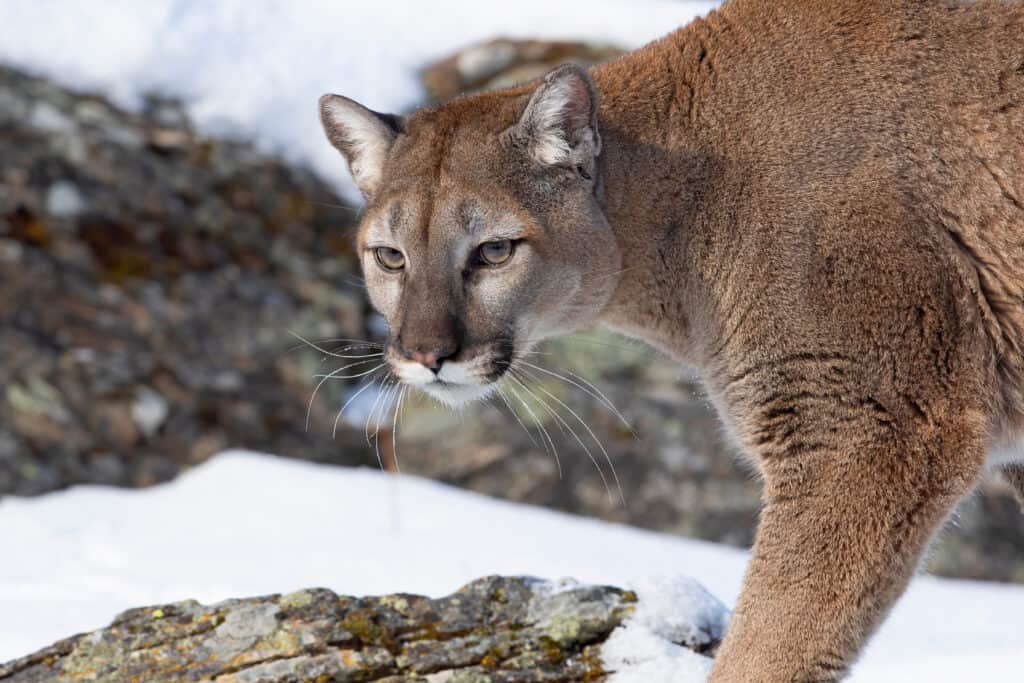
Geography does influence cougar size, but the relationship is more complicated than saying a cold-weather cat simply needs extra fat. Research comparing pumas across the Americas has found that animals in temperate regions tend to be larger and rely more heavily on big prey, while tropical populations often take a wider variety of smaller animals. Larger bodies can also conserve heat more efficiently, but prey size, genetics, competition, and habitat quality are intertwined with climate. A Canadian male is therefore more likely to reach an impressive weight than many cats living closer to the tropics, yet there is still wide variation within every region. Cold weather alone cannot turn an average mountain lion into a record holder.
Mountain Lions Fiercely Guard Their Space
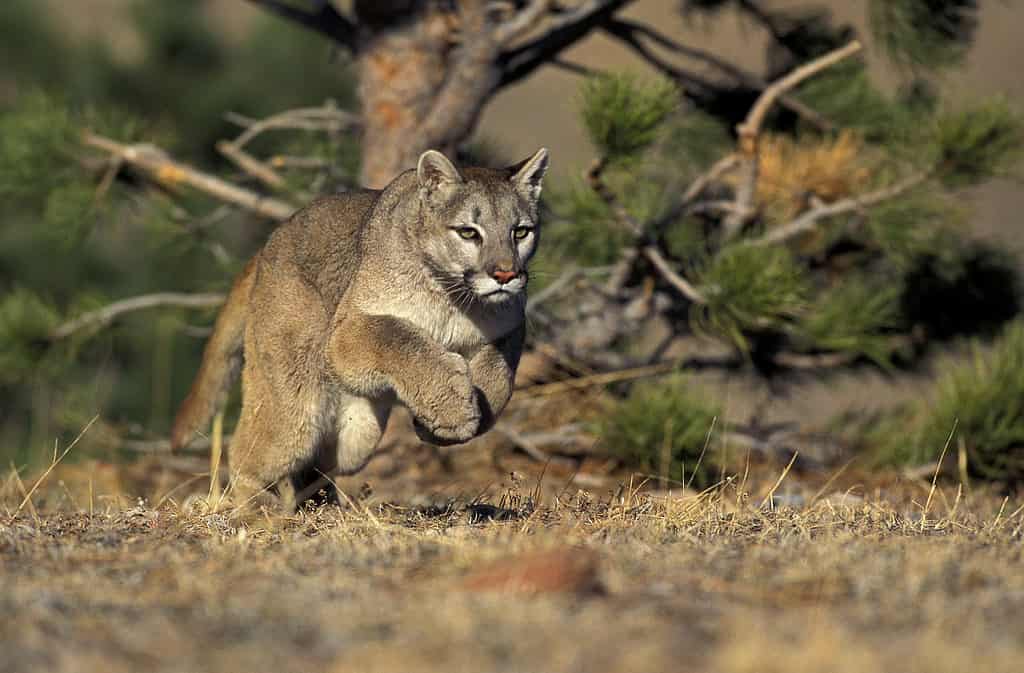
Mountain lions are solitary and organize their lives around large home ranges marked with scent, scrapes, urine, and visual signals. Adult males generally keep distance from one another, and serious fights can occur when boundaries or access to females are challenged. Those encounters may cause severe injuries or death, but not every overlap ends in combat. Females raise their kittens alone and select secluded resting or den sites within their ranges, moving the young when safety or changing conditions require it. Territorial behavior helps spread cougars across the landscape and limits how many can occupy the same area. It also explains why young males may travel extraordinary distances after leaving their mothers to search for an unclaimed range.
What Mountain Lions Hunt and Eat
Mountain lions are ambush predators that usually hunt alone, using cover to approach before exploding forward in a short burst. Deer are their primary prey across much of North America, but adult cats can also kill elk, moose calves, wild pigs, mountain goats, and bighorn sheep. Smaller animals such as raccoons, rabbits, porcupines, coyotes, and rodents fill gaps between large kills. In Washington’s Cascade Mountains, wildlife officials estimate that a large male may kill a deer or elk about once every nine to 12 days, but that rate is regional and changes with prey size, season, and whether a female is feeding kittens. Their flexible diet is another reason cougars can survive in so many different habitats.
They Hide Large Kills and Return for Days
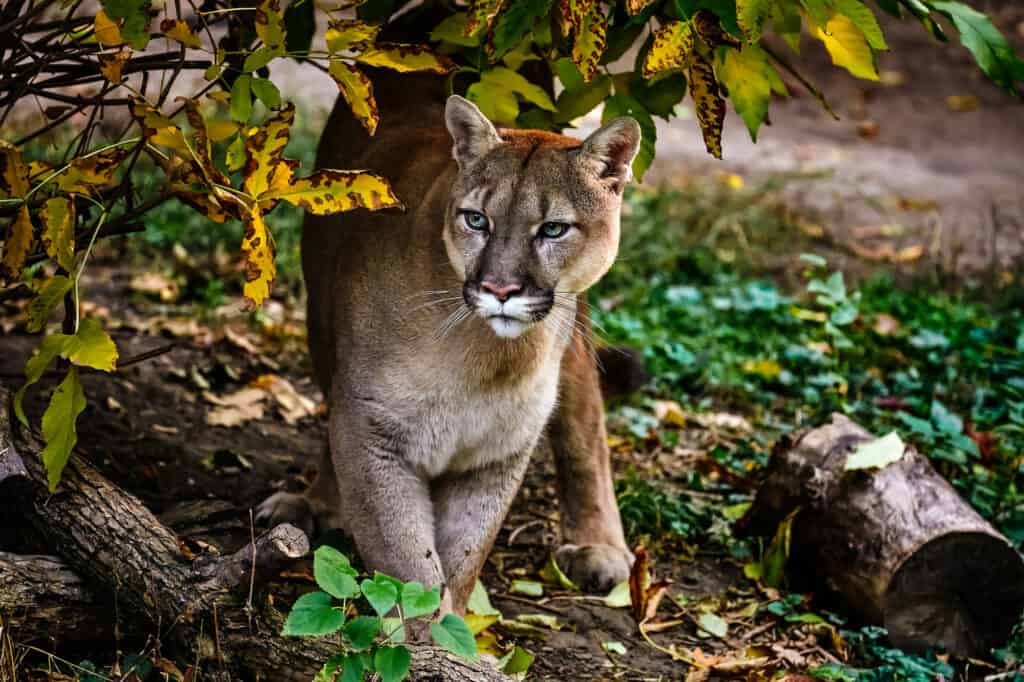
A mountain lion rarely consumes a deer or elk in one sitting. After feeding, it commonly drags the carcass to a secluded place and covers it with leaves, grass, sticks, soil, or conifer needles. This behavior is called caching. The covering does not truly bury the prey underground or stop decomposition, but it can conceal the scent and sight of the carcass from scavengers while the cougar remains nearby. The cat may return for several meals over three or four days, depending on temperature, competition, and the size of the kill. Caching lets a lion gain far more energy from one successful hunt, which is especially important because stalking large prey takes time and carries a real risk of injury.
Age and Genetics Help Create Exceptional Cats
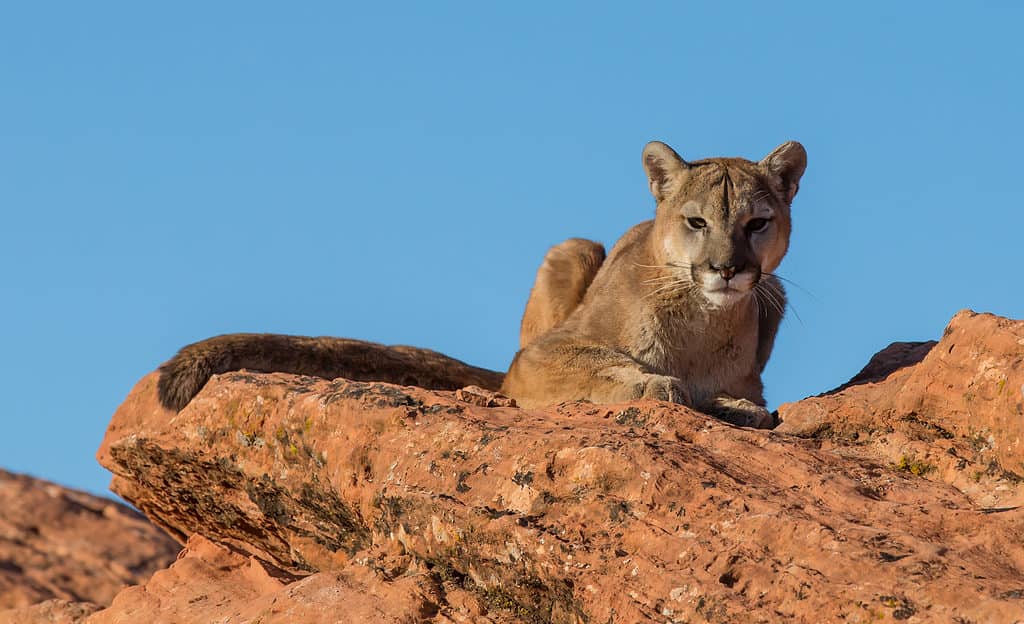
Age and genetics help establish how large a mountain lion can become, but nutrition and survival determine whether it reaches that potential. A cub first lives on its mother’s milk, begins sampling meat as weaning starts, and gradually learns by following her to kills and watching her hunt. Strong inherited traits may support a broad skull or heavy frame, yet a young cat that loses its mother early, suffers an injury, or struggles to find prey may never reach typical adult size. Most juveniles stay with their mother for roughly 18 to 24 months before dispersing, giving them time to develop the strength and judgment needed to survive alone. Full maturity, not a single early growth milestone, is what produces the largest adult cats.
Young Cougars Need Months of Hunting Practice
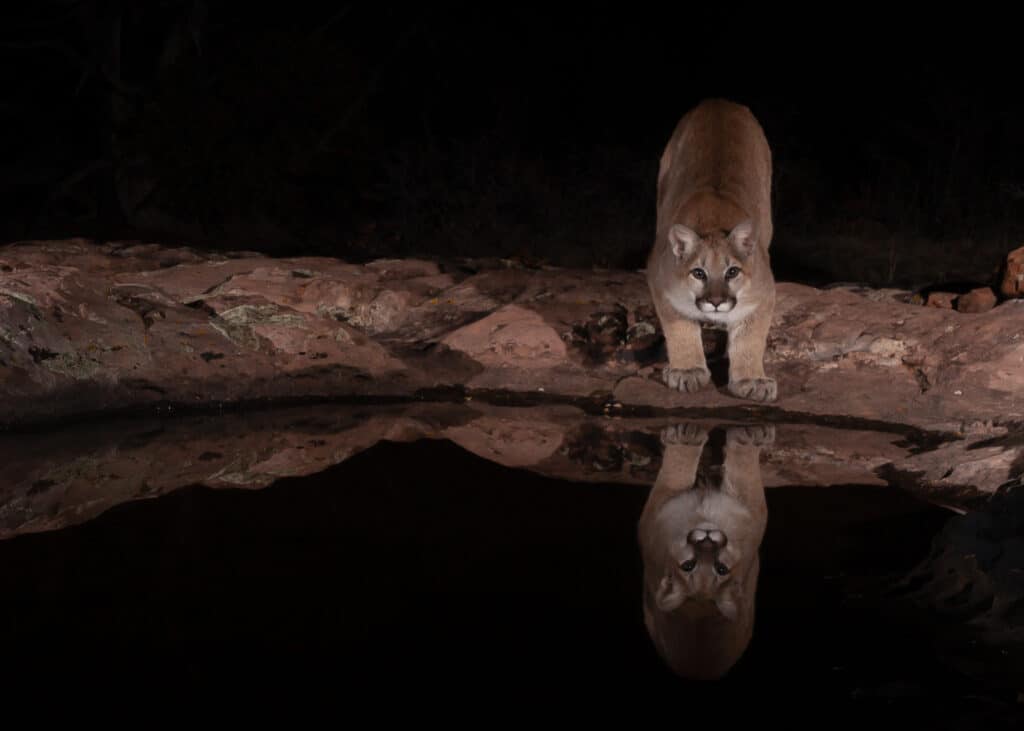
Young mountain lions do not just suddenly become expert deer hunters at a young age, like six months old. National Park Service guidance says cubs may begin accompanying their mother on hunts as early as about six weeks and can be capable hunters by around six months, but they are still learning and remain dependent on her. Early targets are more likely to be rabbits, rodents, skunks, or other manageable prey, while the mother continues providing access to larger kills. Over the following year, juveniles practice stalking, choosing cover, judging distance, and delivering an effective bite. Only with greater size and experience can they consistently tackle deer-sized animals. Moose and adult elk are not easy prey, even for a powerful, fully grown cougar.