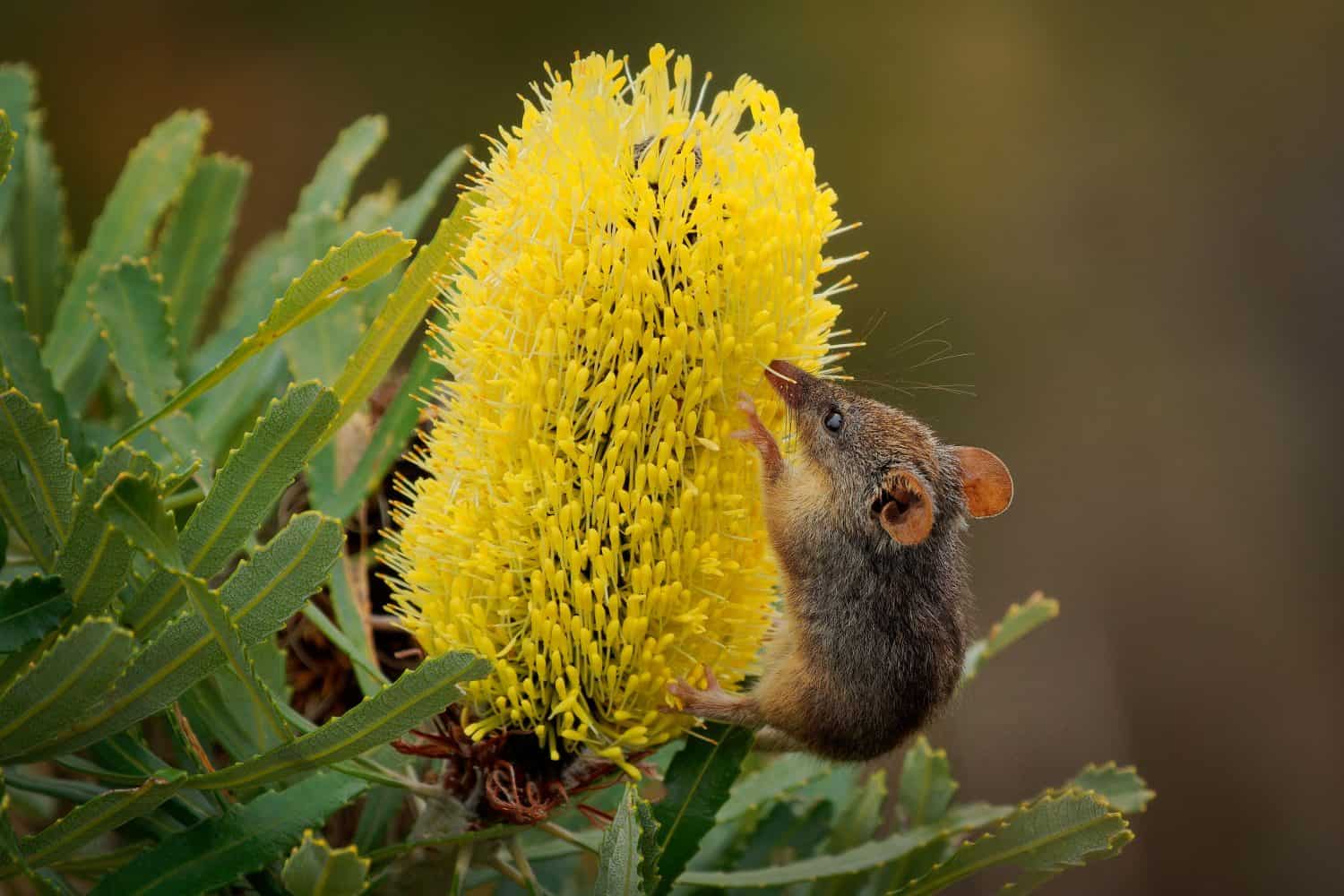

We often assume that bigger is better, but nature constantly proves this wrong. The world’s smallest mammals are miniature marvels, many weighing less than a paperclip and capable of fitting right in the palm of your hand. Forget the “small” size of a common house mouse — these mice are giants compared to the world’s smallest mammals. These tiny creatures prove that survival, agility, and a voracious appetite are not limited by size. Here are the tiniest mammals on Earth!
9. American Shrew Mole
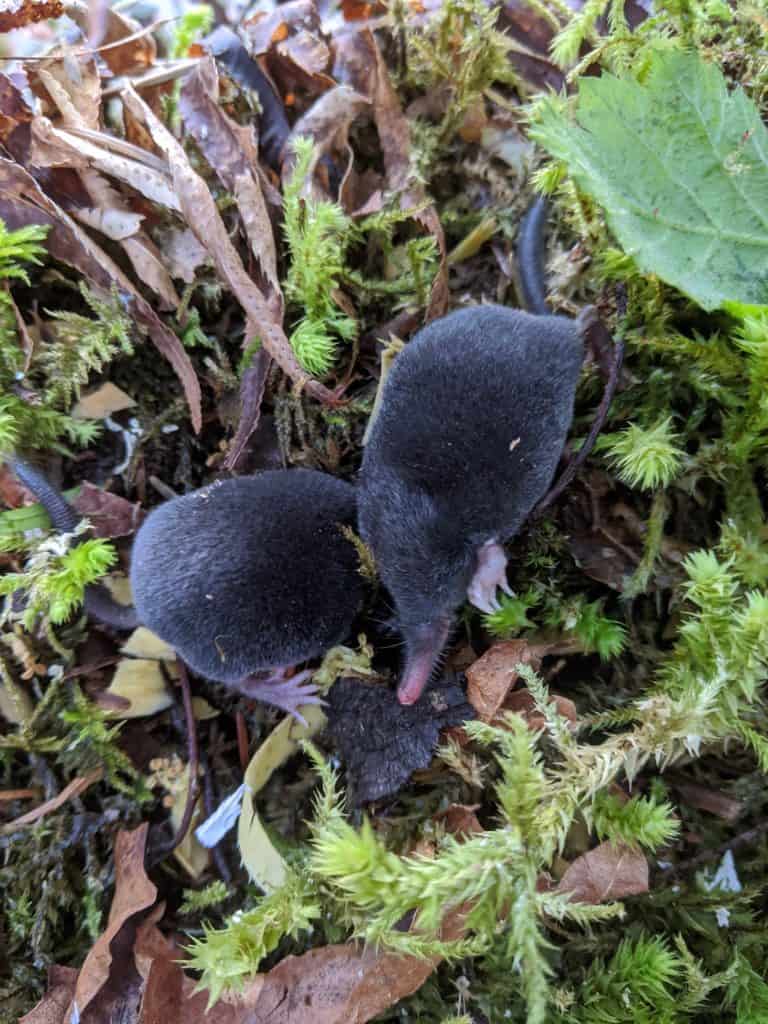
Unlike most moles, American shrew moles spend much of their time above ground.
©Owen Borseth / CC BY-SA 4.0 / Wikimedia Commons – Original / License
The American shrew mole (Neurotrichus gibbsii) is a tiny mammal living in the Pacific Northwest, from British Columbia down to California. Measuring just 4 to 5 inches from nose to tail and weighing only 7 to 11 grams (0.25 to 0.43 ounces) — just a bit more than a credit card — it is the smallest mole in North America, though it doesn’t act like a typical mole at all. Unlike its relatives, the American shrew mole doesn’t spend its life underground and alone or leave behind big dirt mounds. Instead, it appears to be social and travels in loose groups, creating shallow tunnels and surface runways.
Although tiny, the American shrew mole has a truly massive appetite. Its metabolism is so fast that it has to consume more than its entire body weight every day, feasting on everything from snails and earthworms to fungi and seeds. Although it is mostly blind, the American shrew mole uses its very sensitive snout to find food.
8. Tasmanian Pygmy Possum
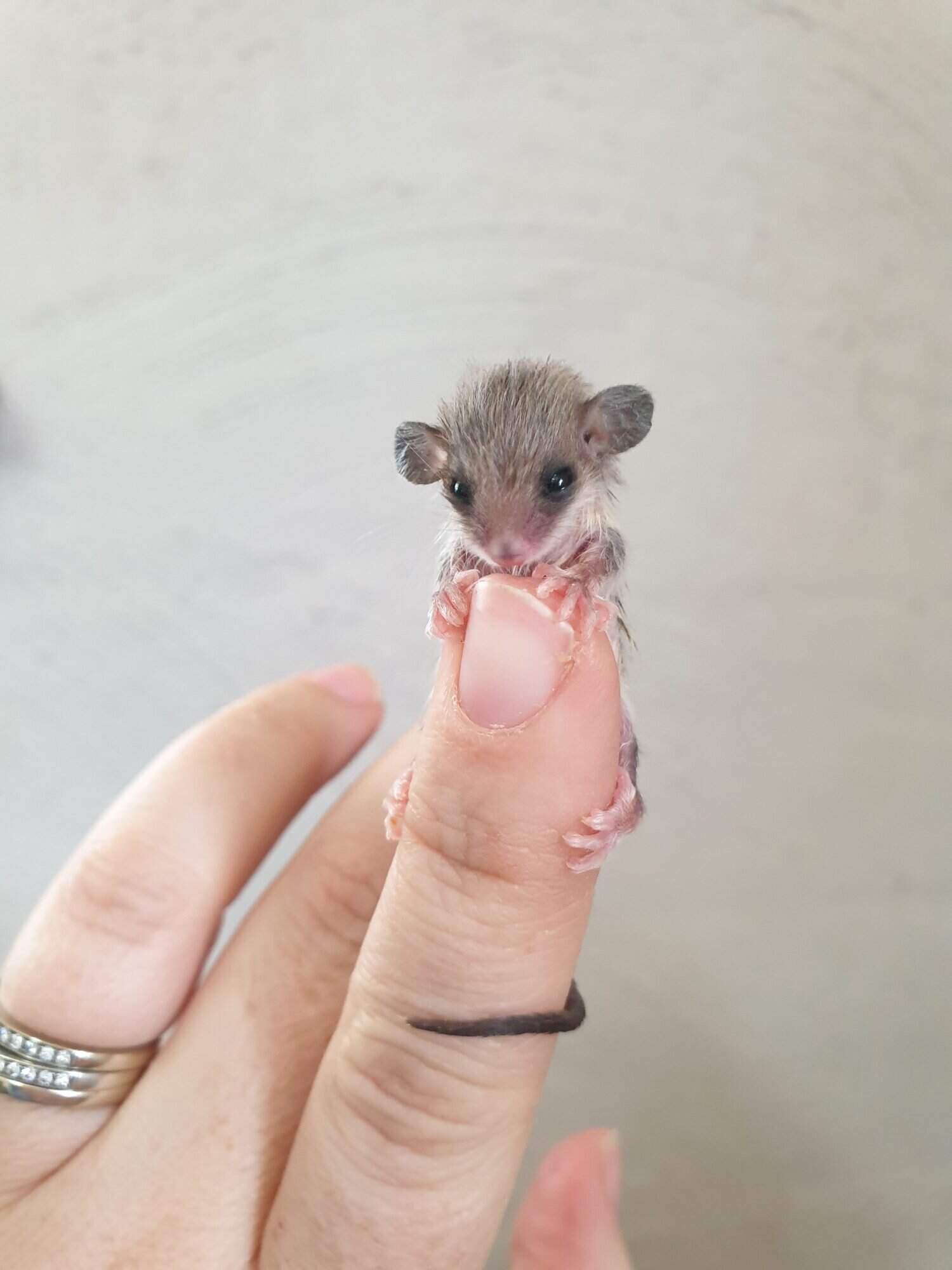
The Tasmanian pygmy possum is also called the little pygmy possum.
©Little_Hoof/Shutterstock.com
The Tasmanian pygmy possum (Cercartetus lepidus) is the smallest possum in the world, measuring just 2.8 inches long and weighing 7 to 10 grams (0.25 to 0.35 ounces) — less than the weight of a credit card.
This little mammal with a long, prehensile tail lives in Tasmania and parts of mainland Australia (including South Australia, Western Victoria, and Kangaroo Island). As a nocturnal omnivore, it spends its nightly hours actively hunting spiders, insects, and tiny lizards. It also sips nectar and pollen from certain native plants without causing damage, making it an important pollinator in its ecosystem.
7. Paucident Planigale
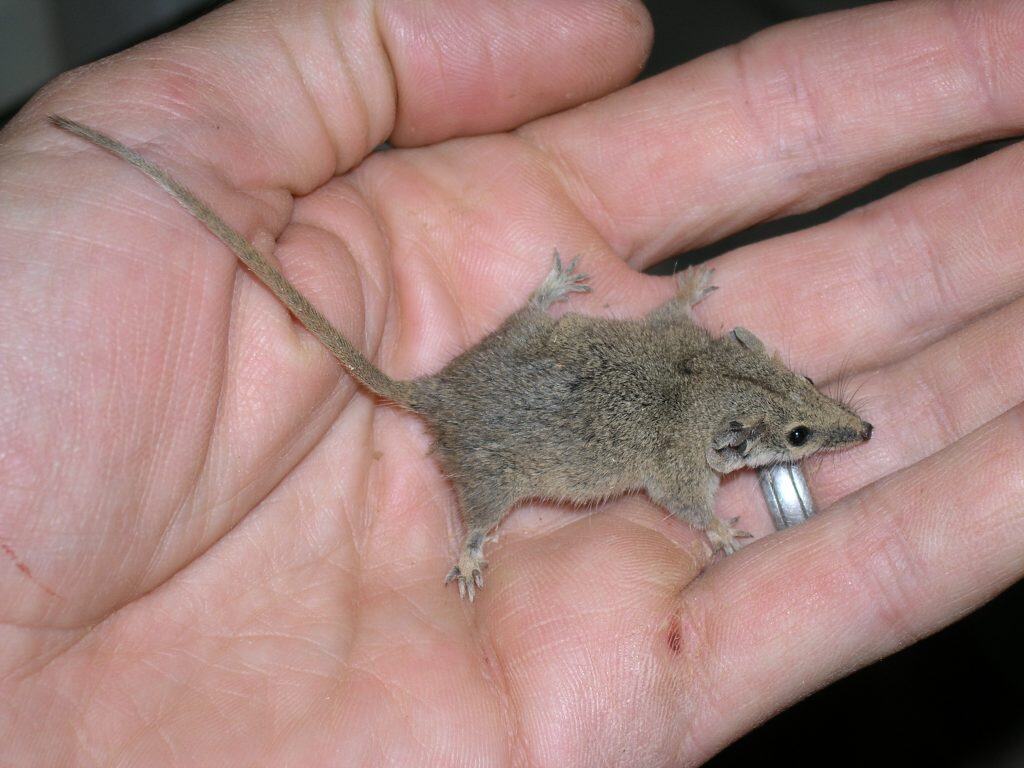
Paucident planigales often bask in the sun to conserve energy.
©David M Watson / CC BY-SA 4.0 / Wikimedia Commons – Original / License
The paucident planigale (Planigale gilesi) is one of Australia’s tiniest mammals, weighing only about 6.9 grams (0.24 ounces). This miniature meat-eater is related to the Tasmanian devil and spotted quolls, though its body is roughly just 3 inches long. At night, it hunts spiders, beetles, locusts, and even small lizards.
Found across the dry, inland regions of Australia, the paucident planigale survives in its harsh, arid environment by entering a state of torpor when food is scarce or the temperature drops. This type of deep rest is similar to a mini-hibernation and allows this little mammal to conserve precious energy until conditions improve. Its name, ‘paucident,’ means ‘few teeth’ in Latin. Unlike other planigales, which have three premolars in each row of their jaws, the paucident planigale has only two.
6. Narrow-Nosed Planigale
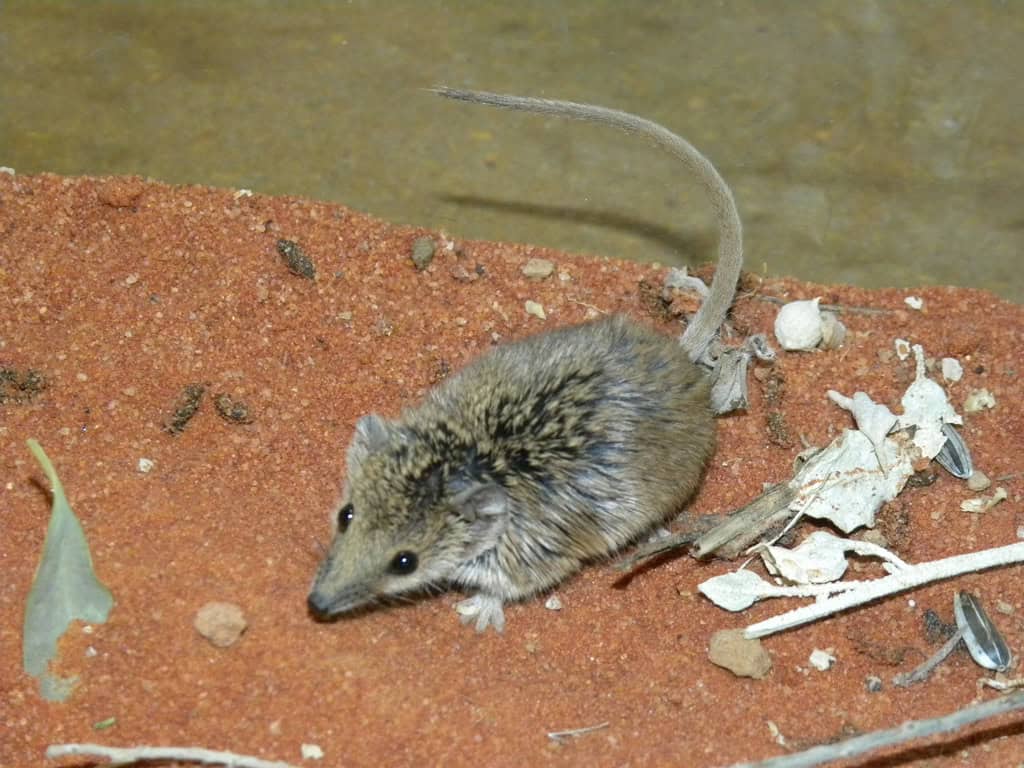
The narrow-nosed planigale has distinctive caramel-colored claws.
The narrow-nosed planigale (Planigale tenuirostris) is one of the world’s smallest mammals, weighing just 5.3 grams (0.04 ounces) — about as heavy as a U.S. nickel. Found throughout eastern Australia, its body measures only around 3 inches long.
During the day, the narrow-nosed planigale hides in narrow cracks in clay soils. As a nocturnal predator, it emerges at night to hunt beetles, moths, centipedes, small lizards, and spiders — sometimes tackling victims larger than its own body. Its flattened, triangular-shaped head allows it to squeeze into tiny crevices to ambush its prey.
5. Long-Tailed Planigale

Long-tailed planigales prefer plains and flooded areas.
©Donna Belder / CC BY 4.0 / Wikimedia Commons – Original / License
The long-tailed planigale (Planigale ingrami) is currently recognized as the world’s smallest marsupial and among the smallest mammals overall. On average, it weighs 4.2 to 4.3 grams (0.15 ounces) — about as much as a teaspoon of granulated white sugar. Its body is only 2 to 2.5 inches long, but don’t be fooled, this tiny creature is a fierce predator.
Found on the cracked black-soil plains of northern Australia, the long-tailed planigale spends much of its time hiding inside the narrow crevices that form during the dry seasons. From these sheltered cracks, it launches itself at spiders, insects, grasshoppers, and even small lizards or baby mammals that are several times its own size.
4. African Pygmy Mouse
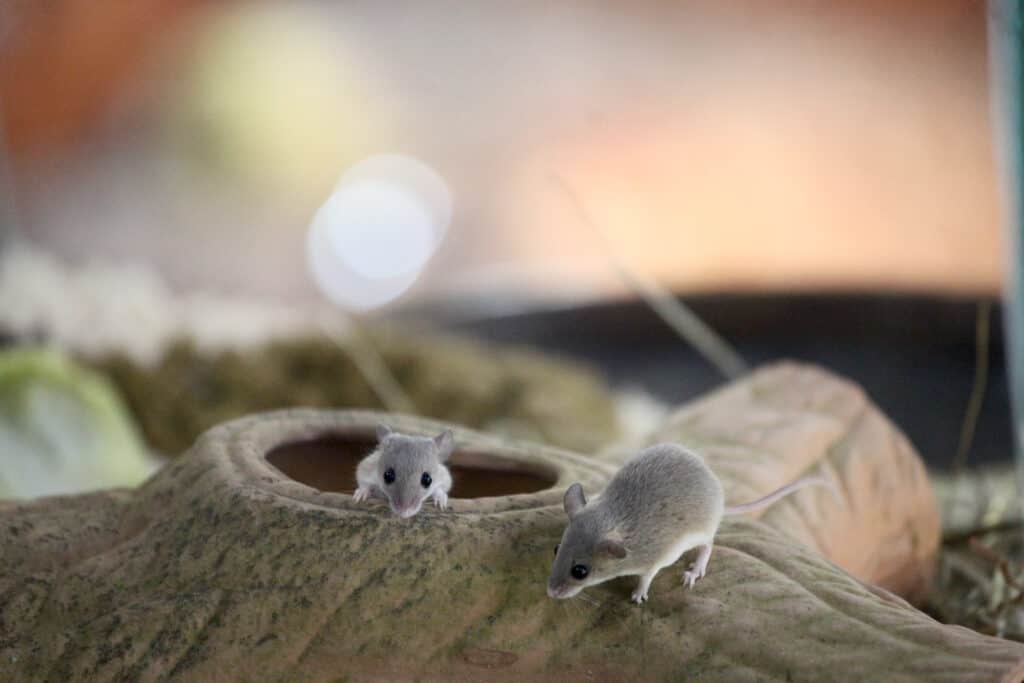
African pygmy mice occasionally build small burrows, but typically use multiple places for shelter.
©iStock.com/PapaPics
The African pygmy mouse (Mus minutoides) is a contender for the smallest rodent on Earth, often tying with the Baluchistan pygmy jerboa. Adults measure just 2 to 3 inches long with a 1- to 2-inch tail, and can weigh as little as 3 grams (0.11 ounces), though most average around 5 grams (0.18 ounces) — roughly as much as a few standard paperclips. These adaptable little creatures thrive across much of sub-Saharan Africa and are habitat generalists that adjust to many different environments.
As a ground-dwelling, nocturnal mammal, the African pygmy mouse primarily eats grass seeds, supplementing its diet with termites and other insects when available. Instead of digging its own burrows, it escapes the sun by finding shelter under fallen logs, rocks, debris, and within the cool walls of old termite mounds.
3. Baluchistan Pygmy Jerboa
The Baluchistan pygmy jerboa (Salpingotulus michaelis), sometimes called the dwarf three-toed jerboa, is one of the tiniest rodent in the world, closely rivaled by the African pygmy mouse. Weighing only 3 to 3.7 grams (0.11 to 0.13 ounces), this tiny mammal looks like a miniature kangaroo the size of a cotton ball, measuring about 2 inches long with a 3 to 4 inch long tail and enormous back feet.
Found primarily in Balochistan, Pakistan, and possibly parts of Afghanistan, this small jerboa thrives in hot, dry deserts, rocky plains, and sand dunes. As a nocturnal animal, it emerges at night to feed on desert plants and seeds. Baluchistan pygmy jerboas retreat to burrows during the day to avoid the intense heat, which they dig using all four limbs.
2. Bumblebee Bat

The bumblebee bat is also called Kitti’s hog-nosed bat.
©Amarisa M/Shutterstock.com
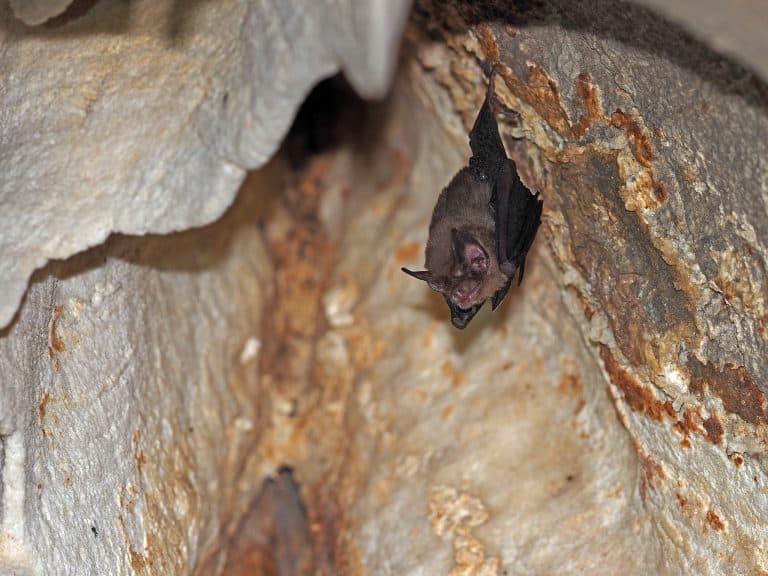
The bumblebee bat (Craseonycteris thonglongyai) is widely considered the smallest mammal in the world by length, while the Etruscan shrew is the smallest by weight. It measures a mere 1 to 1.3 inches long — making it smaller than a bumblebee — and weighs under 2 grams (0.07 ounces), or about as much as a U.S. dime. This tiny creature also has the smallest skull of any mammal on Earth. Its nickname, the hog-nosed bat, comes from its tiny, pig-like snout.
Bumblebee bats have an incredibly limited range, found only in limestone caves across small parts of Thailand and Myanmar, which is one of the reasons they are classified as Near Threatened. As insectivores, bumblebee bats rely on their sharp reflexes to catch tiny spiders, flies, and beetles right out of the air using their mouths.
1. Etruscan Shrew
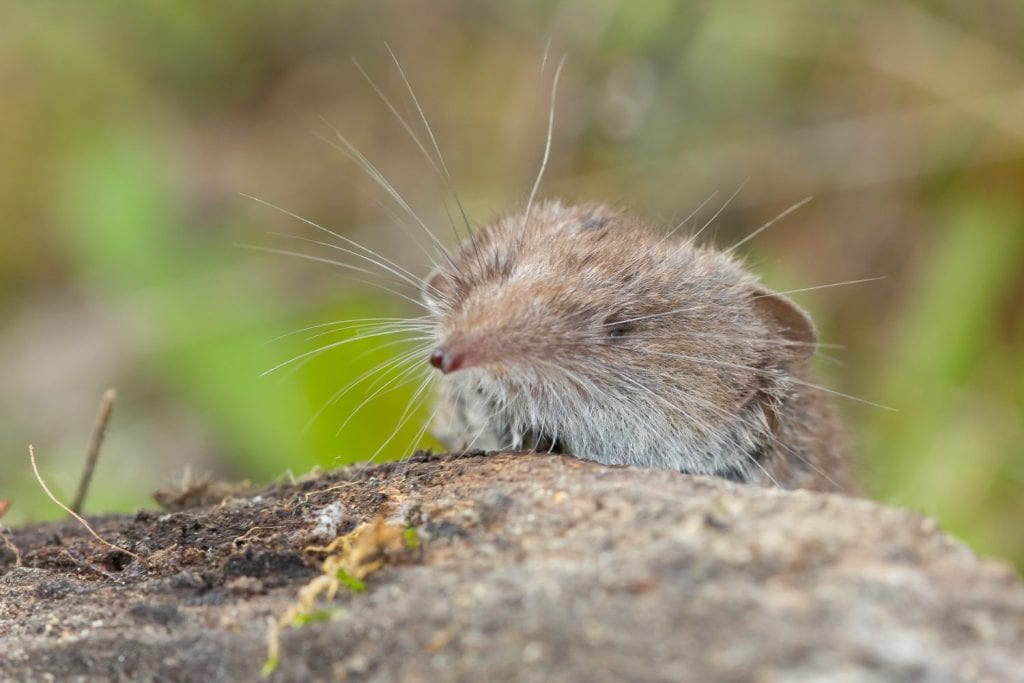
Etruscan shrews typically live in warmer, damp climates.
©Wirestock Creators/Shutterstock.com
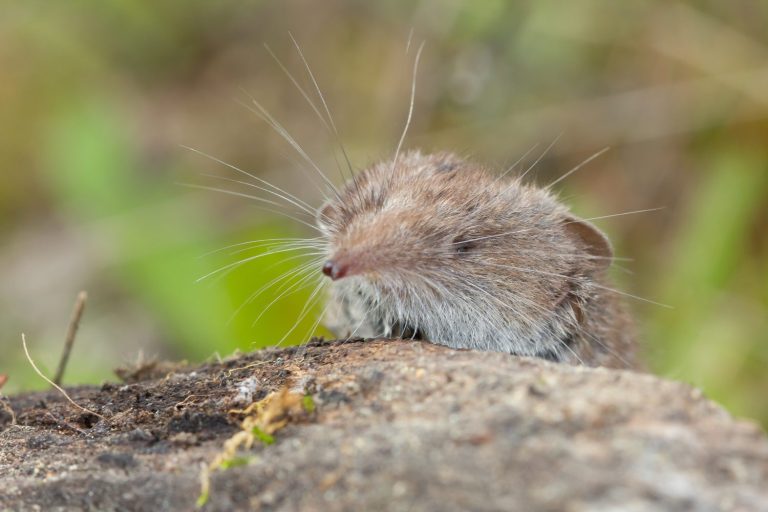
The Etruscan shrew (Suncus etruscus) is widely considered the world’s smallest mammal by weight, though the bumblebee bat is smaller by length. On average, this tiny creature weighs just 1.8 grams (0.06 ounces) — about as much as a paperclip — with a 1.5 to 2-inch-long body. Although it’s slightly longer than the bumblebee bat, the Etruscan shrew is the lightest mammal on Earth.
Because it is so small, the Etruscan shrew needs a constant, massive supply of energy. Its incredibly fast heart beats about 1,500 times a minute, or 25 times every second. To fuel this high metabolism, this tiny shrew must consume up to twice its own body weight in food every single day. Interestingly, this tiny terror is a surprisingly picky eater, avoiding insects with hard shells and preferring softer prey like grasshoppers, earthworms, and larvae. When hunting, it relies more on touch than on sight. Etruscan shrews live from southern Europe and North Africa across to Asia and the Arabian Peninsula.