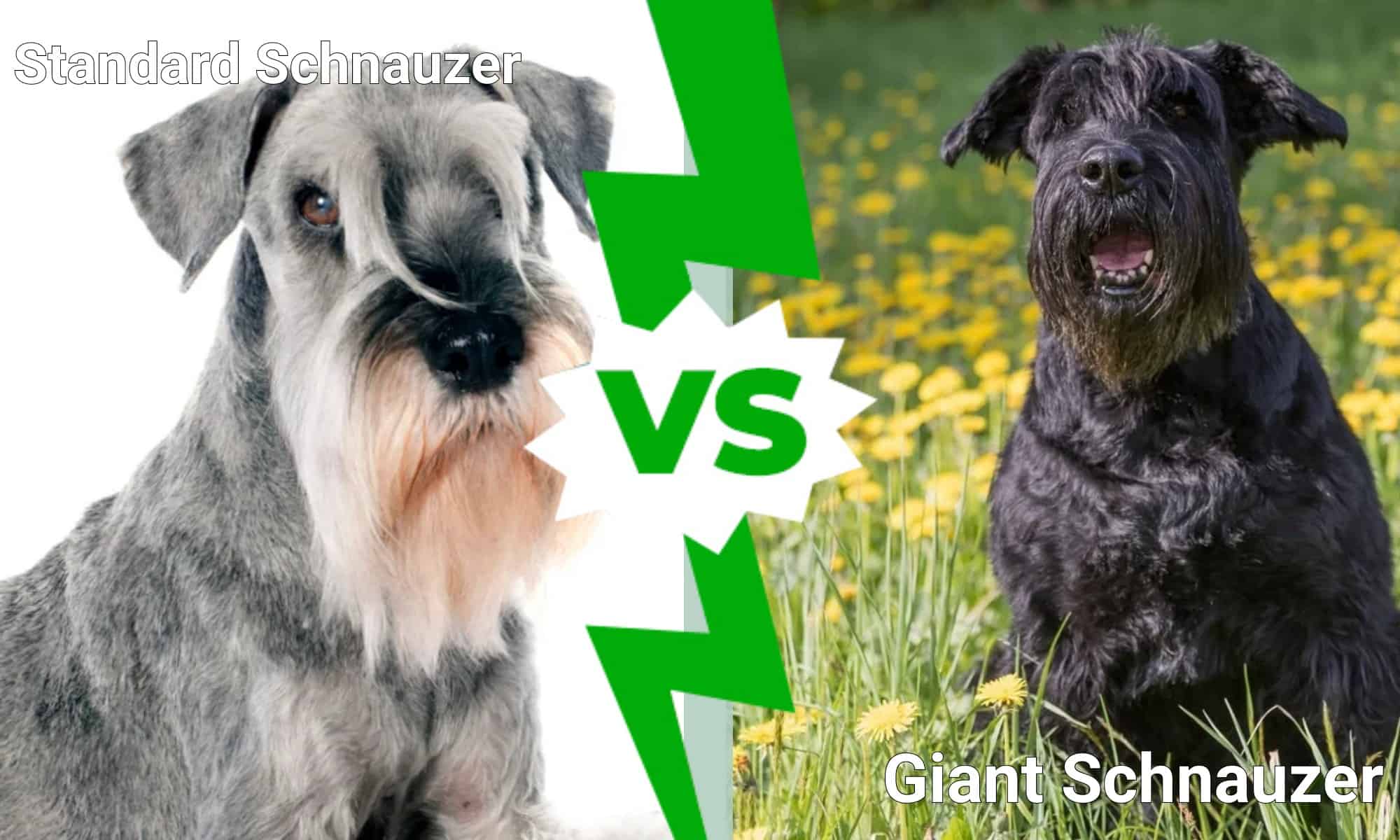

Originally bred as farm dogs in Germany, schnauzers are known for their distinctive whiskered snout. While affectionate with their families, their strong guarding instincts and high prey drive require consistent training. Schnauzers are an energetic breed that need regular exercise and mental stimulation to prevent stubbornness and other behavioral issues. Schnauzers are placed into one of three official size groups (miniature, standard, and giant), each considered a separate and distinct breed. While standard schnauzers and giant schnauzers may look very similar, there are five key differences between them.
Size
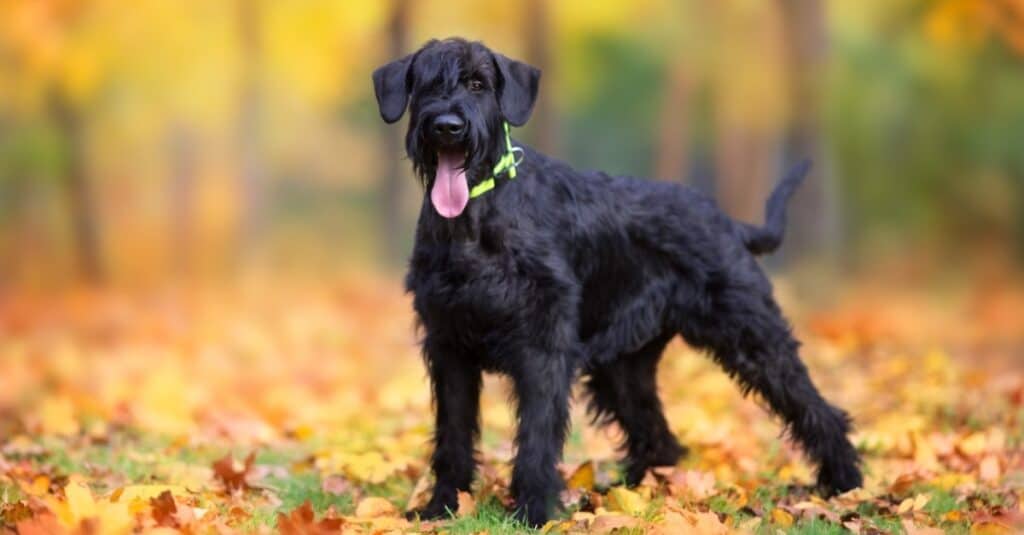
A schnauzer’s facial hair makes it appear to have a beard.
©iStock.com/Nemyrivskyi Viacheslav
Giant schnauzers are larger than standard schnauzers. Standard schnauzers are between 17 and 20 inches tall. Males weigh between 35 and 50 pounds, while female standard schnauzers weigh between 30 and 45 pounds. Giant schnauzers are significantly larger, measuring 23.5 to 27.5 inches tall and weighing 59 to 85 pounds for males and 55 to 74 pounds for females. Standard schnauzers are typically considered fully grown by about 12 months, though some may continue to fill out until 18 months, while giant schnauzers are considered full-grown between 16 and 19 months of age.
Adaptability
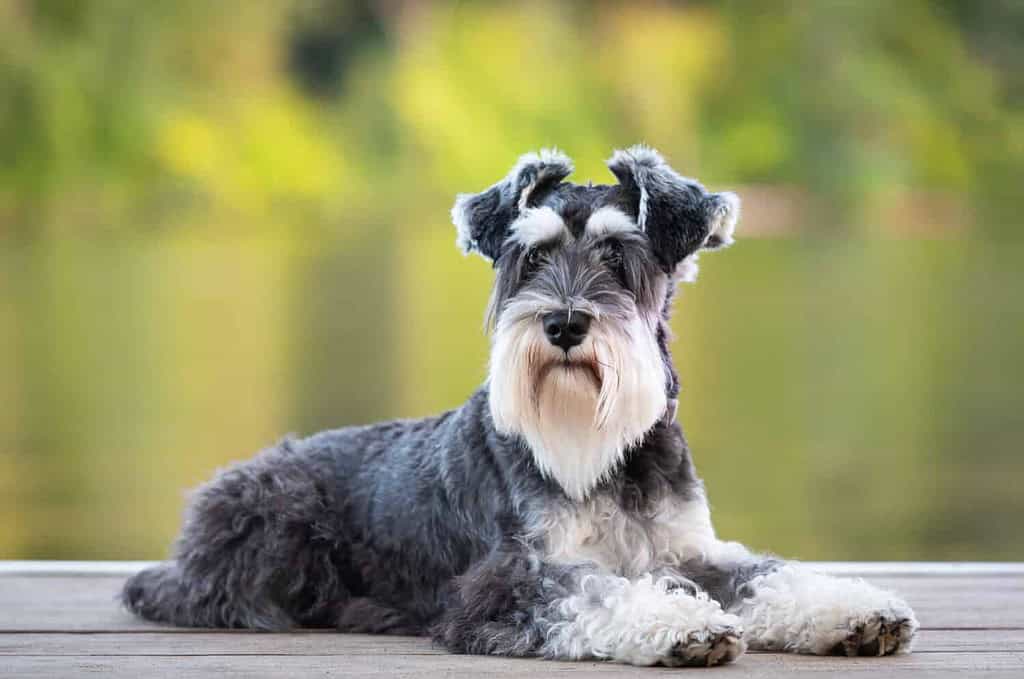
Schnauzer is derived from the German word schnauze, meaning snout or muzzle, due to the dog’s distinctive bearded snout.
©Debra Anderson/Shutterstock.com
The standard schnauzer is generally considered more adaptable due to its medium size and versatility, fitting well in apartments or houses as long as they get plenty of exercise. Standard schnauzers are a good fit for families with small children, often forming strong bonds and acting as guardians for the children in their family.
The Giant schnauzer is also very adaptable and intelligent, but requires a greater commitment to exercise and training to prevent behavioral problems, making it less suitable for less active households. Giant schnauzers need substantial physical and mental exercise, such as long runs, hikes, and mentally stimulating activities, to prevent boredom and destructive behavior.
Lifespan
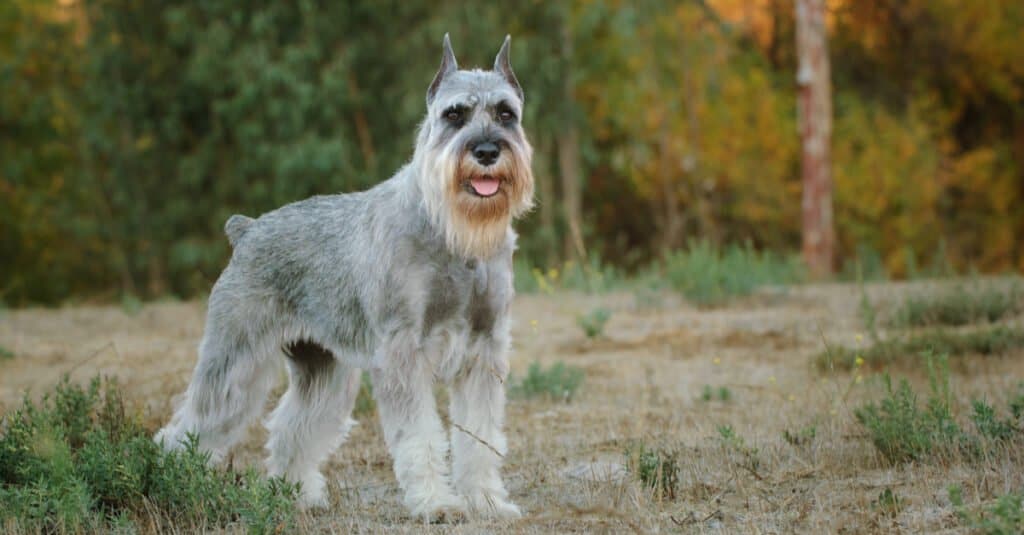
A Standard Schnauzer lives longer than a Giant Schnauzer.
©everydoghasastory/Shutterstock.com
Standard schnauzers have a longer lifespan than giant schnauzers. The average standard schnauzer lives between 13 and 16 years. Giant schnauzers may live for 10 to 12 years. This is typical of most dog breeds, in which smaller dogs have a longer average lifespan than larger breeds, a trend linked to genetic changes for size that make giant breeds more susceptible to health issues.
Giant schnauzers are susceptible to various conditions, such as cancer (including toe cancer and lymphoma), hip dysplasia, and heart conditions, all of which can affect longevity.
Trainability
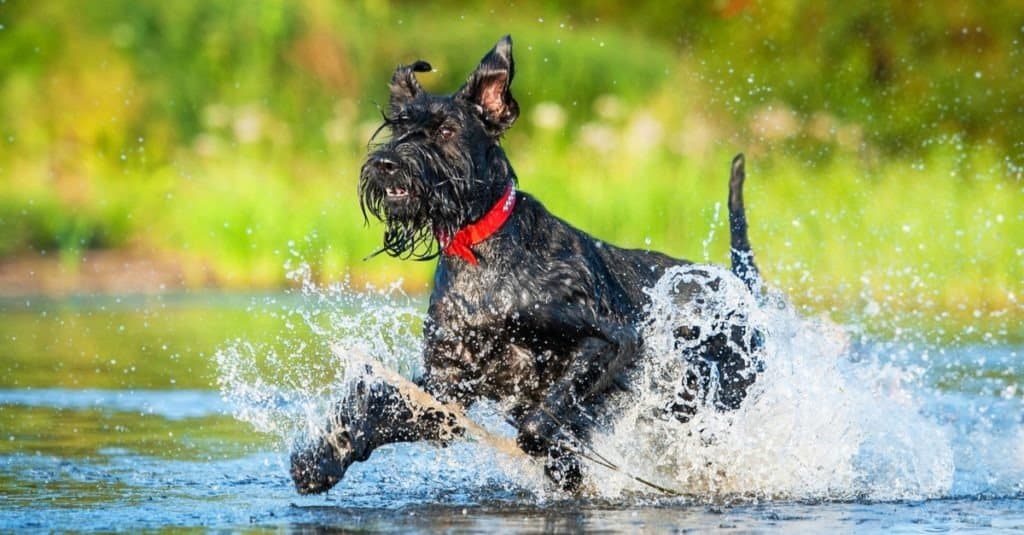
Schnauzers were originally bred to be all-purpose farm dogs and are good at many types of jobs.
©Rita_Kochmarjova/Shutterstock.com
The giant schnauzer is considered easier to train for experienced owners due to its intelligence and eagerness to please, whereas the standard schnauzer can be more stubborn and prone to barking. Both breeds require consistent training, early socialization, and both mental and physical stimulation to be well-behaved; however, the giant schnauzer’s size and protective nature require a significant commitment to training and handling.
Grooming
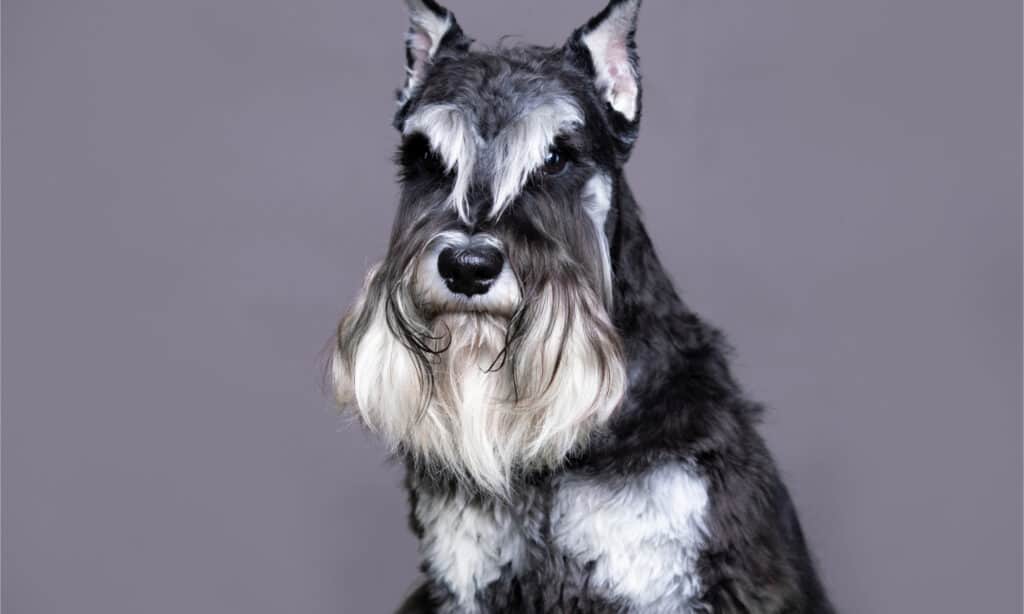
A schnauzer’s beard requires attention to grooming, lest it become matted.
©Liliya Kulianionak/Shutterstock.com
The primary difference in the grooming needs of standard and giant schnauzers is that giant schnauzers require more labor-intensive grooming because of their larger size. Both standard and giant schnauzers have wiry coats that need regular brushing, clipping, or hand-stripping to avoid matting. However, professional grooming for a giant schnauzer is recommended every 4–6 weeks because of their size and their beard, which requires frequent cleaning to prevent food buildup. Standard schnauzers have less intensive grooming needs, although they also benefit from regular grooming.