
Quick Take
- The buildings themselves aren't data centers' biggest environmental threat. The infrastructure needed to power them is far more destructive, and most people never consider it. See the power infrastructure impact →
- Data centers hit local water ecosystems in two distinct ways, and experts say we still don't know the full scale of the damage. Explore the water double whammy →
- The noise from a data center can reach wildlife up to a mile away, and its effects on animals' behavior are more disruptive than most residents realize. Hear how noise affects wildlife →
- Data centers deliberately target rural areas for reasons that have nothing to do with space, and in doing so they are quietly eliminating something wildlife depend on that cities lost long ago. Discover what rural darkness means →
Spring has been a season of celebration at Nashville Zoo. A clouded leopard cub was born in March, marking the zoo conservation breeding program’s 50th cub to date, and an adorable 2-pound Southern Pudu fawn was born in May. A mop-headed Highland cow named Elinor was reunited with her brother Hamish when she joined the zoo’s herd at its historic farm. However, this joy was quickly overshadowed by concern when Atlanta-based DC Blox announced plans to build a data center directly next to the zoo’s parking lot.
The number of data centers in the U.S. doubled between 2018 and 2021, and is projected to double again between 2021 and 2025. According to Pew, 39% of Americans say that data centers are bad for the environment, compared to 14% who say they are neither good nor bad, and 4% who say they are good. The Metro Council of Nashville is debating a bill that would ban data centers within a half-mile of homes, schools, churches, or zoos. The state of Tennessee has already passed legislation requiring data centers to pay for their own electricity infrastructure, aiming to prevent rising electricity costs caused by their operation.
Tennessee has been seen as prime real estate for data center developers because of its favorable electricity infrastructure and pricing provided by the federally run Tennessee Valley Authority, its low risk of natural disasters, and its fiber-optic rollout. But across the country, residents and scientists alike have raised the alarm about the local harms caused by data centers: loud, persistent humming noises, air pollution from generators, widespread light pollution, spiking electricity demand, and depletion of local water resources.
The planned data center next to the Nashville Zoo will replace a pair of office buildings. However, many data centers elsewhere have destroyed wildlife habitat. While human communities can call their representatives when troubled by data center development, wildlife has no such recourse. Nearly 3,000 new data centers are planned or under construction in the U.S., and an understanding of this growing industry isn’t complete without examining the impacts on animals and the environment.
How Do Data Centers Harm Wildlife?
Data centers disrupt the environment in 5 main ways: habitat loss from their construction, loss and fragmentation of habitat from the expansion of electrical infrastructure, freshwater use, noise pollution, and light pollution. To better understand these impacts, we spoke to Kyle Hart of the National Parks Conservation Association, who is the lead editor of a recent report titled, “A Smarter Path
Forward: Safeguarding National Parks Amid Explosive AI and Data Center Growth.”
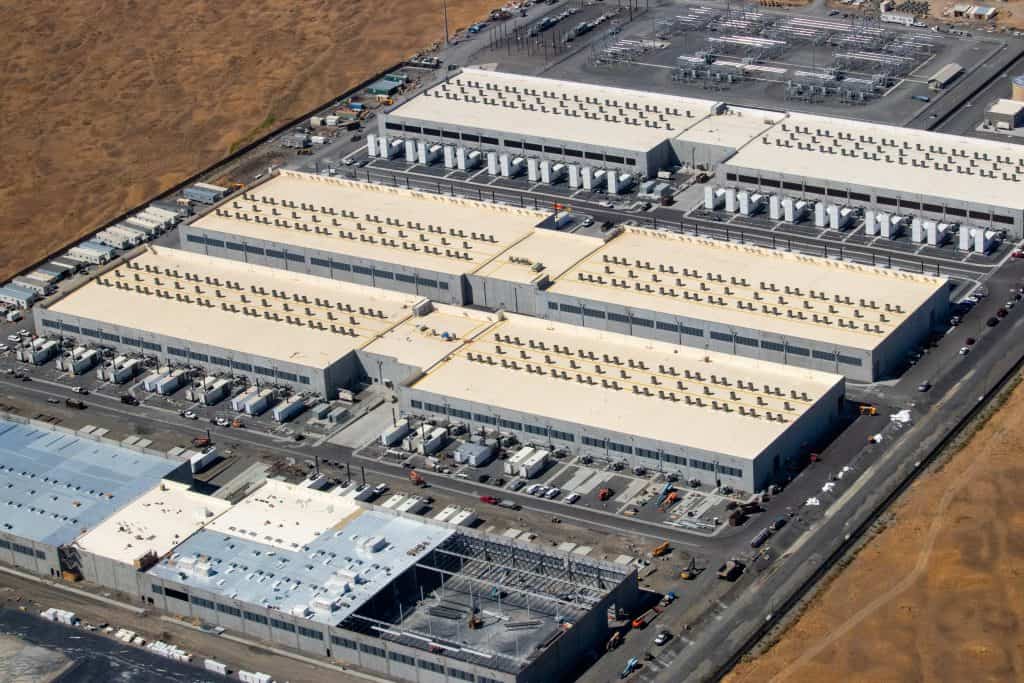
Amazon Web Services Data Center, Boardman, Oregon.
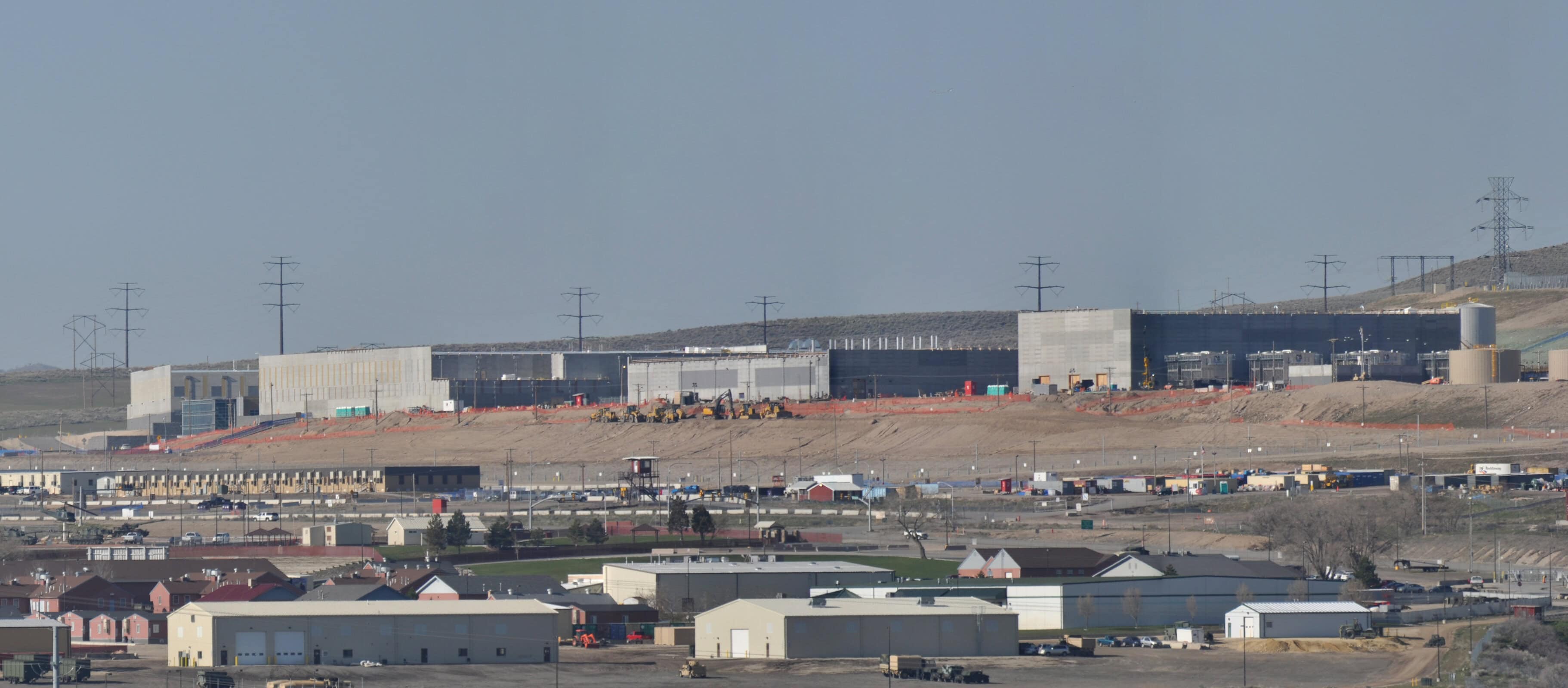
Data centers need a lot of space to house the servers, chips, backup generators, networking equipment, and coolant systems; the average data center in the U.S. is 100,000 square feet, not to mention the associated roads and parking lots that all destroy or disrupt habitat. Some can be much larger, including one studied by Hart that threatens natural areas in Virginia: “That project is about 1.5 million square foot data center campus. To put that into perspective, your average Walmart supercenter is like 250,000 square feet. So, it’s like 5 or 6 Walmart supercenters. That is inside the boundary of Prince William Forest Park.”
Another project of concern could develop 2,000 acres of habitat next to Manassas National Battlefield Park. “That region is like a wildlife oasis; you have your standard suite of like, you know, Eastern megafauna running around, deer and turkeys, and foxes. The project that would completely convert a huge swath of habitat to industrial facilities,” Hart says.
A Growing Grid Powering Data Center Demand
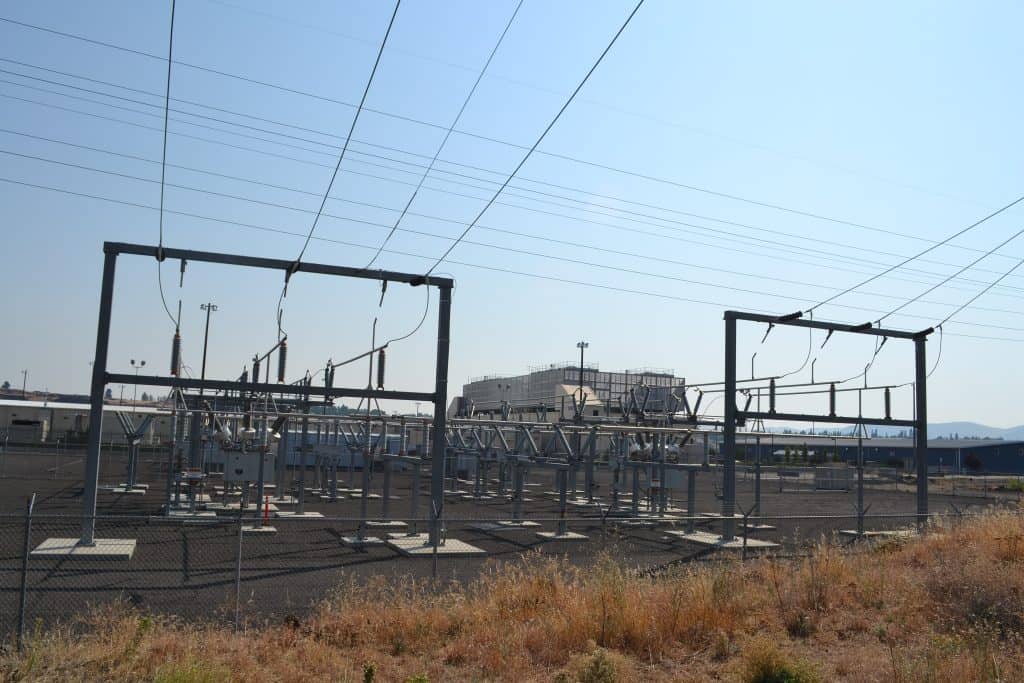
Transmission lines at the Google Data Center, The Dalles, Oregon.
Last year, data centers consumed 5% of all electricity generated in the United States, and that figure could grow to 6.7-12% by 2028, according to the Lawrence Livermore Laboratory. This demand has driven the growth of power generation and transmission infrastructure, developing and dividing even more habitat than the data centers themselves. This includes new wind, solar, and natural gas developments, power stations, and the construction of more power lines through natural areas. Because of their size and environmental impacts, most of these developments are taking place in rural areas where wildlife thrives.
“One thing that we’ve started to realize, and we unpack this a little bit in the report, is that the physical footprint of the data centers is likely to pale in comparison to, in a landscape change perspective, the new infrastructure that’s needed to serve that energy demand. Whatever energy source is selected, we recognize that our climate is changing and that has huge impacts on parks and wildlife and water systems,” Hart says. Though renewable energy development and operation are preferable from a climate perspective than fossil fuel development, any kind of growth in our power system has the potential to reduce habitat and harm wildlife.
Every way of generating electricity has consequences for ecosystems, but fossil fuels are the biggest player; 57% of US electricity is produced by burning fossil fuels. 40% of U.S. electricity comes from natural gas, with coal taking up another 16.3%. Besides harming air quality, the fossil fuel economy leaks pollutants into the soil and water, often rendering habitats unlivable and sickening or killing animals. In Alaska, the current administration opened up 1.68 million acres of coastal plain habitat in the Arctic National Wildlife Refuge to oil and gas companies, one of many natural areas threatened by development.
The remaining 43% of U.S. electricity is generated by renewable resources. The AI industry has leaned particularly on solar, often colocating solar farms and backup batteries in its largest campuses. Though more ecologically friendly than parking lots, building new renewable capacity leaves less room for habitat.
Thermoelectric power plants, including those powered by nuclear, natural gas, and coal, use freshwater to generate steam and create electricity (and to cool their components). Electricity generation accounts for 40% of freshwater withdrawals nationwide, and it is unclear how water resources will be managed in an era of increased demand.
Data Centers and Water, a “Double Whammy” for Wildlife
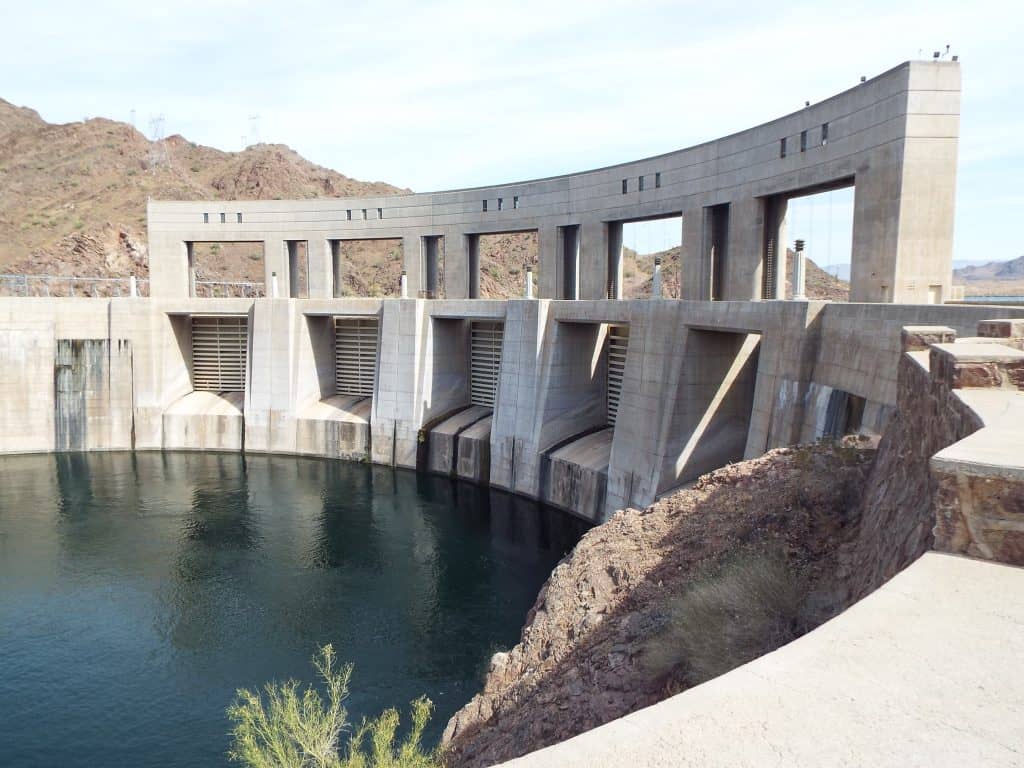
The Parker Dam, on the Colorado River at the California/Arizona Border, generates electricity and acts as a water source.
Hart pointed out 2 main ways data centers harm ecosystems through their impact on our water resources. “It’s a double whammy. It doesn’t take a rocket scientist to understand that the water that washes off an industrial site like a data center is dirtier than what comes off of forest and farms and open fields,” Hart says. Stormwater runoff from data centers contains heavy metals, oils, cleaning agents, and corrosion inhibitors.
The second impact stems from the high water consumption of data centers. Because data centers require large amounts of freshwater to cool their servers, they also draw down water tables and river levels, and we don’t know how much water these developments will end up using. “Data centers use a tremendous amount of water. We are still a little bit in the dark about the total scale and scope of that problem, largely due to the industry’s proclivity for utilizing nondisclosure agreements to shield estimated in actual water use,” explains Hart.
Drawing too much water from the ground or rivers makes many ecosystems less robust. “At some juncture, there will be an inflection point where rivers don’t have enough flow to sustain the wildlife that they historically have,” Hart says. ”That’s everything from spawning fish and fish eggs all the way down to the bass and the bluegill that live there full time.”
As people draw more freshwater from the James River in Virginia, saltwater from the Chesapeake Bay creeps further upstream. This leads to some unexpected wildlife interactions, reports Hart: “People were catching crabs in downtown Richmond.”
Effects of Light Pollution
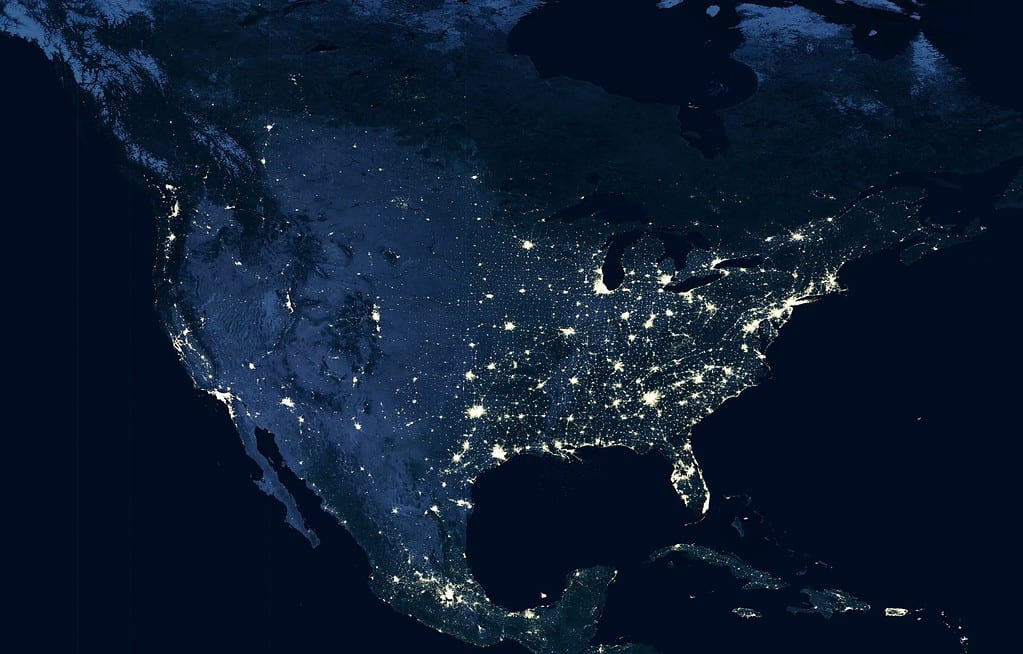
Data centers threaten to introduce light pollution in America’s rural areas, which maintain dark night skies.
©Viacheslav Lopatin/Shutterstock.com
Data centers use systems of cameras and 24/7 bright floodlights to secure their perimeters, posing challenges for nearby life. Light pollution disorients migrating birds, causing them to waste energy by flying outside of their historical migration routes and leaving them vulnerable to predation. Resident animals suffer serious harm from this bright intrusion. “It shifts wildlife away from light pollution: take your big deer, foxes, things that are crepuscular or nocturnal aren’t going to spend their time where there’s bright lights constantly,” according to Hart.
Data center developers look for two things: cheap energy and water. Often, that means rural areas, where light pollution is rare. Hart described the impact of data center development in rural Virginia: “Counties like Culpepper County and Orange County, that have historically been rural, are all of a sudden hosting large concentrations, thousands of acres of data center facilities. We are talking about a pretty significant change to the Virginia landscape,” Hart says. As a result, both wildlife and people have fewer dark-sky refuges.
I’m a pretty firm believer that corporations have created this problem, and it’s sort of their problem to solve, and that placing the impetus to solve this problem on the end user is unfair.
Kyle Hart of the National Parks Conservation Association
A Constant Hum Drowns Out Animal Calls
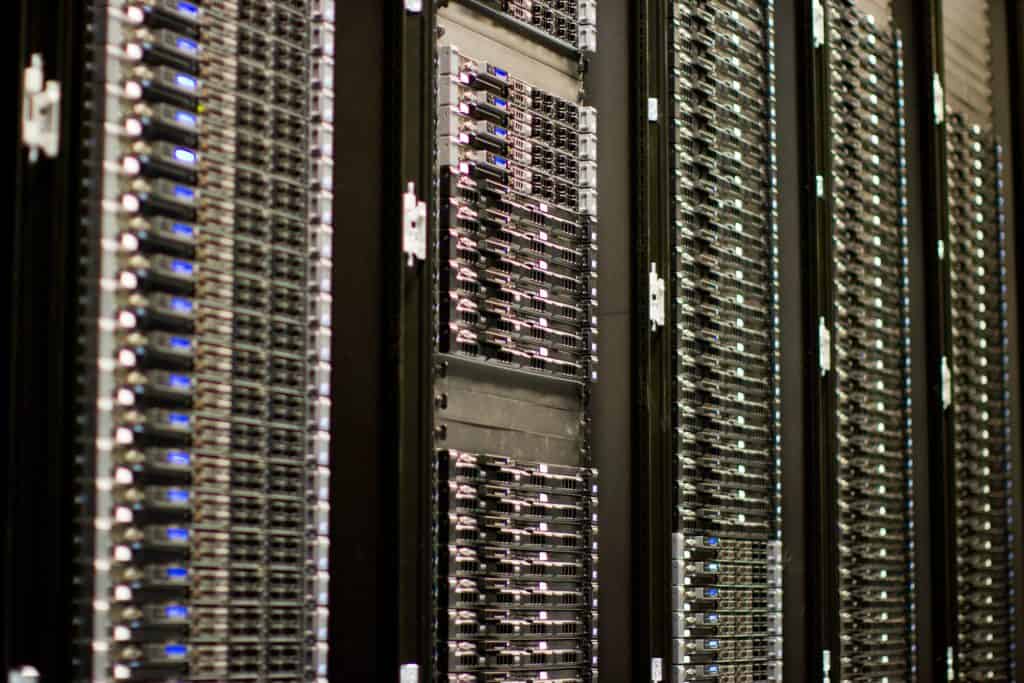
Networked web data servers operated by the Wikipedia Foundation.
The servers powering the artificial intelligence boom are neither small nor quiet, nor are the fans that keep them cool enough to run at maximum capacity, nor are the generators that supplement the center’s power. They generate a variety of rumbling and humming noises, flooding their surroundings with low-frequency sounds that can propagate up to a mile away.
Noise pollution can cause chronic stress, weaken the immune system, and disrupt circadian rhythms in animals and humans; it can also interfere with an animal’s ability to find a mate or hunt for prey. As with light pollution, many animals avoid the sources of noise or light. Animals use sound for navigation and detecting predators, and while some species are more resilient than others, noise pollution can greatly disrupt ecosystem functions.
Developers can deploy mitigation strategies and technologies to help prevent the worst impacts of noise pollution, but they are not incentivized to do so unless policymakers and community members get involved.
What’s the Future of Data Centers?
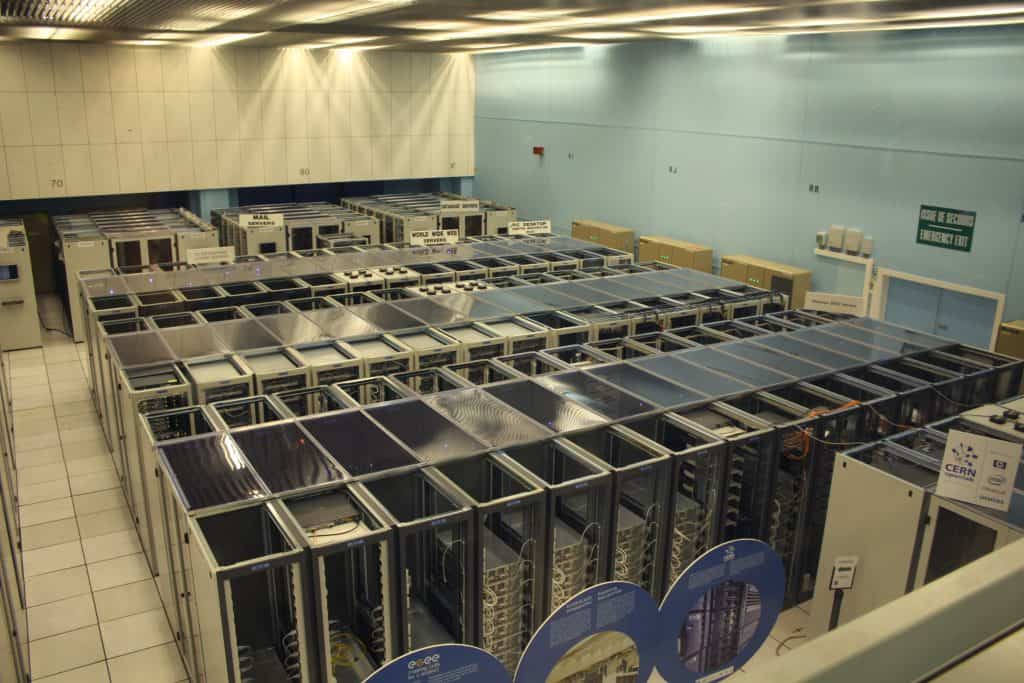
Server stacks in a data center operated by the European Organization for Nuclear Research (CERN) with World Wide Web and Mail servers.
The planned data center at the Nashville Zoo has met fierce resistance; a petition with hundreds of thousands of signatures is circulating, and Mayor Freddie O’Connell has put her support behind the bill the Council is considering, which would prevent its construction. But many data centers built in remote locations will not receive the same attention, even though their potential to harm wildlife is significant. It is projected that 40,000 acres of land in the U.S. will be developed into data centers in the next five years, mostly in rural areas, threatening habitat in numerous ways. Federal regulation of this growth is minimal, and so far, the most effective challenges to these changes have occurred at the local level.
Hart had a passionate response when we asked him how people can make a difference when data centers are planned nearby: “First and foremost, get involved, right? Get involved with your local government. Most of these decisions for data centers are being made at the county or city council level. Show up, get involved, get to know your local elected officials, and tell them, at a minimum, you want data centers to be built responsibly and in a sustainable way.”
Artificial intelligence, which has led to this data center boom, has become increasingly integrated into people’s day-to-day lives, but Hart encouraged us not to blame individual users of these technologies:
“I’m a pretty firm believer that corporations have created this problem, and it’s sort of their problem to solve, and that placing the impetus to solve this problem on the end user is unfair.” He told us that there are certain considerations we can make about its use: “Your choices do matter. I think you can be responsible about your use of technology: not saving documents to the cloud forever that you don’t need anymore, and not using artificial intelligence to create silly videos that don’t really mean anything, like recognizing that there’s a real-world impact. I think that is kind of akin to recycling and turning out the lights, right?”
The rapid growth of artificial intelligence and the data centers it requires has led to feelings of loss of control. Because of this speed, we do not yet know how many acres of habitat will be converted to industrial buildings and concrete, how much water or energy will be used, how much our energy system will need to expand, or how all of these changes will ultimately impact wildlife. However, careful research and staying informed and involved will help us protect our natural heritage.