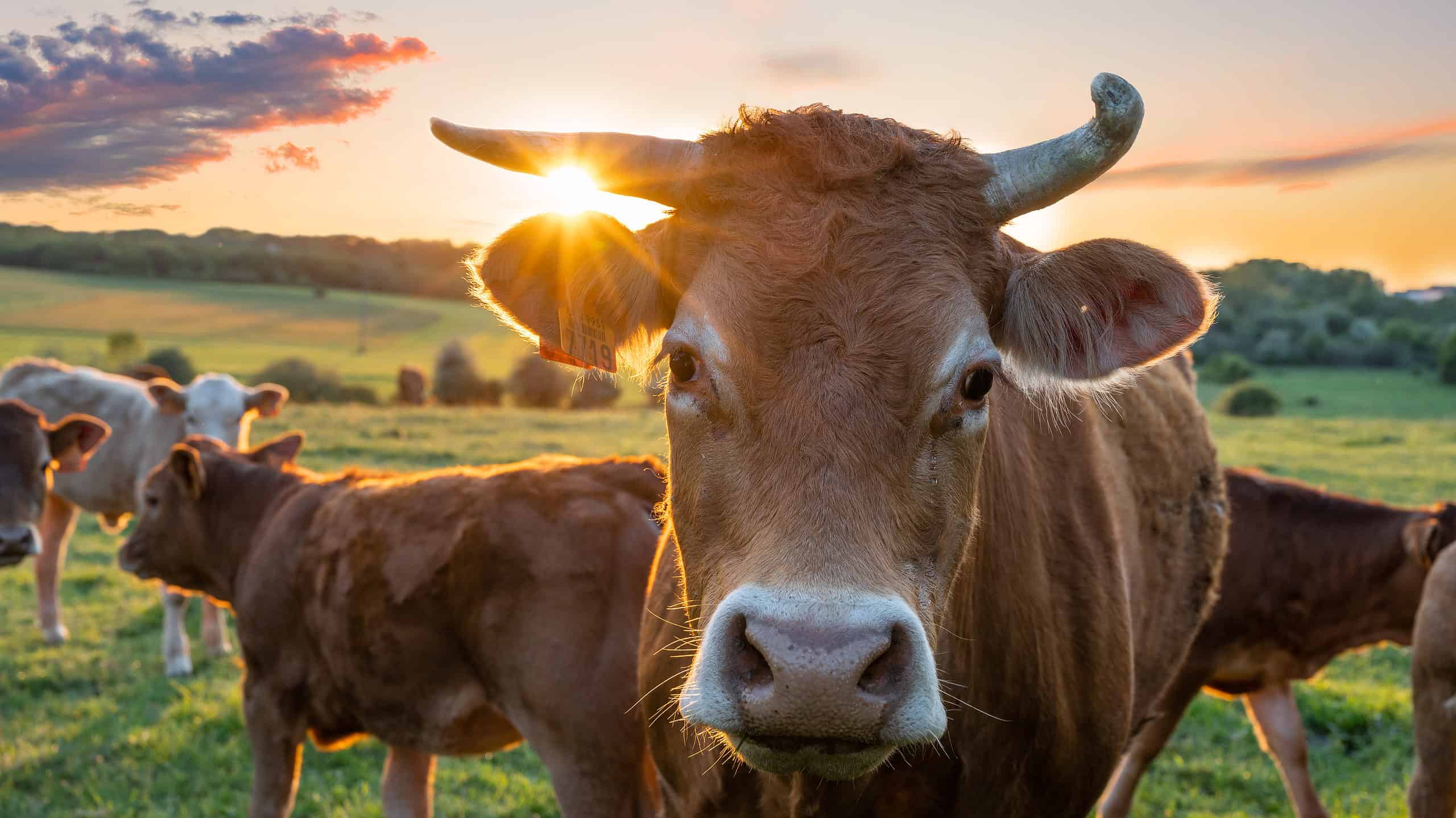

The size of cattle (Bos taurus) is influenced by various factors, including genetics, diet, and environment. Throughout history, cattle breeders have used selective breeding to create larger cattle that can produce more milk and beef than wild cattle. As part of the breeding process, they also try to create animals that are gentle and horn-free, as such large beasts can be dangerous. There are estimated to be between 1,100 and 1,300 cattle breeds in the world today. Continue reading to discover the largest cows in the world.
10. Bazadaise
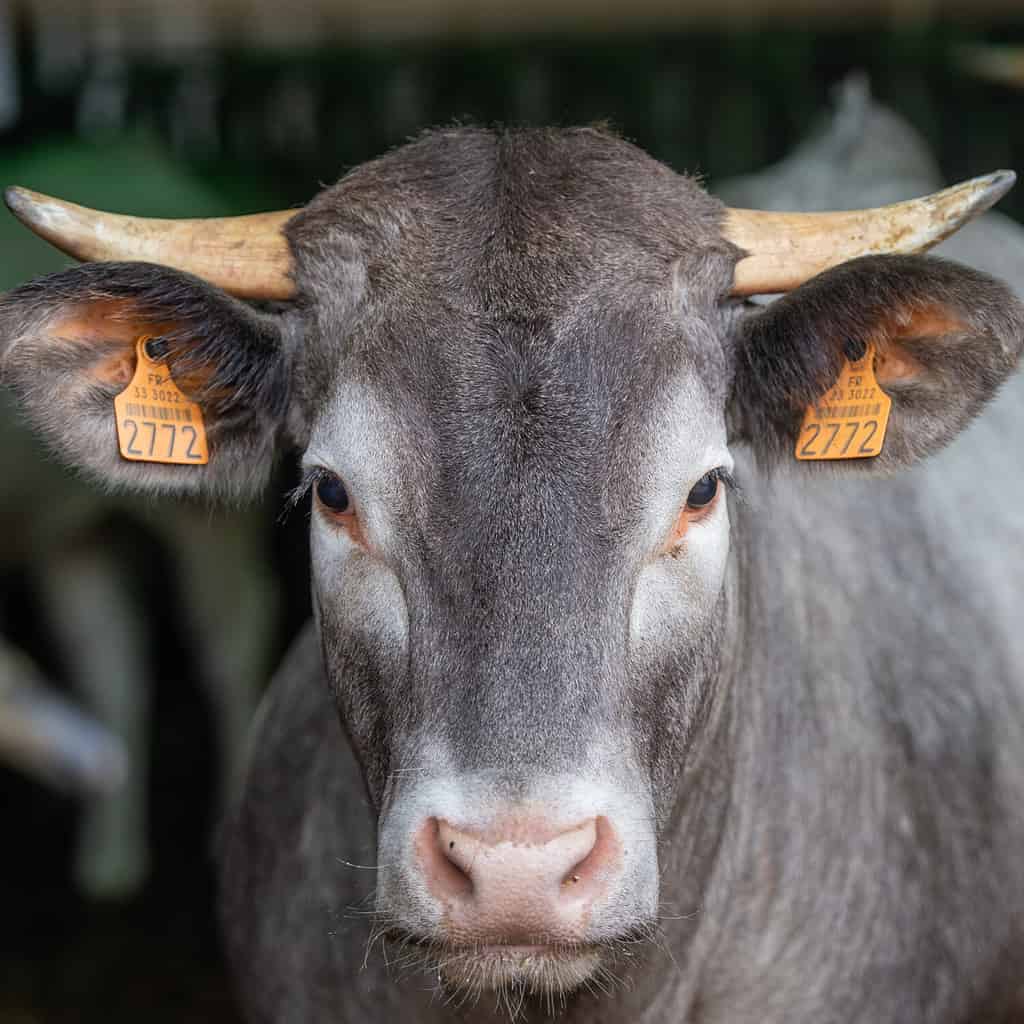
Bazadaise beef is prized for its marbling, tenderness and flavor.
©FreeProd33/Shutterstock.com
The Bazadaise is grey and has dark-tipped horns. Originally beasts of burden, they pulled heavy loads. However, they are now raised for their meat. The meat is tender, well-marbled, and has a delicious flavor. Bazadaise cattle weigh up to 2,200 pounds and are 4.75 feet tall at the shoulder.
9. Montbéliarde
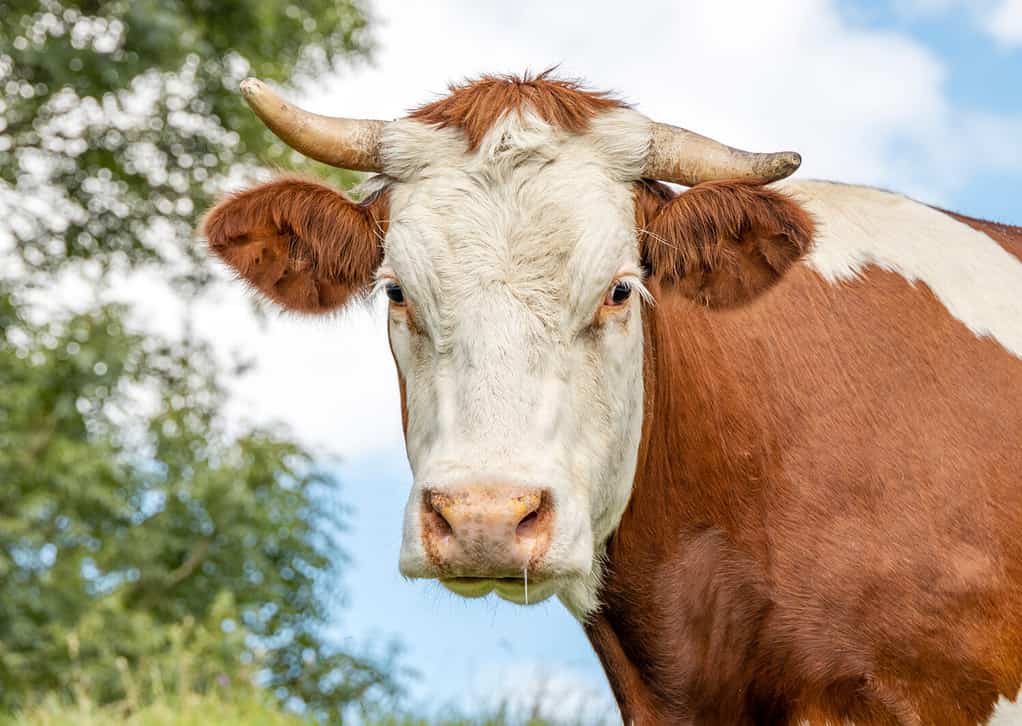
The Montbéliarde is a short-horned breed that has been developed in France since the late 19th century.
©Clara Bastian/Shutterstock.com
The Montbéliarde is a short-horned cattle breed developed in France in the late 19th century. They are a pied (having two or more colors) breed that comes in splotched red and yellow patterns. They are especially valued for their milk, which is well-suited for cheesemaking. At maturity, Montbéliarde cattle can weigh up to 2,600 pounds and stand about 4.75 feet tall. Montbéliarde cattle are one of the major dairy breeds in France, and retain the rest of the sentence. and they have become popular around the world for crossbreeding with Holsteins to improve the fertility and lifespan of the Holstein breed.
8. Parthenais
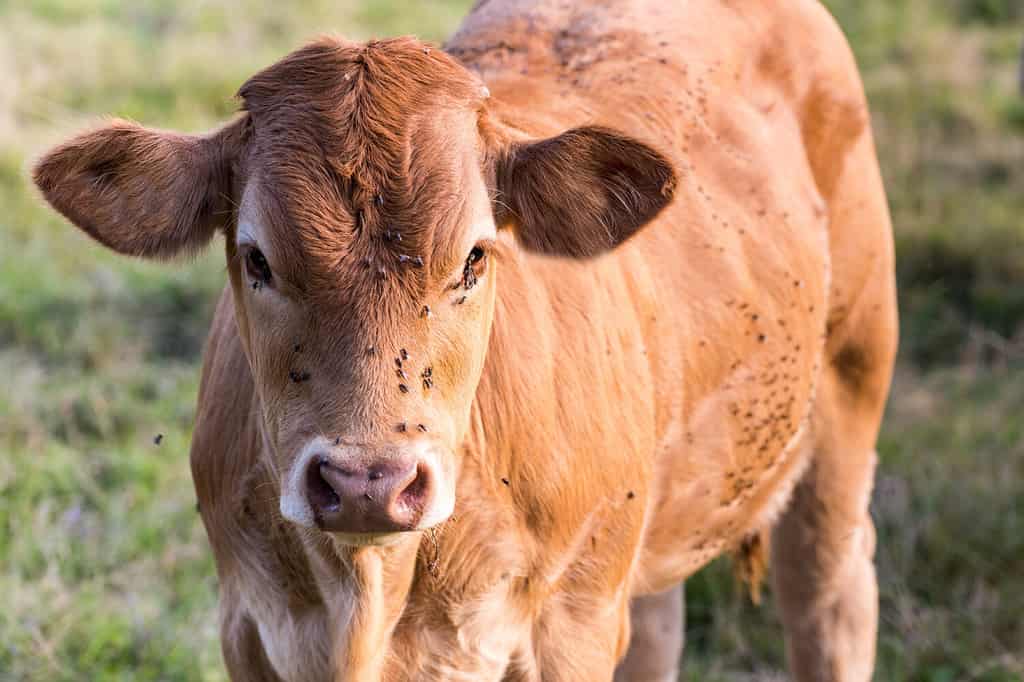
The fur of Parthenaise cattle ranges from light to dark wheaten.
©Pitamaha/Shutterstock.com
The Parthenaise is native to Western France. It was originally bred for milk, meat, and as a draft animal, but today it is raised for its meat. The fur of Parthenaise cattle ranges from light to dark wheaten, and they have grey rings around their muzzles and eyes. One interesting feature of this breed is that their horns grow in a lyre shape. Mature bulls stand 4.75 feet tall and weigh up to 2,600 pounds.
7. German Angus
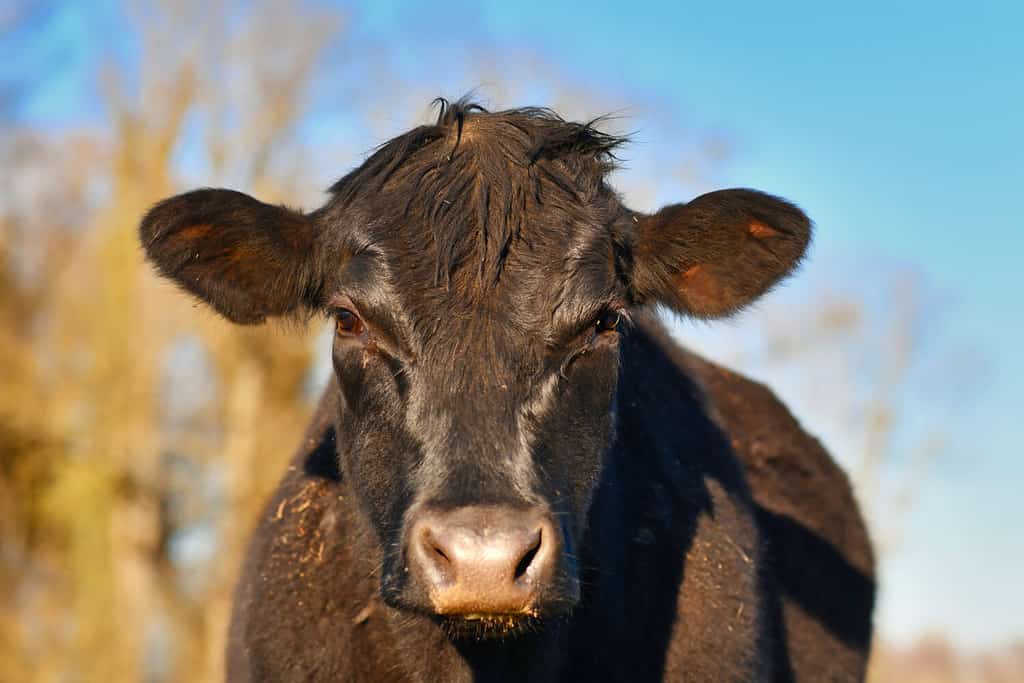
German angus cows come in solid black, brown, or red and never have horns.
©Firn/Shutterstock.com
As the name suggests, this breed originated in Germany. It was developed in the 1950s for beef production, and approximately 10,000 German Angus cattle have been recorded in recent years. They come in solid black, brown, or red and never have horns. German Angus cattle grows up to 4.75 feet tall and weigh up to 2,650 pounds. They have an easier time calving and have a lower calf mortality rate than their predecessor breeds. Their temperament is tame and placid.
6. Glan Cattle
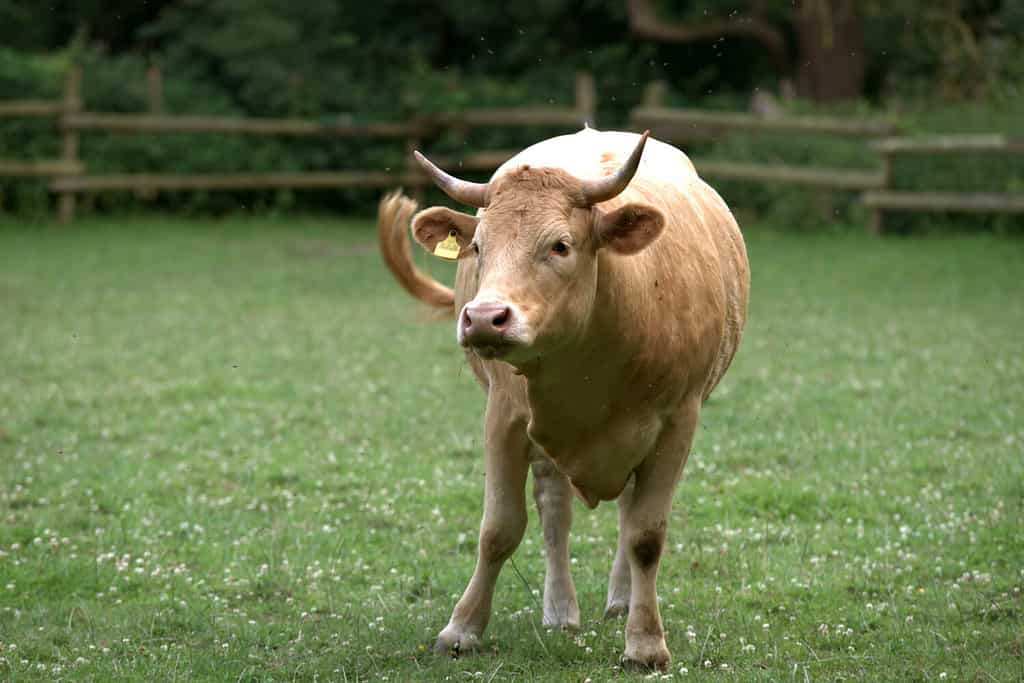
A traditional cattle breed, Glan cattle arefound in the Rhineland-Palatinate region of Germany.
©Erhard Ernst/Shutterstock.com
Glan cattle are a yellowish-furred breed that has been raised for hundreds of years in Germany, particularly in the Rhineland-Palatinate region. They can weigh up to 2,650 pounds and can grow as tall as 4.75 feet. They almost went extinct but are starting to make a comeback, primarily as beef cattle. Glan cattle remain a rare breed, with a small but slowly increasing population.
5. Limousin
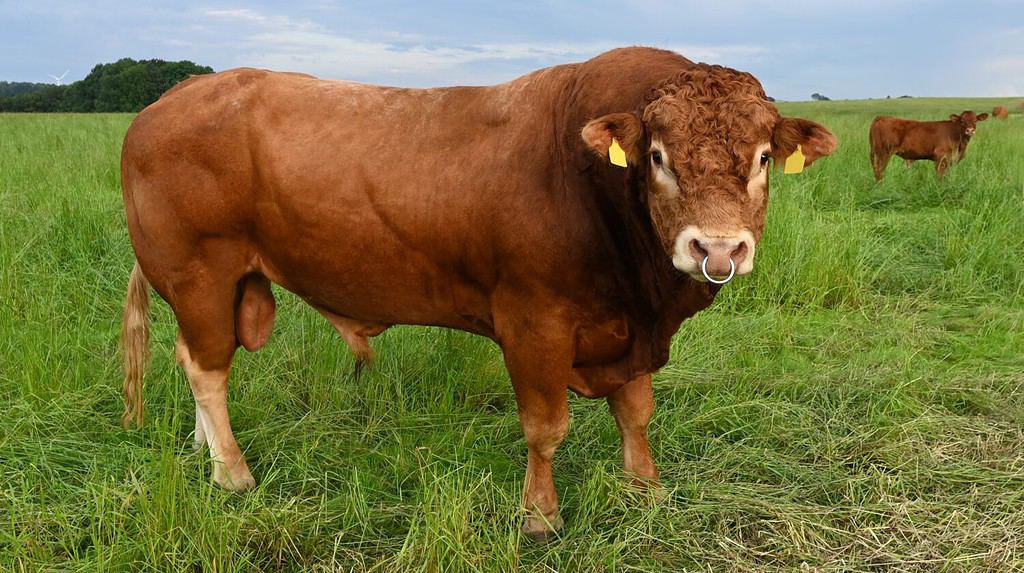
The Limousin is a breed of high muscle beef cattle that originated in France.
©perfect-picture-hunter/Shutterstock.com
France is home to some of the largest cattle breeds in the world, including the Limousin, an ancient breed that resembles cattle depicted in 20,000-year-old European cave paintings. Today, the Limousin is the second-most popular breed in France after the Charolais, and is raised in about 80 countries around the world. An adult male can weigh up to 2,870 pounds and stand 4.75 feet tall at the shoulder.
4. Maine-Anjou
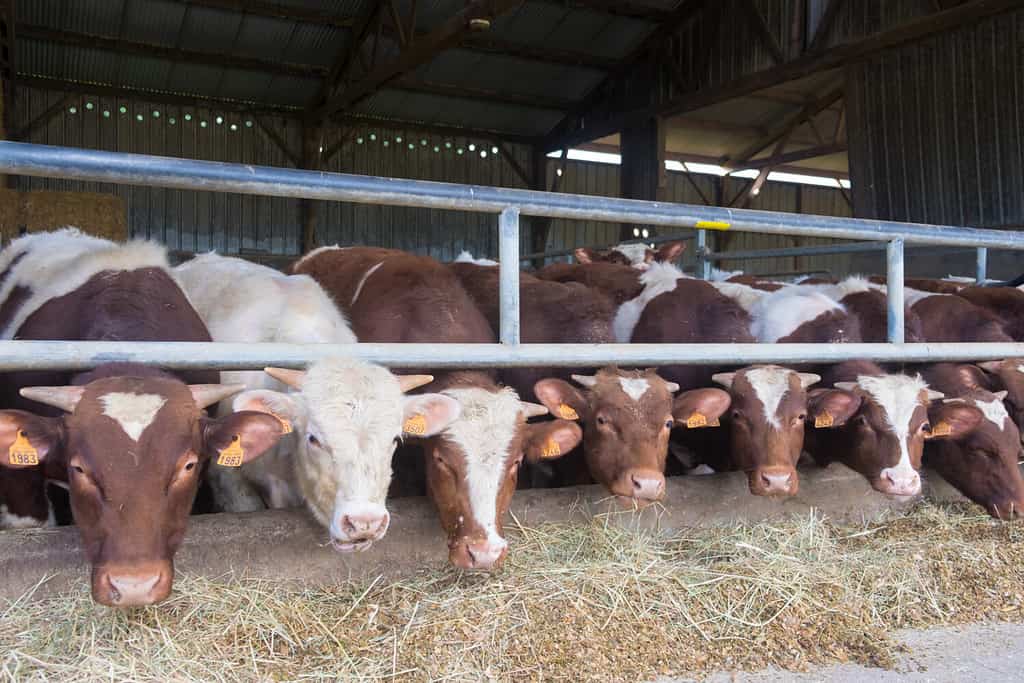
Maine-Anjou cattle from France fatten up easily and can grow to 3,100 pounds.
©eric laudonien/Shutterstock.com
This breed was developed in France to produce both milk and beef, which it excels at, as it fattens up easily. Maine-Anjou cows can grow to about 3,100 pounds and 5.6 feet tall. The cows have a strong maternal instinct and raise healthy calves with their highly nutritious milk. However, bulls are reputed to be difficult and aggressive.
3. Chaolais
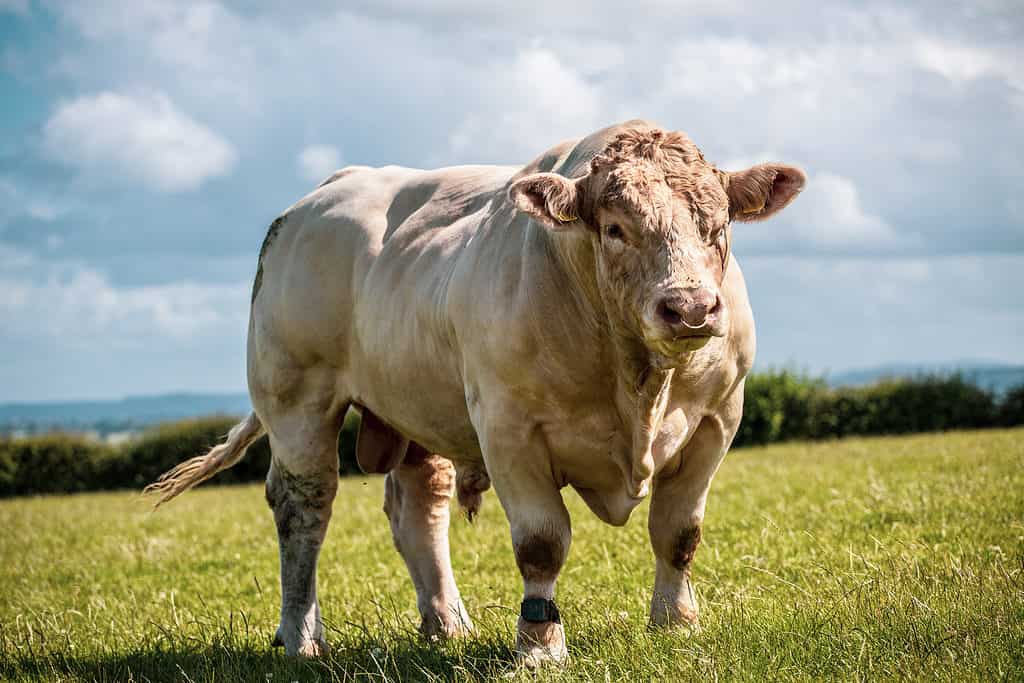
Charolais cattle are large and muscular.
©Lazarov/Shutterstock.com
The Charolais is a French beef breed that is often crossed with other breeds, such as Angus or Hereford. It is the most common beef breed in the country, with several million heads raised in France, making it the most common beef breed in the country. Charolais cattle are also widely raised outside France, with significant populations in countries such as Mexico and the Czech Republic. They are white to cream-colored and quite heavy, weighing up to 3,600 pounds. They can be almost 5 feet tall.
2. South Devon
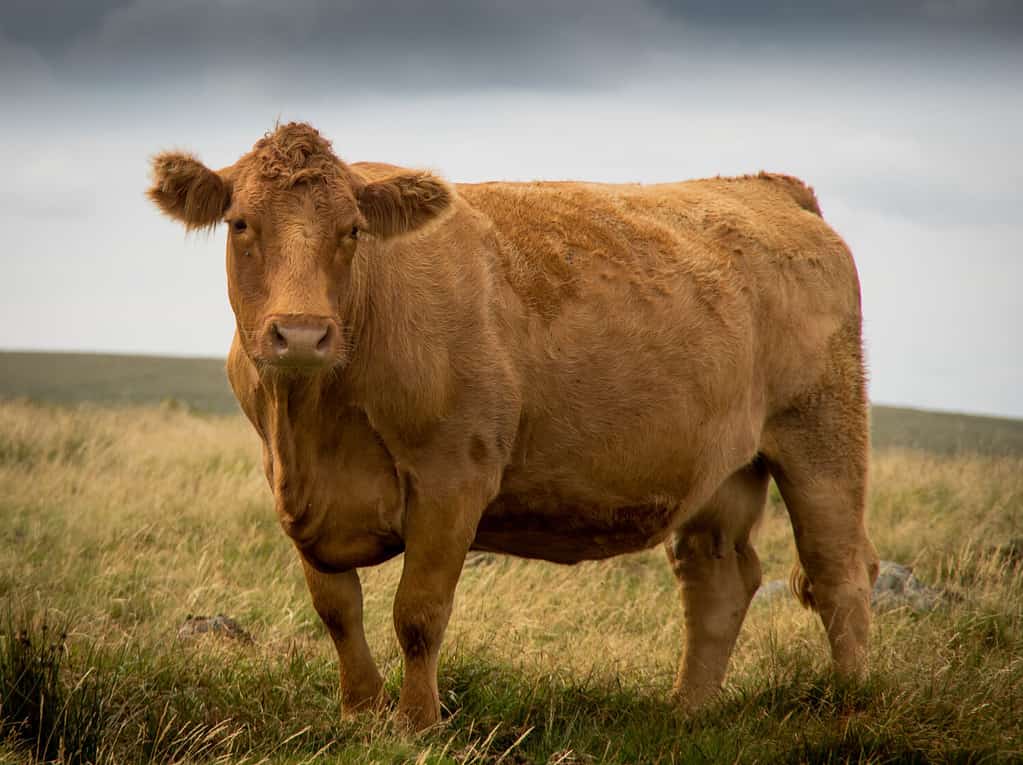
The largest breed originating in the United Kingdom, South Devon cattle weigh up to 1,800 pounds.
©Dave Atkins/Shutterstock.com
South Devon cows are native to the United Kingdom and are the largest breed from that country. Mature South Devon bulls typically weigh between 2,600 and 3,300 pounds, and cows average around 1,800 pounds, with bulls standing up to about 5 feet tall. They are raised for their high meat and milk production, but their gentle giant disposition is one of their greatest assets. Mother cows have a strong maternal instinct and care attentively for their young, so that the mortality rate of calves is lower than with other breeds.
1. Chianina
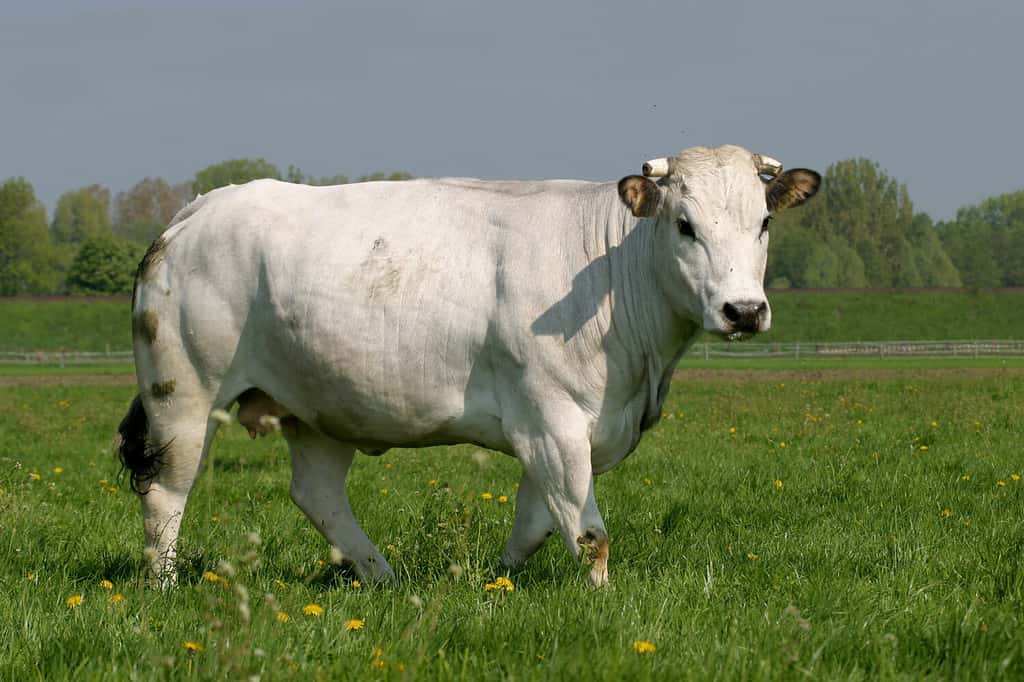
Chianina cows are the tallest and heaviest breed of cattle.
©R. Maximiliane/Shutterstock.com
The Chianina is the largest of all breeds of cattle. Chianina bulls can stand up to 5 feet 11 inches tall and often exceed 3,500 pounds, while oxen may reach heights of up to 6 feet 7 inches. Calves can weigh a whopping 110 pounds at birth. They are white with a black switch (the term for the long hairs at the end of a cow’s tail). Originating in Italy, the Chianina is not only the largest breed in the world but one of the oldest as well. They were prized by the ancient Romans for their white coats and were used in special ceremonies and processions.