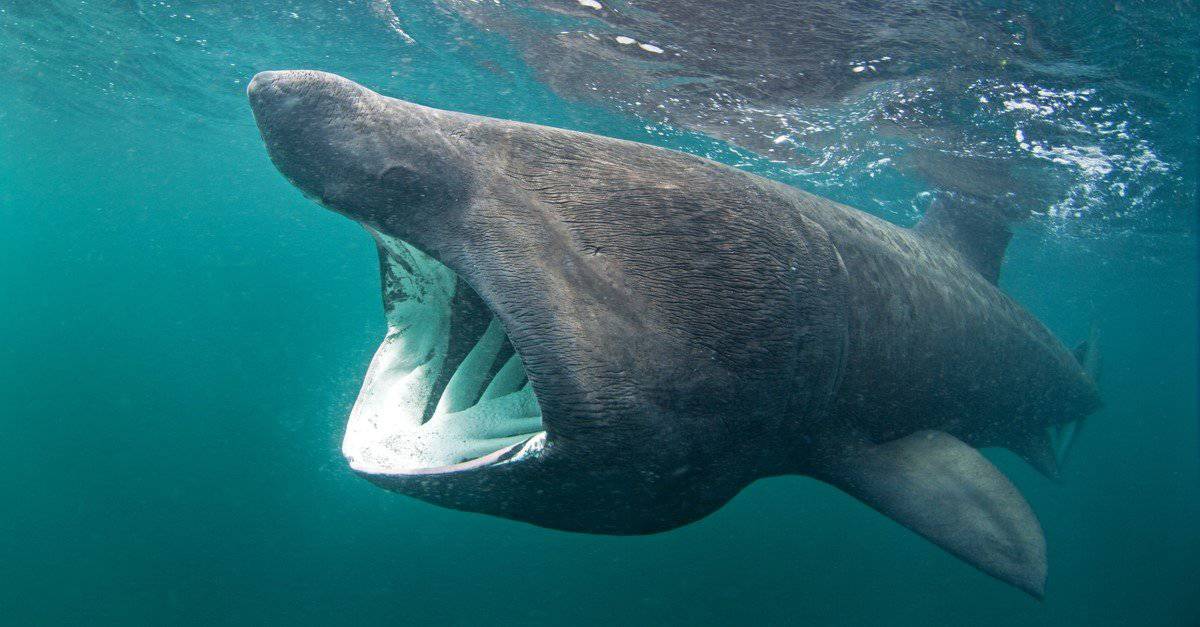

The exact number of fish species is a debated topic. Sometimes you see 20,000 quoted, but there could be thousands more. Irrespective of numbers, we know that fish species are highly variable in terms of habitat, diet, and appearance. Some live in the oceans, but others stay in freshwater habitats such as lakes and rivers. There is also a huge variety in size, with some of them being truly huge! Here, you can learn about the ten largest saltwater fish swimming in our oceans.
Whale Shark (Rhincodon typus)
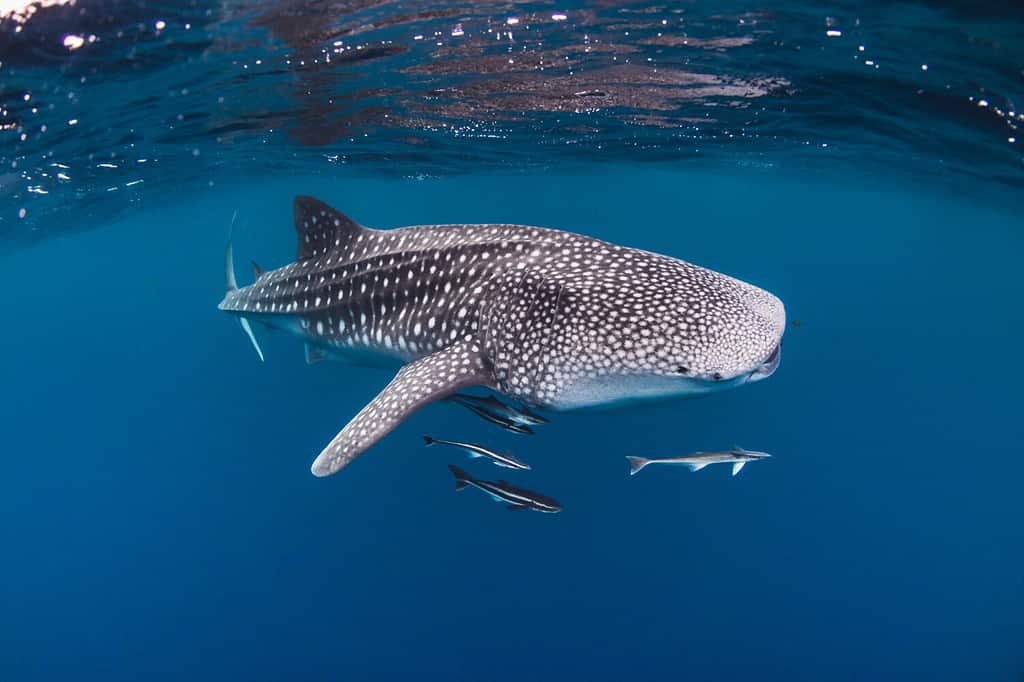
Whale sharks have distinctive spots.
©Aaronejbull87/Shutterstock.com
Whale sharks are both the largest fish swimming in our seas right now and the largest known fish to have ever lived on our planet. The largest accurately measured whale shark was 61.7 feet – that’s about as long as a bowling lane! However, the average length is between 18 and 32 feet. These giant fish have a broad body and a large sweeping tail. Its mouth is 4 feet across, and its skin can be four inches thick. Whale sharks have a dark grey back with light spots on it and a white underbelly. Every shark has a different spot pattern. These giant fish are found in the tropical Atlantic, Pacific, and Indian Oceans. Their range is mainly 30 degrees North to 35 degrees South, but they have been seen outside this. Their habitat is offshore waters, and they can sometimes be spotted in lagoons or coral atolls as well as near bays and near continental drop-offs.
They use a feeding method called cross-flow filtration, which does not require a filter. Instead, water is taken in through the mouth, then directed away through the gills. However, the tiny particles of food have enough momentum to carry on towards the back of the mouth. They form a spinning ball of food (bolus) which eventually grows large enough to trigger the swallow reflex. Their diet is mainly sergestid shrimps and fish eggs, together with other tiny creatures such as krill, jellies, copepods, and small fish. Very few predators can hunt them because of their size, but killer whales, great white sharks, tiger sharks, and humans can kill them.
Basking Shark (Cetorhinus maximus)
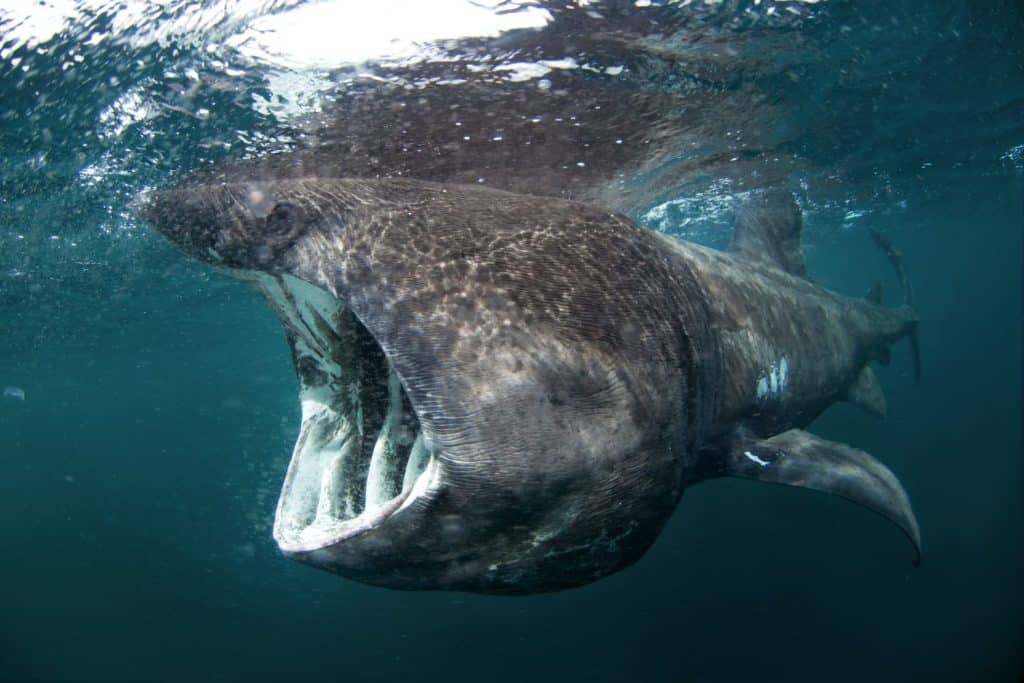
Basking sharks live in shallow waters.
©Martin Prochazkacz/Shutterstock.com
Basking sharks have an average adult length of 23 – 25 feet, but the largest ever trapped was caught in a fisherman’s net in the Bay of Fundy in Canada in 1851. It measured 40.3 feet, which is about the length of a school bus. They have conical snouts, large gill slits behind their mouths, and crescent-shaped caudal fins. Their skin is a grayish-brown, but their underbelly is a pale white.
These sharks have a wide geographic range, but they are most often found in temperate and boreal waters. They are inhabitants of both the northern and southern hemispheres and are able to swim in a wide range of depths. Most of the time, however, they live in shallow water where the sunlight can penetrate.
Basking sharks are selective foragers and look for food along thermal fronts, where there is a lot of zooplankton. They feed by opening and closing their jaws every 30 to 60 seconds, then filter the water through their gill rakers, which capture the plankton. Their diet is made up of plankton. We humans are their main predator. Great white sharks have been seen feeding on their carcasses, but no one knows if they actually killed them!
Giant Oceanic Manta Ray (Mobula birostris)
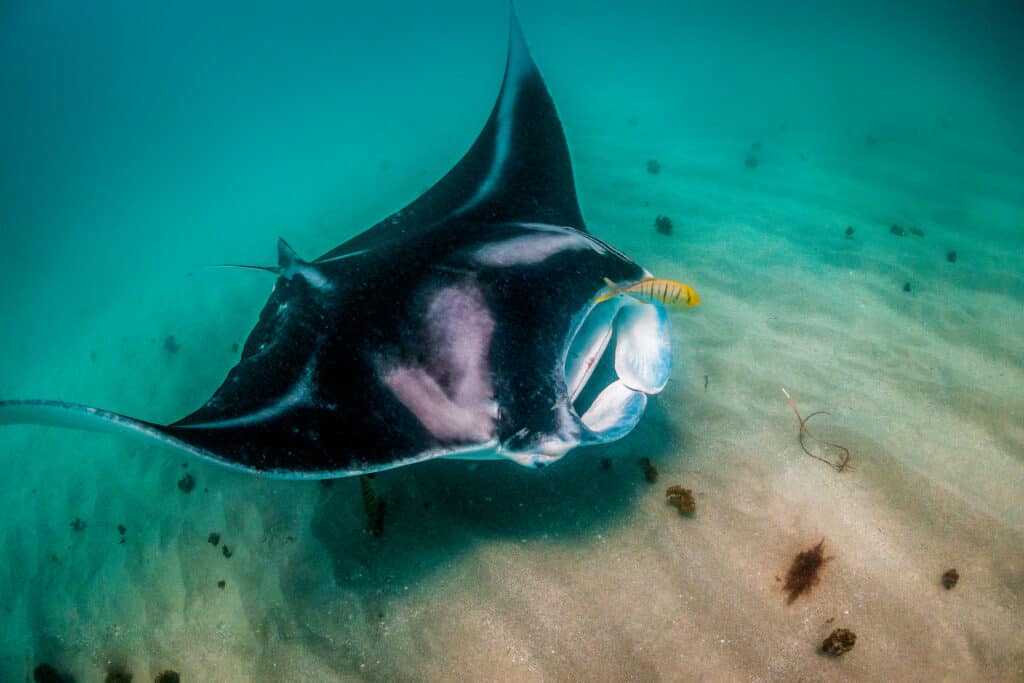
Giant manta rays have wing-like pectoral fins.
©Aaronejbull87/Shutterstock.com
These guys are the world’s largest rays. Manta rays have a very distinctive diamond-shaped body with elongated wing-like pectoral fins. Their ‘wingspan’ can reach 26 feet, which is about the length of a limousine. They can either be black with a white belly or all black with distinctive spots. These unique fish are found in tropical, sub-tropical, and temperate waters all over the world. You’re most likely to see them offshore in productive coastal areas. They’ve also been spotted in estuaries, inlets, and bays. When it comes to depths, they have been seen in shallow waters; however, they can also dive down to 3000 feet.
These manta rays move around the oceans following plankton. They spend most of their time alone, but will gather in groups for cleaning, feeding, and mating. Their diet is mainly made up of plankton, including. euphausiids, copepods, mysids, decapod larvae, and shrimp. However, they will also sometimes eat smaller fish. When feeding, they hold their fins in an O shape and open their mouth wide so that water and prey are pushed through their mouths. Sometimes, they even do somersaults and create a feeding train with other mantas to get the best mouthful of prey!
Great White Shark (Carcharodon carcharias)
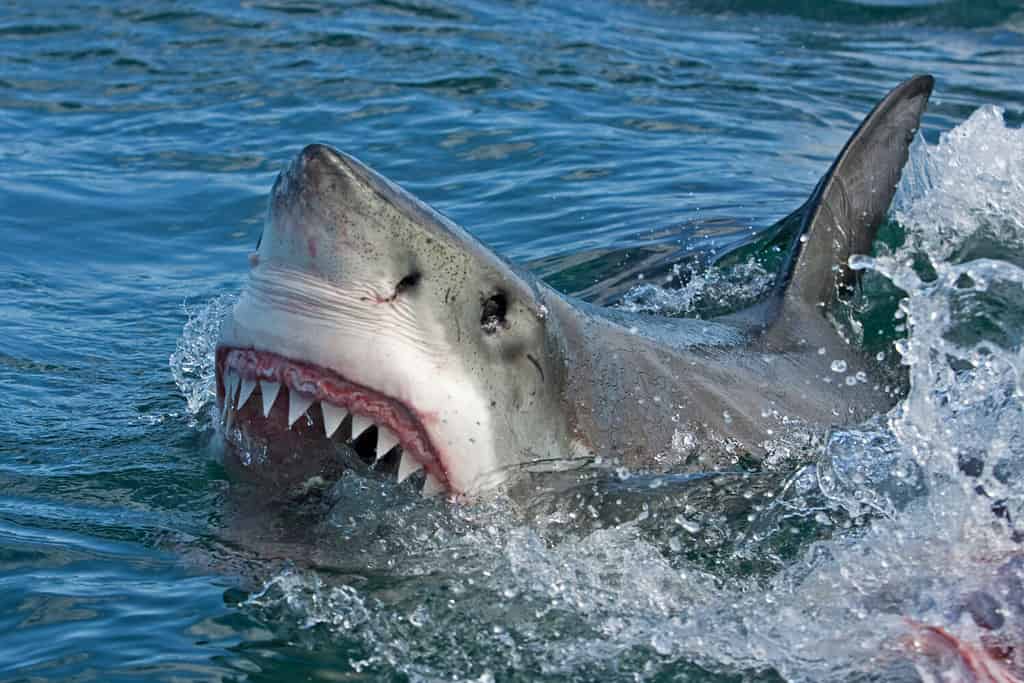
Great white sharks can reach 21 feet long.
©Martin Prochazkacz/Shutterstock.com
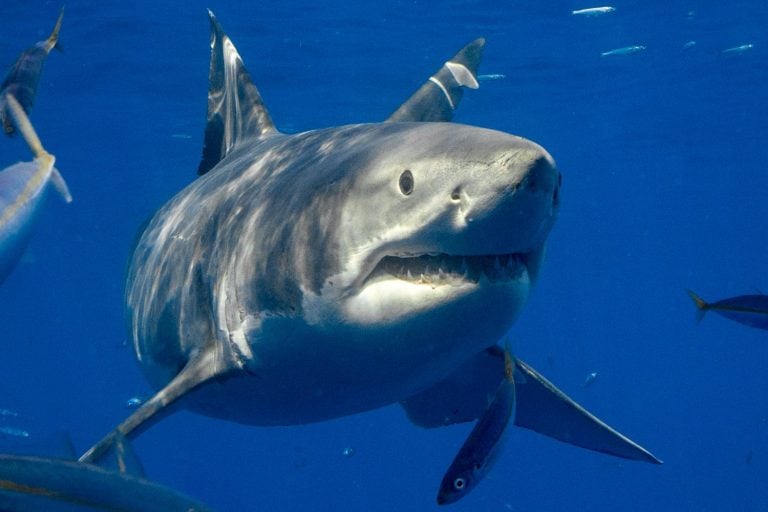
The infamous great white shark is probably the sea creature that humans fear the most. Typical great whites are between 11 and 16 feet long, but a female given the name ‘Deep Blue’ was estimated to be up to 21 feet long. That’s around the height of an adult giraffe. Females are generally larger than males. These sharks have a streamlined body with a pointed snout. They can be dark or light grey with a white belly. Perhaps their most significant feature is their teeth, which are replaced throughout their lifetime.
Great whites have a large geographic range in all cold temperate and tropical coastal waters. Primarily, they occupy coastal and offshore insular and continental shelves. They have been found at depths of 6,000 feet, all the way up to the surface. Adults feed on seals, sea lions, dolphins, turtles, and sea birds. They often attack by swimming vertically at prey from deeper water. Great whites also feed on whale carcasses. As they are at the top of the food chain, only killer whales, humans, and other great white sharks can kill them.
Greenland Shark (Somniosus microcephalus)
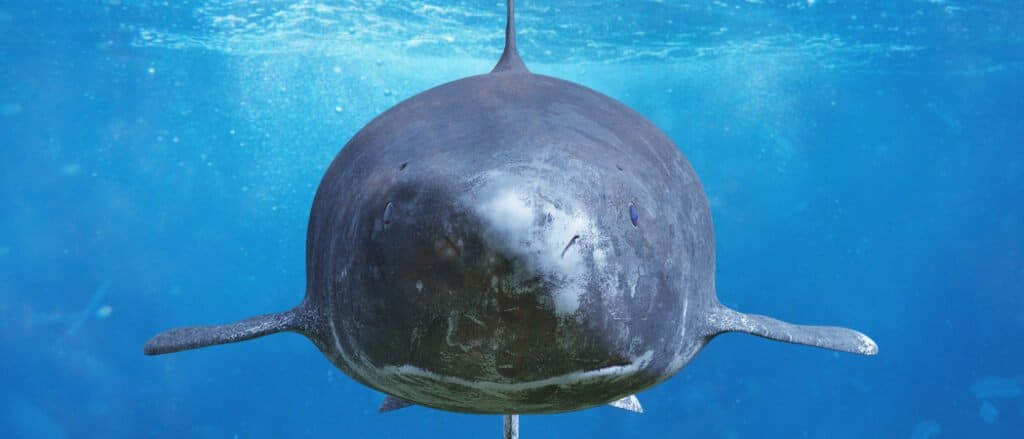
Greenland sharks can live for hundreds of years.
©Dotted Yeti/Shutterstock.com
As fish go, Greenland sharks are sluggish creatures and are the largest sharks found in the Arctic Ocean. Their average length is 6.5 feet to 13 feet, but the largest ever recorded was 21 feet long. That’s the same as a standard shipping container. They are medium grey or brown, with a heavy, cylindrical body and a short snout.
One of the most remarkable things about these fish is that they can live for hundreds of years. Their range covers the North Atlantic, from the coast of New England and Canada to Scandinavian waters. That said, one has been spotted at the mouth of the Seine River in France! The diet of Greenland sharks is made up mainly of fish (including herring, salmon, and smelt), seals, small whales, and bodies of land mammals that have fallen in the sea (carrion). They have no known predators.
Tiger/Leopard Shark (Galeocerdo cuvier)
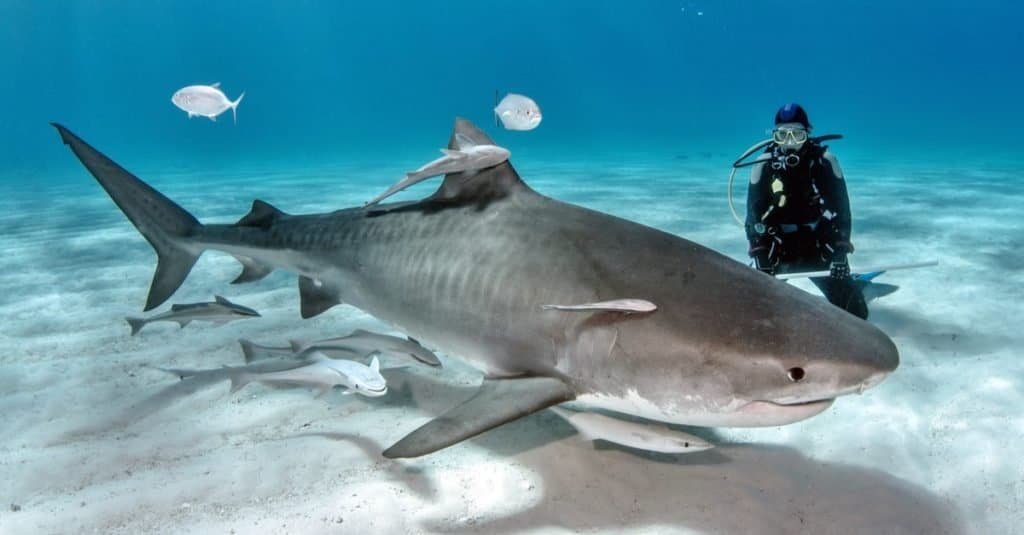
Tiger sharks live in coastal areas.
©Tomas Kotouc/Shutterstock.com
Most tiger sharks reach around 12 feet in length, but in 2018, divers encountered ‘Kamakai’, a female who measured around 18 feet and was bigger than the boat that the divers had used for their expedition! Young sharks have tiger-like stripes, but these fade as they get older. Adults are blue or green with a light yellow or white underbelly. They are found in many subtropical and tropical waters, primarily from 45 degrees North to 32 degrees South. Their preferred habitats are seagrass ecosystems in coastal areas, and they spend about a third of their time in shallow coastal waters.
Tiger sharks have powerful, serrated teeth and feed on mollusks, crustaceans, sea turtles, as well as birds and snakes. They will also scavenge on dead whales and go for several weeks without feeding. They are well-camouflaged, stealthy hunters who sneak up on their prey and strike. These fish are capable of high-speed chases, but only for short distances.
Reef Manta Ray (Manta alfredi)
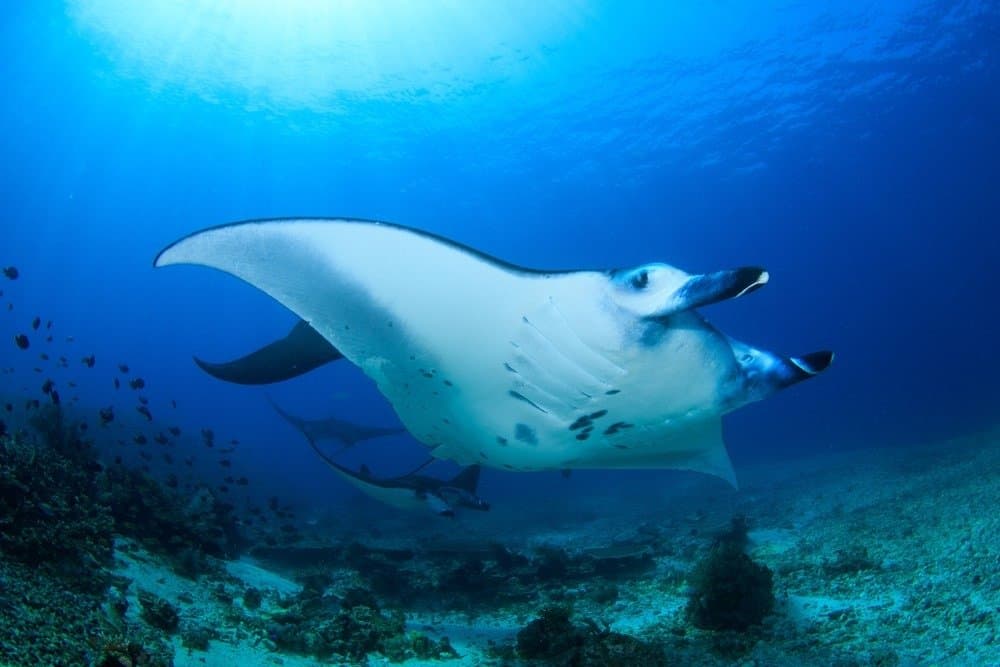
Reef manta rays have wing-like pectoral fins.
©SergeUWPhoto/Shutterstock.com
Also called Prince Alfred’s ray, these creatures have the typical manta appearance with wing-like pectoral fins and cephalic fin tips that wrap around their mouth. The largest ever recorded reef manta ray was 18.04 feet—that is around the same height as a giraffe! They have a black back with light colored patches on the shoulder region.
Their distribution primarily covers the Indian and Pacific Oceans, including coastal waters around Australia and Japan. They are also found around South Africa, Thailand, Hawaii, and in the Red Sea. Their habitats are inshore waters in tropical and subtropical latitudes. You will often spot them near coral and rocky reefs. These rays feed exclusively on zooplankton by extending their cephalic horns and filtering water through their gill slits.. They are occasionally hunted by orcas and large sharks.
Giant Sunfish (Mola alexandrine)
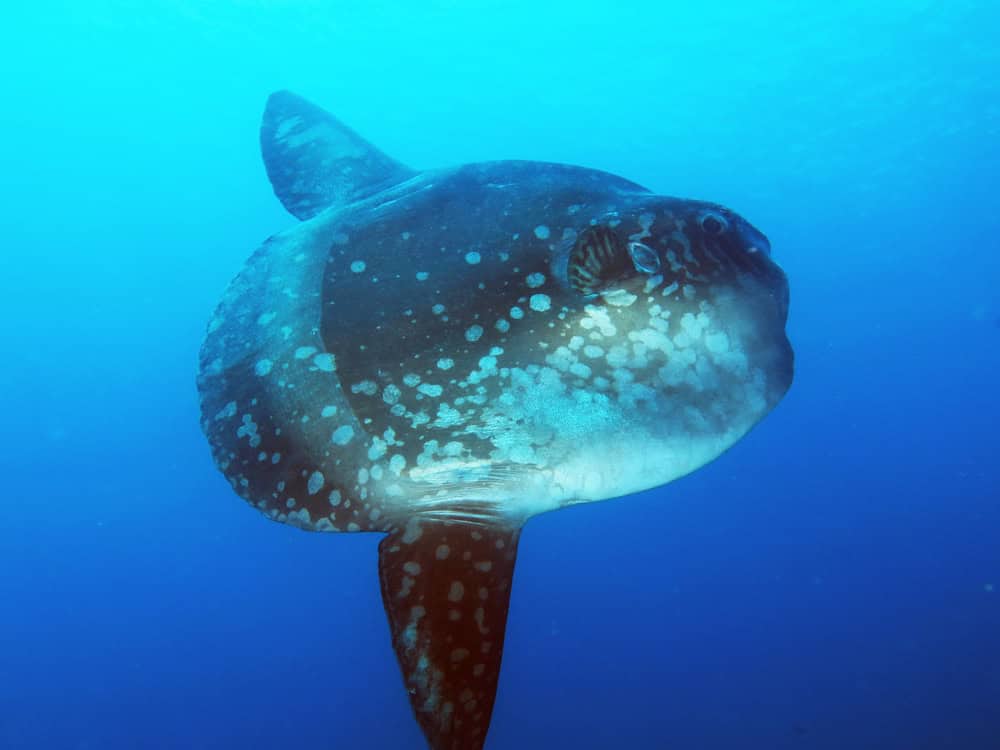
Giant sunfish are heavier than a rhino.
©Laura Dts/Shutterstock.com
One look at this extraordinary creature, and you will understand why it is also called the bumphead sunfish! The maximum size record for these giant sunfish is nearly 11 feet long. A dead Mola alexandrine found near the Azores weighed 6049 pounds, which is heavier than a rhino! Their large bodies are flattened and rounded with large fins, and they are a brownish-gray color with pale patches.
Giant sunfish are found in both temperate and tropical waters, but are not found in the polar regions. They have a seasonal migration pattern, moving north in the summer driven by temperature differences. Their preferred habitat is the open ocean, and they prefer temperatures of between 62.24°F and 78.08°F. Their diet is made up mainly of jellyfish, but these are not very nutritious, so they need to eat a lot of them. They supplement this with brittle stars, small fish, plankton, and mollusks. They are preyed on by tiger sharks and orcas, although attacks are rare.
Ocean Sunfish (Mola mola)
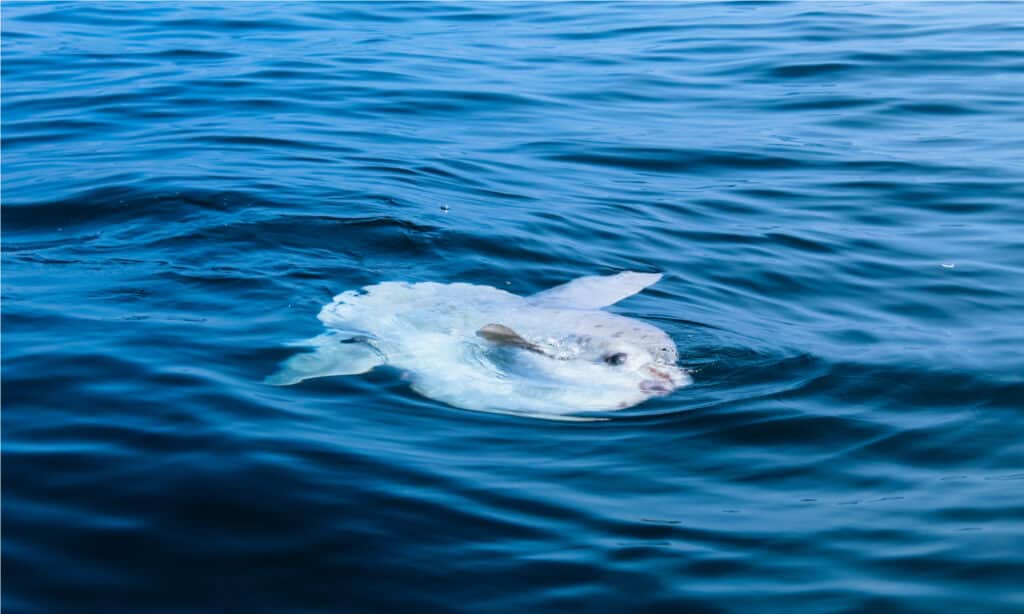
Ocean sunfish have small mouths and large eyes on their massive heads.
©Anna K Mueller/Shutterstock.com
A close relative of the giant sunfish is the ocean sunfish. This smaller fish can reach around 5,000 pounds, which is around the same weight as a Ford Expedition truck. They have the typical compressed and ovular sunfish body shape with thick rubbery skin and no caudal fin. Their backs vary in color from silvery grey to brown, and they have white bellies.
They are found in temperate and tropical regions of the Mediterranean, Atlantic, Indian, and Pacific Oceans. Here, they spend most of their time in the open ocean, but you will occasionally spot them in kelp beds and deep coral reefs, where they go to be cleaned by other fish. Their diet is mainly made up of jellyfish and gelatinous zooplankton, such as ctenophores, salps, and medusae. However, they have also been seen eating crustaceans, seaweed, and mollusks. They will dive deeper to access food sources. Given their size, it is only larger sharks and California sea lions can prey on them, although they are also occasionally caught by humans.
Hoodwinker Sunfish (Mola tecta)
Another close relative of the ocean sunfish, the hoodwinker sunfish, was only identified in 2015. It has a flat, almost symmetrical oval-shaped body and only measures about 8 feet in length, but weighs up to 2 tonnes! That’s about the same weight as a Ford Taurus car. Scientists have established that the hoodwinker sunfish (Mola tecta) lives primarily in the temperate waters of the southern hemisphere, including areas off New Zealand, Australia, South Africa, and southern Chile. It may also live in the northern hemisphere. These fish eat salps and nektonic siphonophores, but we do not know their predators.