
Quick Take
- At least one fish on this list does not live in a traditional tank, and it might be the most stunning white fish of all. See why koi can't be tanked →
- Many people are housing one of these fish completely wrong, and they don't even realize it's suffering. Find out the goldfish truth →
- One white fish on this list is so small it's measured in grains of rice, and it can do something most fish can't. Meet the tiny rice fish →
- White bettas exist, but owning one comes with a catch that makes them unlike almost every other fish here. See the betta's solo rule →
White fish are stunning, elegant additions to colorful or dark tanks and make great companions for more vividly colored tank mates. Some people find white fish boring, but not us! just remember that not all of these fish can be kept together. They have different tank requirements, and some of them don’t get along with other fish. Always do your research before adoption. Having a pet is a big commitment and you’re responsible for their well-being. Here are 12 beautiful white fish that will make you want a new tank.
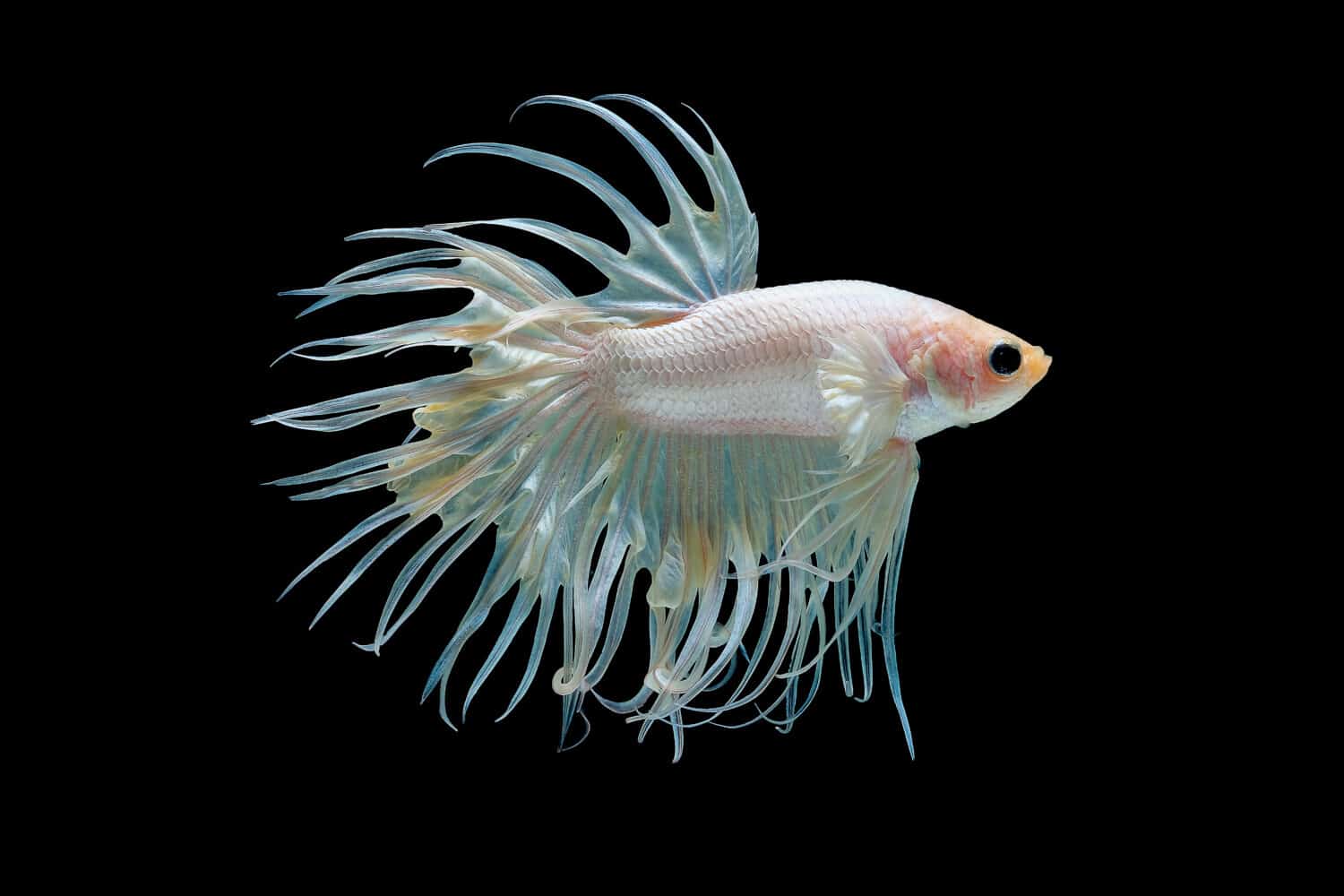
1. White Betta Fish
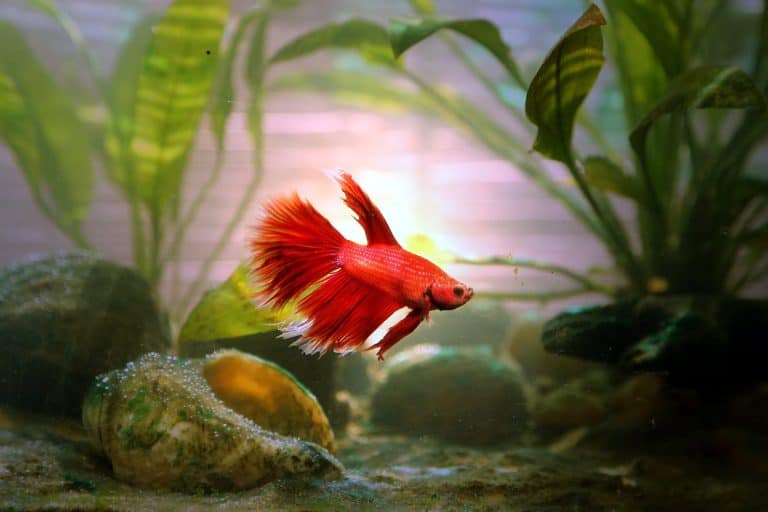
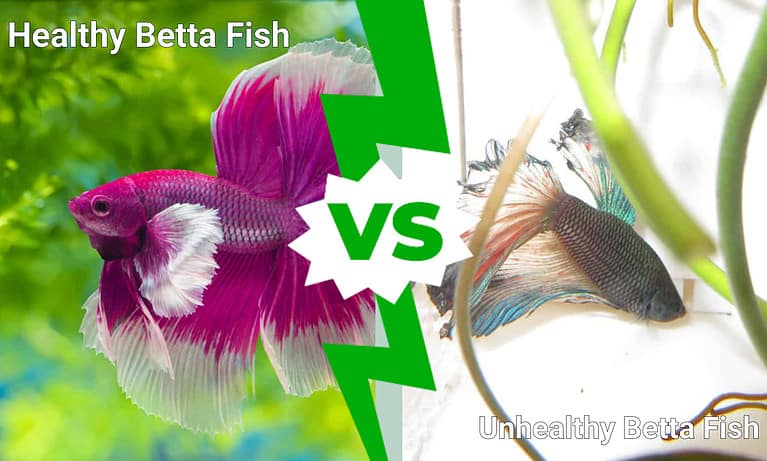
Betta fish, or Siamese fighting fish are freshwater fish endemic to Southeast Asia. These fish are bred in many colors. While white bettas are rare, they’re stunning to look at. As their nickname suggests, bettas are aggressive fish. They don’t do well with tank mates and are best raised alone in a tank of at least 5 gallons. Betta fish typically reach 2.5-3 inches in length.
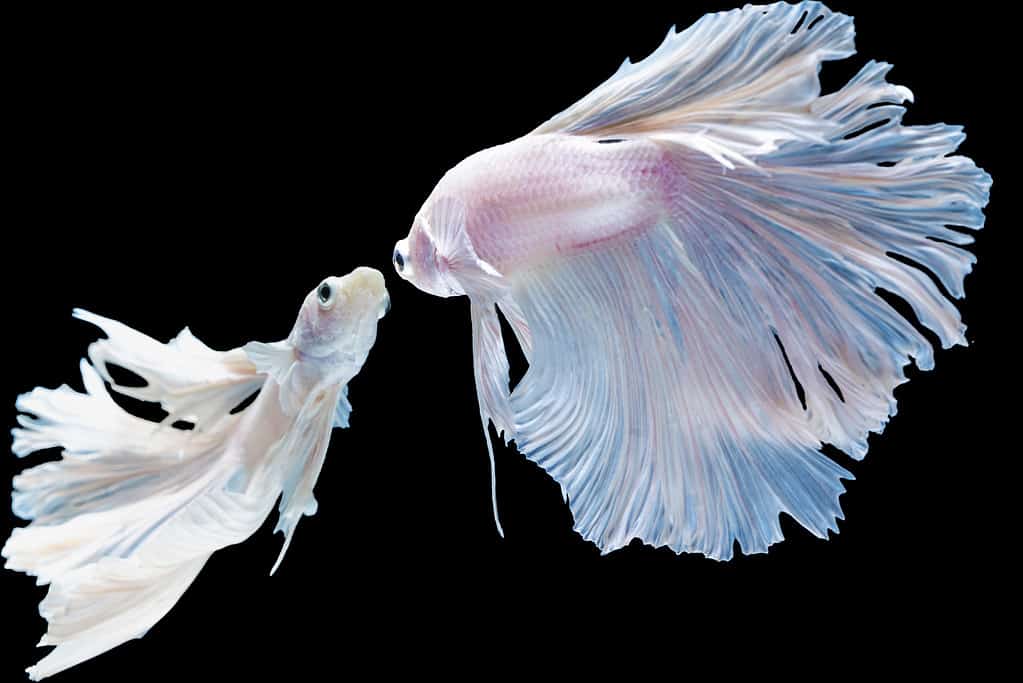
Bettas do not do well with tank mates, as they are aggressive. Breeding them is best left to the experts.
©iStock.com/kaew6566
2. Guppy
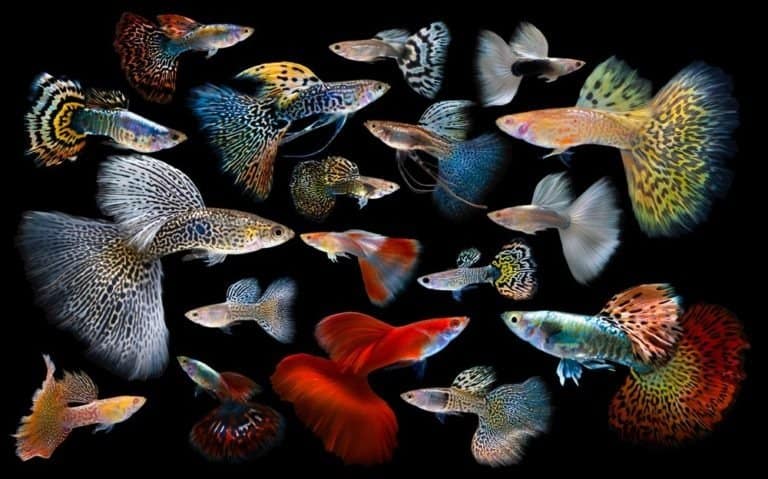
Guppies are very popular and easy-to-care-for fish. Maxing out at around 2.4 inches, they are small, social fish that like to live with other guppies. Experts recommend keeping two female guppies for every male guppy, as the males can sometimes harass the females. Guppies have been bred in captivity for many years, so there are many varieties to choose from when adopting them as pets. Yin yang and platinum white are two to consider. Yin yang guppies get their name because they can be black or white, and complement each other nicely.
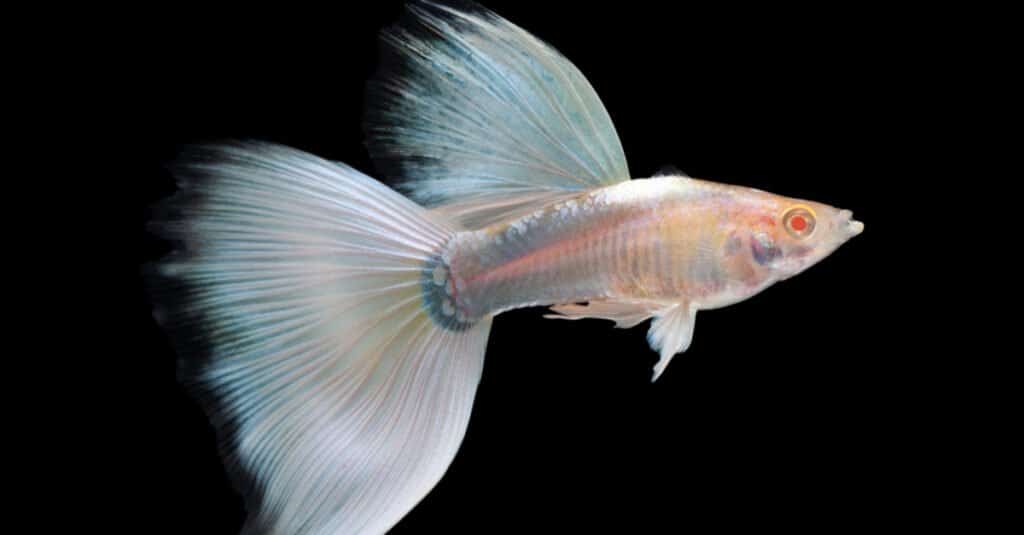
Guppies have an incredible amount of variety in their appearance.
©panpilai paipa/Shutterstock.com
3. Dwarf Gourami
Dwarf gouramis are typically vivid blue, red, or orange in color. However, there are pale white varieties as well. These fish tend to have hints of red or blue in their scales, which is a nice addition if you don’t want a plain white fish. They are schooling fish, and socializing is extremely important to them. Never keep fewer than six in one tank. These fish typically grow to between 2 and 3.5 inches in length. Purchase at least a 10-gallon tank and add five gallons for every additional fish.
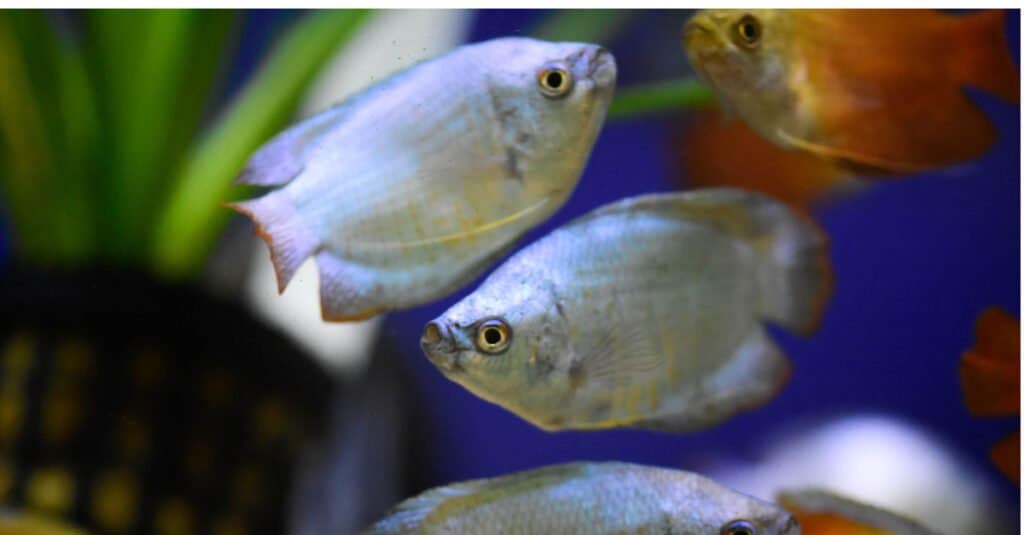
Dwarf gouramis can appear in pale white varieties.
©Andrej Jakubik/Shutterstock.com
4. Swordtail
White swordtails, like the Kohaku swordtail, are live-bearing fish with asymmetric tails. The bottom tail fins of the male swordtail are longer than the rest of their tails. These fish also come in red, orange, black, yellow, and more colors if you want to keep a variety. Because these fish are social and can reach up to 4 inches, they need a fairly large tank. We recommend at least a 10-gallon tank with a minimum of five swordtails. The male-female ratio should be 1 to 4.
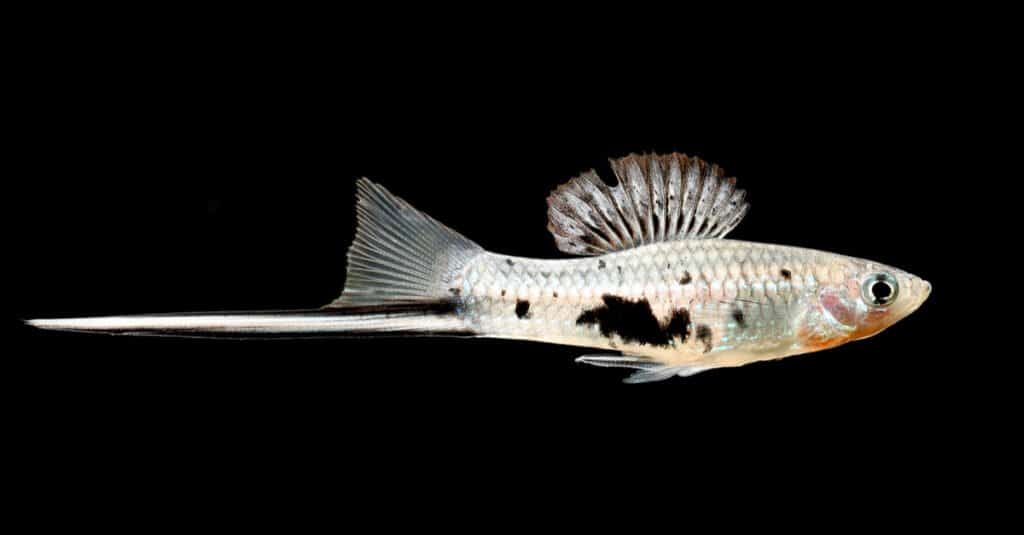
Swordtails can sometimes have vibrant white coloring.
©Dan Olsen/Shutterstock.com
5. Butterfly Koi
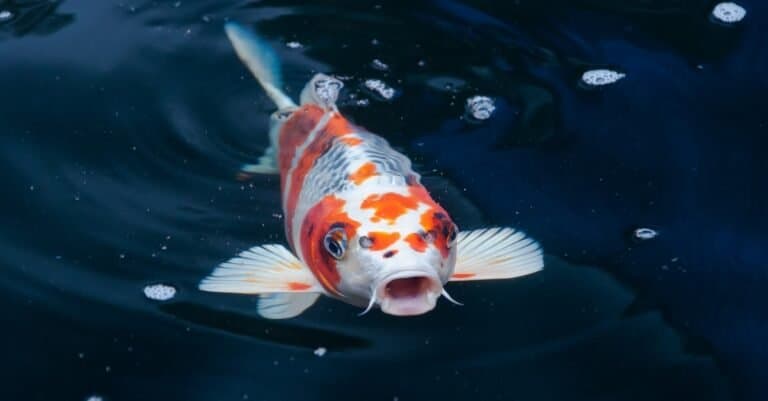
Butterfly koi are much larger than the fish listed above, reaching 2 to 3 feet in length. In fact, they’re so big that they can’t be properly kept in tanks. However, if you are looking to fill a backyard pond, these fish can be a stunning solid white color. They can also be born with a white base and pops of color throughout their scales, which is equally beautiful. As koi mature, their fins continue to grow until they are long and flowing.
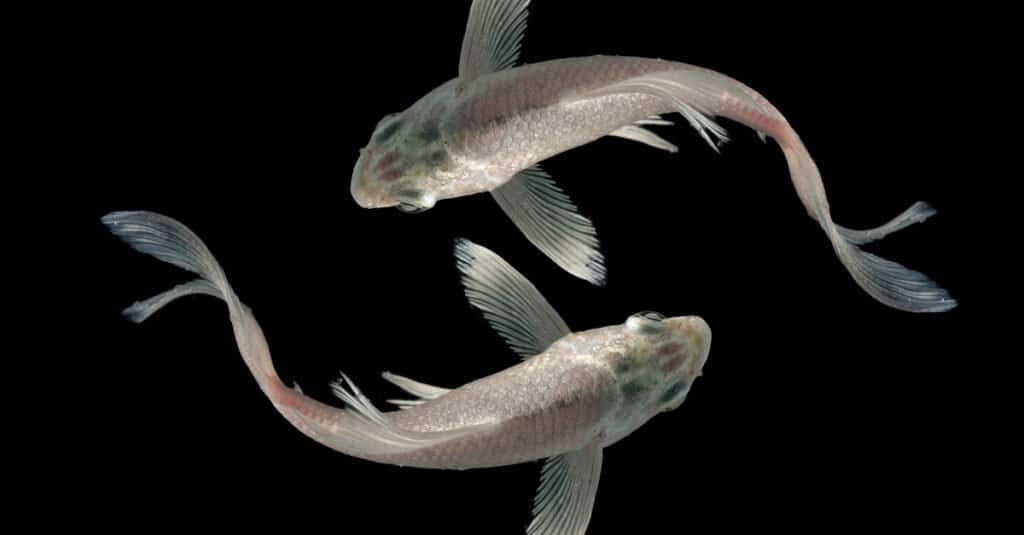
Butterfly koi can reach up to 3 feet in length.
©Dany Kurniawan/Shutterstock.com
6. Barb Fish
Barbs are another type of fish that come in a variety of colors and patterns. The tiger, zebra, and tinfoil barbs all have patterned white scales, though they aren’t completely white in color. These little fish are so active you’ll want to watch them swim all day! They’re also incredibly social, so you shouldn’t keep fewer than six in one tank. They range from less than 1 inch to 14+ inches in length depending on species, so housing these fish properly could require a 30 gallon to 55 gallon tank.
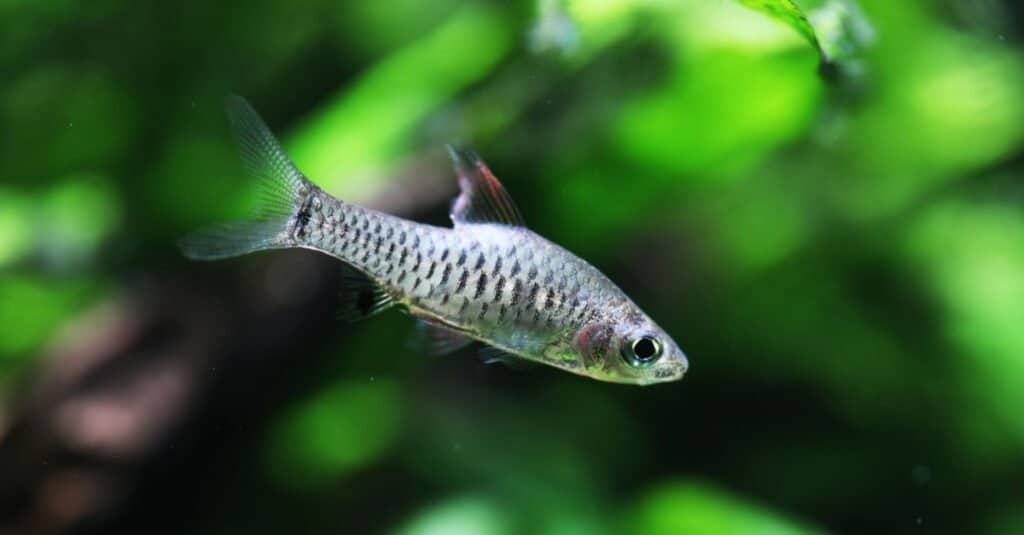
Barbs are active, social fish and can have white scales.
©Pavaphon Supanantananont/Shutterstock.com
7. Angelfish
Angelfish have unique, triangular bodies and tails with flowing fins. These fish can be either plain white or white patterned. You can’t go wrong with either, since the patterned angelfish have the prettiest black and yellow markings. Angelfish are a big commitment, though, since you’ll need at least five to six fish in one tank to keep them happy. Since they are large — measuring 4–6 inches in length and up to 10 inches in height — at least a 20-30 gallon tank is required for a single fish or a pair. Angelfish should only be kept with larger, docile fish if you have the tank space for them all. They are prone to aggression and may eat smaller fish.
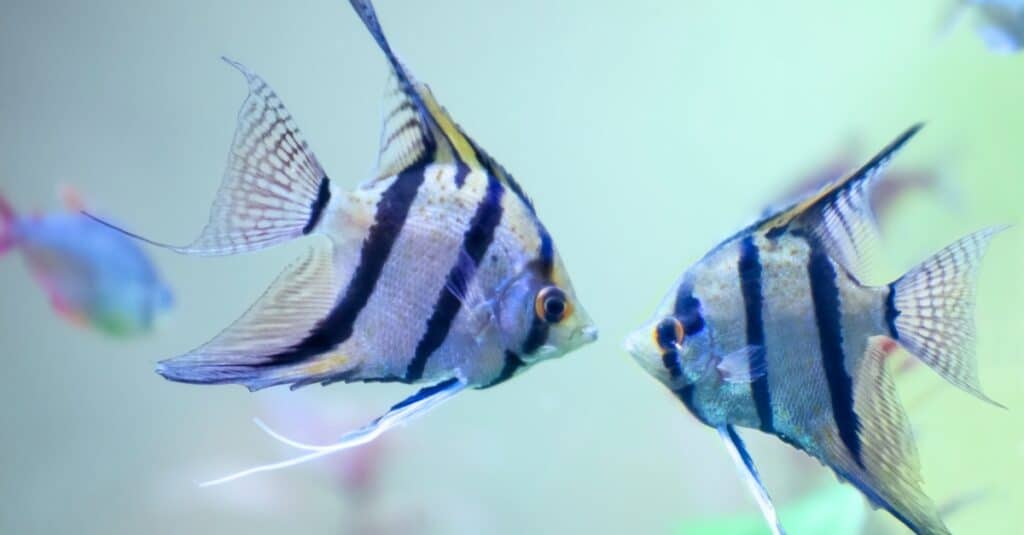
Angelfish vary dramatically in color, but some can be plain white or white patterned.
©iStock.com/TatianaMironenko
8. Medaka Rice Fish
Medaka rice fish, or Japanese rice fish, are quite small, growing to about 1.4 inches in length. As their name suggests, they only reach about the size of seven grains of rice lined up side-by-side. They can be white patterned or even transparent, allowing you to see their internal structures. These small fish swim in schools and must be kept in groups of six or more. Their tank should be 10 gallons or larger.
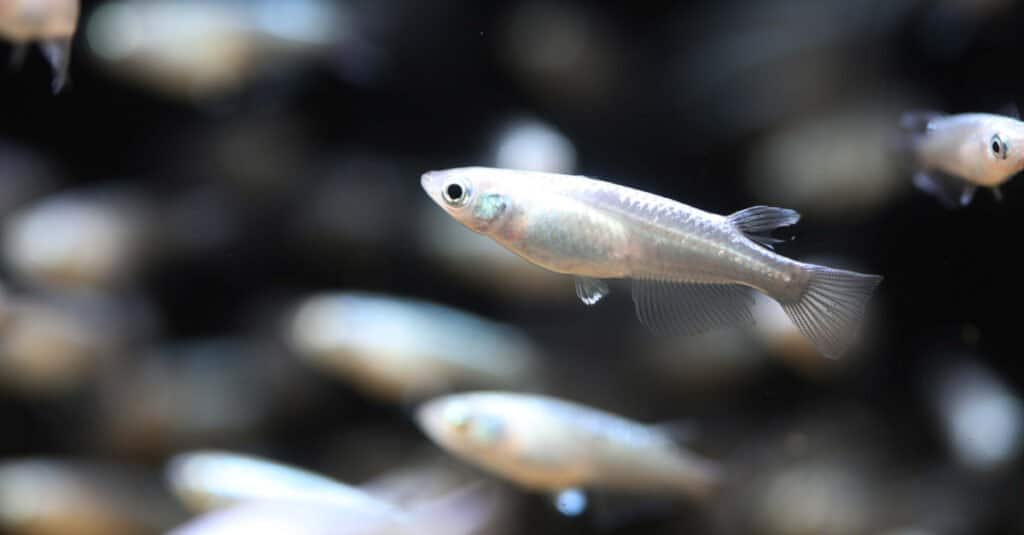
Medaka rice fish should be kept in groups.
©Pavaphon Supanantananont/Shutterstock.com
9. Cory Catfish
Cory catfish help to keep the bottom of your tank clean, and they look great while doing it! White varieties are usually patterned, except for albino cory catfish. These fish grow 1-3 inches long, which is small for catfish, and they have whiskers, or barbels, near their mouths. They must be kept in groups of six or more, in a tank that’s at least 20 gallons. Although these fish are docile, they should be kept with other fish of similar temperament and size. Large or aggressive tank mates could injure or kill your cories.
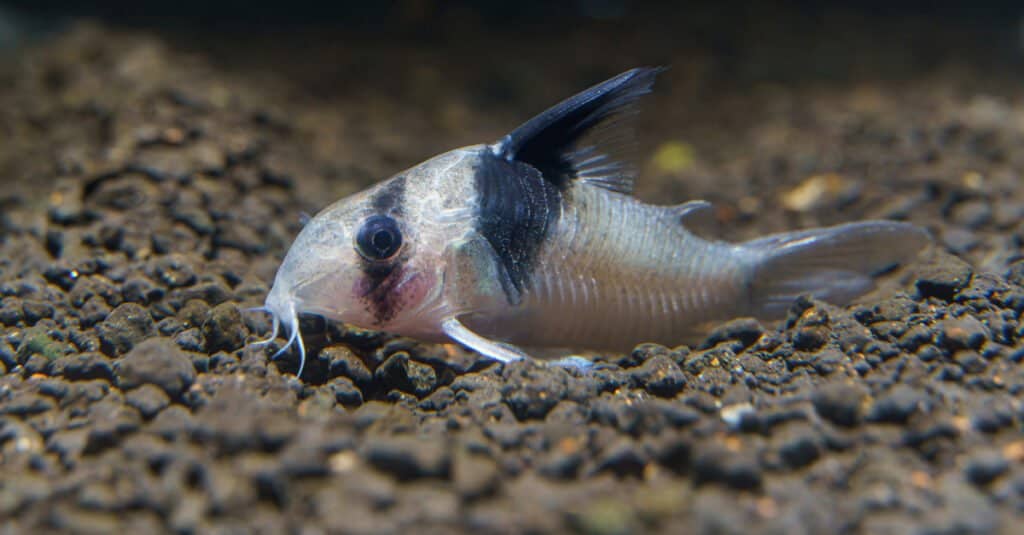
Panda cory catfish have a distinctive black and white appearance.
©chonlasub woravichan/Shutterstock.com
10. White Skirt Tetra
Tetras are another commonly bred fish with many color varieties. Look for a white skirt tetra if you’d like a white-to-transparent tetra. These social, schooling fish should be kept in groups of six or more. This allows them to interact and live happily inside of their tank. They are small fish, reaching an average of about 2 inches. At least a 20-gallon tank is recommended for housing a school of tetra. Allow more space if needed for more tetras or other tank mates.
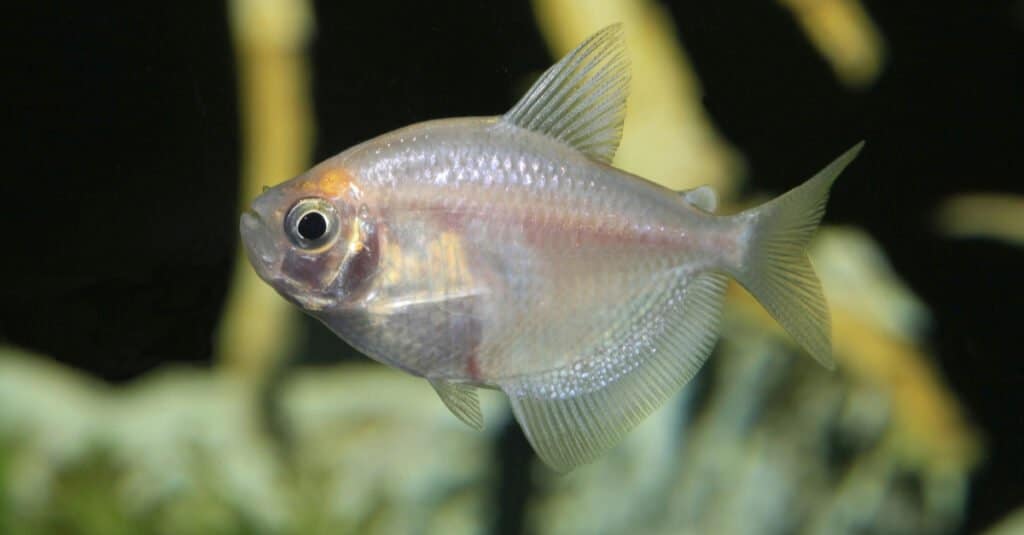
White skirt tetras average around 2 inches in length.
©Steve Bower/Shutterstock.com
11. Bristlenose Pleco
The bristlenose pleco, also known as bushy-nose pleco or bristlenose catfish, is a species of small catfish that typically grows to around 5 inches in length. They are bigger than cory catfish, and quite different in temperament as well. Bristlenose plecos are more territorial and do well as the only catfish in the tank, or when introduced to another pleco at a young age. These fish are also herbivores, meaning that they eat algae and other plant matter from your tank. They are also nocturnal, so you’ll rarely see them moving around the tank. Bristlenose plecos should be kept in a tank no smaller than 20 gallons. For more than one, increase the tank size.
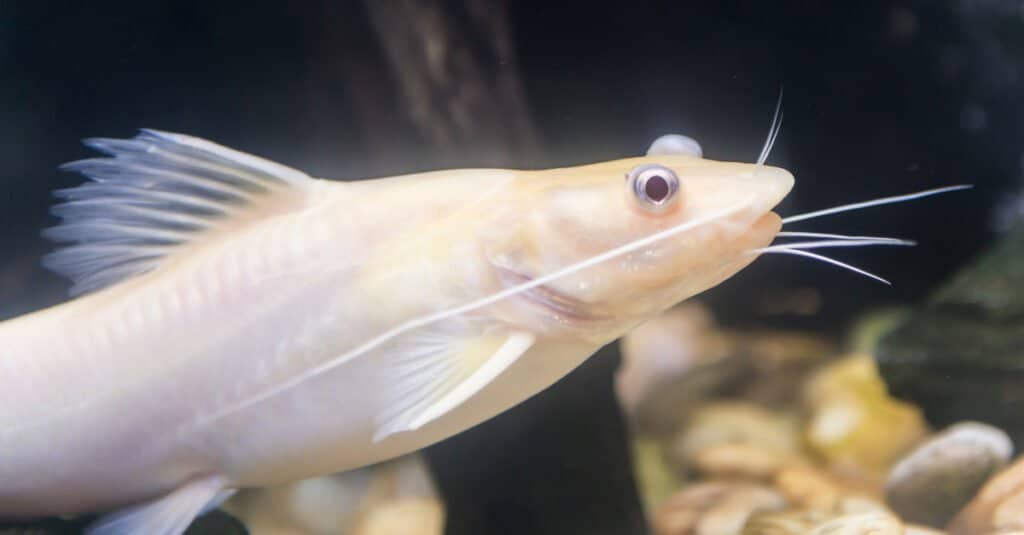
The Bristlenose pleco is a popular species among small pleco fish and can be white.
©kwanchai.c/Shutterstock.com
12. Goldfish
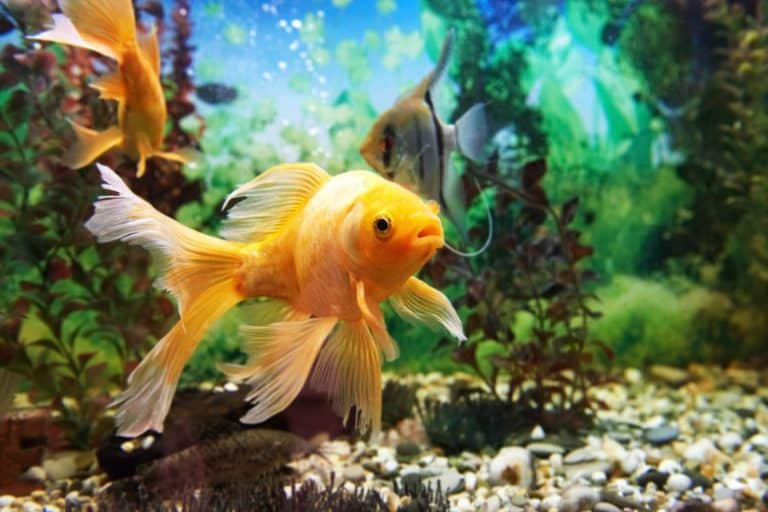
Goldfish can be entirely white. Some have a slight pink or yellow tint. There are also white goldfish with different-colored patterns on their scales. Goldfish are perhaps the most misunderstood pet out there. Many people keep them in small bowls or tanks, but this couldn’t be further from proper care. In order to adopt goldfish and care for them properly, you’ll need an outdoor pond. This is because goldfish can grow very large — up to 14 inches long!
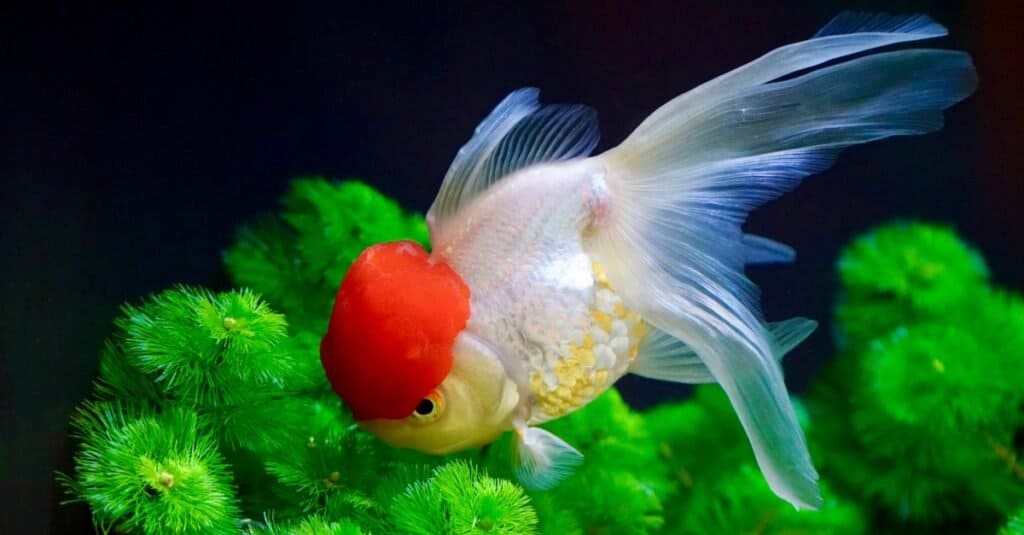
Red cap orandas are goldfish with white bodies and a distinctive reddish-orange cap.
©Wang Sing/Shutterstock.com