
Quick Take
- Arapaimas have teeth on their tongue.
- Piranha teeth are unable to penetrate the scales of this freshwater giant.
- Scientists were inspired to create lightweight body armor by studying the arapaima’s scales.
Arapaima, which are among the world’s largest freshwater fish, are native to the Amazon and Essequibo river basins in South America. They are found primarily in Brazil, Peru, Colombia, Ecuador, and Guyana, inhabiting floodplain lakes and slow-moving rivers. Their teeth are located not only on their jaws but also on their tongues and the roofs of their mouths, enabling arapaimas to crush even the most heavily armored prey. Continue reading to learn everything you need to know about arapaima teeth.

Arapaima are among the world’s largest freshwater fish.
©SergioRocha/Shutterstock.com
What Kind of Teeth Do Arapaima Have?
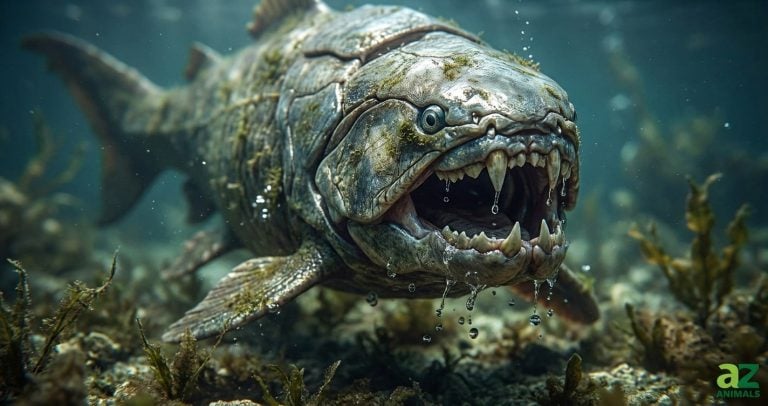
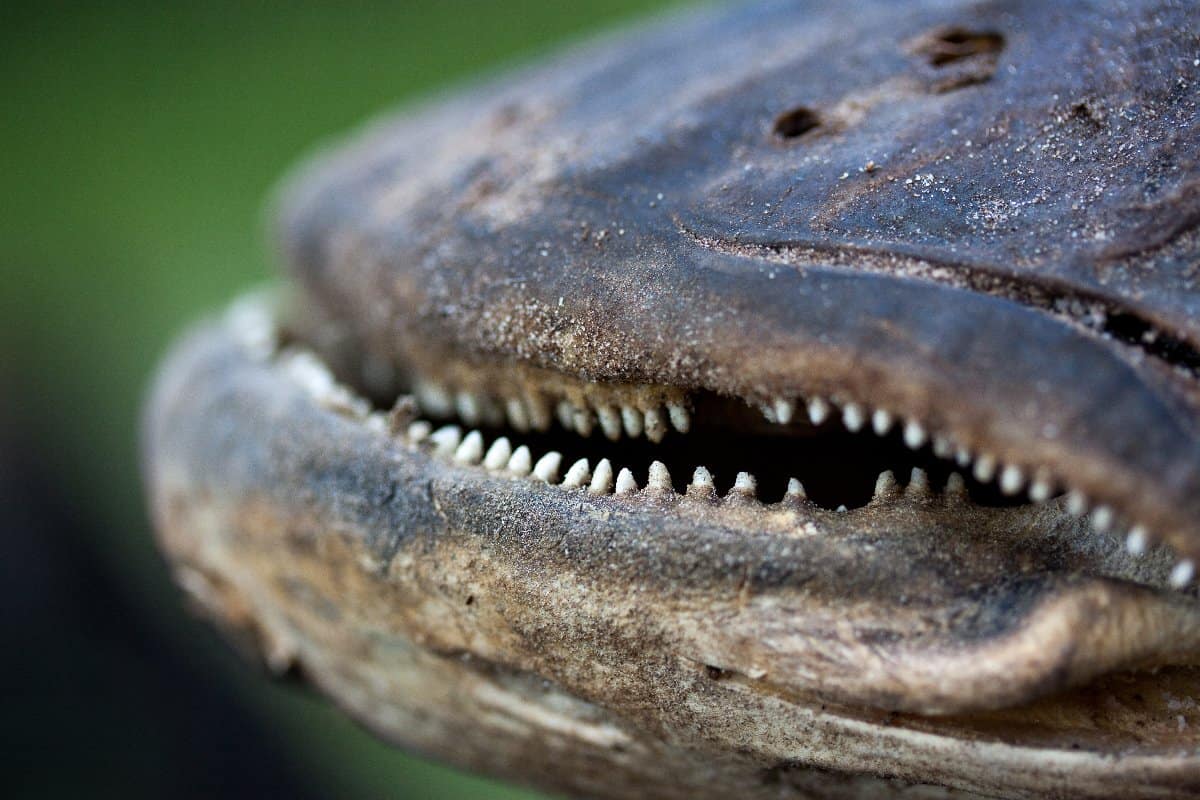
Arapaimas have cardiform, brush-like teeth lining the upper and lower jaws. These teeth are generally uniform in shape and size (homodont) and adapted for gripping prey. Arapaimas also have a tooth plate on their tongue (basibranchial tooth plate) and palatal teeth on the roof of their mouths, which help them grip and process prey in conjunction with their powerful jaws.
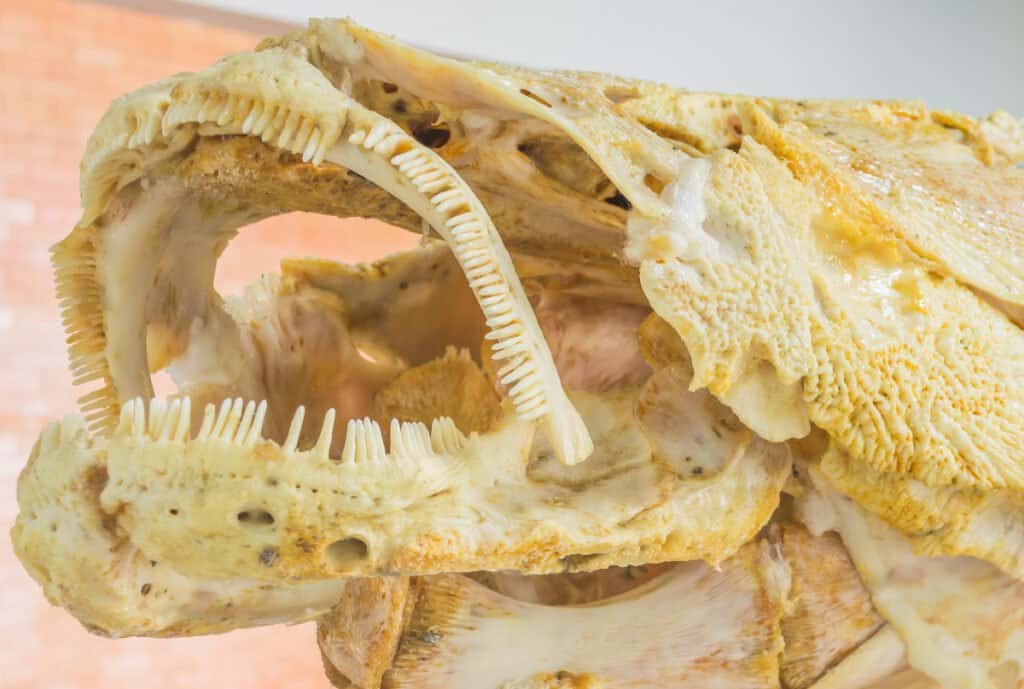
Teeth that are arranged in rows, like those of the arapaima, are called cardiform teeth.
©BLUR LIFE 1975/Shutterstock.com
Arapaimas have cardiform teeth, meaning that their teeth are arranged in rows. Arapaima have a single row of cardiform teeth in both the upper and lower jaws.
There are variations in tooth counts among arapaima populations, with a single row of 21 to 42 homodont teeth in the upper jaw and 21 to 37 teeth in the lower jaw.
The arapaima’s palatal teeth, located on the roof (palate) of its mouth, are arranged in multiple rows. These work together with the lingual teeth on the arapaima’s tongue (the basibranchial tooth plate), which are arranged in dense clusters rather than rows.
How Arapaima Use Their Teeth
Arapaimas are large predatory fish that use a powerful vacuum-suction or gulper strategy to capture their prey. They rapidly open their tooth-filled mouths, creating a vacuum that sucks in their prey, including fish, crustaceans, and surface-dwelling birds.
Arapaimas are ferocious hunters and require large amounts of food. They are primarily piscivores, preying almost exclusively on fish, although they may occasionally consume other small animals found near the water’s surface. Arapaimas have been observed leaping out of the water in short bursts to grab prey within reach, such as birds and lizards.
Do Arapaima Fish Have Armor to Protect Themselves?
Apart from their enormous size, arapaimas are tough opponents due to their armored bodies. An arapaima’s body has thick scales that even the sharp, blade-like teeth of deadly piranhas cannot penetrate. Although arapaimas live in the same freshwater habitat as piranhas, they are protected from these small fish’s attacks because their scales are strong enough to withstand an assault by a school of piranhas. The strong scales that protect arapaimas from predators have attracted the attention of researchers.
Scientists are using arapaima scales as inspiration to develop advanced, lightweight body armor that mimics their toughness, flexibility, and resistance to penetration.