
Quick Take
- The black drum must generate 11,000 Newtons of pressure to survive its specific ecological niche.
- The pharyngeal teeth create an internal anatomical obstruction that dictates the specimen’s specific feeding depth.
- It is counter-intuitive that Aplodinotus grunniens maintains predatory crushing power despite its exclusive freshwater habitat.
- Lifting the operculum is required to verify the development of these hidden secondary jaws.
While the family Sciaenidae contains between 270 and 300 species of drum fish worldwide, the vast majority are marine (saltwater) species. Only one drum fish, the freshwater drum (Aplodinotus grunniens), spends its life entirely in freshwater habitats across North and Central America from the Hudson Bay to Guatemala, east to the Appalachians, and west to Texas. Both freshwater and saltwater drums are considered sport fish, known for being strong fighters. Drum fish are edible, often compared to snapper, with a mild, sweet flavor and firm texture. Drum fish are bottom feeders with distinctively large pharyngeal (throat teeth) that look like cobblestones or molars, while some species also have pointed teeth for shredding. Continue reading to learn everything you need to know about drum fish teeth.

Red drums are carnivores with sharp teeth.
©IrinaK/Shutterstock.com
Drum Fish Teeth
Drum fish have pharyngeal (throat) teeth deep inside their throat, rendering them invisible without lifting the gill cover (operculum) and looking underneath their gills. Freshwater drum and marine drum fish possess specialized secondary jaws in the posterior (back) of their mouth. The placement of these teeth and their number are unique to various drum fish families and species.
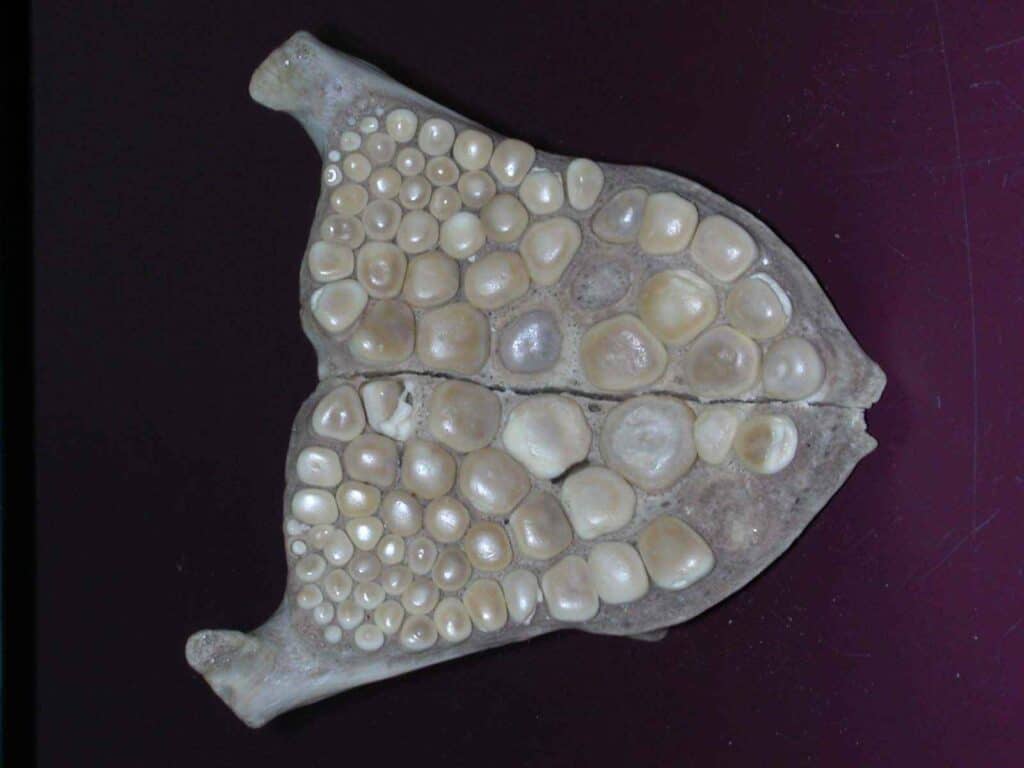
Drum fish grind and crush food with their pharyngeal teeth.
These molar-like pharyngeal teeth are used to crush and grind hard-shelled foods. Although drum fish are widely distributed, their diets are remarkably similar, consisting primarily of benthic (bottom-dwelling) invertebrates, including mussels, clams, crabs, oysters, and mollusks. These teeth are composed of a specialized two-layered design of enameloid and dentin. Their unique composition is an evolutionary adaptation that allows them to crush hard-shelled mollusks and crustaceans.
Red Drum Fish Teeth
The red drum’s (Sciaenops ocellatus) pharyngeal teeth are large, pointed, and conical. They are used for shredding and ripping their food, including small crabs, fish, shrimp, marine worms, and other invertebrates. Red drum fish are found along the U.S. Atlantic and Gulf Coasts, from Massachusetts to Mexico, in waters with sandy/muddy bottoms, seagrass, and oyster reefs, migrating seasonally and moving offshore to spawn.
Black Drum Fish Teeth
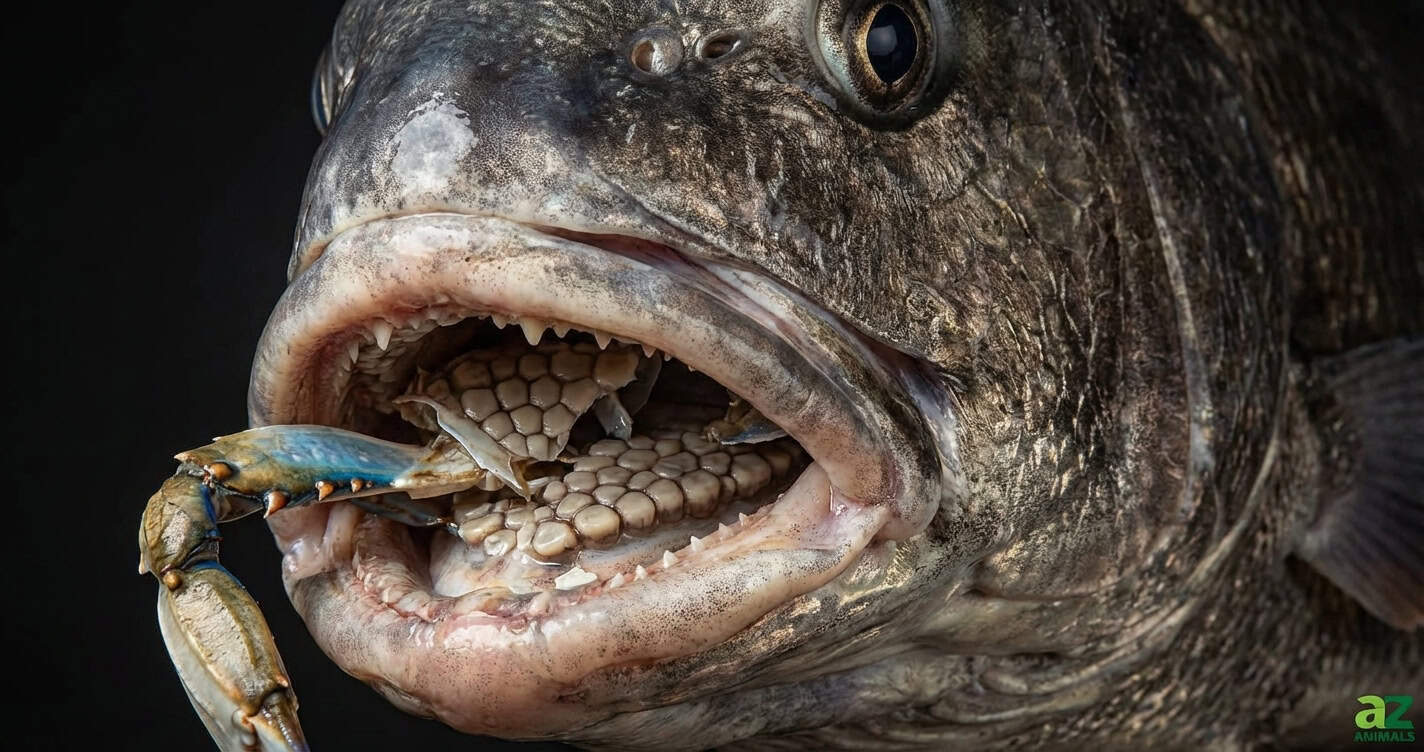
Black drum fish have molar-like pharyngeal teeth with flat crowns. However, they also have small and pointed teeth surrounding their jaws, unlike the red drum.
Along with these small, sharp teeth, they have huge, flat, molar-like teeth in their throat. These teeth are designed to provide the heavy forces needed to break open bivalve shells.
Freshwater Drum Fish Teeth
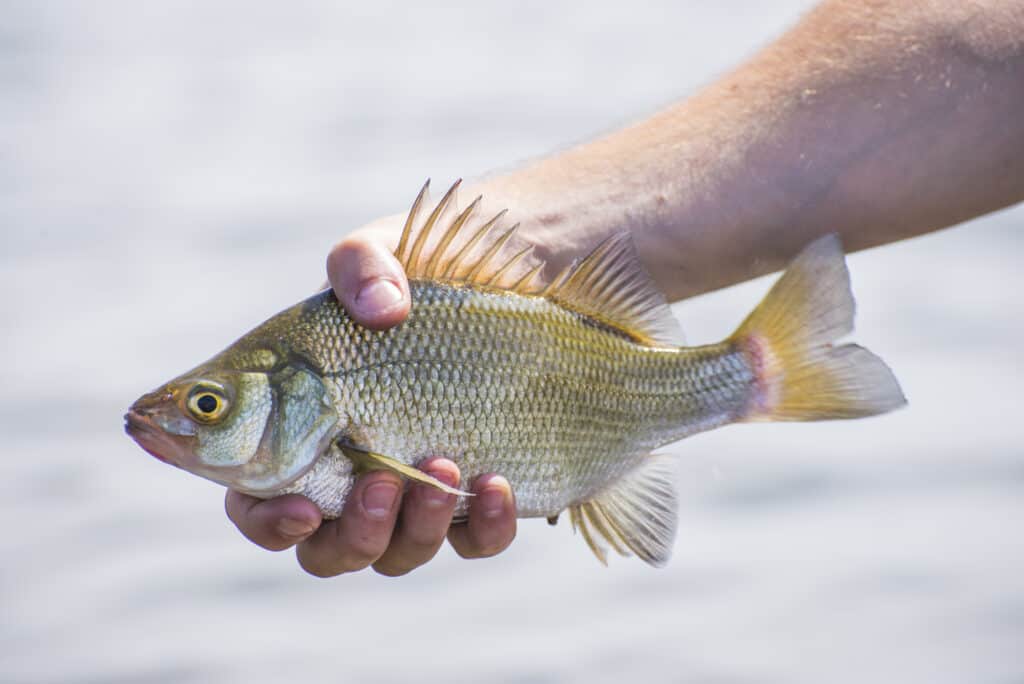
Found exclusively in freshwater habitats across North and Central America, freshwater drum fish have teeth in both their jaws and throats.
©Roxana Gonzalez/Shutterstock.com
Freshwater drums have tiny, sharp, conical cardiform teeth lining the jaws. At the back of their mouth and down their throat are similar molariform cusps that help them crush the crustaceans and snails that they eat.
How Strong is a Drum Fish Bite?
Because their diet consists primarily of hard-shelled invertebrates such as mollusks, crustaceans, and other shellfish, drum fish are expected to have a ferocious bite to be able to crush and grind these tough shells. The black drum species has been determined to have one of the strongest fish jaws in the world, exhibiting a bite force of up to 11,000 Newtons.
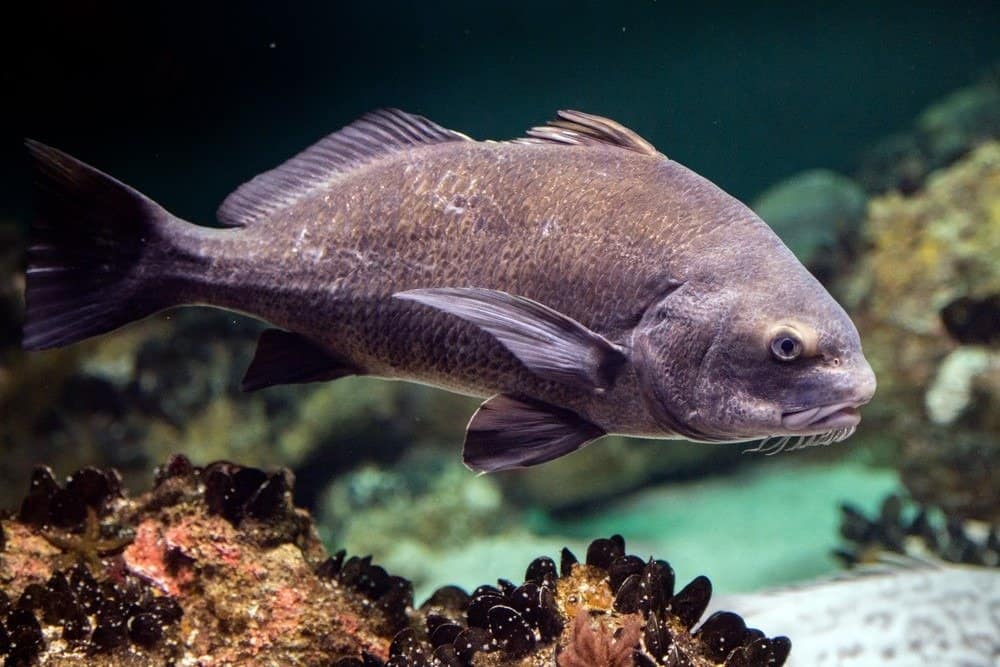
The largest black drum individuals are estimated to have a bite force of up to 11,000 Newtons, making them among the strongest biters in the fish world.
©Andrea Izzotti/Shutterstock.com