
Quick Take
- Great white sharks are not born with their iconic serrated teeth; instead, their teeth change as they grow and their diet shifts.
- Juvenile great whites have thin, needle-like teeth with small cusplets that help them grip slippery prey such as fish and squid.
- Great whites develop broader, serrated teeth when they are around three-meters long.
- Teeth vary in shape and function across the jaw, with different positions specialized for impact, gripping, and slicing during feeding.
Great white sharks have a reputation for being some of the most ferocious animals in the ocean, owing in part to their mouth full of sharp, serrated teeth. Most people believe that they are born as the perfect killing machine, with these teeth already fully formed and ready to use. However, like many animals, they are not quite the finished article at birth, as new research suggests that their teeth undergo a fascinating transformation partway through the shark’s life. Keep reading to discover exactly how great white shark teeth change to make them even deadlier!
The Difference with Juvenile Teeth
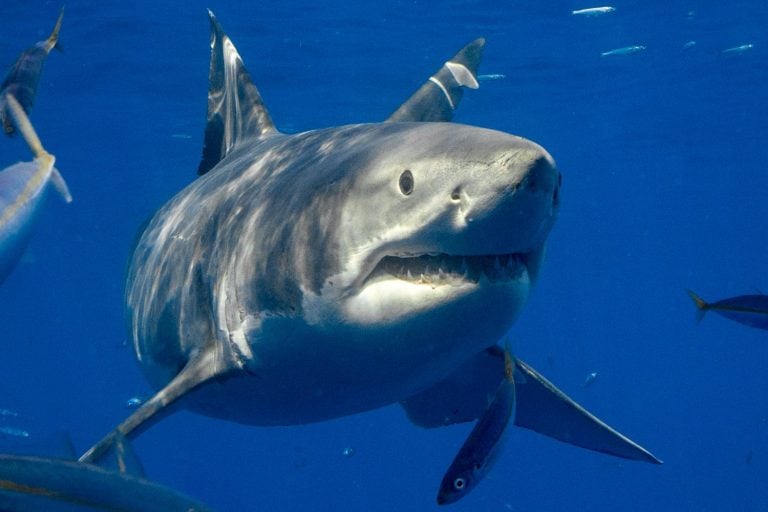
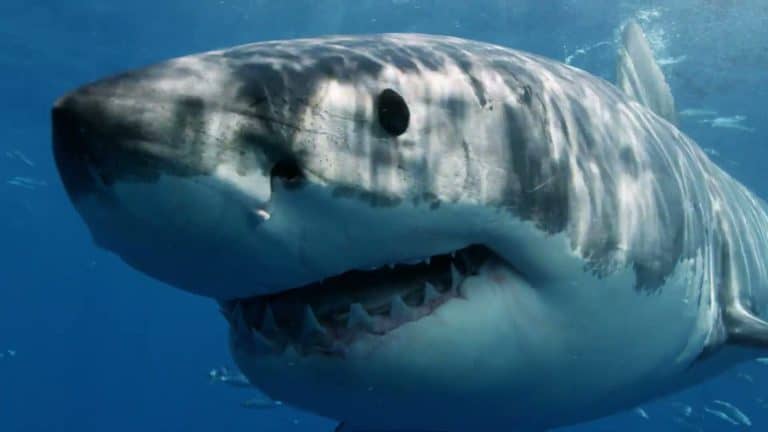
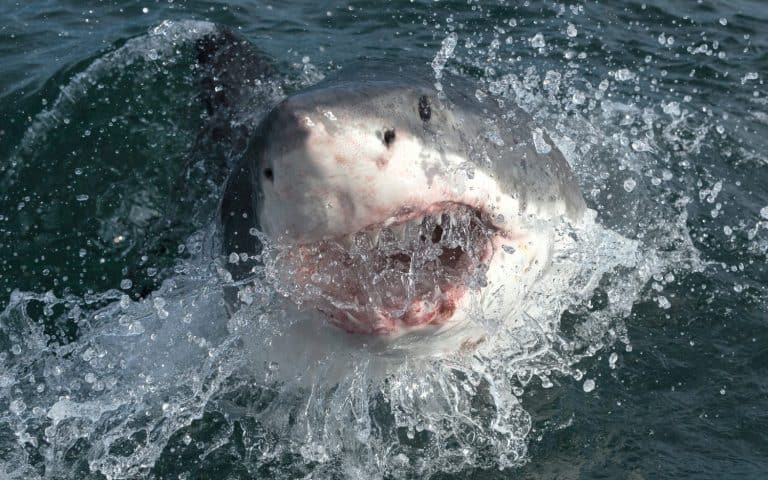
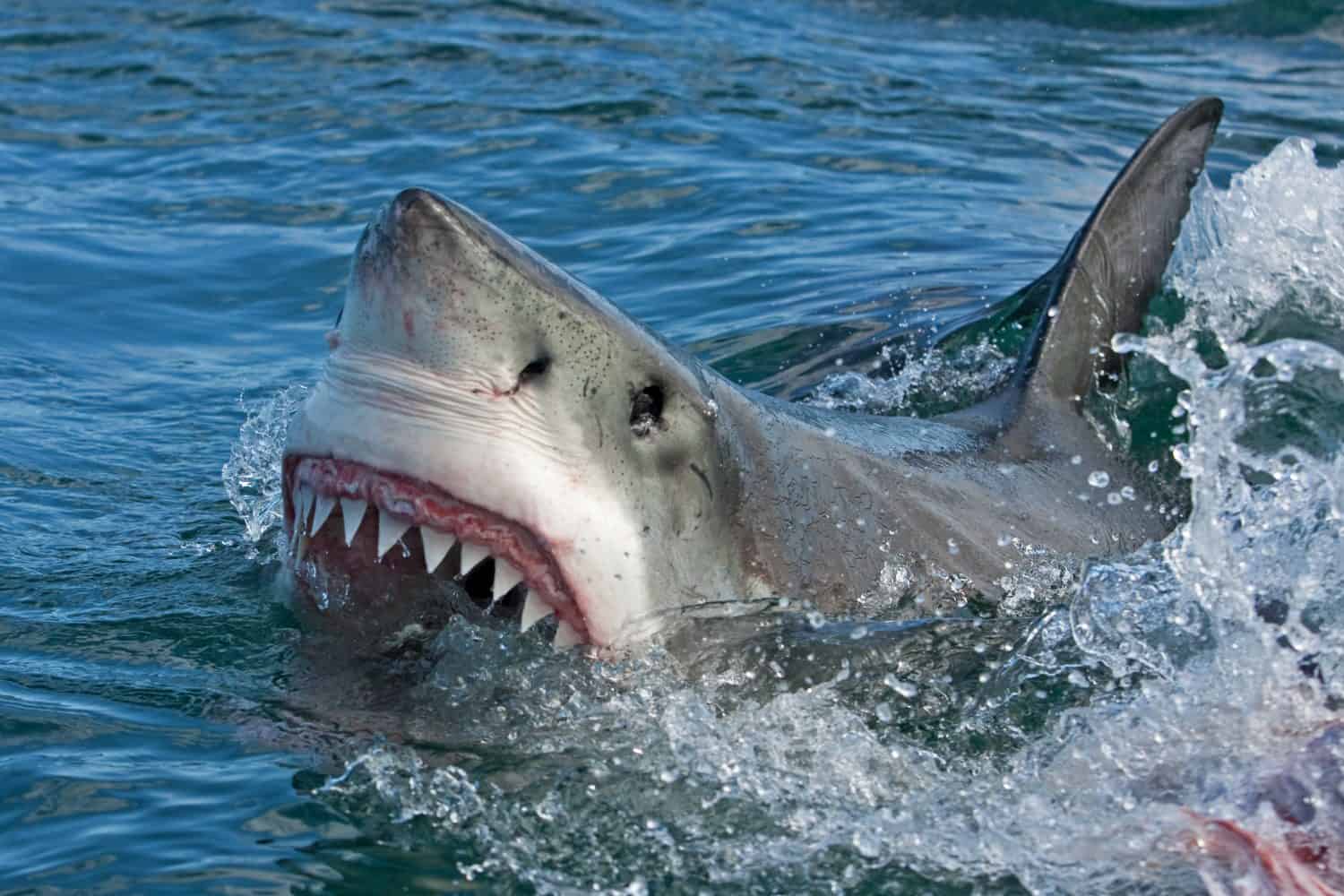
Like most animals, the type of teeth that a shark has reflects its diet. Great white sharks are famous for their triangular-shaped, serrated teeth, which they use for catching and killing large prey, such as seals and dolphins. They have up to 300 of these teeth in their mouth at any one time. They are arranged in multiple rows, with new teeth constantly moving forward to replace teeth that are broken or lost throughout the shark’s lifetime.
Great white sharks have up to 300 teeth.
©Alessandro De Maddalena/Shutterstock.com
It would be easy to assume that great whites are born with the iconic teeth that they are best known for. However, new research shows that this is not quite true. Although they can reach lengths of up to 20 feet as adults, great white sharks are just four to five feet long at birth. Due to their relatively small size, young great white sharks prey on much smaller animals than their adult counterparts.
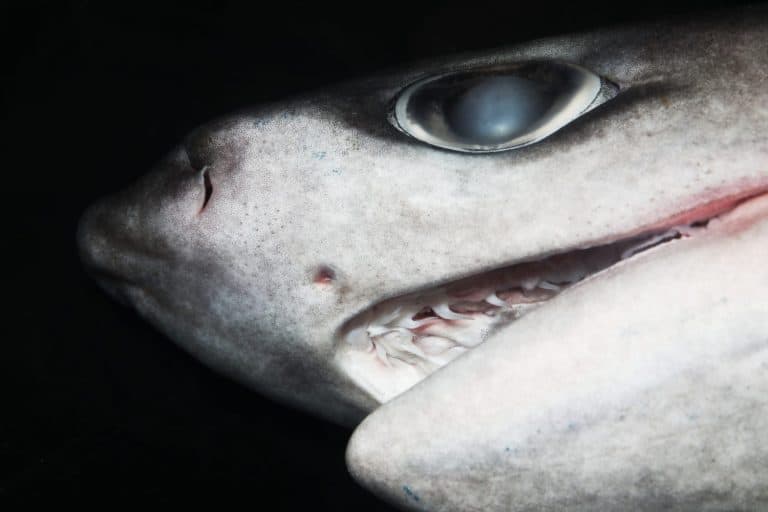
This is because they haven’t yet developed the strength or skills to tackle larger marine mammals. At this size, they mainly eat fish and squid, which are slippery and difficult to hold onto. Therefore, to accommodate this diet, juvenile great whites actually have different teeth from adults. Instead, their teeth are small and needle-like. These are similar to those of species such as mako sharks, which also eat fish and squid.
Juvenile great whites also have a useful addition to their teeth in the form of cusplets. These are small projections on the base, which help grip wriggling prey. These teeth are much more suited to a fish-based diet than their serrated adult teeth, which are used for tearing and cutting the flesh of larger mammals. This unique adaptation means that juveniles are much more likely to survive to adulthood.
The Three-Meter Change
Great white sharks grow slowly, with males not reaching sexual maturity until they are 26 years old and females taking up to 33 years. Therefore, they don’t transition from juvenile teeth to adult teeth particularly quickly. However, there is a certain point when most do – once they reach approximately three meters long. The transformation doesn’t happen overnight but occurs as great whites approach and pass the three-meter mark. At this point, fish and squid are no longer sufficient to meet the energy needs of the growing shark. Therefore, they begin to transition onto larger prey, which means that their teeth need to change to accommodate this.
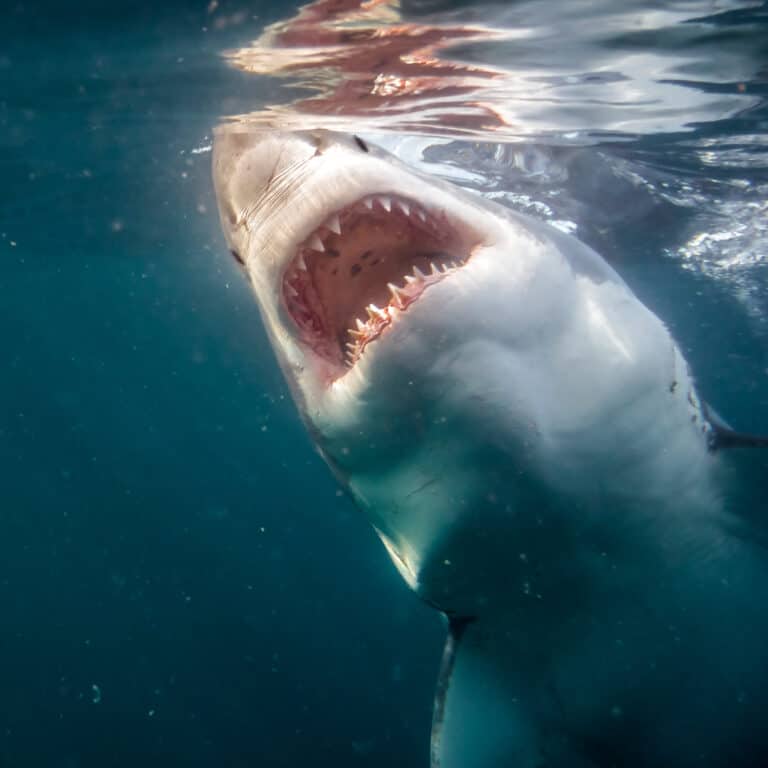
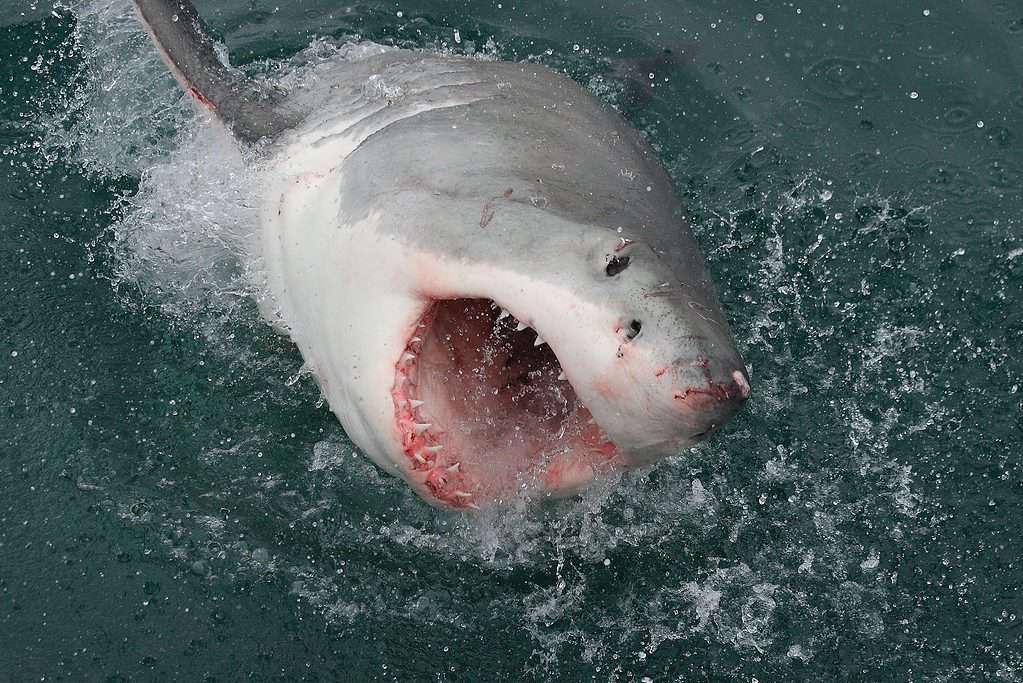
During the transformation, the cusplets that once helped the juveniles grasp small, slippery fish and squid begin to disappear from their teeth. At the same time, the teeth themselves become broader and thicker. They also develop the distinctive serrated edges that great whites are famous for. These new teeth are far better suited to slicing through flesh and fat. This means the shark can tear off a great chunk of tissue with a single bite. They are also robust enough to withstand hitting bone and wrestling with larger animals.
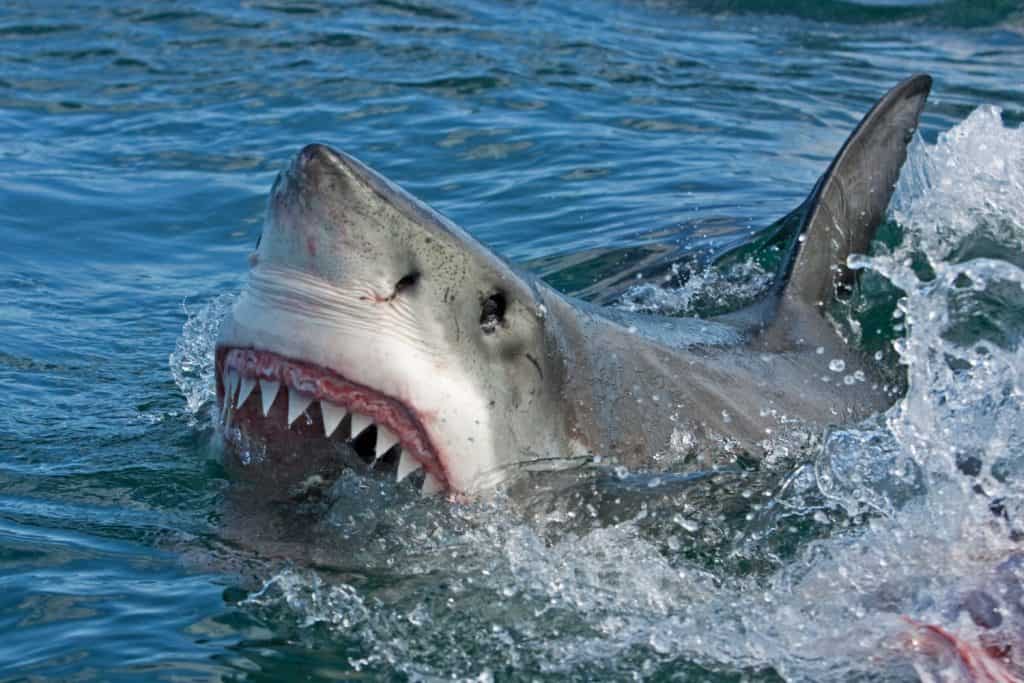
Adult great white sharks have distinctive triangular-shaped teeth with serrated edges.
©Martin Prochazkacz/Shutterstock.com
How Tooth Position Affects Function
Although great whites begin to undertake this unique tooth transformation at around three meters in length, it’s important to understand that they don’t develop a mouth full of uniform serrated teeth. Instead, their teeth differ slightly depending on their positions within the jaw. This is because each position serves a different purpose during feeding.
The four front teeth and the two on either side of them are the strongest, most robust teeth, with a thick base. This is because they are the teeth that make the first impact with the prey animal. They also usually have the greatest amount of force exhibited on them. They have clear serrations on their edges, and they are ideal for gripping, puncturing, and cutting into flesh. As the teeth move further back along the jaw, they become slightly shorter and more angled. This makes them best suited for holding onto struggling prey.
Interestingly, there are also distinctive differences between teeth in the upper and lower jaws. Lower teeth are suited for gripping and holding prey, while upper teeth are more suited for slicing and tearing flesh. This unique combination makes the shark’s mouth a highly effective tool.