
Quick Take
- Baleen is a flexible, keratin-based filtering system that allows whales to feed on massive amounts of tiny prey efficiently.
- Different baleen shapes and sizes reflect different feeding strategies, from skimming plankton to lunging at krill swarms.
- Baleen isn’t just a feeding tool; it also records a whale’s diet, movements, and life history over many years.
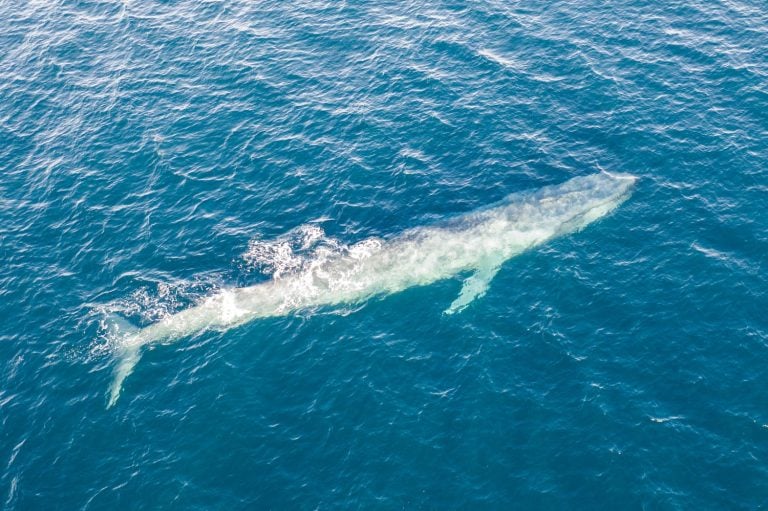
Whales are mighty. Blue whales, for example, aren’t only the largest animal on Earth, but as far as we know, they’re the largest animal that’s ever existed on Earth—and that includes dinosaurs. Considering how big they are, one would have to assume they’ve got some pretty large, pretty sharp teeth to take down the type of prey needed to sustain them, right?
Shockingly, no. Not only do blue whales not have large, sharp teeth, but they also don’t have teeth at all. Instead, there’s a strange curtain of long, fibrous plates hanging from the upper jaw, almost like oversized, bristly combs. It certainly doesn’t seem conducive to keeping a 100-foot-long, 200-ton animal fed. But it is. And then some. That structure is called baleen, and it’s one of the most unusual and effective feeding tools in the animal kingdom.
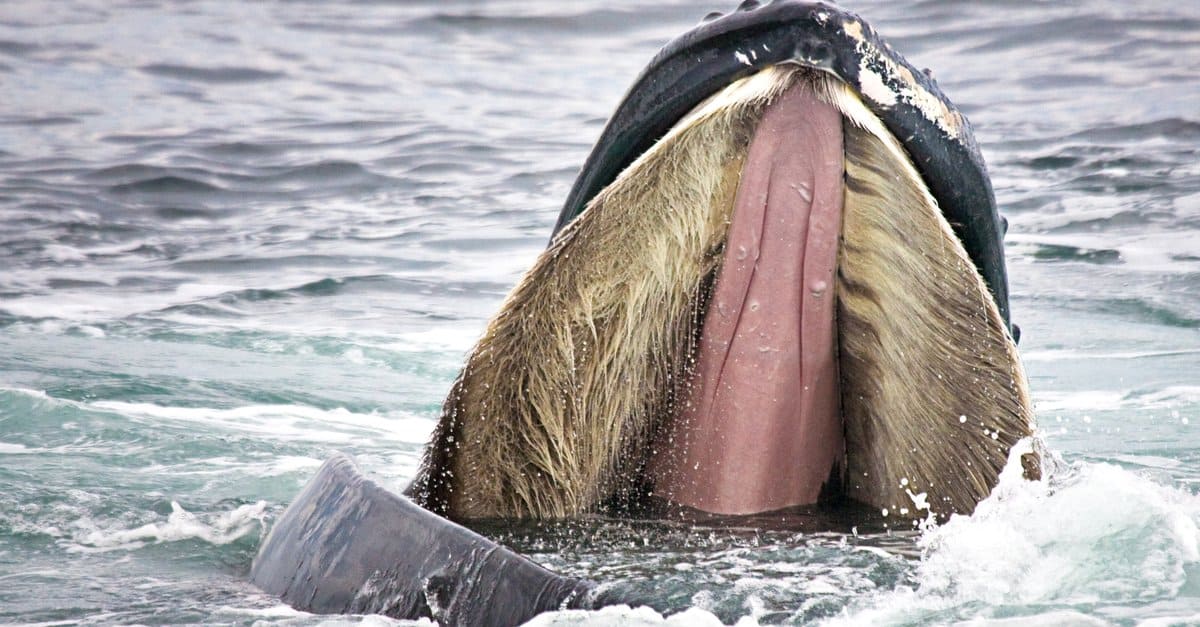
Baleen plates are made of keratin, the same protein found in human fingernails and hair.
©John Tunney/Shutterstock.com
What Exactly Is Baleen?
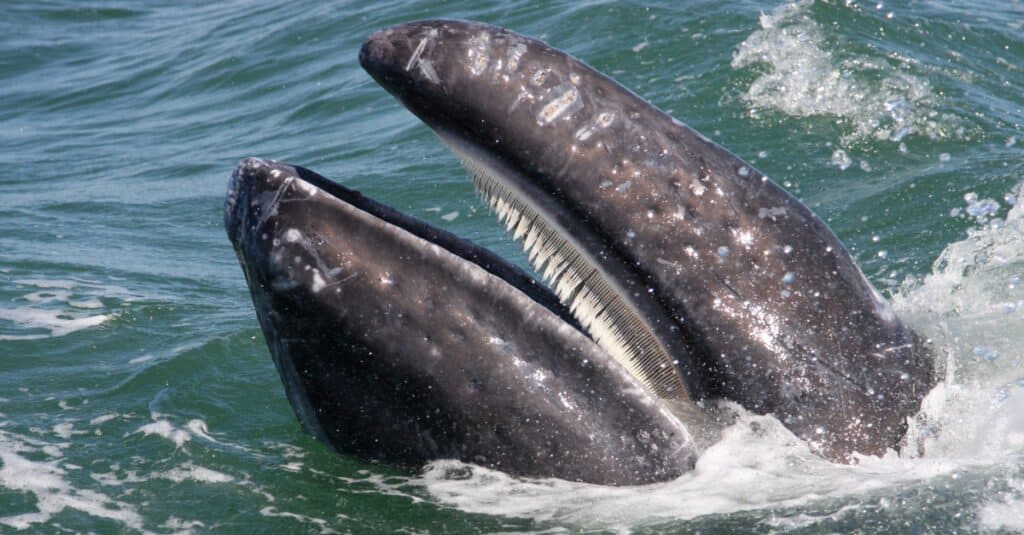
Baleen is a series of flexible plates that hang down from the upper jaw of certain whales known as baleen whales, or Mysticeti. Instead of teeth, they have hundreds of baleen plates arranged in two rows, one on each side of the mouth.
Baleen is keratin-based, and if that word sounds familiar, that’s because it’s the same protein that makes up human fingernails, hair, and the outer layer of skin. It’s tough but flexible, which makes it perfect for repeated use in filtering food without breaking apart.
Each baleen plate looks like a long, narrow slab hanging vertically from the upper jaw. The outer edge is relatively smooth, while the inner edge frays into coarse, hair-like fibers. Those fibers are the real workhorses of the system, forming a dense mesh that traps food while letting water escape.
One of the most common misconceptions about baleen is that it’s a type of tooth. It isn’t. Teeth are made primarily of dentin and enamel and are rooted in the jawbone. Baleen, by contrast, grows from the gum tissue of the upper jaw and is not embedded in bone.
Toothed whales like orcas, dolphins, and sperm whales belong to a different group called Odontoceti. They use their teeth to grab prey and often swallow it whole. Baleen whales took a very different evolutionary path. Instead of biting or tearing food, they evolved a system that lets them gather food in bulk.
Interestingly, baleen whales do have teeth at one point in their development. Whale embryos briefly form tooth buds, just like their toothed relatives. Those buds are later reabsorbed, and baleen plates develop instead. This is one of the strongest pieces of evidence that baleen whales evolved from toothed ancestors.
How Baleen Works as a Filter
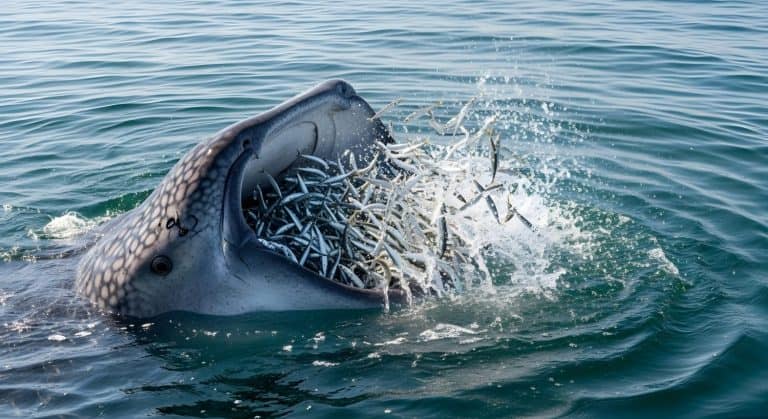
At its core, baleen is a filtration system, but the way it’s used varies by species. In general, a baleen whale takes in a huge mouthful of seawater filled with prey. The whale then closes its mouth slightly and pushes the water back out using its tongue. As the water escapes, it passes through the baleen plates. The fibrous inner edges trap food particles, not unlike a pasta strainer. The trapped food particles are then swallowed.
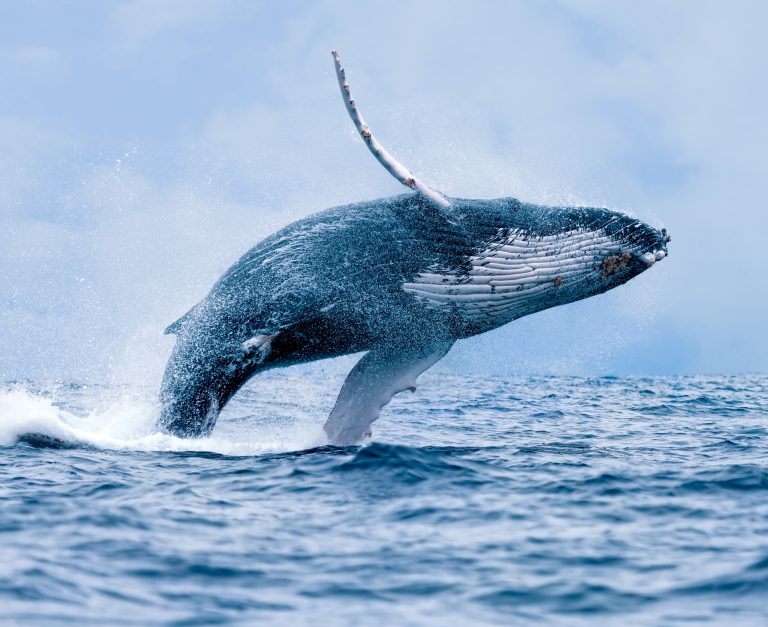
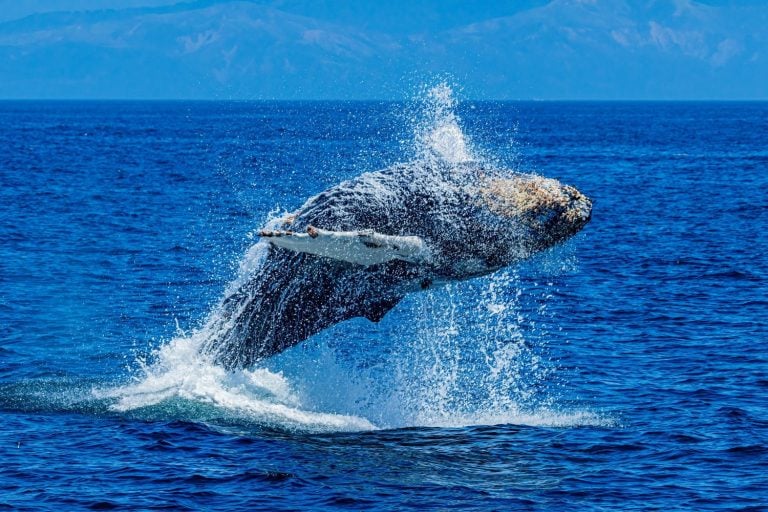
A blue whale can engulf close to 12,000 gallons of water in a single gulp, which is about as much water as it takes to fill your typical above-ground swimming pool. After filtering it, the whale might end up with just a few pounds of krill, but that’s enough to make the effort worthwhile when repeated dozens of times a day.
A single blue whale gulp can take in about 12,000 gallons of seawater before filtering out krill.
©Sharlyn/Shutterstock.com
Different feeding strategies rely on baleen in different ways:
- Skim feeders like right whales swim slowly with their mouths open, continuously filtering water.
- Lunge feeders like humpback and blue whales charge into dense prey patches, then filter the water afterward.
- Bottom feeders like gray whales scoop up sediment and filter out small crustaceans living on the seafloor.
In every case, baleen acts like a giant sieve that’s perfectly tuned to the whale’s preferred prey size.
How Big Do Baleen Plates Get?
The size of baleen plates varies depending on the species, but some are truly enormous. In blue whales, individual baleen plates can reach lengths of up to 3 feet. Right whales, which specialize in filtering tiny plankton, also have exceptionally long baleen plates, often over 8 feet from top to bottom. These long plates create an extremely fine filtering surface, ideal for capturing small prey.
On the smaller end, minke whales have much shorter baleen plates, often under a foot long. Their baleen is also coarser, reflecting their diet of larger prey like small fish and larger crustaceans. The spacing between plates matters just as much as length. Whales that feed on very small organisms have tightly packed baleen with dense fringes, while whales that target larger prey have wider spacing and stiffer fibers.
What Does Baleen Feel Like?
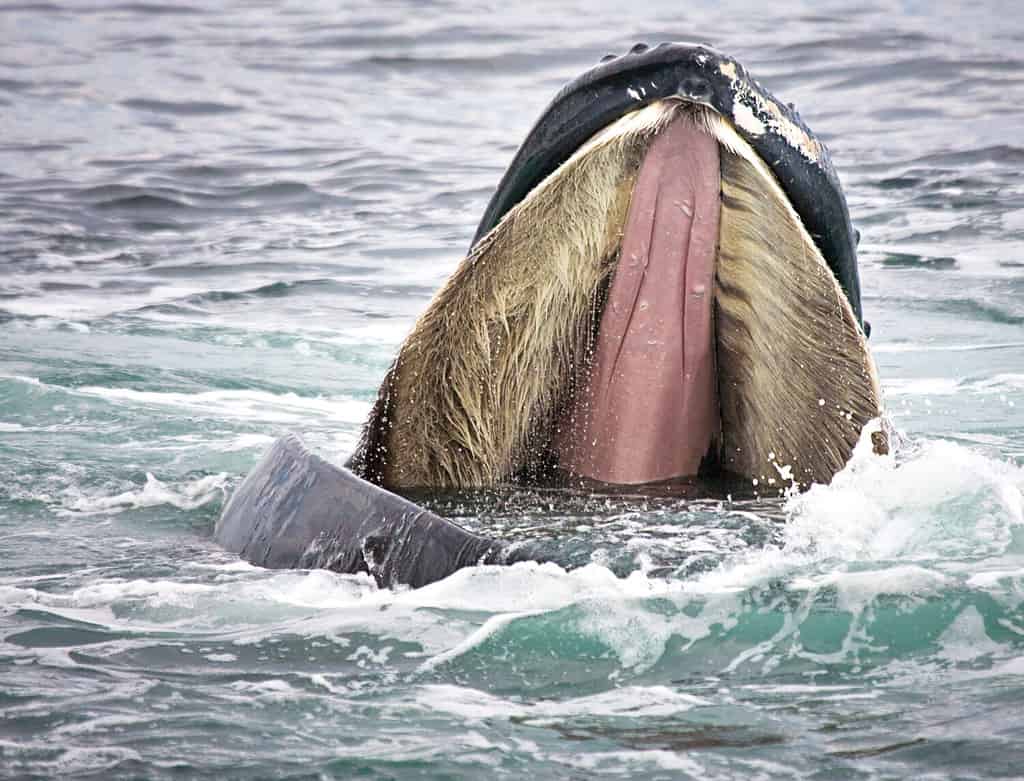
Baleen isn’t hard like bone. In fact, it’s surprisingly flexible. If you could safely touch a baleen plate, it would feel somewhat like a thick, slightly rubbery fingernail. When wet, baleen becomes even more pliable. That flexibility helps prevent damage as water rushes past it and prey presses against it. It also reduces the risk of plates snapping under pressure, which would be a serious problem for an animal that depends on baleen to eat. Over time, baleen wears down at the bottom and grows continuously from the top, much like human nails or animal claws. This constant growth balances out daily wear and tear.
Despite its size, baleen is flexible and slightly rubbery, especially when wet.
©jo Crebbin/Shutterstock.com
Historical Human Use of Baleen
Before plastic became widespread, baleen was very valuable to humans. It was often referred to as “whalebone,” even though it isn’t bone at all. Baleen was used to make corset stays, umbrella ribs, buggy whips, fishing rods, and even early typewriter springs. Its combination of strength and flexibility made it ideal for products that needed to bend without breaking.
The demand for baleen contributed to the intense hunting of whales in the 18th and 19th centuries. Thankfully, modern materials have replaced baleen in manufacturing, and many baleen whale species are now protected by international agreements, though the level of protection varies by species and region.
Baleen as a Scientific Time Capsule
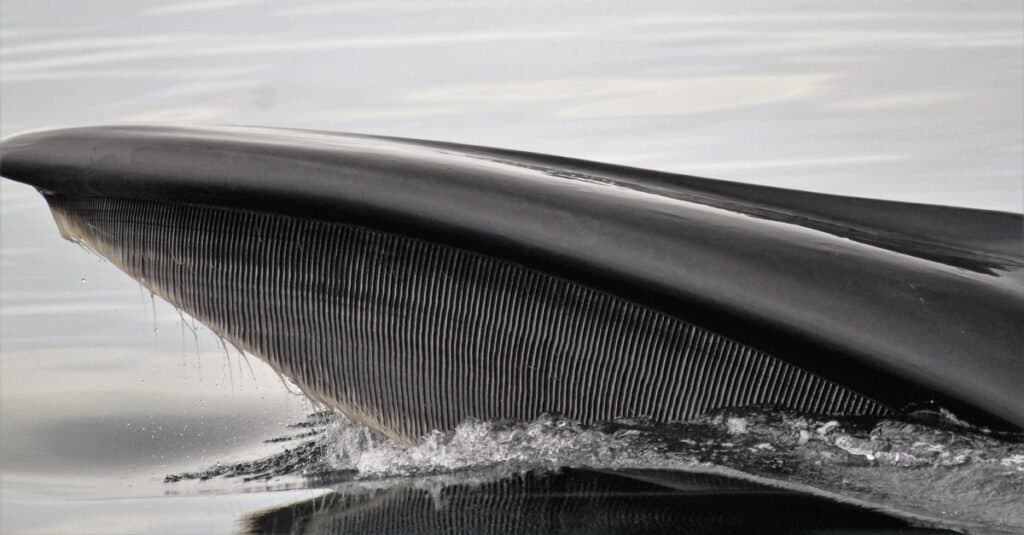
One of the most fascinating things about baleen is that it records a whale’s life history. As baleen grows, it incorporates chemical signatures from the whale’s diet and environment. By analyzing stable isotopes along the length of a baleen plate, scientists can track changes in diet, migration patterns, and even stress levels over several years. It’s similar to how tree rings record environmental conditions over time. A single baleen plate can provide a multi-year timeline of a whale’s life, offering insights that are difficult to obtain any other way.
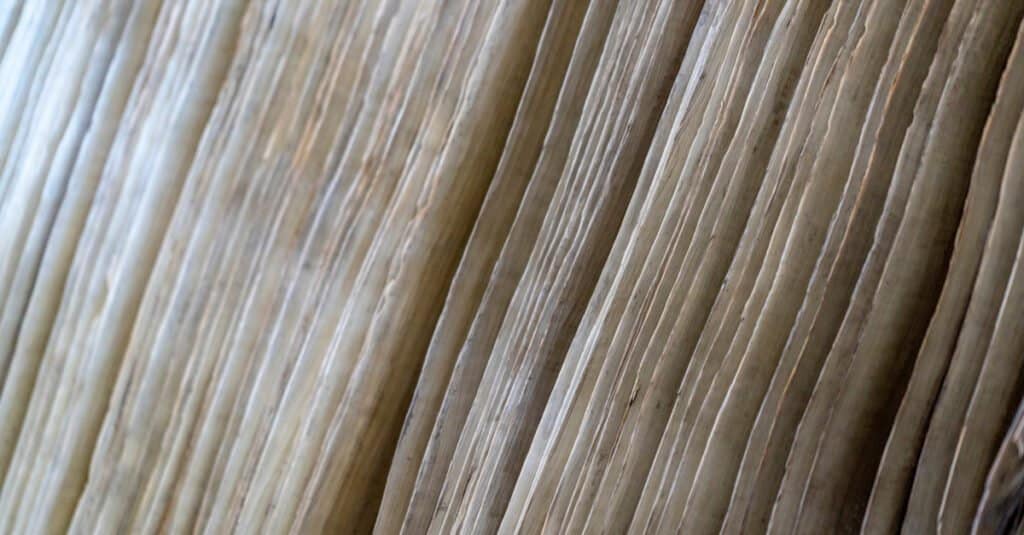
Scientists can analyze baleen to track a whale’s diet and migrations over several years.
©Andrea Izzotti/Shutterstock.com
An Elegant Evolutionary Solution
Baleen is a great example of evolution finding a simple, efficient answer to a complex problem. How do you feed a 100-foot-long animal without spending all day chasing individual prey? You turn the entire ocean into a buffet and filter out what you need. It’s like the difference between fishing with a net and a pole.
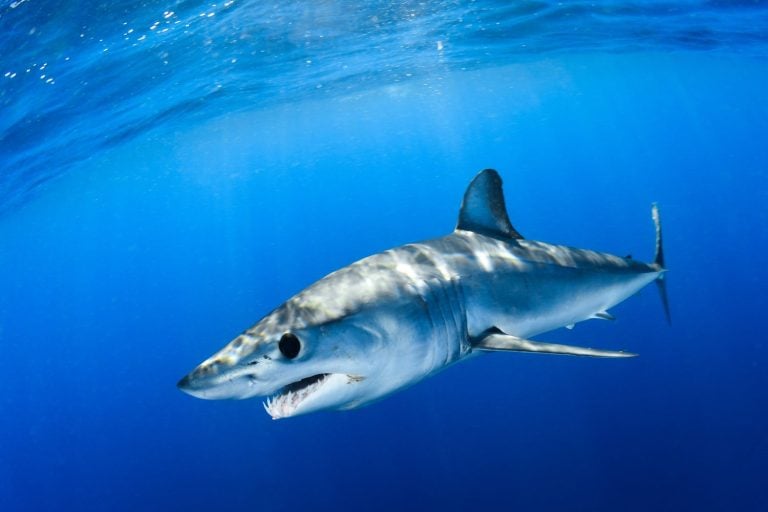
Baleen isn’t nearly as intimidating as the jaws of a shark. It isn’t sharp, flashy, or aggressive. But without it, some of the most iconic animals on the planet simply couldn’t exist. Nature doesn’t always favor brute force or speed. Sometimes, the most successful solutions are the ones that quietly and efficiently get the job done, one mouthful of seawater at a time.