Quick Take
- One fish wears a fake eye on its flank to trick predators, and the trick has a clever twist.
- One adorable pick is secretly armed, and its scales are no safer to touch than its tail.
- Yes, that famously slow, stomachless charmer counts as a fish. Find out how it gets by.
- A bold little reef dweller has a best friend that would sting most others. What's in it for each?
Fish are among the most diverse animals on Earth. Scientists have identified more than 37,654 species of fish, with dozens of new ones discovered every year. About 71% of our planet’s surface is covered by water, creating endless habitats in which marine life can thrive. Fish come in an incredible variety of shapes, sizes, and colors. We highlighted ten of the world’s cutest, most captivating fish, each one unique, colorful, and irresistibly charming.
1. Butterfly Fish
These brightly painted fish deserve a place on the world’s cutest fish list. There are 129 species of butterfly fish around the world. They live mostly around reefs and range in size from 4 to 9 inches. Many species of butterfly fish have brightly colored stripes. They come in black, white, blue, red, orange, and yellow in a multitude of color combinations. Some have spots that look like eyes on their flanks and a camouflaged dark stripe over their real eyes. These spots are meant to fool predators by disguising the fish’s true head orientation.
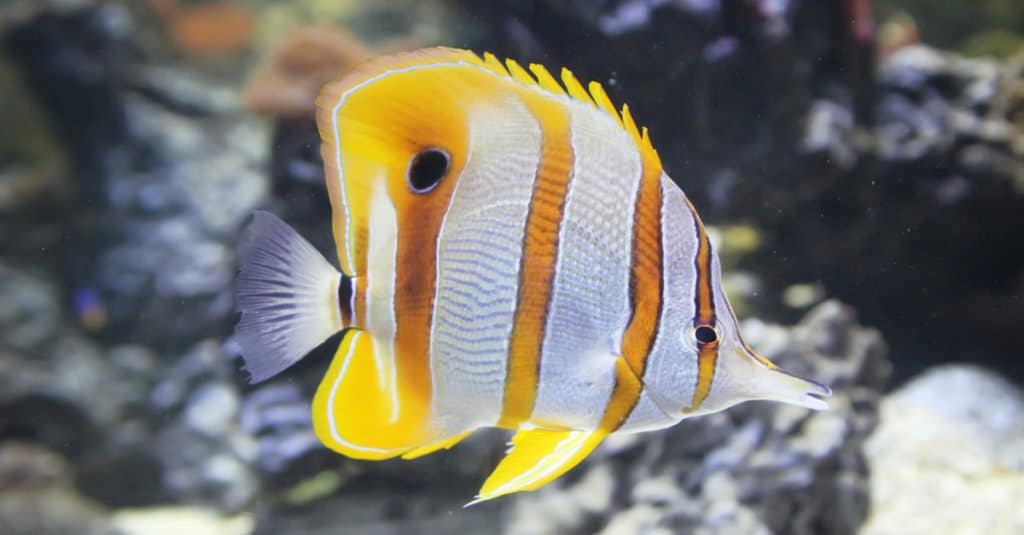
Butterfly fish have brightly colored stripes.
©Vladislav Gajic/Shutterstock.com
2. Rainbow Fish
The rainbow fish’s bright colors earn it a spot on the world’s cutest fish list. They are called rainbow fish for the colors that refract off their scales. These small freshwater fish range in size from 2-4 inches, with a few species reaching 8 inches. They live in large schools and travel and forage together. Rainbow fish live in freshwater rivers, lakes, and swamps of Australia, New Guinea, and parts of Indonesia. They eat crustaceans, insect larvae, and algae.

Rainbowfish can get up to eight inches long but most are 2–4 inches.
©Aleron Val/Shutterstock.com
3. Kribensis
Rainbow kribs, or kribensis (Pelvicachromis pulcher), are a colorful West African cichlid. Rainbow kribensis are so cute that they are one of the most popular aquarium fish worldwide. They have many common names, including red krib, purple cichlid, and common krib. They have dark stripes that run lengthwise down their bodies from fin to mouth, cute pink and red bellies, and sometimes a golden eye spot. These adorable fish live in freshwater with dense vegetation. They eat algae, plants, and invertebrates.

Kribensis are West African cichlids commonly found in aquariums.
©zzphot_25/Shutterstock.com
4. Betta Fish
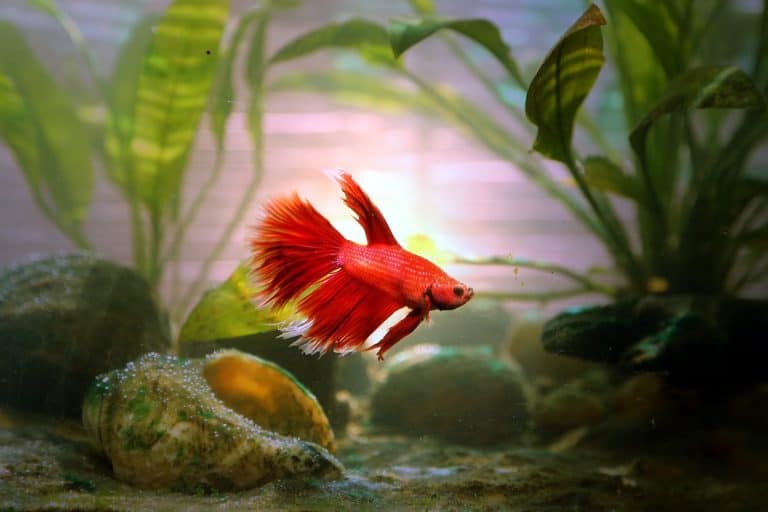
Betta fish are quite popular. Many refer to bettas as Siamese fighting fish, though is merely the most famous type of about 70 Betta species. Pet bettas (Betta splendens) generally measure 2-2.5 inches. These fish come in various stunning colors, including red, orange, yellow, blue, turquoise, black, and multi-colored. They have lovely long, flowing fins. In the wild, betta fish are native to Southeast Asia and can be found in shallow water marshes and paddy fields with abundant vegetation. They eat zooplankton, larvae of insects (including mosquitos), and tiny crustaceans.
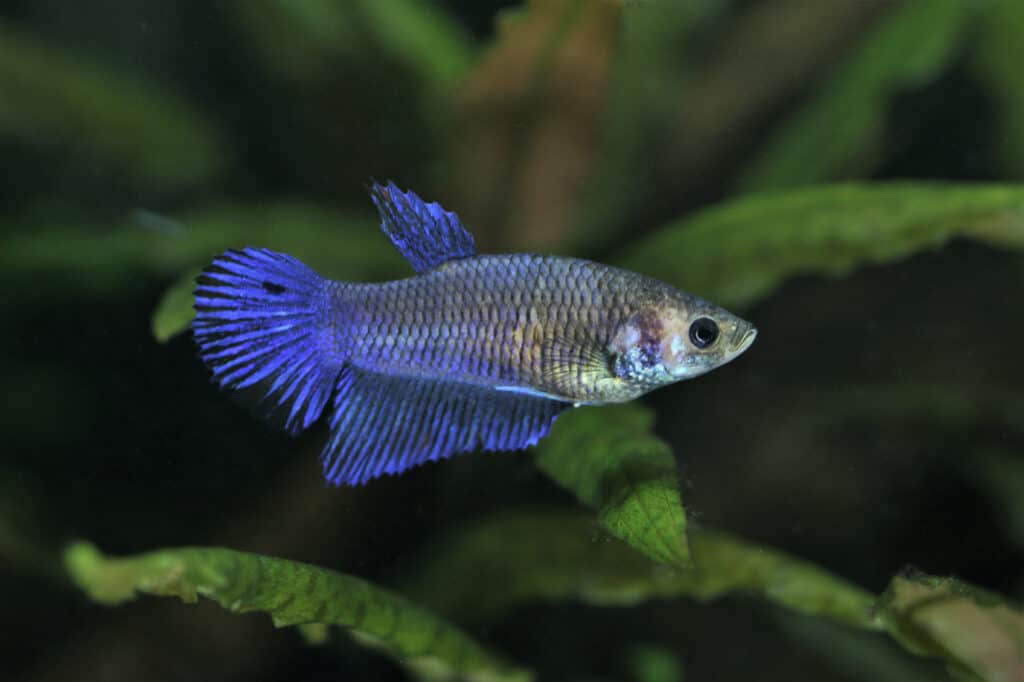
There are over 70 different species of betta fish.
©Arunee Rodloy/Shutterstock.com
5. Angelfish
Angelfish are definitely contenders for the world’s cutest fish. They are known for their bright colors, including orange, blue, white, yellow, and iridescent purple. Angelfish vary in size, generally growing to between 8–12 inches. Some species have long extensions of their fins that look like streamers. They can be found in various oceans (mostly tropical Atlantic, Indian, and Pacific reefs) but prefer water no deeper than 160 feet. They like to hang out in lagoons, reefs, and sea caves and are known for being brave and curious, often swimming up to divers to check them out. Angelfish’s favorite food is sea sponges; they also consume algae and tunicates. There are roughly 90 species of angelfish.
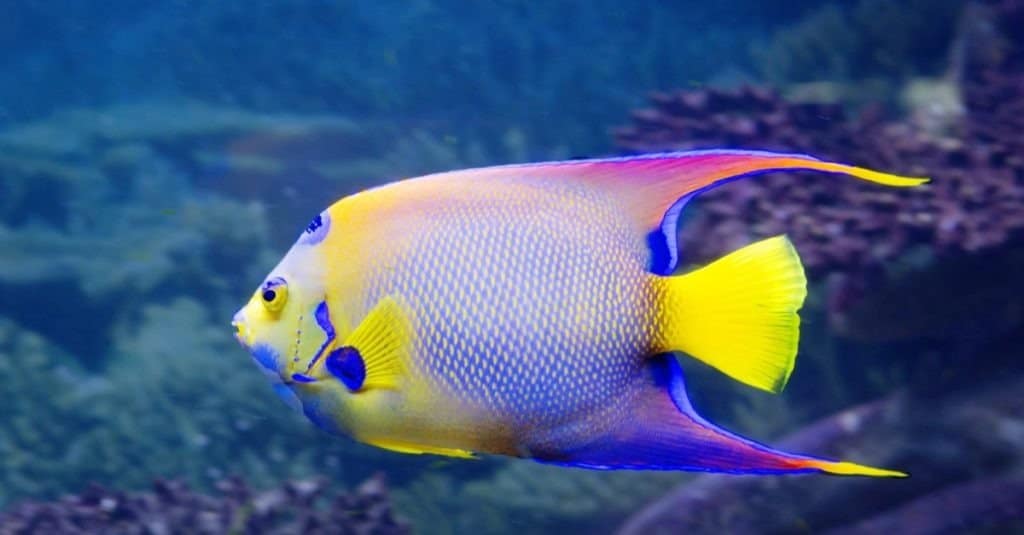
You can identify angelfish by their brightly colored stripes.
©Galina Savina/Shutterstock.com
6. Surgeon Fish
There are 86 species of surgeonfish in the family Acanthuridae. Surgeonfish have many names, including unicorn fish and tangs. They are called surgeonfish due to sharp, retractable spines on either side of the tails. Their scales are sharp and dangerous to touch and an excellent way to avoid being eaten. Surgeonfish eat mostly algae, and they have a single row of teeth adapted just for this purpose. They live in schools, and together they protect their coral reef homes. Depending on the species, surgeon fish can measure from 4 inches to around 3 feet.

Surgeonfish have sharp spines located on either side of the base of the tail.
©iStock.com/tae208
7. Dragonet
There are more than 180 recognized species of dragonet in the family Callionymidae, and they have many different appearances. They are quite colorful in general and have lovely patterns designed to confuse the eye, especially the eye of their predators. For example, the Mandarin dragonet (or mandarin fish) has an electric blue, orange and green pattern. They live near coral and sandy bottoms, sometimes partly burying themselves for camouflage. Dragonets have long bodies without scales, and a few species are venomous. They range in size from 0.75 inches to 12 inches in length. The diet of the dragonet depends largely on its environment. Dragonets will eat bivalves, worms, snails, slugs, and brittle stars.
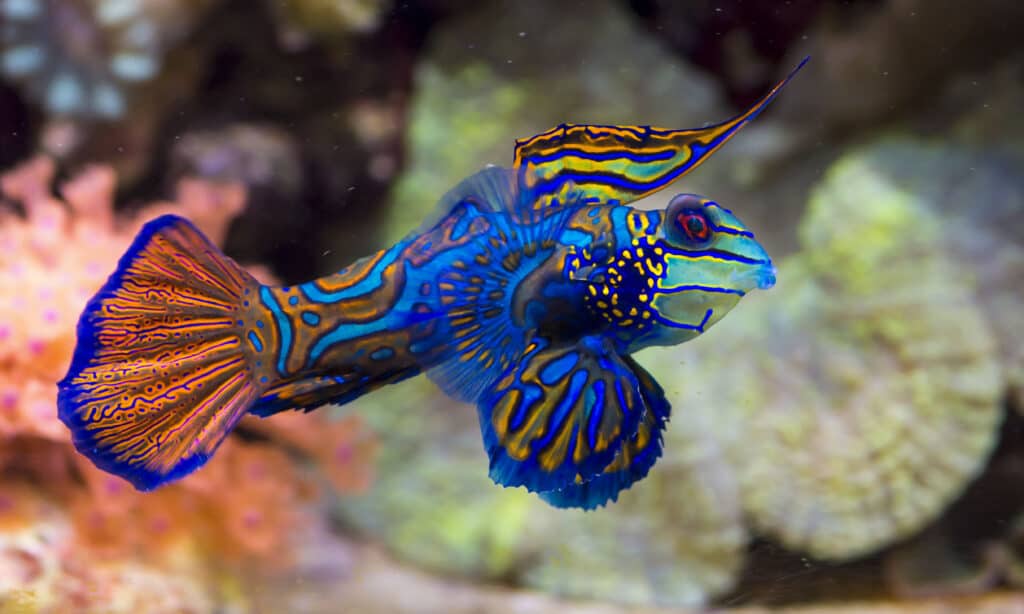
The Mandarin dragonet has an electric blue, orange and green pattern.
©Dobermaraner/Shutterstock.com
8. Killifish
Killifish, a group of several families in the order Cyprinodontiformes, include 1,270 species, some of which have beautiful patterns. They are typically small schooling fish of less than 6 inches in length. They are known for their jewel-tone colors of reds, blues, yellows, and greens. These fish can be found in marine and freshwater habitats in the Americas, Europe, Africa, and the Middle East. Killifish make their homes in streams, rivers, and lakes. They feed on aquatic insect larvae, like mosquitos. They also enjoy worms and crustaceans. Because of their bright colors, unique patterns, and spots, killifish are popular aquarium fish.

There are 1270 species of killifish, which all vary in color, size, and shape.
©slowmotiongli/Shutterstock.com
9. Sea Horse
Yes, sea horses are fish. There are 46 species of sea horses in the genus Hippocampus. They have a horse-like head, neck, and tail. The species range in size from a tiny 0.6 inches to 14 inches. These bony fish do not have scales but skin that stretches over bones. These bones help protect them from being eaten. Seahorses swim upright, using pectoral fins on each side of their head to steer. They aren’t very good swimmers and are considered very slow-moving fish. Some species of seahorse move only a few feet per minute. Rather than swim, they prefer to hang out in one place with their tail wrapped around a piece of seaweed or coral. Seahorses don’t have stomachs, so they eat a simple but continuous diet of small crustaceans.
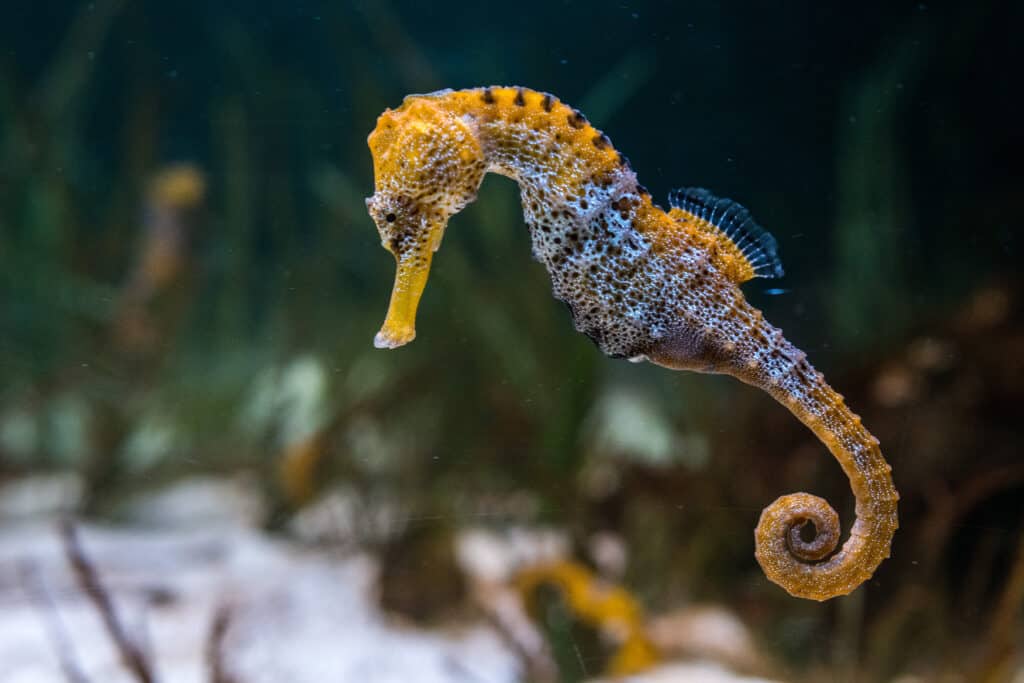
Sea horses are slow-moving fish.
©Marcos del Mazo/Shutterstock.com
10. Clownfish
There are 30 species of clownfish, also known as anemone fish, in the genus Amphiprion. Most of them have color patterns that feature yellow, orange, red, brown, black and white. They are generally between 3 and 6 inches long. They inhabit the warm waters of the Indian and Pacific oceans and make their homes in shallow areas with reefs and lagoons. Clownfish like to eat zooplankton, larvae, and algae. They are best friends with sea anemones and have a symbiotic relationship. The sea anemone protects the clownfish by offering a safe nesting site. The clownfish defends the sea anemone from predators and feeds it with nitrogen from its waste.
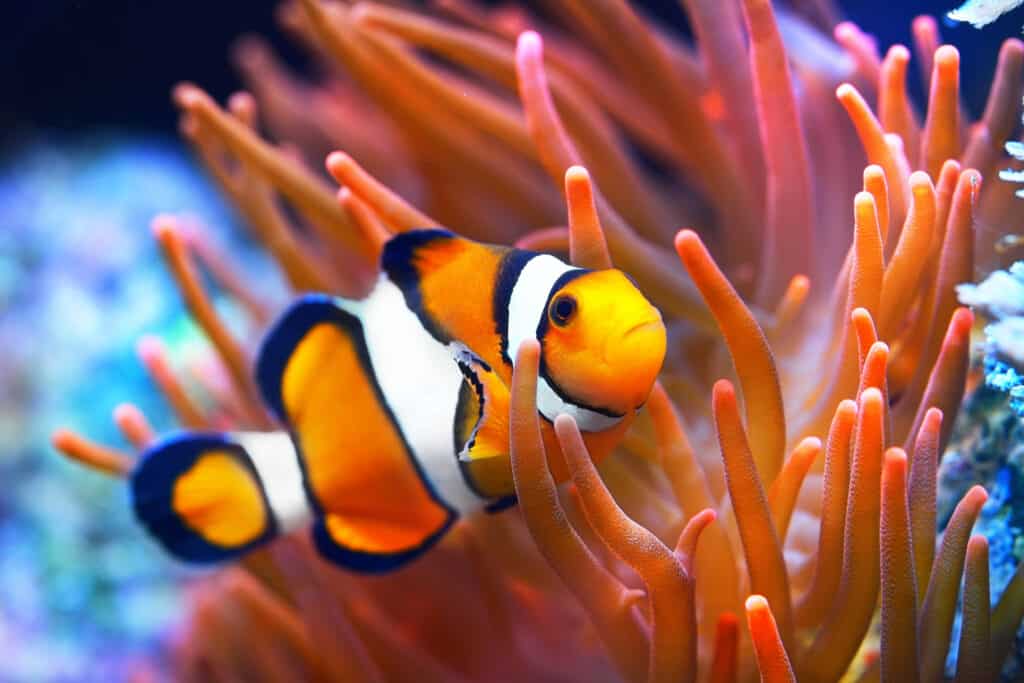
Clownfish have a symbiotic relationship with sea anemone.
©Alex Stemmers/Shutterstock.com