
Quick Take
- Axolotls are solitary by nature, which means the wrong tank mate doesn't just cause conflict. It can be dangerous in a way most owners don't anticipate. Axolotl coexistence basics →
- One popular tank mate looks completely safe but could end up causing serious digestive harm to your axolotl if you get the size wrong. Apple snail size risks →
- Some fish survive alongside axolotls not because they're ignored but because they rely on a specific behavioral trick. Group behavior for protection →
- Pairing two axolotls sounds simple, but one common mistake can turn a peaceful tank into a dangerous one overnight. Pairing axolotls safely →
Axolotls are favorite aquatic pets that have gained worldwide popularity, especially during the social media era. With their endearing appearance, such as smiling faces, wide black eyes, and unique regenerative abilities, it’s no wonder they are so popular. Because axolotls are naturally solitary creatures, it is important to select the right tank mates for a harmonious and comfortable tank environment. Continue reading to discover 7 perfect tank mates for your axolotls, how to care for them, and why they’re a suitable fit.
Other Adult Axolotls
The axolotl (Ambystoma mexicanum) is native to lakes in the Mexico City region, historically including Lake Xochimilco and Lake Chalco, though wild populations are now largely confined to Lake Xochimilco. They have a lifespan of 10 to 15 years and live fully in the water. Their average size is about 9 to 12 inches in length, but some may grow up to 15 inches.
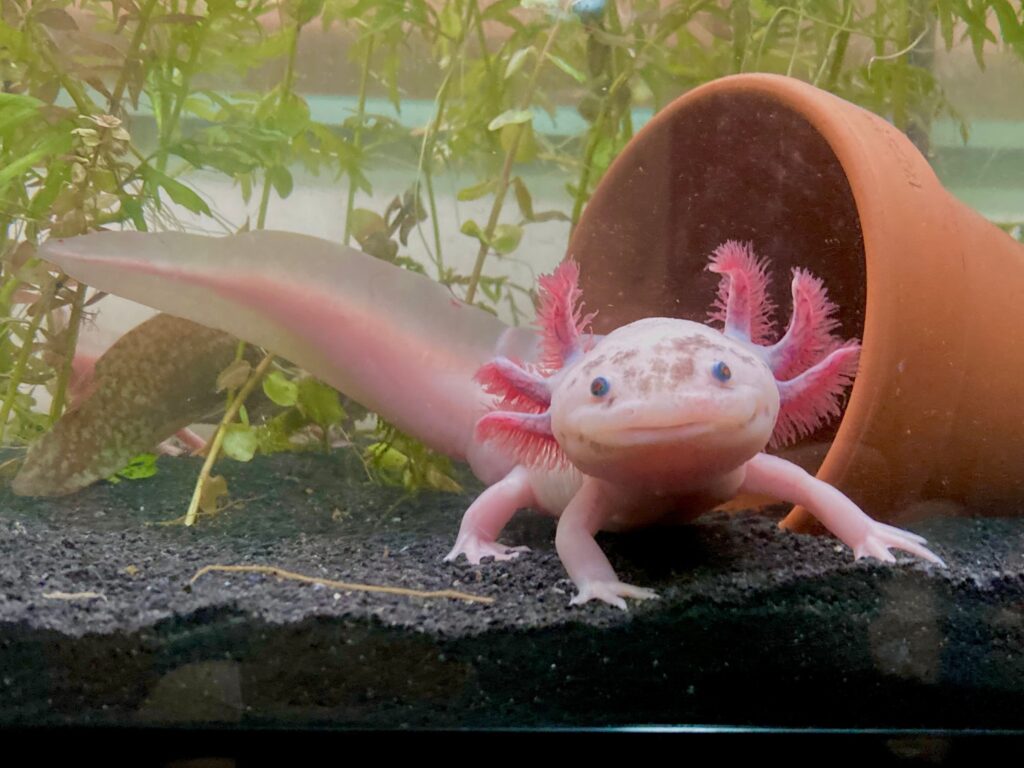
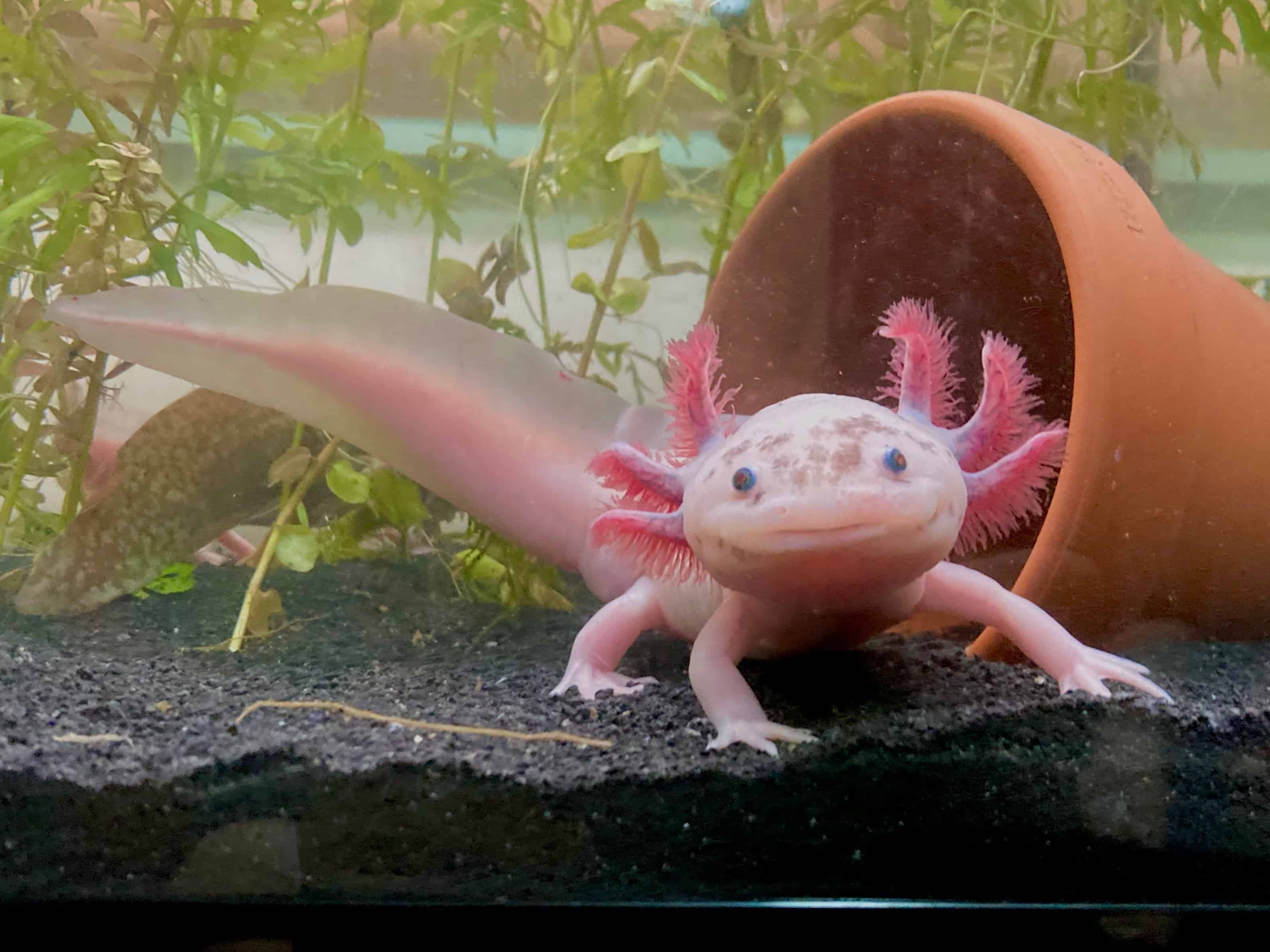
Of course, the best tank mate for an axolotl is another axolotl.
©axolotlowner/Shutterstock.com
These unique amphibians require spacious tanks with cool water between 60 to 68°F as warmer temperatures can stress them. If you add another axolotl to the tank, a 40-gallon tank is necessary, as each axolotl requires 20 gallons. The tank should be filled with fine sand or coarse gravel, as fine gravel may obstruct the axolotl’s stomach if accidentally ingested.
Adult axolotls not only share the same diet and living conditions, but they also make perfect tank mates because they can coexist peacefully. It is best to keep axolotls of the same gender together to prevent unwanted breeding. Young axolotls should be kept separate from adults, as mature axolotls may eat smaller ones. It is also important to provide hiding places like plants and caves to help your axolotls feel secure.
White Cloud Mountain Minnow
White cloud mountain minnows (Tanichthys albonubes) are small, peaceful freshwater fish native to China. They are popular for their beauty, easy care, and adaptability to various water conditions. These iridescent, silver fish grow to about 1.5 to 2 inches long and should be kept in groups of 5 to 6.
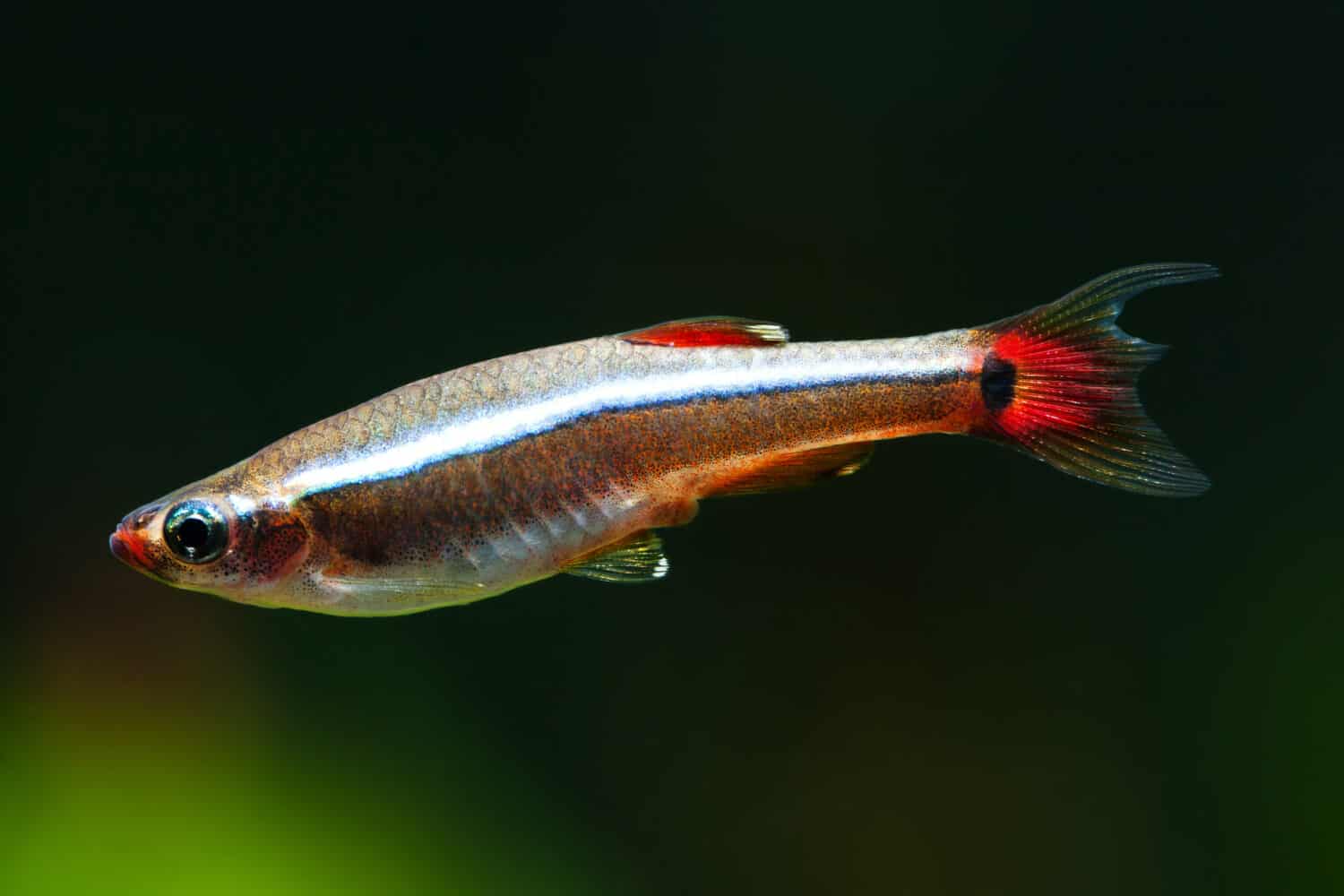
If you want to add a fish to your axolotl aquarium, try white cloud mountain minnows!
©Besjunior/Shutterstock.com
One of the advantages of keeping white cloud mountain minnows with your axolotl is that they require similar water parameters, including the cooler water temperatures of between 64°F and 72°F.
Adult minnows are too large for axolotls to eat, and their docile temperament means the likelihood of aggression toward the axolotl is minimal.
Zebrafish
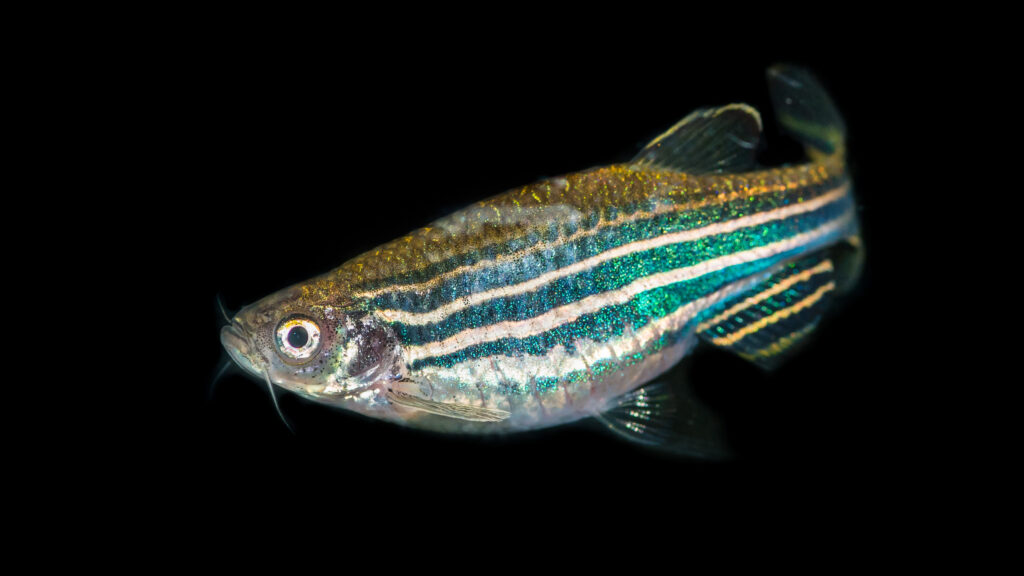
Another suitable tank mate for the axolotl is the zebrafish.
©Ian Grainger/Shutterstock.com
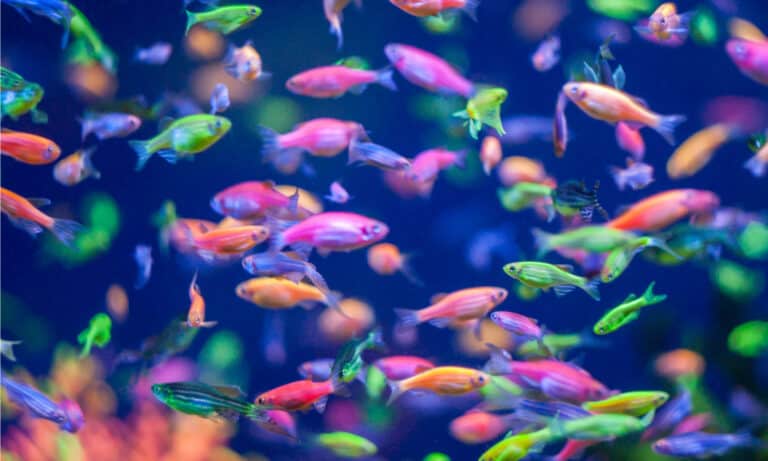
Zebrafish (Danio rerio) are native to several countries in South Asia, including India and Nepal. These small fish only grow to 2 inches in length. They are popular for their striking appearance, with a distinctive zebra-like pattern of blue and gold horizontal stripes from head to tail. They require a minimum of 10 gallons for a small group of at least 6 with a water temperature of 64 to 75°F. As zebrafish are known to be active, be sure to have plenty of open swimming areas for them.
Zebrafish are suitable tank mates for axolotls as they are unlikely to be perceived as food and are fast enough to swim away from the axolotls when necessary. They occupy the upper and middle water levels and have similar water temperature preferences. Their peaceful nature and resilience make them an ideal fit.
Dojo Loach
Dojo loaches (Misgurnus anguillicaudatus) are native to East Asia, including China, Korea, and Japan. Historically, dojo loaches were popular in Chinese rice paddies, where they were valued for their ability to help control pest populations.
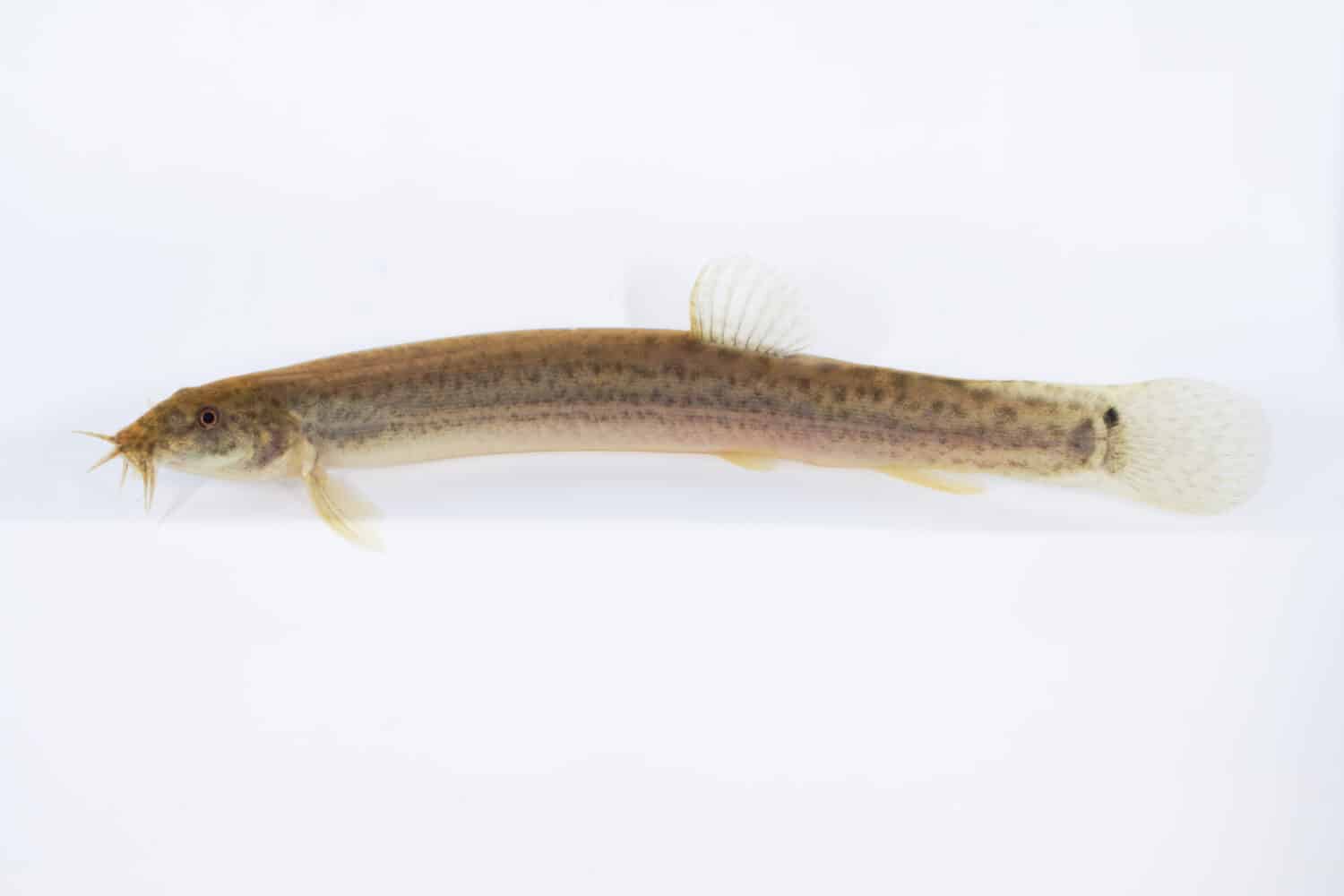
Native to Asia, dojo loaches prefer cold water, are peaceful, and share a similar diet with the axolotl.
©23frogger/Shutterstock.com
Dojo loaches have an elongated, eel-like body shape and small, smooth scales. They are generally olive or brown. These loaches are relatively large and can grow up to 12 inches long. Ideally, a minimum tank size of 30 gallons is required for a small group of loaches.
Like the axolotl, they are a species that prefers cold water with a temperature of 65 to 75°F. Don’t let your tank’s water temperature rise above 68°F as that is the upper range of the axolotl’s ideal and preferred water temperature. They are also peaceful and unlikely to intimidate or stress the axolotl, and they share a similar diet, eating food such as pellets, brine shrimp, and frozen bloodworms.
Rosy Barb
Rosy barbs (Pethia conchonius) are native to various regions in South Asia, including India and Nepal. They are hardy, easy to care for, and compatible with a variety of tank mates. Adult rosy barbs can grow to a length of around 3 to 4 inches.
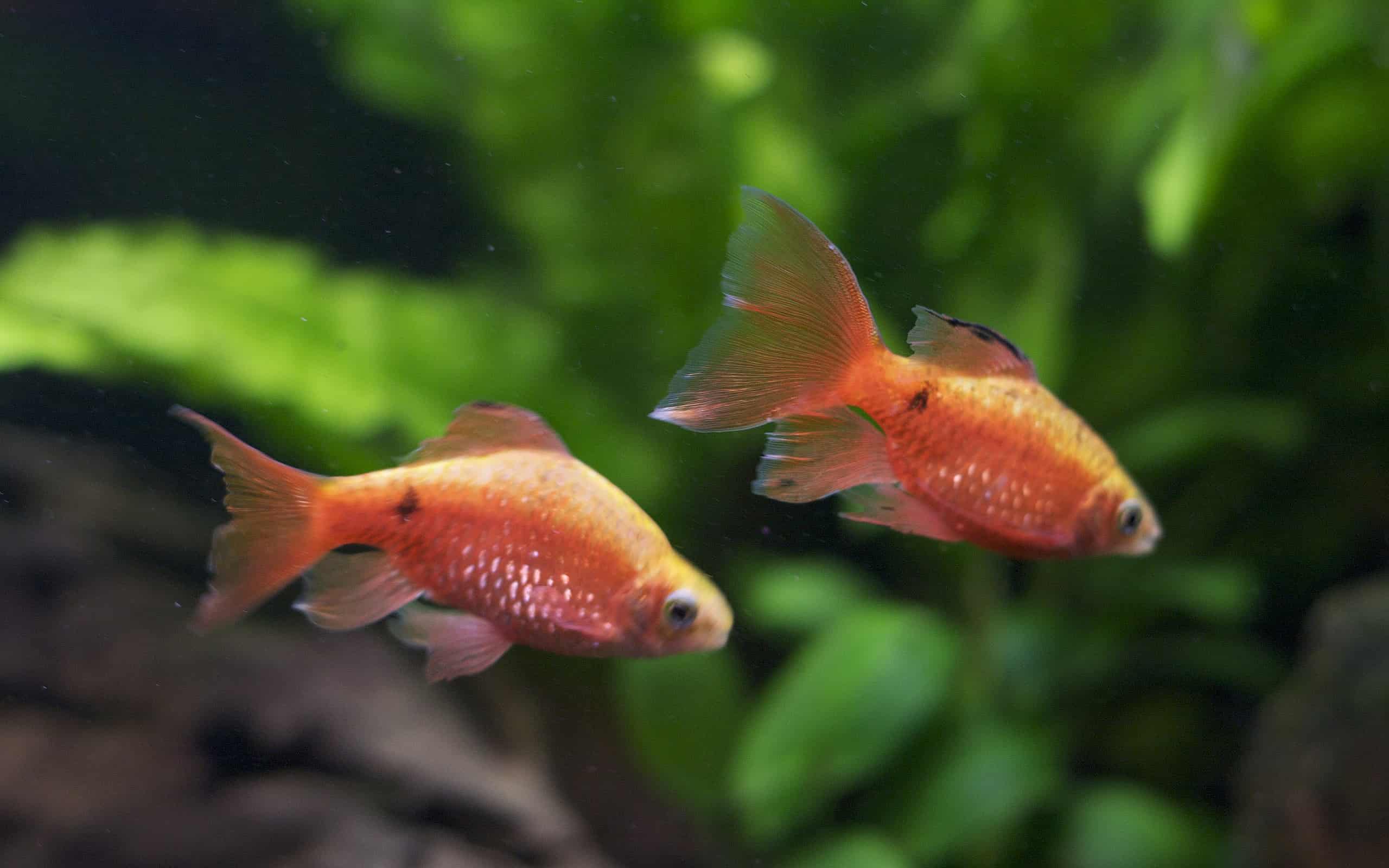
As particularly hardy fish, rosy barbs are active swimmers that have similar water temperature needs as the axolotl.
©Kkonstan, CC BY 3.0, via Wikimedia Commons – Original / License
A minimum of 20 gallons is recommended for a small group of rosy barbs. Their water temperature preferences, 64 to 75°F, overlap at the higher range of the axolotls’.
These active swimmers primarily occupy the middle and upper levels of the tank, and their larger size is not generally seen as prey by the axolotl, although the axolotl may still attempt to eat them. With a similar water temperature preference and the rosy barb’s peaceful nature, both species may cohabit easily. And as a plus, the rosy barb’s iridescent colors will brighten up your tank.
Pearl Danio
Named after the iridescent white spots covering their blue bodies, the pearl danio (Danio albolineatus) is one of the most attractive freshwater fish and a popular addition to home aquariums. Pearl danios are native to the rivers of Myanmar and Thailand, Laos, Cambodia, Vietnam, and Sumatra (Indonesia).
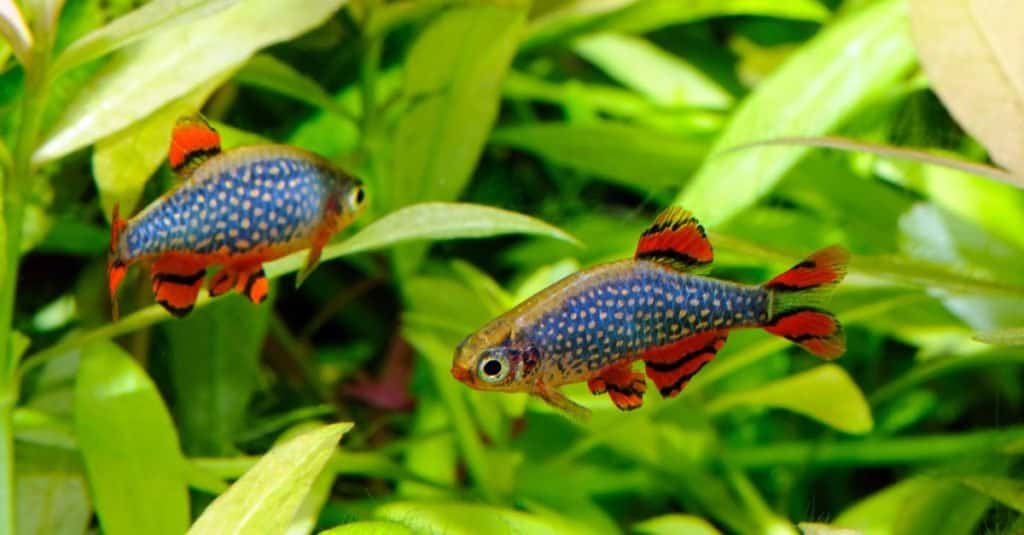
The pearl danio can tolerate a wide range of water temperatures, ranging from 64 to 72 degrees Fahrenheit.
©Bos11/Shutterstock.com
Pearl danios are peaceful fish that peacefully coexist with other peaceful fish. These fish can grow to around 2.5 inches long, and they are tolerant of a wide range of water conditions with a temperature of 64 to 72°F. The minimum volume required to house a school of pearl danios is 10 gallons, with a minimum of six in a group.
Pearl danios can make good tank mates for axolotls because they are fast swimmers, and they swim in schools as protection against the axolotl when placed in the same tank. Their peaceful nature means they won’t likely bother your axolotl, making them less likely to become food.
Apple Snail
The adult apple snail (Ampullariidae), native to South America, is a great tank companion for your axolotl, as it will generally be too large to be consumed. A fully grown apple snail reaches about 6 inches in diameter.
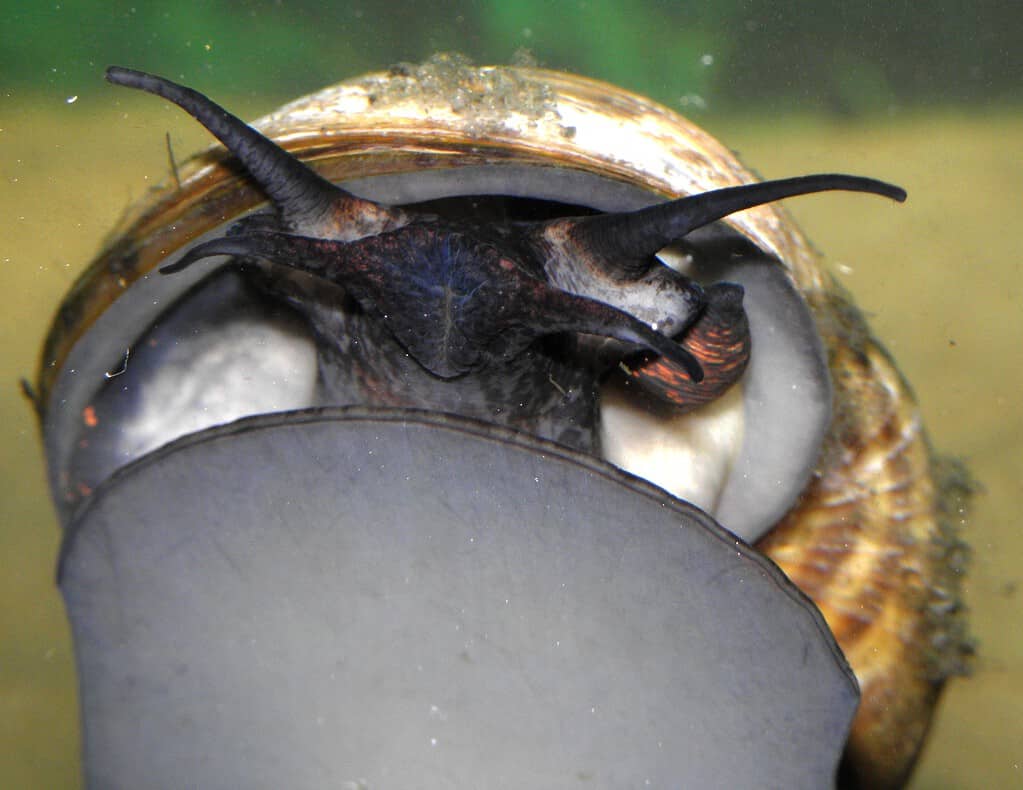
Although apple snails can make good axolotl tank mates, be careful about what size apple snail you put in the tank.
A minimum of 10 gallons is required for a single apple snail, and it is best to keep only one, as they proliferate quickly. They can survive in a wide range of water temperatures of 64 to 82°F, including the cooler temperatures preferred by and necessary for axolotls.
Apple snails are generally peaceful creatures that can coexist with axolotls without causing any issues. They also keep the tank clean and balanced by consuming algae and decaying matter. Their slow-moving and non-threatening nature makes them a suitable tank mate for axolotls. However, keep in mind that it’s best to keep a larger apple snail with a younger axolotl in case the axolotl tries to eat the apple snail. This may cause digestive issues, as the snail may not pass through the axolotl’s digestive system.