

Quick Take
- Producing hundreds of eggs in a single cycle is a standard Danio achievement.
- Limiting a school to 1 or 2 fish induces lethal stress in Danios.
- It is paradoxical that stagnant water is the preferred habitat for several Danio species.
- Vegetation selection is a mandatory step during spawning to ensure egg protection.
Danios make a popular choice for aquarium hobbyists due to their hardy nature. Danios come in many types and colors, but the common attribute across the species is their size, hardiness, and active swimming style. They tolerate a wide range of water conditions and are good eaters.
One thing to keep in mind is that all the different types of danios are schooling fish. Keeping just one or two danios will cause unnecessary stress and will have a negative effect on their health.

3 Danio Fish Facts
- The different types of danios are excellent additions to home aquariums, due to their hardy nature and active personalities.
- A lid is necessary for the danio aquarium; these fish are surface dwellers and natural jumpers.
- Most danios sold as pets are bred in captivity.
Classification and Scientific Name
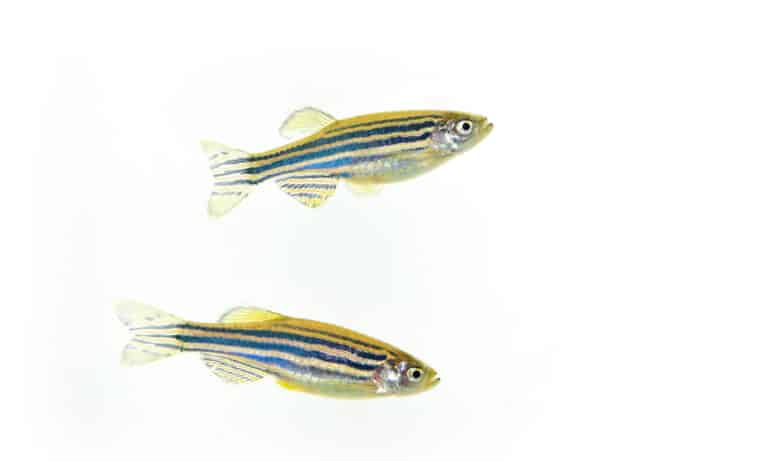
Danio fish are in the family Cyprinidae. The word “danio” is derived from the Bangla word “dhani,” which means “of the rice field.” They are also known as zebra fish, due to the stripes that run along the sides of most species of danios.
Species
There are 27 species of danio fish. All members of the Danio genus have two pairs of long barbels, which are whisker-like sensory organs near the mouth. Most danio species also have horizontal stripes.
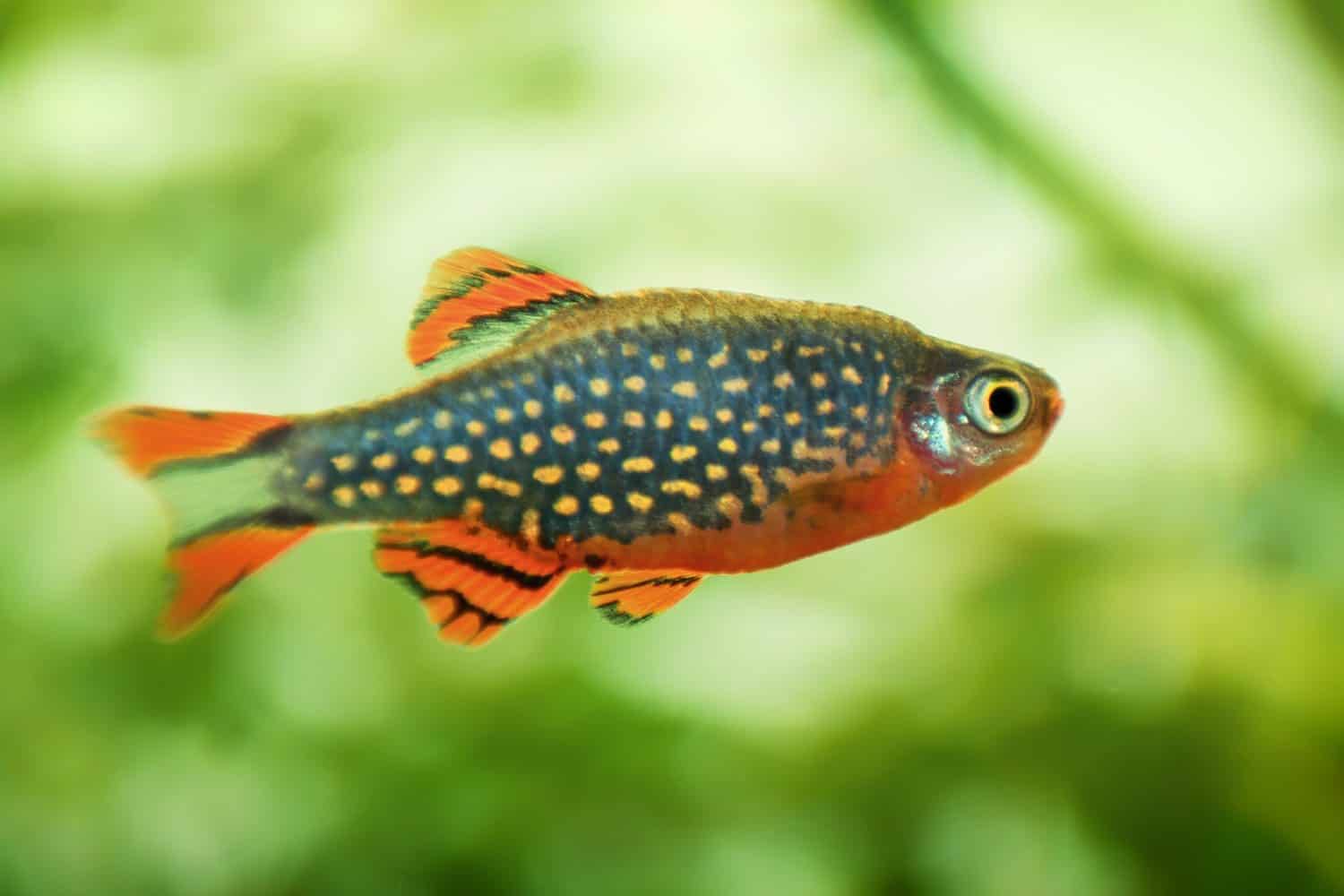
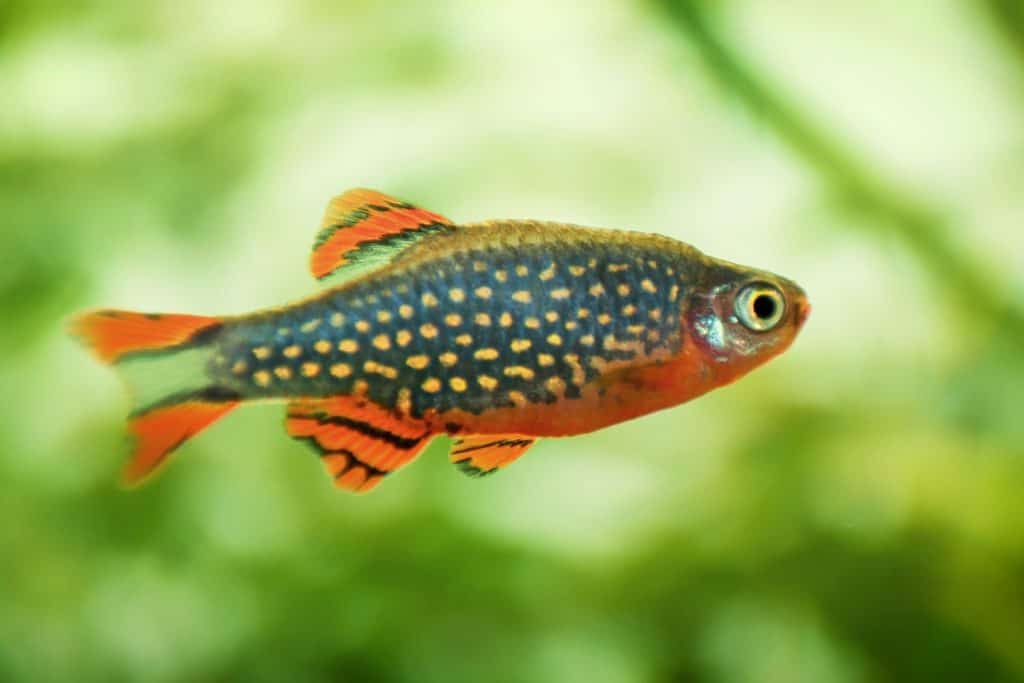
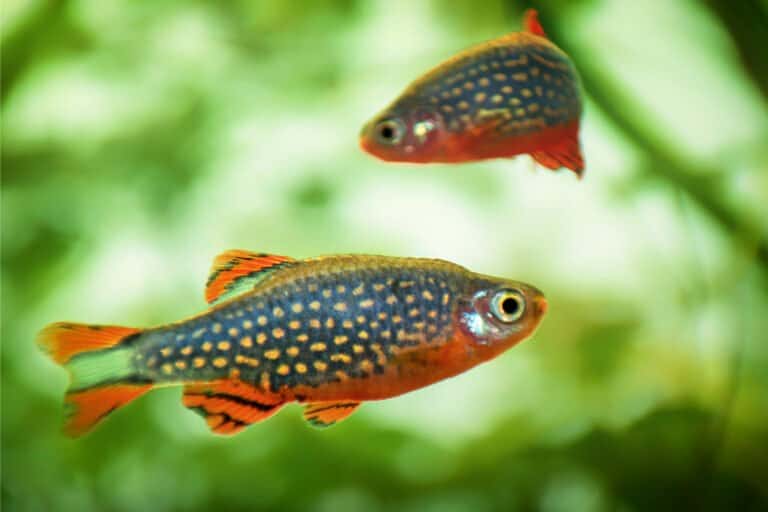
Danio margaritatus — commonly known as the celestial pearl danio. The celestial pearl danio originated from Myanmar and is a popular choice for aquariums. It is brightly colored, plump, and fun to watch as it navigates through its tank.
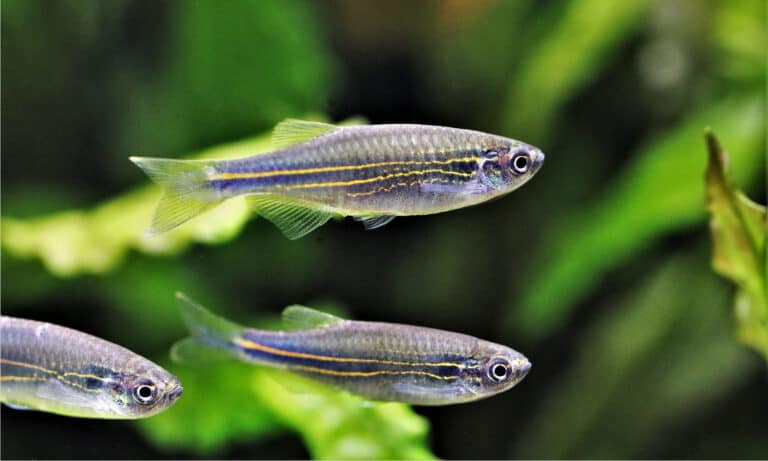
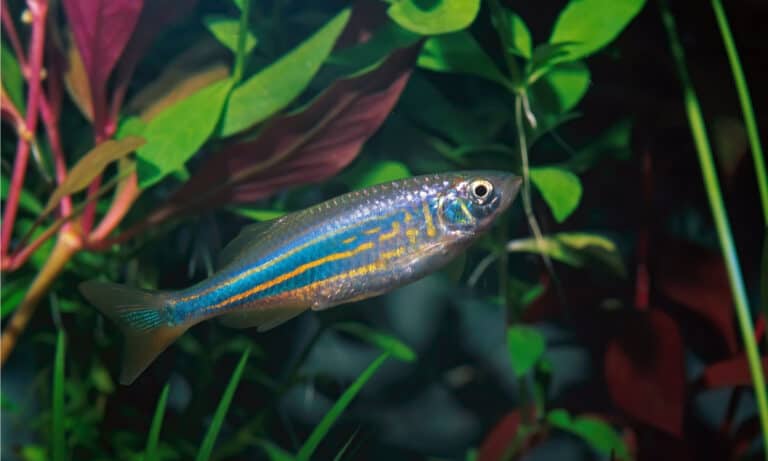
Devario aequipinnatus — commonly known as the giant danio. Easy to care for and full of energy, the giant danio is a fun addition to a larger tank. The giant danio, like other danios, is a schooling fish. Once they reach 4 inches, plan on a tank of at least 30 gallons for this larger species.
Danio rerio — also known as the leopard danio or zebra danio. Originating in India, the leopard danio gets its common name from the spots that cover its body. Most danios, regardless of the colors, have thin, horizontal lines on their sides. The leopard danio, on the other hand, is covered in spots, while the zebra danio has stripes.
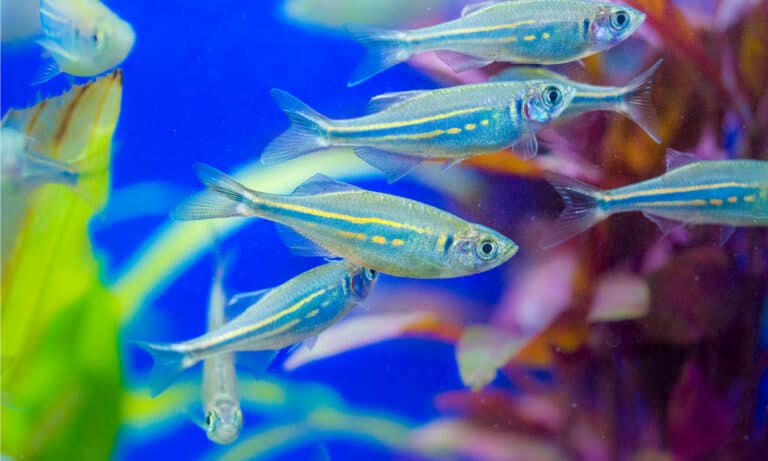
Danio kerri — also known as the blue danio. The blue danio is an attractive fish that makes a good choice for beginners to the fishkeeping hobby. Its bright blue body has a few golden-pink lines running along its side. Like other danios, they are an active schooling species, so they need room to move around.
Appearance
Danios are small and come in a variety of colors. Most species of danios have thin, horizontal stripes along their sides. They generally mature to around 2 inches in length.
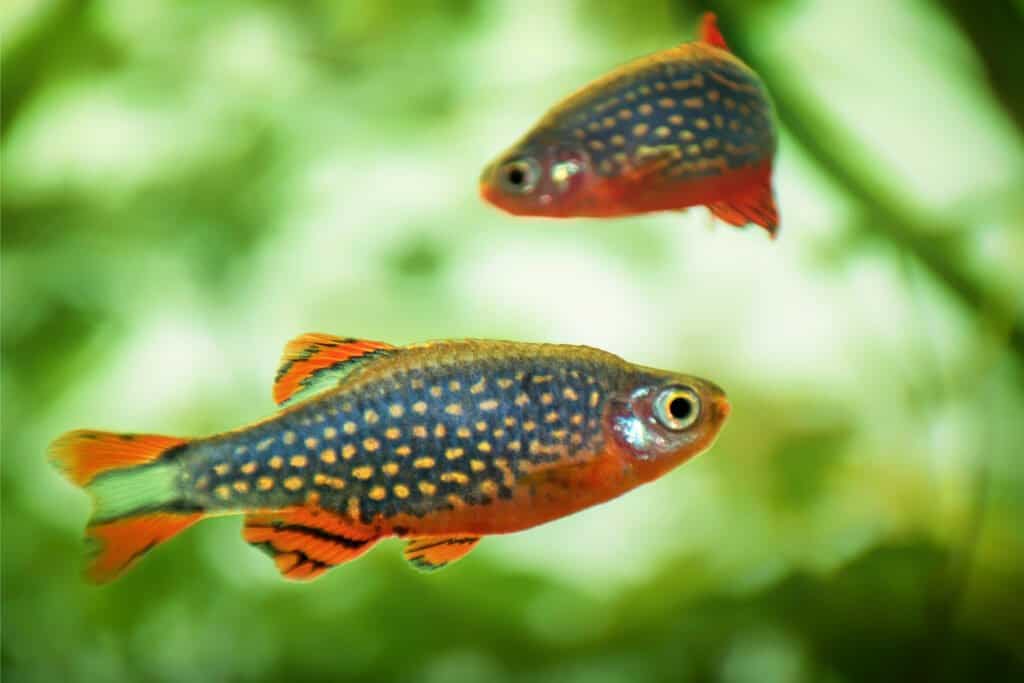
Danios are vibrantly colored fish.
©Magdalena Teterdynko/Shutterstock.com
Distribution, Population, and Habitat
Danios live in freshwater. Most species prefer calm or even stagnant water, but some species are happier in fast-flowing waterways. They can be found in the wild in floodplains, rice paddies, canals, and ditches, as well as streams and ponds.
Predators and Prey
Danios are omnivores, so they do catch their own prey as part of their diet. They are also small enough to be an attractive meal for other animals. Their speed while swimming and schooling behavior helps protect them from some predators.
What eats danios?
Larger fish, birds, and small amphibians can prey on danios.
What do danios eat?
Because of their small size, the prey of danios fish is made up of small insects and larvae.
Reproduction and Lifespan
The danio, like many fish, reproduces by spawning. During this process, the male will select an area, typically with vegetation for better camouflage. The female releases eggs and the male releases sperm, so fertilization occurs outside the body.
Eggs hatch quickly, and the young are fully independent when they emerge from their eggs. A female can lay hundreds of eggs.
Danio Pictures
View all of our Danio pictures in the gallery.

Arunee Rodloy/Shutterstock.com
Sources
- Fishkeeping World / Accessed March 2, 2022
- Aqueon / Accessed March 2, 2022
- Encyclo Fish / Accessed March 2, 2022