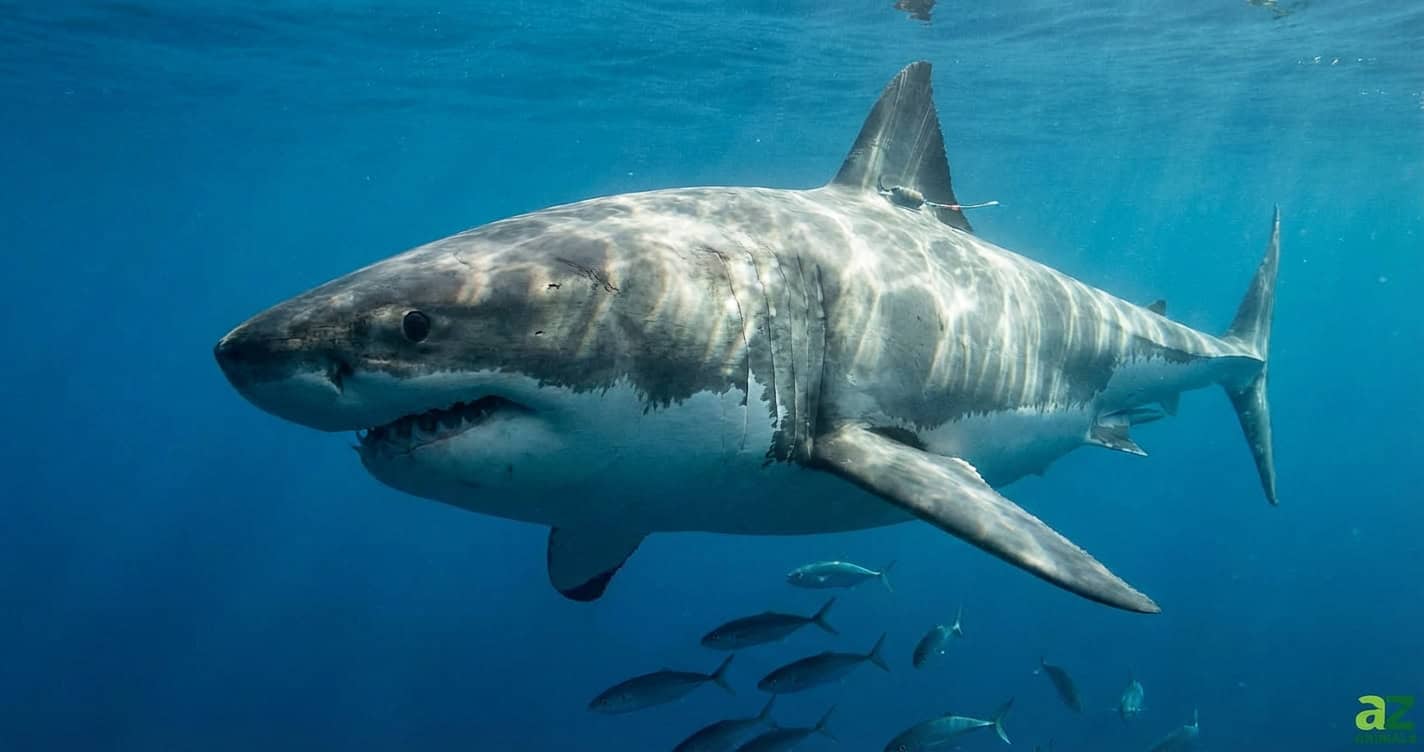

Quick Take
- Reaching 2.5 tons requires Deep Blue to survive for over 50 years in the wild.
- The 20-foot length of Haole Girl led to a significant case of mistaken identity in Hawaii.
- Counter-intuitively, Great Whites maintain massive sizes while consuming only 3 percent of their body weight.
- Research group OCEARCH was forced to subdue Myrtle Beach residents after Breton triggered a specific tracker.
Great white sharks occur all around the world. However, this species has high concentrations near New Zealand, Australia, South Africa, the Northeastern Pacific, and the North Atlantic. But, the great white sharks off the US West Coast are an isolated population that occurs off California and Guadalupe Island, situated 150 miles from the coast of Baja California, Mexico. The largest great white shark recently spotted in Hawaii was a female known as Haole Girl (though often confused with Deep Blue). The incredible footage was taken by independent divers and photographers, including Ocean Ramsey, in 2019. While Deep Blue is perhaps the most famous great white, she is approximately 50 years old and is affectionately named “Deep Blue.” People love hearing stories about sightings of this mysterious shark, so she even has her own fan-run Twitter account, @Deep_Blue_Shark.
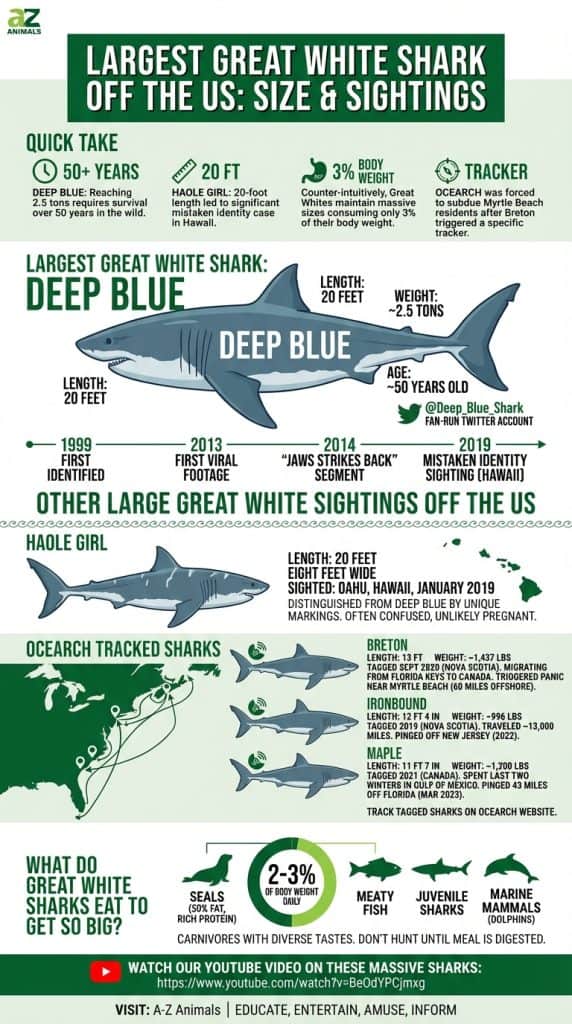
Reaching 2.5 tons takes 50 years of survival and a diet that defies logic. Meet the ocean’s biggest titans and the technology tracking their every move near American shores.
©A-Z Animals
Largest Great White Shark Off the US: Size
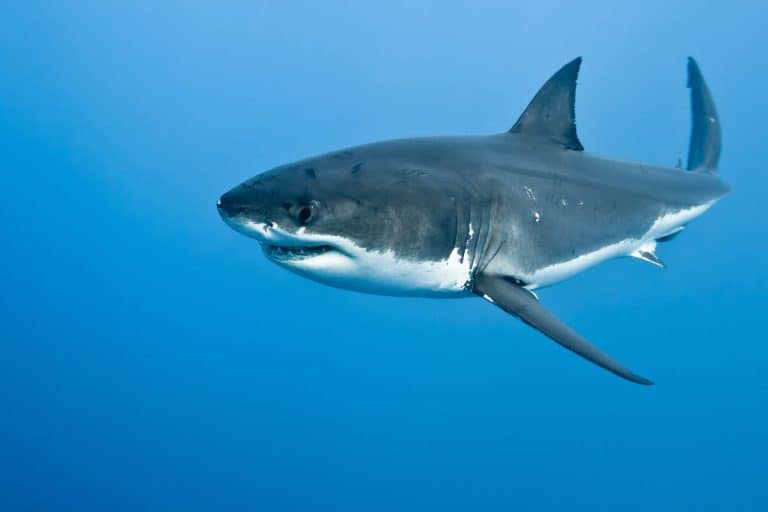
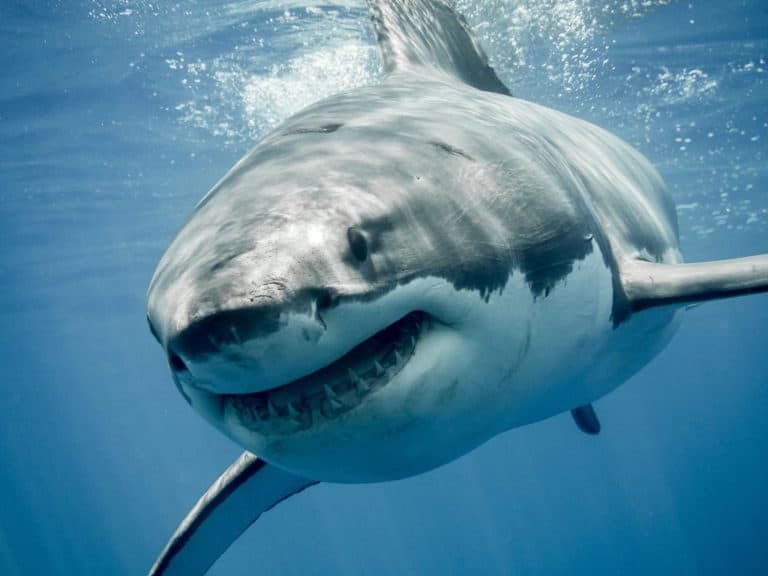
On average, great white sharks measure between 11 and 15 feet long, but there is one female that puts the rest to shame, and she has been spotted a few times over the years. Her name is Deep Blue, and she was first identified in 1999. However, the first recorded footage of her to go viral was captured in 2013. She also appeared in Shark Week’s “Jaws Strikes Back” segment in 2014. This gigantic shark measures a whopping 20 feet long and weighs approximately 2.5 tons!
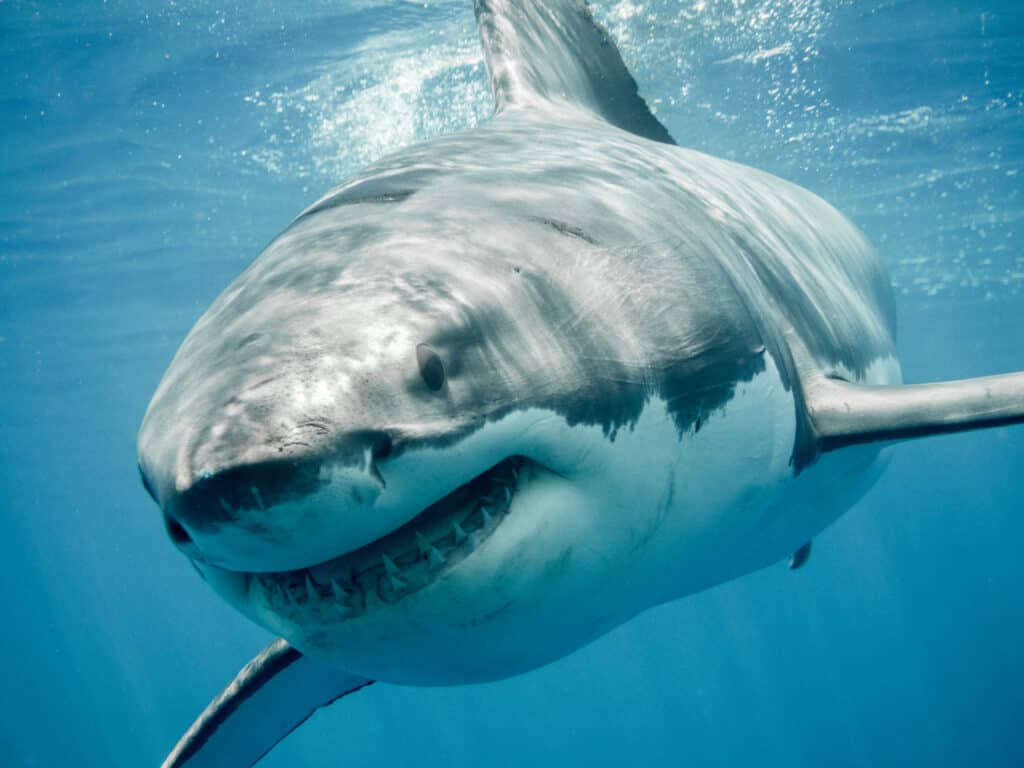
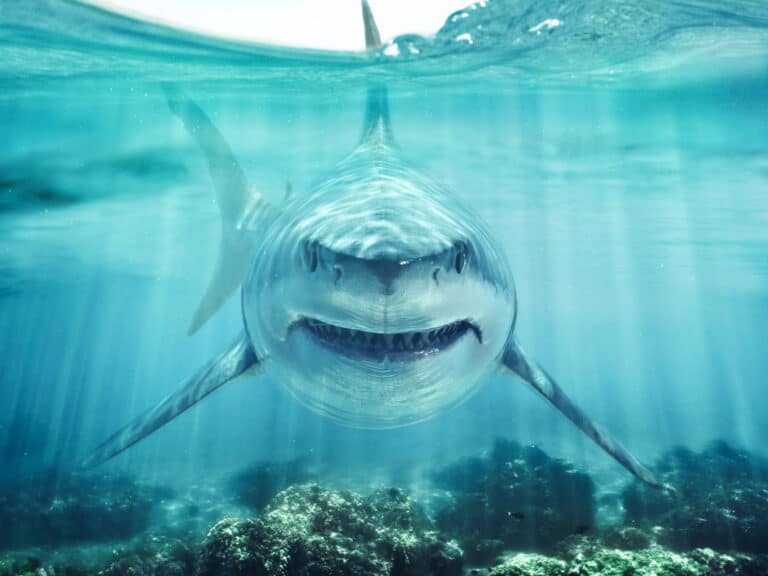
Great white sharks have high concentrations near New Zealand, Australia, South Africa, the Northeastern Pacific, and the North Atlantic.
©Ramon Carretero/Shutterstock.com
Unfortunately, a tag has never been fitted to Deep Blue, and researchers typically search for her in familiar locations. However, a massive shark mistaken for her appeared off the coast of Hawaii in 2019 and was spotted by divers and later featured by National Geographic. She seemed to have just eaten, but there could be a chance she was pregnant.
Other Large Great White Sightings Off the US
There have been several large great white sightings off the US coastlines. As these sharks migrate far distances, seeing the same shark in various locations is not unusual.
Haole Girl — 20 Feet Long
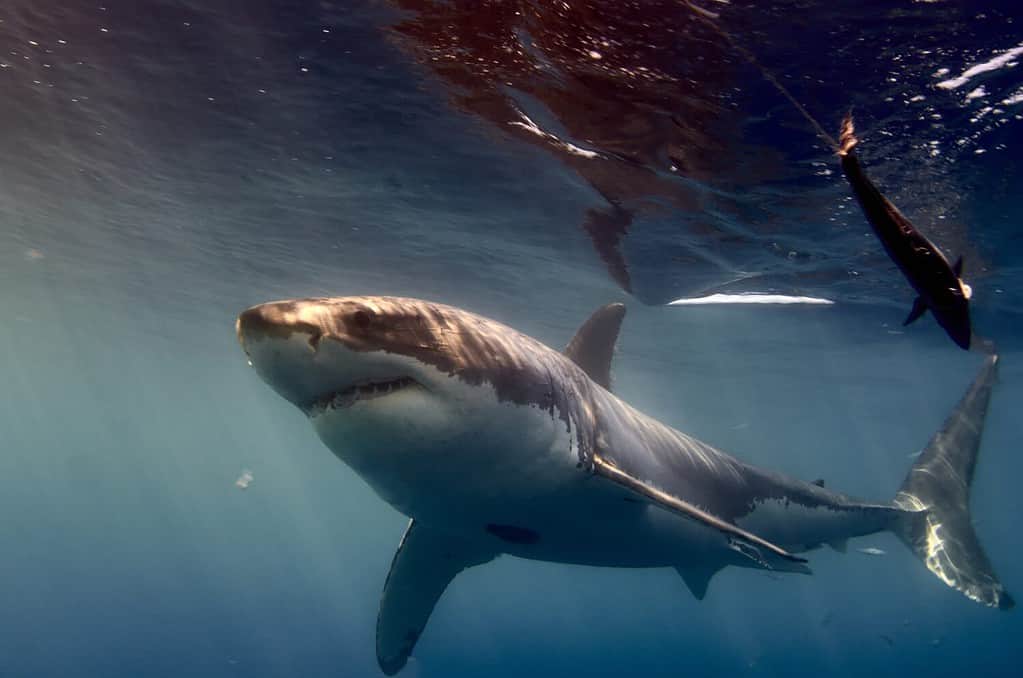
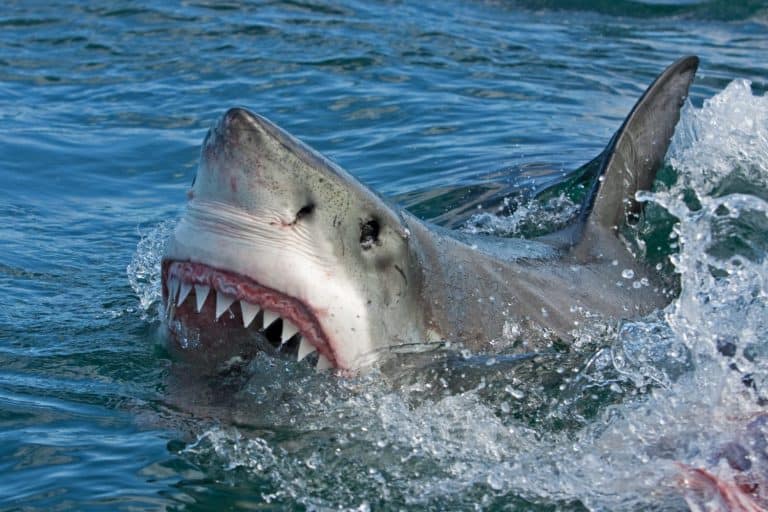
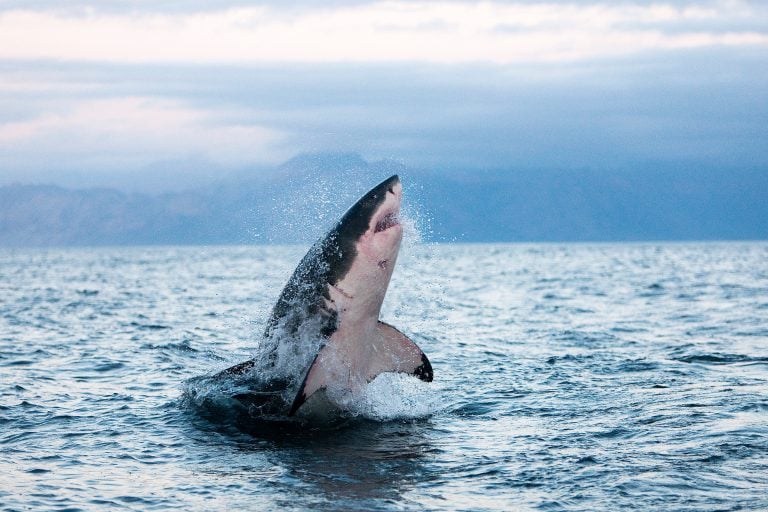
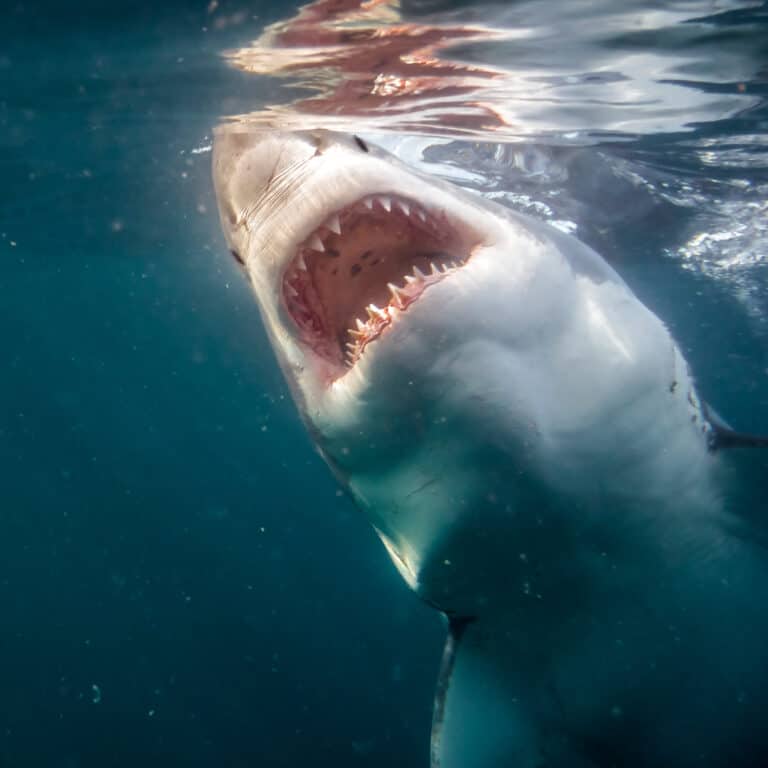
The great white shark is the largest predatory fish on earth.
©Wirestock Creators/Shutterstock.com
The great white shark is the largest predatory fish on earth. This massive shark was the one actually sighted off Oahu’s coastline in January 2019. The footage shows a 20-foot shark, eight feet wide, which was named Haole Girl. Experts distinguish her from Deep Blue by the unique markings on her pigment and fins. Unfortunately, there is not much information on this behemoth, so hopefully, there will be another sighting soon.
Breton — 13 Feet Long
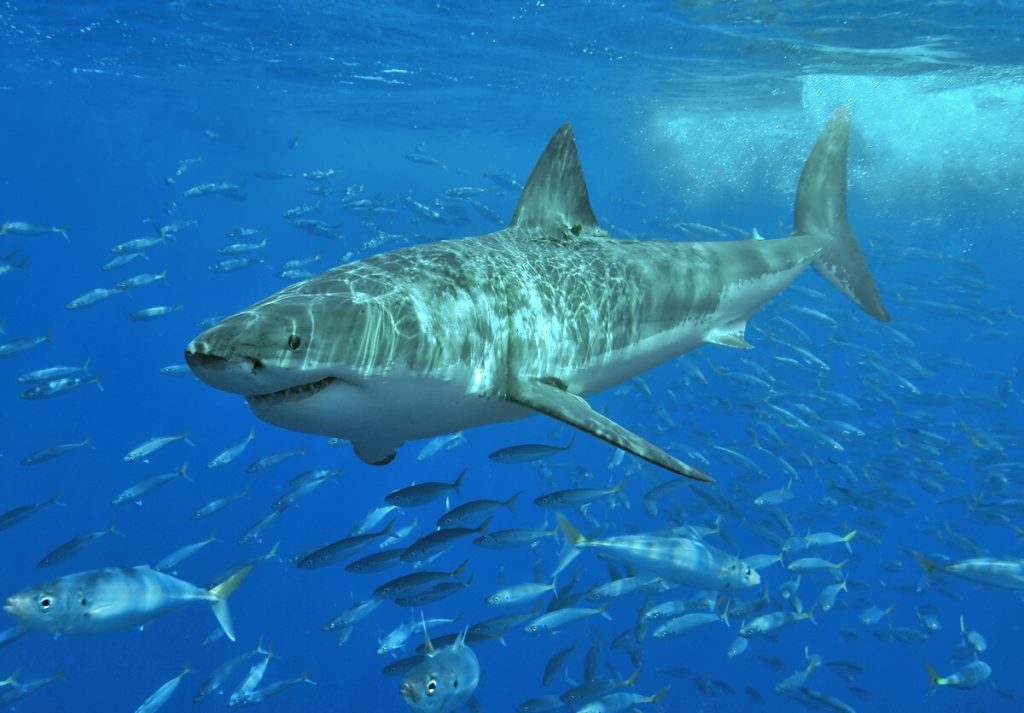
The nonprofit marine research group OCEARCH tracks dozens of sharks to provide open-sourced data on their migration patterns.
OCEARCH is a nonprofit marine research group that tracks dozens of sharks and provides open-sourced data about their migration patterns. They have tagged one of the largest great white sharks off the US, named Breton. He is a massive male, approximately 13 feet long, and weighing around 1,437 pounds. This nonprofit initially tagged Breton in September 2020 near Nova Scotia. However, his tracker pinged close to North Carolina’s outer banks in March 2023. These electronic trackers will ping whenever the shark’s dorsal fin breaches the surface. Researchers believe that Breton is following the migration patterns of other great whites in the Atlantic and is making his way from the Florida Keys to Canada.
In 2022, Breton also made an appearance just off the shore of Myrtle Beach, South Carolina, which caused a lot of panic for residents. Luckily, OCEARCH reassured residents by explaining that the giant shark was at least 60 miles offshore.
Ironbound — 12 Feet 4 Inches Long
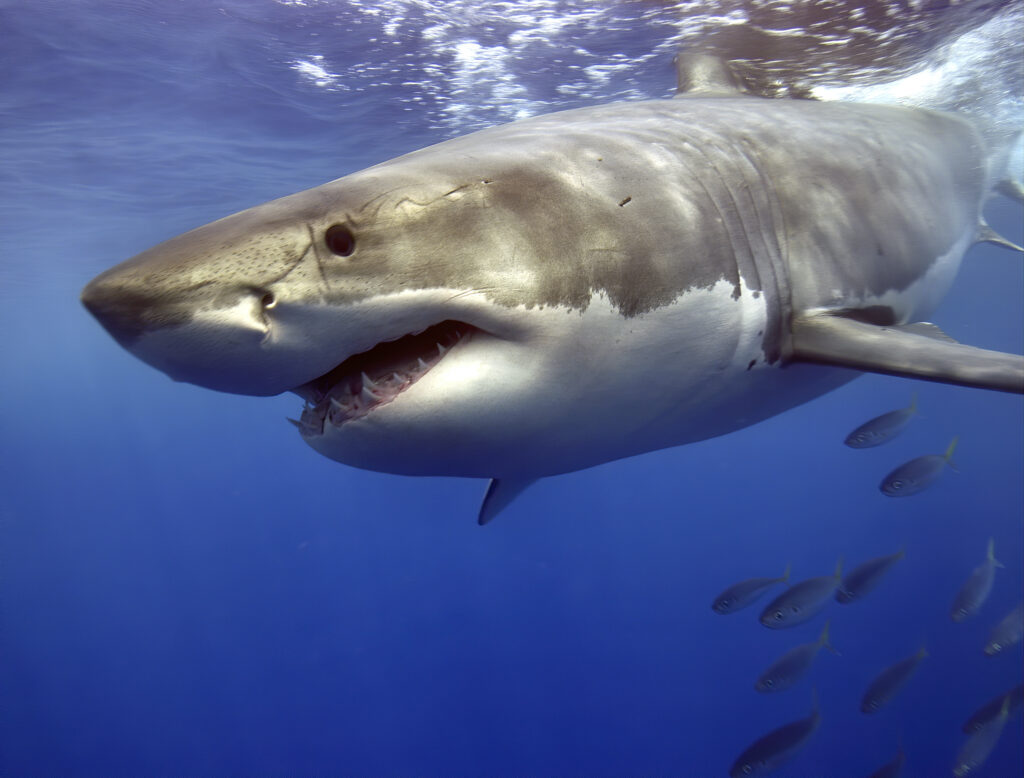
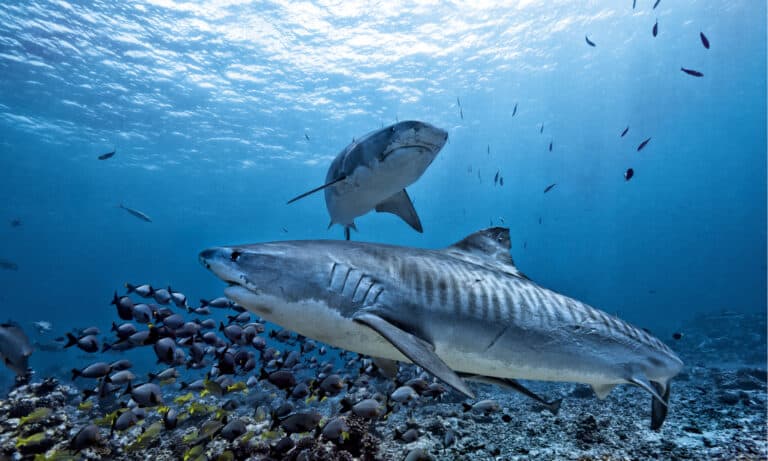
OCEARCH can track tagged sharks when they cruise at the surface.
©iStock.com/Martin Heyn
Ironbound is a massive male shark first tagged in Nova Scotia, Canada, in 2019. He measures 12 foot four inches and weighs about 996 pounds. Researchers named the shark after West Ironbound Island, located near Lunenburg, where he was first spotted. Ironbound traveled about 13,000 miles since being tagged. However, in 2022 his tracker pinged off the coast of New Jersey.
Maple — 11 Feet 7 Inches Long
©Jsegalexplore/Shutterstock.com
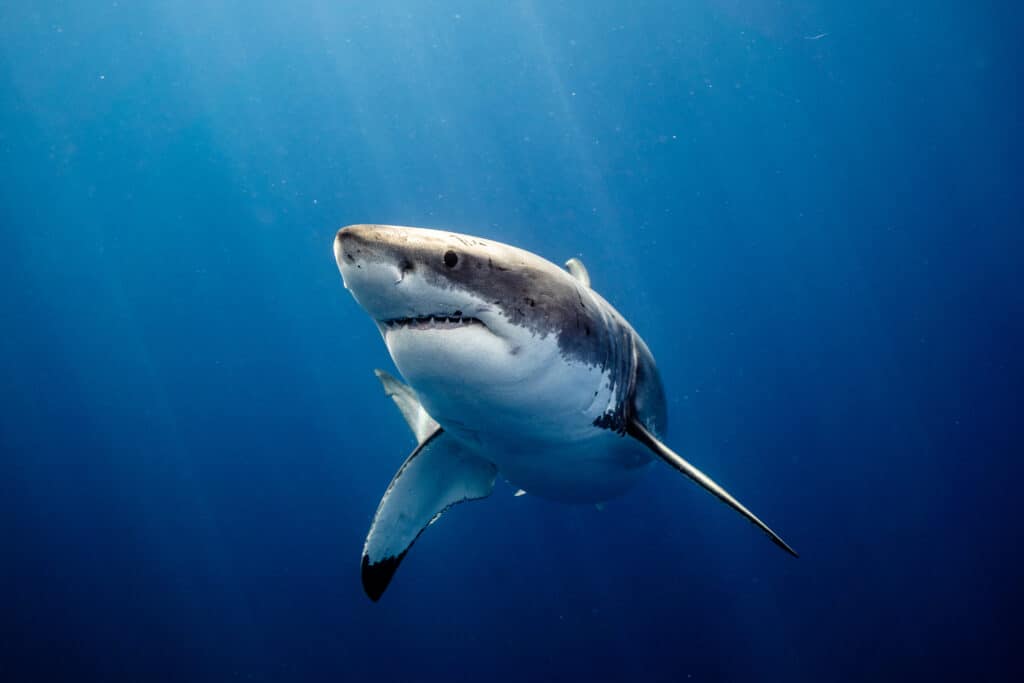
Maple is an 11-foot-seven-inch great white shark who was first tagged in Canada in 2021. Since then, she has made her way down to the Gulf of Mexico. But there have been many sightings of her traveling up and down the East Coast. She is a large specimen weighing approximately 1,200 pounds! In March 2023, Maple pinged 43 miles off the Northern coast of Florida. OCEARCH explains that Maple has spent the last two winters in the Gulf of Mexico, but if you want to keep up with her movements, you can track her here. In fact, if you visit OCEARCH’s website, you can follow any of the sharks they have tagged. Not only does it show their most recent ping, but it also shows you their previous location.
What Do Great White Sharks Eat to Get So Big?
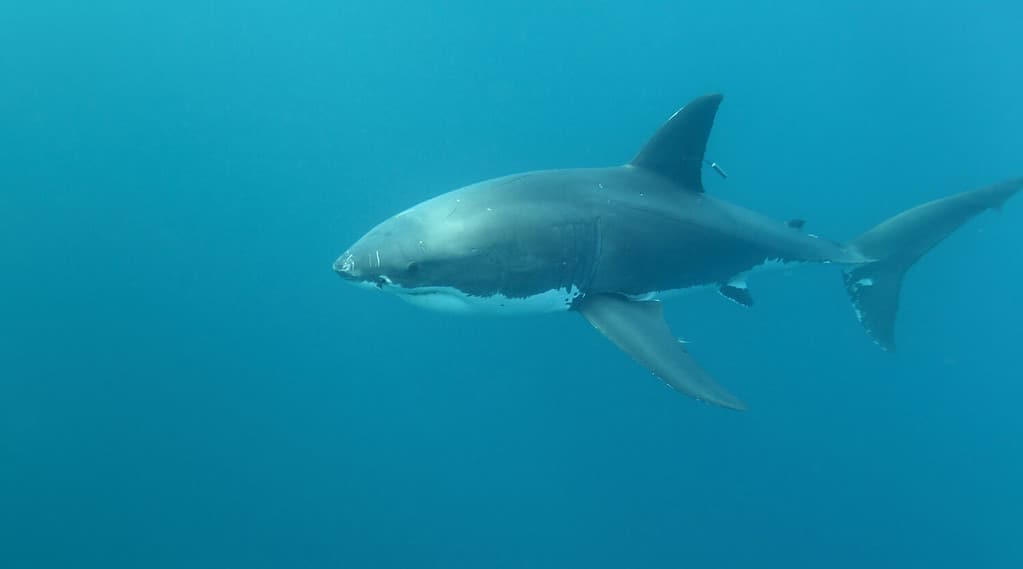
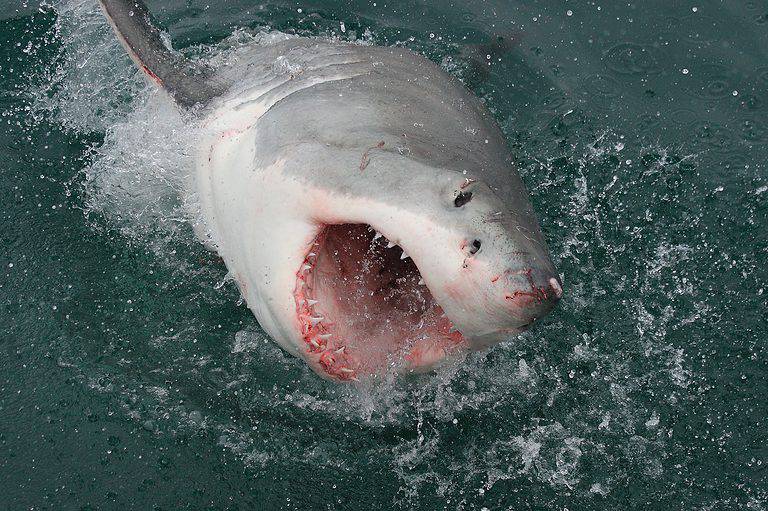
Young great white pups, seeking protection from larger predators, consume smaller seals and substantial meaty fish as they grow and develop.
©Alessandro De Maddalena/Shutterstock.com
Great white sharks, unlike Jaws depicted, eat once every few days, about 2-3% of their body weight. They don’t hunt until the meal is digested.
Being carnivores, great white sharks have diverse tastes but steer clear of plants. They are capable of preying on juvenile sharks and various marine mammals, including dolphins. While dolphins are intelligent and can defend themselves in pods, they are a documented part of the great white diet, especially when isolated. Seals, on the other hand, are a favored meal for most great white sharks. These creatures, consisting of 50% fat and rich in protein, provide the sustenance sharks need to survive. Young great white pups, seeking protection from larger predators, consume smaller seals and substantial meaty fish as they grow and develop.