
Quick Take
- Until now, scientists have never understood where tiger sharks travel to mate.
- An aggregation of tiger sharks in Hawaii, tracked over six years, highlighted how tiger sharks might travel seasonally during reproductive periods.
- This aggregation was the first of its kind and challenges existing ideas of tiger sharks as solely solitary creatures.
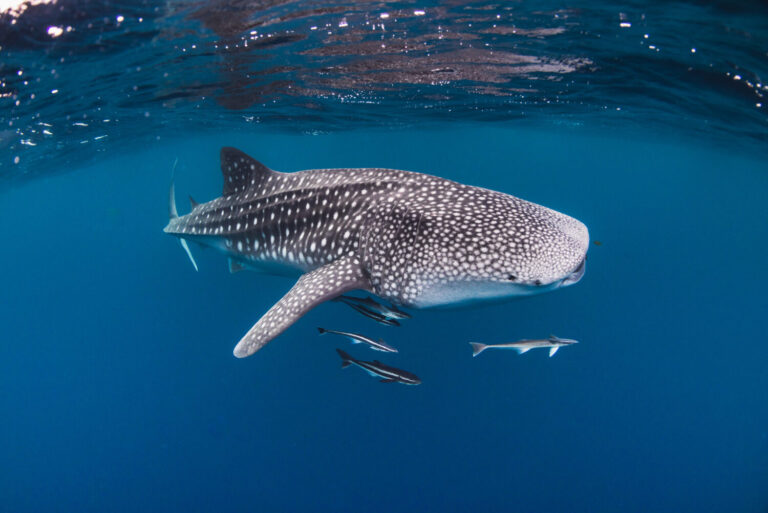
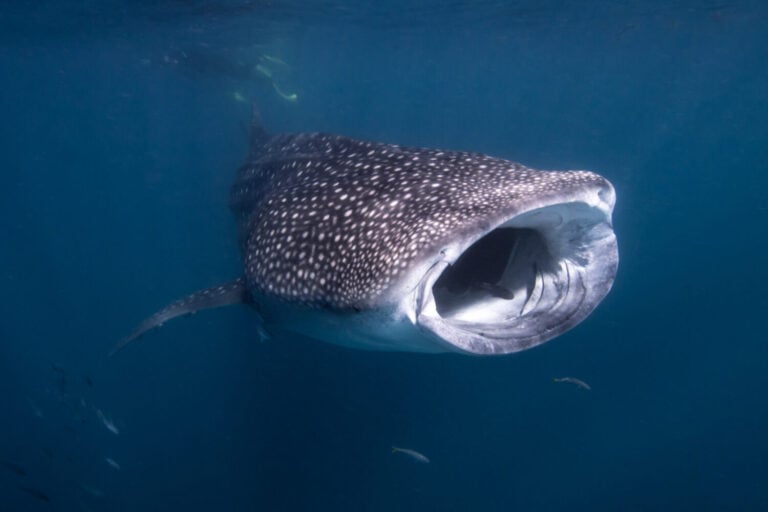
According to research, scientists know quite a lot about sharks. For example, we know that an estimated 57 shark species are bioluminescent (can produce light). We know that certain sharks, like whale sharks, have specialized diets (they’re filter feeders). And, thanks to unique tracking tools like OCEARCH’s Shark Tracker, we can even track singular sharks’ migration patterns. But one thing has been curiously absent from our scientific knowledge about sharks: where and how they mate. Although some species, including zebra sharks, have been observed mating in the wild, shark mating is actually rare to see or scientifically document.
However, researchers recently gained insight into at least one location where tiger sharks mate. This has been a mystery for decades. After all, tiger sharks are known to be relatively solitary, so scientists have long questioned when and how mating occurs. But shark researchers from the University of Hawaii at Manoa’s Hawaii Institute of Marine Biology uncovered some answers after analyzing acoustic telemetry data from a six-year period. Their findings give us a better understanding of tiger shark mating and show that maybe these sharks aren’t as solitary as we once believed.
An Overview of Tiger Sharks
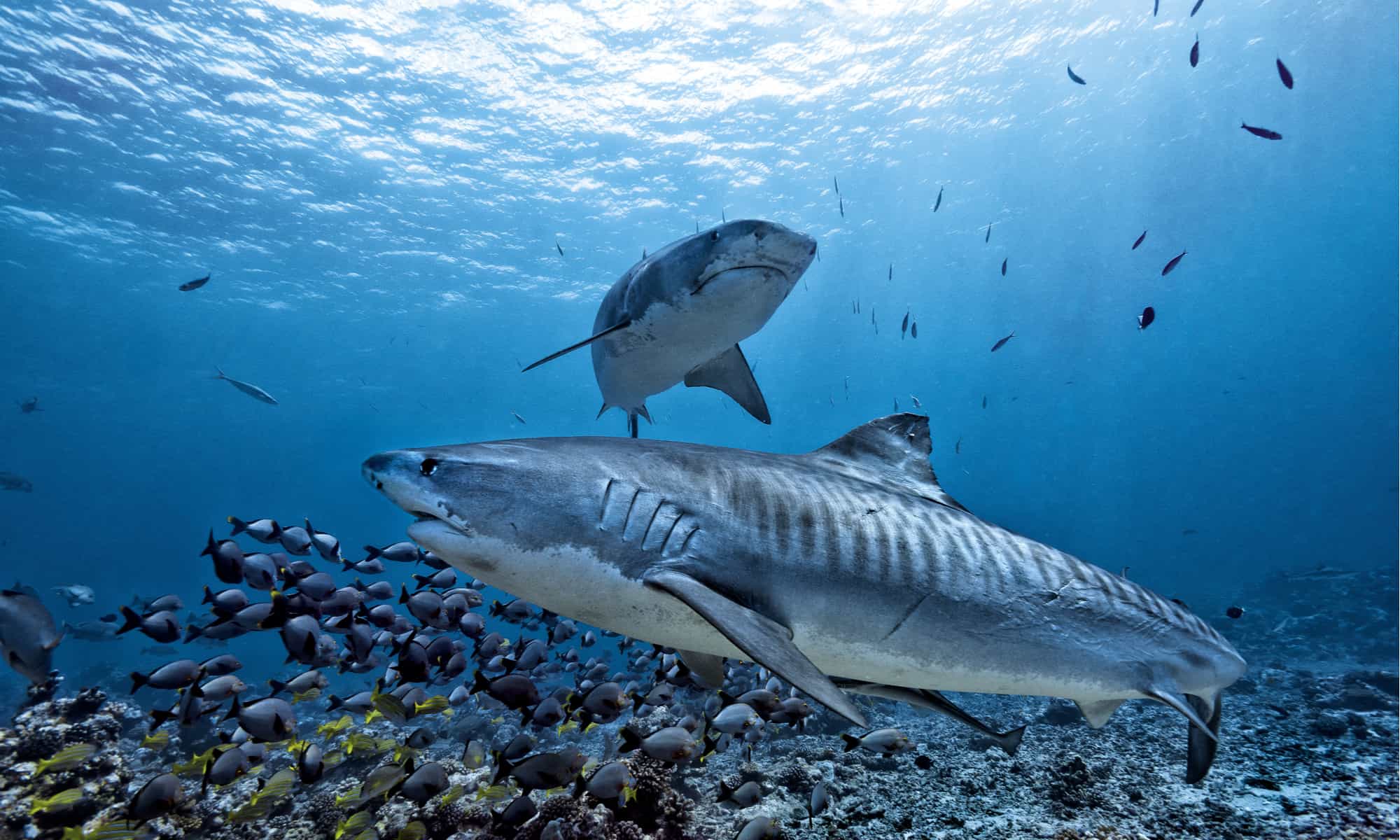
Named for the distinctive gray stripes on the sides of their bodies, tiger sharks are one of the 50-60 requiem shark species within the order Carcharhinidae. Tiger sharks typically average 10-14 feet in length, though they can range from about eight feet to eighteen feet, with females being larger than males. These sharks are known as the trash cans (or garbage disposals) of the sea because they’ll eat almost anything they can find, including seabirds, bony fishes, or even actual trash like car tires or metal.
Tiger sharks can be aggressive. They, along with great white sharks and bull sharks, are among the three species known to attack humans unprovoked. But that doesn’t mean you’ll get attacked by a shark if you’re swimming near one, so don’t be afraid. Most of the time, you wouldn’t even realize!

Tiger sharks are ovoviviparous, so their babies hatch inside of them before birth.
©wildestanimal/Shutterstock.com
When it comes to reproduction, tiger sharks are unique. They produce eggs that hatch inside their bodies before giving live birth. Tiger sharks have a long gestation period, lasting around 13-16 months. After gestation, they can give birth to litters of anywhere from 10-80 pups, although the average sits in the 20s-30s range. Tiger sharks may start giving birth in early-to-mid summer, but birthing rates usually peak around September or October. After giving birth, a female tiger shark may wait another year before becoming pregnant again.
Unfortunately, tiger sharks’ slow reproduction is a cause for concern. Tiger sharks are classified as Near Threatened by the IUCN due to overfishing and other human pressures. Though their population levels are not currently declining at a rate to consider them Endangered, conservation initiatives remain important to prevent further decline.
What Does the Research Show?

Although juvenile and adult tiger sharks might occupy different areas, some tiger sharks are known to gather in groups.
©kaschibo/Shutterstock.com
Where do tiger sharks go seasonally? Is mating specific or opportunistic? What factors shape their reproductive decisions? For years, scientists questioned the intricacies of tiger shark mating with few answers to show for it. But a December 2025 article published in Scientific Reports has changed that.
As the study’s authors explain, “Although tiger sharks are known to mate seasonally, it is unclear whether mating relies on opportunistic encounters between males and females, whether they aggregate at specific sites, or whether both factors contemporaneously drive their reproductive strategies.”
In this study, the researchers focus on acoustic telemetry data captured between 2013 and 2019. Their data focused on tagged tiger sharks near O’ahu and Maui. The researchers noticed trends after evaluating the data. In particular, they noted:
- Sharks tagged around Maui stayed in Maui year-round. Additionally, sharks tagged around O’ahu traveled to Maui (specifically Olowalu) seasonally during the winter months.
- These visits coincided with, or even slightly preceded, when humpback whale mothers and calves would come to Olowalu.
- 80% of the tagged sharks were sexually mature. This ranges from between four to ten years old, with many female tiger sharks considered sexually mature around seven years old.
Because this overlap coincided with humpback whale calf-rearing season, researchers needed to determine whether the sharks were present for mating or hunting purposes.
Feeding or Mating?
The presence of humpback whales and calves, along with the opportunity for placental foraging, seems attractive for tiger sharks. Since tiger sharks are opportunistic hunters, being around whales during birthing season would allow them to feed more freely.
However, through photo documentation, the researchers noticed something telling about the sharks. Male tiger sharks had abrasions on their claspers, the male reproductive organs used to transport semen. Female tiger sharks, on the other hand, were observed with bite marks. Shark mating can be relatively violent, with male sharks biting the female sharks to hold them in place while they mate.
Although mating was not directly observed, researchers determined that Olowalu was the site of a seasonal reproductive aggregation for tiger sharks, given the physical signs of mating and the number of adult sharks present. At the same time, the sharks may also take advantage of the feeding opportunities. It’s important to note that feeding and mating are not mutually exclusive.
No similar aggregation of this kind has ever been documented before in tiger sharks. Admittedly, there’s still much to learn about tiger shark behavior and reproduction. But this gives us a clearer look at our friends in the deep, and a bigger appreciation for the long journeys they make to mate.
CORRECTION: This article was updated on March 22, 2026, to correct a photo. A previous version of this article incorrectly identified a sand tiger shark (Carcharias taurus) as a tiger shark (Galeocerdo cuvier).