
The ocean’s top predators, great white sharks, have long captured human attention, but only a few individuals become famous in their own right. “Contender” is one of them. One of the largest male great whites ever studied, this 1,653-lb. behemoth has been patrolling the East Coast of the United States and Canada for years. And now, with a free app, you can follow his movements yourself (he’s off Cape Hatteras as of this writing).
Great White Sharks at a Glance
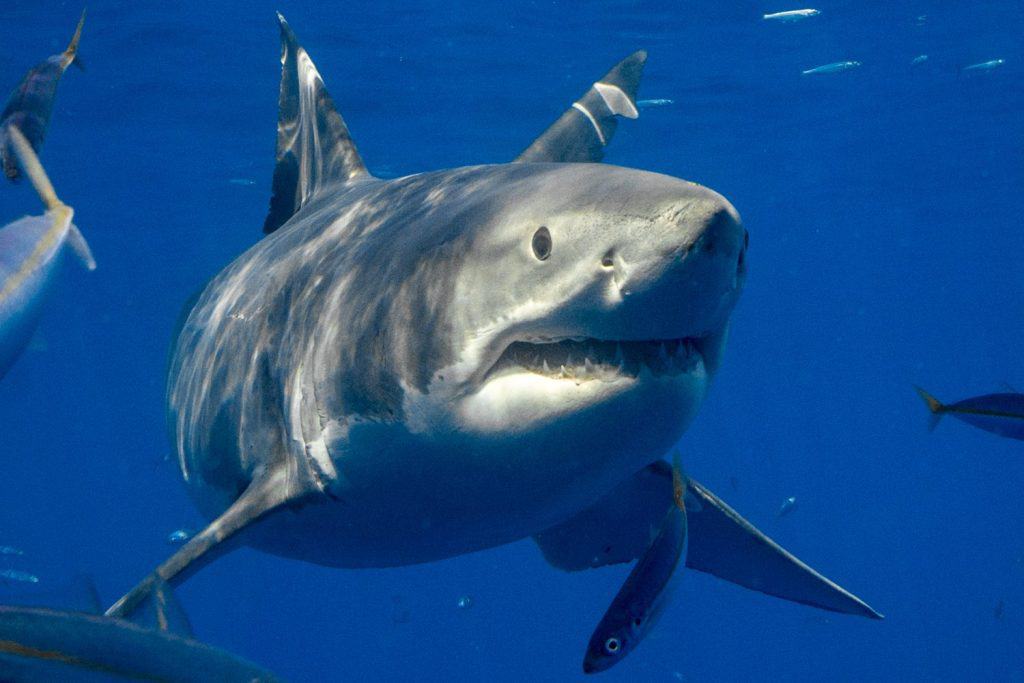
Sharks are a type of fish: the largest predatory fish in the world.
©Shane Myers Photography/Shutterstock.com
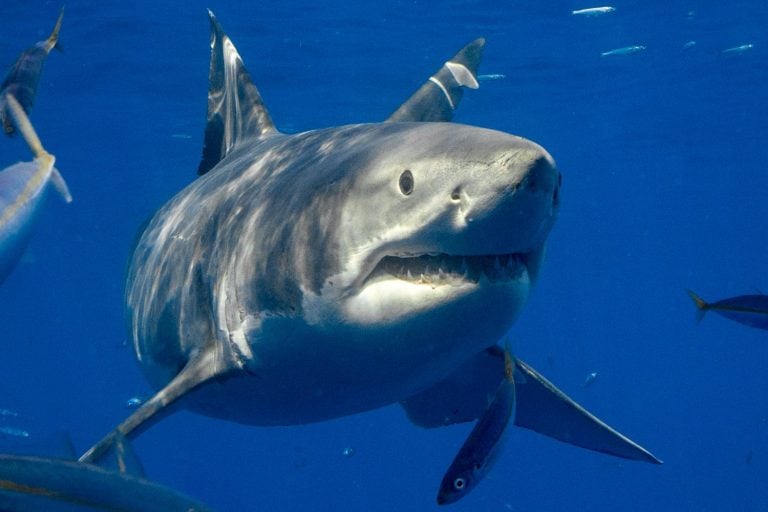
Great white sharks are the largest predatory fish in the world’s oceans. Adult males are often between 11 and 13 feet, while many females reach 15 or 16 feet, and a few may grow close to 20 feet. They are regionally endothermic, meaning they can warm key muscles and organs above the surrounding water temperature. This adaptation, combined with a streamlined body, allows them to swim quickly and hunt efficiently in cool temperate waters.
Their diet varies with age and location. Younger sharks focus more on fish, while large adults like Contender often target seals and other marine mammals when available. Great whites also have keen senses: they detect faint electrical signals from prey and can respond to tiny traces of scent in the water. All of these traits make them high-level predators that help keep prey populations in balance.
They Don’t Mean to Eat People
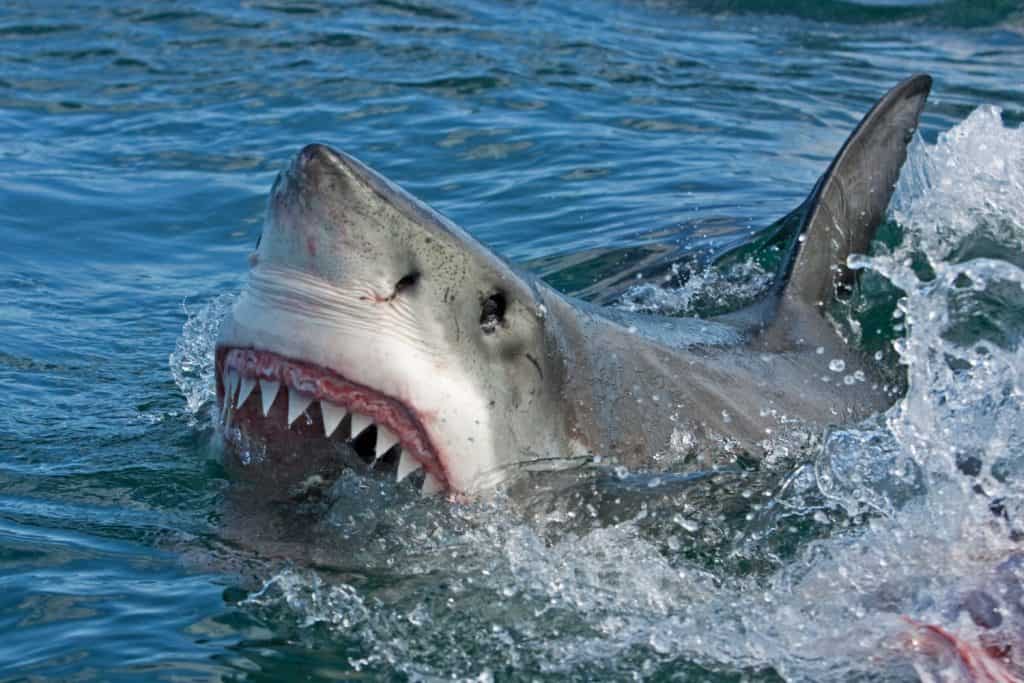
When great white sharks bite people, it’s usually a mistake. A potentially fatal mistake.
©Martin Prochazkacz/Shutterstock.com
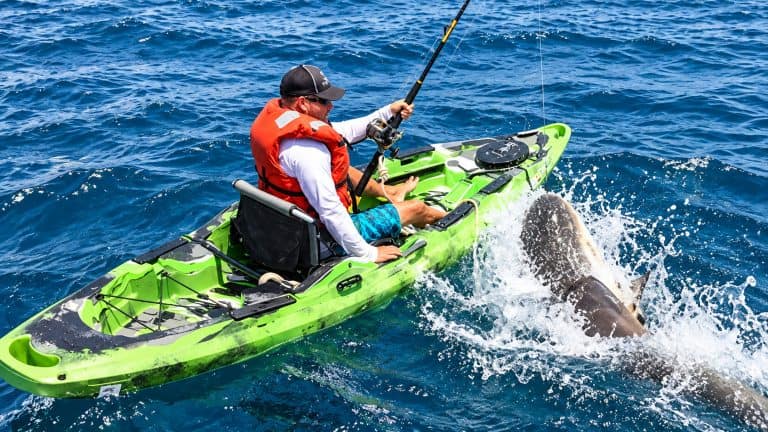
Very rarely, great white sharks eat people, but they don’t mean to. Great whites don’t see humans as food, and when they bite someone, it’s usually because they’re curious or they’ve mistaken a swimmer or surfer for a seal. Their real diet is fish, sea lions, and other fatty marine animals that give them way more energy than a human body ever could.
Most encounters end after a single bite, with the shark letting go once it realizes the mistake. However, that bite can be strong enough to sever a limb or cause life-threatening bleeding. There have been a few cases where a great white has consumed human remains, but these situations are extremely rare and typically occur after the person has already died from the initial bite or from drowning. In fact, worldwide, there are only about 5-6 documented cases a year of sharks of any species killing people. In the U.S., a shark kills a person on average about once every two years. And during those same two years, an average of four people have died from vending machines falling on them!
“Contender” Is a Big Boy
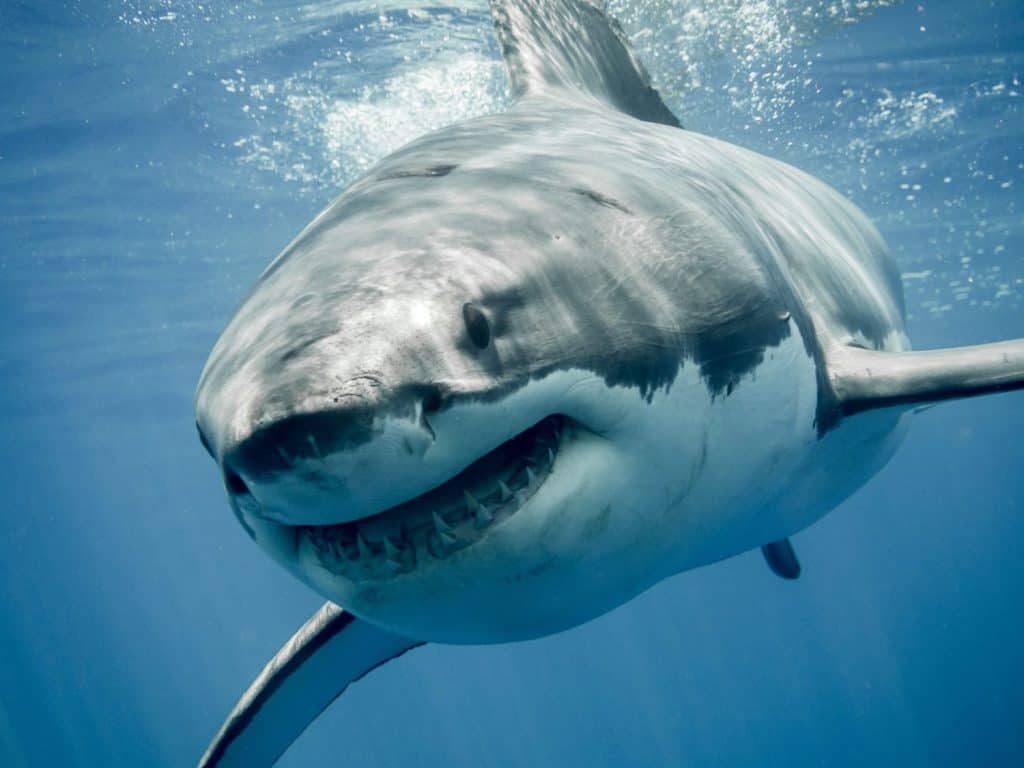
Contender is one of the largest male great white sharks captured and studied.
©Ramon Carretero/Shutterstock.com
Tagged by the nonprofit research group OCEARCH on January 17, 2025, about 45 miles off the Florida–Georgia border, Contender is an adult male that measures about 13.8 feet and weighs roughly 1,653 pounds. That size earns him the title of the largest male white shark ever tagged, sampled, and released by OCEARCH in the Western North Atlantic population, and one of the largest ever recorded in the Atlantic region.
Scientists estimate that he is around 30 to 32 years old, an age that marks him as a fully mature male and an important breeder for his population. His size, age, and long-distance travels provide a rare window into what life looks like for an older male great white in a changing ocean
How Scientists Follow A Giant
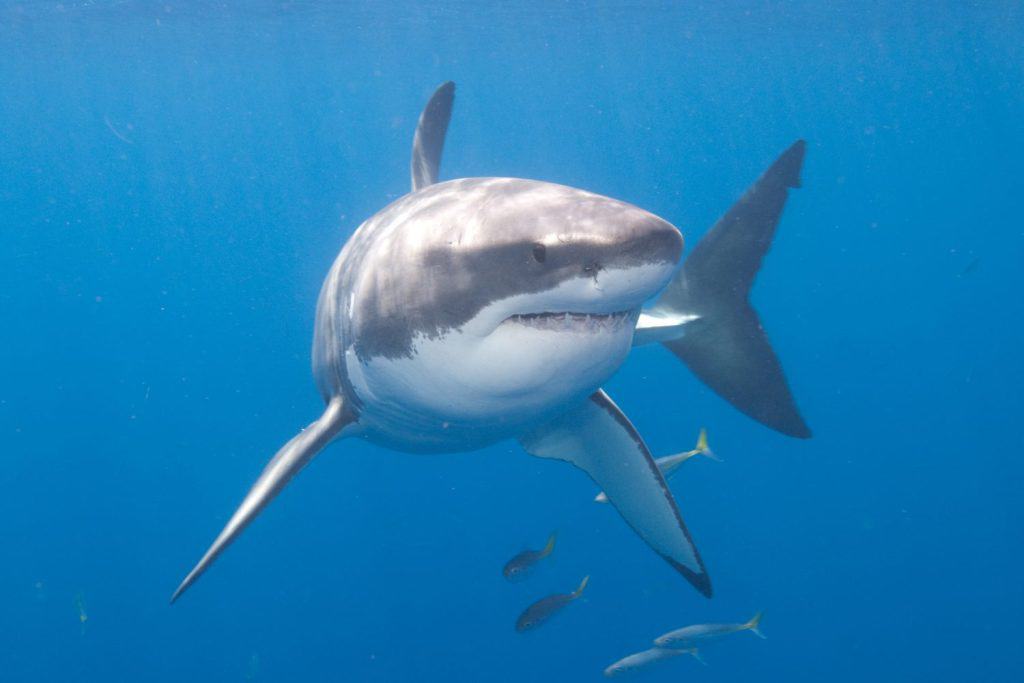
With a special tag transmitting a signal, Contender betrays his whereabouts to researchers.
©Jim Agronick/Shutterstock.com
During Contender’s capture, researchers secured him on a specialized lift beside the research vessel so veterinarians and biologists could work quickly and safely. They drew blood, took small tissue samples, measured his length and girth, and checked his overall condition. He got fitted with a SPOT satellite tag to his dorsal fin before being released.
The tag sends a signal, or “ping,” whenever the fin breaks the surface for long enough. Each ping includes the shark’s position and basic environmental details such as sea surface temperature. Over time, those points create a track that shows where Contender travels and how long he spends in different regions. The tag is designed to last up to about five years, giving scientists an extended look at his movements across seasons and through various stages of his life.
What The Tags Reveal About His Route
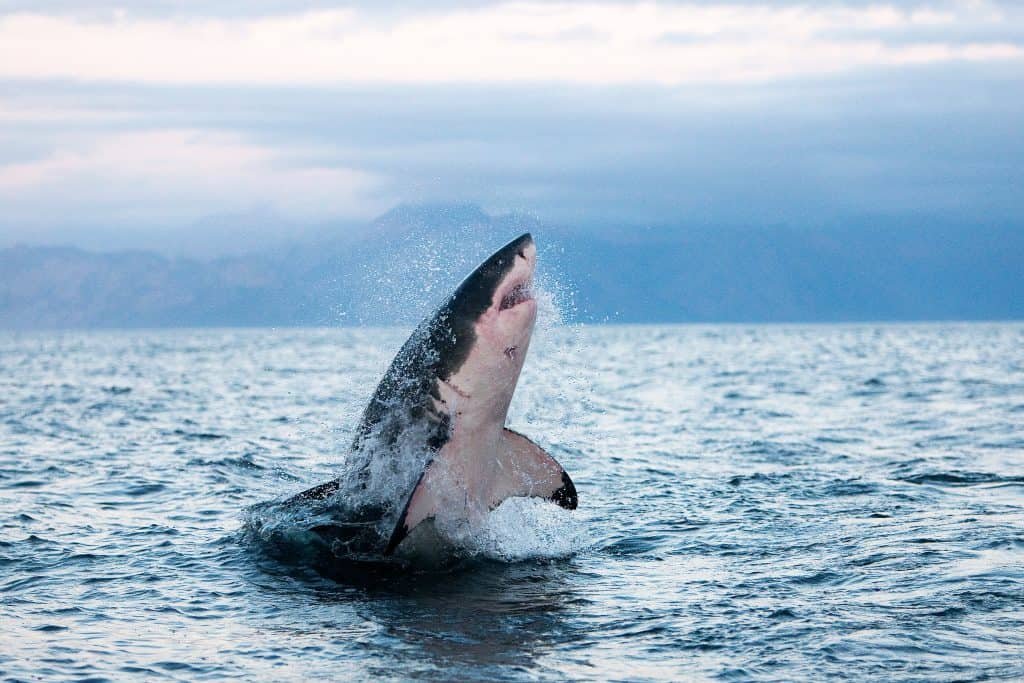
Contender’s annual migration takes him from Florida to Canada and back again.
©slowmotiongli/Shutterstock.com
Since his tagging, Contender has traced an impressive route along the western Atlantic. After spending time off Florida, he moved north along the Gulf Stream and was later detected off North Carolina’s Outer Banks. In July 2025, his signals placed him between Nantucket Shoals and Georges Bank, east of Massachusetts, a known white shark hotspot.
By early autumn, he surprised researchers by appearing near Anticosti Island in the Gulf of St. Lawrence, an area where tagged adult males have rarely been documented. Later that month and into October, he pinged again off Cape Breton Island in Atlantic Canada. Most recently, his track has shown him off the coast of the Outer Banks of North Carolina. This route shows how a single shark can link distant feeding grounds and travel through several national jurisdictions in a single year.
Contender’s track has mostly remained offshore, often dozens of miles from popular swimming areas. When he does approach coastal zones, he usually passes through quickly while following prey or seasonal currents.
A Seasonal Commute Through The Atlantic
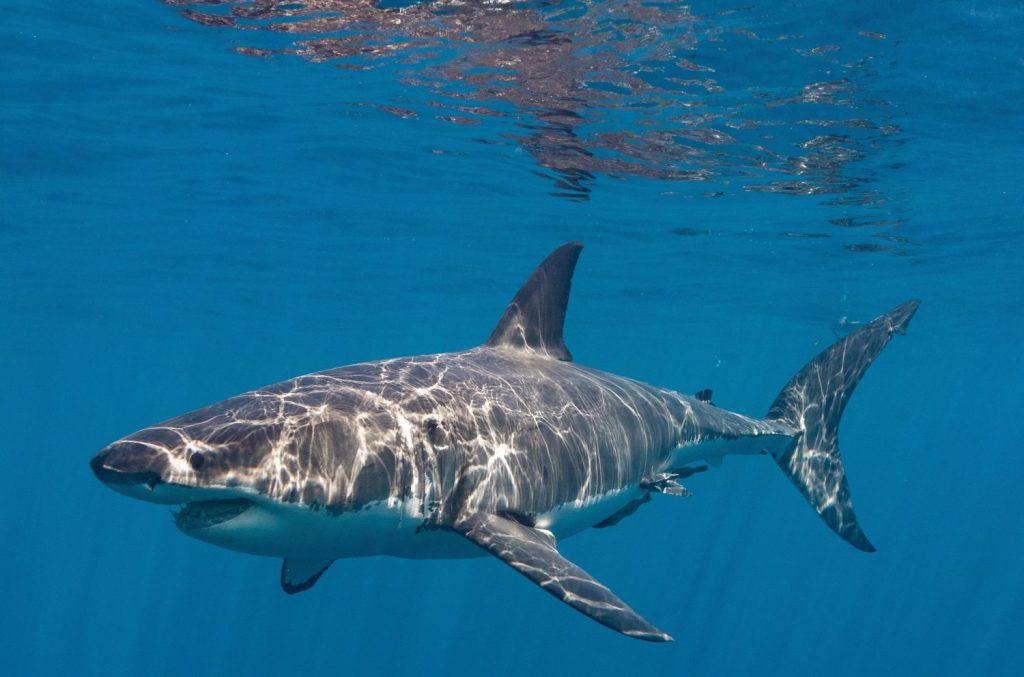
Contender’s path shows that he has a large territory spanning the coastal waters of two countries.
©Wirestock Creators/Shutterstock.com
Contender’s movements fit what researchers are learning about the wider Western North Atlantic white shark population. Many adults spend the colder months in deeper offshore waters from the Carolinas to Florida, where temperatures are milder and prey such as fish and smaller sharks are available. As spring and summer arrive, they head north toward productive feeding grounds off New England and Atlantic Canada, drawn by dense seal populations and schooling fish.
OCEARCH expeditions and other research programs have shown that white sharks tagged in the southeastern United States frequently return to Atlantic Canada during the summer and fall, indicating strong site fidelity to that region. Contender’s route from Florida to Nantucket, the Gulf of St. Lawrence, Cape Breton, and back toward the mid-Atlantic coast reinforces the idea that these sharks view the entire western Atlantic margin as a single connected habitat rather than a series of separate zones.
Why Tracking A Big Male Matters
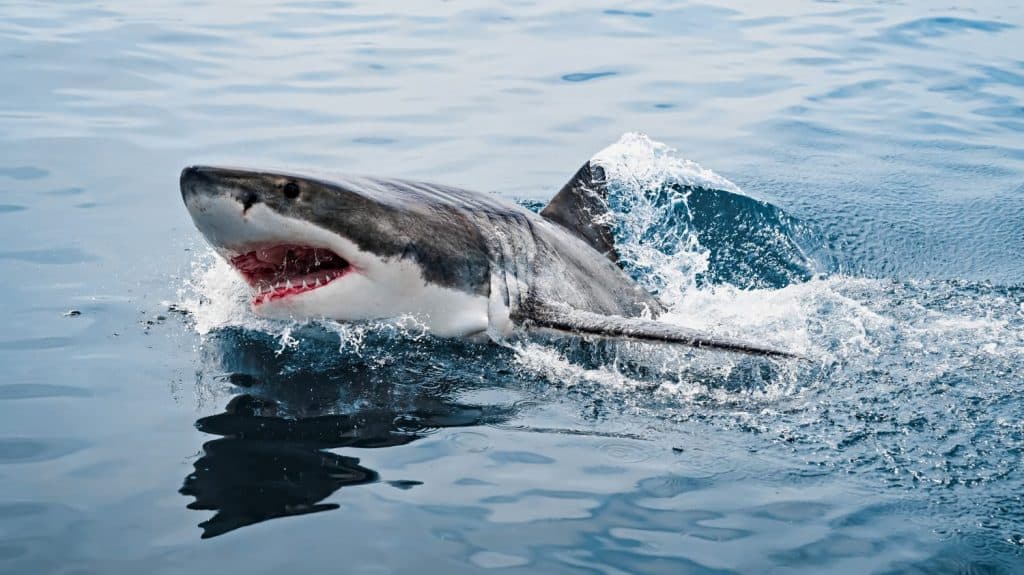
Great white sharks are considered a Vulnerable species.
©NNER/Shutterstock.com
Female great whites usually grow larger than males, but very large mature males like Contender are relatively rare in tagging records. Because he has survived for three decades in a human-dominated ocean, he represents a successful combination of genetics, health, and behavior. When scientists collect tissue and blood samples from such an individual, they can study their diet, exposure to pollutants such as mercury, and overall condition. Genetic tests can reveal how he is related to other sharks in the population and whether the breeding pool is broad or limited.
For a species listed as globally Vulnerable by the International Union for Conservation of Nature, every mature breeder carries extra importance. Learning how and where individuals like Contender thrive helps researchers identify habitats that need protection and management measures that support the long-term recovery of the species.
Ocean Neighbors, Predators, And Prey
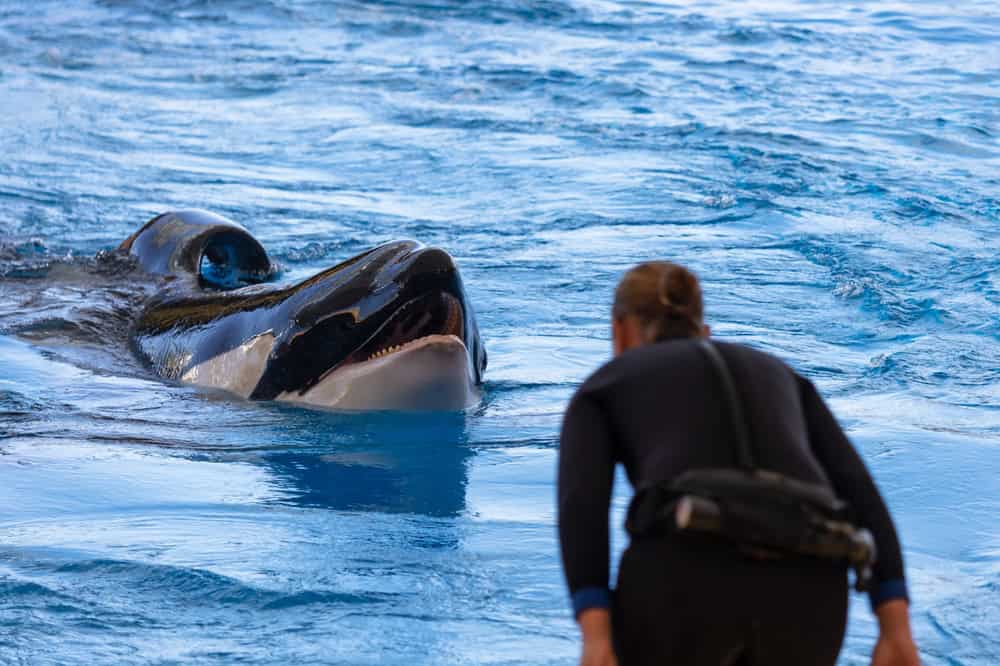
Orcas and humans are really the only two predators that pose a regular threat to great white sharks.
©Tereza Tothova/Shutterstock.com
Along his route, Contender shares the water with many other marine animals. Seals are a key prey group in areas such as New England and Atlantic Canada, and their seasonal movements often overlap with white shark migrations. Sea turtles and large fish species also use some of the same coastal and offshore zones, relying on similar currents and feeding areas.
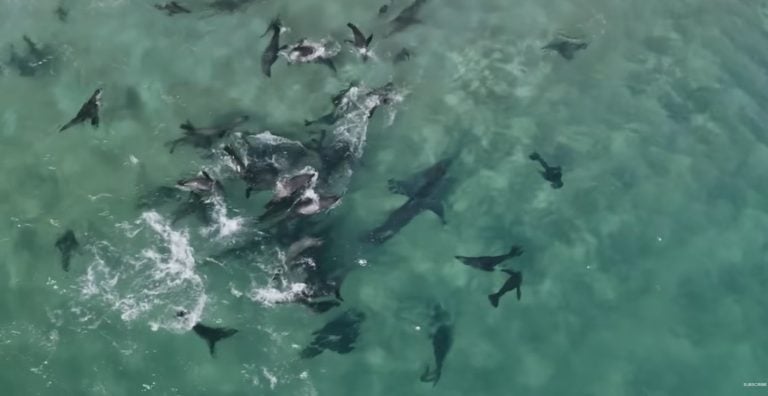
Contender may even cross paths with orcas, powerful marine mammals that sometimes prey on sharks. In several regions, orcas have been observed flipping great whites and other sharks upside down to induce a state of paralysis called tonic immobility, making it easier for them to access the sharks’ nutrient-dense livers.
These interactions remind scientists that no species exists in isolation. Studying Contender’s path alongside movement data from other animals helps build a more complete picture of how energy, prey, and predators move through the Atlantic ecosystem.
Real-Time Science For Everyone

Following sharks online is free and kinda cool.
©Dragana Gordic/Shutterstock.com
You can track Contender’s movements yourself from your phone or computer using this Global Shark Tracker. You’ll see a number of sharks there; scroll down to find our friend Contender. It’s a great tool for students, beach goers, or just people who are curious and fascinated by nature.
This open-data approach is intentional. It turns a single tagged animal into a global teaching tool. It also builds support for shark conservation by replacing fear with curiosity and giving people a direct connection to an individual animal.
Looking Ahead With Contender
Contender’s story is still unfolding. In the coming years, his tag may show repeated round-trip journeys or unexpected detours as ocean temperatures and prey patterns shift under climate change. Each new ping adds another piece to the puzzle of how mature male great whites live, feed, and reproduce in the Western North Atlantic, and how healthy our oceans are.