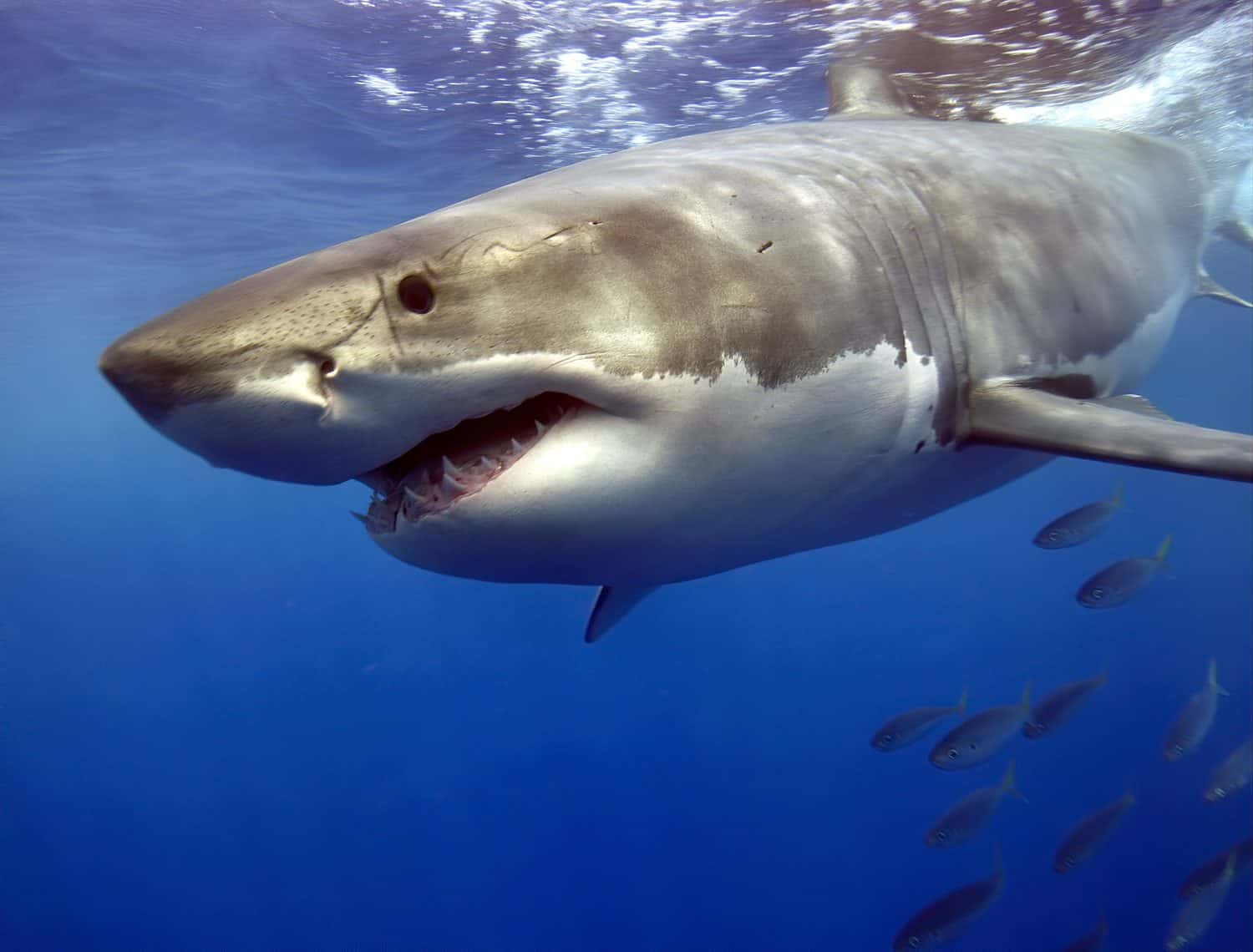

Tales of massive sharks have been around since the time of the first seafaring people. While some of the accounts may have been accurate, there is evidence that some exaggeration may have taken place from time to time. However, thanks to modern technology, a massive shark has been confirmed as the largest great white shark ever recorded in the world. The incredible shark may be mature in age, but is continuing to live a life of adventure as she swims thousands of miles between her preferred California and Mexico coastlines and beyond. The impressive great white is Deep Blue.
Largest Confirmed Great White Shark Is 20 Feet Long
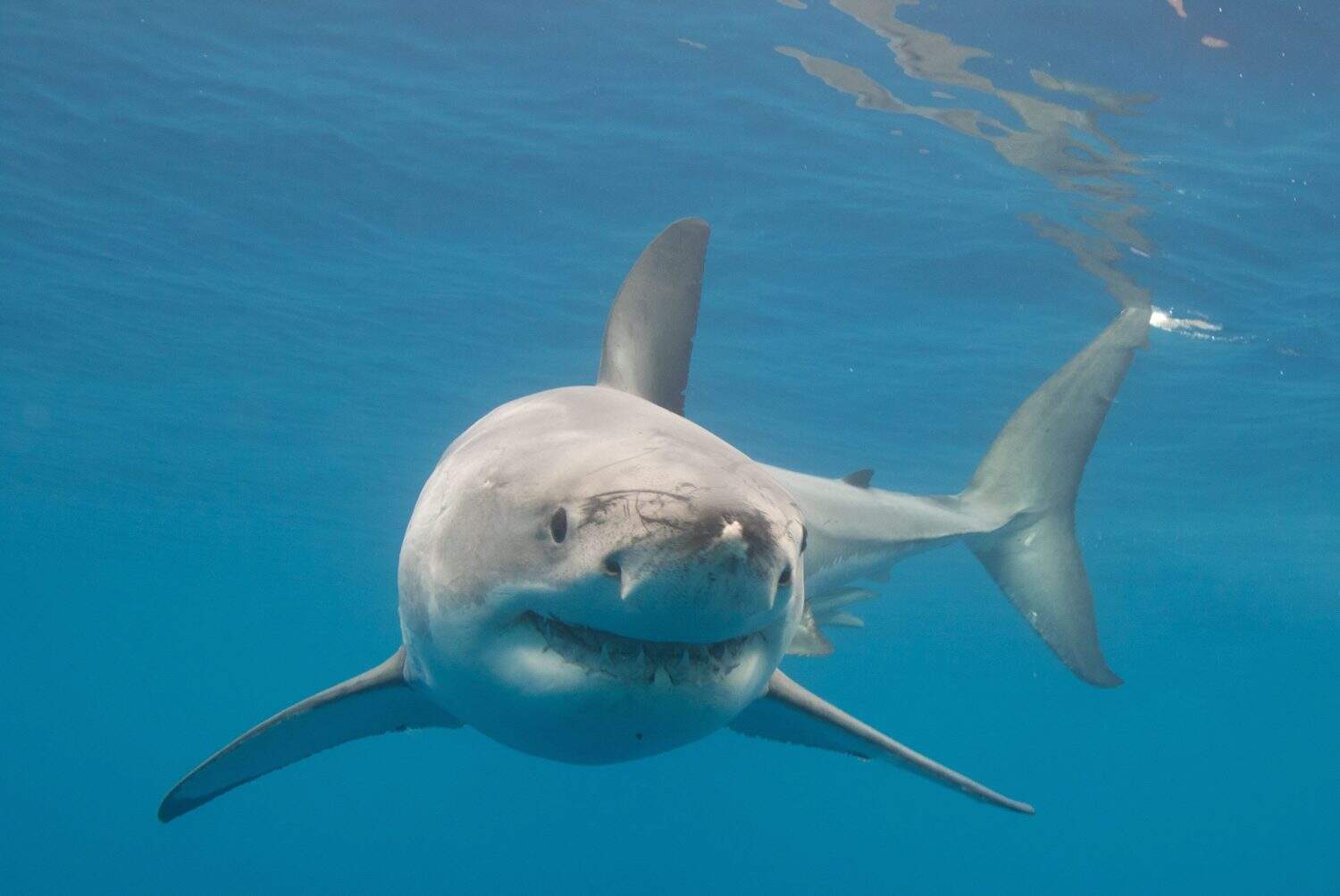
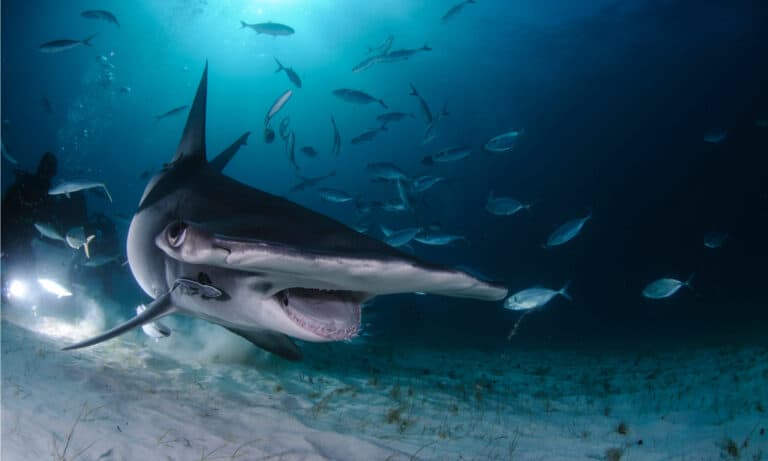
A great white, similar to this shark, named Deep Blue, is the largest of all great white sharks.
©Wirestock Creators/Shutterstock.com
Some large creatures swim in the sea. However, few things frighten people more in the ocean environment than sharks, specifically great white sharks. With an average size of four feet long, all species of sharks are formidable foes to their prey. But for those who are much larger, such as the largest confirmed great white shark, it is clear why many in this species are apex predators.
The largest confirmed great white shark was discovered in 2013 off the coast of Guadalupe Island in Mexico. The great white shark, given the name Deep Blue, measured in at 20 feet long and was believed to weigh 5,500 pounds. To put this length in perspective, Deep Blue is approximately the size of a standard limo. An average great white measuring between 11 and 16 feet, making Deep Blue markedly larger. At the time of her discovery, Deep Blue had a significant girth. This led scientists to believe that she was pregnant. If Deep Blue were pregnant, however, scientists were unable to determine when her offspring were born.
Since the time of her discovery, Deep Blue has proven to be a curious shark but not an aggressive one. Researchers state that she has taken a few bites at cages in the water used to observe her, but has not gone after the scientists inside. There have even been those who have swum alongside Deep Blue and have done so without incident. While this action is not advised, it does show that there is a misconception about great white sharks being mindless and aggressive predators.
Deep Blue is a more mature great white shark, but from all appearances, the female shark looks to be in good health. Therefore, it was not a surprise to see Deep Blue ping on the map with her satellite tracker in 2024, as she provided information to scientists about her location and behavior.
Deep Blue Was Still Alive in 2024
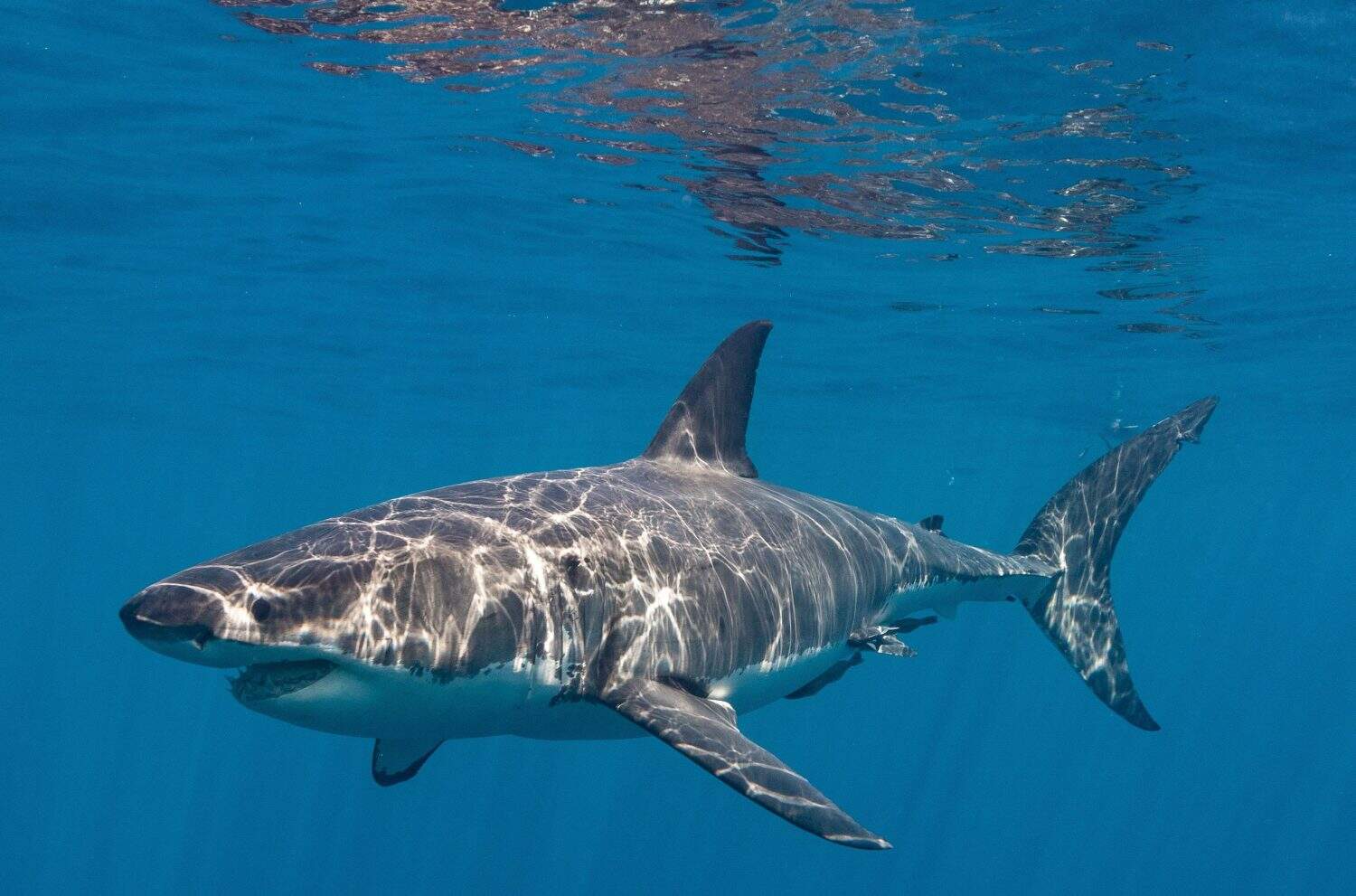
Deep Blue, similar to this great white, was still swimming off the coast of Mexico in 2024.
©Wirestock Creators/Shutterstock.com
Despite the average lifespan of a great white shark being 30 years, Deep Blue has surpassed that, with a ripe old age of over 50 years. While Deep Blue has yet to be spotted in 2025, as of 2024, the ginormous great white shark was still alive, continuing to provide researchers information about her migratory patterns, as she has done for over a decade.
Deep Blue has a preference for the waters of the Pacific Ocean. However, it is common for her to move from the coast of California to Mexico, with time spent in both Cabo San Lucas and Ensenada. There have even been times when Deep Blue has made her way off the coast of Florida. Deep Blue’s most recent sighting was in Ensenada as she swam between fishing boats, likely looking for her next meal.
As of 2025, there have yet to be any sightings of Deep Blue. This, however, does not mean there is anything wrong with the great white. Over the years, the migratory patterns of Deep Blue have changed due to climate change and changes in food sources. Therefore, just where Deep Blue will surface next is anyone’s guess.
Deep Blue Has Become an Ambassador for Great White Sharks
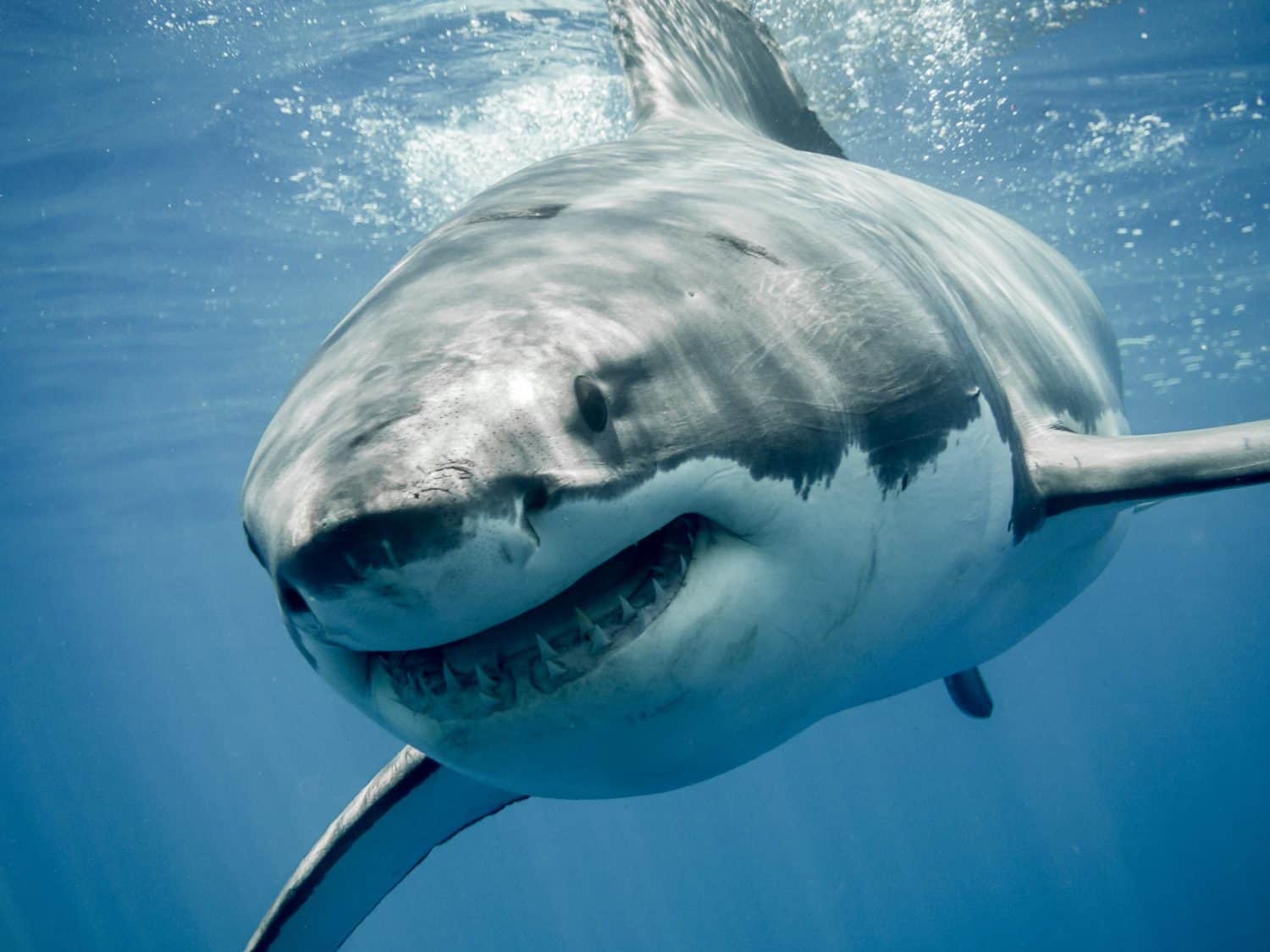
Deep Blue, similar to this white shark, has become an ambassador to her species thanks to her long-term tracking.
©Ramon Carretero/Shutterstock.com
A shark the size of Deep Blue could easily become the things nightmares are made of. But thanks to the satellite tracking device that was affixed to Deep Blue, the massive great white shark has become an ambassador for the species.
Since her discovery in 2013, Deep Blue has been providing scientists with information about her travel patterns and interactions with other sharks. During this time, Deep Blue has covered more than 20,000 miles, all of which can be monitored in real time.
Thanks to the ability to monitor Deep Blue’s migratory patterns, scientists have created better conservation plans to protect the species. Additionally, the hope is that more people become invested in saving the species, thanks to the ability to not only track Deep Blue but also other white sharks on online platforms such as OCEARCH Shark Tracker or Shark Research Foundation.
The ability to track helps scientists who come across the white sharks in the field, and can even allow for updated measurements to be taken in some instances. This is something that was not available tens of decades ago, which is why claims of massive great white sharks persisted for years.
The History of Massive Great White Shark Claims
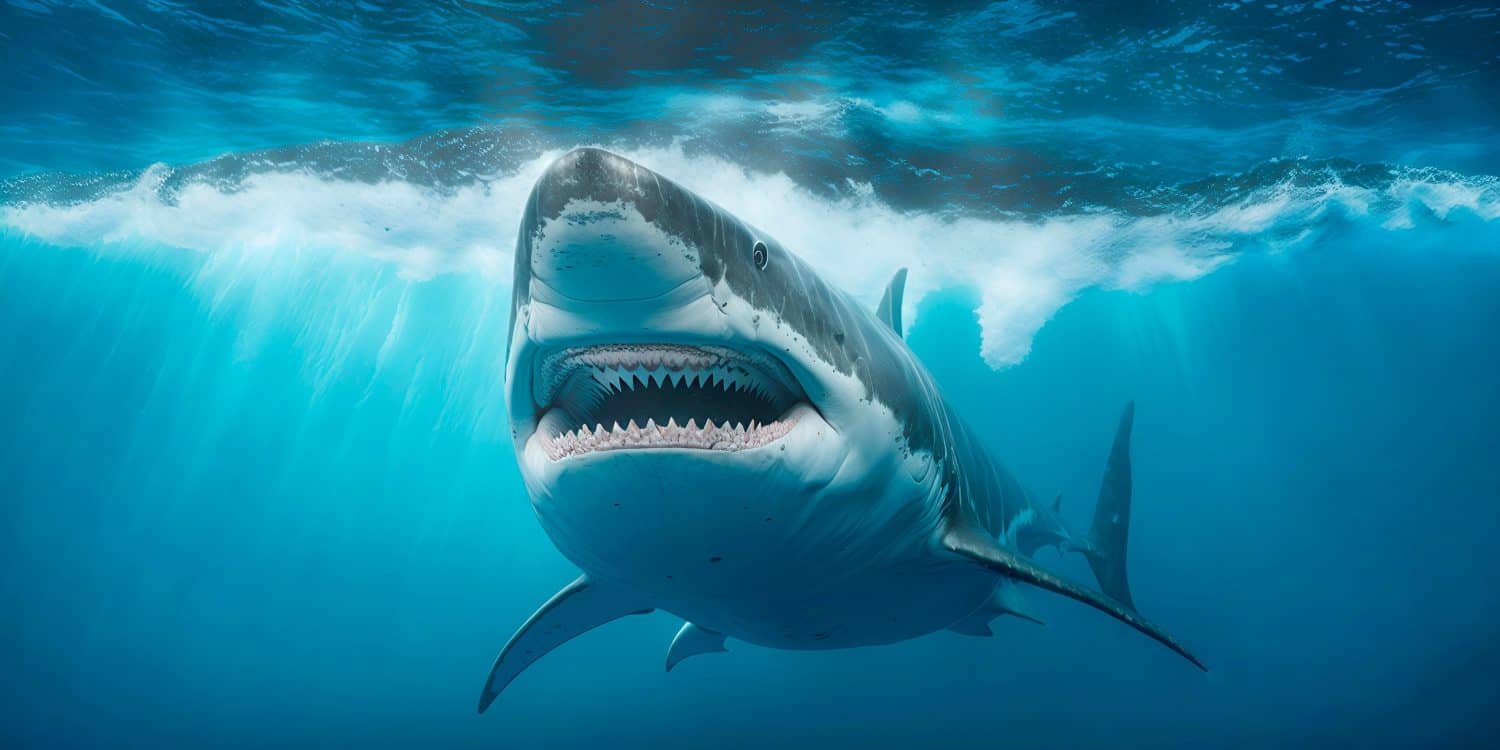
Stories of massive great white sharks being caught over the last century have since been debunked.
©LuckyStep/Shutterstock.com
Over the years, claims of incredibly impressive great white sharks have been made around the world. Two in particular were in a class of their own based on their lengths alone. However, these sharks were not as they seemed, easily making Deep Blue the largest confirmed great white ever encountered. In the 1870s, fishermen in Port Fairy, Australia, claimed to have caught a massive 36-foot great white shark. This shark would hold the title as the largest great white shark ever observed, let alone caught in history.
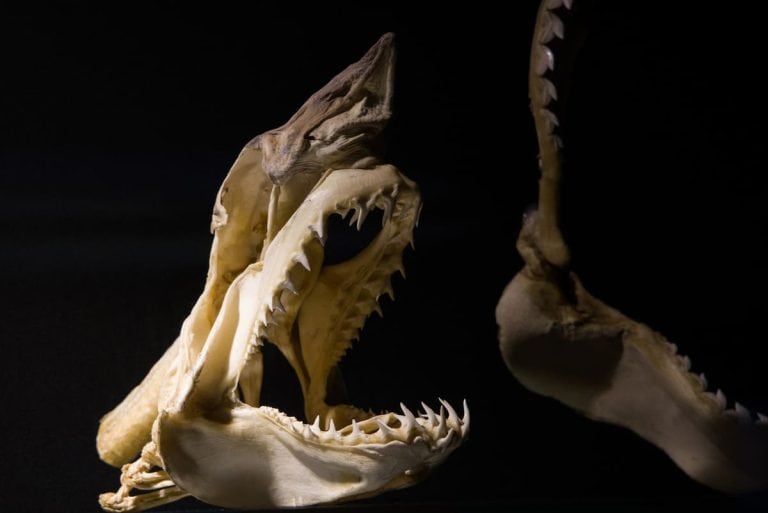
As the years went on and science became more precise, researchers were able to take a closer look at the jaw of the shark that had been preserved. Based on measurements alone, it was clear that the white shark could not have been 36 feet long. Instead, the great white was believed to be closer to 16 feet long. While still a very large shark, it was 20 feet shy of its initial measurements.
As the 1930s rolled around, another large shark was captured. This shark was measured to be 37 feet long, hailing from New Brunswick, Canada. But, as luck would have it, it was not a white shark at all. Instead, the incredible shark was a basking shark that had been misidentified as a great white. Therefore, until a larger great white shark makes its presence known, Deep Blue is an easy record holder as the largest great white shark encountered.
The Declining Population of Great White Sharks
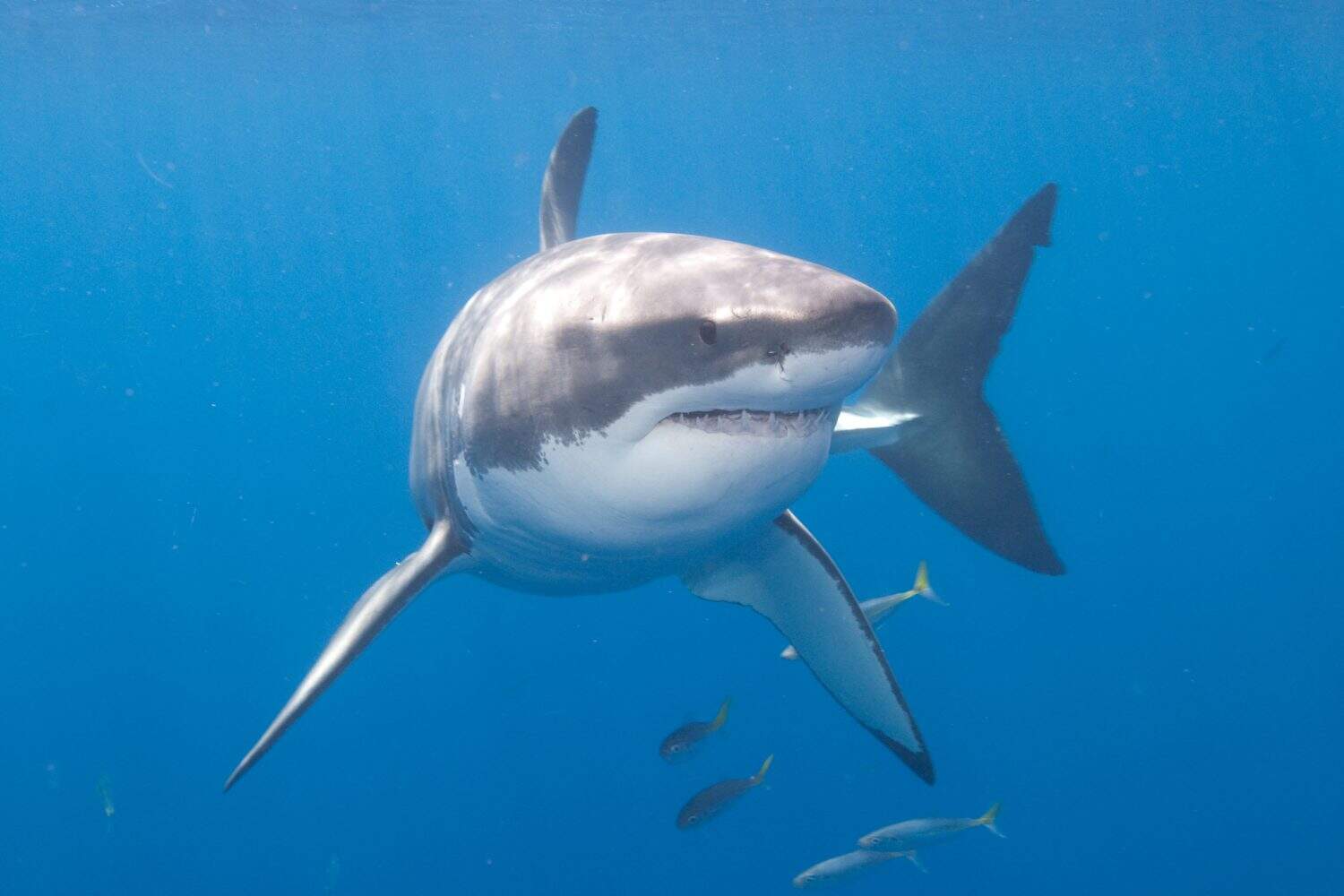
There are only 3,500 great white sharks left in the world.
©Jim Agronick/Shutterstock.com
Deep Blue and other great white sharks may be apex predators, but even they cannot stop the fact that the great white shark population is declining. With an estimated 3,500 great white sharks left in the world, conservationists are calling for change before the population reaches a point of no return. Like other sharks, there are multiple issues stacked against the great white sharks’ survival. Some of the factors that have led to a declining population for great white sharks include:
- Overfishing
- Getting caught in fishing nets as bycatch
- Predation by orcas
- Disruption of the ecosystem
According to the IUCN, great white sharks are listed as “vulnerable.” This is one step away from endangered. This population decline has occurred over the last three generations of great white sharks, and unfortunately, it is continuing today.
“Globally, based on long-term abundance data and protections instigated in the 1990s that have since reduced catches and allowed some recovery,” IUCN explains on its website, “the White Shark population is estimated to have reduced by 30–49 percent over the last three generations, and is therefore assessed as Vulnerable.”
Further still, scientists have more recently discovered that all the great white sharks in the ocean are not from the same population of sharks. There are, instead, three distinct groups that split from one another approximately 100,000 to 200,000 years ago.
While this may not seem like important information, the fact that the North Atlantic/Mediterranean, Indo-Pacific, and North Pacific great white sharks have different DNA from one another means that if one of these populations goes extinct, there are no great white sharks from that lineage to replace them. This essentially means that while the overall population of great white sharks may be 3,500, the actual count for these specific groups is much smaller.
How to Help Save Great White Sharks
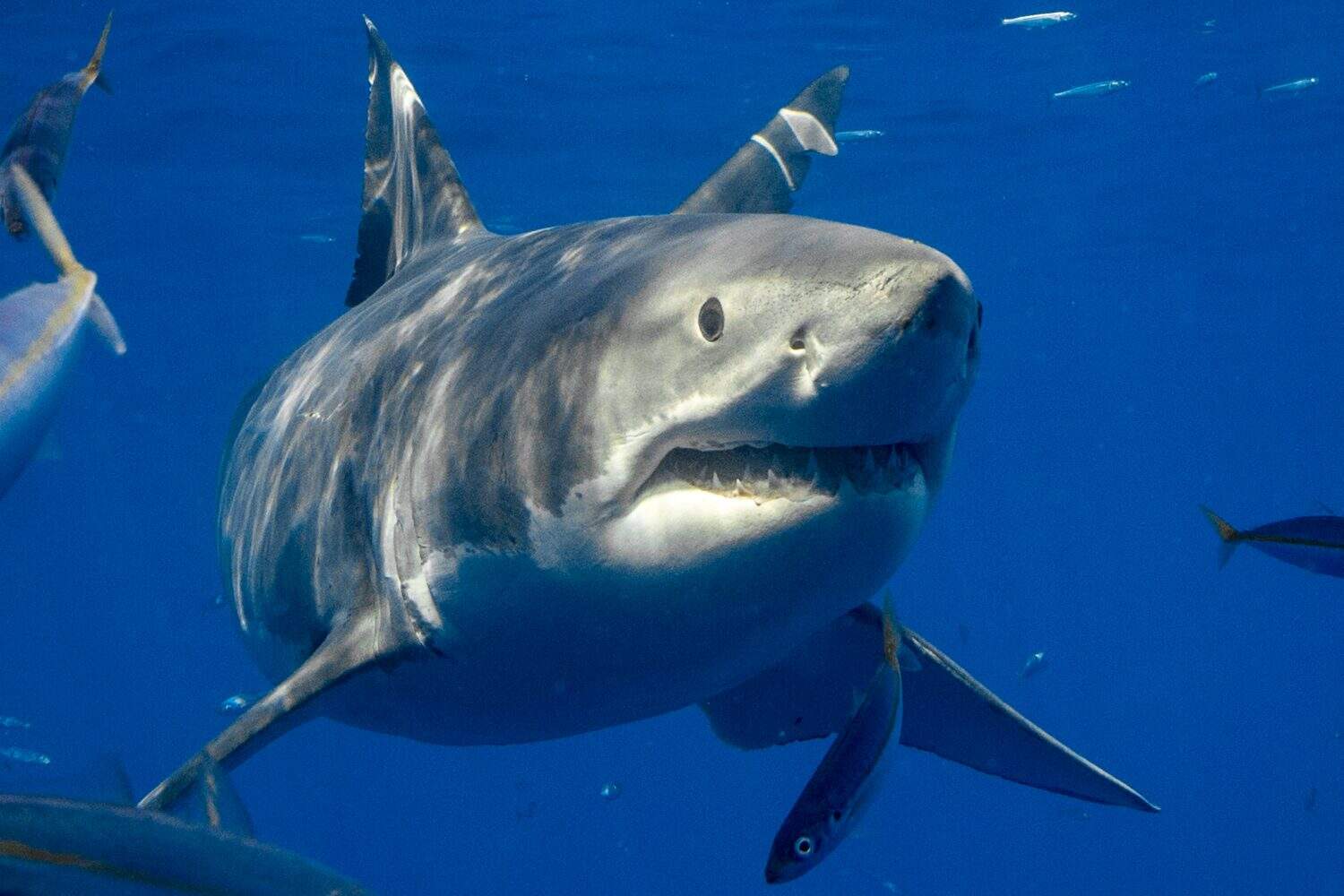
Great white sharks need conservation, and there are many ways people can get involved to help save the species.
©Shane Myers Photography/Shutterstock.com
Conservationists have been sounding the alarm about the declining great white shark population for decades. But with numbers continuing to decline, the message has not resonated.
If changes are not made soon, those looking out for the welfare of white sharks say it is only a matter of time before these massive sharks are endangered, or worse, go extinct. If this happens, an apex predator will be eliminated from the oceans, creating an unbalanced habitat with populations of animals that the great whites consumed growing out of control.
Fortunately, there are ways to help the great white sharks from having their populations decline further. Some ways that people can participate in saving the great white shark include:
- Donate to organizations working to save the white sharks
- Participate in local ocean clean-up events
- Write to legislators about the importance of saving great white sharks
- Become informed and spread the word about the great white shark population decline
- Do not buy or consume shark products
- Only eat seafood that is sustainably sourced
Over 100 million sharks are killed annually. White sharks are part of this group. If action is not taken soon, conservationists believe great white sharks, and other sharks for that matter, are doomed to meet the fate of those who came before them. If that happens, the oceans as they are known today will become an environment that is completely unrecognizable and likely unsustainable for the remaining marine life that inhabits them.