
Quick Take
- Alaskan wood frogs survive freezing temperatures by entering states of suspended animation.
- They do this by undergoing a controlled body freeze, spreading glucose through their bodies, and shutting off vital organs.
- Once temperatures rise, Alaskan wood frogs thaw out in record time.
- This remarkable survival strategy has potential applications in medical science fields like emergency medicine and organ transplantation.
The animal kingdom is full of fascinating tricks for enduring sub-freezing temperatures. Birds, for example, often just take flight for warmer parts unknown the moment a frost hits their environment. Mammals, such as grizzly bears, prepare in advance by undergoing a sort of bulking season before entering dens to sleep through the winter. The Alaskan wood frog, however, braves the cold in a way that seems to violate every law of physics and biology.
These wood frogs stop their heart, stop their breathing, and literally freeze solid. If you walked by one of these unassuming wood frogs in the middle of winter, you might assume it had died long ago. It turns out, however, that Alaskan Wood Frogs undergo one of the most fascinating adaptations on earth. For up to seven months each year, these amphibians become living popsicles. Though they are frozen solid, with their blood immobilized, they thaw and return to life as soon as the spring sun warms them. Let’s explore how this little frog survives conditions that would kill most creatures, and how its extraordinary adaptation could revolutionize human medicine.
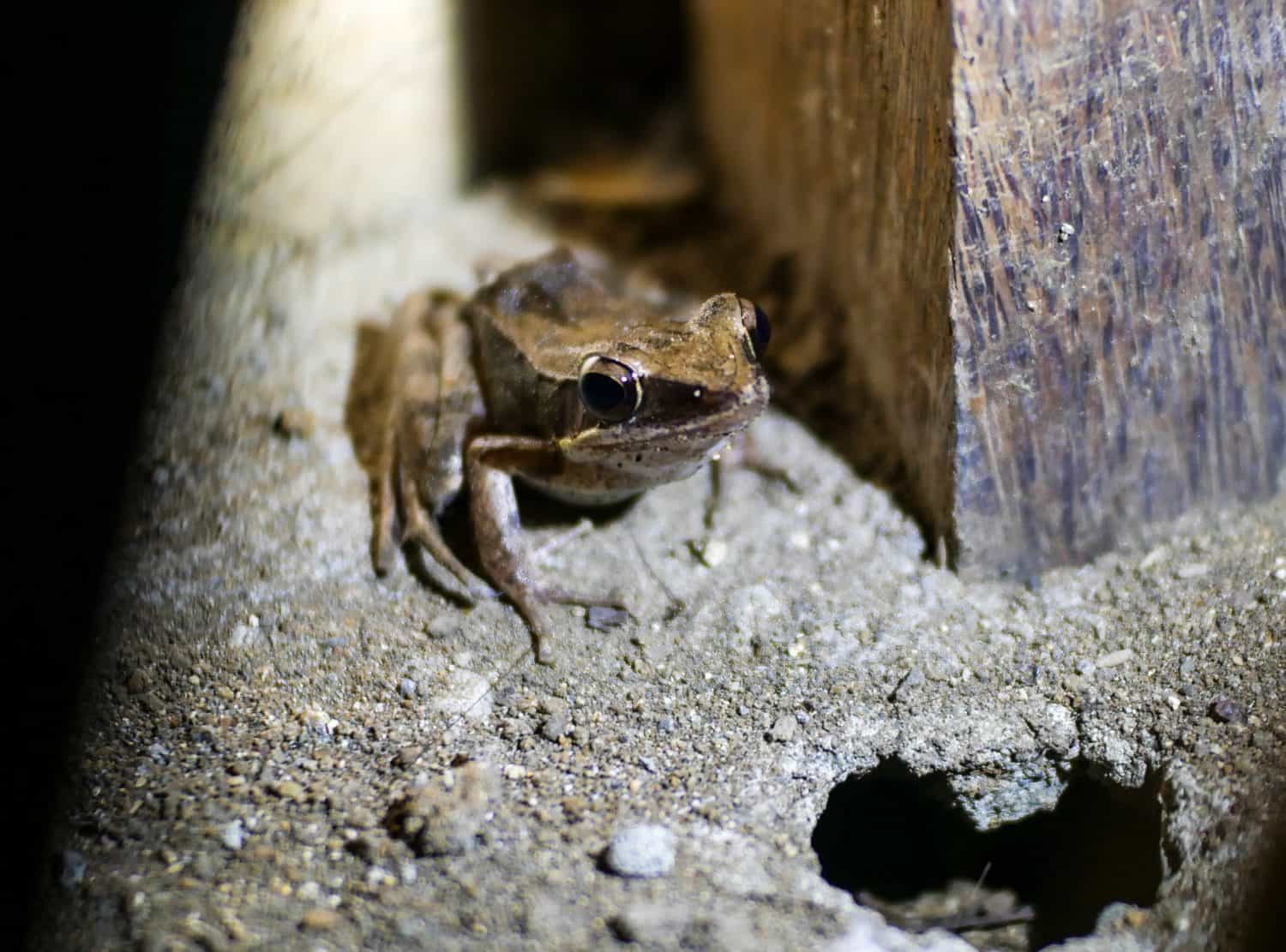
These frogs have a range that extends farther north than any other reptile or amphibian in North America, reaching as high as the Arctic Circle.
©Hariyanto teng/Shutterstock.com
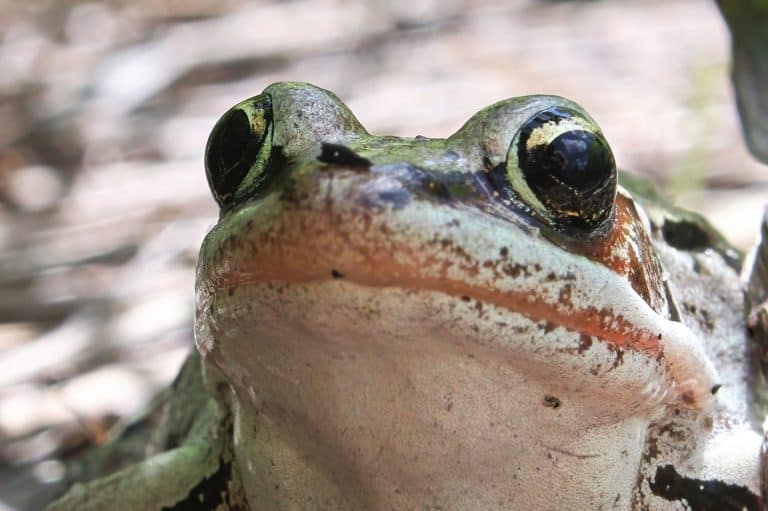
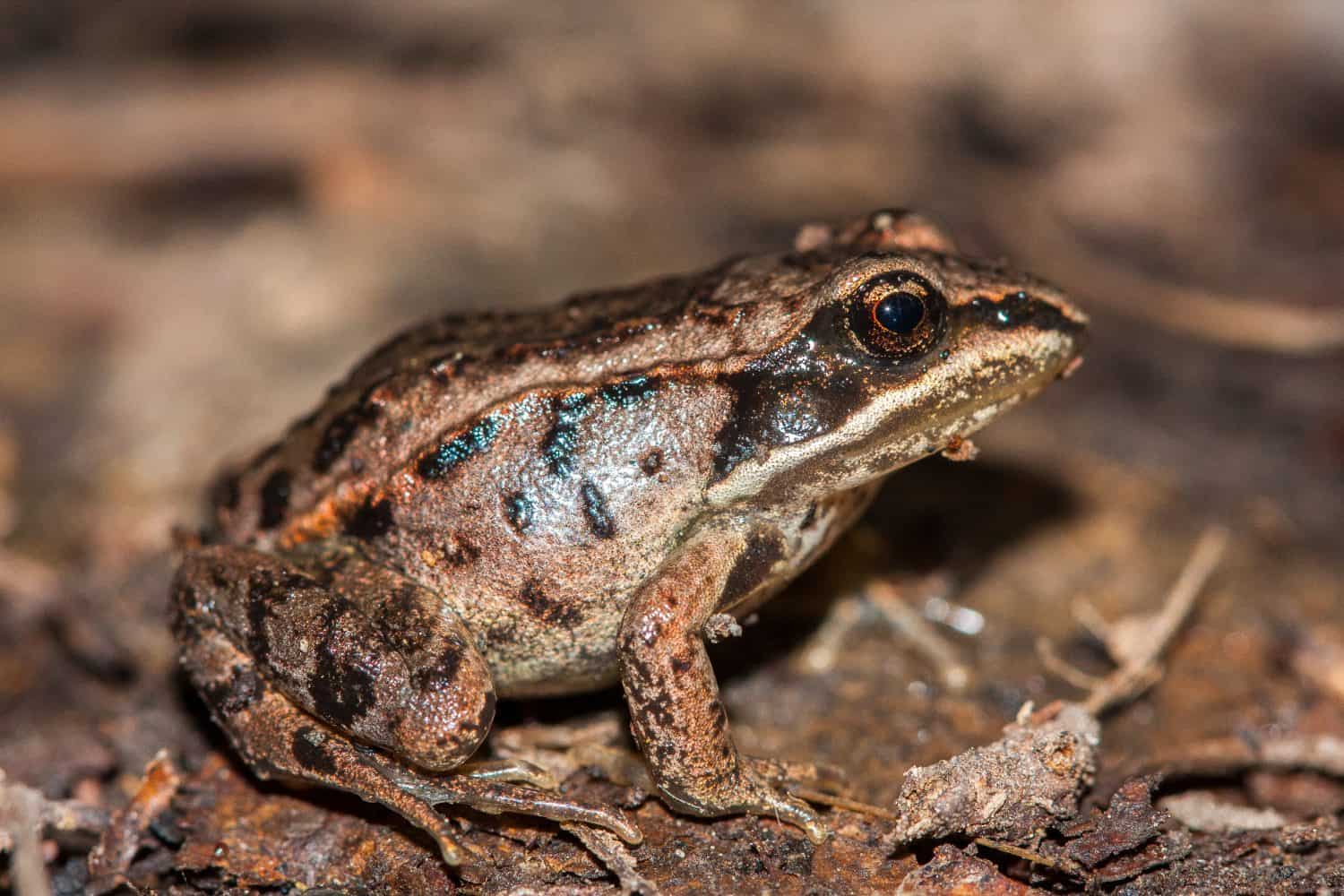
Alaskan Wood Frogs (Lithobates sylvaticus) have a range that extends farther north than any other reptile or amphibian in North America. Some wood frogs are known to live as far north as the Arctic Circle. Though similar in appearance to other North American frog species, Alaskan wood frogs are distinguished by a band of dark coloration across their eyes that looks like a burglar mask. They also have bodies colored brown or tan, which helps them effortlessly blend into Alaskan forests.
Most frogs tend to hang out by the water, but Alaskan wood frogs mostly stick to terrestrial environments. They inhabit a range of environments, including boreal forests and tundra, as long as there is enough moisture nearby. As solitary creatures, Alaskan wood frogs are most active in the early spring to summer when they migrate toward vernal pools for mating purposes. When they aren’t mating, these frogs are opportunistic hunters. They subsist on a variety of bugs and grubs, including beetles, snails, and worms, which they snatch up using their sticky tongues. Alaskan wood frogs are also an important part of the food chain, serving as prey for birds, snakes, and small mammals such as skunks and raccoons.
There is no doubt—Alaskan wood frogs are built for efficiency. Their skin is permeable and sensitive to even the most subtle shifts in their environment. However, when winter arrives, Alaskan wood frogs undergo a remarkable transformation. While other frogs dive deep underwater to avoid freezing, Alaskan wood frogs literally freeze solid.
A Sub-Zero Shield
When most animal cells freeze, it kills the animal. This is because cells are mostly composed of water. When water freezes, it expands and forms sharp ice crystals, which act like tiny knives, destroying cell membranes and disrupting cellular processes. As the fluid surrounding the cells freezes, it draws water out of the cells through osmosis, causing the cells to collapse irreparably.
Three-Step Process
Alaskan wood frogs avoid this destructive process through several unique adaptations. First, the frogs must get a taste of the cold to start their survival strategy. Once ice touches their skin, however, ice-nucleating proteins in their blood trigger a controlled freeze. This process allows ice to form in the abdominal cavity and between muscle fibers, so freezing occurs only in areas that will not cause structural damage. Just as land managers use controlled burns to prevent catastrophic wildfires, Alaskan wood frogs use controlled freezing to avoid damage to vital organs and cells.
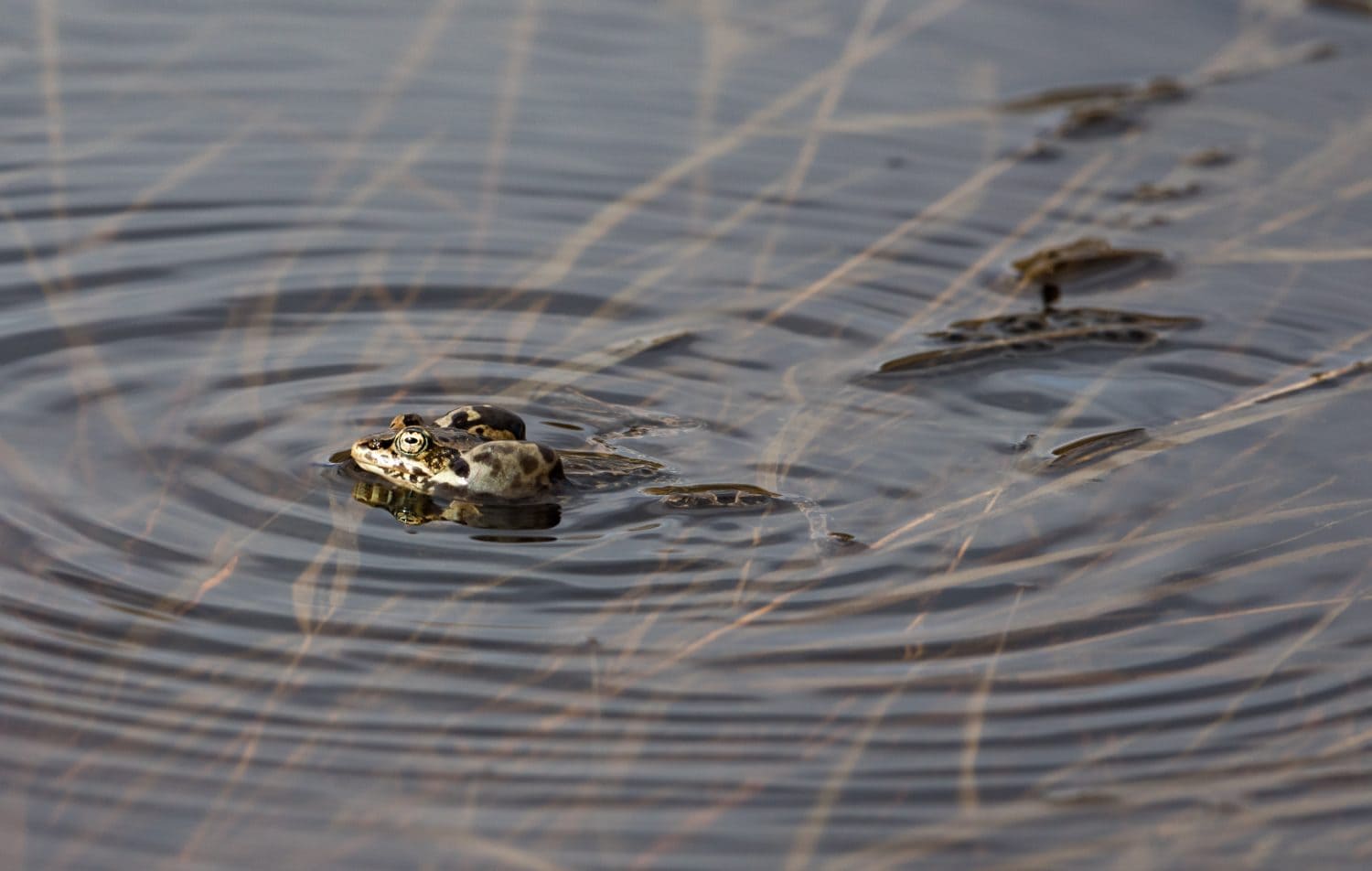
Wood frogs convert glycogen into sugar, which acts as a natural antifreeze during the winter months.
©Dee Carpenter Originals/Shutterstock.com
The most important part of the freezing process, however, is the wood frog’s natural antifreeze. Once its skin starts to freeze, its liver kicks into action. It converts stored glycogen into glucose, or sugar. This then floods the frog’s blood and cells. Such high sugar levels would be fatal to humans, but frogs use them as protection because the glucose lowers the freezing point of the liquid inside their cells. By turning its blood into a syrupy substance, the Alaskan wood frog can avoid complete freezing.
After glucose is distributed throughout its body, the frog shuts down: its heart slows and stops, its lungs cease to function, and its brain activity halts. At this point, by all measures, the frog appears clinically dead.
Sun’s Out, Buns Out
Freezing to the point of clinical death is one thing. When the sun starts to show its face in the early spring, however, Alaskan wood frogs begin perhaps the most incredible stage of their winter survival strategy. While a frozen ham might take hours or days to thaw, Alaskan wood frogs thaw and revive with surprising speed.
The moment temperatures rise above freezing, the frog begins to thaw out. The evenly distributed glucose ensures that the frogs thaw both inside and out at the same time. Typically, however, their hearts restart first. Once ‘awake,’ so to speak, the heart pumps blood back into the defrosting arteries. A few hours later, the frogs start to breathe air. In less than a day, these frogs are active again and head straight to vernal pools to mate. Because they spend the winter on land, Alaskan wood frogs get a head start on mating during the short warm season.
Medical Potential

The winter survival strategy employed by Alaskan wood frogs has great potential for medical science. The use of glucose or synthetic cryoprotectants could, for example, allow transplanted organs to be stored for longer periods.
©True Touch Lifestyle/Shutterstock.com
The ability of Alaskan wood frogs to let their bodies freeze and survive unharmed may seem like a fluke. However, such remarkable adaptations are ideal subjects for medical research, especially in fields like emergency medicine and organ transplantation. Human organs like hearts or kidneys have a very short shelf life once removed from a body. Depending on the organ and preservation method, storage times can range from 4–12 hours for hearts and lungs, and up to 24–48 hours for livers and kidneys with advanced techniques. Freezing organs for longer storage is not currently possible because cellular damage would occur too easily.
The wood frog’s ability to survive freezing offers clues for improving organ preservation. Researchers are now actively exploring how to safely freeze human tissue using glucose-based or synthetic protectants, with promising advances that could transform organ transplantation. Such innovations could make organ banks possible, allow organs to be transported worldwide, and potentially eliminate transplant waiting lists.
Additionally, the ability of Alaskan wood frogs to survive for months without a heartbeat or breath is inspiring experimental research, though direct applications in humans are still in the early stages. This could lead to breakthrough treatments for conditions involving loss of blood flow, such as strokes or heart attacks. If these strategies can be safely adapted, they could significantly improve outcomes in organ preservation and emergency medicine.