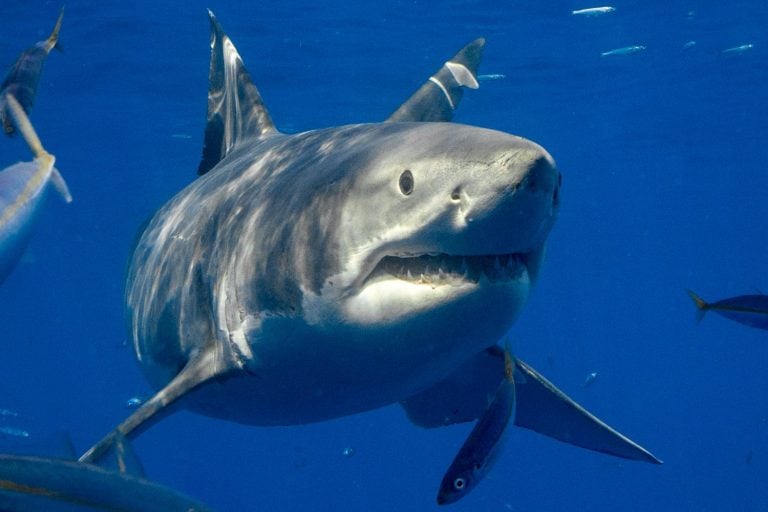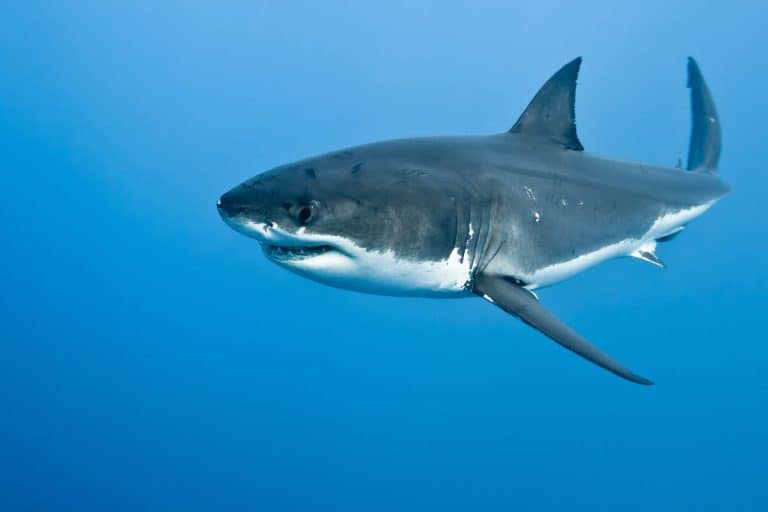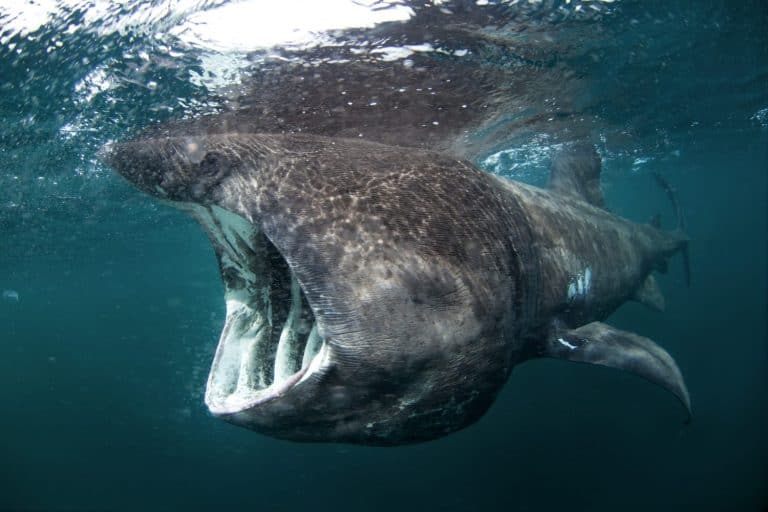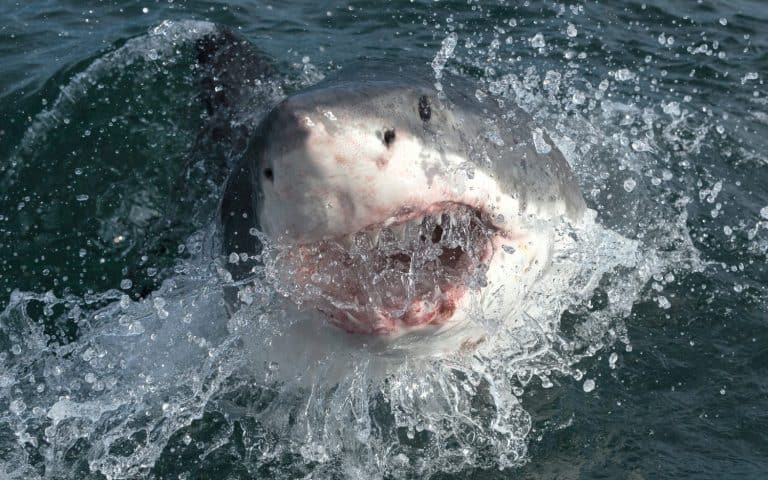

It is not every day that someone catches a great white shark from shore. Anglers can go their whole lives without ever seeing one caught from the beach, let alone landing one. That is exactly what happened to two surf anglers off Cape Hatteras, North Carolina, in March 2025 as they cast lines for local favorites like drum and bluefish. The pair of tar heels ended up reeling in a great white shark measuring between twelve and thirteen feet long.
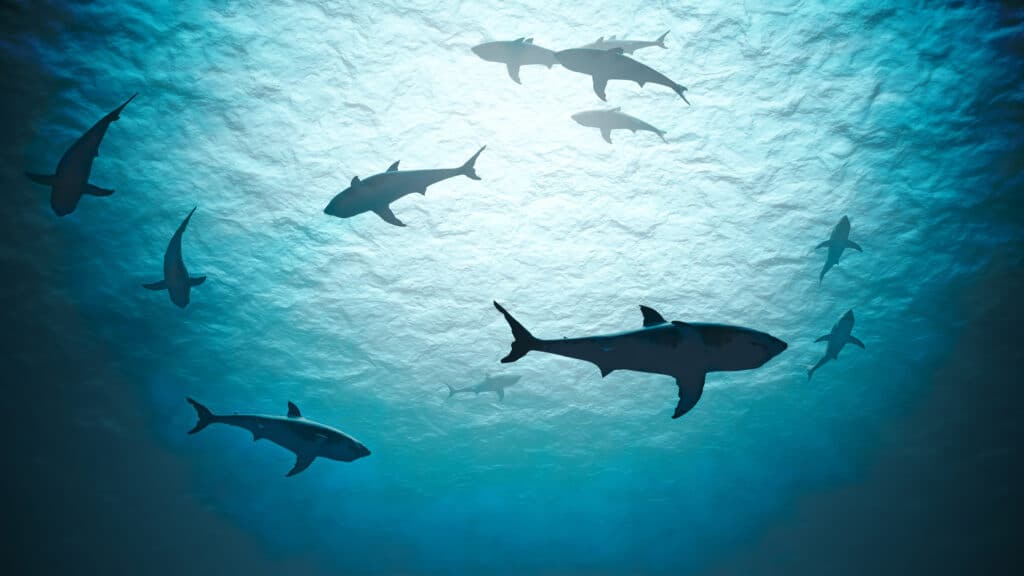
Great white sharks are closely monitored by scientists.
©iStock.com/vchal
From Hunted to Monitored
Great white sharks experienced population declines due to unregulated fishing, shark-hunting tournaments, and sensationalized portrayals in mid-20th-century media. Today, the focus has turned from trophy hunting to monitoring. Since 2012, OCEARCH researchers have fitted great white sharks with tracking transmitters to study their migratory behavior. When a tagged shark surfaces, their tracker sends a location ping, allowing researchers to map its movements across vast stretches of ocean.
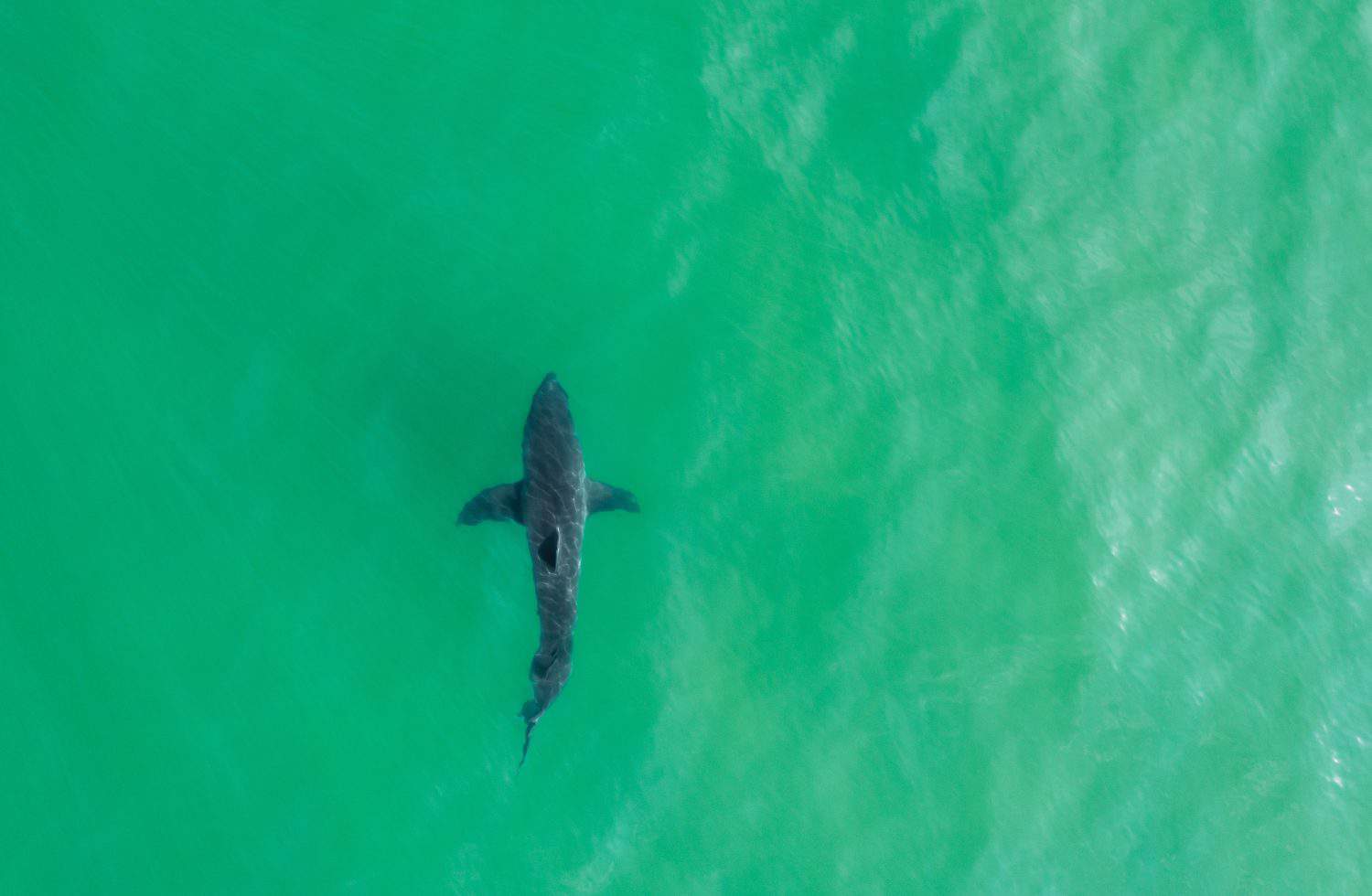
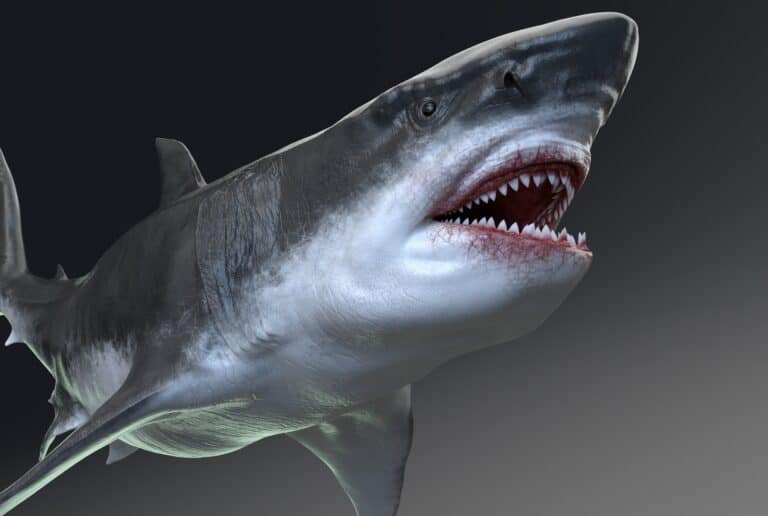
As oceans warm, great white sharks are inching closer to our coastlines.
©Mark F Lotterhand/Shutterstock.com
Documenting Sharks on the Move
Research from OCEARCH and NOAA suggests that warming seas are contributing to the changes in the migration patterns of great white sharks. Sharks are arriving along the East Coast far sooner than expected. An example of one of these early arrivals is Penny, a great white shark fitted with a tracking tag off the coast of Ocracoke, North Carolina, in April 2023. Penny began her migration earlier than researchers had anticipated, reaching Florida by December 2024. The warming sea water is also affecting sharks’ prey. Atlantic menhaden and striped bass are particularly sensitive to these environmental changes.
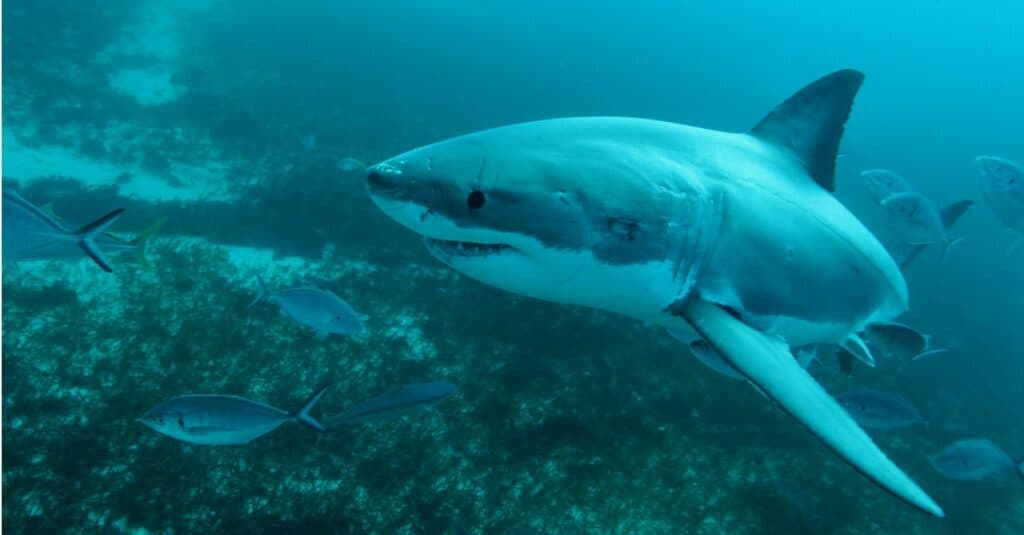
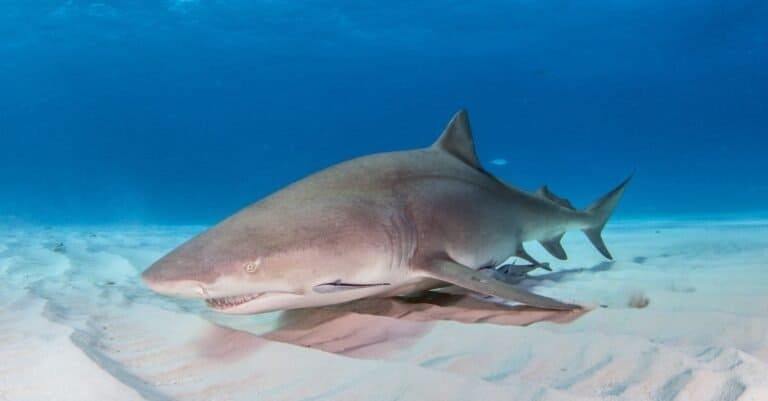
Warming seas are disrupting the nursery habitats that young great whites depend on.
©iStock.com/Alessandro De Maddalena
Nursery Habitats Face Risk
Along the East Coast, young great white sharks depend on shallow coastal regions, like the New York Bight, as nursery habitats. Shark nurseries provide shelter from larger predators and abundant prey. Warming seas are disrupting the natural ecosystems of these nursery habitats. Young sharks face the growing challenge of traveling farther in search of food, which increases the likelihood of encounters with humans.

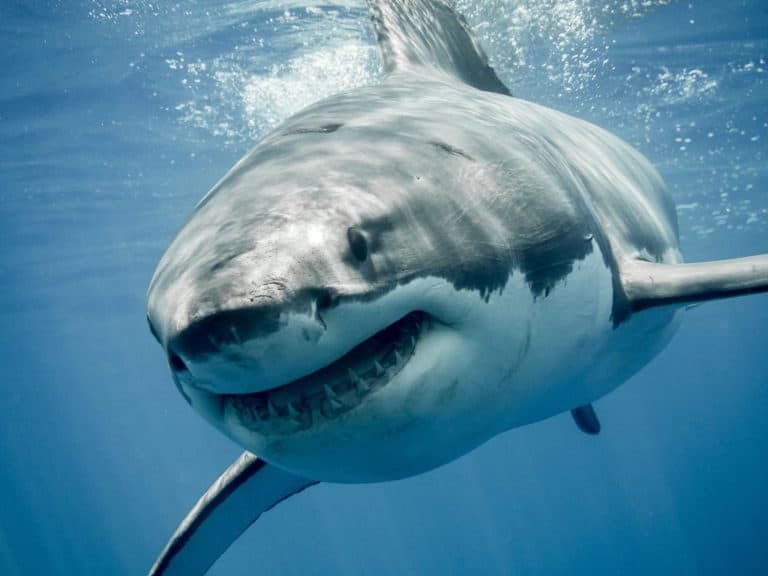
During 2014–2015, “The Blob” heatwave brought juvenile great whites to the waters off Monterey Bay.
©Anne M Vallone/Shutterstock.com
Sharks Expand Their Territory
In 2014 and 2015, a marine heatwave known as “The Blob” caused great whites to appear in an unlikely region. Seawater off northern California typically stays at about 13°C, but during the heatwave, it rose to 21°C. While these waters were once too cold for great whites, the heatwave made the surrounding waters around Monterey Bay inviting.
A similar pattern is developing along the Mid-Atlantic. A NOAA report titled “2023 State of the Ecosystem: Mid-Atlantic” found that rising sea temperatures are shifting marine species distributions along the Mid-Atlantic coast, including sharks and their prey. When baitfish swim into surf zones, great whites will inevitably come after them.
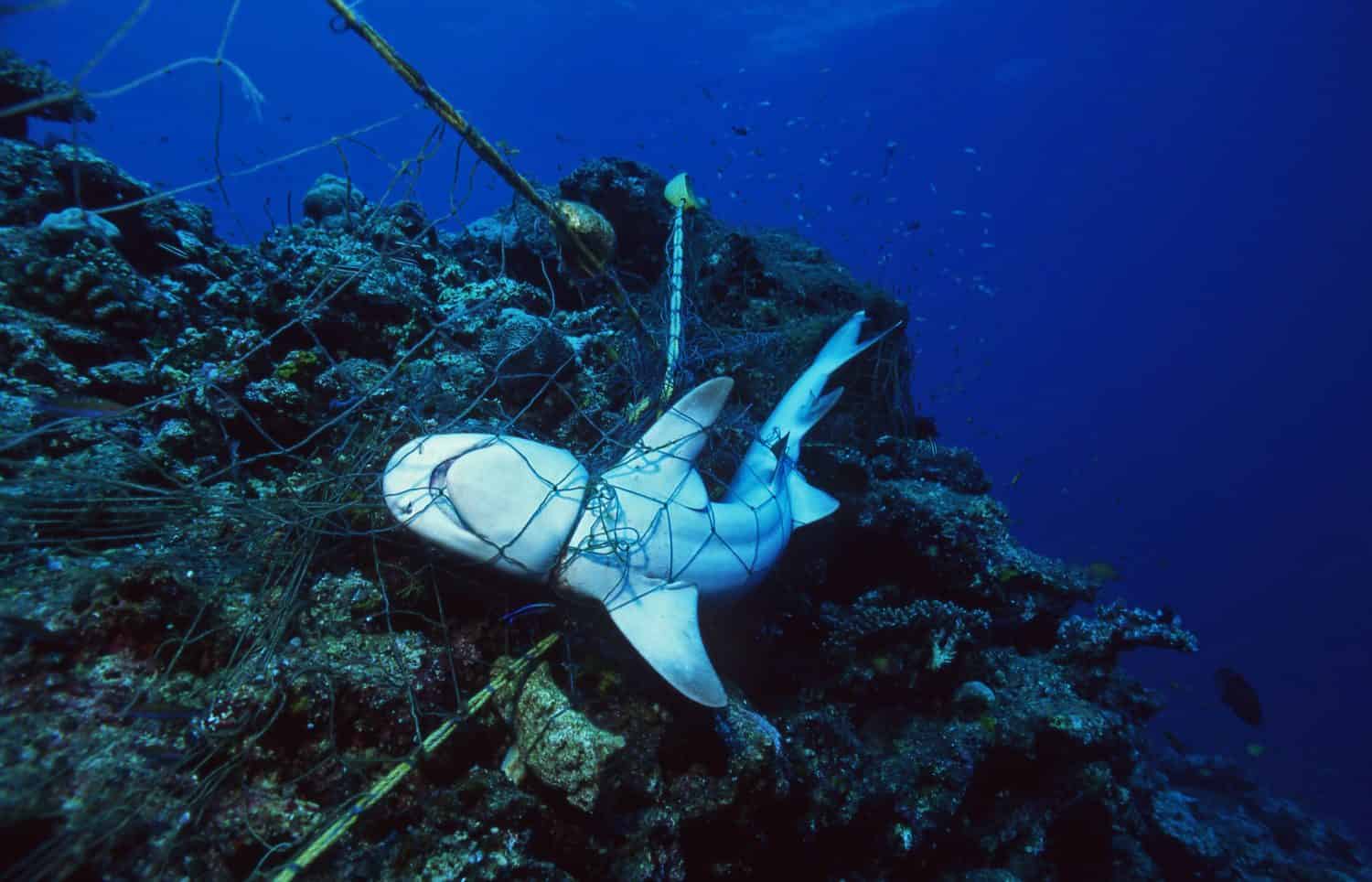
A great white shark tangled in a net shows the consequences of bycatch.
©VisionDive/Shutterstock.com
Reducing Fatal Bycatch
While great white sharks are a federally protected species under U.S. law, they still face the deadly threat of bycatch. Great white sharks, along with whales, sea turtles, dolphins, and seabirds, are among the marine species that become victims of fishing nets and lines. To reduce the risk of injury to these animals, commercial and recreational fishing fleets have begun using biodegradable gear that breaks down over time. The initiative prevents ghost gear from trapping marine life.
Technology Keeps Beaches Safe

New technology keeps beachgoers safe while collecting data to protect sharks and their natural habitats.
©SherryLee/Shutterstock.com
Lifeguards along the West Coast are using drones to monitor public beaches for any approaching sharks. In the Mid-Atlantic, a network of underwater acoustic sensors tracks signals from tagged sharks and shares that information with beachgoers via an app called Sharktivity. The app supplies users with up-to-the-minute alerts of confirmed shark sightings and beach closures. The goal of all this innovative technology is to protect beachgoers while educating and advocating for the conservation of great white sharks.
Heed the Message
The land catch of a massive great white shark at Cape Hatteras is not just a fish story about the big one that they ‘had to’ let get away. Nature is sending us a message. Marine animals are being pushed closer to shore due to a disrupted ocean environment and ecosystem. The consequences impact life both in water and on land.