
Quick Take
- Reaching for lice shampoo when you spot a tiny bug could be the wrong move, and the actual culprit might not even want anything to do with you. About lice species →
- One lice look-alike can launch itself into the air using a built-in spring mechanism hidden on its body, and the creature responsible is probably not what you'd expect. Meet the jumping imposters →
- Some of these lice imposters are already in your home right now. They're feeding on something completely different than you. Booklice in your home →
- There's one key visual clue that instantly separates a real louse from its closest look-alikes, and most people never think to check for it. Spot the key differences →
It can be very concerning when you see a bug on your head or body that looks like a louse. Before you panic, remember that many other bugs look incredibly similar to lice at first glance. So, if you see a bug and are unsure if it’s a louse, don’t grab a bottle of lice shampoo right away; it might be something else altogether. Continue reading to learn about bugs that are commonly mistaken for lice and how to identify them.
Lice: Overview
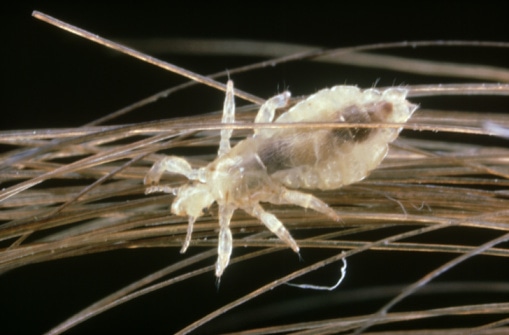
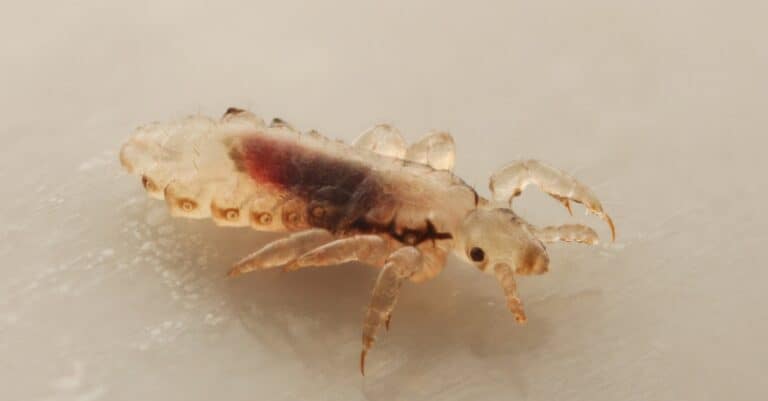
There are over 5,000 described species of lice (Phthiraptera) worldwide. The majority are chewing lice that parasitize birds, while a smaller number target mammals, including the three species that require a human host. Their survival depends on their specific hosts rather than their environments. This means that the geographic range of each lice species is determined strictly by the distribution of the animal or human population it infects.
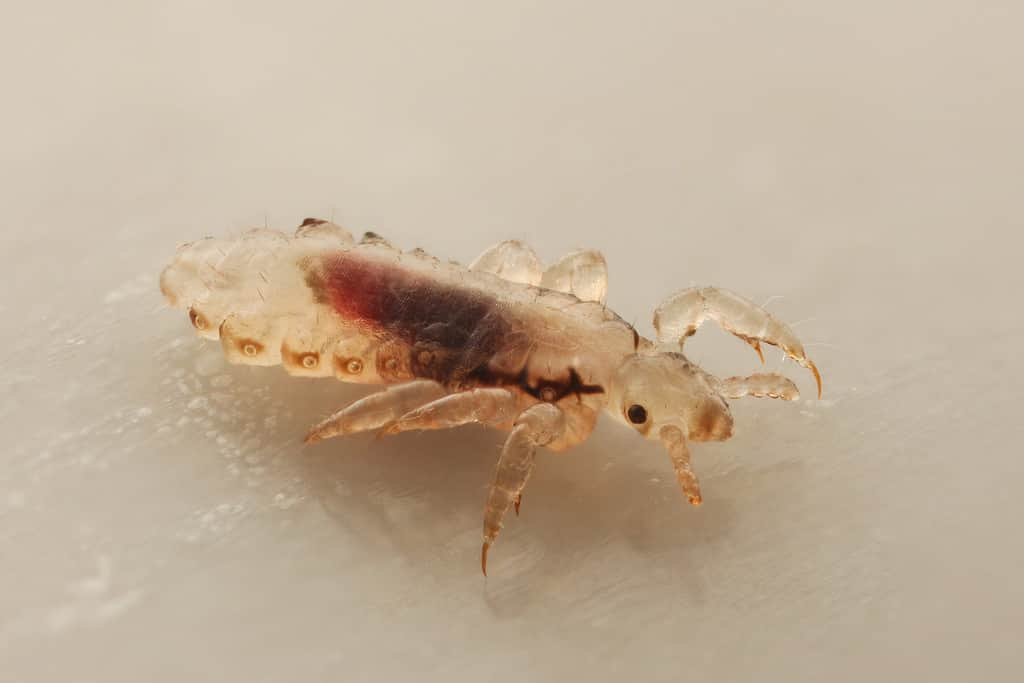
Lice are found on every continent, including Antarctica, where they live on penguins.
©devil79sd/Shutterstock.com
Three types of lice require a human host: head lice, body lice, and pubic lice. Head lice are the most common type. They live on the scalp and lay their eggs on hair shafts. Body lice live on clothing and lay their eggs in seams or folds of fabric. Pubic lice live in pubic hair and lay eggs along the hair shafts.
Thrips
Though they may look similar, thrips (Thysanoptera) are a different type of animal altogether. Thrips live and feed on plants. They puncture the plant’s surface with their mouthparts and suck up its juices. This can damage the plant, causing it to become stunted or discolored, a sign of infestation.
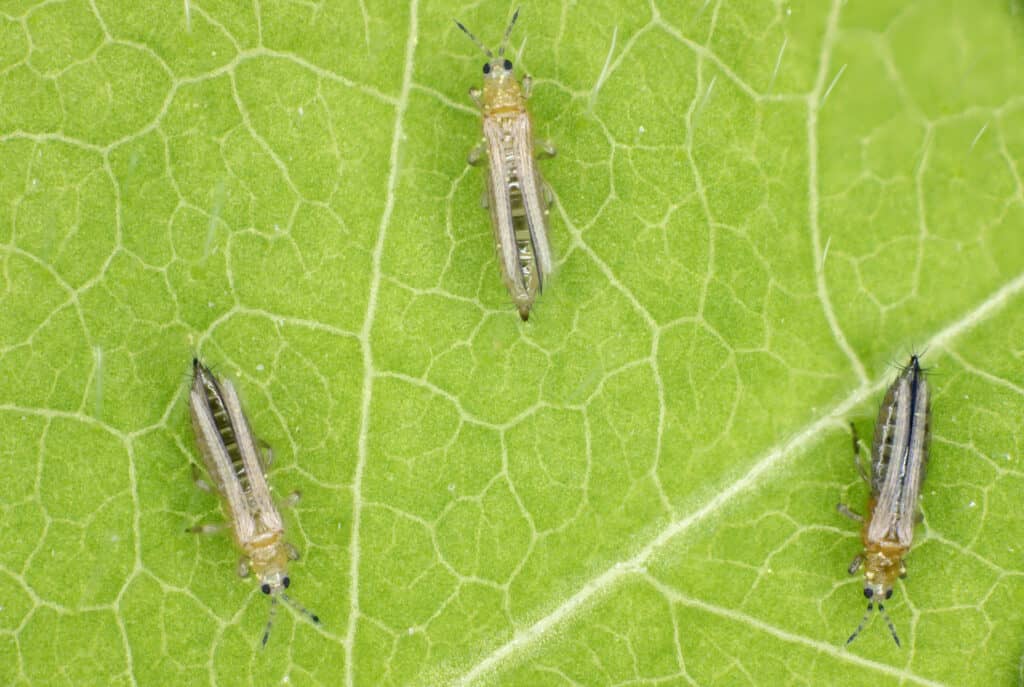
Thrips eat plant matter.
©iStock.com/Tomasz Klejdysz
Thrips are tiny insects that may be carried inside your clothing or live on indoor plants. They are usually 0.02 to 0.55 inches long and are light-colored. They can generally be found on plant leaves outside or pupating in the leaf litter layer of the soil itself.
How To Tell The Difference
Lice are generally smaller, while thrips are usually longer and darker in color. Thrips have wings, while lice are wingless creatures. The biggest difference between these two bugs is that thrips are generally found on plants, while lice are typically found on an animal host.
Springtails
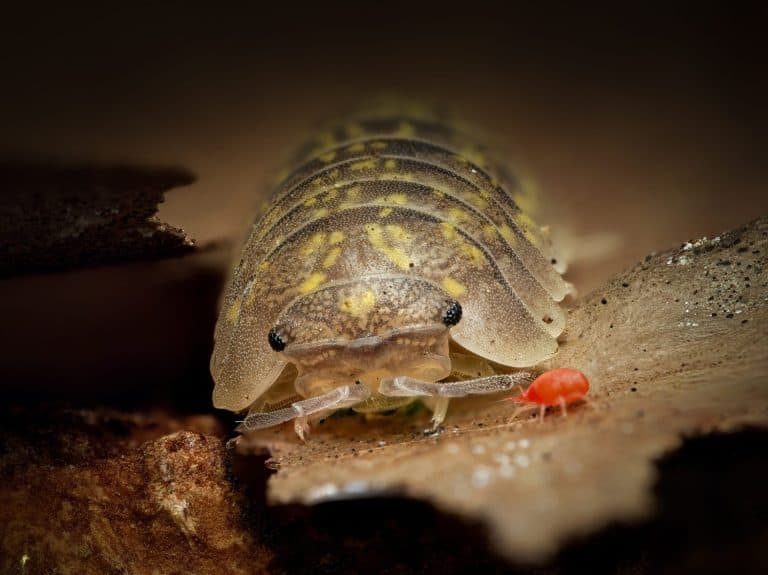
Springtails (Collembola) are small, wingless insects that measure less than 1/8 of an inch long. Springtails are found in damp environments such as soil, leaf litter, and decaying wood. They feed on mold and other decaying organic matter. Unlike lice, springtails do not live on humans and don’t cause any harm or irritation when they come into contact with humans.
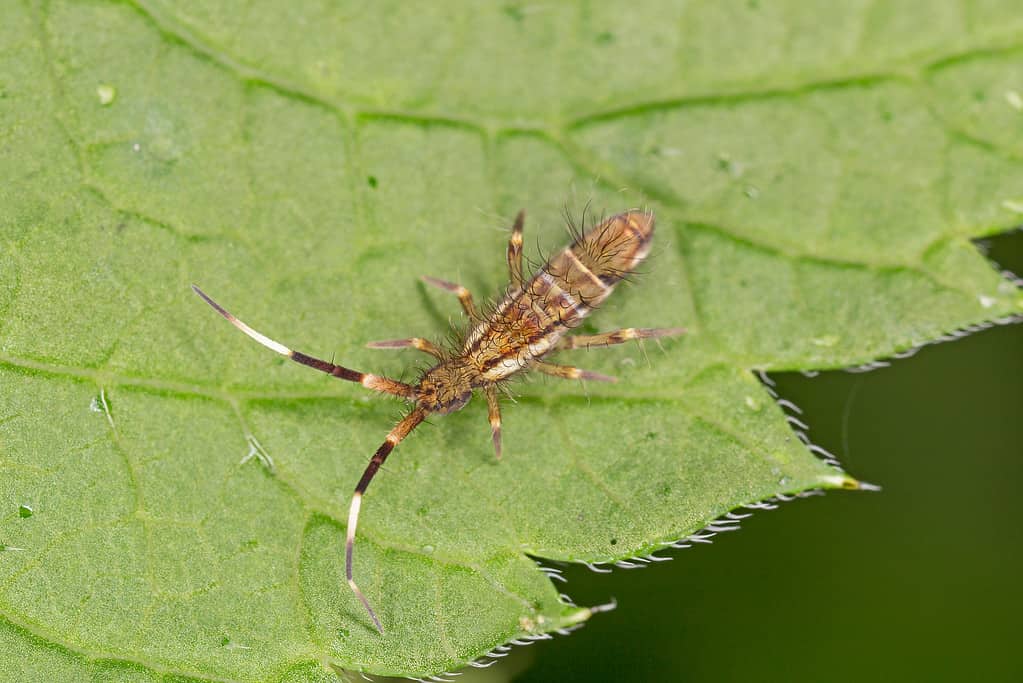
Springtails are small, wingless insects (just like lice), usually less than 1/8 of an inch long.
©Ihor Hvozdetskyi/Shutterstock.com
Springtails can jump long distances using their furcula, a forked structure on the underside of their abdomen that acts like a spring. When at rest, the furcula is held under tension by a small catch called the retinaculum. If threatened, the springtail releases the catch, causing the furcula to snap against the ground and launch the insect into the air to escape.
How To Tell The Difference
Lice are small, wingless insects that live on humans, while springtails are tiny creatures resembling miniature shrimp. Both lice and springtails can be found in homes. However, lice are more commonly found in households with children, as they spread quickly through close contact. Springtails are more likely to be found in damp or humid areas such as bathrooms or basements and do not cause harm or irritation.
Booklice
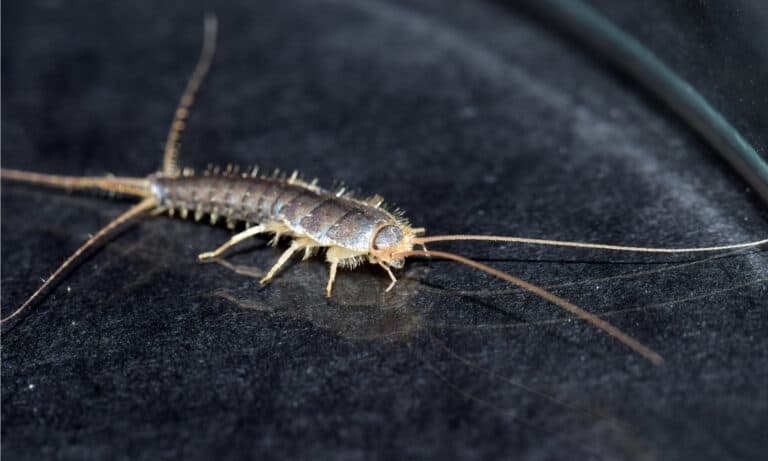
Booklice (Psocodea, formerly Psocoptera) are small insects, often wingless but sometimes with wings, commonly found in humid environments such as libraries, greenhouses, and stored grains. They range in size but are usually about 0.2 inches long and are typically pale in color.
Booklice feed on paper, glue, mold, and fungus, and are often found near damp books or paper products. While booklice are not known to transmit disease, they can be annoying if they infest your home. If you suspect you have an infestation, it is best to contact a professional pest control company for assistance and advice.
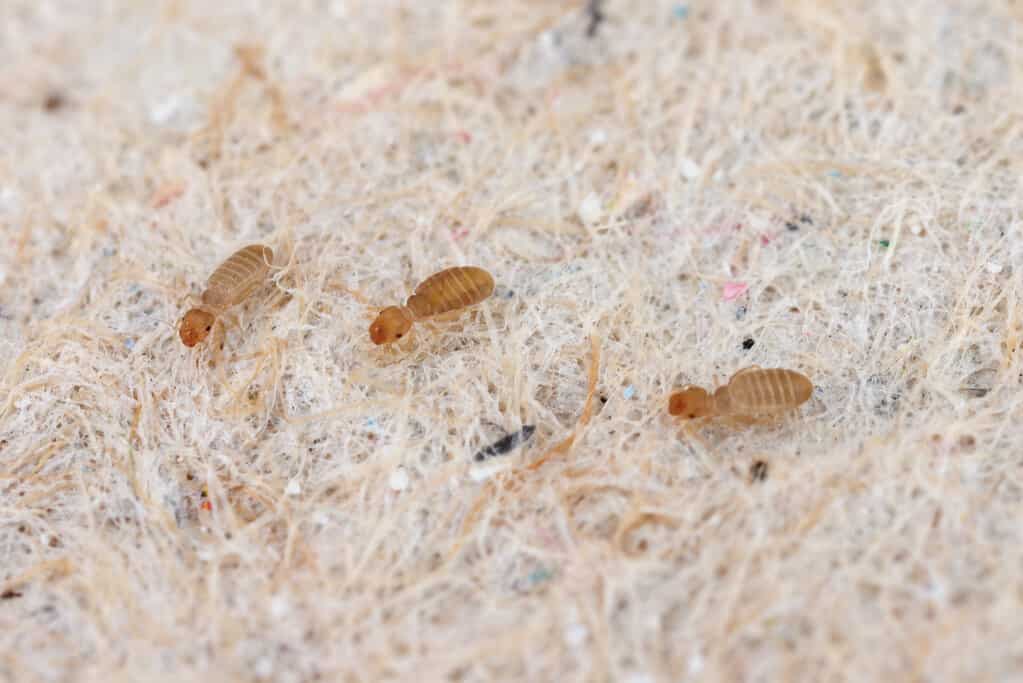
Booklice feed on paper, glue, mold, and fungus, often found near damp books or paper products.
©omasz Klejdysz/Shutterstock.com
How To Tell The Difference
One of the most significant differences between booklice and human lice is their diet; booklice feed primarily on paper, glue, or mold, while lice feed on human blood. Another big difference is their habitat: booklice are often found in places like libraries, bookshelves, basements, or bathrooms, while lice are found primarily on humans.
In terms of appearance, booklice are usually grayer than head lice and may have tiny wings on the sides of their bodies, although these wings are too small for flight.