
Quick Take
- At least one of these seven bugs isn't an insect at all. It's actually a crustacean related to crabs and lobsters. Meet the crustacean imposter →
- Some centipede lookalikes share your home right now, feeding on your books, clothing, and food. Most people mistake them for something harmless. See the home-dwelling lookalikes →
- At least one imposter on this list is actually prey for the real centipede, and both can turn up in the same corner of your house.
- One lookalike lives completely underground, has no eyes, and moves just as fast as a centipede, yet most people have never heard of it. Discover the eyeless underground dweller →
Centipedes are one of the most common household pests and one of the most feared. With their long, segmented bodies and dozens of legs, they’re not exactly cute and cuddly. What if we told you there are a few bugs out there that can look remarkably like centipedes yet aren’t related to each other? In this article, you’ll discover seven bugs that look like centipedes with indicators showing how to tell them apart. So, the next time you spot a creepy-crawly bug in your home, take a closer look, it could be one of these centipede imposters.
What Is a Centipede?
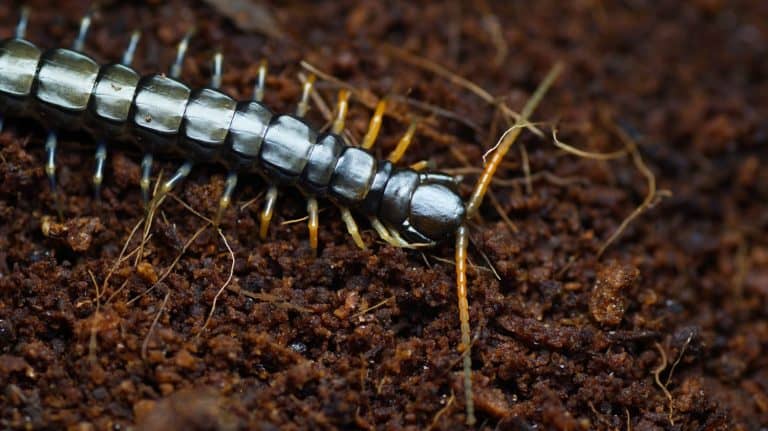
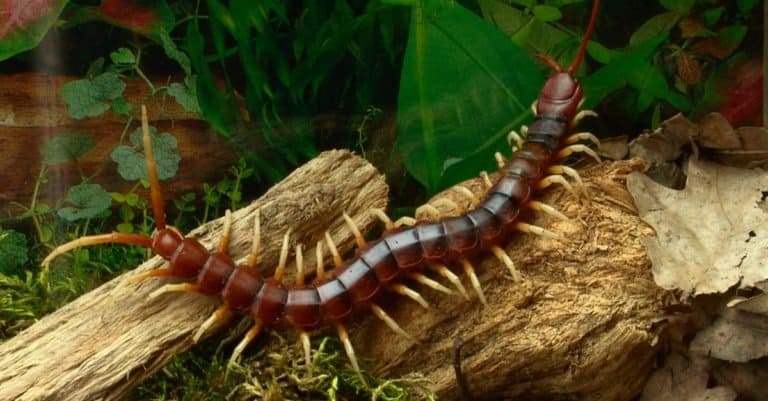
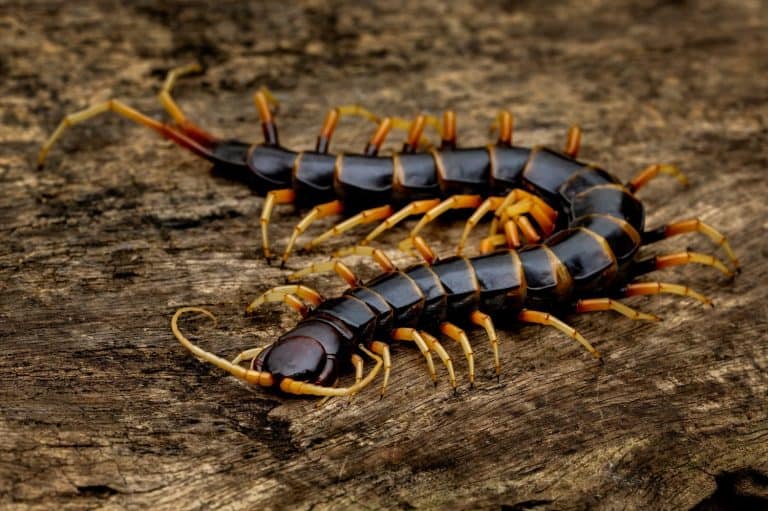
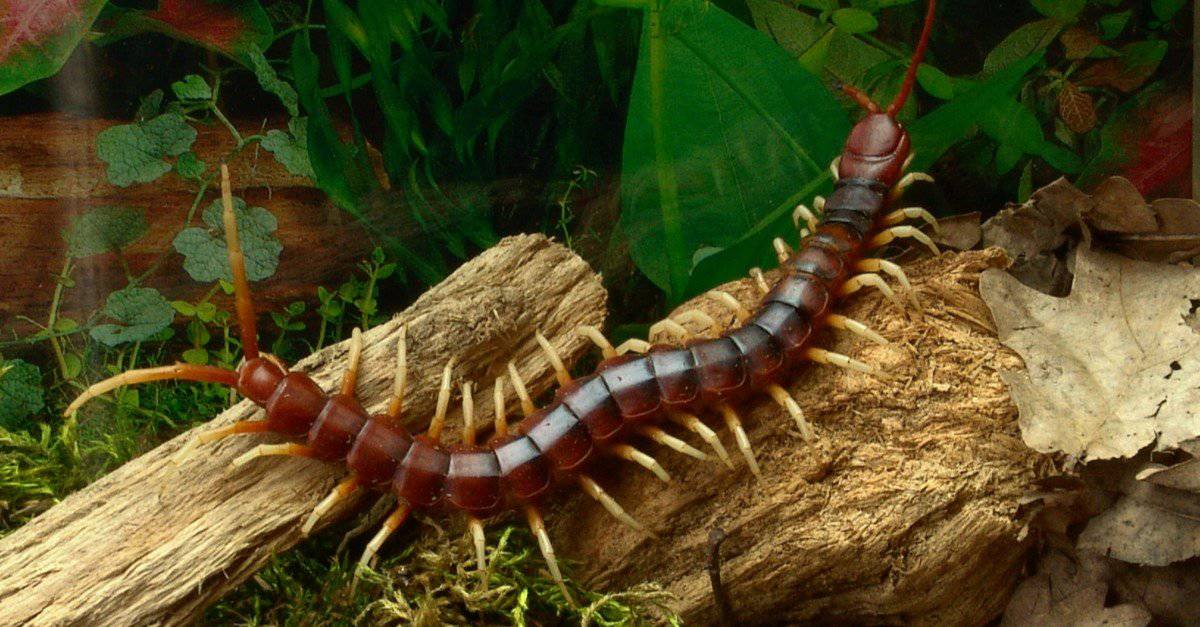
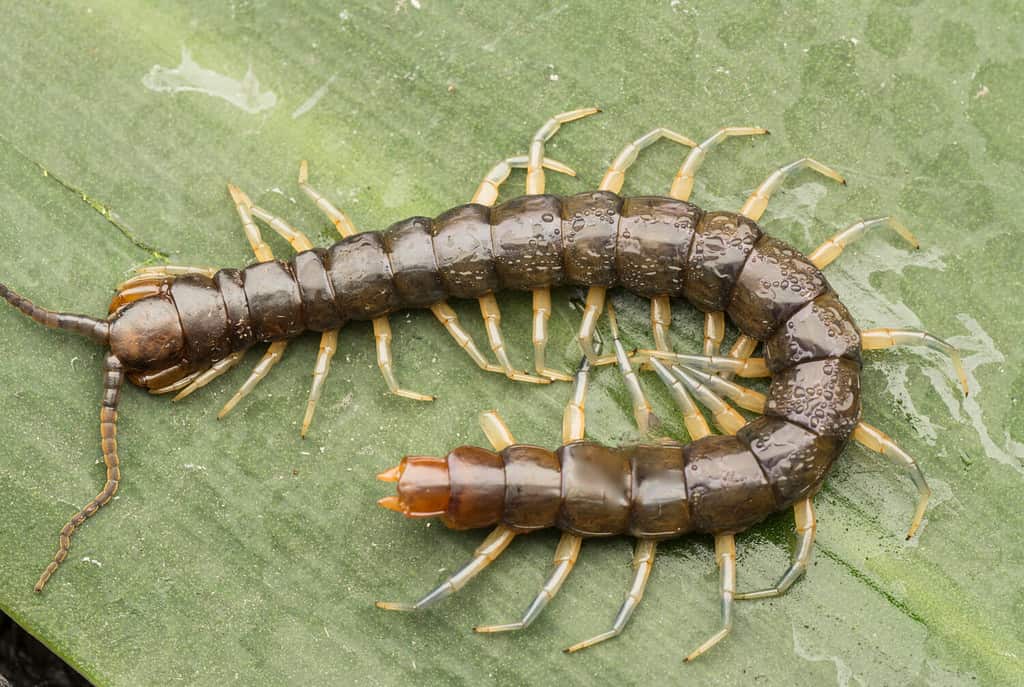
Centipedes are arthropods, closely related to insects and spiders. They have flattened bodies with distinct heads and long, straight antennae. In North America, they generally range from 1-8 inches in length. Centipedes can run very quickly, but most species have far fewer than 100 legs, despite the name. They typically have between 15 and 30 pairs of legs, with only one pair of legs per segment.
Centipedes are generally shades of light yellow to dark or reddish brown. They prefer damp areas and are typically found under rocks, leaf litter, mulch, or logs. Centipedes are carnivores and predators of insects and other invertebrates.
©Young Swee Ming/Shutterstock.com
Millipedes
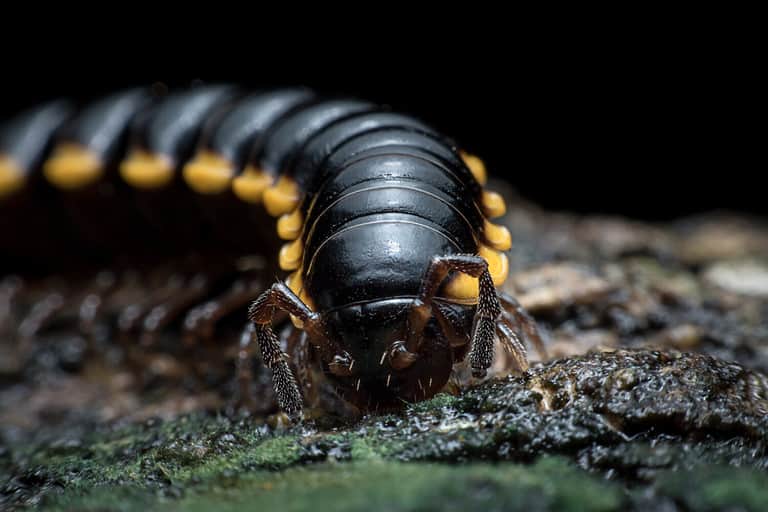
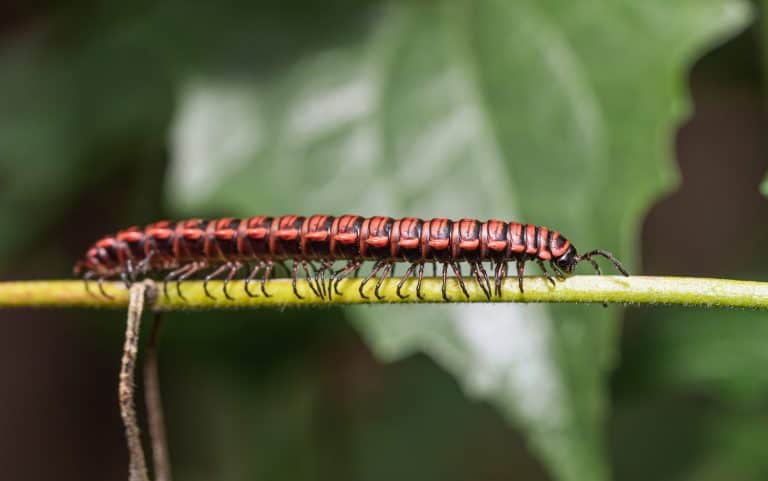
Like centipedes, millipedes are arthropods. In North America, millipedes range from less than 1 inch to around 4 inches in length. Most are black, grey, or brownish, but some species can have contrasting bright colors to warn predators that they have chemical defenses. Most millipedes have between 30 and 300 legs, with two pairs of legs per body segment. Centipedes measure up to 8 inches in length and generally have fewer legs, with only one pair of legs per segment.
Both centipedes and millipedes have cylindrical or flattened bodies, but most millipede species have more rounded bodies. Millipedes are typically much slower than centipedes, which move rapidly and erratically. Centipedes have straight antennae, while millipedes have short, bent antennae. These arthropods also feed on different food sources. Millipedes are detritivores, primarily consuming decaying plant matter, but centipedes are carnivores, preferring insects and other small organisms.
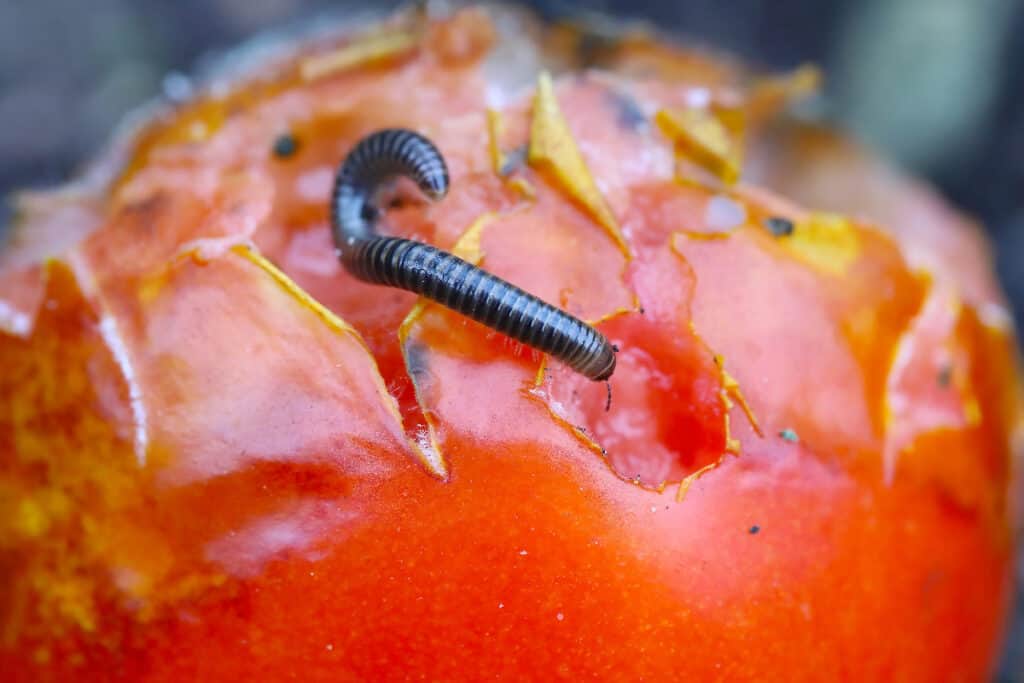
Millipedes that we see in North America generally range from 0.5 to 4 inches in length.
©Tomasz Klejdysz/Shutterstock.com
Firebrats
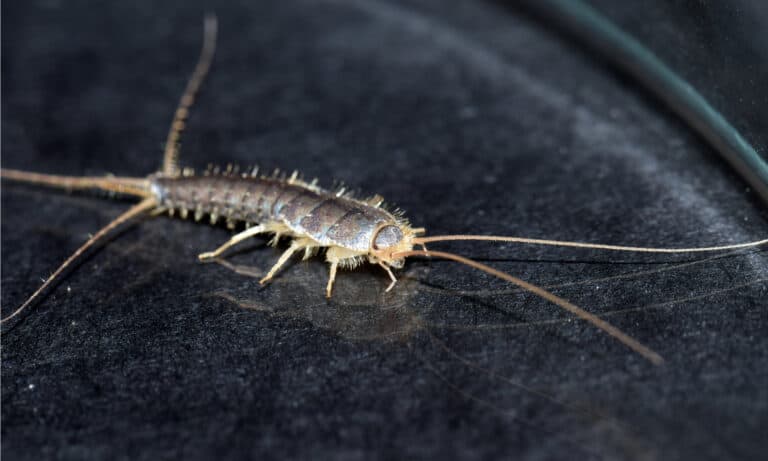
Another crawly bug that looks like a centipede is the firebrat (Thermobia domestica). This small hexapod has a fish-shaped body. Firebrats are wingless and are closely related to silverfish. Firebrats are usually mottled, dark grayish-brown with 6 legs, two long antennae, and 3 tail bristles. Centipedes have more than twice the number of legs and are typically light yellow to dark or reddish brown.
Typically, firebrats are smaller than centipedes. They can grow about 0.5 to 0.75 inches long, while centipedes are long and slender, growing 1-8 inches. Centipedes prefer dark, damp areas and feed on insects and other small animals, while firebrats are usually found near warm, dry areas near heat sources, such as furnaces, fireplaces, and boilers. Firebrats feed on starches and carbohydrates. They may eat sugar, paper goods, and book bindings, while centipedes hunt insects and other invertebrates, including firebrats.
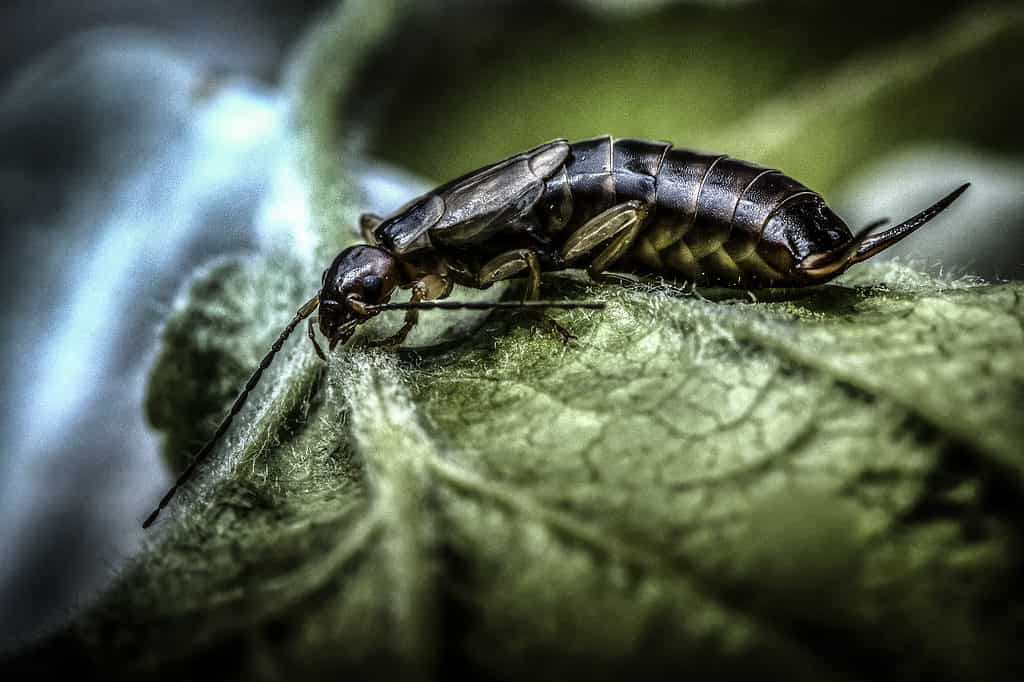
Firebrats are usually found near warm, moist areas, such as furnaces, fireplaces, and boilers.
©iStock.com/Wirestock
Caterpillars
Caterpillars belong to the order Lepidoptera, as they are the larvae of moths and butterflies. Depending on the species, they range in size from 0.78 inches to 8 inches, which is similar to centipedes at 1-8 inches. Some caterpillars have bright colors and patterns, while others are drab-colored like centipedes and blend into their surroundings for camouflage. Caterpillars can move quickly by undulating their bodies, making them look deceptively centipede-like. Caterpillars have three pairs of true legs and up to five pairs of fleshy prolegs, so they can appear to have as many legs as some centipede species.
However, despite their similar-looking bodies, they are distinct in morphology, diet, and development. For example, caterpillars have plump, round bodies. They generally have small antennae, and some species also have horns. Centipedes have flatter bodies. Their heads are also clearly separated from their trunk, and their antennae stick out much further from their bodies. Caterpillars are herbivores, but centipedes are carnivores. Lastly, caterpillars have soft exoskeletons, while centipedes have hard, tough ones.

Caterpillars are the larvae of moths and butterflies.
©Catherine Eckert/Shutterstock.com
Silverfish
Silverfish, or Lepisma saccharinum, are small, wingless members of the arthropod phylum. They typically measure 0.5-0.75 inches long. They get their name from their light, silvery-gray color and side-to-side fish-like movements. Silverfish have six legs, three bristle-like tails, and long, thin antennae that can be regenerated if lost. Centipedes have at least twice the number of legs and move mostly in a straight line. Additionally, most centipede species are shades of yellow to brown.
Silverfish feed on carbohydrates such as sugars and starch, which they find in book bindings, clothing, paper, coffee, and flour. In contrast, centipedes feed primarily on insects. Some centipede species, such as the house centipede, are predators of silverfish.
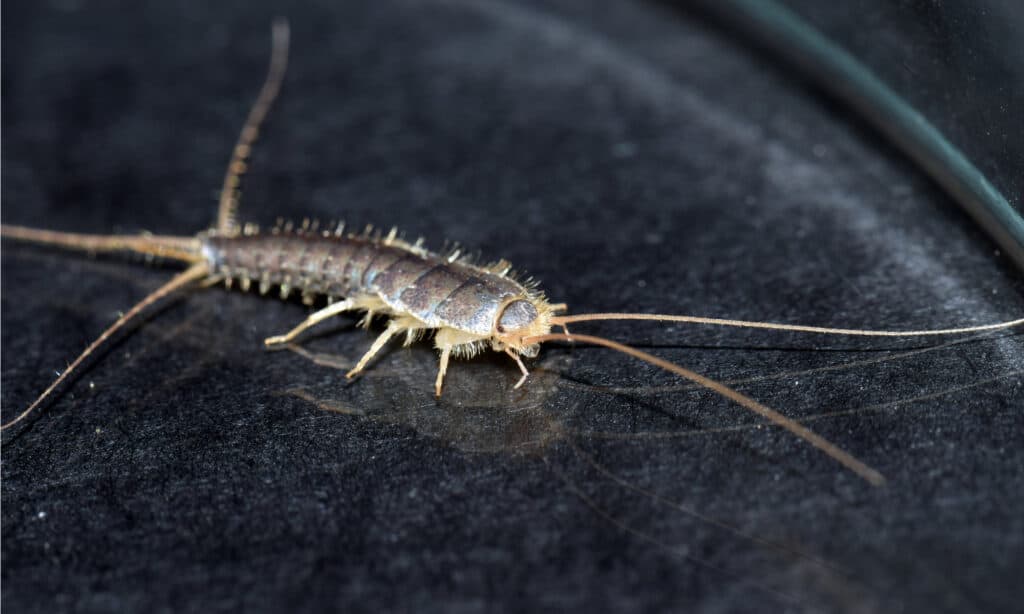
Silverfish have light, silvery gray bodies.
©2Dvisualize/Shutterstock.com
Woodlice, Sow Bugs, or Pill Bugs
Woodlice, sow bugs, and pill bugs are isopod crustaceans in the order Isopoda. Like centipedes, woodlice have flattened bodies of multiple segments and hard exoskeletons. However, woodlice have pill-shaped bodies, and they molt and lose their exoskeletons as they grow. Unlike centipedes, woodlice only have seven pairs of legs. They thrive in different environments, from marine zones to deserts. They are typically shades of grey, brownish-grey, and black and measure from around 0.05 to 1.2 inches long, making them generally much smaller and grayer than centipedes. Some species can use conglobation as a defensive mechanism, which means they can curl up into a ball.
Woodlice are also studied for their unique role in nutrient cycling, which aids in water and soil conservation. Their role as a beneficial species has made them popular among scientists and hobbyists. Woodlice can be easily differentiated from centipedes due to their pill-shaped bodies and their smaller size. Moreover, woodlice are detritivores, unlike centipedes, which are carnivorous. They share similar environments outdoors, so centipedes often prey on woodlice.
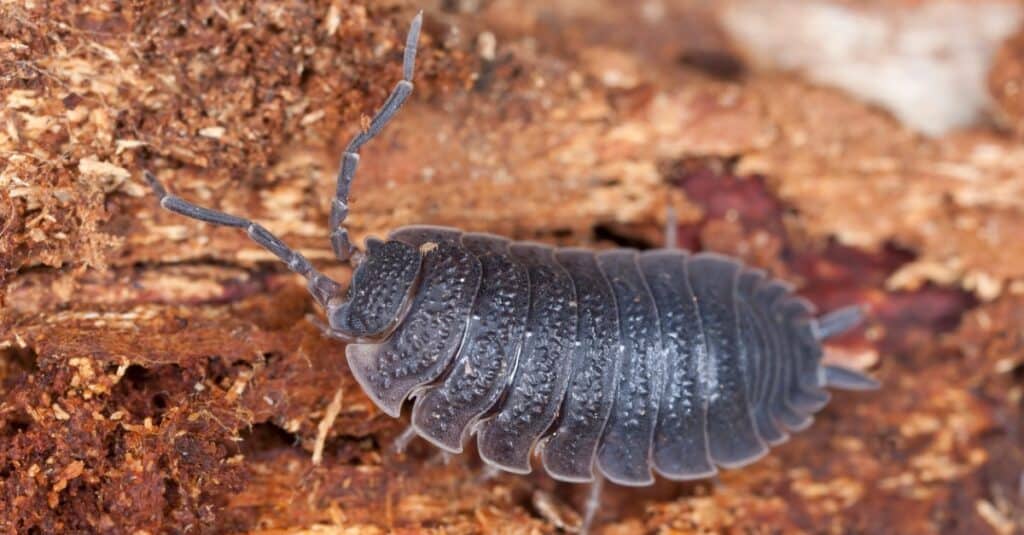
Woodlice, or sow bugs, are actually isopod crustaceans, not insects.
©iStock.com/Henrik_L
Symphylan
Also called garden centipedes, symphylans are arthropods — though they are not true insects or true centipedes — that live in moist soil and belong to the class Symphyla. They have no eyes and white, translucent bodies. These arthropods are very tiny, with most adults measuring 0.12 to 0.33 inches in length. They have segmented bodies with one pair of legs per segment. Adults have 11 to 12 pairs of legs. Symphylans also molt throughout their lives as they grow. They use their long, segmented antennae as sense organs and navigation tools underground.
Unlike centipedes, symphylans are primarily detritivores and feed on decaying organic matter. Despite living underground, they are fast movers like centipedes. However, symphylans are easily distinguished from centipedes by their small size, lack of pigmentation, smaller number of legs, and their underground habitats.

Symphylans are arthropods that live underground.