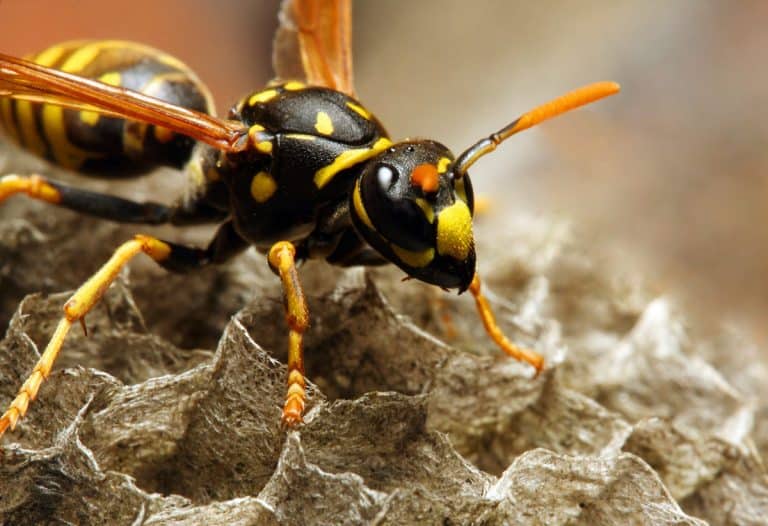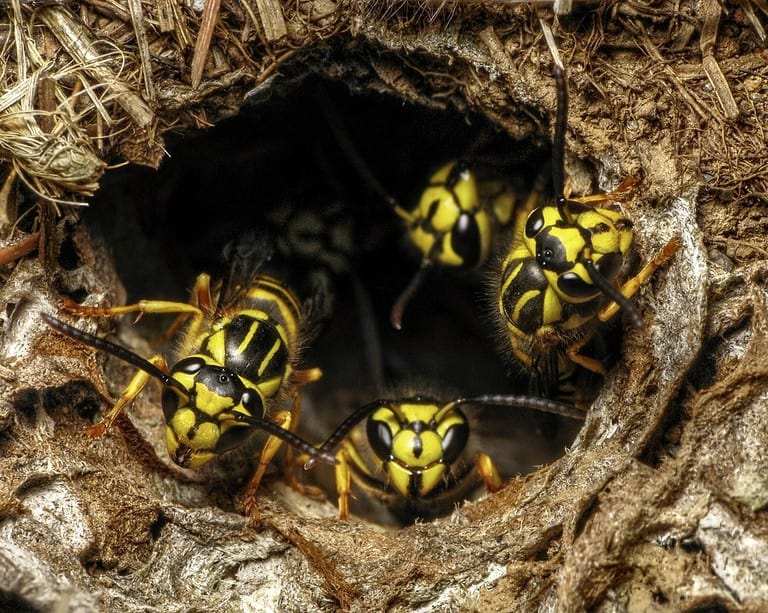

We’ve all been there: simply going about your day-to-day routine only to stumble upon an unexpected household pest, whether it be a rat or a cockroach. Instantly, you feel unsettled in your own home, knowing these critters can spread dangerous illnesses and cause unpleasant symptoms. What’s more, some require multiple sessions and weeks to exterminate, depending on the severity of the situation.
“Something to keep in mind is that infestations can vary in length after treatment,” says Sean Hearn, licensed Pest Control Operator, Associate Certified Entomologist, and Chief of Revenue at All U Need Pest Control.
We spoke with pest control experts to discover the most common yet persistent household pests. Here are six of the hardest pests to exterminate.
1. Cockroaches
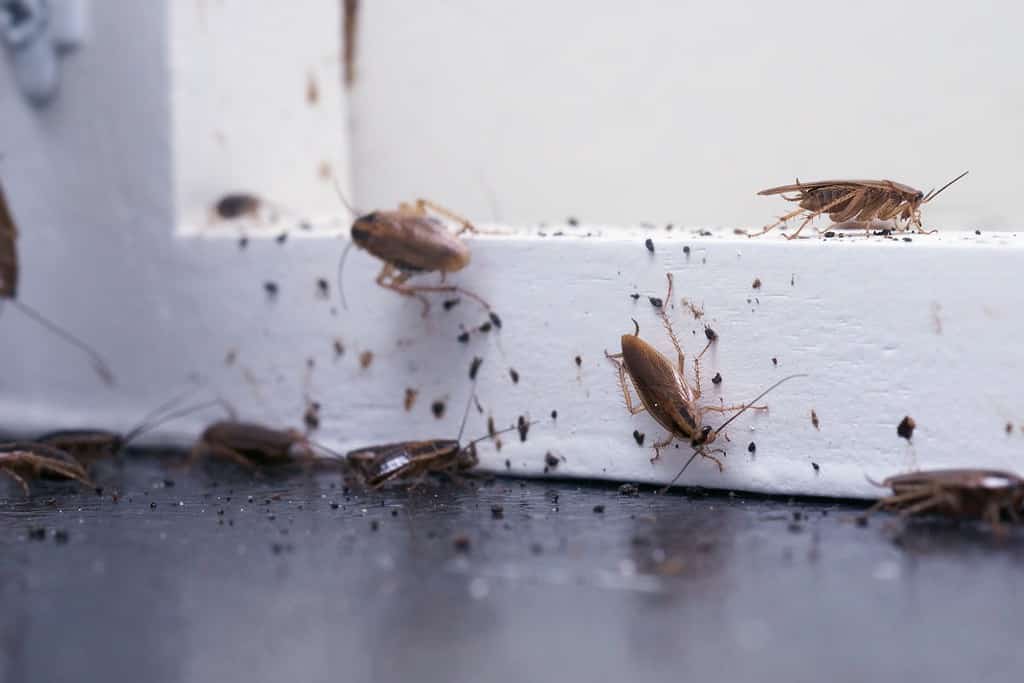
German cockroaches are hard to get rid of, as they’re highly resilient.
©IrinaK/Shutterstock.com
One of the most common yet difficult-to-exterminate household pests is the dreaded cockroach.
“Cockroaches are one of the most resilient and adaptable pests, capable of thriving in diverse environments,” says Jim McHale, Entomologist & President at JP McHale Pest Management. “Cockroaches are attracted to damp and dark environments, so the rainy spring season is ideal for them to venture indoors.”
Hearn agrees that cockroaches are a prevalent issue—more specifically, the German cockroach.
“German roaches are always near the top,” says Hearn. “They thrive in warm, high-moisture areas like your kitchens and bathrooms, usually packing into cracks behind your appliances, cabinets, or any tight space they can find. They reproduce extremely fast that even one surviving egg can restart an entire infestation.”
“Their nesting patterns lead to the hatching of an entirely new generation of cockroaches throughout the last weeks of winter,” McHale adds.
As precautionary measures, MaHale recommends properly storing food and fixing leaky faucets and pipes. However, once you have an infestation, more serious measures need to be taken—especially given their ability to reproduce quickly.
“Because of that, they require a structured interior program that uses the correct baits, growth regulators, and precise applications of products,” says Hearn. “If done right, most homes see full resolution within two to four weeks as their life cycle runs out.”
2. Fruit Flies
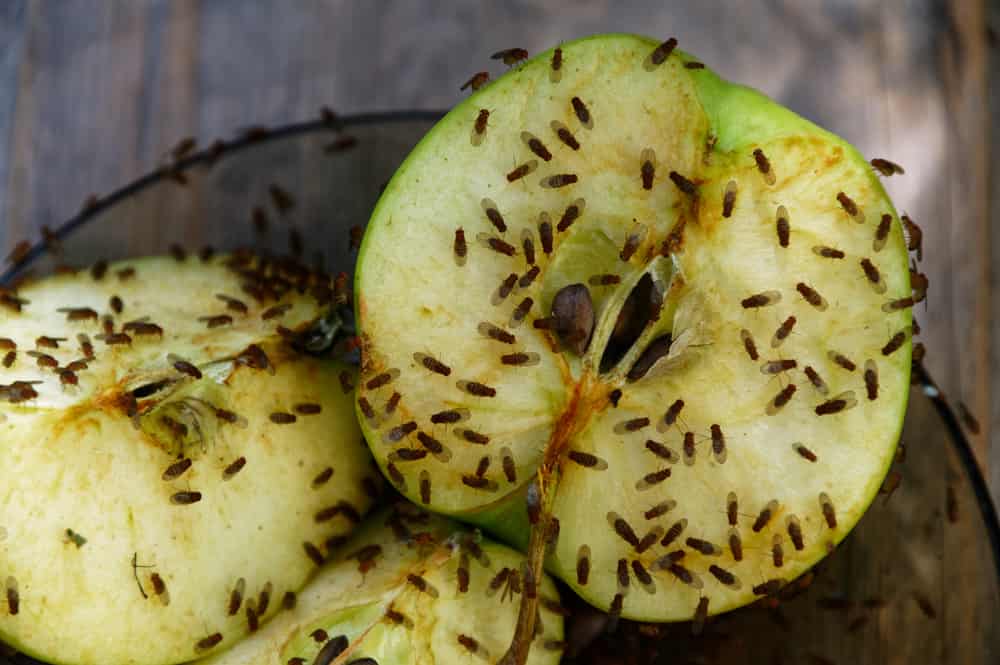
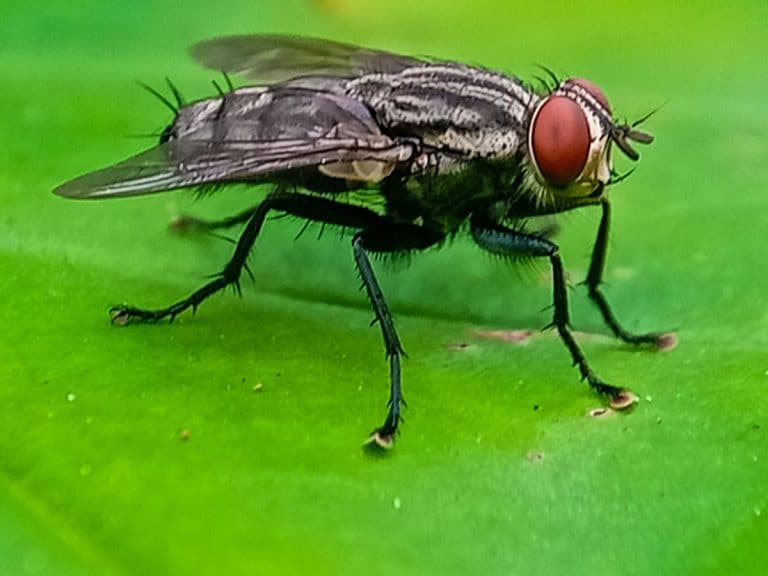
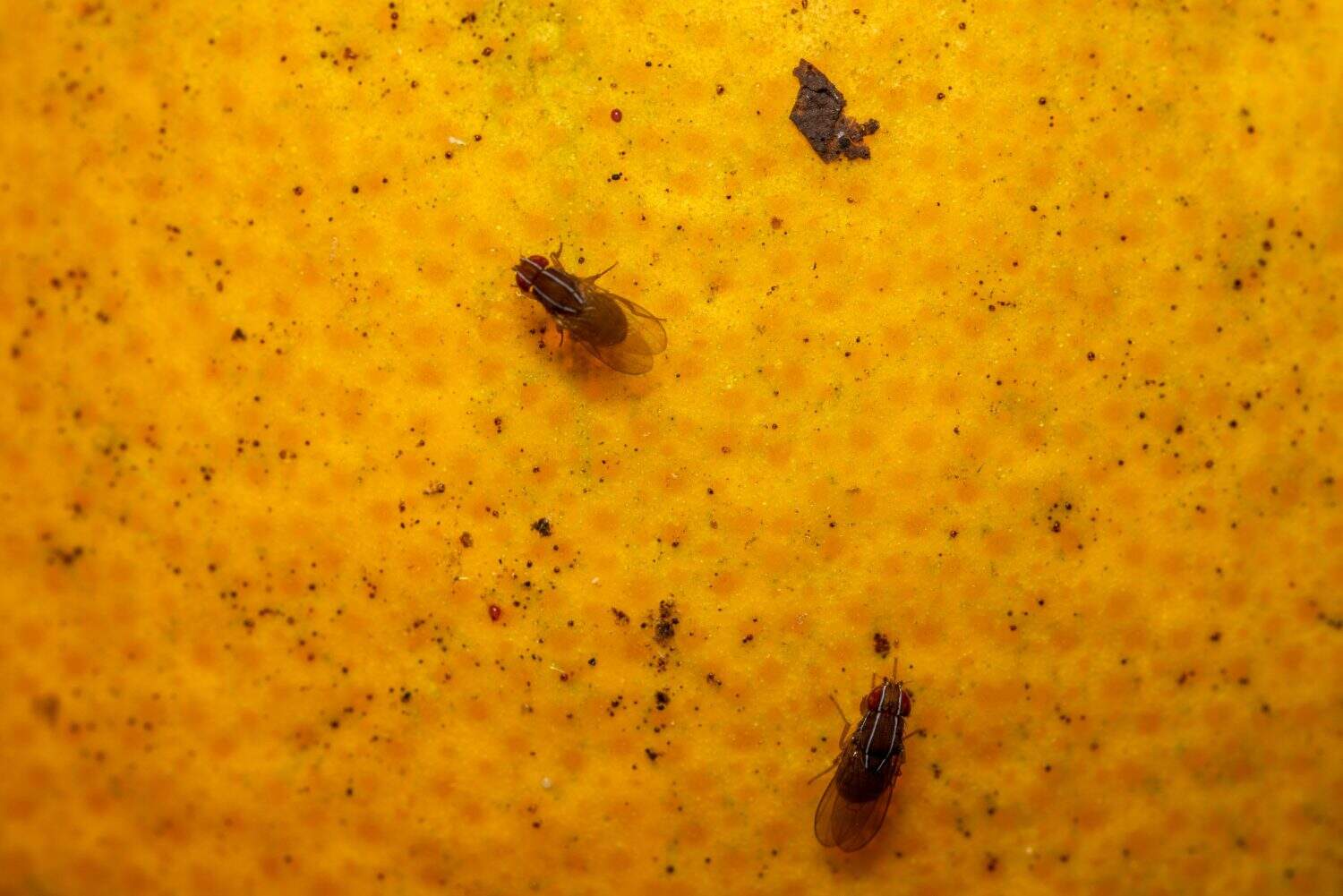
Unfortunately, fruit flies seem to multiply by the day.
©Anne Webber/Shutterstock.com
We’ve likely all experienced the annoying fruit fly in all of its germ-spreading glory. Of course, there’s never just one lone insect. These pests often exist in groups, feeding on rotten food and carrying harmful bacteria.
“Fruit flies are small, brownish-yellow insects attracted to ripening or decaying fruits and vegetables,” says McHale. “They are also drawn to sugary liquids and alcohol.”
To prevent a fruit fly issue, McHale recommends properly storing fruits and vegetables in airtight containers, disposing of overripe and rotting produce, and promptly cleaning spills of sugary liquids or alcohol.
If you do notice fruit flies, you can set up a “trap” using a container with small holes. Fill the container with apple cider vinegar and a few drops of dish soap to attract and trap the flies. (Tip: If you don’t have a container with holes, use a regular bowl, covered it with Saran Wrap, and poked holes in the wrap to attract the flies. Works every time!)
While they might seem harmless, fruit flies can spread illness. “Dangerous bacteria and other germs can stick to the hair on fruit flies’ bodies, which can end up on a customer’s food or employees’ hands, and spread illnesses that cause health problems, especially diarrhea,” says McHale. “Fruit Flies are attracted to ripe produce and sugary substances. They breed in moist waste and are commonly found near sinks, drains, and compost bins.”
3. Rodents
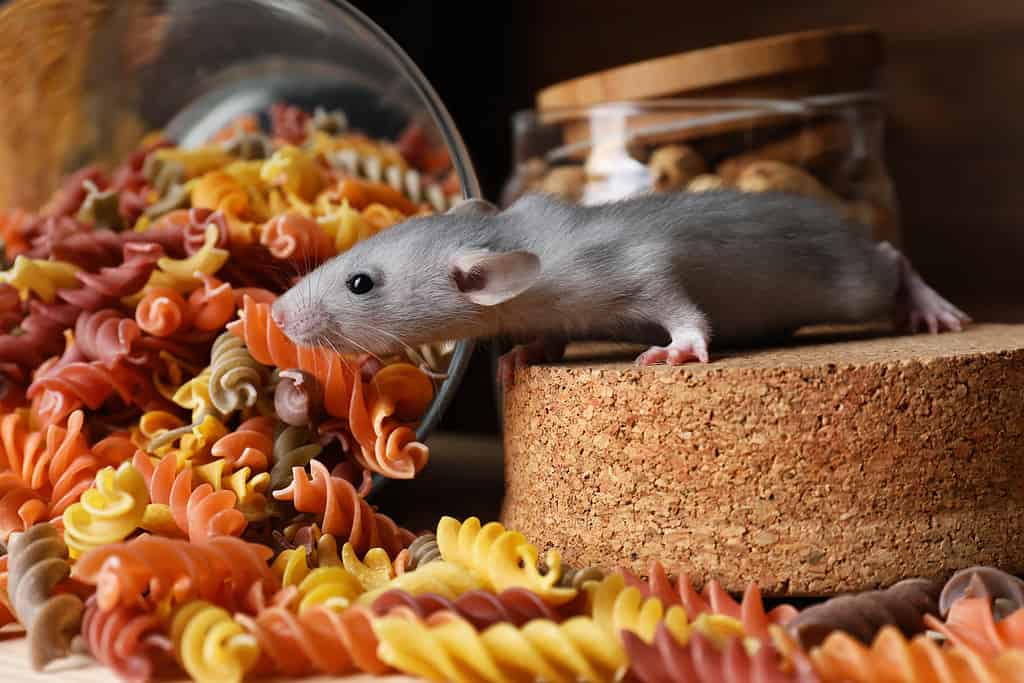
Rats leave behind waste products, which can contaminate food.
©Liudmila Chernetska/iStock via Getty Images
Certain rodents like mice and rats are perhaps the most alarming household pest infestations of all, as these critters can be quite large and carry dangerous diseases.
“Rodents are another major issue, especially in neighborhoods near water, heavy vegetation, or [that] are ill-kept,” says Hearn. “They like to move through your attics, soffits, palm trees, anywhere they feel safe to traverse. Then once they get inside, they like to chew through wiring, damage the insulation in your attic, and keep homeowners awake at night, as you can usually hear them rustling around.”
Though rodents might be small compared to other animals, they’re quite intelligent, cautious creatures, Hearn warns. As a result, pest control can be challenging.
“I always recommend a reliable approach that includes exterior bait stations, interior trapping, and sealing off any access points on the outside of the home,” he explains. “I’d also make sure there’s no brush or stacked material near or around the home, as that will promote safe traversal areas. You want to make the environment around your home as ‘uncomfortable’ as possible, as a rodent’s main concern is always safety.”
McHale also recommends decluttering your home, discarding any cardboard boxes or papers that might attract the animal.
Something to keep in mind is that infestations can vary in length after treatment.
Sean Hearn, Entomologist and Chief of Revenue at All U Need Pest Control
4. Ants
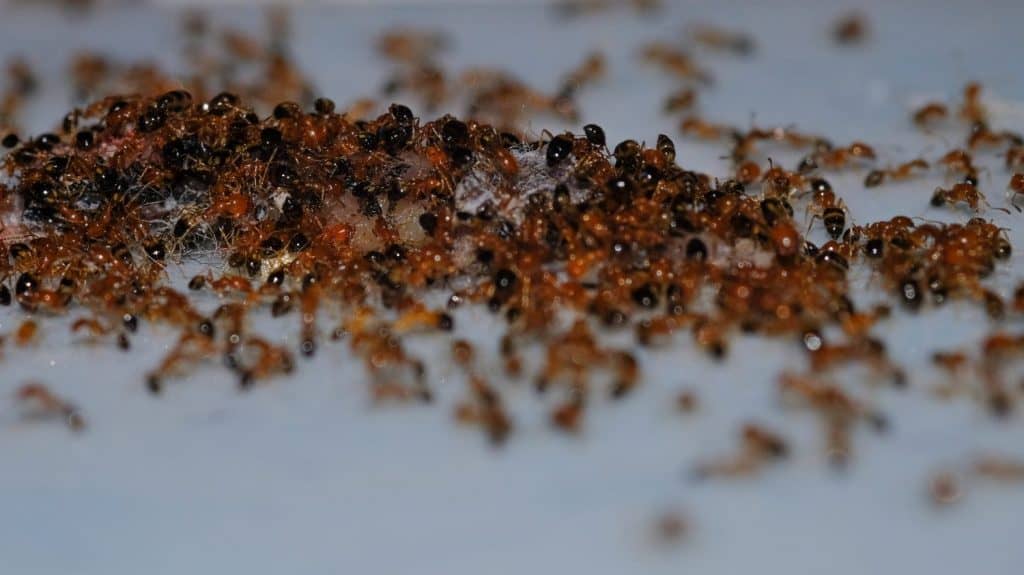
Ant colonies can consist of billions of ants.
©Creative Stock Studio/Shutterstock.com
While they might not be as concerning as cockroaches or rats, ants are a common and sometimes dangerous household pest. In fact, they can contaminate your food with a host of bacteria and even cause property damage in some instances.
“[Ants] tend to be some of the most stubborn pests we deal with,” says Hearn. “Unfortunately, the big challenge is that they’re often found operating with multiple colonies and multiple queens. As an example, you may see mounds throughout your yard and think they’re separate colonies that can be dealt with individually, but they’re actually all interconnected, so the wrong product can cause them to split and expand as they try and maneuver away from it, making the situation worse as they spread throughout the yard.”
To manage their population, Hearn recommends using granular baits and liquid lawn applications.
“As they’re extremely prevalent in our service areas, [ants] tend to spread back in the yard if the yard isn’t being actively managed, so I always recommend ongoing maintenance when dealing with them,” he says.
5. Spiders
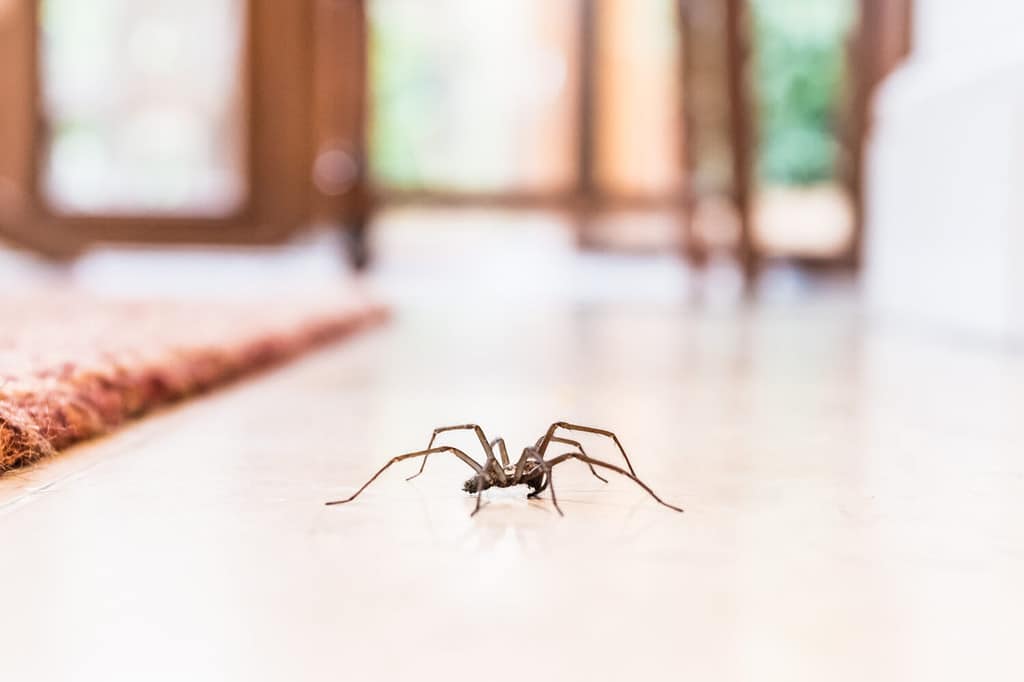
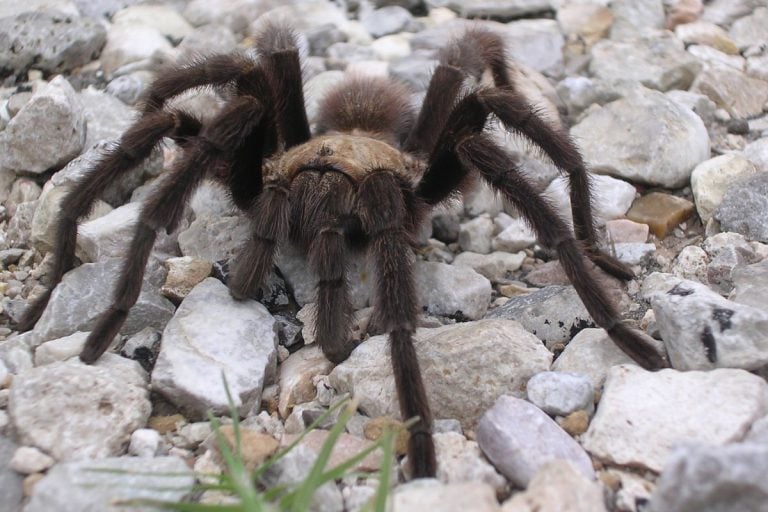
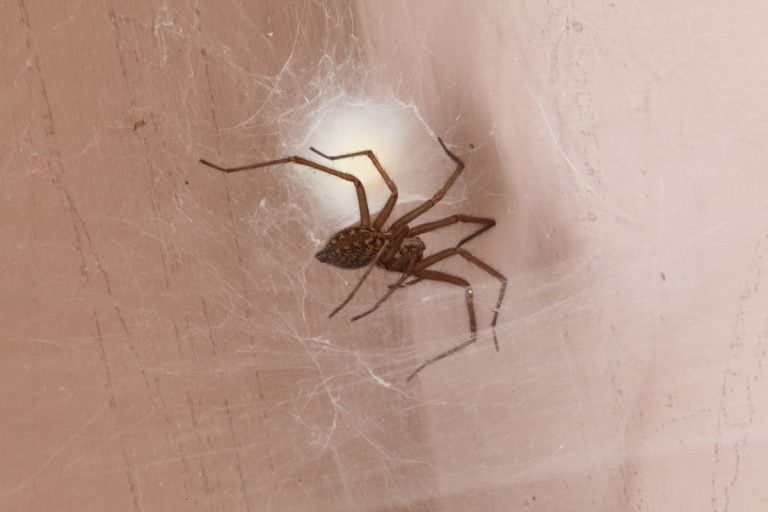
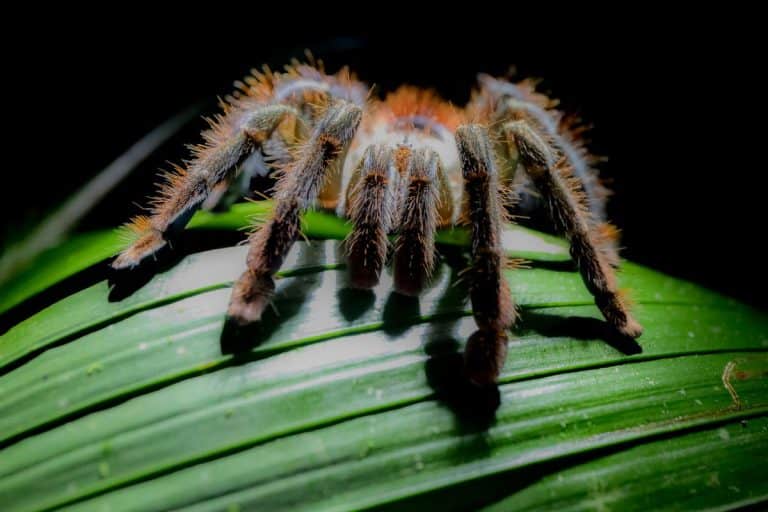
Some spiders are commonly found indoors, but an infestation can occur quickly if given the proper environment.
©Christine Bird/Shutterstock.com
Spotting a few spiders here and there isn’t exactly the worst problem a homeowner can experience. In fact, some spiders even act as a natural source of pest control. However, when there’s an infestation, the problem becomes far more serious.
“In many neighborhoods with lanais or pool cages, spiders tend to become a constant source of frustration because they spread webs across your soffits, screens, around outdoor lighting, in your garage, etc.,” says Hearn. “They are a bit harder to control as they don’t pick up product the same way insects do.”
Hearn uses a process called IPM (Integrated Pest Management), which is more of a preventative method. If you can stop the spiders from finding their way inside your home, then you’re usually safe from an infestation.
Hearn focuses on measures that include “removing webs, fogging screen enclosures, and reducing the insect population they feed on, aka their food sources,” he explains. “All of these help prevent the spiders from moving in in the first place. Homeowners will usually see immediate improvement visually due to sweeping and fogging, and then the longer-term reduction follows over the next few weeks.”
6. Bed Bugs
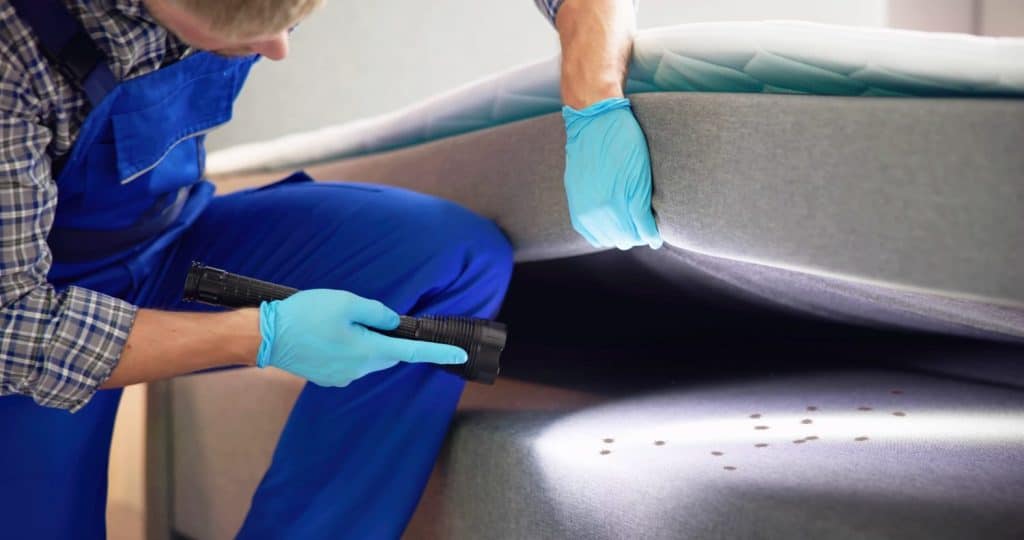
Bed bugs are parasitic insects that feed on humans at night.
©Andrey_Popov/Shutterstock.com
Perhaps the most dreaded household pests out there, bed bugs literally feed off your blood while you sleep.
“Bed bugs are another major pest that consistently ranks among some of the hardest for homeowners to deal with,” says Hearn. “They like to hide in your mattresses, seams of your furniture, in your baseboards, and any tiny crack they can squeeze themselves into throughout your room. This makes them tough to detect until the activity is already well established.”
Oftentimes, people don’t realize they have a bed bug infestation until it’s too late. They may notice an itchy rash on their skin upon waking or see evidence on their bedsheets.
“Treatment requires a detailed and targeted approach that includes thorough inspections, very precise applications, and homeowner cooperation with laundering and heat exposure for fabrics,” Hearn says. “Most infestations take around two to three weeks to fully resolve- while major infestations can take much longer.”