
Quick Take
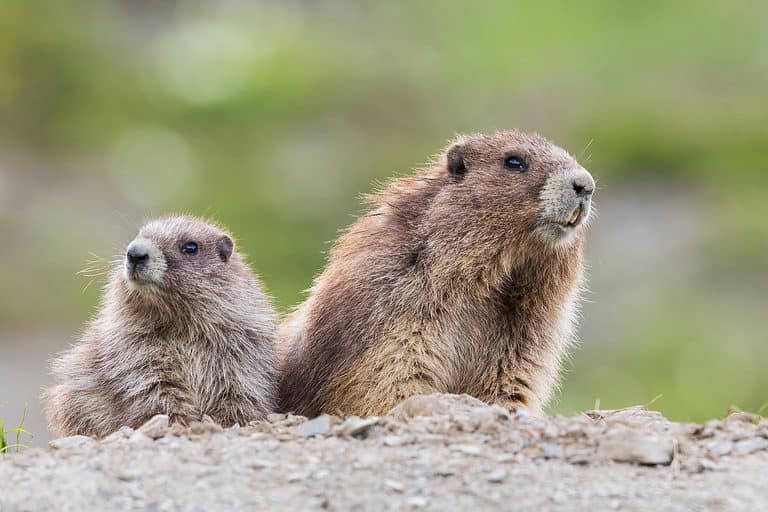
- The Olympic marmot, the state endemic mammal, is the only mammal endemic to Washington State.
- Orcas became the official state marine mammal in 2005 to increase awareness about these animals and to help protect their natural habitat.
- Washington school children voted to adopt the willow goldfinch as a state symbol and the legislature made it official in 1951.
- The Olympia oyster, Washington’s official state oyster since 2014, is the only oyster species native to the Puget Sound.
If you are looking for the most breathtaking natural landscapes in the Pacific Northwest, it is hard to top the state of Washington. Also known as the Evergreen State, Washington’s dense forests, rugged mountains, and large stretches of coastline are home to a wide variety of wildlife. This incredible natural beauty and biodiversity is also reflected in the official state animals of Washington. Keep reading to take a closer look at these amazing animals.
1. State Endemic Mammal: Olympic Marmot (Marmota olympus)
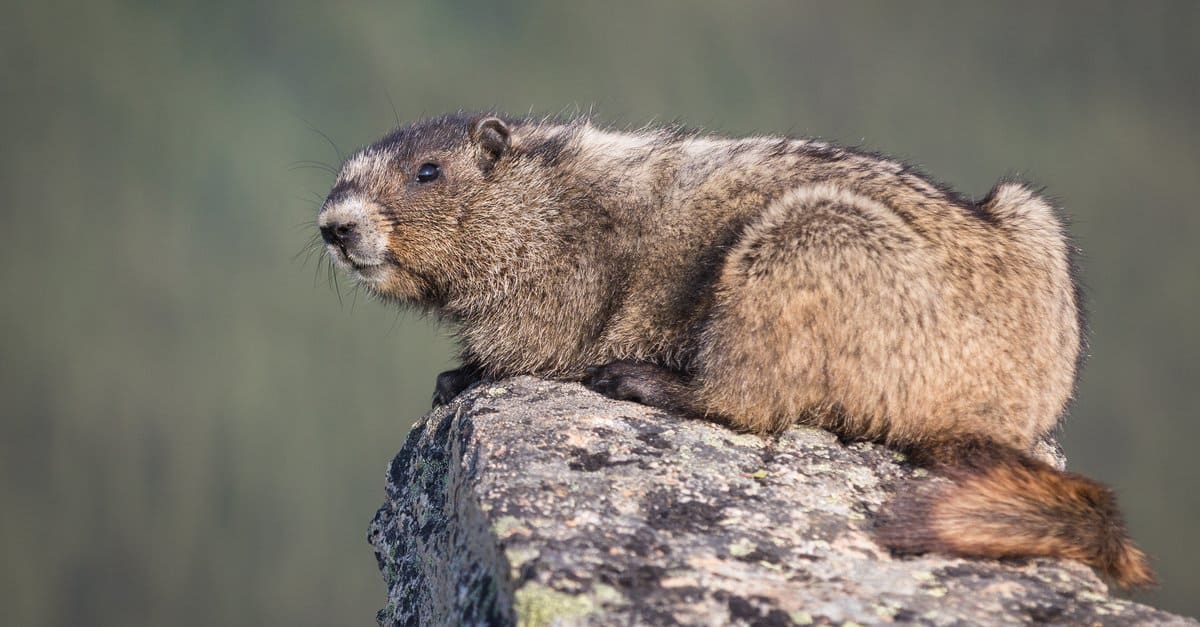
The Olympic marmot is the only mammal endemic to the state. Following a proposal from children at Seattle’s Westwood School, this adorable animal became Washington’s official state endemic mammal in 2009. The Olympic marmot is a type of ground squirrel. Their fur is shades of brown mixed with white. They can reach up to 32 inches long and weigh up to 20 pounds. These adorable animals live in groups in the Olympic Mountains, which are located on the Olympic Peninsula in northwestern Washington. They are commonly seen during the summer in Olympic National Park, particularly along Hurricane Ridge.
Olympic marmots are extremely social and gregarious animals. They form tight bonds with family members and often smell each other’s cheeks or touch each other’s noses in greeting. During the summer months, Olympic marmots enjoy basking in the sun and searching for food during the day, returning to their burrows in the evening. They stay in their burrows from September to May for hibernation. Olympic marmots eat insects, fruits, legumes, herbs, flowers, and grasses.
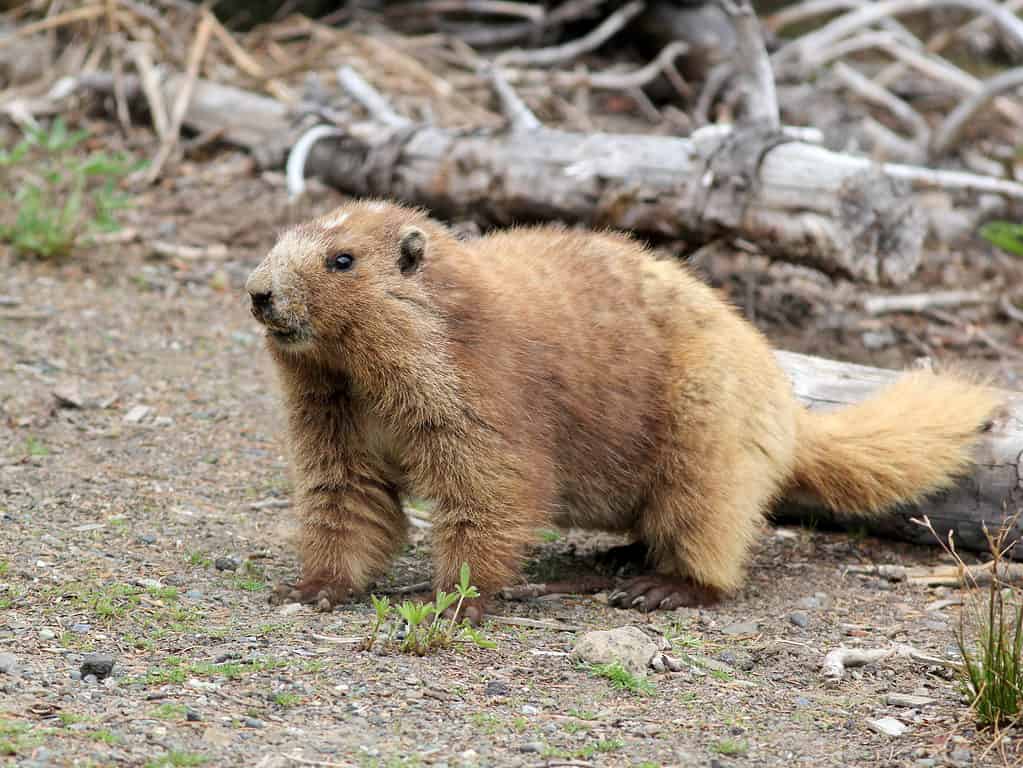
Olympic marmots live in groups ranging from a few individuals to more than 40 in Olympic National Park.
©Randy Bjorklund/Shutterstock.com
2. State Marine Mammal: Orca (Orcinus orca)
Orcas are well known in the state of Washington. Also referred to as killer whales, orcas became the official state marine mammal in 2005 due to a proposal from the second graders of Crescent Harbor Elementary School. The main goals of making the orca an official state animal were to increase awareness about these animals and to help protect their natural habitat. Orcas are also an important symbol for the indigenous peoples of the area. Pods of orcas annually migrate through the waters of Puget Sound off Washington’s northwest coast.
Southern Resident orcas spend part of the summer and fall in Puget Sound each year. These orcas are different from typical killer whales. They almost exclusively eat seafood, such as like Chinook salmon, rather than hunting marine mammals. Orca pods have distinct cultures, including language, hunting techniques, and food preferences. Orcas can be recognized by the black, white, and sometimes grey markings that are unique to each individual. The largest orca ever recorded was a male from Washington State measuring 32 feet long. Larger males can also weigh in excess of 12,000 pounds.
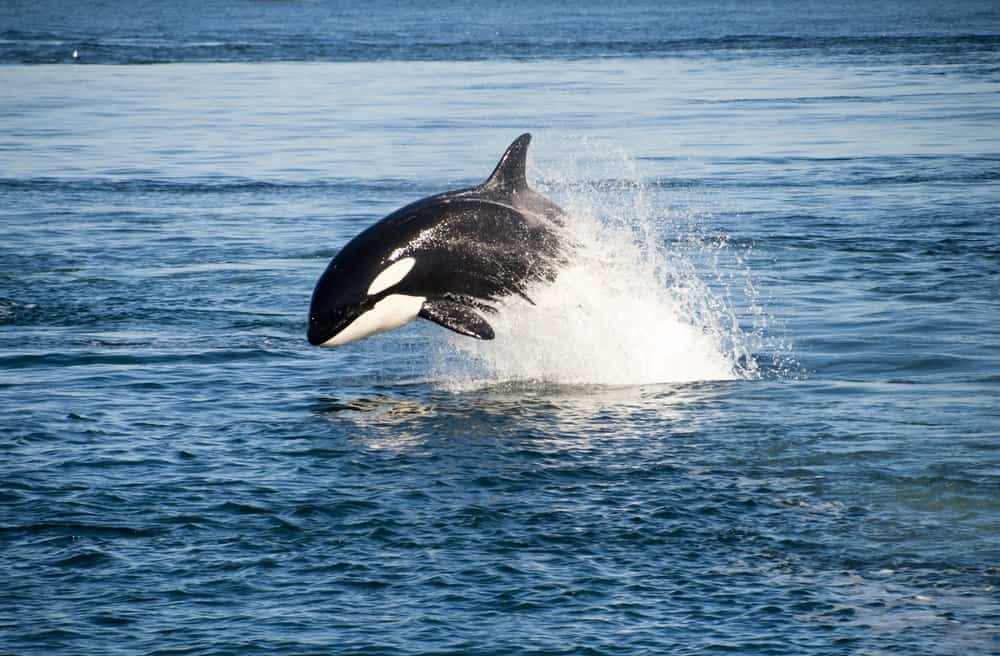
One goal of making the orca an official state animal of Washington was to help to protect its habitat.
©qingqing/Shutterstock.com
3. State Bird: Willow Goldfinch (Spinus tristis)
The official state bird of Washington State is the willow goldfinch. School children voted to adopt these delicate and acrobatic birds as a state symbol and the legislature made it official in 1951. Males have yellow bodies with black and white wings. Females, however, tend to have dull or olive-yellow coloring with dark brown wings and a dark brown tail. In addition, both males and females have brownish coloring during the winter months.
Willow goldfinches are small birds and only reach about 5 inches in length. They are very active birds with impressive flying abilities, gracefully dipping and rising in wave-like patterns as they soar through the sky. Willow goldfinches primarily eat seeds and are particularly fond of elm, thistle, and sunflower seeds. These finches are year-round residents found throughout the state. They are generally seen in open woodlands, brushlands, backyards, and parks, particularly in the central Columbia Plateau region in central to southeastern Washington.
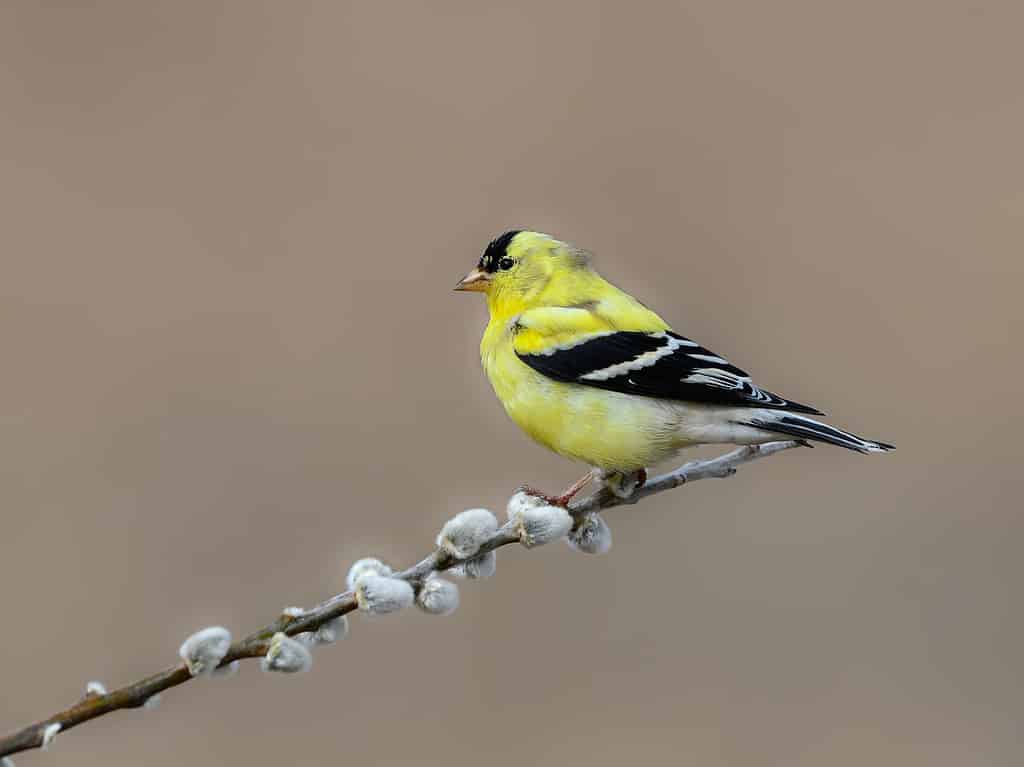
Willow goldfinches are small birds, only growing to around 5 inches in length.
©FotoRequest/Shutterstock.com
4. State Fish: Steelhead Trout (Oncorhynchus mykiss irideus)
The steelhead trout has been the official state fish of Washington since 1969. It the among the most popular game fish for recreational fishing, which is an important industry in the state. Steelhead trout are anadromous fish, returning to the freshwater rivers where they were born to spawn. The steelhead trout is actually the same species as the rainbow trout. The only difference is that rainbow trout live only in freshwater, while steelhead trout move between freshwater and saltwater habitats.
Steelhead trout have elongated bodies covered with silvery-blue scales that shimmer in the sunlight. Their bellies are a bright white color, which is separated from their silvery spotted backs with a translucent line of pinkish coloring. They also have dark spots all over their bodies. These fish can reach about 30 pounds, but they generally average between 8 and 11 pounds. The largest steelhead trout ever caught in Washington weighed 35.06 pounds. It was caught in the Snake River in 1973. They are often found in Puget Sound tributaries and coastal rivers.
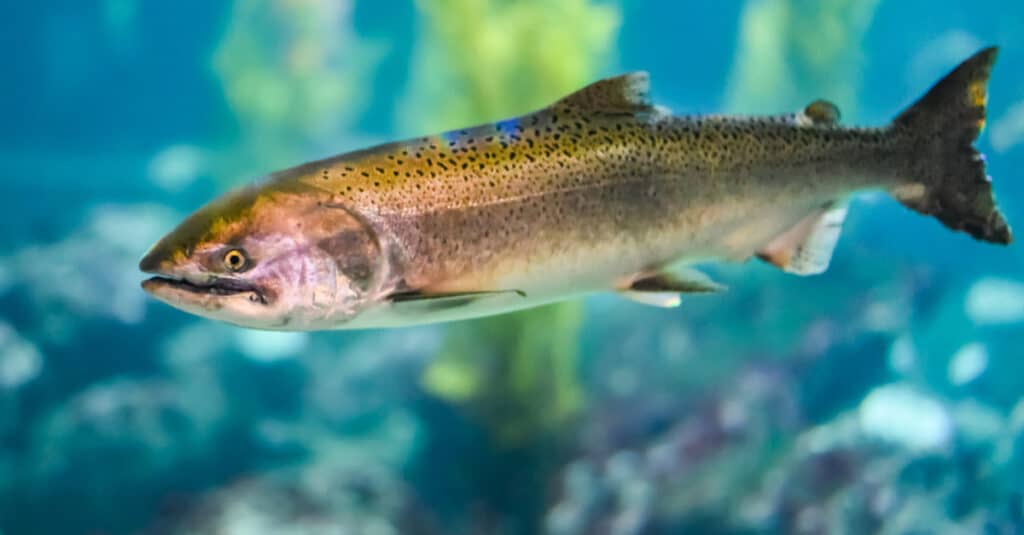
Steelhead trout are one of the most popular species for recreational fishing in the state.
©David A Litman/Shutterstock.com
5. State Amphibian: Pacific Chorus Frog (Pseudacris regilla)
In 2007, the Pacific chorus frog (or Pacific tree frog) was designated as the official state amphibian of Washington, following a proposal from children at Boston Harbor Elementary School. The Pacific chorus frog is native to Washington and lives in every county in the state. These frogs are not only cute and charismatic, but they are also very helpful to the ecosystems of Washington and eat many pesky insects like mosquitoes.
Pacific chorus frogs are no bigger than 2 inches long and can be green, gray, brown, or tan. Regardless of their color, each frog has a distinctive black stripe that runs from the eye down to the shoulder. True to their name, Pacific chorus frogs make beautiful sounds at night, swelling their throats up to three times the size of their heads.
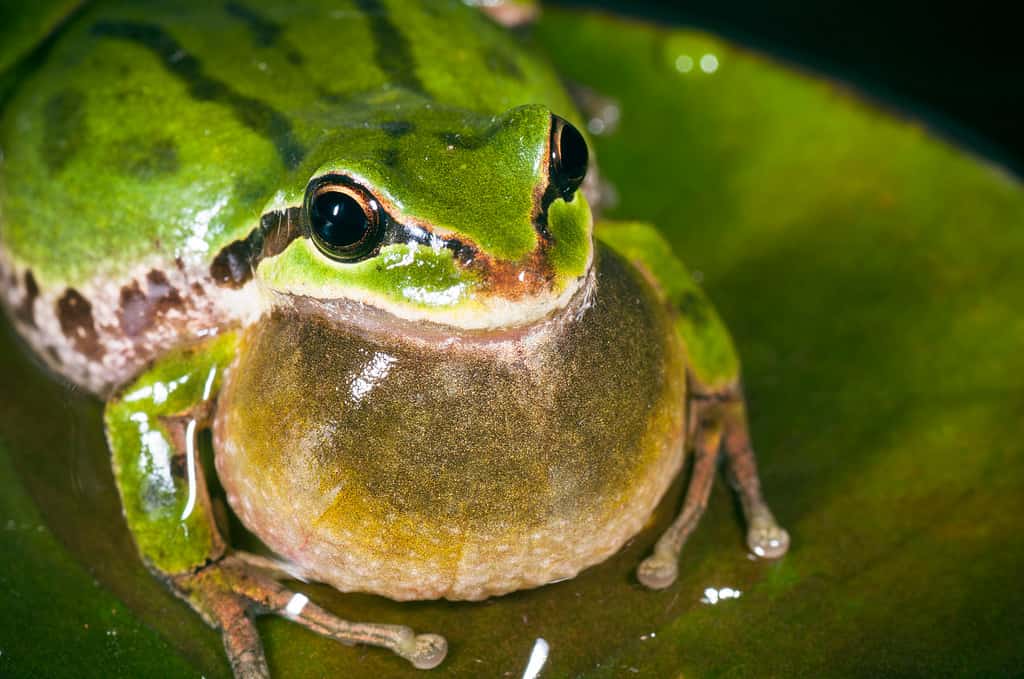
Pacific chorus frogs are helpful to the ecosystems of Washington, eating many insects such as mosquitoes.
©Elementspace/Shutterstock.com
6. State Insect: Green Darner Dragonfly (Anax junius)
The green darner dragonfly became the Washington official state insect in 1997 after students from Crestwood Elementary proposed the idea to the Washington State legislature. These dragonflies live all over the state of Washington. The green darner dragonfly is one of the fastest dragonflies and can fly at speeds of 25 to 35 mph. It is also one of the largest dragonflies, with a wingspan of 4 to 6 inches and a body that is 2.25 to 3.5 inches long. Its dazzling green thorax is sometimes accented by a deep red stripe running down the middle of its blue abdomen.
Green darner dragonflies are skilled aerial hunters, catching and eating their prey in mid-flight. They are beneficial to the environment because they eat many insect pests, including mosquitoes. Green darner dragonflies are among the most common dragonfly species in North America. From July through October, they begin to migrate from the northern United States down to the Gulf Coast or Mexico.
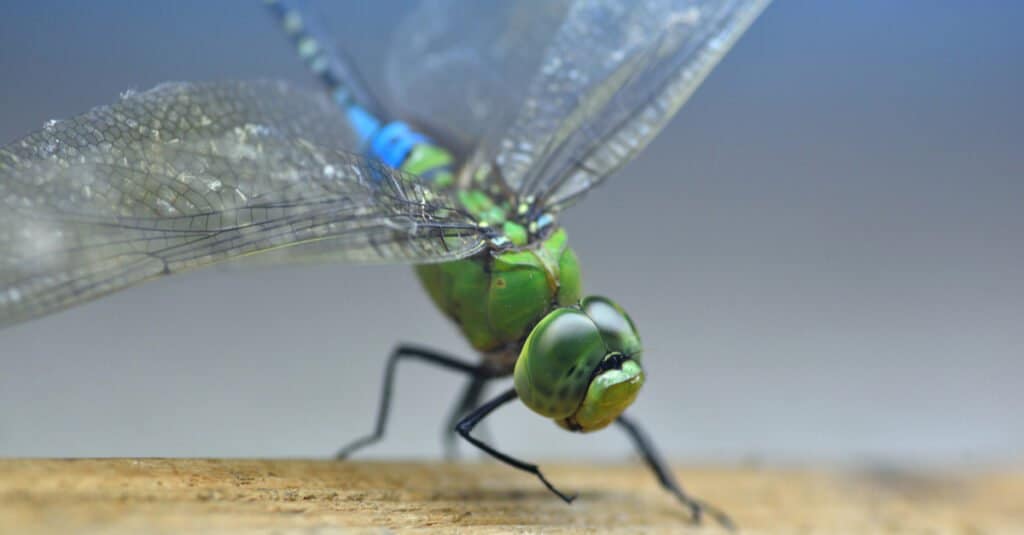
The green darner dragonfly is one of the fastest dragonfly species, capable of flying 25 to 35 mph.
©Photoongraphy/Shutterstock.com
7. State Oyster: Olympia Oyster (Ostrea lurida)
Although oysters are quite common in Washington today, most are not endemic to the state. In fact, the Olympia oyster, Washington’s official state oyster since 2014, is the only oyster species native to the Puget Sound in Washington State. It is an edible oyster species that can be found along the Northern Pacific Coast in North America and up into southern parts of Alaska. Olympia oysters grow to around 2 to 3 inches long and have rounded or oval-shaped shells. They can come in different colors, such as white or purplish black, and often have brown or yellow stripes.
While Olympia oysters were once abundant in Washington, heavy harvesting along the state’s coasts and beaches in the early 1900s caused their large populations to nearly disappear. Additionally, the introduction and farming of other oyster species threatened the native Olympia oyster populations. Olympia oysters still face threats such as polluted water, habitat destruction, and dangerous predators. However, in 1998 the Washington Department of Fish and Wildlife adopted a new restoration strategy to help protect and replenish wild Olympia oysters in the state.
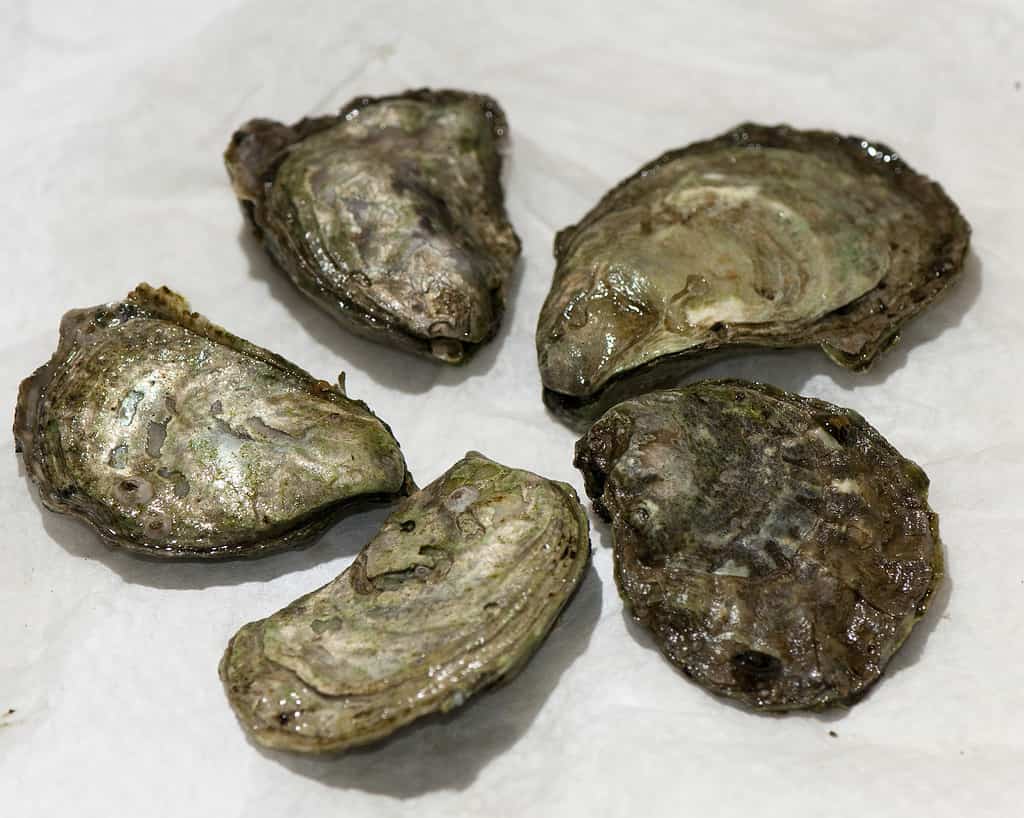
The Olympia oyster is the only oyster species native to the Puget Sound in Washington State.
©VIUDeepBay, CC BY 2.0 <https://creativecommons.org/licenses/by/2.0>, via Wikimedia Commons – Original / License